Judith, Chapter 8 (Codex Alexandrinus)
Introduction
Judith 8 in the Greek Old Testament (the Septuagint) as written in Codex Alexandrinus, a Greek Bible copied in the fifth century, probably in Egypt, and now in the British Library (Royal MS 1 D. VI, the second of its four volumes). It is one of the three great early codices of the whole Greek Bible, with Codex Vaticanus and Codex Sinaiticus.
This entry meets the strict three-criteria standard of the Theosis Library:
- Manuscript scan: the pages of Codex Alexandrinus carrying this chapter (fol. 432v, fol. 433r, fol. 433v), from the full-size photographic (autotype) facsimile published by the British Museum in 1879-1883, as digitised on the Internet Archive. The verse range of every page comes from the reduced photographic facsimile of 1936, which prints it beneath each plate, and the opening words of every page were read on the plate to confirm the page and the verse it begins with. Each section links to the page or pages that hold its verses. Folio numbers are those written at the head of each leaf and visible on the plates.
- Original text: Swete's edition, which here prints the text of Codex Vaticanus (Vat. gr. 1209), the base of his edition, and gives the readings of Alexandrinus only in his apparatus. The Greek column is therefore Vaticanus' text; where Alexandrinus differs, the plate shows what Alexandrinus reads.
- English translation: Sir Lancelot C. L. Brenton, The Septuagint Version of the Old Testament (1844; 1851 edition), a translation of the Greek, public domain, from the eBible.org text.
How was this verified? (Provenance)
Where on the image
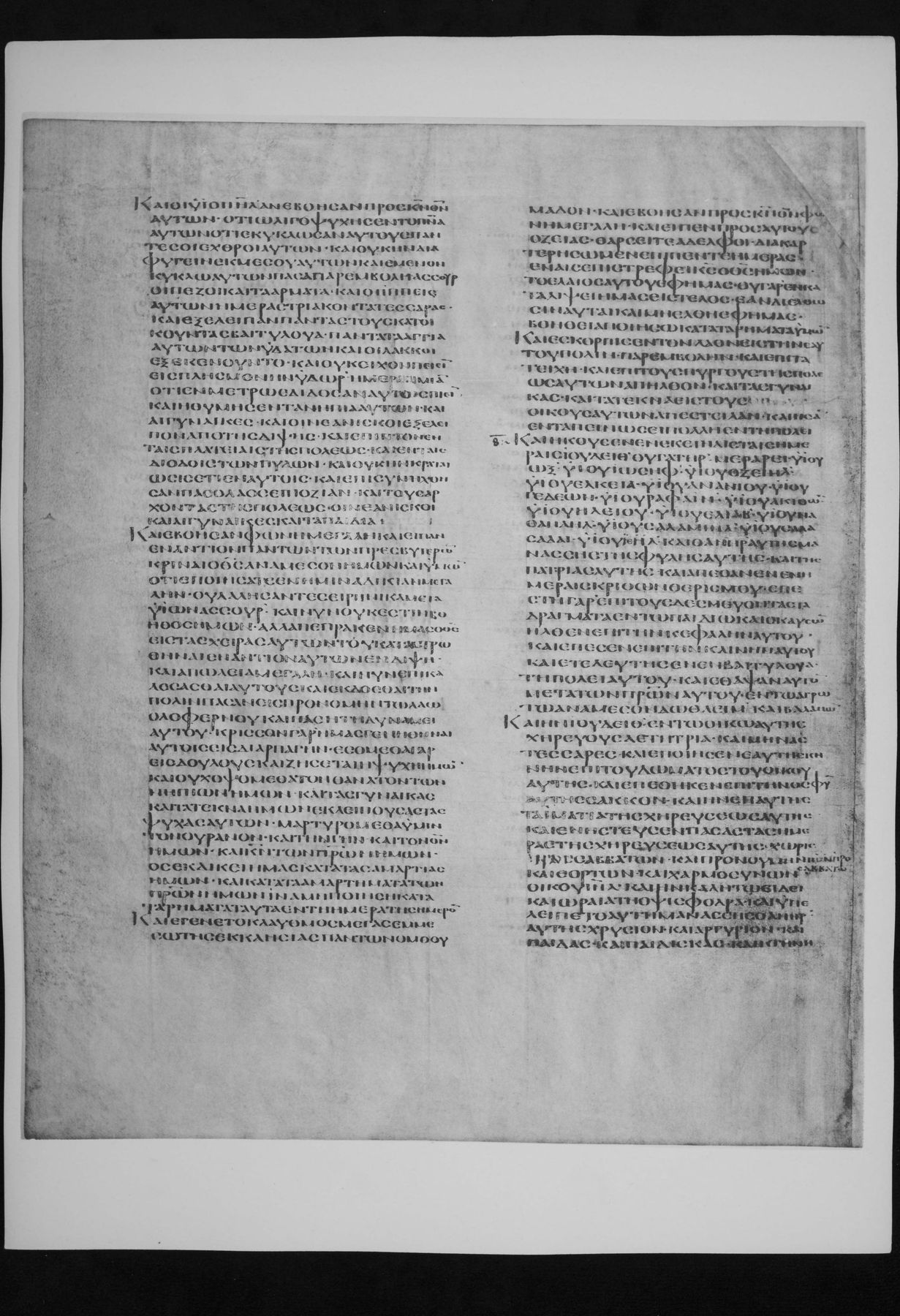
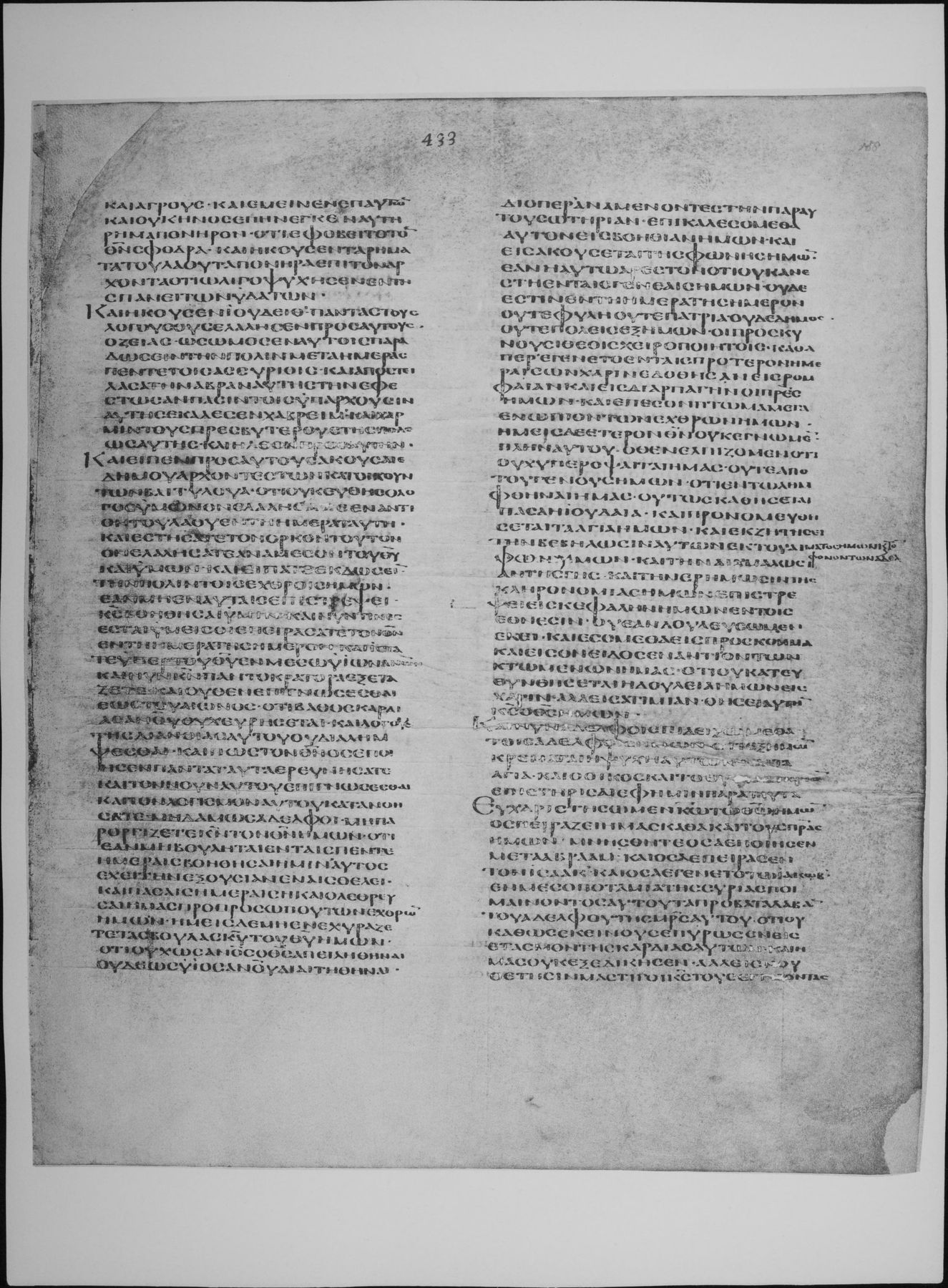
Judith 8:1-7 is on fol. 432v (full-size facsimile of 1879-83, Internet Archive codex-alexandrinus leaf 889). The 1936 reduced facsimile prints beneath this page: Judith vii. 19-viii. 7. Checked on the plate: the page begins at the start of Judith 7:19 (first words read: ΚΑΙ ΟΙ ΥΙΟΙ ΙΣΡΑΗΛ ΑΝΕΒΟΗΣΑΝ ΠΡΟΣ ΚΝ ΘΝ ΑΥΤΩΝ ΟΤΙ ΩΛΙΓΟΨΥΧΗΣΕΝ). Judith 8:7-8 is on fol. 433r (full-size facsimile of 1879-83, Internet Archive codex-alexandrinus leaf 890). The 1936 reduced facsimile prints beneath this page: Judith viii. 7-27. Checked on the plate: the page begins inside Judith 8:7 (first words read: ΚΑΙ ΑΓΡΟΥΣ ΚΑΙ ΕΜΕΙΝΕΝ ΕΠ ΑΥΤΩΝ ΚΑΙ ΟΥΚ ΗΝ ΟΣ ΕΠΗΝΕΓΚΕΝ ΑΥΤΗ ΡΗΜΑ ΠΟΝΗΡΟΝ).
1Καὶ ἤκουσεν ἐν ἐκείναις ταῖς ἡμέραις Ἰουδεὶθ θυγάτηρ Μεραρεὶ υἱοῦ Ὢξ υἱοῦ Ἰωσὴφ υἱοῦ Ὀζειὴλ υἱοῦ Ἑλκειὰ υἱοῦ Ἠλειοὺ υἱοῦ Χελκείου υἱοῦ Ἐλιὰβ υἱοῦ Ναθαναὴλ υἱοῦ Σαλαμιὴλ υἱοῦ Σαρασαδαὶ υἱοῦ Ἰσραήλ. 2καὶ ὁ ἀνὴρ αὐτῆς Μανασσῆς τῆς φυλῆς αὐτῆς καὶ τῆς πατριᾶς αὐτῆς· καὶ ἀπέθανεν ἐν ἡμέραις θερισμοῦ κριθῶν. 3ἐπέστη γὰρ ἐπὶ τοῦ δεσμεύοντος τὸ δράγμα ἐν τῷ πεδίῳ, καὶ ὁ καύσων ἦλθεν ἐπὶ τὴν κεφαλὴν αὐτοῦ, καὶ ἔπεσεν ἐπὶ τὴν κλίνην καὶ ἐτελεύτησεν ἐν Βαιτυλουὰ τῇ πόλει αὐτοῦ, καὶ ἔθαψαν αὐτὸν μετὰ τῶν πατέρων αὐτοῦ ἐν τῷ ἀγρῷ τῷ ἀνὰ μέσον Δωθάειμ καὶ Βαλαμών. 4καὶ ἦν Ἰουδεὶθ ἐν τῷ οἴκῳ αὐτῆς χηρεύουσα ἔτη τρία καὶ μῆνας τέσσαρες. 5καὶ ἐποίησεν αὐτῇ σκηνὴν ἐπὶ τοῦ δώματος τοῦ οἴκου αὐτῆς, καὶ ἐπέθηκεν ἐπὶ τὴν ὀσφὺν αὐτῆς σάκκον, καὶ ἦν ἐπ᾽ αὐτῆς τὰ ἱμάτια τῆς χηρεύσεως αὐτῆς. 6καὶ ἐνήστευε πάσας τὰς ἡμέρας τῆς χηρεύσεως αὐτῆς χωρὶς προσαββάτων καὶ σαββάτων καὶ προνουμηνιῶν καὶ ἑορτῶν καὶ χαρμοσυνῶν οἴκου Ἰσραήλ. 7καὶ ἦν καλὴ τῷ εἴδει καὶ ὡραία τῇ ὄψει σφόδρα· καὶ ὑπελείπετο αὐτῇ Μανασσῆς ὁ ἀνὴρ αὐτῆς χρυσίον καὶ ἀργύριον καὶ παῖδας καὶ παιδίσκας καὶ κτήνη καὶ ἀγρούς, καὶ ἔμενεν ἐπ᾽ αὐτῶν. 8καὶ οὐκ ἦν ὃς ἐπήνεγκεν αὐτῇ ῥῆμα πονηρόν, ὅτι ἐφοβεῖτο τὸν θεὸν σφόδρα.
1Now at that time Judith heard thereof, which was the daughter of Merari, the son of Ox, the son of Joseph, the son of Oziel, the son of Elcia, the son of Eliu, the son of Chelcias, the son of Eliab, the son of Nathanael, the son of Salamiel, the son of Sarasadai, the son of Israel. 2And Manasses was her husband, of her tribe and kindred, who died in the barley harvest. 3For as he stood overseeing them that bound sheaves in the field, the heat came upon his head, and he fell on his bed, and died in his city of Bethulia: and they buried him with his fathers in the field between Dothaim and Balamo. 4So Judith was a widow in her house three years and four months. 5And she made her a tent upon the top of her house, and put on sackcloth upon her loins, and ware her widow's apparel. 6And she fasted all the days of her widowhood, save the eves of the sabbaths, and the sabbaths, and the eves of the new moons, and the new moons, and the feasts and solemn days of the house of Israel. 7She was also of a goodly countenance, and very beautiful to behold: and her husband Manasses had left her gold, and silver, and menservants, and maidservants, and cattle, and lands; and she remained upon them. 8And there was none that gave her an ill word; for she feared God greatly.
Where on the image
Judith 8:9-16 is on fol. 433r (full-size facsimile of 1879-83, Internet Archive codex-alexandrinus leaf 890). The 1936 reduced facsimile prints beneath this page: Judith viii. 7-27. Checked on the plate: the page begins inside Judith 8:7 (first words read: ΚΑΙ ΑΓΡΟΥΣ ΚΑΙ ΕΜΕΙΝΕΝ ΕΠ ΑΥΤΩΝ ΚΑΙ ΟΥΚ ΗΝ ΟΣ ΕΠΗΝΕΓΚΕΝ ΑΥΤΗ ΡΗΜΑ ΠΟΝΗΡΟΝ).
9Καὶ ἤκουσεν ῥήματα τοῦ λαοῦ τὰ πονηρὰ ἐπὶ τὸν ἄρχοντα, ὅτι ὠλιγοψύχησαν ἐπὶ τῇ σπάνει τῶν ὑδάτων· καὶ ἤκουσεν πάντας τοὺς λόγους Ἰουδεὶθ οὓς ἐλάλησεν πρὸς αὐτοὺς Ὀζείας, ὃς ὤμοσεν αὐτοῖς παραδώσειν τὴν πόλιν μετὰ ἡμέρας πέντε τοῖς Ἀσσυρίοις. 10καὶ ἀποστείλασα τὴν ἅβραν αὐτῆς τὴν ἐφεστῶσαν πᾶσιν τοῖς ὑπάρχουσιν αὐτῆς ἐκάλεσεν Χάβρειν καὶ Χάρμειν τοὺς πρεσβυτέρους τῆς πόλεως αὐτῆς. 11καὶ ἦλθον πρὸς αὐτήν· καὶ εἶπεν πρὸς αὐτούς Ἀκούσατε δή μου, ἄρχοντες τῶν κατοικούντων ἐν Βαιτυλουά· ὅτι οὐκ εὐθὴς ὁ λόγος ὑμῶν ὃν ἐλαλήσατε ἐναντίον τοῦ λαοῦ ἐν τῇ ἡμέρᾳ ταύτῃ, καὶ ἐστήσατε τὸν ὅρκον ὃν ἐλαλήσατε ἀνὰ μέσον τοῦ θεοῦ καὶ ὑμῶν, καὶ εἴπατε ἐκδώσειν τὴν πόλιν τοῖς ἐχθροῖς ἡμῶν ἐὰν μὴ ἐν αὐταῖς ἐπιστρέψῃ ὁ κύριος βοήθειαν ὑμῖν. 12καὶ νῦν τίνες ἐστὲ ὑμεῖς οἳ ἐπειράσατε τὸν θεὸν ἐν τῇ ἡμέρᾳ τῇ σήμερον, καὶ ἵστατε ὑπὲρ τοῦ θεοῦ ἐν μέσῳ υἱῶν ἀνθρώπων; 13καὶ νῦν Κύριον Παντοκράτορα ἐξετάζετε, καὶ οὐθὲν ἐπιγνώσεσθε ἕως τοῦ αἰῶνος· 14ὅτι βάθος καρδίας ἀνθρώπου οὐχ εὑρήσετε, καὶ λόγους τῆς διανοίας αὐτοῦ οὐ διαλήμψεσθε· καὶ πῶς τὸν θεὸν ὃς ἐποίησεν τὰ πάντα ταῦτα ἐρευνήσετε, καὶ τὸν νοῦν αὐτοῦ ἐπιγνώσεσθε, καὶ τὸν λογισμὸν αὐτοῦ κατανοήσετε; μηδαμῶς, ἀδελφοί, μὴ παροργίζετε Κύριον θεὸν ἡμῶν. 15ὅτι ἐὰν μὴ βούληται ἐν ταῖς πέντε ἡμέραις βοηθῆσαι ἡμῖν, αὐτὸς ἔχει τὴν ἐξουσίαν ἐν αἷς θέλει σκεπάσαι ἡμέραις, ἢ καὶ ὀλεθρεῦσαι ἡμᾶς πρὸ προσώπου τῶν ἐχθρῶν ἡμῶν. 16ὑμεῖς δὲ μὴ ἐνεχυράζετε τὰς βουλὰς Κυρίου τοῦ θεοῦ ἡμῶν, ὅτι οὐχ ὡς ἄνθρωπος ὁ θεὸς ἀπειληθῆναι οὐδ᾽ ὡς υἱὸς ἀνθρώπου διαιτηθῆναι.
9Now when she heard the evil words of the people against the governor, that they fainted for lack of water; for Judith had heard all the words that Ozias had spoken unto them, and that he had sworn to deliver the city unto the Assyrians after five days; 10then she sent her waiting-woman, that had the government of all things that she had, to call Ozias and Chabris and Charmis, the ancients of the city. 11And they came unto her, and she said unto them, Hear me now, O ye governors of the inhabitants of Bethulia: for your words that ye have spoken before the people this day are not right, touching this oath which ye made and pronounced between God and you, and have promised to deliver the city to our enemies, unless within these days the Lord turn to help you. 12And now who are ye that have tempted God this day, and stand instead of God among the children of men? 13And now try the Lord Almighty, but ye shall never know any thing. 14For ye cannot find the depth of the heart of man, neither can ye perceive the things that he thinketh: then how can ye search out God, that hath made all these things, and know his mind, or comprehend his purpose? Nay, my brethren, provoke not the Lord our God to anger. 15For if he will not help us within these five days, he hath power to defend us when he will, even every day, or to destroy us before our enemies. 16Do not bind the counsels of the Lord our God: for God is not as man, that he may be threatened; neither is he as the son of man, that he should be wavering.
Where on the image
Judith 8:17-24 is on fol. 433r (full-size facsimile of 1879-83, Internet Archive codex-alexandrinus leaf 890). The 1936 reduced facsimile prints beneath this page: Judith viii. 7-27. Checked on the plate: the page begins inside Judith 8:7 (first words read: ΚΑΙ ΑΓΡΟΥΣ ΚΑΙ ΕΜΕΙΝΕΝ ΕΠ ΑΥΤΩΝ ΚΑΙ ΟΥΚ ΗΝ ΟΣ ΕΠΗΝΕΓΚΕΝ ΑΥΤΗ ΡΗΜΑ ΠΟΝΗΡΟΝ).
17διόπερ ἀναμένοντες τὴν παρ᾽ αὐτοῦ σωτηρίαν ἐπικαλεσώμεθα αὐτὸν εἰς βοήθειαν ἡμῶν, καὶ εἰσακούσεται τῆς φωνῆς ἡμῶν, ἐὰν ἦν αὐτῷ ἀρεστόν. 18ὅτι οὐκ ἀνέστη ἐν ταῖς γενεαῖς ἡμῶν οὐδὲ ἔστιν ἐν τῇ ἡμέρᾳ τῇ σήμερον οὔτε φυλὴ οὔτε πατριὰ οὔτε δῆμος οὔτε πόλις ἐξ ἡμῶν οἳ προσκυνοῦσι θεοῖς χειροποιήτοις, καθάπερ ἐγένετο ἐν ταῖς πρότερον ἡμέραις· 19ὧν χάριν ἐδόθησαν εἰς ῥομφαίαν καὶ εἰς διαρπαγὴν οἱ πατέρες ἡμῶν, καὶ ἔπεσον πτῶμα μέγα ἐνώπιον τῶν ἐχθρῶν ἡμῶν. 20ἡμεῖς δὲ ἕτερον θεὸν οὐκ ἐπέγνωμεν πλὴν αὐτοῦ· ὅθεν ἐλπίζομεν ὅτι οὐχ ὑπερόψεται ἡμᾶς οὐδ᾽ ἀπὸ τοῦ γένους ἡμῶν. 21ὅτι ἐν τῷ λημφθῆναι ἡμᾶς οὕτως καθήσεται πᾶσα ἡ Ἰουδαία, καὶ προνομευθήσεται τὰ ἅγια ἡμῶν, καὶ ζητήσει τὴν βεβήλωσιν αὐτῶν ἐκ τοῦ αἵματος ἡμῶν, 22καὶ τὸν φόνον τῶν ἀδελφῶν ἡμῶν καὶ τὴν αἰχμαλωσίαν τῆς γῆς καὶ τὴν ἐρήμωσιν τῆς κληρονομίας ἡμῶν ἐπιστρέψει εἰς κεφαλὴν ἡμῶν ἐν τοῖς ἔθνεσιν οὗ ἐὰν δουλεύσωμεν ἐκεῖ, καὶ ἐσόμεθα εἰς πρόσκομμα καὶ εἰς ὄνειδος ἐναντίον τῶν κτωμένων ἡμᾶς. 23ὅτι οὐ κατευθυνθήσεται ἡ δουλεία ἡμῶν εἰς χάριν, ἀλλ᾽ εἰς ἀτιμίαν θήσει αὐτὴν Κύριος ὁ θεὸς ἡμῶν. 24καὶ νῦν, ἀδελφοί, ἐπιδειξώμεθα τοῖς ἀδελφοῖς ἡμῶν, ὅτι ἐξ ἡμῶν κρέμαται ἡ ψυχὴ αὐτῶν, καὶ τὰ ἅγια καὶ ὁ οἶκος καὶ τὸ θυσιαστήριον ἐπεστήρισται ἐφ᾽ ἡμῖν.
17Therefore let us wait for salvation of him, and call upon him to help us, and he will hear our voice, if it please him. 18For there arose none in our age, neither is there any now in these days, neither tribe, nor family, nor people, nor city, among us, which worship gods made with hands, as hath been aforetime. 19For the which cause our fathers were given to the sword, and for a spoil, and had a great fall before our enemies. 20But we know none other God, therefore we trust that he will not despise us, nor any of our nation. 21For if we be taken so, all Judea shall lie waste, and our sanctuary shall be spoiled; and he will require the profanation thereof at our mouth. 22And the slaughter of our brethren, and the captivity of the country, and the desolation of our inheritance, will he turn upon our heads among the Gentiles, wheresoever we shall be in bondage; and we shall be an offence and a reproach to all them that possess us. 23For our servitude shall not be directed to favour; but the Lord our God shall turn it to dishonour. 24Now therefore, O brethren, let us shew an example to our brethren, because their hearts depend upon us, and the sanctuary, and the house, and the altar, rest upon us.
Where on the image
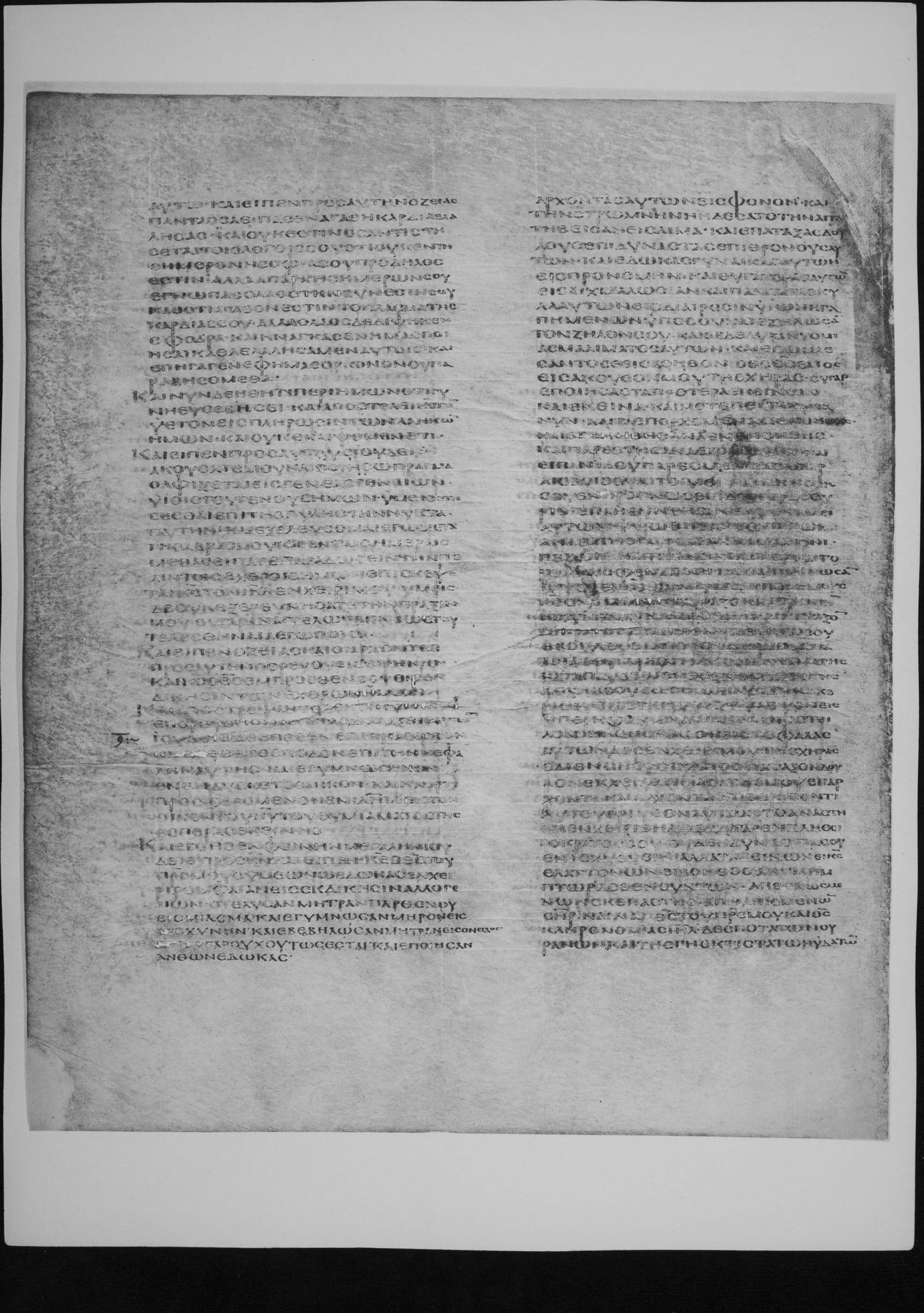
Judith 8:25-27 is on fol. 433r (full-size facsimile of 1879-83, Internet Archive codex-alexandrinus leaf 890). The 1936 reduced facsimile prints beneath this page: Judith viii. 7-27. Checked on the plate: the page begins inside Judith 8:7 (first words read: ΚΑΙ ΑΓΡΟΥΣ ΚΑΙ ΕΜΕΙΝΕΝ ΕΠ ΑΥΤΩΝ ΚΑΙ ΟΥΚ ΗΝ ΟΣ ΕΠΗΝΕΓΚΕΝ ΑΥΤΗ ΡΗΜΑ ΠΟΝΗΡΟΝ). Judith 8:27-32 is on fol. 433v (full-size facsimile of 1879-83, Internet Archive codex-alexandrinus leaf 891). The 1936 reduced facsimile prints beneath this page: Judith viii. 27-ix. 12. Checked on the plate: the page begins inside Judith 8:27 (first words read: ΑΥΤΩ ΚΑΙ ΕΙΠΕΝ ΠΡΟΣ ΑΥΤΗΝ ΟΖΕΙΑΣ ΠΑΝΤΑ ΟΣΑ ΕΙΠΑΣ ΕΝ ΑΓΑΘΗ ΚΑΡΔΙΑ ΕΛΑΛΗΣΑΣ).
25παρὰ ταῦτα πάντα εὐχαριστήσωμεν Κυρίῳ τῷ θεῷ ἡμῶν, ὃς πειράζει ἡμᾶς καθὰ καὶ τοὺς πατέρας ἡμῶν. 26μνήσθητε ὅσα ἐποίησεν μετὰ Ἀβραάμ, καὶ ὅσα ἐπείρασεν τὸν Ἰσαάκ, καὶ ὅσα ἐγένετο τῷ Ἰακὼβ ἐν Μεσοποταμίᾳ τῆς Συρίας ποιμαίνοντι τὰ πρόβατα Λαβὰν τοῦ ἀδελφοῦ τῆς μητρὸς αὐτοῦ. 27ὅτι οὐ καθὼς ἐκείνους ἐπύρωσεν εἰς ἐτασμὸν τῆς καρδίας αὐτῶν, καὶ ἡμᾶς οὐκ ἐξεδίκησεν, ἀλλ᾽ εἰς νουθέτησιν μαστιγοῖ Κύριος τοὺς ἐγγίζοντας αὐτῷ. 28Καὶ εἶπεν πρὸς αὐτὴν Ὀζείας Πάντα ὅσα εἶπας ἀγαθῇ καρδίᾳ ἐλάλησας, καὶ οὐκ ἔστιν ὃς ἀντιστήσεται τοῖς λόγοις σου. 29ὅτι οὐκ ἐν τῇ σήμερον ἡ σοφία σου πρόδηλός ἐστιν, ἀλλ᾽ ἀπ᾽ ἀρχῆς ἡμερῶν σου ἔγνω πᾶς ὁ λαὸς τὴν σύνεσίν σου, καθότι ἀγαθόν ἐστιν τὸ πλάσμα τῆς καρδίας σου. 30ἀλλὰ ὁ λαὸς ἐδίψησεν σφόδρα, καὶ ἠνάγκασαν ποιῆσαι ἡμᾶς καθὰ ἐλαλήσαμεν αὐτοῖς, καὶ ἐπαγαγεῖν ἐφ᾽ ἡμᾶς ὅρκον ὃν οὐ παραβησόμεθα. 31καὶ νῦν δεήθητι περὶ ἡμῶν, ὅτι γυνὴ εὐσεβὴς εἶ, καὶ ἀποστελεῖ Κύριος τὸν ὑετὸν εἰς πλήρωσιν τῶν λάκκων ἡμῶν, καὶ οὐκ ἐκλείψομεν ἔτι. 32καὶ εἶπεν πρὸς αὐτοὺς Ἰουδείθ Ἀκούσατέ μου, καὶ ποιήσω πρᾶγμα ὃ ἀφίξεται εἰς γενεὰς γενεῶν υἱοῖς τοῦ γένους ἡμῶν.
25Moreover let us give thanks to the Lord our God, which trieth us, even as he did our fathers. 26Remember what things he did to Abraham, and how he tried Isaac, and what happened to Jacob in Mesopotamia of Syria, when he kept the sheep of Laban his mother's brother. 27For he hath not tried us in the fire, as he did them, for the examination of their hearts, neither hath he taken vengeance on us: but the Lord doth scourge them that come near unto him, to admonish them. 28Then said Ozias to her, All that thou hast spoken hast thou spoken with a good heart, and there is none that may gainsay thy words. 29For this is not the first day wherein thy wisdom is manifested; but from the beginning of thy days all the people have known thy understanding, because the disposition of thine heart is good. 30But the people were very thirsty, and compelled us to do unto them as we have spoken, and to bring an oath upon ourselves, which we will not break. 31Therefore now pray thou for us, because thou art a godly woman, and the Lord will send us rain to fill our cisterns, and we shall faint no more. 32Then said Judith unto them, Hear me, and I will do a thing, which shall go throughout all generations to the children of our nation.
Where on the image
Judith 8:33-36 is on fol. 433v (full-size facsimile of 1879-83, Internet Archive codex-alexandrinus leaf 891). The 1936 reduced facsimile prints beneath this page: Judith viii. 27-ix. 12. Checked on the plate: the page begins inside Judith 8:27 (first words read: ΑΥΤΩ ΚΑΙ ΕΙΠΕΝ ΠΡΟΣ ΑΥΤΗΝ ΟΖΕΙΑΣ ΠΑΝΤΑ ΟΣΑ ΕΙΠΑΣ ΕΝ ΑΓΑΘΗ ΚΑΡΔΙΑ ΕΛΑΛΗΣΑΣ).
33ὑμεῖς στήσεσθε ἐπὶ τῆς πύλης τὴν νύκτα ταύτην, καὶ ἐξελεύσομαι ἐγὼ μετὰ τῆς ἅβρας μου, καὶ ἐν ταῖς ἡμέραις μεθ᾽ ἃς εἴπατε παραδώσειν τὴν πόλιν τοῖς ἐχθροῖς ἡμῶν ἐπισκέψεται Κύριος τὸν Ἰσραὴλ ἐν χειρί μου. 34ὑμεῖς δὲ οὐκ ἐξερευνήσετε τὴν πρᾶξίν μου, οὐ γὰρ ἐρῶ ὑμῖν ἕως τοῦ τελεσθῆναι ἃ ἐγὼ ποιῶ. 35καὶ εἶπεν Ὀζείας καὶ οἱ ἄρχοντες πρὸς αὐτήν Πορεύου εἰς εἰρήνην, καὶ Κύριος ὁ θεὸς ἔμπροσθέν σου εἰς ἐκδίκησιν τῶν ἐχθρῶν ἡμῶν. 36καὶ ἀποστρέψαντες ἐκ τῆς σκηνῆς ἐπορεύθησαν ἐπὶ τὰς διατάξεις αὐτῶν.
33Ye shall stand this night in the gate, and I will go forth with my waitingwoman: and within the days that ye have promised to deliver the city to our enemies the Lord will visit Israel by mine hand. 34But enquire not ye of mine act: for I will not declare it unto you, till the things be finished that I do. 35Then said Ozias and the princes unto her, Go in peace, and the Lord God be before thee, to take vengeance on our enemies. 36So they returned from the tent, and went to their wards.
Cite
Sources
- Source: Codex Alexandrinus (British Library Royal MS 1 D. VI) via the British Museum photographic facsimiles of 1879-83 and 1936 (Internet Archive) + Swete's Septuagint + Brenton's English (holding institution)
- Critical edition: H. B. Swete, The Old Testament in Greek according to the Septuagint (1909)
← previous · → next · v cycle view · l back to library