Leviticus, Chapter 17 (Codex Alexandrinus)
Introduction
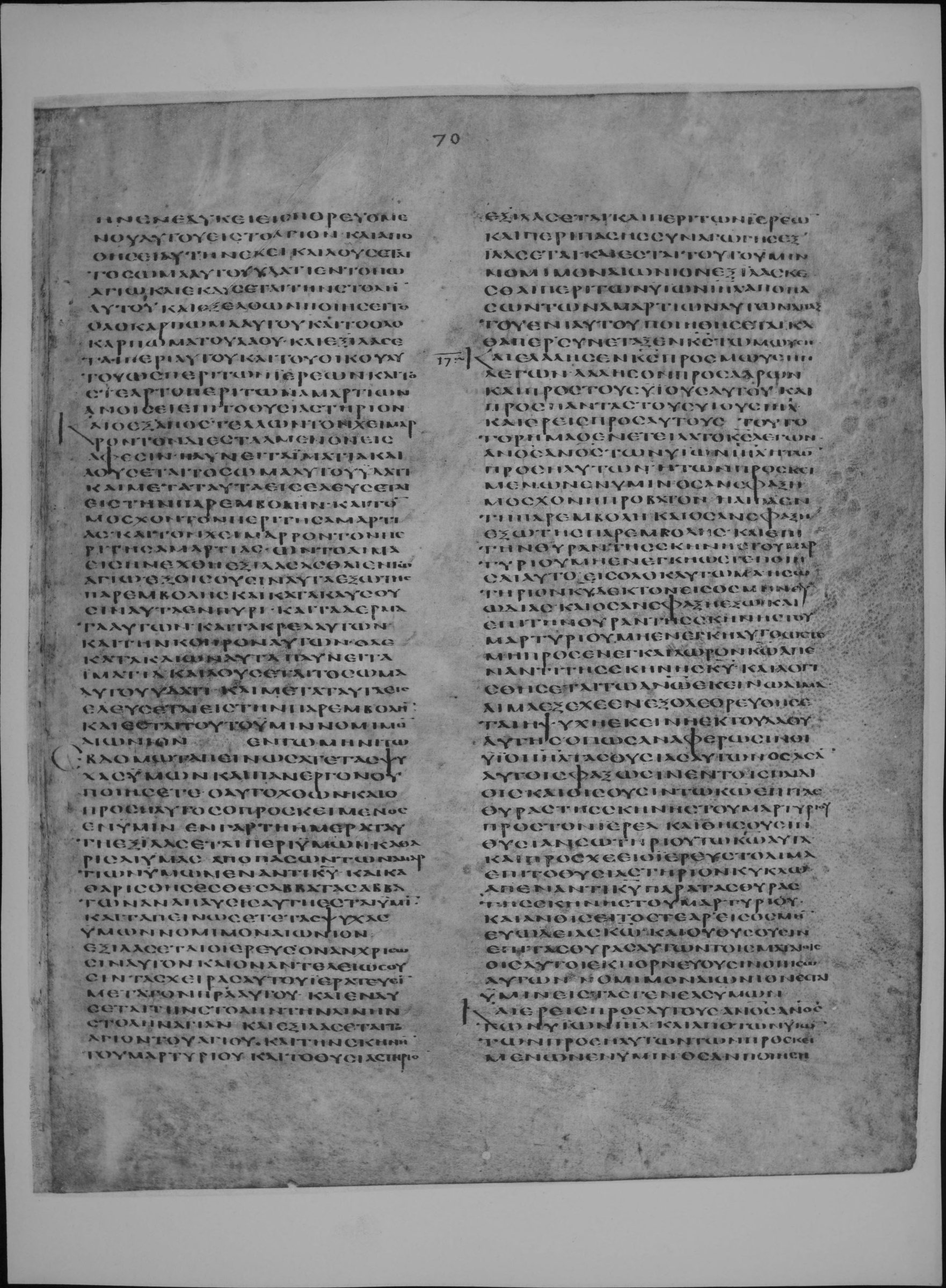
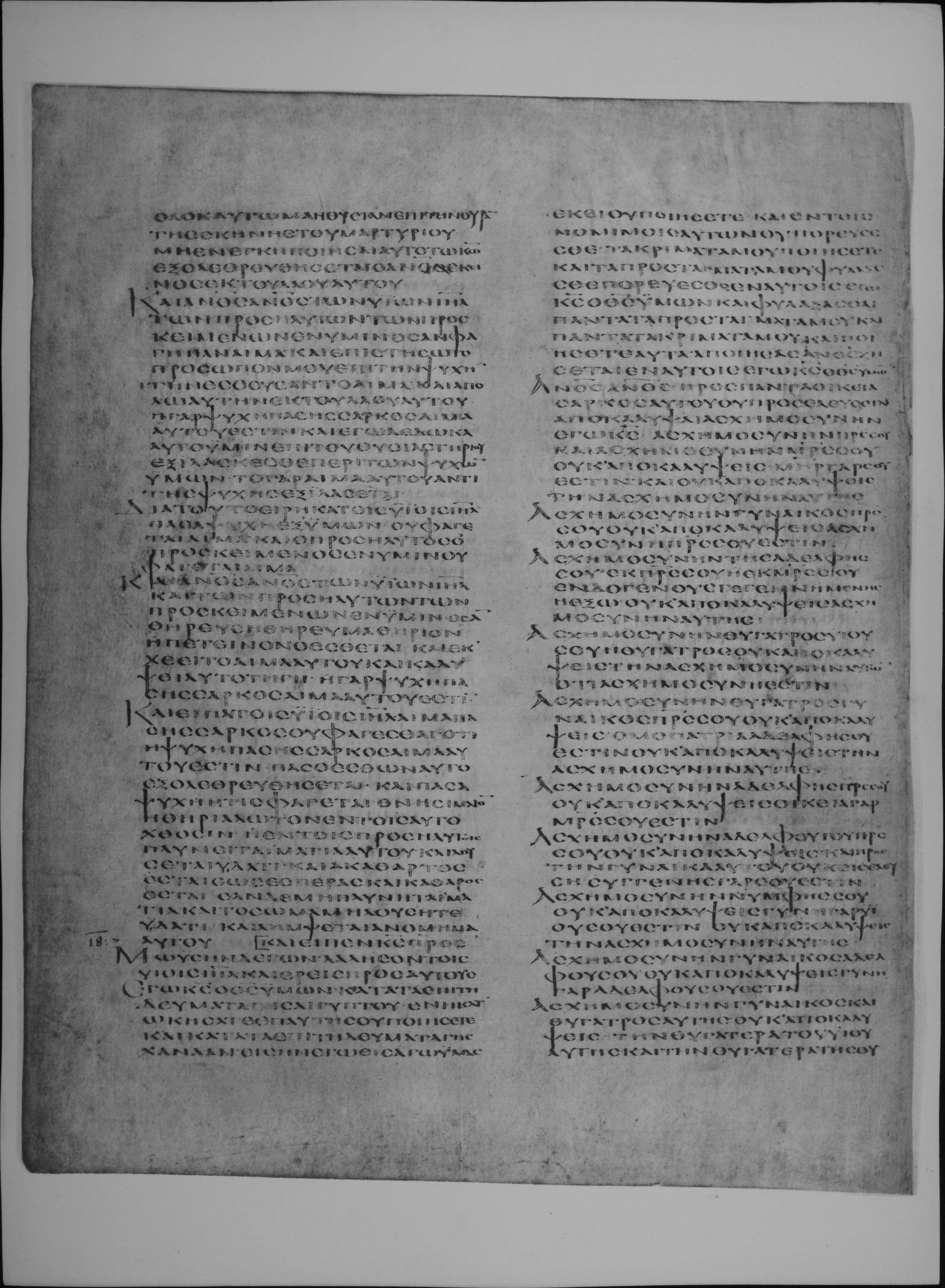
Leviticus 17 in the Greek Old Testament (the Septuagint) as written in Codex Alexandrinus, a Greek Bible copied in the fifth century, probably in Egypt, and now in the British Library (Royal MS 1 D. V, the first of its four volumes). It is one of the three great early codices of the whole Greek Bible, with Codex Vaticanus and Codex Sinaiticus, and for Genesis 1:1-46:28, which Codex Vaticanus has lost, it is the oldest surviving complete Greek text (older papyri such as the Berlin Genesis papyrus and Chester Beatty 961 survive only in part).
This entry meets the strict three-criteria standard of the Theosis Library:
- Manuscript scan: the pages of Codex Alexandrinus carrying this chapter (fol. 70r, fol. 70v), from the full-size photographic (autotype) facsimile published by the British Museum in 1879-1883, as digitised on the Internet Archive. The verse range of every page comes from the reduced photographic facsimile of 1915, which prints it beneath each plate, and the opening words of every page were read on the plate to confirm the page and the verse it begins with. Each section links to the page or pages that hold its verses. Folio numbers are those written at the head of each leaf and visible on the plates.
- Original text: Swete's edition, which here prints the text of Codex Vaticanus (Vat. gr. 1209), the base of his edition, and gives the readings of Alexandrinus only in his apparatus. The Greek column is therefore Vaticanus' text; where Alexandrinus differs, the plate shows what Alexandrinus reads.
- English translation: Sir Lancelot C. L. Brenton, The Septuagint Version of the Old Testament (1844; 1851 edition), a translation of the Greek, public domain, from the eBible.org text.
How was this verified? (Provenance)
Where on the image
Leviticus 17:1-8 is on fol. 70r (full-size facsimile of 1879-83, Internet Archive codex-alexandrinus leaf 160). The 1915 reduced facsimile prints beneath this page: Levit. xvi. 23-xvii. 8. Checked on the plate: the page begins inside Leviticus 16:23 (first words read: ΗΝ ΕΝΕΔΕΔΥΚΕΙ ΕΙΣΠΟΡΕΥΟΜΕΝΟΥ ΑΥΤΟΥ ΕΙΣ ΤΟ ΑΓΙΟΝ ΚΑΙ ΑΠΟΘΗΣΕΙ ΑΥΤΗΝ ΕΚΕΙ). Leviticus 17:8 is on fol. 70v (full-size facsimile of 1879-83, Internet Archive codex-alexandrinus leaf 161). The 1915 reduced facsimile prints beneath this page: Levit. xvii. 8-xviii. 17. Checked on the plate: the page begins inside Leviticus 17:8 (first words read: ΟΛΟΚΑΥΤΩΜΑ Η ΘΥΣΙΑΝ ΚΑΙ ΕΠΙ ΤΗΝ ΘΥΡΑΝ ΤΗΣ ΣΚΗΝΗΣ ΤΟΥ ΜΑΡΤΥΡΙΟΥ ΜΗ ΕΝΕΓΚΗ).
1Καὶ ἐλάλησεν Κύριος πρὸς Μωυσῆν λέγων 2Λάλησον πρὸς Ἀαρὼν καὶ πρὸς τοὺς υἱοὺς αὐτοῦ καὶ πρὸς πάντας υἱοὺς Ἰσραὴλ καὶ ἐρεῖς πρὸς αὐτούς Τοῦτο τὸ ῥῆμα ὃ ἐνετείλατο Κύριος λέγων 3Ἄνθρωπος ἄνθρωπος τῶν υἱῶν Ἰσραὴλ ἢ τῶν προσηλύτων ἢ τῶν προσκειμένων ἐν ὑμῖν ὃς ἂν σφάξῃ μόσχον ἢ πρόβατον ἢ αἶγα ἐν τῇ παρεμβολῇ καὶ ὃς ἂν σφάξῃ ἔξω τῆς παρεμβολῆς 4καὶ ἐπὶ τὴν θύραν τῆς σκηνῆς τοῦ μαρτυρίου μὴ ἐνέγκῃ ὥστε ποιῆσαι αὐτὸ εἰς ὁλοκαύτωμα ἢ σωτήριον Κυρίῳ δεκτὸν εἰς ὀσμὴν εὐωδίας, καὶ ὃς ἂν σφάξῃ ἔξω καὶ ἐπὶ τὴν θύραν τῆς σκηνῆς τοῦ μαρτυρίου μὴ ἐνέγκῃ αὐτὸ ὥστε μὴ προσενέγκαι δῶρον Κυρίῳ ἀπέναντι τῆς σκηνῆς Κυρίου, καὶ λογισθήσεται τῷ ἀνθρώπῳ ἐκείνῳ αἷμα· αἷμα ἐξέχεεν, ἐξολεθρευθήσεται ἡ ψυχὴ ἐκείνη ἐκ τοῦ λαοῦ αὐτῆς. 5ὅπως ἀναφέρωσιν οἱ υἱοὶ Ἰσραὴλ τὰς θυσίας αὐτῶν ὅσας ἂν αὐτοὶ σφάξουσιν ἐν τοῖς πεδίοις, καὶ οἴσουσιν τῷ κυρίῳ ἐπὶ τὰς θύρας τῆς σκηνῆς τοῦ μαρτυρίου πρὸς τὸν ἱερέα, καὶ θύσουσιν θυσίαν σωτηρίου τῷ κυρίῳ αὐτά· 6καὶ προσχεεῖ ὁ ἱερεὺς τὸ αἷμα ἐπὶ τὸ θυσιαστήριον κύκλῳ ἀπέναντι Κυρίου παρὰ τὰς θύρας τῆς σκηνῆς τοῦ μαρτυρίου, καὶ ἀνοίσει τὸ στέαρ εἰς ὀσμὴν εὐωδίας Κυρίῳ· 7καὶ οὐ θύσουσιν ἔτι τὰς θυσίας αὐτῶν τοῖς ματαίοις, οἷς αὐτοὶ ἐκπορνεύουσιν ὀπίσω αὐτῶν· νόμιμον αἰώνιον ἔσται ὑμῖν εἰς τὰς γενεὰς ὑμῶν. 8Καὶ ἐρεῖς πρὸς αὐτούς Ἄνθρωπος ἄνθρωπος τῶν υἱῶν Ἰσραὴλ καὶ ἀπὸ τῶν υἱῶν τῶν προσηλύτων τῶν προσκειμένων ἐν ὑμῖν ὃς ἂν ποιήσῃ ὁλοκαύτωμα ἢ θυσίαν
1And the Lord spoke to Moses, saying, 2Speak to Aaron and to his sons, and to all the children of Israel, and thou shalt say to them, This is the word which the Lord has commanded, saying, 3Every man of the children of Israel, or of the strangers abiding among you, who shall kill a calf, or a sheep, or a goat in the camp, or who shall kill it out of the camp, 4and shall not bring it to the door of the tabernacle of witness, so as to sacrifice it for a whole-burnt-offering or peace-offering to the Lord to be acceptable for a sweet-smelling savour: and whosoever shall slay it without, and shall not bring it to the door of the tabernacle of witness, so as to offer it as a gift to the Lord before the tabernacle of the Lord; blood shall be imputed to that man, he has shed blood; that soul shall be cut off from his people. 5That the children of Israel may offer their sacrifices, all that they shall slay in the fields, and bring them to the Lord unto the doors of the tabernacle of witness to the priest, and they shall sacrifice them as a peace-offering to the Lord. 6And the priest shall pour the blood on the altar round about before the Lord by the doors of the tabernacle of witness, and shall offer the fat for a sweet-smelling savour to the Lord. 7And they shall no longer offer their sacrifices to vain gods after which they go a whoring; it shall be a perpetual statute to you for your generations. 8And thou shalt say to them, Whatever man of the children of Israel, or of the sons of the proselytes abiding among you, shall offer a whole-burnt-offering or a sacrifice,
Where on the image
Leviticus 17:9-16 is on fol. 70v (full-size facsimile of 1879-83, Internet Archive codex-alexandrinus leaf 161). The 1915 reduced facsimile prints beneath this page: Levit. xvii. 8-xviii. 17. Checked on the plate: the page begins inside Leviticus 17:8 (first words read: ΟΛΟΚΑΥΤΩΜΑ Η ΘΥΣΙΑΝ ΚΑΙ ΕΠΙ ΤΗΝ ΘΥΡΑΝ ΤΗΣ ΣΚΗΝΗΣ ΤΟΥ ΜΑΡΤΥΡΙΟΥ ΜΗ ΕΝΕΓΚΗ).
9καὶ ἐπὶ τὴν θύραν τῆς σκηνῆς τοῦ μαρτυρίου μὴ ἐνέγκῃ ποιῆσαι αὐτὸ τῷ κυρίῳ, ἐξολεθρευθήσεται ὁ ἄνθρωπος ἐκεῖνος ἐκ τοῦ λαοῦ αὐτοῦ. 10Καὶ ἄνθρωπος ἄνθρωπος τῶν υἱῶν Ἰσραὴλ ἢ τῶν προσηλύτων τῶν προσκειμένων ἐν ὑμῖν ὃς ἂν φάγῃ πᾶν αἷμα, καὶ ἐπιστήσω τὸ πρόσωπόν μου ἐπὶ τὴν ψυχὴν τὴν ἔσθουσαν τὸ αἷμα καὶ ἀπολῶ αὐτὴν ἐκ τοῦ λαοῦ αὐτῆς. 11ἡ γὰρ ψυχὴ πάσης σαρκὸς αἷμα αὐτοῦ ἐστιν, καὶ ἐγὼ δέδωκα αὐτὸ ὑμῖν ἐπὶ τοῦ θυσιαστηρίου ἐξιλάσκεσθαι περὶ τῶν ψυχῶν ὑμῶν· τὸ γὰρ αἷμα αὐτοῦ ἀντὶ τῆς ψυχῆς ἐξιλάσεται. 12διὰ τοῦτο εἴρηκα τοῖς υἱοῖς Ἰσραήλ Πᾶσα ψυχὴ ἐξ ὑμῶν οὐ φὰγεται αἷμα, καὶ ὁ προσήλυτος ὁ προσκείμενος ἐν ὑμῖν οὐ φάγεται αἷμα. 13καὶ ἄνθρωπος ἄνθρωπος τῶν υἱῶν Ἰσραὴλ καὶ τῶν προσηλύτων τῶν προσκειμένων ἐν ὑμῖν ὃς ἂν θηρεύσῃ θήρευμα θηρίον ἢ πετεινὸν ὃ ἔσθεται, καὶ ἐκχεεῖ τὸ αἷμα καὶ καλύψει αὐτὸ τῇ γῇ· 14ἡ γὰρ ψυχὴ πάσης σαρκὸς αἷμα αὐτοῦ ἐστιν, καὶ εἶπα τοῖς υἱοῖς Ἰσραήλ Αἷμα πάσης σαρκὸς οὐ φάγεσθε, ὅτι ἡ ψυχὴ πάσης σαρκὸς αἷμα αὐτοῦ ἐστίν· πᾶς ὁ ἔσθων αὐτὸ ἐξολεθρευθήσεται. 15καὶ πᾶσα ψυχὴ ἥτις φάγεται θνησιμαῖον ἢ θηριάλωτον, ἐν τοῖς αὐτόχθοσιν ἢ ἐν τοῖς προσηλύτοις, πλυνεῖ τὰ ἱμάτια αὐτοῦ καὶ λούσεται ὕδατι, καὶ ἀκάθαρτος ἕως ἑσπέρας, καὶ καθαρὸς ἔσται. 16ἐὰν δὲ μὴ πλύνῃ τὰ ἱμάτια καὶ τὸ σῶμα μὴ λούσηται ὕδατι, καὶ λήμψεται ἀνόμημα αὐτοῦ.
9and shall not bring it to the door of the tabernacle of witness to sacrifice it to the Lord, that man shall be destroyed from among his people. 10And whatever man of the children of Israel, or of the strangers abiding among you, shall eat any blood, I will even set my face against that soul that eats blood, and will destroy it from its people. 11For the life of flesh is its blood, and I have given it to you on the altar to make atonement for your souls; for its blood shall make atonement for the soul. 12Therefore I said to the children of Israel, No soul of you shall eat blood, and the stranger that abides among you shall not eat blood. 13And whatever man of the children of Israel, or of the strangers abiding among you shall take any animal in hunting, beast, or bird, which is eaten, then shall he pour out the blood, and cover it in the dust. 14For the blood of all flesh is its life; and I said to the children of Israel, Ye shall not eat the blood of any flesh, for the life of all flesh is its blood: every one that eats it shall be destroyed. 15And every soul which eats that which has died of itself, or is taken of beasts, either among the natives or among the strangers, shall wash his garments, and bathe himself in water, and shall be unclean until evening: then shall he be clean. 16But if he do not wash his garments, and do not bathe his body in water, then shall he bear his iniquity.
Cite
Sources
- Source: Codex Alexandrinus (British Library Royal MS 1 D. V) via the British Museum photographic facsimiles of 1879-83 and 1915 (Internet Archive) + Swete's Septuagint + Brenton's English (holding institution)
- Critical edition: H. B. Swete, The Old Testament in Greek according to the Septuagint (1909)
← previous · → next · v cycle view · l back to library