Leviticus, Chapter 27 (Codex Alexandrinus)
Introduction
Leviticus 27 in the Greek Old Testament (the Septuagint) as written in Codex Alexandrinus, a Greek Bible copied in the fifth century, probably in Egypt, and now in the British Library (Royal MS 1 D. V, the first of its four volumes). It is one of the three great early codices of the whole Greek Bible, with Codex Vaticanus and Codex Sinaiticus, and for Genesis 1:1-46:28, which Codex Vaticanus has lost, it is the oldest surviving complete Greek text (older papyri such as the Berlin Genesis papyrus and Chester Beatty 961 survive only in part).
This entry meets the strict three-criteria standard of the Theosis Library:
- Manuscript scan: the pages of Codex Alexandrinus carrying this chapter (fol. 76v, fol. 77r, fol. 77v), from the full-size photographic (autotype) facsimile published by the British Museum in 1879-1883, as digitised on the Internet Archive. The verse range of every page comes from the reduced photographic facsimile of 1915, which prints it beneath each plate, and the opening words of every page were read on the plate to confirm the page and the verse it begins with. Each section links to the page or pages that hold its verses. Folio numbers are those written at the head of each leaf and visible on the plates.
- Original text: Swete's edition, which here prints the text of Codex Vaticanus (Vat. gr. 1209), the base of his edition, and gives the readings of Alexandrinus only in his apparatus. The Greek column is therefore Vaticanus' text; where Alexandrinus differs, the plate shows what Alexandrinus reads.
- English translation: Sir Lancelot C. L. Brenton, The Septuagint Version of the Old Testament (1844; 1851 edition), a translation of the Greek, public domain, from the eBible.org text.
How was this verified? (Provenance)
Where on the image
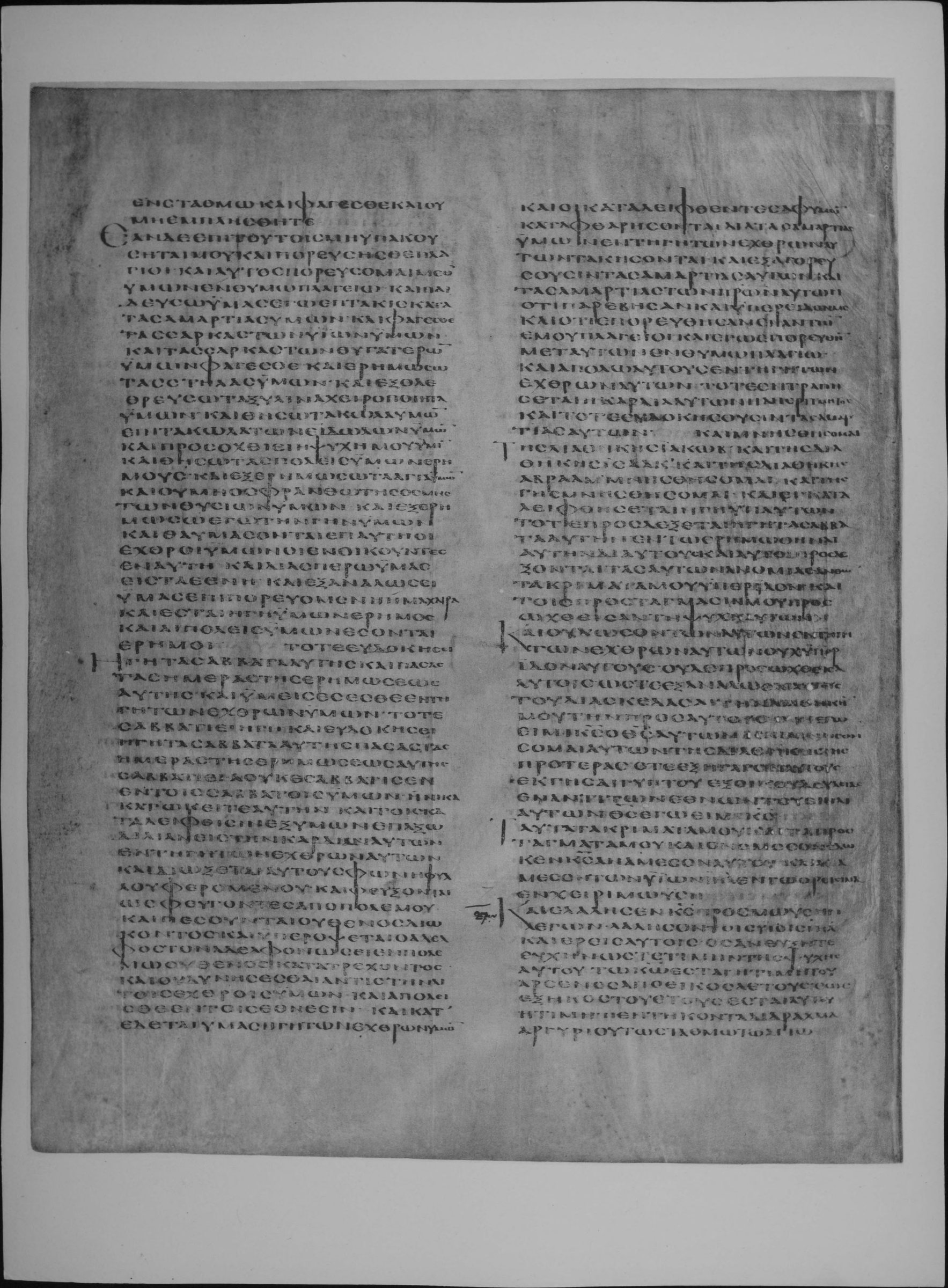
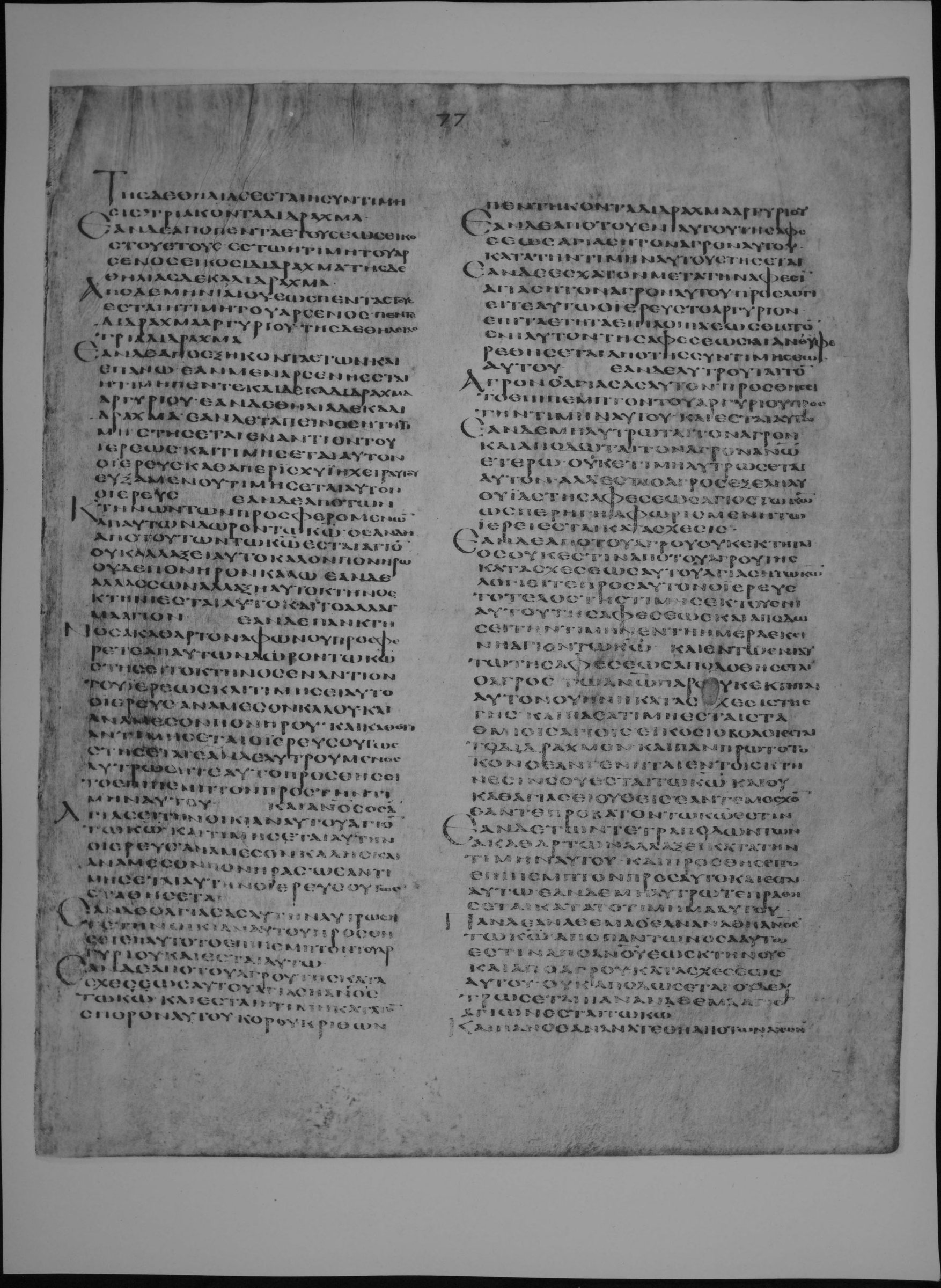
Leviticus 27:1-3 is on fol. 76v (full-size facsimile of 1879-83, Internet Archive codex-alexandrinus leaf 173). The 1915 reduced facsimile prints beneath this page: Levit. xxvi. 26-xxvii. 3. Checked on the plate: the page begins inside Leviticus 26:26 (first words read: ΕΝ ΣΤΑΘΜΩ ΚΑΙ ΦΑΓΕΣΘΕ ΚΑΙ ΟΥ ΜΗ ΕΜΠΛΗΣΘΗΤΕ ΕΑΝ ΔΕ ΕΠΙ ΤΟΥΤΟΙΣ ΜΗ ΥΠΑΚΟΥΣΗΤΕ ΜΟΥ). Leviticus 27:4-8 is on fol. 77r (full-size facsimile of 1879-83, Internet Archive codex-alexandrinus leaf 174). The 1915 reduced facsimile prints beneath this page: Levit. xxvii. 4-29. Checked on the plate: the page begins at the start of Leviticus 27:4 (first words read: ΤΗΣ ΔΕ ΘΗΛΕΙΑΣ ΕΣΤΑΙ Η ΣΥΝΤΙΜΗΣΙΣ ΤΡΙΑΚΟΝΤΑ ΔΙΔΡΑΧΜΑ).
1Καὶ ἐλάλησεν Κύριος πρὸς Μωυσῆν λέγων 2Λάλησον τοῖς υἱοῖς Ἰσραὴλ καὶ ἐρεῖς αὐτοῖς Ὃς ἂν εὔξηται εὐχὴν ὥστε τιμὴν τῆς ψυχῆς αὐτοῦ τῷ κυρίῳ, 3ἔσται ἡ τιμὴ τοῦ ἄρσενος ἀπὸ εἰκοσαετοῦς ἕως ἑξηκονταετοῦς, ἔσται αὐτοῦ ἡ τιμὴ πεντήκοντα δίδραχμα ἀργυρίου τῷ σταθμῷ τῷ ἁγίῳ· 4τῆς δὲ θηλείας ἔσται ἡ συντίμησις τριάκοντα δίδραχμα. 5ἐὰν δὲ ἀπὸ πενταετοῦς ἕως εἴκοσι ἐτῶν, ἔσται ἡ τιμὴ τοῦ ἄρσενος εἴκοσι δίδραχμα, τῆς δὲ θηλείας δέκα τέσσερα δίδραχμα. 6ἀπὸ δὲ μηνιαίου ἕως πενταετοῦς ἔσται ἡ τιμὴ τοῦ ἄρσενος πέντε δίδραχμα ἀργυρίου, τῆς δὲ θηλείας τρία δίδραχμα. 7ἐὰν δὲ ἀπὸ ἑξηκονταετῶν καὶ ἐπάνω, ἐὰν μὲν ἄρσεν ᾖ, ἔσται ἡ τιμὴ πέντε καὶ δέκα δίδραχμα ἀργυρίου, ἐὰν δὲ θήλεια, δέκα δίδραχμα. 8ἐὰν δὲ ταπεινὸς ᾖ τιμῇ, στήσεται ἐναντίον τοῦ ἱερέως, καὶ τιμήσεται αὐτὸν ὁ ἱερεύς· καθάπερ ἰσχύει ἡ χεὶρ τοῦ εὐξαμένου, τιμήσεται αὐτὸν ὁ ἱερεύς.
1And the Lord spoke to Moses, saying, 2Speak to the children of Israel, and thou shalt say to them, Whosoever shall vow a vow as the valuation of his soul for the Lord, 3the valuation of a male from twenty years old to sixty years old shall be—his valuation shall be fifty didrachms of silver by the standard of the sanctuary. 4And the valuation of a female shall be thirty didrachms. 5And if it be from five years old to twenty, the valuation of a male shall be twenty didrachms, and of a female ten didrachms. 6And from a month old to five years old, the valuation of a male shall be five didrachms, and of a female, three didrachms of silver. 7And if from sixty years old and upward, if it be a male, his valuation shall be fifteen didrachms of silver, and if a female, ten didrachms. 8And if the man be too poor for the valuation, he shall stand before the priest; and the priest shall value him: according to what the man who has vowed can afford, the priest shall value him.
Where on the image
Leviticus 27:9-16 is on fol. 77r (full-size facsimile of 1879-83, Internet Archive codex-alexandrinus leaf 174). The 1915 reduced facsimile prints beneath this page: Levit. xxvii. 4-29. Checked on the plate: the page begins at the start of Leviticus 27:4 (first words read: ΤΗΣ ΔΕ ΘΗΛΕΙΑΣ ΕΣΤΑΙ Η ΣΥΝΤΙΜΗΣΙΣ ΤΡΙΑΚΟΝΤΑ ΔΙΔΡΑΧΜΑ).
9Ἐὰν δὲ ἀπὸ τῶν κτηνῶν τῶν προσφερομένων ἀπ᾽ αὐτῶν δῶρον τῷ κυρίῳ, ὃς ἂν δῷ ἀπὸ τούτων τῷ κυρίῳ, ἔσται ἅγιον. 10οὐκ ἀλλάξει αὐτὸ καλὸν πονηρῷ οὐδὲ πονηρὸν καλῷ· ἐὰν δὲ ἀλλάσσων ἀλλάξῃ αὐτὸ κτῆνος κτήνει, ἔσται αὐτὸ καὶ τὸ ἄλλαγμα ἅγια. 11ἐὰν δὲ πᾶν κτῆνος ἀκάθαρτον, ἀφ᾽ ὧν οὐ προσφέρεται ἀπ᾽ αὐτῶν δῶρον τῷ κυρίῳ, στήσει τὸ κτῆνος ἔναντι τοῦ ἱερέως· 12καὶ τιμήσεται αὐτὸ ὁ ἱερεὺς ἀνὰ μέσον καλοῦ καὶ ἀνὰ μέσον πονηροῦ· καὶ καθότι ἂν τιμηθήσεται ὁ ἱερεύς, οὕτως στήσεται. 13ἐὰν δὲ λυτρούμενος λυτρώσηται αὐτόν, προσθήσει τὸ ἐπίπεμπτον πρὸς τὴν τιμὴν αὐτοῦ. 14Καὶ ἄνθρωπος ὃς ἂν ἁγιάσῃ τὴν οἰκίαν αὐτοῦ ἁγίαν τῷ κυρίῳ, καὶ τιμήσεται αὐτὴν ὁ ἱερεὺς ἀνὰ μέσον καλῆς καὶ ἀνὰ μέσον πονηρᾶς· ὡς ἂν τιμήσεται αὐτὴν ὁ ἱερεύς, οὕτως σταθήσεται. 15ἐὰν δὲ ὁ ἁγιάσας αὐτὴν λυτρῶται τὴν οἰκίαν αὐτοῦ, προσθήσει ἐπ᾽ αὐτὸ τὸ ἐπίπεμπτον τοῦ ἀργυρίου τῆς τιμῆς, καὶ ἔσται αὐτῷ. 16Ἐὰν δὲ ἀπὸ τοῦ ἀγροῦ τῆς κατασχέσεως αὐτοῦ ἁγιάσῃ ἄνθρωπος τῷ κυρίῳ, καὶ ἔσται ἡ τιμὴ κατὰ τὸν σπόρον αὐτοῦ, κόρου κριθῶν πεντήκοντα δίδραχμα ἀργυρίου.
9And if it be from the cattle that are offered as a gift to the Lord, whoever shall offer one of these to the Lord, it shall be holy. 10He shall not change it, a good for a bad, or a bad for a good; and if he do at all change it, a beast for a beast, it and the substitute shall be holy. 11And if it be any unclean beast, of which none are offered as a gift to the Lord, he shall set the beast before the priest. 12And the priest shall make a valuation between the good and the bad, and accordingly as the priest shall value it, so shall it stand. 13And if the worshipper will at all redeem it, he shall add the fifth part to its value. 14And whatsoever man shall consecrate his house as holy to the Lord, the priest shall make a valuation of it between the good and the bad: as the priest shall value it, so shall it stand. 15And if he that has sanctified it should redeem his house, he shall add to it the fifth part of the money of the valuation, and it shall be his. 16And if a man should hallow to the Lord a part of the field of his possession, then the valuation shall be according to its seed, fifty didrachms of silver for a homer of barley.
Where on the image
Leviticus 27:17-24 is on fol. 77r (full-size facsimile of 1879-83, Internet Archive codex-alexandrinus leaf 174). The 1915 reduced facsimile prints beneath this page: Levit. xxvii. 4-29. Checked on the plate: the page begins at the start of Leviticus 27:4 (first words read: ΤΗΣ ΔΕ ΘΗΛΕΙΑΣ ΕΣΤΑΙ Η ΣΥΝΤΙΜΗΣΙΣ ΤΡΙΑΚΟΝΤΑ ΔΙΔΡΑΧΜΑ).
17ἐὰν δὲ ἀπὸ τοῦ ἐνιαυτοῦ τῆς ἀφέσεως ἁγιάσῃ τὸν ἀγρὸν αὐτοῦ, κατὰ τὴν τιμὴν αὐτοῦ στήσεται. 18ἐὰν δὲ ἔσχατον μετὰ τὴν ἄφεσιν ἁγιάσῃ τὸν ἀγρὸν αὐτοῦ, προσλογιεῖται αὐτῷ ὁ ἱερεὺς τὸ ἀργύριον ἐπὶ τὰ ἔτη τὰ ἐπίλοιπα ἕως εἰς τὸν ἐνιαυτὸν τῆς ἀφέσεως, καὶ ἀνθυφαιρεθήσεται ἀπὸ τῆς συντιμήσεως αὐτοῦ. 19ἐὰν δὲ λυτρῶται τὸν ἀγρὸν ὁ ἀγοράσας αὐτόν, προσθήσει τὸ ἐπίπεμπτον τοῦ ἀργυρίου πρὸς τὴν τιμὴν αὐτοῦ, καὶ ἔσται αὐτῷ. 20ἐὰν δὲ μὴ λυτρῶται τὸν ἀγρόν, καὶ ἀποδῶται τὸν ἀγρὸν ἀνθρώπῳ ἑτέρῳ, οὐκέτι μὴ λυτρώσηται αὐτόν· 21ἀλλ᾽ ἔσται ὁ ἀγρὸς ἐξεληλυθυίας τῆς ἀφέσεως ἅγιος τῷ κυρίῳ ὥσπερ ἡ γῆ ἡ ἀφωρισμένη· τῷ ἱερεῖ ἔσται κατάσχεσις. 22ἐὰν δὲ ἀπὸ τοῦ ἀγροῦ οὗ κέκτηται, ὃς οὐκ ἔστιν ἀπὸ τοῦ ἀγροῦ τῆς κατασχέσεως αὐτοῦ, ἁγιάσει τῷ κυρίῳ, 23λογιεῖται πρὸς αὐτὸν ὁ ἱερεὺς τὸ τέλος τῆς τιμῆς ἐκ τοῦ ἐνιαυτοῦ τῆς ἀφέσεως, καὶ ἀποδώσει τὴν τιμὴν ἐν τῇ ἡμέρᾳ ἐκείνῃ ἅγιον τῷ κυρίῳ· 24καὶ ἐν τῷ ἐνιαυτῷ τῆς ἀφέσεως ἀποδοθήσεται ὁ ἀγρὸς τῷ ἀνθρώπῳ παρ᾽ οὗ κέκτηται αὐτόν, οὗ ἦν ἡ κατάσχεσις τῆς γῆς.
17And if he should sanctify his field from the year of release, it shall stand according to his valuation. 18And if he should sanctify his field in the latter time after the release, the priest shall reckon to him the money for the remaining years, until the next year of release, and it shall be deducted as an equivalent from his full valuation. 19And if he that sanctified the field would redeem it, he shall add to its value the fifth part of the money, and it shall be his. 20And if he do not redeem the field, but should sell the field to another man, he shall not after redeem it. 21But the field shall be holy to the Lord after the release, as separated land; the priest shall have possession of it. 22And if he should consecrate to the Lord of a field which he has bought, which is not of the field of his possession, 23the priest shall reckon to him the full valuation from the year of release, and he shall pay the valuation in that day as holy to the Lord. 24And in the year of release the land shall be restored to the man of whom the other bought it, whose the possession of the land was.
Where on the image
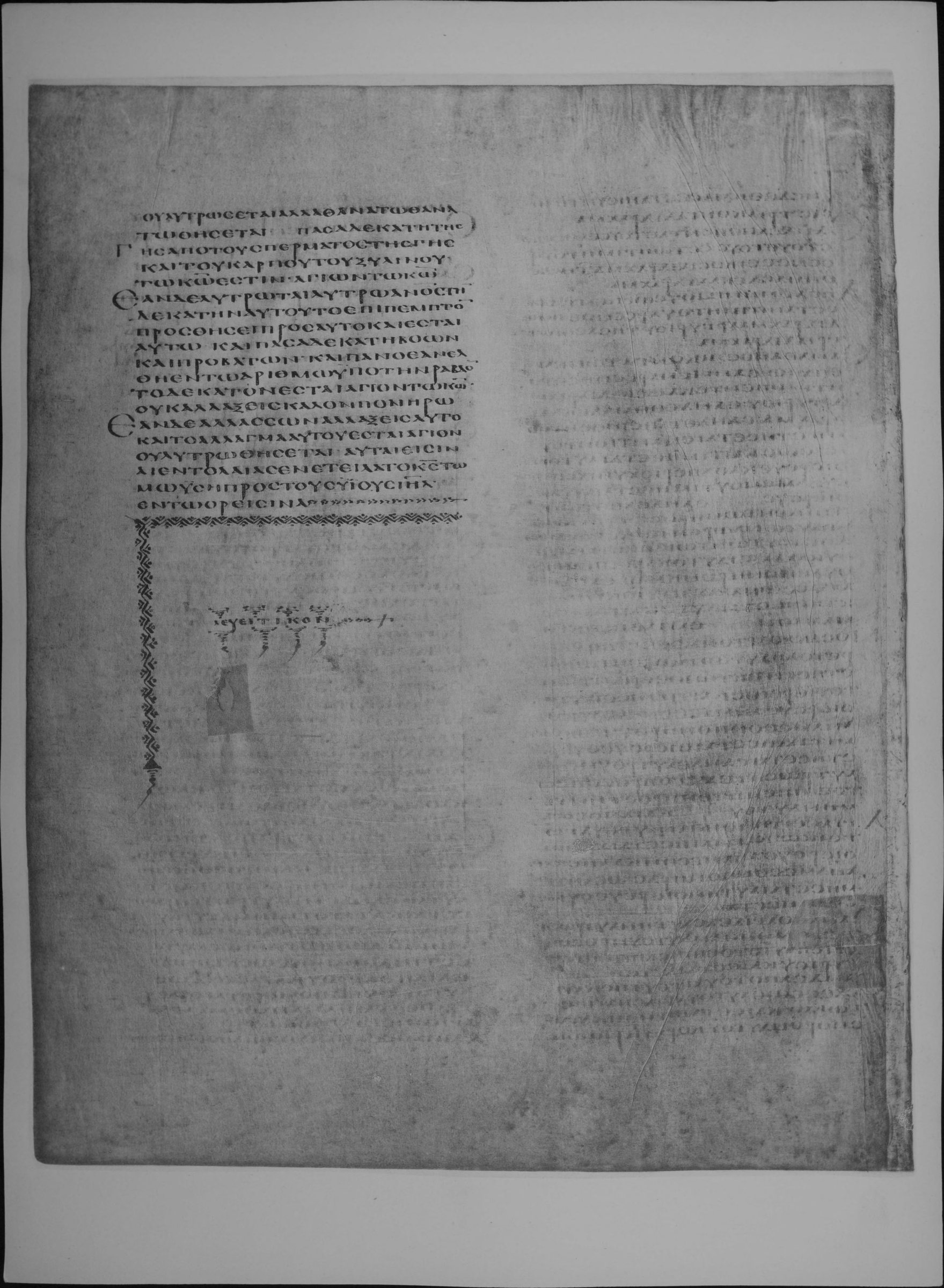
Leviticus 27:25-29 is on fol. 77r (full-size facsimile of 1879-83, Internet Archive codex-alexandrinus leaf 174). The 1915 reduced facsimile prints beneath this page: Levit. xxvii. 4-29. Checked on the plate: the page begins at the start of Leviticus 27:4 (first words read: ΤΗΣ ΔΕ ΘΗΛΕΙΑΣ ΕΣΤΑΙ Η ΣΥΝΤΙΜΗΣΙΣ ΤΡΙΑΚΟΝΤΑ ΔΙΔΡΑΧΜΑ). Leviticus 27:29-34 is on fol. 77v (full-size facsimile of 1879-83, Internet Archive codex-alexandrinus leaf 175). The 1915 reduced facsimile prints beneath this page: Levit. xxvii. 29-34. Checked on the plate: the page begins inside Leviticus 27:29 (first words read: ΟΥ ΛΥΤΡΩΘΗΣΕΤΑΙ ΑΛΛΑ ΘΑΝΑΤΩ ΘΑΝΑΤΩΘΗΣΕΤΑΙ ΠΑΣΑ ΔΕΚΑΤΗ ΤΗΣ ΓΗΣ).
25καὶ πᾶσα τιμὴ ἔσται σταθμίοις ἁγίοις· εἴκοσι ὀβολοὶ ἔσται τὸ δίδραχμον. 26Καὶ πᾶν πρωτότοκον ὃ ἂν γένηται ἐν τοῖς κτήνεσίν σου ἔσται τῷ κυρίῳ, καὶ οὐ καθαγιάσει οὐθεὶς αὐτό, ἐάν τε μόσχον ἐάν τε πρόβατον· τῷ κυρίῳ ἐστίν. 27ἐὰν δὲ τῶν τετραπόδων τῶν ἀκαθάρτων, ἀλλάξει κατὰ τὴν τιμὴν αὐτοῦ καὶ προσθήσει τὸ ἐπίπεμπτον πρὸς αὐτό, καὶ ἔσται αὐτῷ· ἐὰν δὲ μὴ λυτρῶται, πραθήσεται κατὰ τὸ τίμημα αὐτοῦ. 28Πᾶν δὲ ἀνάθεμα ὃ ἐὰν ἀναθῇ ἄνθρωπος τῷ κυρίῳ ἀπὸ πάντων ὅσα αὐτῷ ἐστιν, ἀπὸ ἀνθρώπου ἕως κτήνους, καὶ ἀπὸ ἀγροῦ κατασχέσεως αὐτοῦ, οὐκ ἀποδώσεται οὐδὲ λυτρώσεται· πᾶν ἀνάθεμα ἅγιον ἁγίων ἔσται τῷ κυρίῳ. 29καὶ πᾶν ὃ ἐὰν ἀνατεθῇ ἀπὸ τῶν ἀνθρώπων οὐ λυτρωθήσεται, ἀλλὰ θανάτῳ θανατωθήσεται. 30Πᾶσα δεκάτη τῆς γῆς, ἀπὸ τοῦ σπέρματος τῆς γῆς καὶ τοῦ καρποῦ τοῦ ξυλίνου, τῷ κυρίῳ ἐστίν· ἅγιον τῷ κυρίῳ. 31ἐὰν δὲ λυτρῶται λύτρῳ ἄνθρωπος τὴν δεκάτην αὐτοῦ, τὸ ἐπίπεμπτον προσθήσει πρὸς αὐτό, καὶ ἔσται αὐτῷ. 32καὶ πᾶσα δεκάτη βοῶν καὶ προβάτων, καὶ πᾶν ὃ ἐὰν ἔλθῃ ἐν τῷ ἀριθμῷ ὑπὸ τὴν ῥάβδον, τὸ δέκατον ἔσται ἅγιον τῷ κυρίῳ. 33οὐκ ἀλλάξεις καλὸν πονηρῷ· ἐὰν δὲ ἀλλάσσων ἀλλάξῃς αὐτό, καὶ τὸ ἄλλαγμα αὐτοῦ ἔσται ἅγιον· οὐ λυτρωθήσεται. 34Αὗταί εἰσιν αἱ ἐντολαὶ ἃς ἐνετείλατο Κύριος τῷ Μωυσῇ πρὸς τοὺς υἱοὺς Ἰσραὴλ ἐν τῷ ὄρει Σεινά.
25And every valuation shall be by holy weights: the didrachm shall be twenty oboli. 26And every first-born which shall be produced among thy cattle shall be the Lord's, and no man shall sanctify it: whether calf or sheep, it is the Lord's. 27But if he should redeem an unclean beast, according to its valuation, then he shall add the fifth part to it, and it shall be his; and if he redeem it not, it shall be sold according to its valuation. 28And every dedicated thing which a man shall dedicate to the Lord of all that he has, whether man or beast, or of the field of his possession, he shall not sell it, nor redeem it: every devoted thing shall be most holy to the Lord. 29And whatever shall be dedicated of men, shall not be ransomed, but shall be surely put to death. 30Every tithe of the land, both of the seed of the land, and of the fruit of trees, is the Lord's, holy to the Lord. 31And if a man should at all redeem his tithe, he shall add the fifth part to it, and it shall be his. 32And every tithe of oxen, and of sheep, and whatsoever may come in numbering under the rod, the tenth shall be holy to the Lord. 33Thou shalt not change a good for a bad, or a bad for a good; and if thou shouldest at all change it, its equivalent also shall be holy, it shall not be redeemed. 34These are the commandments which the Lord commanded Moses for the sons of Israel in mount Sina.
Cite
Sources
- Source: Codex Alexandrinus (British Library Royal MS 1 D. V) via the British Museum photographic facsimiles of 1879-83 and 1915 (Internet Archive) + Swete's Septuagint + Brenton's English (holding institution)
- Critical edition: H. B. Swete, The Old Testament in Greek according to the Septuagint (1909)
← previous · → next · v cycle view · l back to library