2 Esdras (Nehemiah), Chapter 4 (Codex Alexandrinus)
Introduction
2 Esdras (Nehemiah) 4 in the Greek Old Testament (the Septuagint) as written in Codex Alexandrinus, a Greek Bible copied in the fifth century, probably in Egypt, and now in the British Library (Royal MS 1 D. VI, the second of its four volumes). It is one of the three great early codices of the whole Greek Bible, with Codex Vaticanus and Codex Sinaiticus.
2 Esdras: the Septuagint gives Ezra and Nehemiah as one book, 2 Esdras (Esdras B); its chapters 11-23 are the book of Nehemiah. This entry uses Nehemiah's chapter numbers, as the digital Swete text does (2 Esdras 11 = Nehemiah 1, and so on); the captions of the 1957 facsimile give both.
Numbering: Swete's Greek and Brenton's English number or divide some verses of this chapter differently (Swete 4:4-5 = Brenton 4:4; Swete 4:6 = Brenton 4:5). Each column keeps its own verse numbers, and sections are cut only where the two texts agree, so each section holds the same passage in both languages.
This entry meets the strict three-criteria standard of the Theosis Library:
- Manuscript scan: the pages of Codex Alexandrinus carrying this chapter (fol. 454v, fol. 455r), from the full-size photographic (autotype) facsimile published by the British Museum in 1879-1883, as digitised on the Internet Archive. The verse range of every page comes from the reduced photographic facsimile of 1957, which prints it beneath each plate, and the opening words of every page were read on the plate to confirm the page and the verse it begins with. Each section links to the page or pages that hold its verses. Folio numbers are those written at the head of each leaf and visible on the plates.
- Original text: Swete's edition, which here prints the text of Codex Vaticanus (Vat. gr. 1209), the base of his edition, and gives the readings of Alexandrinus only in his apparatus. The Greek column is therefore Vaticanus' text; where Alexandrinus differs, the plate shows what Alexandrinus reads.
- English translation: Sir Lancelot C. L. Brenton, The Septuagint Version of the Old Testament (1844; 1851 edition), a translation of the Greek, public domain, from the eBible.org text.
How was this verified? (Provenance)
Where on the image
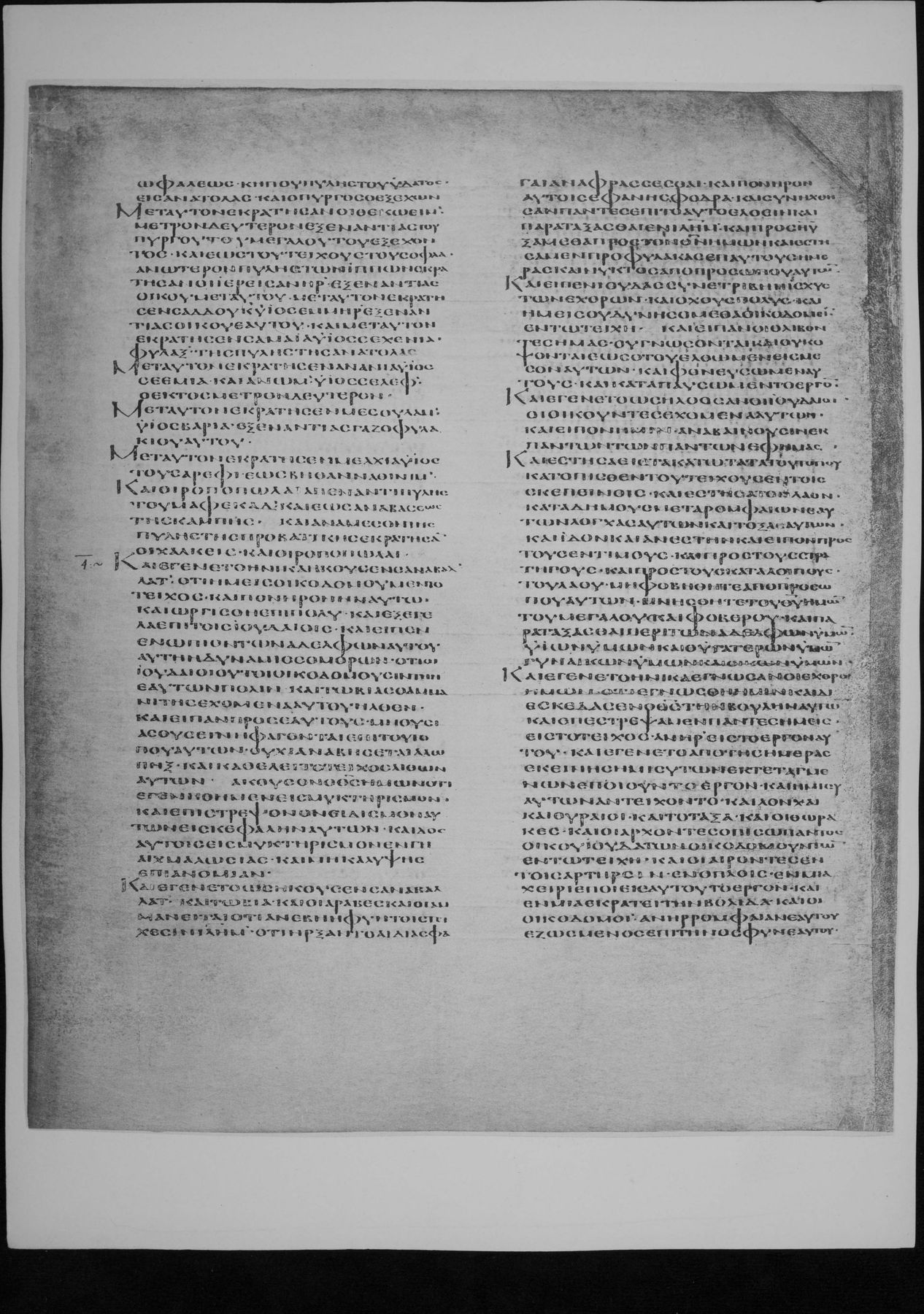
2 Esdras (Nehemiah) 4:1-8 is on fol. 454v (full-size facsimile of 1879-83, Internet Archive codex-alexandrinus leaf 933). The 1957 reduced facsimile prints beneath this page: 2 Esdras xiii. 26-xiv. 18 (Nehemiah iii. 26-iv. 12). Checked on the plate: the page begins inside 2 Esdras (Nehemiah) 3:26 (first words read: ΩΦΑΛΕΩΣ ΚΗΠΟΥ ΠΥΛΗΣ ΤΟΥ ΥΔΑΤΟΣ ΕΙΣ ΑΝΑΤΟΛΑΣ ΚΑΙ Ο ΠΥΡΓΟΣ Ο ΕΞΕΧΩΝ).
1Καὶ ἐγένετο ἡνίκα ἤκουσεν Ἀναβαλλὰτ ὅτι ἡμεῖς οἰκοδομοῦμεν τὸ τεῖχος, καὶ πονηρὸν αὐτῷ ἐφάνη, καὶ ὠργίσθη ἐπὶ πολύ, καὶ ἐξεγέλα ἐπὶ τοῖς Ἰουδαίοις. 2καὶ εἶπεν ἐνώπιον τῶν ἀδελφῶν αὐτοῦ Αὕτη ἡ δύναμις Σομορών, ὅτι οἱ Ἰουδαῖοι οὗτοι οἰκοδομοῦσιν τὴν ἑαυτῶν πόλιν; 3καὶ Τωβίας ὁ Ἀμμανείτης ἐχόμενα αὐτοῦ ἦλθεν· καὶ εἶπαν πρὸς ἑαυτούς Μὴ θυσιάσουσιν ἢ φάγονται ἐπὶ τοῦ τόπου αὐτῶν; οὐχὶ ἀναβήσεται ἀλώπηξ καὶ καθελεῖ τὸ τεῖχος λίθων αὐτῶν; 4ἄκουσον ὁ θεὸς ἡμῶν, ὅτι ἐγενήθημεν εἰς μυκτηρισμόν, 5καὶ ἐπίστρεψον ὀνειδισμὸν αὐτῶν εἰς κεφαλὴν αὐτῶν, καὶ δὸς αὐτοὺς εἰς μυκτηρισμὸν ἐν γῇ αἰχμαλωσίας, 6καὶ μὴ καλύψῃς ἐπὶ ἀνομίαν. 7Καὶ ἐγένετο ὡς ἤκουσεν Σαναβαλλὰτ καὶ Τωβιὰ καὶ οἱ Ἄραβες καὶ οἱ Ἀμμανεῖται ὅτι ἀνέβη ἡ φυὴ τοῖς τείχεσιν Ἰερουσαλήμ, ὅτι ἤρξαντο αἱ διασφαγαὶ ἀναφράσσεσθαι, καὶ πονηρὸν αὐτοῖς ἐφάνη σφόδρα. 8καὶ συνήχθησαν πάντες ἐπὶ τὸ αὐτὸ ἐλθεῖν παρατάξασθαι ἐν Ἰερουσαλήμ.
1Now it came to pass, when Sanaballat heard that we were building the wall, that it was grievous to him, and he was very angry, and railed against the Jews. 2And he said before his brethren (that is the army of the Samaritans) Is it true that these Jews are building their city? do they indeed offer sacrifices? will they prevail? and will they this day restore the stones, after they have been burnt and made a heap of rubbish? 3And Tobias the Ammanite came near to him, and said to them, Do they sacrifice or eat in their place? shall not a fox go up and pull down their wall of stones? 4Hear, O our God, for we have become a scorn; and return thou their reproach upon their head, and make them a scorn in a land of captivity, 5and do not cover their iniquity. 7But it came to pass, when Sanaballat and Tobia, and the Arabians, and the Ammanites, heard that the building of the walls of Jerusalem was advancing, and that the breaches began to be stopped, that it appeared very grievous to them. 8And all of them assembled together, to come to fight against Jerusalem, and to destroy it utterly.
Where on the image
2 Esdras (Nehemiah) 4:9-16 is on fol. 454v (full-size facsimile of 1879-83, Internet Archive codex-alexandrinus leaf 933). The 1957 reduced facsimile prints beneath this page: 2 Esdras xiii. 26-xiv. 18 (Nehemiah iii. 26-iv. 12). Checked on the plate: the page begins inside 2 Esdras (Nehemiah) 3:26 (first words read: ΩΦΑΛΕΩΣ ΚΗΠΟΥ ΠΥΛΗΣ ΤΟΥ ΥΔΑΤΟΣ ΕΙΣ ΑΝΑΤΟΛΑΣ ΚΑΙ Ο ΠΥΡΓΟΣ Ο ΕΞΕΧΩΝ).
9καὶ προσηυξάμεθα πρὸς τὸν θεὸν ἡμῶν, καὶ ἐστήσαμεν προφύλακας ἐπ᾽ αὐτοὺς ἡμέρας καὶ νυκτὸς ἀπὸ προσώπου αὐτῶν. 10καὶ εἶπεν Ἰούδας Συνετρίβη ἡ ἰσχὺς τῶν ἐχθρῶν, καὶ ὄχλος πολύς, καὶ ἡμεῖς οὐ δυνησόμεθα οἰκοδομεῖν ἐν τῷ τείχει. 11καὶ εἶπαν οἱ θλίβοντες ἡμᾶς Οὐ γνώσονται καὶ οὐκ ὄψονται ἕως ὅτου ἔλθωμεν εἰς μέσον αὐτῶν καὶ φονεύσωμεν αὐτοὺς καὶ καταπαύσωμεν τὸ ἔργον. 12καὶ ἐγένετο ὡς ἤλθοσαν οἱ Ἰουδαῖοι οἱ οἰκοῦντες ἐχόμενα αὐτῶν, καὶ εἴποσαν ἡμῖν Ἀναβαίνουσιν ἐκ πάντων τῶν τόπων ἐφ᾽ ἡμᾶς· 13καὶ ἔστησα εἰς τὰ κατώτατα τοῦ τόπου κατόπισθεν τοῦ τείχους ἐν τοῖς σκεπεινοῖς, καὶ ἔστησα τὸν λαὸν κατὰ δήμους μετὰ ῥομφαιῶν αὐτῶν, λόγχας αὐτῶν καὶ τόξα αὐτῶν. 14καὶ εἶδον, καὶ ἀνέστην καὶ εἶπα πρὸς τοὺς ἐντίμους καὶ πρὸς τοὺς καταλοίπους τοῦ λαοῦ Μὴ φοβηθῆτε ἀπὸ προσώπου αὐτῶν· μνήσθητε τοῦ θεοῦ ἡμῶν τοῦ μεγάλου καὶ φοβεροῦ, καὶ παρατάξασθε περὶ τῶν ἀδελφῶν ὑμῶν, υἱῶν ὑμῶν, θυγατέρων ὑμῶν, γυναικῶν ὑμῶν καὶ οἴκων ὑμῶν. 15καὶ ἐγένετο ἡνίκα ἤκουσαν οἱ ἐχθροὶ ἡμῶν ὅτι ἐγνώσθη ἡμῖν, καὶ διεσκέδασεν ὁ θεὸς τὴν βουλὴν αὐτῶν· καὶ ἐπεστρέψαμεν πάντες ἡμεῖς εἰς τὸ τεῖχος, ἀνὴρ εἰς τὸ ἔργον αὐτοῦ. 16καὶ ἐγένετο ἀπὸ τῆς ἡμέρας ἐκείνης ἥμισυ τῶν ἐκτετιναγμένων ἐποίουν τὸ ἔργον, καὶ ἥμισυ αὐτῶν ἀντείχοντο, καὶ λόγχαι καὶ θυρεοὶ καὶ τὰ τόξα καὶ οἱ θώρακες καὶ οἱ ἄρχοντες ὀπίσω παντὸς οἴκου Ἰούδα
9So we prayed to our God and set watchmen against them day and night, because of them. 10And Juda said, The strength of the enemies is broken, yet there is much rubbish, and we shall not be able to build the wall. 11And they that afflicted us said, They shall not know, and they shall not see, until we come into the midst of them, and slay them, and cause the work to cease. 12And it came to pass, when the Jews who lived near them came, that they said to us, They are coming up against us from every quarter. 13So I set men in the lowest part of the place behind the wall in the lurking-places, I even set the people according to their families, with their swords, their spears, and their bows. 14And I looked, and arose, and said to the nobles, and to the captains, and to the rest of the people, Be not afraid of them: remember our great and terrible God, and fight for your brethren, your sons, your daughters, your wives, and your houses. 15And it came to pass, when our enemies heard that it was made known to us, and God had frustrated their counsel, that we all returned to the wall, every man to his work. 16And it came to pass from that day that half of them that had been driven forth, wrought the work, and half of them kept guard; and there were spears, and shields, and bows, and breast-plates, and rulers behind the whole house of Juda,
Where on the image
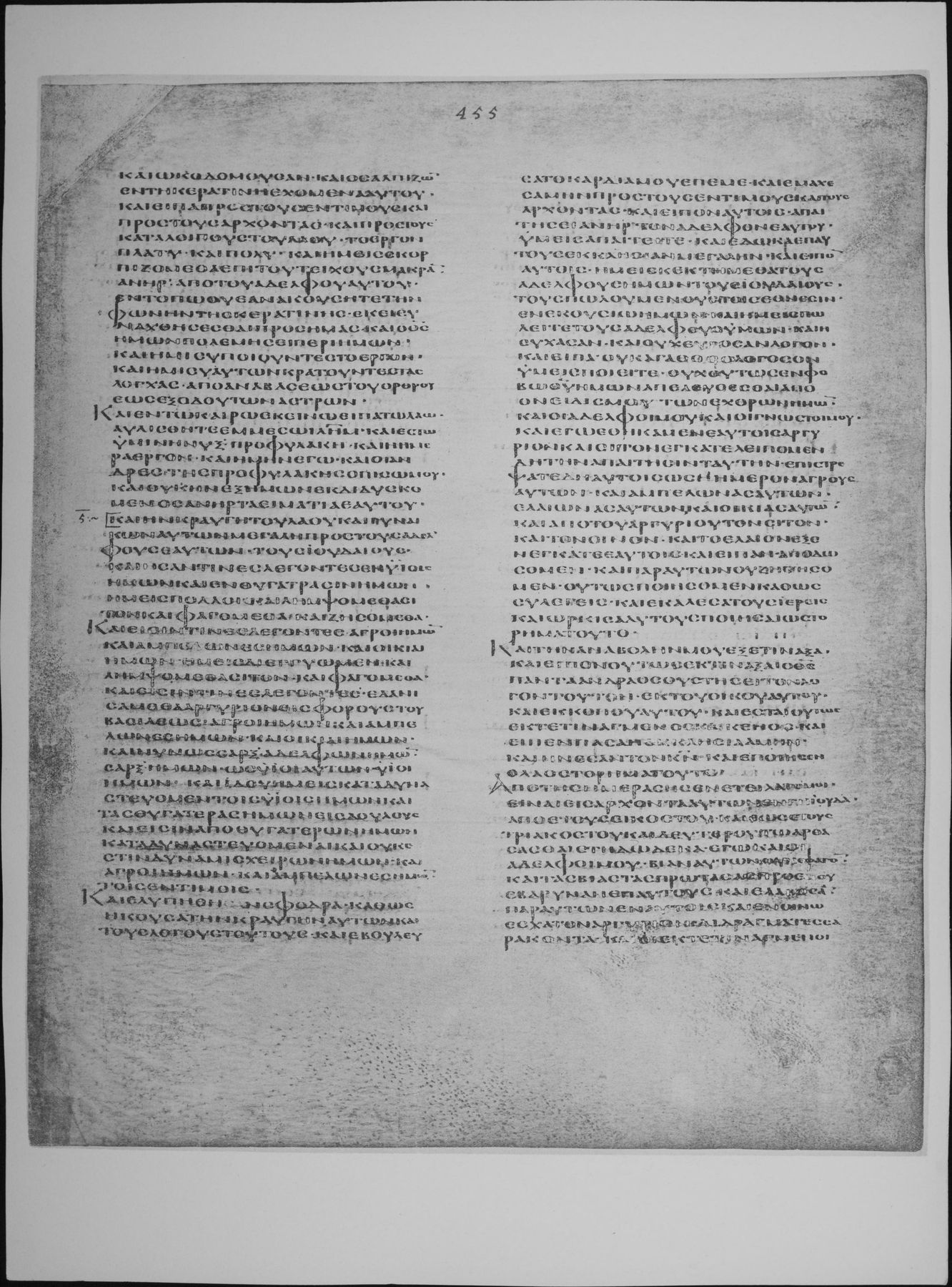
2 Esdras (Nehemiah) 4:17-18 is on fol. 454v (full-size facsimile of 1879-83, Internet Archive codex-alexandrinus leaf 933). The 1957 reduced facsimile prints beneath this page: 2 Esdras xiii. 26-xiv. 18 (Nehemiah iii. 26-iv. 12). Checked on the plate: the page begins inside 2 Esdras (Nehemiah) 3:26 (first words read: ΩΦΑΛΕΩΣ ΚΗΠΟΥ ΠΥΛΗΣ ΤΟΥ ΥΔΑΤΟΣ ΕΙΣ ΑΝΑΤΟΛΑΣ ΚΑΙ Ο ΠΥΡΓΟΣ Ο ΕΞΕΧΩΝ). 2 Esdras (Nehemiah) 4:18-23 is on fol. 455r (full-size facsimile of 1879-83, Internet Archive codex-alexandrinus leaf 934). The 1957 reduced facsimile prints beneath this page: 2 Esdras xiv. 18-xv. 15 (Nehemiah iv. 12-v. 15). Checked on the plate: the page begins inside 2 Esdras (Nehemiah) 4:18 (first words read: ΚΑΙ ΟΙ ΟΙΚΟΔΟΜΟΥΝΤΕΣ ΚΑΙ Ο ΣΑΛΠΙΖΩΝ ΕΝ ΤΗ ΚΕΡΑΤΙΝΗ ΕΧΟΜΕΝΑ ΑΥΤΟΥ).
17τῶν οἰκοδομούντων ἐν τῷ τείχει. καὶ οἱ αἴροντες ἐν τοῖς ἀρτῆρσιν ἐν ὅπλοις· ἐν μιᾷ χειρὶ ἐποίει αὐτὸ τὸ ἔργον, καὶ μιᾷ ἐκράτει τὴν βολίδα. 18καὶ οἰκοδόμοι, ἀνὴρ ῥομφαίαν αὐτοῦ ἐζωσμένος ἐπὶ ὀσφὺν αὐτοῦ, καὶ οἰκοδομοῦσαν· καὶ ὁ σαλπίζων ἐν τῇ κερατίνῃ ἐχόμενα αὐτοῦ. 19καὶ εἶπα πρὸς τοὺς ἐντίμους καὶ πρὸς τοὺς ἄρχοντας καὶ πρὸς τοὺς καταλοίπους τοῦ λαοῦ Τὸ ἔργον πλατὺ καὶ πολύ, καὶ ἡμεῖς σκορπιζόμεθα ἐπὶ τοῦ τείχους μακρὰν ἀνὴρ ἀπὸ τοῦ ἀδελφοῦ αὐτοῦ. 20ἐν τόπῳ οὗ ἐὰν ἀκούσητε τὴν φωνὴν τῆς κερατίνης, ἐκεῖ συναχθήσεσθε πρὸς ἡμᾶς, καὶ ὁ θεὸς ἡμῶν πολεμήσει περὶ ἡμῶν. 21καὶ ἡμεῖς ποιοῦντες τὸ ἔργον, καὶ ἥμισυ αὐτῶν κρατοῦντες τὰς λόγχας ἀπὸ ἀναβάσεως ἕως τοῦ ὄρθρου, ἕως ἐξόδου τῶν ἄστρων. 22καὶ ἐν τῷ καιρῷ ἐκείνῳ εἶπα τῷ λαῷ Αὐλίσθητε ἐν μέσῳ Ἰερουσαλήμ, καὶ ἔστω ὑμῖν ἡ νὺξ προφυλακή, καὶ ἡ ἡμέρα ἔργον. 23καὶ ἤμην ἐγὼ καὶ οἱ ἄνδρες τῆς προφυλακῆς ὀπίσω μου, καὶ οὐκ ἦν ἐξ ἡμῶν ἐκδιδυσκόμενος ἀνὴρ τὰ ἱμάτια αὐτοῦ.
17even of them that were building the wall:—and those who carried the burdens were under arms: each with one hand wrought his work, and with the other held his dart. 18And the builders wrought each man having his sword girt upon his loins, and so they built: and the trumpeter with his trumpet next to him. 19And I said to the nobles, and to the rulers, and to the rest of the people, The work is great and abundant, and we are dispersed upon the wall, each at a great distance from his brother. 20In whatsoever place ye shall hear the sound of the cornet, thither gather yourselves together to us; and our God shall fight for us. 21So we continued labouring at the work: and half of them held the spears from the rising of the morning until the stars appeared. 22And at that time I said to the people, Lodge ye every man with his servant in the midst of Jerusalem, and let the night be a watch-time to you, and the day a work-time. 23And I was there, and the watchmen behind me, and there was not a man of us that put off his garments.
Cite
Sources
- Source: Codex Alexandrinus (British Library Royal MS 1 D. VI) via the British Museum photographic facsimiles of 1879-83 and 1957 (Internet Archive) + Swete's Septuagint + Brenton's English (holding institution)
- Critical edition: H. B. Swete, The Old Testament in Greek according to the Septuagint (1909)
← previous · → next · v cycle view · l back to library