Numbers, Chapter 11 (Codex Alexandrinus)
Introduction
Numbers 11 in the Greek Old Testament (the Septuagint) as written in Codex Alexandrinus, a Greek Bible copied in the fifth century, probably in Egypt, and now in the British Library (Royal MS 1 D. V, the first of its four volumes). It is one of the three great early codices of the whole Greek Bible, with Codex Vaticanus and Codex Sinaiticus, and for Genesis 1:1-46:28, which Codex Vaticanus has lost, it is the oldest surviving complete Greek text (older papyri such as the Berlin Genesis papyrus and Chester Beatty 961 survive only in part).
This entry meets the strict three-criteria standard of the Theosis Library:
- Manuscript scan: the pages of Codex Alexandrinus carrying this chapter (fol. 85v, fol. 86r, fol. 86v), from the full-size photographic (autotype) facsimile published by the British Museum in 1879-1883, as digitised on the Internet Archive. The verse range of every page comes from the reduced photographic facsimile of 1915, which prints it beneath each plate, and the opening words of every page were read on the plate to confirm the page and the verse it begins with. Each section links to the page or pages that hold its verses. Folio numbers are those written at the head of each leaf and visible on the plates.
- Original text: Swete's edition, which here prints the text of Codex Vaticanus (Vat. gr. 1209), the base of his edition, and gives the readings of Alexandrinus only in his apparatus. The Greek column is therefore Vaticanus' text; where Alexandrinus differs, the plate shows what Alexandrinus reads.
- English translation: Sir Lancelot C. L. Brenton, The Septuagint Version of the Old Testament (1844; 1851 edition), a translation of the Greek, public domain, from the eBible.org text.
How was this verified? (Provenance)
Where on the image
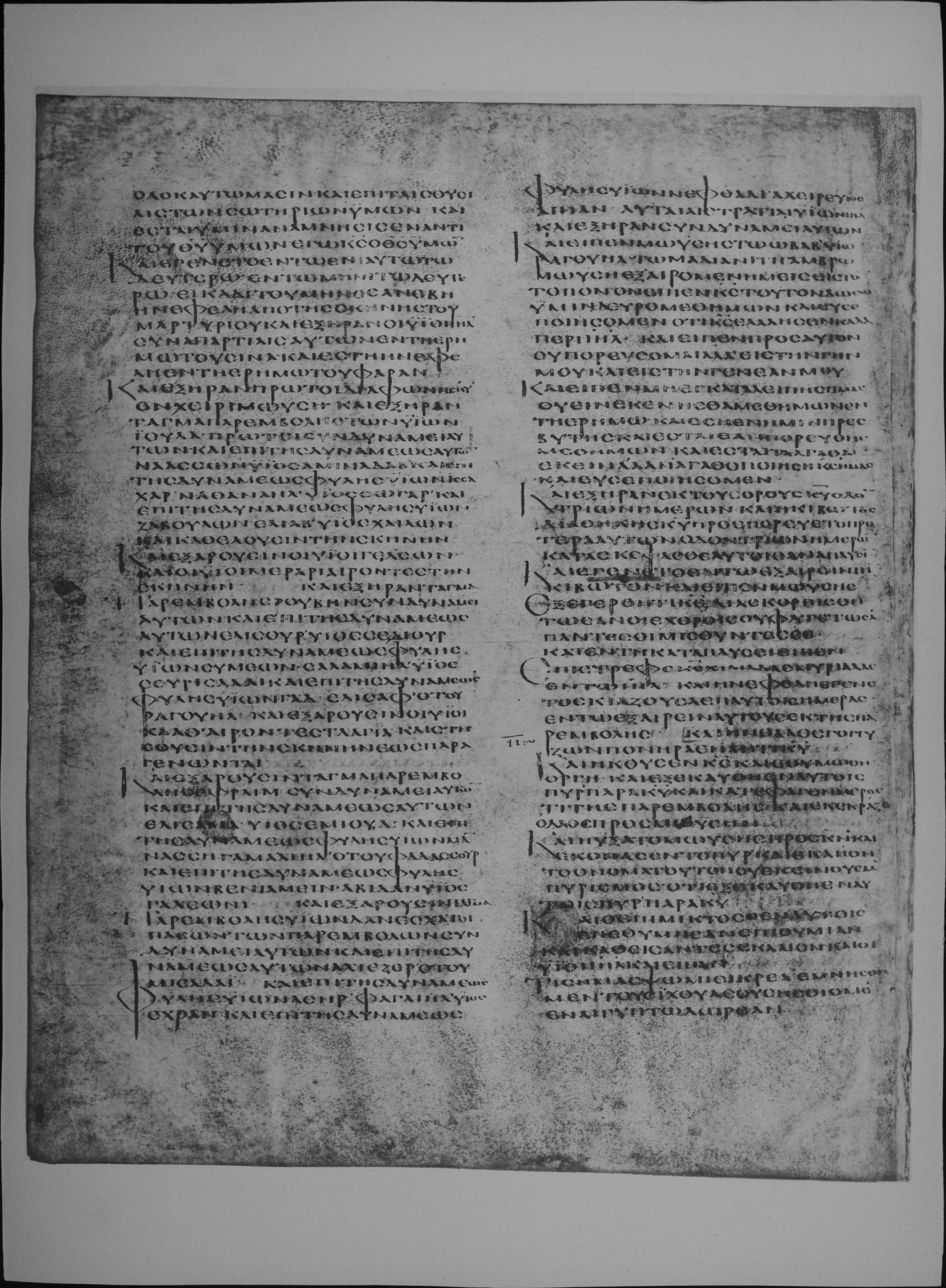
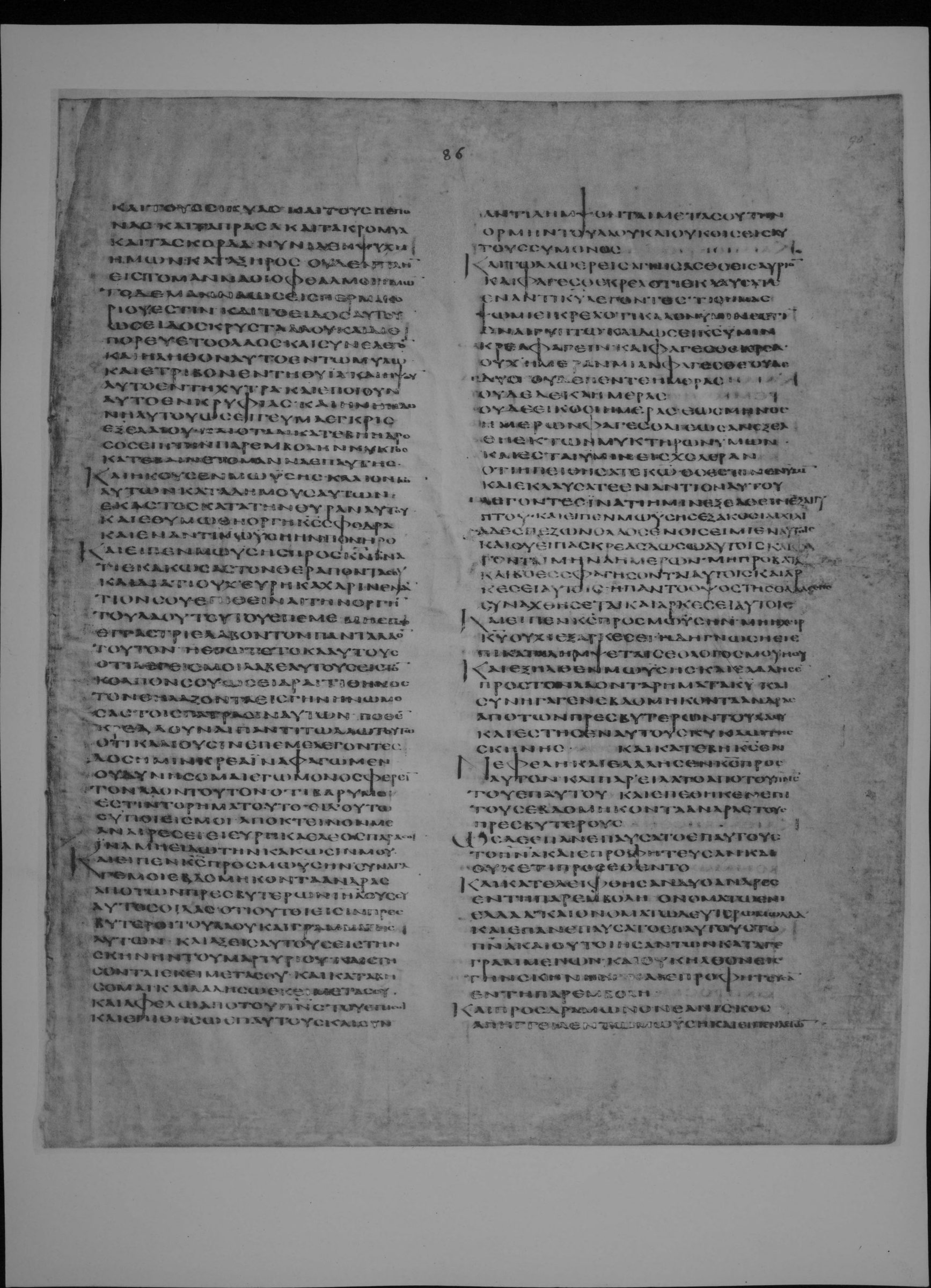
Numbers 11:1-5 is on fol. 85v (full-size facsimile of 1879-83, Internet Archive codex-alexandrinus leaf 191). The 1915 reduced facsimile prints beneath this page: Num. x. 10-xi. 5. Checked on the plate: the page begins inside Numbers 10:10 (first words read: ΟΛΟΚΑΥΤΩΜΑΣΙΝ ΚΑΙ ΕΠΙ ΤΑΙΣ ΘΥΣΙΑΙΣ ΤΩΝ ΣΩΤΗΡΙΩΝ ΥΜΩΝ ΚΑΙ ΕΣΤΑΙ ΥΜΙΝ ΑΝΑΜΝΗΣΙΣ). Numbers 11:5-8 is on fol. 86r (full-size facsimile of 1879-83, Internet Archive codex-alexandrinus leaf 192). The 1915 reduced facsimile prints beneath this page: Num. xi. 5-27. Checked on the plate: the page begins inside Numbers 11:5 (first words read: ΚΑΙ ΤΟΥΣ ΣΙΚΥΑΣ ΚΑΙ ΤΟΥΣ ΠΕΠΟΝΑΣ ΚΑΙ ΤΑ ΠΡΑΣΑ ΚΑΙ ΤΑ ΚΡΟΜΜΥΑ ΚΑΙ ΤΑ ΣΚΟΡΔΑ).
1Καὶ ἦν ὁ λαὸς γογγύζων πονηρὰ ἔναντι Κυρίου· καὶ ἤκουσεν Κύριος καὶ ἐθυμώθη ὀργῇ, καὶ ἐξεκαύθη ἐν αὐτοῖς πῦρ παρὰ Κυρίου καὶ κατέφαγεν μέρος τι τῆς παρεμβολῆς. 2καὶ ἐκέκραξεν ὁ λαὸς πρὸς Μωυσῆν· καὶ ηὔξατο Μωυσῆς πρὸς Κύριον, καὶ ἐκόπασεν τὸ πῦρ. 3καὶ ἐκλήθη τὸ ὄνομα τοῦ τόπου ἐκείνου Ἐνπυρισμός, ὅτι ἐξεκαύθη ἐν αὐτοῖς πῦρ παρὰ Κυρίου. 4Καὶ ὁ ἐπίμικτος ὁ ἐν αὐτοῖς ἐπεθύμησεν ἐπιθυμίαν· καὶ καθίσαντες ἔκλαιον καὶ οἱ υἱοὶ Ἰσραὴλ καὶ εἶπαν Τίς ἡμᾶς ψωμιεῖ κρέας; 5ἐμνήσθημεν τοὺς ἰχθύας οὓς ἠσθίομεν ἐν Αἰγύπτῳ δωρεάν, καὶ τοὺς σικύας καὶ τοὺς πέπονας καὶ τὰ πράσα καὶ τὰ κρόμμυα καὶ τὰ σκόρδα· 6νυνὶ δὲ ἡ ψυχὴ ἡμῶν κατάξηρος, οὐδὲν πλὴν εἰς τὸ μάννα οἱ ὀφθαλμοὶ ἡμῶν. 7τὸ δὲ μάννα ὡσεὶ σπέρμα κορίου ἐστίν, καὶ τὸ εἶδος αὐτοῦ εἶδος κρυστάλλου. 8καὶ διεπορεύετο ὁ λαὸς καὶ συνέλεγον, καὶ ἤληθον αὐτὸ ἐν τῷ μύλῳ καὶ ἔτριβον ἐν τῇ θυίᾳ, καὶ ἥψουν αὐτὸ ἐν τῇ χύτρᾳ καὶ ἐποίουν αὐτὸ ἐνκρυφίας· καὶ ἦν ἡ ἡδονὴ αὐτοῦ ὡσεὶ γεῦμα ἐνκρὶς ἐξ ἐλαίου.
1And the people murmured sinfully before the Lord; and the Lord heard them and was very angry; and fire was kindled among them from the Lord, and devoured a part of the camp. 2And the people cried to Moses: and Moses prayed to the Lord, and the fire was quenched. 3And the name of that place was called Burning; for a fire was kindled among them from the Lord. 4And the mixed multitude among them lusted exceedingly; and they and the children of Israel sat down and wept and said, Who shall give us flesh to eat? 5We remember the fish, which we ate in Egypt freely; and the cucumbers, and the melons, and the leeks, and the garlic, and the onions. 6But now our soul is dried up; our eyes turn to nothing but to the manna. 7And the manna is as coriander seed, and the appearance of it the appearance of hoarfrost. 8And the people went through the field, and gathered, and ground it in the mill, or pounded it in a mortar, and baked it in a pan, and made cakes of it; and the sweetness of it was as the taste of wafer made with oil.
Where on the image
Numbers 11:9-16 is on fol. 86r (full-size facsimile of 1879-83, Internet Archive codex-alexandrinus leaf 192). The 1915 reduced facsimile prints beneath this page: Num. xi. 5-27. Checked on the plate: the page begins inside Numbers 11:5 (first words read: ΚΑΙ ΤΟΥΣ ΣΙΚΥΑΣ ΚΑΙ ΤΟΥΣ ΠΕΠΟΝΑΣ ΚΑΙ ΤΑ ΠΡΑΣΑ ΚΑΙ ΤΑ ΚΡΟΜΜΥΑ ΚΑΙ ΤΑ ΣΚΟΡΔΑ).
9καὶ ὅταν κατέβη ἡ δρόσος ἐπὶ τὴν παρεμβολὴν νυκτός, κατέβαινεν τὸ μάννα ἐπ᾽ αὐτῆς. 10καὶ ἤκουσεν Μωυσῆς κλαίοντων αὐτῶν κατά δήμους αὐτῶν, ἕκαστον ἐπὶ τῆς θύρας αὐτοῦ· καὶ ἐθυμώθη ὀργῇ Κύριος σφόδρα, καὶ ἔναντι Μωυσῆ ἦν πονηρόν. 11καὶ εἶπεν Μωυσῆς πρὸς Κύριον Ἵνα τί ἐκάκωσας τὸν θεράποντά σου; καὶ διὰ τί οὐχ εὕρηκα χάριν ἐναντίον σου, ἐπιθεῖναι τὴν ὁρμὴν τοῦ λαοῦ τούτου ἐπ᾽ ἐμέ; 12μὴ ἐγὼ ἐν γαστρὶ ἔλαβον πάντα τὸν λαὸν τοῦτον, ἢ ἐγὼ ἔτεκον αὐτούς, ὅτι λέγεις μοι Λάβε αὐτὸν εἰς τὸν κόλπον σου, ὡσεὶ ἄραι τιθηνὸς τὸν θηλάζοντα, εἰς τὴν γῆν ἣν ὤμοσας τοῖς πατράσιν αὐτῶν; 13πόθεν μοι κρέα δοῦναι παντὶ τῷ λαῷ τούτῳ; ὅτι κλαίουσιν ἐπ᾽ ἐμοὶ λέγοντες Δὸς ἡμῖν κρέα ἵνα φάγωμεν. 14οὐ δυνήσομαι ἐγὼ μόνος φέρειν τὸν λαὸν τοῦτον, ὅτι βαρύτερόν μοί ἐστιν τὸ ῥῆμα τοῦτο. 15εἰ δὲ οὕτως σὺ ποιεῖς μοι, ἀπόκτεινόν με ἀναιρέσει, εἰ εὕρηκα ἔλεος παρὰ σοί, ἵνα μὴ ἴδω μου τὴν κάκωσιν. 16Καὶ εἶπεν Κύριος πρὸς Μωυσῆν Συνάγαγέ μοι ἑβδομήκοντα ἄνδρας ἀπὸ τῶν πρεσβυτέρων Ἰσραήλ, οὓς αὐτός σοι εἶδες ὅτι οὗτοί εἰσιν πρεσβύτεροι τοῦ λαοῦ καὶ γραμματεῖς αὐτῶν. καὶ ἄξεις αὐτοὺς πρὸς τὴν σκηνὴν τοῦ μαρτυρίου, καὶ στήσονται ἐκεῖ μετὰ σοῦ.
9And when the dew came upon the camp by night, the manna came down upon it. 10And Moses heard them weeping by their families, every one in his door: and the Lord was very angry; and the thing was evil in the sight of Moses. 11And Moses said to the Lord, Why hast thou afflicted thy servant, and why have I not found grace in thy sight, that thou shouldest lay the weight of this people upon me? 12Have I conceived all this people, or have I born them? that thou sayest to me, Take them into thy bosom, as a nurse would take her suckling, into the land which thou swarest to their fathers? 13Whence have I flesh to give to all this people? for they weep to me, saying, Give us flesh, that we may eat. 14I shall not be able to bear this people alone, for this thing is too heavy for me. 15And if thou doest thus to me, slay me utterly, if I have found favour with thee, that I may not see my affliction. 16And the Lord said to Moses, Gather me seventy men from the elders of Israel, whom thou thyself knowest that they are the elders of the people, and their scribes; and thou shalt bring them to the tabernacle of witness, and they shall stand there with thee.
Where on the image
Numbers 11:17-24 is on fol. 86r (full-size facsimile of 1879-83, Internet Archive codex-alexandrinus leaf 192). The 1915 reduced facsimile prints beneath this page: Num. xi. 5-27. Checked on the plate: the page begins inside Numbers 11:5 (first words read: ΚΑΙ ΤΟΥΣ ΣΙΚΥΑΣ ΚΑΙ ΤΟΥΣ ΠΕΠΟΝΑΣ ΚΑΙ ΤΑ ΠΡΑΣΑ ΚΑΙ ΤΑ ΚΡΟΜΜΥΑ ΚΑΙ ΤΑ ΣΚΟΡΔΑ).
17καὶ καταβήσομαι καὶ λαλήσω ἐκεῖ μετὰ σοῦ, καὶ ἀφελῶ ἀπὸ τοῦ πνεύματος τοῦ ἐπὶ σοὶ καὶ ἐπιθήσω ἐπ᾽ αὐτούς· καὶ συναντιλήμψονται μετὰ σοῦ τὴν ὁρμὴν τοῦ λαοῦ, καὶ οὐκ οἴσεις αὐτοὺς σὺ μόνος. 18καὶ τῷ λαῷ ἐρεῖς Ἁγνίσασθε εἰς αὔριον, καὶ φάγεσθε κρέα· ὅτι ἐκλαύσατε ἔναντι Κυρίου λέγοντες Τίς ἡμᾶς ψωμιεῖ κρέα; ὅτι καλὸν ἡμῖν ἐστὶν ἐν Αἰγύπτῳ· καὶ δώσει Κύριος ὑμῖν κρέα φαγεῖν, καὶ φάγεσθε κρέα. 19οὐχ ἡμέραν μίαν φάγεσθε, οὐδὲ δύο οὐδὲ πέντε ἡμέρας, οὐδὲ δέκα ἡμέρας, οὐδὲ εἴκοσι ἡμέρας· 20ἕως μηνὸς ἡμερῶν φάγεσθε, ἕως ἂν ἐξέλθῃ ἐκ τῶν μυκτήρων ὑμῶν κρέα· καὶ ἔσται ὑμῖν εἰς χολέραν· ὅτι ἠπειθήσατε Κυρίῳ ὅς ἐστιν ἐν ὑμῖν, καὶ ἐκλαύσατε ἐναντίον αὐτοῦ λέγοντες Ἵνα τί ἡμῖν ἐξελθεῖν ἐξ Αἰγύπτου; 21καὶ εἶπεν Μωυσῆς πρὸς Κύριον Ἑξακόσιαι χιλιάδες πεζῶν ὁ λαὸς ἐν οἷς εἰμὶ ἐν αὐτοῖς, καὶ σὺ εἶπας Κρέα δώσω αὐτοῖς φαγεῖν, καὶ φάγονται μῆνα ἡμερῶν· 22μὴ πρόβατα καὶ βόες σφαγήσονται αὐτοῖς, καὶ ἀρκέσει αὐτοῖς; ἢ πᾶν τὸ ὄψος τῆς θαλάσσης συναχθήσεται αὐτοῖς, καὶ ἀρκέσει αὐτοῖς; 23καὶ εἶπεν Κύριος πρὸς Μωυσῆν Μὴ χεὶρ Κυρίου οὐκ ἐξαρκέσει; ἤδη γνώσει εἰ ἐπικαταλήμψεταί σε ὁ λόγος μου ἢ οὔ. 24καὶ ἐξῆλθεν Μωυσῆς καὶ ἐλάλησεν πρὸς τὸν λαὸν τὰ ῥήματα Κυρίου, καὶ συνήγαγεν ἑβδομήκοντα ἄνδρας ἀπὸ τῶν πρεσβυτέρων τοῦ λαοῦ καὶ ἔστησεν αὐτοὺς κύκλῳ τῆς σκηνῆς.
17And I will go down, and speak there with thee; and I will take of the spirit that is upon thee, and will put it upon them; and they shall bear together with thee the burden of the people, and thou shalt not bear them alone. 18And to the people thou shalt say, Purify yourselves for the morrow, and ye shall eat flesh; for ye wept before the Lord, saying, Who shall give us flesh to eat? for it was well with us in Egypt: and the Lord shall allow you to eat flesh, and ye shall eat flesh. 19Ye shall not eat one day, nor two, nor five days, nor ten days, nor twenty days; 20ye shall eat for a full month, until the flesh come out at your nostrils; and it shall be nausea to you, because ye disobeyed the Lord, who is among you, and wept before him, saying, What had we to do to come out of Egypt? 21And Moses said, The people among whom I am are six hundred thousand footmen; and thou saidst, I will give them flesh to eat, and they shall eat a whole month. 22Shall sheep and oxen be slain for them, and shall it suffice them? or shall all the fish of the sea be gathered together for them, and shall it suffice them? 23And the Lord said to Moses, Shall not the hand of the Lord be fully sufficient? now shalt thou know whether my word shall come to pass to thee or not. 24And Moses went out, and spoke the words of the Lord to the people; and he gathered seventy men of the elders of the people, and he set them round about the tabernacle.
Where on the image
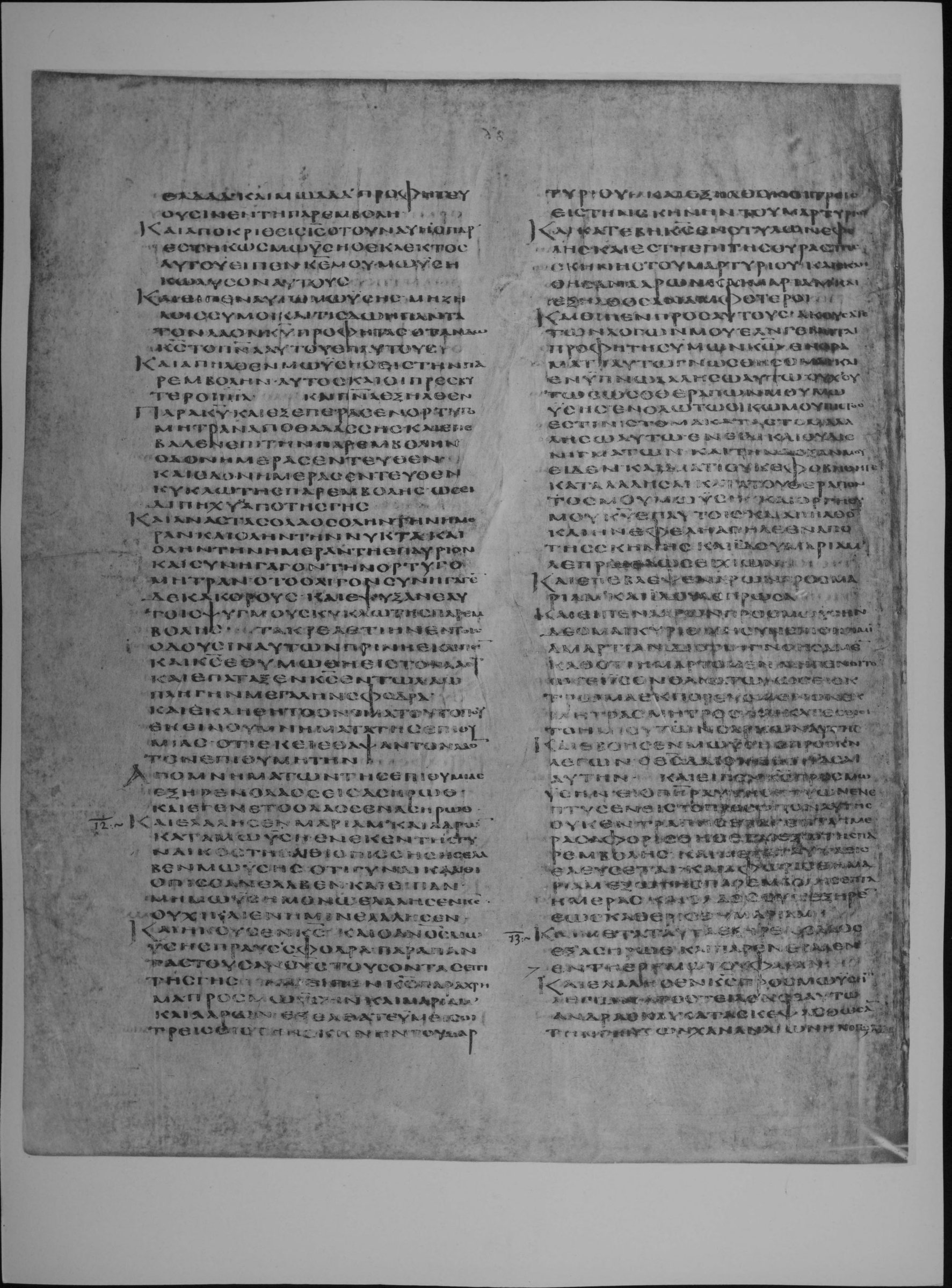
Numbers 11:25-27 is on fol. 86r (full-size facsimile of 1879-83, Internet Archive codex-alexandrinus leaf 192). The 1915 reduced facsimile prints beneath this page: Num. xi. 5-27. Checked on the plate: the page begins inside Numbers 11:5 (first words read: ΚΑΙ ΤΟΥΣ ΣΙΚΥΑΣ ΚΑΙ ΤΟΥΣ ΠΕΠΟΝΑΣ ΚΑΙ ΤΑ ΠΡΑΣΑ ΚΑΙ ΤΑ ΚΡΟΜΜΥΑ ΚΑΙ ΤΑ ΣΚΟΡΔΑ). Numbers 11:27-32 is on fol. 86v (full-size facsimile of 1879-83, Internet Archive codex-alexandrinus leaf 193). The 1915 reduced facsimile prints beneath this page: Num. xi. 27-xiii. 3. Checked on the plate: the page begins inside Numbers 11:27 (first words read: ΕΛΔΑΔ ΚΑΙ ΜΩΔΑΔ ΠΡΟΦΗΤΕΥΟΥΣΙΝ ΕΝ ΤΗ ΠΑΡΕΜΒΟΛΗ ΚΑΙ ΑΠΟΚΡΙΘΕΙΣ ΙΗΣΟΥΣ).
25καὶ κατέβη Κύριος ἐν νεφέλῃ καὶ ἐλάλησεν πρὸς αὐτόν, καὶ παρείλατο ἀπὸ τοῦ πνεύματος τοῦ ἐπ᾽ αὐτῷ καὶ ἐπέθηκεν ἐπὶ τοὺς ἑβδομήκοντα ἄνδρας τοὺς πρεσβυτέρους· ὡς δὲ ἐπανεπαύσατο τὸ πνεῦμα ἐπ᾽ αὐτούς, καὶ ἐπροφήτευσαν, καὶ οὐκέτι προσέθεντο. 26καὶ κατελείφθησαν δύο ἄνδρες ἐν τῇ παρεμβολῇ, ὄνομα τῷ ἑνὶ Ἐλδὰδ καὶ ὄνομα τῷ δευτέρῳ Μωδάδ, καὶ ἐπανεπαύσατο ἐπ᾽ αὐτοὺς πνεῦμα· καὶ οὗτοι ἦσαν τῶν καταγεγραμμένων, καὶ οὐκ ἦλθον πρὸς τὴν σκηνήν· καὶ ἐπροφήτευσαν ἐν τῇ παρεμβολῇ. 27καὶ προσδραμὼν ὁ νεανίσκος ἀπήγγειλεν Μωυσῇ καὶ εἶπεν λέγων Ἐλδὰδ καὶ Μωδὰδ προφητεύουσιν ἐν τῇ παρεμβολῇ. 28καὶ ἀποκριθεὶς Ἰησοῦς ὁ τοῦ Ναυὴ ὁ παρεστηκὼς Μωυσῇ ὁ ἐκλεκτὸς εἶπεν Κύριε Μωυσῆ, κώλυσον αὐτούς. 29καὶ εἶπεν αὐτῷ Μωυσῆς Μὴ ζηλοῖς σὺ ἐμέ; καὶ τίς δῴη πάντα τὸν λαὸν Κυρίου προφήτας, ὅταν δῷ Κύριος τὸ πνεῦμα αὐτοῦ ἐπ᾽ αὐτούς; 30καὶ ἀπῆλθεν Μωυσῆς εἰς τὴν παρεμβολήν, αὐτὸς καὶ οἱ πρεσβύτεροι Ἰσραήλ. 31Καὶ πνεῦμα ἐξῆλθεν παρὰ Κυρίου καὶ ἐξεπέρασεν ὀρτυγομήτραν ἀπὸ τῆς θαλάσσης, καὶ ἐπέβαλεν ἐπὶ τὴν παρεμβολὴν ὁδὸν ἡμέρας ἐντεῦθεν καὶ ὁδὸν ἡμέρας ἐντεῦθεν κύκλῳ τῆς παρεμβολῆς, ὡσεὶ δίπηχυ ἀπὸ τῆς γῆς. 32καὶ ἀναστὰς ὁ λαὸς ὅλην τὴν ἡμέραν καὶ ὅλην τὴν νύκτα καὶ ὅλην τὴν ἡμέραν τὴν ἐπαύριον, καὶ συνήγαγον τὴν ὀρτυγομήτραν· ὁ τὸ ὀλίγον συνήγαγεν δέκα κόρους· καὶ ἔσφαξαν ἑαυτοῖς ψυγμοὺς κύκλῳ τῆς παρεμβολῆς.
25And the Lord came down in a cloud, and spoke to him, and took of the spirit that was upon him, and put it upon the seventy men that were elders; and when the spirit rested upon them, they prophesied and ceased. 26And there were two men left in the camp, the name of the one was Eldad, and the name of the other Modad; and the spirit rested upon them, and these were of the number of them that were enrolled, but they did not come to the tabernacle; and they prophesied in the camp. 27And a young man ran and told Moses, and spoke, saying, Eldad and Modad prophesy in the camp. 28And Joshua the son of Naue, who attended on Moses, the chosen one, said, My lord Moses, forbid them. 29And Moses said to him, Art thou jealous on my account? and would that all the Lord's people were prophets; whenever the Lord shall put his spirit upon them. 30And Moses departed into the camp, himself and the elders of Israel. 31And there went forth a wind from the Lord, and brought quails over from the sea; and it brought them down upon the camp a day's journey on this side, and a day's journey on that side, round about the camp, as it were two cubits from the earth. 32And the people rose up all the day, and all the night, and all the next day, and gathered quails; he that gathered least, gathered ten measures; and they refreshed themselves round about the camp.
Where on the image
Numbers 11:33-35 is on fol. 86v (full-size facsimile of 1879-83, Internet Archive codex-alexandrinus leaf 193). The 1915 reduced facsimile prints beneath this page: Num. xi. 27-xiii. 3. Checked on the plate: the page begins inside Numbers 11:27 (first words read: ΕΛΔΑΔ ΚΑΙ ΜΩΔΑΔ ΠΡΟΦΗΤΕΥΟΥΣΙΝ ΕΝ ΤΗ ΠΑΡΕΜΒΟΛΗ ΚΑΙ ΑΠΟΚΡΙΘΕΙΣ ΙΗΣΟΥΣ).
33τὰ κρέα ἔτι ἦν ἐν τοῖς ὀδοῦσιν αὐτῶν πρὶν ἢ ἐκλείπειν, καὶ Κύριος ἐθυμώθη εἰς τὸν λαὸν αὐτοῦ· καὶ Κύριος ἐπάταξεν τὸν λαὸν πληγὴν μεγάλην σφόδρα. 34καὶ ἐκλήθη τὸ ὄνομα τοῦ τόπου ἐκείνου Μνήματα τῆς ἐπιθυμίας· ἐκεῖ ἔθαψαν τὸν λαὸν τὸν ἐπιθυμητήν. 35ἀπὸ Μνημάτων ἐπιθυμίας ἐξῆρεν ὁ λαὸς εἰς Ἁσηρώθ, καὶ ἐγένετο ὁ λαὸς ἐν Ἁσηρώθ.
33The flesh was yet between their teeth, before it failed, when the Lord was wroth with the people, and the Lord smote the people with a very great plague. 34And the name of that place was called the Graves of Lust; for there they buried the people that lusted. 35The people departed from the Graves of Lust to Aseroth; and the people halted at Aseroth.
Cite
Sources
- Source: Codex Alexandrinus (British Library Royal MS 1 D. V) via the British Museum photographic facsimiles of 1879-83 and 1915 (Internet Archive) + Swete's Septuagint + Brenton's English (holding institution)
- Critical edition: H. B. Swete, The Old Testament in Greek according to the Septuagint (1909)
← previous · → next · v cycle view · l back to library