Numbers, Chapter 17 (Codex Alexandrinus)
Introduction
Numbers 17 in the Greek Old Testament (the Septuagint) as written in Codex Alexandrinus, a Greek Bible copied in the fifth century, probably in Egypt, and now in the British Library (Royal MS 1 D. V, the first of its four volumes). It is one of the three great early codices of the whole Greek Bible, with Codex Vaticanus and Codex Sinaiticus, and for Genesis 1:1-46:28, which Codex Vaticanus has lost, it is the oldest surviving complete Greek text (older papyri such as the Berlin Genesis papyrus and Chester Beatty 961 survive only in part).
Numbering: Swete's Greek and Brenton's English number or divide some verses of this chapter differently (Swete 17:1-13 = Brenton 17:16-28). Each column keeps its own verse numbers, and sections are cut only where the two texts agree, so each section holds the same passage in both languages.
This entry meets the strict three-criteria standard of the Theosis Library:
- Manuscript scan: the pages of Codex Alexandrinus carrying this chapter (fol. 90r, fol. 90v), from the full-size photographic (autotype) facsimile published by the British Museum in 1879-1883, as digitised on the Internet Archive. The verse range of every page comes from the reduced photographic facsimile of 1915, which prints it beneath each plate, and the opening words of every page were read on the plate to confirm the page and the verse it begins with. Each section links to the page or pages that hold its verses. Folio numbers are those written at the head of each leaf and visible on the plates.
- Original text: Swete's edition, which here prints the text of Codex Vaticanus (Vat. gr. 1209), the base of his edition, and gives the readings of Alexandrinus only in his apparatus. The Greek column is therefore Vaticanus' text; where Alexandrinus differs, the plate shows what Alexandrinus reads.
- English translation: Sir Lancelot C. L. Brenton, The Septuagint Version of the Old Testament (1844; 1851 edition), a translation of the Greek, public domain, from the eBible.org text.
How was this verified? (Provenance)
Where on the image
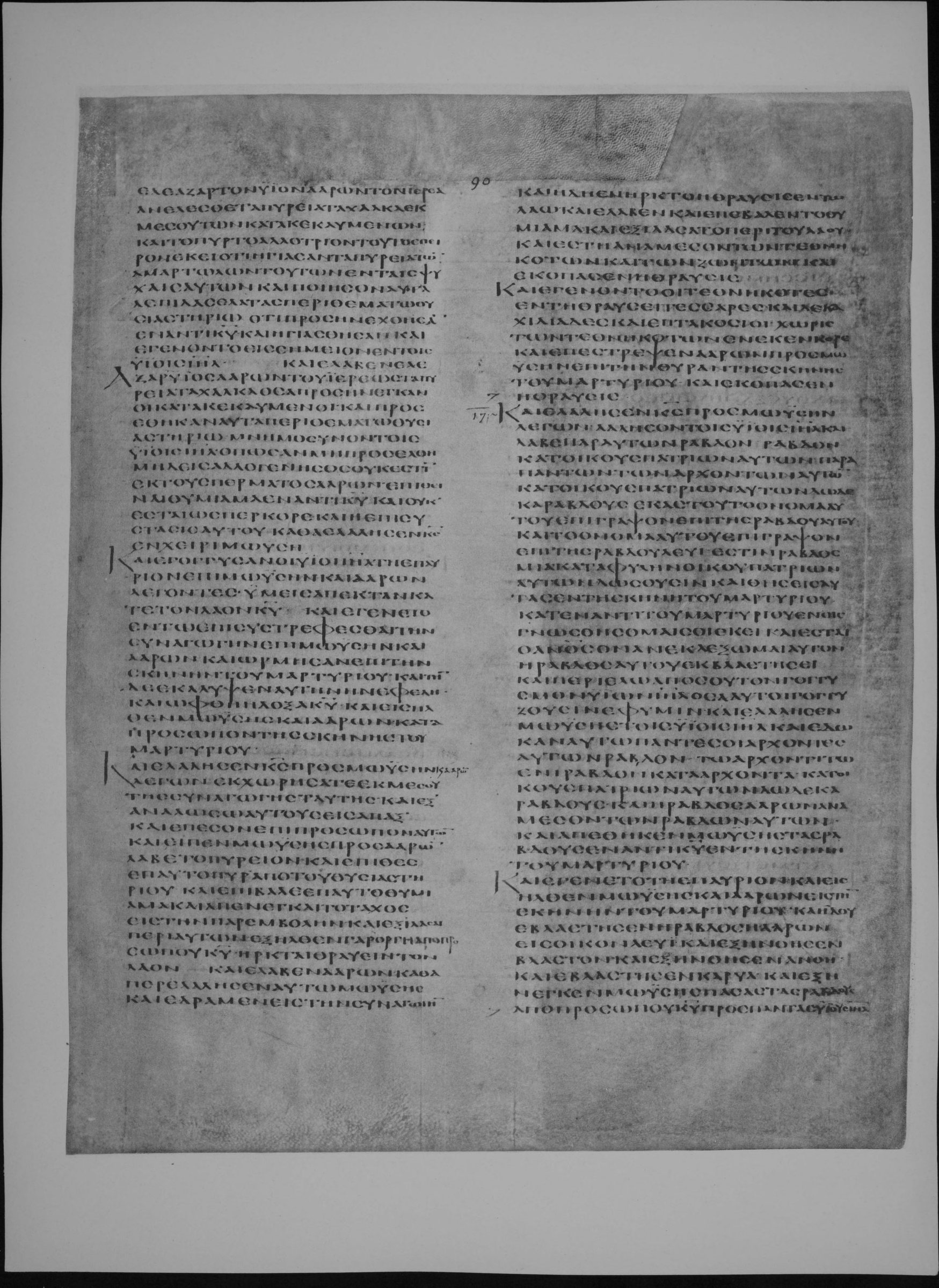
Numbers 17:1-8 is on fol. 90r (full-size facsimile of 1879-83, Internet Archive codex-alexandrinus leaf 200). The 1915 reduced facsimile prints beneath this page: Num. xvi. 36-xvii. 9. Checked on the plate: the page begins inside Numbers 16:37 (first words read: ΕΛΕΑΖΑΡ ΤΟΝ ΥΙΟΝ ΑΑΡΩΝ ΤΟΝ ΙΕΡΕΑ ΑΝΕΛΕΣΘΕ ΤΑ ΠΥΡΕΙΑ ΤΑ ΧΑΛΚΑ ΕΚ ΜΕΣΟΥ ΤΩΝ ΚΑΤΑΚΕΚΑΥΜΕΝΩΝ). Note: the caption begins at xvi. 36, but verse 36 (ΚΑΙ ΕΙΠΕΝ ΚΣ ΠΡΟΣ ΜΩΥΣΗΝ) ends the preceding page and this page begins inside 16:37.
1Καὶ ἐλάλησεν Κύριος πρὸς Μωυσῆν λέγων 2Λάλησον τοῖς υἱοῖς Ἰσραήλ, καὶ λάβε παρ᾽ αὐτῶν ῥάβδον, ῥάβδον κατ᾽ οἴκους πατριῶν παρὰ πάντων τῶν ἀρχόντων αὐτῶν, κατ᾽ οἴκους πατριῶν αὐτῶν, δώδεκα ῥάβδους· καὶ ἑκάστου τὸ ὄνομα αὐτοῦ ἐπίγραψον ἐπὶ τῆς ῥάβδου. 3καὶ τὸ ὄνομα Ἀαρὼν ἐπίγραψον ἐπὶ τῆς ῥάβδου Λευεί· ἔστιν γὰρ ῥάβδος μία, κατὰ φυλὴν οἴκου πατριῶν αὐτῶν δώσουσιν. 4καὶ θήσεις αὐτὰς ἐν τῇ σκηνῇ τοῦ μαρτυρίου κατέναντι τοῦ μαρτυρίου, ἐν οἷς γνωσθήσομαί σοι ἐκεῖ. 5καὶ ἔσται ὁ ἄνθρωπος ὃν ἐὰν ἐκλέξωμαι αὐτόν, ἡ ῥάβδος αὐτοῦ ἐκβλαστήσει· καὶ περιελῶ ἀπ᾽ ἐμοῦ τὸν γογγυσμὸν τῶν υἱῶν Ἰσραήλ, ἃ αὐτοὶ γογγύζουσιν ἐφ᾽ ὑμῖν. 6καὶ ἐλάλησεν Μωυσῆς τοῖς υἱοῖς Ἰσραήλ· καὶ ἔδωκαν αὐτῷ πάντες οἱ ἄρχοντες αὐτῶν ῥάβδον, τῷ ἄρχοντι τῷ ἑνὶ ῥάβδον κατὰ ἄρχοντα, κατ᾽ οἴκους πατριῶν αὐτῶν, ιβ᾽ ῥάβδους· Καὶ ἡ ῥάβδος Ἀαρὼν ἀνὰ μέσον τῶν ῥάβδων αὐτῶν. 7καὶ ἀπέθηκεν Μωυσῆς τὰς ῥάβδους ἔναντι Κυρίου ἐν τῇ σκηνῇ τοῦ μαρτυρίου. 8καὶ ἐγένετο τῇ ἐπαύριον καὶ εἰσῆλθεν Μωυσῆς καὶ Ἀαρὼν εἰς τὴν σκηνὴν τοῦ μαρτυρίου, καὶ ἰδοὺ ἐβλάστησεν ἡ ῥάβδος Ἀαρὼν εἰς οἶκον Λευεί, καὶ ἐξήνεγκεν βλαστὸν καὶ ἐξήνθησεν ἄνθη καὶ ἐβλάστησεν κάρυα.
16And the Lord spoke to Moses, saying, 17Speak to the children of Israel, and take rods of them, according to the houses of their families, a rod from all their princes, according to the houses of their families, twelve rods, and write the name of each on his rod. 18And write the name of Aaron on the rod of Levi; for it is one rod for each: they shall give them according to the tribe of the house of their families. 19And thou shalt put them in the tabernacle of witness, before the testimony, where I will be made known to thee. 20And it shall be, the man whom I shall choose, his rod shall blossom; and I will remove from me the murmuring of the children of Israel, which they murmur against you. 21And Moses spoke to the children of Israel, and all their chiefs gave him a rod each, for one chief a rod, according to the house of their families, twelve rods; and the rod of Aaron was in the midst of the rods. 22And Moses laid up the rods before the Lord in the tabernacle of witness. 23And it came to pass on the morrow, that Moses and Aaron went into the tabernacle of witness; and, behold, the rod of Aaron for the house of Levi blossomed, and put forth a bud, and bloomed blossoms and produced almonds.
Where on the image
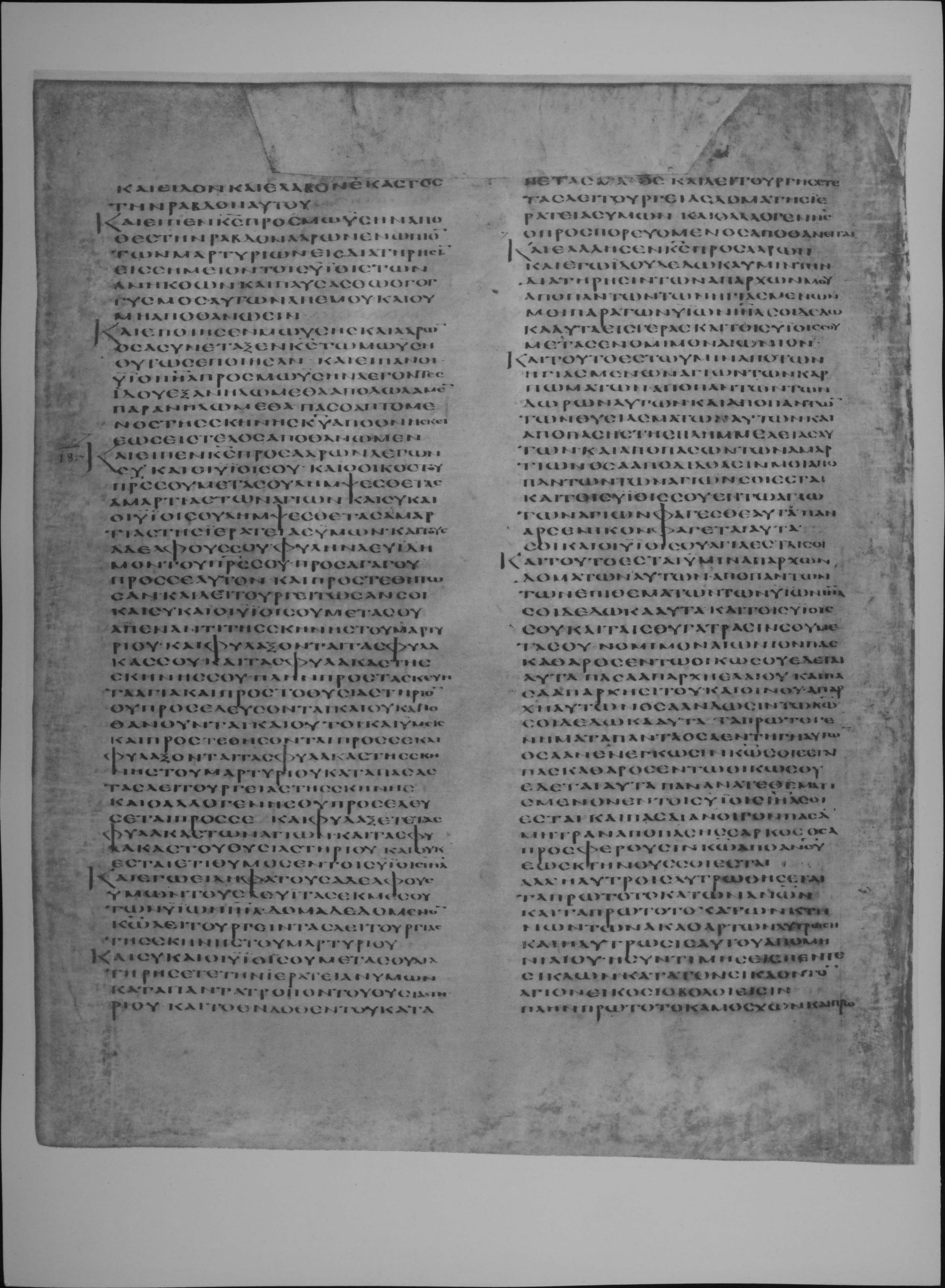
Numbers 17:9 is on fol. 90r (full-size facsimile of 1879-83, Internet Archive codex-alexandrinus leaf 200). The 1915 reduced facsimile prints beneath this page: Num. xvi. 36-xvii. 9. Checked on the plate: the page begins inside Numbers 16:37 (first words read: ΕΛΕΑΖΑΡ ΤΟΝ ΥΙΟΝ ΑΑΡΩΝ ΤΟΝ ΙΕΡΕΑ ΑΝΕΛΕΣΘΕ ΤΑ ΠΥΡΕΙΑ ΤΑ ΧΑΛΚΑ ΕΚ ΜΕΣΟΥ ΤΩΝ ΚΑΤΑΚΕΚΑΥΜΕΝΩΝ). Note: the caption begins at xvi. 36, but verse 36 (ΚΑΙ ΕΙΠΕΝ ΚΣ ΠΡΟΣ ΜΩΥΣΗΝ) ends the preceding page and this page begins inside 16:37. Numbers 17:9-13 is on fol. 90v (full-size facsimile of 1879-83, Internet Archive codex-alexandrinus leaf 201). The 1915 reduced facsimile prints beneath this page: Num. xvii. 9-xviii. 17. Checked on the plate: the page begins inside Numbers 17:9 (first words read: ΚΑΙ ΕΙΔΟΝ ΚΑΙ ΕΛΑΒΟΝ ΕΚΑΣΤΟΣ ΤΗΝ ΡΑΒΔΟΝ ΑΥΤΟΥ ΚΑΙ ΕΙΠΕΝ ΚΣ ΠΡΟΣ ΜΩΥΣΗΝ).
9καὶ ἐξήνεγκεν Μωυσῆς πάσας τὰς ῥάβδους ἀπὸ προσώπου Κυρίου πρὸς πάντας υἱοὺς Ἰσραήλ· καὶ εἶδον, καὶ ἔλαβεν ἕκαστος τὴν ῥάβδον αὐτοῦ. 10καὶ εἶπεν Κύριος πρὸς Μωυσῆν Ἀπόθες τὴν ῥάβδον Ἀαρὼν ἐνώπιον τῶν μαρτυρίων εἰς διατήρησιν, σημεῖον τοῖς υἱοῖς τῶν ἀνηκόων· καὶ παυσάσθω ὁ γογγυσμὸς αὐτῶν ἀπ᾽ ἐμοῦ, καὶ οὐ μὴ ἀποθάνωσιν. 11καὶ ἐποίησεν Μωυσῆς καὶ Ἀαρὼν καθὰ συνέταξεν κύριος τῷ Μωυσῇ, οὕτως ἐποίησαν. 12Καὶ εἶπαν οἱ υἱοὶ Ἰσραὴλ πρὸς Μωυσῆν λέγοντες Ἰδοὺ ἐξανηλώμεθα, ἀπολώλαμεν, παρανηλώμεθα· 13πᾶς ὁ ἁπτόμενος τῆς σκηνῆς Κυρίου ἀποθνήσκει· ἕως εἰς τέλος ἀποθάνωμεν;
24And Moses brought forth all the rods from before the Lord to all the sons of Israel; and they looked, and each one took his rod. 25And the Lord said to Moses, Lay up the rod of Aaron before the testimonies to be kept as a sign for the children of the disobedient; and let their murmuring cease from me, and they shall not die. 26And Moses and Aaron did as the Lord commanded Moses, so did they. 27And the children of Israel spoke to Moses, saying, Behold, we are cut off, we are destroyed, we are consumed. 28Every one that touches the tabernacle of the Lord, dies: shall we die utterly?
Cite
Sources
- Source: Codex Alexandrinus (British Library Royal MS 1 D. V) via the British Museum photographic facsimiles of 1879-83 and 1915 (Internet Archive) + Swete's Septuagint + Brenton's English (holding institution)
- Critical edition: H. B. Swete, The Old Testament in Greek according to the Septuagint (1909)
← previous · → next · v cycle view · l back to library