Numbers, Chapter 19 (Codex Alexandrinus)
Introduction
Numbers 19 in the Greek Old Testament (the Septuagint) as written in Codex Alexandrinus, a Greek Bible copied in the fifth century, probably in Egypt, and now in the British Library (Royal MS 1 D. V, the first of its four volumes). It is one of the three great early codices of the whole Greek Bible, with Codex Vaticanus and Codex Sinaiticus, and for Genesis 1:1-46:28, which Codex Vaticanus has lost, it is the oldest surviving complete Greek text (older papyri such as the Berlin Genesis papyrus and Chester Beatty 961 survive only in part).
This entry meets the strict three-criteria standard of the Theosis Library:
- Manuscript scan: the pages of Codex Alexandrinus carrying this chapter (fol. 91r, fol. 91v), from the full-size photographic (autotype) facsimile published by the British Museum in 1879-1883, as digitised on the Internet Archive. The verse range of every page comes from the reduced photographic facsimile of 1915, which prints it beneath each plate, and the opening words of every page were read on the plate to confirm the page and the verse it begins with. Each section links to the page or pages that hold its verses. Folio numbers are those written at the head of each leaf and visible on the plates.
- Original text: Swete's edition, which here prints the text of Codex Vaticanus (Vat. gr. 1209), the base of his edition, and gives the readings of Alexandrinus only in his apparatus. The Greek column is therefore Vaticanus' text; where Alexandrinus differs, the plate shows what Alexandrinus reads.
- English translation: Sir Lancelot C. L. Brenton, The Septuagint Version of the Old Testament (1844; 1851 edition), a translation of the Greek, public domain, from the eBible.org text.
How was this verified? (Provenance)
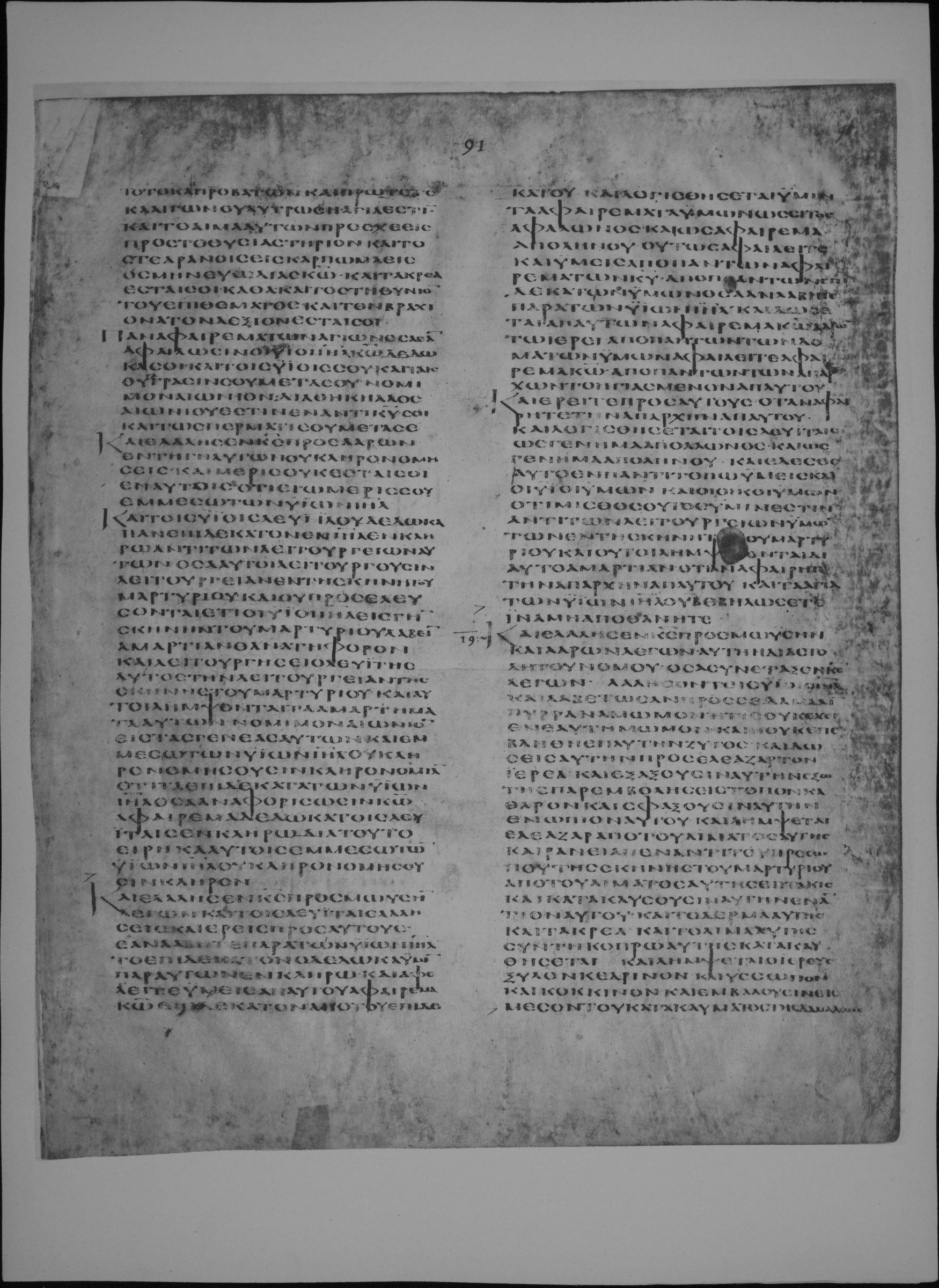
Where on the image
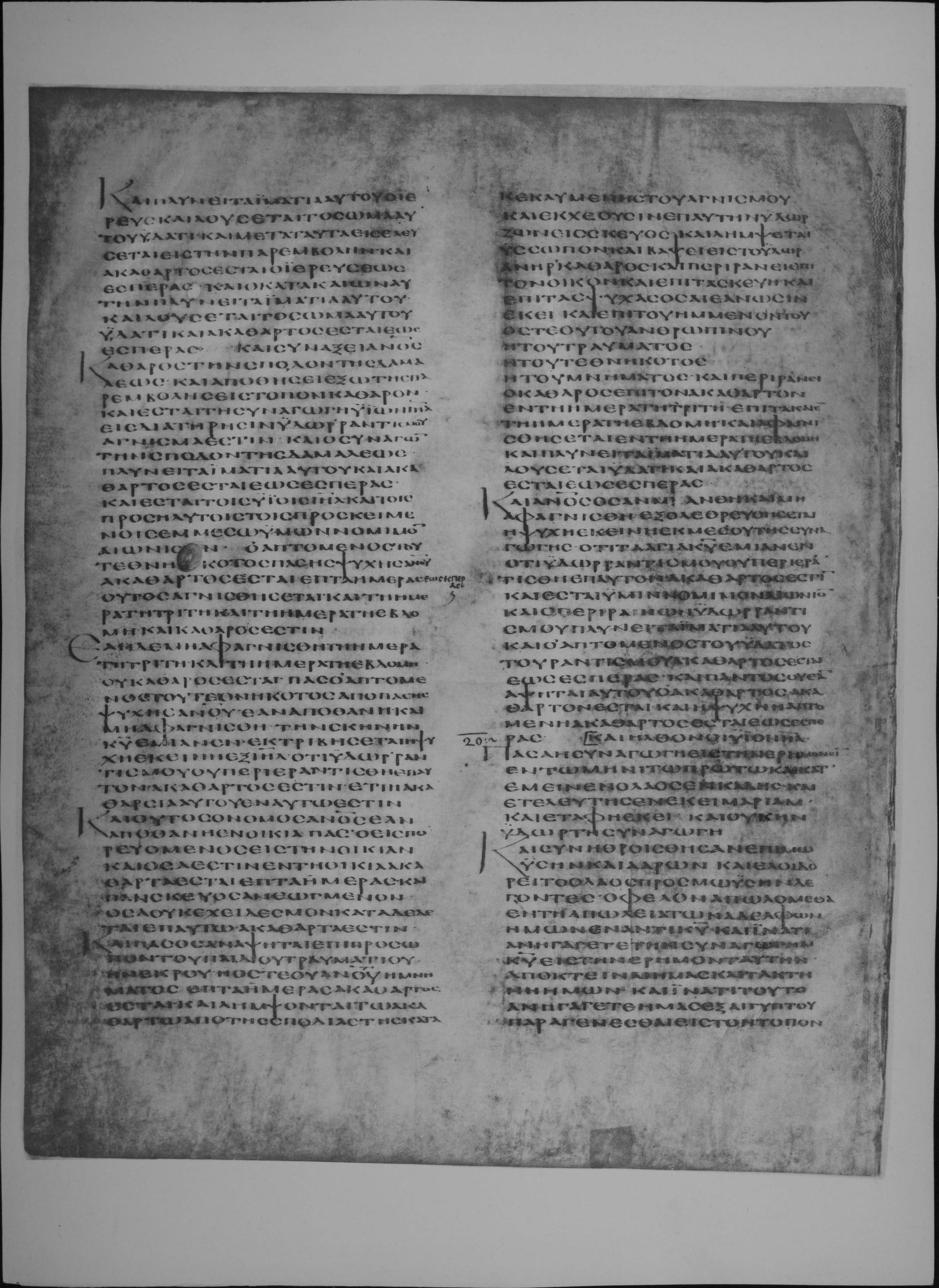
Numbers 19:1-6 is on fol. 91r (full-size facsimile of 1879-83, Internet Archive codex-alexandrinus leaf 202). The 1915 reduced facsimile prints beneath this page: Num. xviii. 17-xix. 6. Checked on the plate: the page begins inside Numbers 18:17 (first words read: ΠΡΩΤΟΤΟΚΑ ΠΡΟΒΑΤΩΝ ΚΑΙ ΠΡΩΤΟΤΟΚΑ ΑΙΓΩΝ ΟΥ ΛΥΤΡΩΣΗ ΑΓΙΑ ΕΣΤΙΝ). Numbers 19:7-8 is on fol. 91v (full-size facsimile of 1879-83, Internet Archive codex-alexandrinus leaf 203). The 1915 reduced facsimile prints beneath this page: Num. xix. 7-xx. 5. Checked on the plate: the page begins at the start of Numbers 19:7 (first words read: ΚΑΙ ΠΛΥΝΕΙ ΤΑ ΙΜΑΤΙΑ ΑΥΤΟΥ Ο ΙΕΡΕΥΣ ΚΑΙ ΛΟΥΣΕΤΑΙ ΤΟ ΣΩΜΑ ΑΥΤΟΥ).
1Καὶ ἐλάλησεν Κύριος πρὸς Μωυσῆν καὶ Ἀαρὼν λέγων 2Αὕτη ἡ διαστολὴ τοῦ νόμου, ὅσα συνέταξεν Κύριος λέγων Λάλησον τοῖς υἱοῖς Ἰσραήλ, καὶ λαβέτωσαν πρὸς σὲ δάμαλιν πυρρὰν ἄμωμον, ἥτις οὐκ ἔχει ἐν αὐτῇ μῶμον καὶ ᾗ οὐκ ἐπεβλήθη ἐπ᾽ αὐτὴν ζυγός. 3καὶ δώσεις αὐτὴν πρὸς Ἐλεαζὰρ τὸν ἱερέα· καὶ ἐξάξουσιν αὐτὴν ἔξω τῆς παρεμβολῆς εἰς τόπον καθαρόν, καὶ σφάξουσιν αὐτὴν ἐνώπιον αὐτοῦ· 4καὶ λήμψεται Ἐλεαζὰρ ἀπὸ τοῦ αἵματος αὐτῆς, καὶ ῥανεῖ ἀπέναντι τοῦ προσώπου τῆς σκηνῆς τοῦ μαρτυρίου ἀπὸ τοῦ αἵματος αὐτῆς ἑπτάκις. 5καὶ κατακαύσουσιν αὐτὴν ἐναντίον αὐτοῦ· καὶ τὸ δέρμα καὶ τὰ κρέα αὐτῆς καὶ τὸ αἷμα αὐτῆς σὺν τῇ κόπρῳ αὐτῆς κατακαυθήσεται. 6καὶ λήμψεται ὁ ἱερεὺς ξύλον κέδρινον καὶ ὕσσωπον καὶ κόκκινον, καὶ ἐμβαλοῦσιν εἰς μέσον τοῦ κατακαύματος τῆς δαμάλεως. 7καὶ πλυνεῖ τὰ ἱμάτια αὐτοῦ ὁ ἱερεὺς καὶ λούσεται τὸ σῶμα αὐτοῦ ὕδατι, καὶ μετὰ ταῦτα εἰσελεύσεται εἰς τὴν παρεμβολήν· καὶ ἀκάθαρτος ἔσται ὁ ἱερεὺς ἕως ἑσπέρας. 8καὶ ὁ κατακαίων αὐτὴν πλυνεῖ τὰ ἱμάτια αὐτοῦ καὶ λούσεται τὸ σῶμα αὐτοῦ, καὶ ἀκάθαρτος ἔσται ἕως ἑσπέρας.
1And the Lord spoke to Moses and Aaron, saying, 2This is the constitution of the law, as the Lord has commanded, saying, Speak to the sons of Israel, and let them take for thee a red heifer without spot, which has no spot on her, and on which no yoke has been put. 3And thou shalt give her to Eleazar the priest; and they shall bring her out of the camp into a clean place, and shall kill her before his face. 4And Eleazar shall take of her blood, and sprinkle of her blood seven times in front of the tabernacle of witness. 5And they shall burn her to ashes before him; and her skin and her flesh and her blood, with her dung, shall be consumed. 6And the priest shall take cedar wood and hyssop and scarlet wool, and they shall cast them into the midst of the burning of the heifer. 7And the priest shall wash his garments, and bathe his body in water, and afterwards he shall go into the camp, and the priest shall be unclean till evening. 8And he that burns her shall wash his garments, and bathe his body, and shall be unclean till evening.
Where on the image
Numbers 19:9-16 is on fol. 91v (full-size facsimile of 1879-83, Internet Archive codex-alexandrinus leaf 203). The 1915 reduced facsimile prints beneath this page: Num. xix. 7-xx. 5. Checked on the plate: the page begins at the start of Numbers 19:7 (first words read: ΚΑΙ ΠΛΥΝΕΙ ΤΑ ΙΜΑΤΙΑ ΑΥΤΟΥ Ο ΙΕΡΕΥΣ ΚΑΙ ΛΟΥΣΕΤΑΙ ΤΟ ΣΩΜΑ ΑΥΤΟΥ).
9καὶ συνάξει ἄνθρωπος καθαρὸς τὴν σποδὸν τῆς δαμάλεως καὶ ἀποθήσει ἔξω τῆς παρεμβολῆς εἰς τόπον καθαρόν. καὶ ἔσται τῇ συναγωγῇ υἱῶν Ἰσραὴλ εἰς διατήρησιν· ὕδωρ ῥαντισμοῦ, ἅγνισμά ἐστιν. 10καὶ πλυνεῖ τὰ ἱμάτια ὁ συνάγων τὴν σποδιὰν τῆς δαμάλεως, καὶ ἀκάθαρτος ἔσται ἕως ἑσπέρας· καὶ ἔσται τοῖς υἱοῖς Ἰσραὴλ καὶ τοῖς προσκειμένοις προσηλύτοις νόμιμον αἰώνιον. 11Ὁ ἁπτόμενος τοῦ τεθνηκότος πάσης ψυχῆς ἀνθρώπου ἀκάθαρτος ἔσται ἑπτὰ ἡμέρας· 12οὗτος ἁγνισθήσεται τῇ ἡμέρᾳ τῇ τρίτῃ καὶ τῇ ἡμέρᾳ τῇ ἑβδόμῃ, καὶ καθαρὸς ἔσται· ἐὰν δὲ μὴ ἀφαγνισθῇ τῇ ἡμέρᾳ τῇ τρίτῃ καὶ τῇ ἡμέρᾳ τῇ ἑβδόμῃ, οὐ καθαρὸς ἔσται. 13πᾶς ὁ ἁπτόμενος τοῦ τεθνηκότος ἀπὸ ψυχῆς ἀνθρώπου, ἐὰν ἀποθάνῃ καὶ μὴ ἀφαγνισθῇ, τὴν σκηνὴν Κυρίου ἐμίανεν· ἐκτριβήσεται ἡ ψυχὴ ἐκείνη ἐξ Ἰσραήλ, ὅτι ὕδωρ ῥαντισμοῦ οὐ περιεραντίσθη ἐπ᾽ αὐτόν· ἀκάθαρτός ἐστιν, ἔτι ἡ ἀκαθαρσία αὐτοῦ ἐν αὐτῷ ἐστιν. 14καὶ οὗτος ὁ νόμος· ἄνθρωπος ἐὰν ἀποθάνῃ ἐν τῇ οἰκίᾳ, πᾶς ὁ εἰσπορευόμενος εἰς τὴν οἰκίαν καὶ ὅσα ἐστὶν ἐν τῇ οἰκίᾳ ἀκάθαρτα ἔσται ἑπτὰ ἡμέρας· 15καὶ πᾶν σκεῦος ἀνεῳγμένον, ὅσα οὐχὶ δεσμὸν καταδέδεται ἐν αὐτῷ, ἀκάθαρτά ἐστιν. 16καὶ πᾶς ὃς ἐὰν ἅψηται ἐπὶ προσώπου τοῦ πεδίου τραυματίου ἢ νεκροῦ ἢ ὀστέου ἀνθρωπίνου ἢ μνήματος, ἑπτὰ ἡμέρας ἀκάθαρτος ἔσται.
9And a clean man shall gather up the ashes of the heifer, and lay them up in a clean place outside the camp; and they shall be for the congregation of the children of Israel to keep: it is the water of sprinkling, a purification. 10And he that gathers up the ashes of the heifer shall wash his garments, and shall be unclean until evening; and it shall be a perpetual statute for the children of Israel and for the strangers joined to them. 11He that touches the dead body of any man, shall be unclean seven days. 12He shall be purified on the third day and the seventh day, and shall be clean; but if he be not purged on the third day and the seventh day, he shall not be clean. 13Every one that touches the carcase of the person of a man, if he should have died, and the other not have been purified, has defiled the tabernacle of the Lord: that soul shall be cut off from Israel, because the water of sprinkling has not been sprinkled upon him; he is unclean; his uncleanness is yet upon him. 14And this is the law; if a man die in a house, every one that goes into the house, and all things in the house, shall be unclean seven days. 15And every open vessel which has not a covering bound upon it, shall be unclean. 16And every one who shall touch a man slain by violence, or a corpse, or human bone, or sepulchre, shall be unclean seven days.
Where on the image
Numbers 19:17-22 is on fol. 91v (full-size facsimile of 1879-83, Internet Archive codex-alexandrinus leaf 203). The 1915 reduced facsimile prints beneath this page: Num. xix. 7-xx. 5. Checked on the plate: the page begins at the start of Numbers 19:7 (first words read: ΚΑΙ ΠΛΥΝΕΙ ΤΑ ΙΜΑΤΙΑ ΑΥΤΟΥ Ο ΙΕΡΕΥΣ ΚΑΙ ΛΟΥΣΕΤΑΙ ΤΟ ΣΩΜΑ ΑΥΤΟΥ).
17καὶ λήμψονται τῷ ἀκαθάρτῳ ἀπὸ τῆς σποδιᾶς τῆς κατακεκαυμένης τοῦ ἁγνισμοῦ, καὶ ἐκχεοῦσιν ἐπ᾽ αὐτὴν ὕδωρ ζῶν εἰς σκεῦος· 18καὶ λήμψεται ὕσσωπον καὶ βάψει εἰς τὸ ὕδωρ ἀνὴρ καθαρός, καὶ περιρανεῖ ἐπὶ τὸν οἶκον καὶ ἐπὶ τὰ σκεύη καὶ ἐπὶ τὰς ψυχάς, ὅσαι ἐὰν ὦσιν ἐκεῖ, καὶ ἐπὶ τὸν ἡμμένον τοῦ ὀστέου τοῦ ἀνθρωπίνου ἢ τοῦ τραυματίου ἢ τοῦ τεθνηκότος ἢ τοῦ μνήματος· 19καὶ περιρανεῖ ὁ καθαρὸς ἐπὶ τὸν ἀκάθαρτον ἐν τῇ ἡμέρᾳ τῇ τρίτῃ καὶ ἐν τῇ ἡμέρᾳ τῇ ἑβδόμῃ, καὶ ἀφαγνισθήσεται τῇ ἡμέρᾳ τῇ ἑβδόμῃ· καὶ πλυνεῖ τὰ ἱμάτια αὐτοῦ καὶ λούσεται ὕδατι, καὶ ἀκάθαρτος ἔσται ἕως ἑσπέρας. 20καὶ ἄνθρωπος ὃς ἐὰν μιανθῇ καὶ μὴ ἀφαγνισθῇ, ἐξολεθρευθήσεται ἡ ψυχὴ ἐκείνη ἐκ μέσου τῆς συναγωγῆς, ὅτι τὰ ἅγια Κυρίου ἐμίανεν· ὅτι ὕδωρ ῥαντισμοῦ οὐ περιεραντίσθη ἐπ᾽ αὐτόν, ἀκάθαρτός ἐστιν. 21καὶ ἔσται ὑμῖν νόμιμον αἰώνιον· καὶ ὁ περιραίνων ὕδωρ ῥαντισμοῦ πλυνεῖ τὰ ἱμάτια αὐτοῦ, καὶ ὁ ἁπτόμενος τοῦ ὕδατος τοῦ ῥαντισμοῦ ἀκάθαρτος ἔσται ἕως ἑσπέρας· 22καὶ παντὸς οὗ ἐὰν ἅψηται αὐτοῦ ὁ ἀκάθαρτος, ἀκάθαρτον ἔσται, καὶ ἡ ψυχὴ ἡ ἁπτομένη ἀκάθαρτος ἔσται ἕως ἑσπέρας.
17And they shall take for the unclean of the burnt ashes of purification, and they shall pour upon them running water into a vessel. 18And a clean man shall take hyssop, and dip it into the water, and sprinkle it upon the house, and the furniture, and all the souls that are therein, and upon him that touched the human bone, or the slain man, or the corpse, or the tomb. 19And the clean man shall sprinkle the water on the unclean on the third day and on the seventh day, and on the seventh day he shall purify himself; and the other shall wash his garments, and bathe himself in water, and shall be unclean until evening. 20And whatever man shall be defiled and shall not purify himself, that soul shall be cut off from the midst of the congregation, because he has defiled the holy things of the Lord, because the water of sprinkling has not been sprinkled upon him; he is unclean. 21And it shall be to you a perpetual statute; and he that sprinkles the water of sprinkling shall wash his garments; and he that touches the water of sprinkling shall be unclean until evening. 22And whatsoever the unclean man shall touch shall be unclean, and the soul that touches it shall be unclean till evening.
Cite
Sources
- Source: Codex Alexandrinus (British Library Royal MS 1 D. V) via the British Museum photographic facsimiles of 1879-83 and 1915 (Internet Archive) + Swete's Septuagint + Brenton's English (holding institution)
- Critical edition: H. B. Swete, The Old Testament in Greek according to the Septuagint (1909)
← previous · → next · v cycle view · l back to library