Numbers, Chapter 24 (Codex Alexandrinus)
Introduction
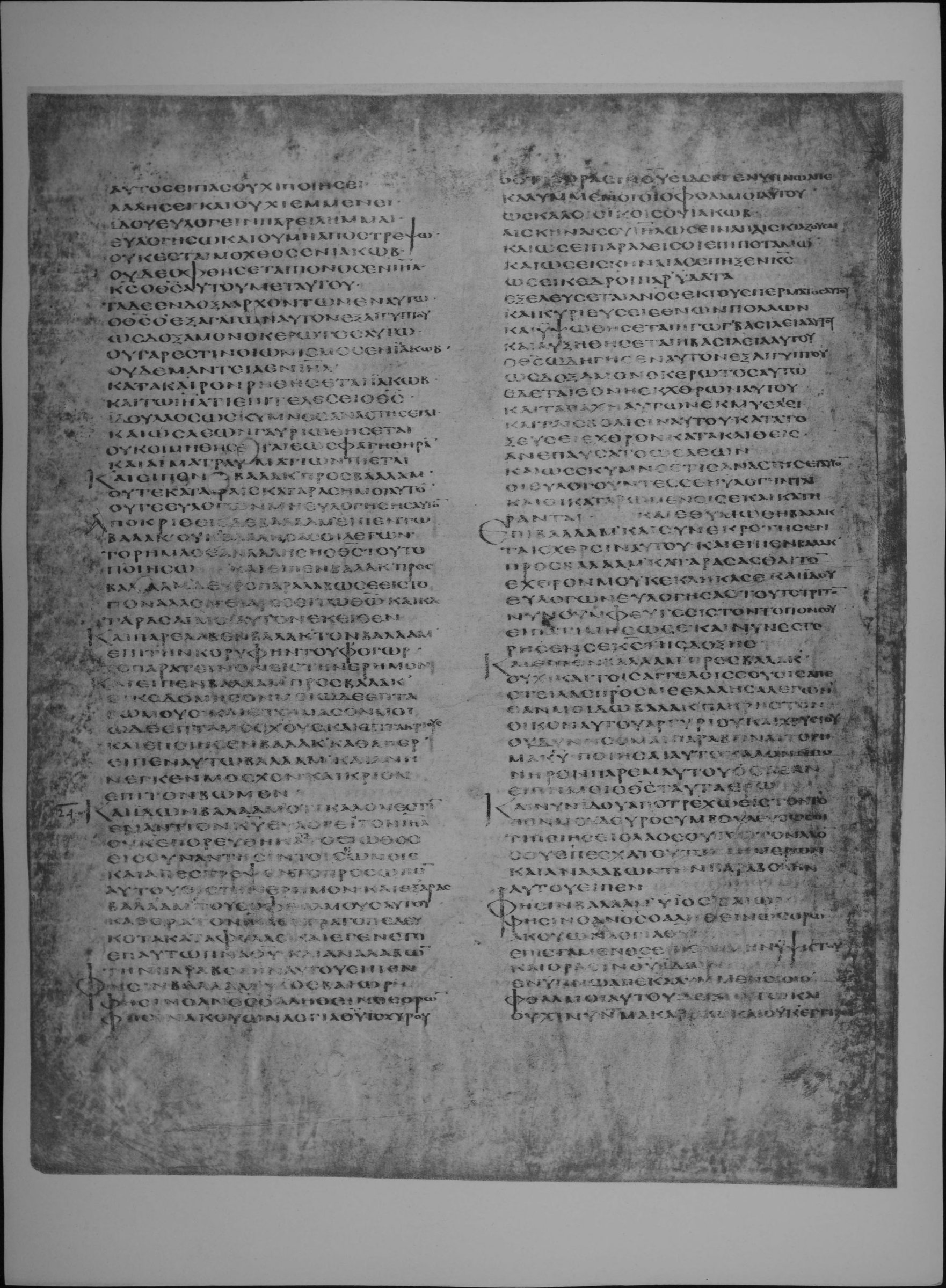
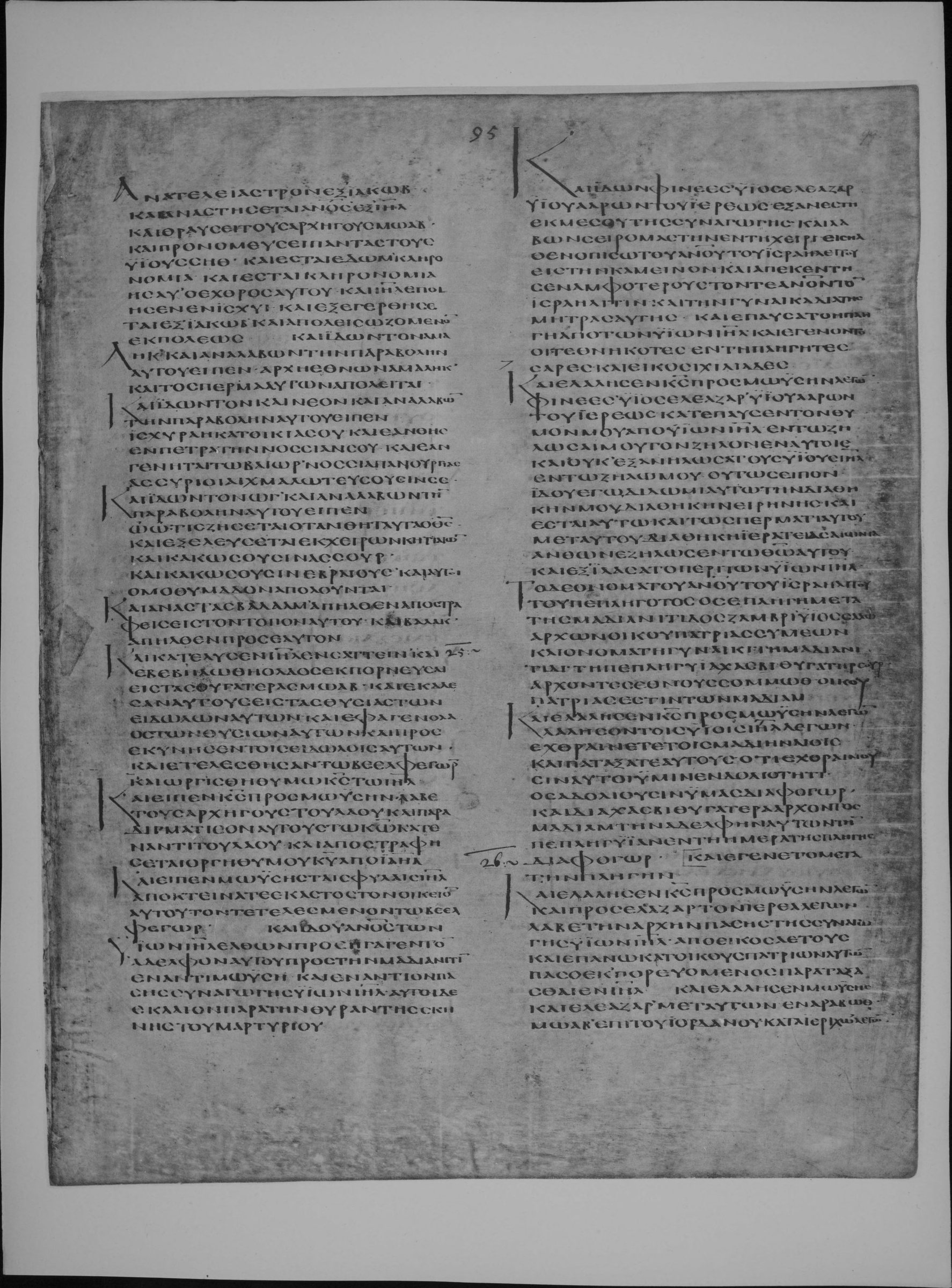
Numbers 24 in the Greek Old Testament (the Septuagint) as written in Codex Alexandrinus, a Greek Bible copied in the fifth century, probably in Egypt, and now in the British Library (Royal MS 1 D. V, the first of its four volumes). It is one of the three great early codices of the whole Greek Bible, with Codex Vaticanus and Codex Sinaiticus, and for Genesis 1:1-46:28, which Codex Vaticanus has lost, it is the oldest surviving complete Greek text (older papyri such as the Berlin Genesis papyrus and Chester Beatty 961 survive only in part).
This entry meets the strict three-criteria standard of the Theosis Library:
- Manuscript scan: the pages of Codex Alexandrinus carrying this chapter (fol. 94v, fol. 95r), from the full-size photographic (autotype) facsimile published by the British Museum in 1879-1883, as digitised on the Internet Archive. The verse range of every page comes from the reduced photographic facsimile of 1915, which prints it beneath each plate, and the opening words of every page were read on the plate to confirm the page and the verse it begins with. Each section links to the page or pages that hold its verses. Folio numbers are those written at the head of each leaf and visible on the plates.
- Original text: Swete's edition, which here prints the text of Codex Vaticanus (Vat. gr. 1209), the base of his edition, and gives the readings of Alexandrinus only in his apparatus. The Greek column is therefore Vaticanus' text; where Alexandrinus differs, the plate shows what Alexandrinus reads.
- English translation: Sir Lancelot C. L. Brenton, The Septuagint Version of the Old Testament (1844; 1851 edition), a translation of the Greek, public domain, from the eBible.org text.
How was this verified? (Provenance)
Where on the image
Numbers 24:1-8 is on fol. 94v (full-size facsimile of 1879-83, Internet Archive codex-alexandrinus leaf 209). The 1915 reduced facsimile prints beneath this page: Num. xxiii. 19-xxiv. 17. Checked on the plate: the page begins inside Numbers 23:19 (first words read: ΑΥΤΟΣ ΕΙΠΑΣ ΟΥΧΙ ΠΟΙΗΣΕΙ ΛΑΛΗΣΕΙ ΚΑΙ ΟΥΧΙ ΕΜΜΕΝΕΙ ΙΔΟΥ ΕΥΛΟΓΕΙΝ ΠΑΡΕΙΛΗΜΜΑΙ).
1Καὶ ἰδὼν Βαλαὰμ ὅτι καλόν ἐστιν ἔναντι Κυρίου εὐλογεῖν τὸν Ἰσραήλ, οὐκ ἐπορεύθη κατὰ τὸ εἰωθὸς εἰς συνάντησιν τοῖς οἰωνοῖς, καὶ ἀπέστρεψεν τὸ πρόσωπον εἰς τὴν ἔρημον. 2καὶ ἐξάρας Βαλαὰμ τοὺς ὀφθαλμοὺς αὐτοῦ καθορᾷ τὸν Ἰσραὴλ ἐστρατοπεδευκότα κατὰ φυλάς· καὶ ἐγένετο πνεῦμα θεοῦ ἐν αὐτῷ. 3καὶ ἀναλαβὼν τὴν παραβολὴν αὐτοῦ εἶπεν Φησὶν Βαλαὰμ υἱὸς Βεώρ, φησὶν ὁ ἄνθρωπος ὁ ἀληθινῶς ὁρῶν, 4φησὶν ἀκούων λόγια θεοῦ, ὅστις ὅρασιν θεοῦ εἶδεν, ἐν ὕπνῳ, ἀποκεκαλυμμένοι οἱ ὀφθαλμοὶ αὐτοῦ· 5ὡς καλοί σου οἱ οἶκοι, Ἰακώβ, αἱ σκηναί σου, Ἰσραήλ· 6ὡς νάπαι σκιάζουσαι, καὶ ὡσεὶ παράδεισος ἐπὶ ποταμῶν· καὶ ὡσεὶ σκηναὶ ἃς ἔπηξεν Κύριος, ὡσεὶ κέδροι παρ᾽ ὕδατα. 7ἐξελεύσεται ἄνθρωπος ἐκ τοῦ σπέρματος αὐτοῦ, καὶ κυριεύσει ἐθνῶν πολλῶν· καὶ ὑψωθήσεται ἢ Γὼγ βασιλεία, καὶ αὐξηθήσεται ἡ βασιλεία αὐτοῦ. 8θεὸς ὡδήγησεν αὐτὸν ἐξ Αἰγύπτου, ὡς δόξα μονοκέρωτος αὐτῷ· ἔδεται ἔθνη ἐχθρῶν αὐτοῦ, καὶ τὰ πάχη αὐτῶν ἐκμυελιεῖ, καὶ ταῖς βολίσιν αὐτοῦ κατατοξεύσει ἐχθρόν.
1And when Balaam saw that it pleased God to bless Israel, he did not go according to his custom to meet the omens, but turned his face toward the wilderness. 2And Balaam lifted up his eyes, and sees Israel encamped by their tribes; and the Spirit of God came upon him. 3And he took up his parable and said, Balaam son of Beor says, the man who sees truly says, 4he says who hears the oracle of the Mighty One, who saw a vision of God in sleep; his eyes were opened: 5How goodly are thy habitations, Jacob, and thy tents, Israel! 6as shady groves, and as gardens by a river, and as tents which God pitched, and as cedars by the waters. 7There shall come a man out of his seed, and he shall rule over many nations; and the kingdom of Gog shall be exalted, and his kingdom shall be increased. 8God led him out of Egypt; he has as it were the glory of a unicorn: he shall consume the nations of his enemies, and he shall drain their marrow, and with his darts he shall shoot through the enemy.
Where on the image
Numbers 24:9-16 is on fol. 94v (full-size facsimile of 1879-83, Internet Archive codex-alexandrinus leaf 209). The 1915 reduced facsimile prints beneath this page: Num. xxiii. 19-xxiv. 17. Checked on the plate: the page begins inside Numbers 23:19 (first words read: ΑΥΤΟΣ ΕΙΠΑΣ ΟΥΧΙ ΠΟΙΗΣΕΙ ΛΑΛΗΣΕΙ ΚΑΙ ΟΥΧΙ ΕΜΜΕΝΕΙ ΙΔΟΥ ΕΥΛΟΓΕΙΝ ΠΑΡΕΙΛΗΜΜΑΙ).
9κατακλιθεὶς ἀνεπαύσατο ὡς λέων καὶ ὡς σκύμνος· τίς ἀναστήσει αὐτόν; οἱ εὐλογοῦντές σε εὐλόγηνται, καὶ οἱ καταρώμενοί σε κεκατήρανται. 10καὶ ἐθυμώθη Βαλὰκ ἐπὶ Βαλαάμ, καὶ συνεκρότησεν ταῖς χερσὶν αὐτοῦ· καὶ εἶπεν Βαλὰκ πρὸς Βαλαάμ Καταρᾶσθαι τὸν ἐχθρόν μου κέκληκά σε, καὶ ἰδοὺ εὐλογῶν εὐλόγησας τρίτον τοῦτο. 11νῦν οὖν φεῦγε εἰς τὸν τόπον σου· εἶπα Τιμήσω σε, καὶ νῦν ἐστέρεσέν σε Κύριος τῆς δόξης. 12καὶ εἶπεν Βαλαὰμ πρὸς Βαλάκ Οὐχὶ καὶ τοῖς ἀγγέλοις σου οὓς ἀπέστειλας πρὸς μὲ ἐλάλησα λέγων 13Ἐάν μοι δῷ Βαλὰκ πλήρη τὸν οἶκον αὐτοῦ ἀργυρίου καὶ χρυσίου, οὐ δυνήσομαι παραβῆναι τὸ ῥῆμα Κυρίου, ποιῆσαι αὐτὸ πονηρὸν ἢ καλὸν παρ᾽ ἐμαυτοῦ· ὅσα ἐὰν εἴπῃ ὁ θεός, ταῦτα ἐρῶ. 14καὶ νῦν ἰδοὺ ἀποτρέχω εἰς τὸν τόπον μου· δεῦρο συμβουλεύσω σοι τί ποιήσει ὁ λαὸς οὗτος τὸν λαόν σου ἐπ᾽ ἐσχάτου τῶν ἡμερῶν. 15καὶ ἀναλαβὼν τὴν παραβολὴν αὐτοῦ εἶπεν Φησὶν Βαλαὰμ υἱὸς Βεώρ, φησὶν ὁ ἄνθρωπος ὁ ἀληθινὸς ὁρῶν, 16ἀκούων λόγια θεοῦ, ἐπιστάμενος ἐπιστήμην παρὰ Ὑψίστου, καὶ ὅρασιν θεοῦ ἰδών, ἐν ὕπνῳ, ἀποκεκαλυμμένοι οἱ ὀφθαλμοὶ αὐτοῦ·
9He lay down, he rested as a lion, and as a young lion; who shall stir him up? they that bless thee are blessed, and they that curse thee are cursed. 10And Balac was angry with Balaam, and clapped his hands together; and Balac said to Balaam, I called thee to curse my enemy, and behold thou hast decidedly blessed him this third time. 11Now therefore flee to thy place: I said, I will honour thee, but now the Lord has deprived thee of glory. 12And Balaam said to Balac, Did I not speak to thy messengers also whom thou sentest to me, saying, 13If Balac should give me his house full of silver and gold, I shall not be able to transgress the word of the Lord to make it good or bad by myself; whatsoever things God shall say, them will I speak. 14And now, behold, I return to my place; come, I will advise thee of what this people shall do to thy people in the last days. 15And he took up his parable and said, 16hearing the oracles of God, receiving knowledge from the Most High, and having seen a vision of God in sleep; his eyes were opened.
Where on the image
Numbers 24:17 is on fol. 94v (full-size facsimile of 1879-83, Internet Archive codex-alexandrinus leaf 209). The 1915 reduced facsimile prints beneath this page: Num. xxiii. 19-xxiv. 17. Checked on the plate: the page begins inside Numbers 23:19 (first words read: ΑΥΤΟΣ ΕΙΠΑΣ ΟΥΧΙ ΠΟΙΗΣΕΙ ΛΑΛΗΣΕΙ ΚΑΙ ΟΥΧΙ ΕΜΜΕΝΕΙ ΙΔΟΥ ΕΥΛΟΓΕΙΝ ΠΑΡΕΙΛΗΜΜΑΙ). Numbers 24:17-25 is on fol. 95r (full-size facsimile of 1879-83, Internet Archive codex-alexandrinus leaf 210). The 1915 reduced facsimile prints beneath this page: Num. xxiv. 17-xxvi. 3. Checked on the plate: the page begins inside Numbers 24:17 (first words read: ΑΝΑΤΕΛΕΙ ΑΣΤΡΟΝ ΕΞ ΙΑΚΩΒ ΚΑΙ ΑΝΑΣΤΗΣΕΤΑΙ ΑΝΟΣ ΕΞ ΙΣΡΑΗΛ ΚΑΙ ΘΡΑΥΣΕΙ ΤΟΥΣ ΑΡΧΗΓΟΥΣ ΜΩΑΒ).
17δείξω αὐτῷ, καὶ οὐχὶ νῦν· μακαρίζω, καὶ οὐκ ἐγγίζει· ἀνατελεῖ ἄστρον ἐξ Ἰακώβ, καὶ ἀναστήσεται ἄνθρωπος ἐξ Ἰσραήλ, καὶ θραύσει τοὺς ἀρχηγοὺς Μωάβ, καὶ προνομεύσει πάντας υἱοὺς Σήθ. 18καὶ ἔσται Ἐδὼμ κληρονομία, καὶ ἔσται κληρονομία Ἠσαὺ ὁ ἐχθρὸς αὐτοῦ· καὶ Ἰσραὴλ ἐποίησεν ἐν ἰσχύι. 19καὶ ἐξεγερθήσεται ἐξ Ἰακώβ, καὶ ἀπολεῖ σωζόμενον ἐκ πόλεως. 20καὶ ἰδὼν τὸν Ἀμαλὴκ καὶ ἀναλαβὼν τὴν παραβολὴν αὐτοῦ εἶπεν Ἀρχὴ ἐθνῶν Ἀμαλήκ, καὶ τὸ σπέρμα αὐτῶν ἀπολεῖται. 21καὶ ἰδὼν τὸν Κεναῖον καὶ ἀναλαβὼν τὴν παραβολὴν αὐτοῦ εἶπεν Ἰσχυρὰ ἡ κατοικία σου· καὶ ἐὰν θῇς ἐν πέτρᾳ τὴν νοσσιάν σου, 22καὶ ἐὰν γένηται τῷ Βεὼρ νεοσσιὰ πανουργίας, Ἀσσύριοί σε αἰχμαλωτεύσουσιν. 23καὶ ἰδὼν τὸν Ὢγ καὶ ἀναλαβὼν τὴν παραβολὴν αὐτοῦ εἶπεν Ὢ ὤ, τίς ζήσεται ὅταν θῇ ταῦτα ὁ θεός; 24καὶ ἐξελεύσεται ἐκ χειρὸς Κιτιαίων, καὶ κακώσουσιν Ἀσσούρ, καὶ κακώσουσιν Ἐβραίους, καὶ αὐτοὶ ὁμοθυμαδὸν ἀπολοῦνται. 25καὶ ἀναστὰς Βαλαὰμ ἀπῆλθεν, ἀποστραφεὶς εἰς τὸν τόπον αὐτοῦ· καὶ Βαλὰκ ἀπῆλθεν πρὸς ἑαυτόν.
17I will point to him, but not now; I bless him, but he draws not near: a star shall rise out of Jacob, a man shall spring out of Israel; and shall crush the princes of Moab, and shall spoil all the sons of Seth. 18And Edom shall be an inheritance, and Esau his enemy shall be an inheritance of Israel, and Israel wrought valiantly. 19And one shall arise out of Jacob, and destroy out of the city him that escapes. 20And having seen Amalec, he took up his parable and said, Amalec is the first of the nations; yet his seed shall perish. 21And having seen the Kenite, he took up his parable and said, Thy dwelling-place is strong; yet though thou shouldest put thy nest in a rock, 22and though Beor should have a skilfully contrived hiding-place, the Assyrians shall carry thee away captive. 23And he looked upon Og, and took up his parable and said, Oh, oh, who shall live, when God shall do these things? 24And one shall come forth from the hands of the Citians, and shall afflict Assur, and shall afflict the Hebrews, and they shall perish together. 25And Balaam rose up and departed and returned to his place, and Balac went to his own home.
Cite
Sources
- Source: Codex Alexandrinus (British Library Royal MS 1 D. V) via the British Museum photographic facsimiles of 1879-83 and 1915 (Internet Archive) + Swete's Septuagint + Brenton's English (holding institution)
- Critical edition: H. B. Swete, The Old Testament in Greek according to the Septuagint (1909)
← previous · → next · v cycle view · l back to library