Susanna (Theodotion), Chapter 1 (Codex Alexandrinus)
Introduction
Susanna (Theodotion) 1 in the Greek Old Testament (the Septuagint) as written in Codex Alexandrinus, a Greek Bible copied in the fifth century, probably in Egypt, and now in the British Library (Royal MS 1 D. VI, the second of its four volumes). It is one of the three great early codices of the whole Greek Bible, with Codex Vaticanus and Codex Sinaiticus.
Place in the codex: as in Swete's edition, Susanna stands before Daniel 1 in Codex Alexandrinus; Daniel begins on the page on which Susanna ends.
This entry meets the strict three-criteria standard of the Theosis Library:
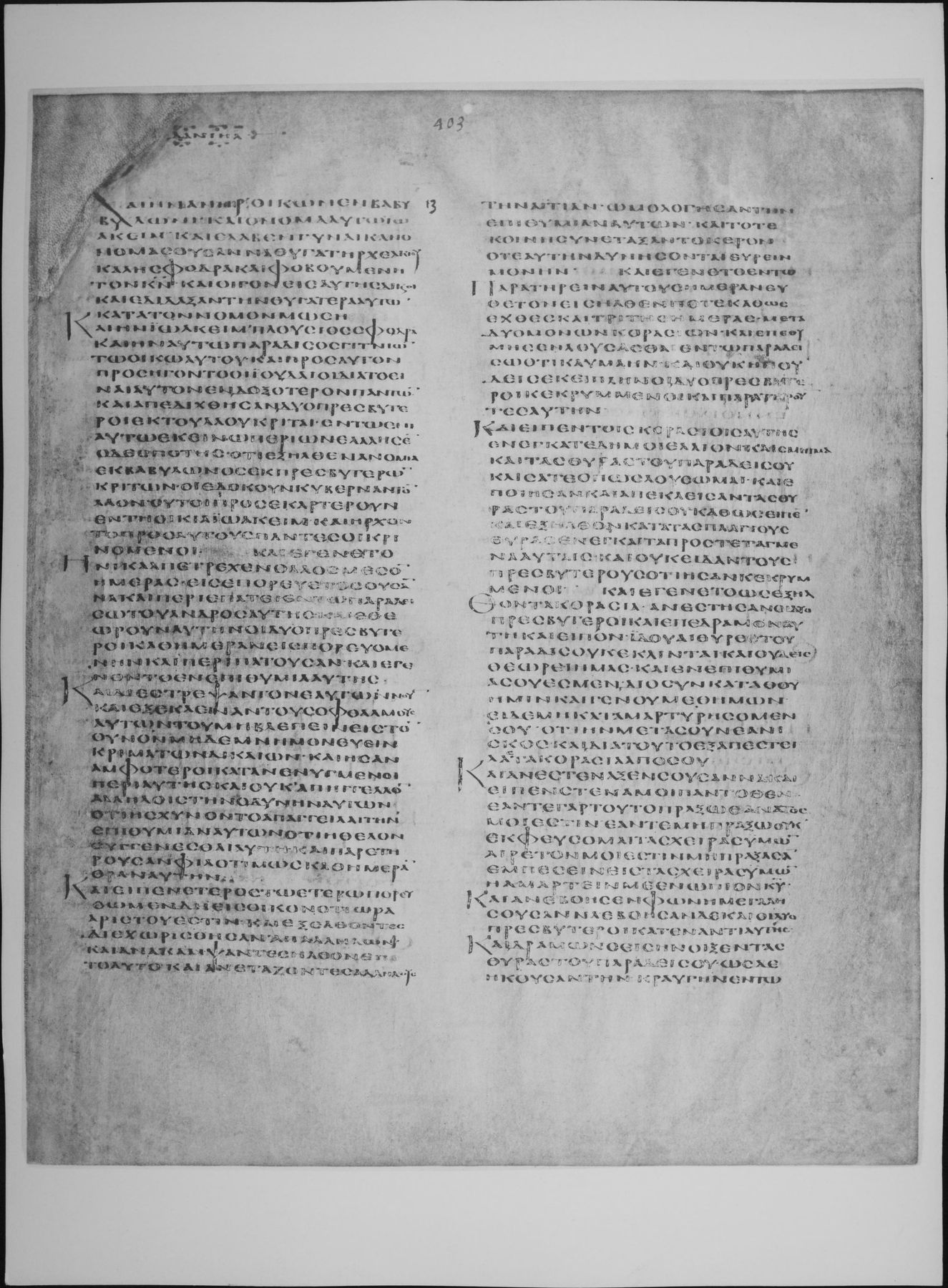
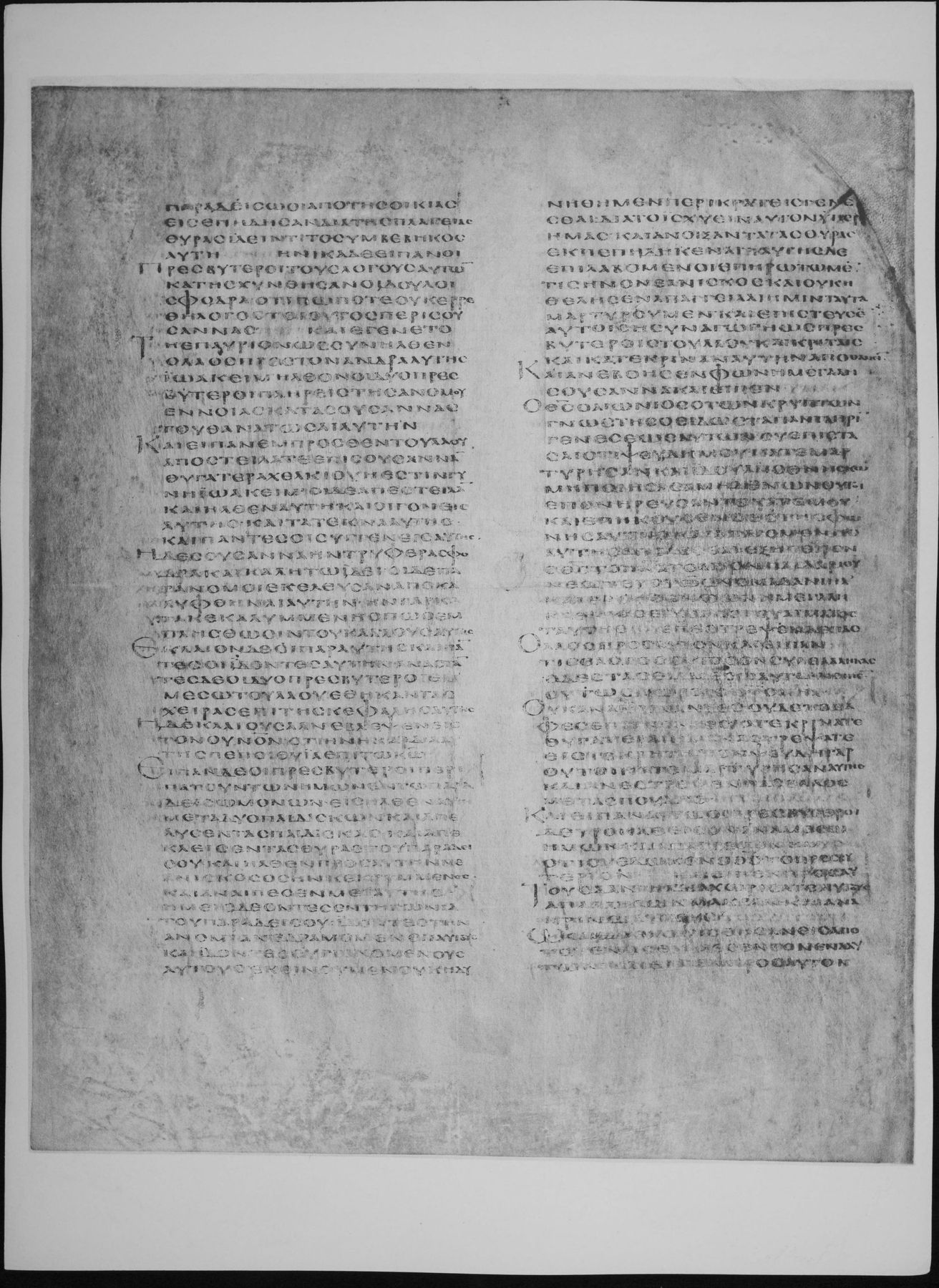
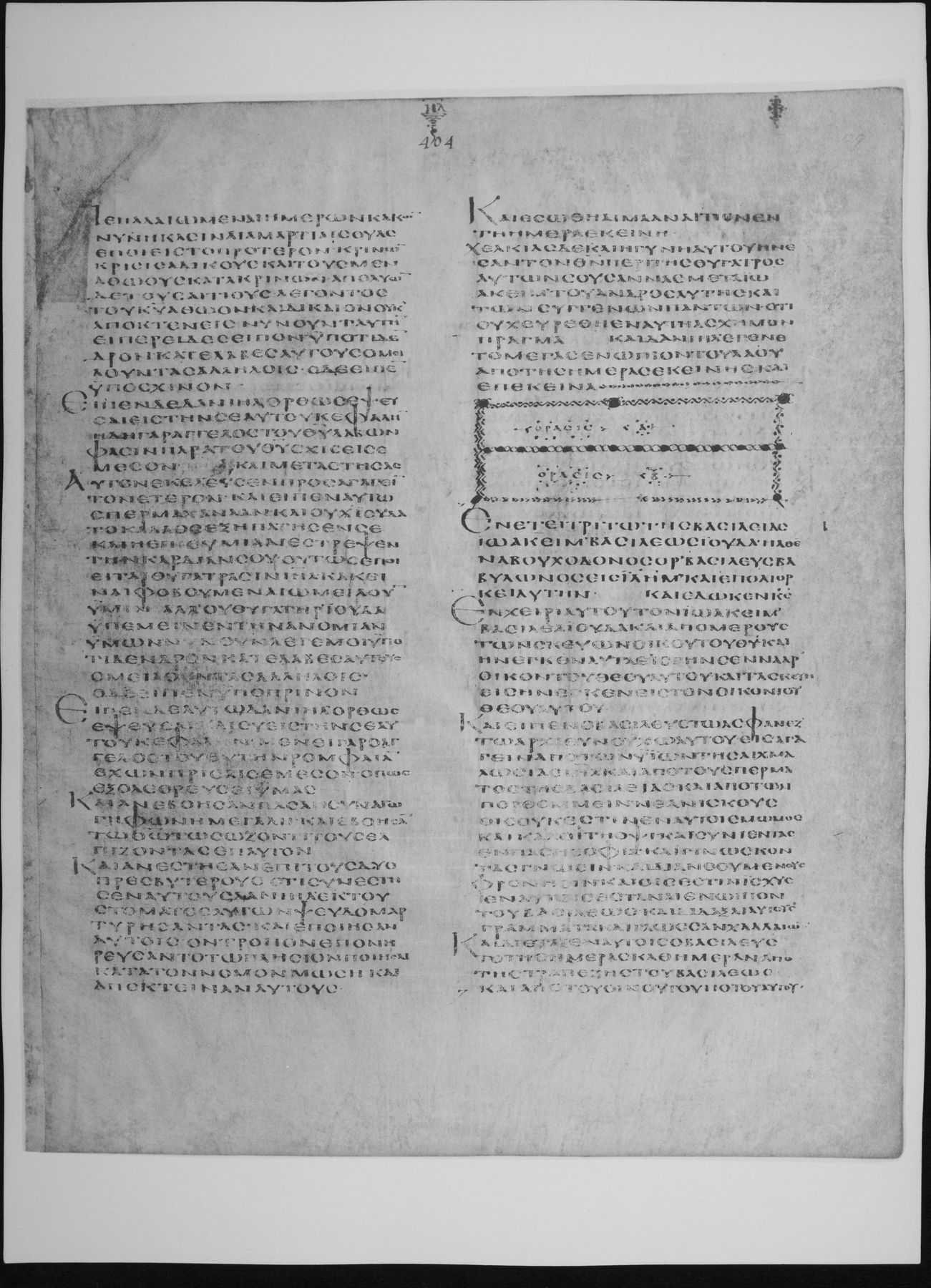
- Manuscript scan: the pages of Codex Alexandrinus carrying this chapter (fol. 403r, fol. 403v, fol. 404r), from the full-size photographic (autotype) facsimile published by the British Museum in 1879-1883, as digitised on the Internet Archive. The verse range of every page comes from the reduced photographic facsimile of 1936, which prints it beneath each plate, and the opening words of every page were read on the plate to confirm the page and the verse it begins with. Each section links to the page or pages that hold its verses. Folio numbers are those written at the head of each leaf and visible on the plates.
- Original text: Swete's edition of the Greek version of Daniel ascribed to Theodotion, which Codex Alexandrinus carries, as almost all Greek manuscripts do, in place of the older Septuagint version (Swete prints that older version, known from the Chigi manuscript, on facing pages; it is not used here). Swete's text of Theodotion is that of Codex Vaticanus (Vat. gr. 1209), with Alexandrinus' readings in his apparatus, so the Greek column is Vaticanus' text; where Alexandrinus differs, the plate shows what Alexandrinus reads. Brenton's English also translates Theodotion's version.
- English translation: Sir Lancelot C. L. Brenton, The Septuagint Version of the Old Testament (1844; 1851 edition), a translation of the Greek, public domain, from the eBible.org text.
How was this verified? (Provenance)
Where on the image
Susanna (Theodotion) 1:1-8 is on fol. 403r (full-size facsimile of 1879-83, Internet Archive codex-alexandrinus leaf 830). The 1936 reduced facsimile prints beneath this page: Susanna 1-26. Checked on the plate: the page begins at the start of Susanna (Theodotion) 1:1 (first words read: ΚΑΙ ΗΝ ΑΝΗΡ ΟΙΚΩΝ ΕΝ ΒΑΒΥΛΩΝΙ ΚΑΙ ΟΝΟΜΑ ΑΥΤΩ ΙΩΑΚΕΙΜ ΚΑΙ ΕΛΑΒΕΝ ΓΥΝΑΙΚΑ).
1ΚΑΙ ἦν ἀνὴρ οἰκῶν ἐν Βαβυλῶνι, καὶ ὄνομα αὐτῷ Ἰωακείμ. 2καὶ ἔλαβεν γυναῖκα ᾗ ὄνομα Σουσάννα, θυγάτηρ Χελκείου, καλὴ σφόδρα καὶ φοβουμένη τὸν κύριον. 3καὶ οἱ γονεῖς αὐτῆς δίκαιοι, καὶ ἐδίδαξαν τὴν θυγατέρα αὐτῶν κατὰ τὸν νόμον Μωυσῆ. 4καὶ ἦν Ἰωακεὶμ πλούσιος σφόδρα, καὶ ἦν αὐτῷ παράδεισος γειτνιῶν τῷ οἴκῳ αὐτοῦ· καὶ πρὸς αὐτὸν προσήγοντο οἱ Ἰουδαῖοι, διὰ τὸ εἶναι αὐτὸν ἐνδοξότερον πάντων. 5Καὶ ἀπεδείχθησαν δύο πρεσβύτεροι ἐκ τοῦ λαοῦ κριταὶ ἐν τῷ ἐνιαυτῷ ἐκείνῳ, περὶ ὧν ἐλάλησεν ὁ δεσπότης ὅτι ἐξῆλθεν ἀνομία ἐκ Βαβυλῶνος ἐκ πρεσβυτέρων κριτῶν οἳ ἐδόκουν κυβερνᾷν τὸν λαόν. 6οὗτοι προσεκαρτέρουν ἐν τῇ οἰκίᾳ Ἰωακείμ, καὶ ἤρχοντο πρὸς αὐτοὺς πάντες οἱ κρινόμενοι. 7καὶ ἐγένετο ἡνίκα ἀπέτρεχεν ὁ λαὸς μέσον ἡμέρας, εἰσεπορεύετο Σουσάννα καὶ περιεπάτει ἐν τῷ παραδείσῳ τοῦ ἀνδρὸς αὐτῆς. 8καὶ ἐθεώρουν αὐτὴν οἱ δύο πρεσβύτεροι καθ᾽ ἡμέραν εἰσπορευομένην καὶ περιπατοῦσαν, καὶ ἐγένοντο ἐν ἐπιθυμίᾳ αὐτῆς.
1There dwelt a man in Babylon, called Joacim: 2and he took a wife, whose name was Susanna, the daughter of Chelcias, a very fair woman, and one that feared the Lord. 3Her parents also were righteous, and taught their daughter according to the law of Moses. 4Now Joacim was a very rich man, and had a fair garden joining unto his house; and to him resorted the Jews; because he was more honourable than all others. 5The same year were appointed two of the ancients of the people to be judges, such as the Lord spake of, that wickedness came from Babylon from ancient judges, who seemed to govern the people. 6These kept much at Joacim's house, and all that had any suits in law came unto them. 7Now when the people departed away at noon, Susanna went into her husband's garden to walk. 8And the two elders saw her going in every day, and walking; so that their lust was inflamed toward her.
Where on the image
Susanna (Theodotion) 1:9-16 is on fol. 403r (full-size facsimile of 1879-83, Internet Archive codex-alexandrinus leaf 830). The 1936 reduced facsimile prints beneath this page: Susanna 1-26. Checked on the plate: the page begins at the start of Susanna (Theodotion) 1:1 (first words read: ΚΑΙ ΗΝ ΑΝΗΡ ΟΙΚΩΝ ΕΝ ΒΑΒΥΛΩΝΙ ΚΑΙ ΟΝΟΜΑ ΑΥΤΩ ΙΩΑΚΕΙΜ ΚΑΙ ΕΛΑΒΕΝ ΓΥΝΑΙΚΑ).
9καὶ διέστρεψαν τὸν ἑαυτῶν νοῦν, καὶ ἐξέκλιναν τοὺς ὀφθαλμοὺς αὐτῶν τοῦ μὴ βλέπειν εἰς τὸν οὐρανὸν μηδὲ μνημονεύειν κριμάτων δικαίων. 10καὶ ἦσαν ἀμφότεροι κατανενυγμένοι περὶ αὐτῆς, καὶ οὐκ ἀνήγγειλαν ἀλλήλοις τὴν ὀδύνην ἑαυτῶν· 11ὅτι ᾐσχύνοντο ἀναγγεῖλαι τὴν ἐπιθυμίαν αὐτῶν ὅτι ἤθελον συγγενέσθαι αὐτῇ. 12καὶ παρετηροῦσαν φιλοτίμως καθ᾽ ἡμέραν ὁρᾷν αὐτήν. 13καὶ εἶπαν ἕτερος τῷ ἑτέρῳ Πορευθῶμεν δὴ εἰς οἶκον, ὅτι ἀρίστου ὥρα ἐστίν· καὶ ἐξελθόντες διεχωρίσθησαν ἀπ᾽ ἀλλήλων. 14καὶ ἀνακάμψαντες ἦλθον ἐπὶ τὸ αὐτό, καὶ ἀνετάζοντες ἀλλήλους τὴν αἰτίαν ὡμολόγησαν τὴν ἐπιθυμίαν αὐτῶν· καὶ τότε κοινῇ συνετάξαντο καιρὸν ὅτε αὐτὴν δυνήσονται εὑρεῖν μόνην. 15καὶ ἐγένετο ἐν τῷ παρατηρεῖν αὐτοὺς ἡμέραν εὔθετον εἰσῆλθέν ποτε καθὼς ἐχθὲς καὶ τρίτης ἡμέρας μετὰ δύο μόνων κορασίων, καὶ ἐπεθύμησε λούσασθαι ἐν τῷ παραδείσῳ, ὅτι καῦμα ἦν. 16καὶ οὐκ ἦν ἐκεῖ οὐδεὶς πλὴν οἱ δύο πρεσβύτεροι κεκρυμμένοι καὶ παρατηροῦντες αὐτήν.
9And they perverted their own mind, and turned away their eyes, that they might not look unto heaven, nor remember just judgments. 10And albeit they both were wounded with her love, yet durst not one shew another his grief. 11For they were ashamed to declare their lust, that they desired to have to do with her. 12Yet they watched diligently from day to day to see her. 13And the one said to the other, Let us now go home: for it is dinner time. 14So when they were gone out, they parted the one from the other, and turning back again they came to the same place; and after that they had asked one another the cause, they acknowledged their lust: then appointed they a time both together, when they might find her alone. 15And it fell out, as they watched a fit time, she went in as before with two maids only, and she was desirous to wash herself in the garden: for it was hot. 16And there was nobody there save the two elders, that had hid themselves, and watched her.
Where on the image
Susanna (Theodotion) 1:17-24 is on fol. 403r (full-size facsimile of 1879-83, Internet Archive codex-alexandrinus leaf 830). The 1936 reduced facsimile prints beneath this page: Susanna 1-26. Checked on the plate: the page begins at the start of Susanna (Theodotion) 1:1 (first words read: ΚΑΙ ΗΝ ΑΝΗΡ ΟΙΚΩΝ ΕΝ ΒΑΒΥΛΩΝΙ ΚΑΙ ΟΝΟΜΑ ΑΥΤΩ ΙΩΑΚΕΙΜ ΚΑΙ ΕΛΑΒΕΝ ΓΥΝΑΙΚΑ).
17καὶ εἶπεν τοῖς κορασίοις Ἐνέγκατε δή μοι ἔλαιον καὶ σμήγματα, καὶ τὰς θύρας τοῦ παραδείσου κλείσατε, ὅπως λούσωμαι. 18καὶ ἐποίησαν καθὼς εἶπεν, καὶ ἀπέκλεισαν τὰς θύρας τοῦ παραδείσου, καὶ ἐξῆλθαν κατὰ τὰς πλαγίας θύρας ἐνέγκαι τὰ προστεταγμένα αὐταῖς, καὶ οὐκ εἴδοσαν τοὺς πρεσβυτέρους, ὅτι ἦσαν κεκρυμμένοι. 19καὶ ἐγένετο ὡς ἐξήλθοσαν τὰ κοράσια, καὶ ἀνέστησαν οἱ δύο πρεσβῦται καὶ ἐπέδραμον αὐτῇ, 20καὶ εἶπον Ἰδοὺ αἱ θύραι τοῦ παραδείσου κέκλεινται, καὶ οὐδεὶς θεωρεῖ ἡμᾶς, καὶ ἐν ἐπιθυμίᾳ σού ἐσμεν· διὸ συνκατάθου ἡμῖν, καὶ γενοῦ μεθ᾽ ἡμῶν. 21εἰ δὲ μή, καταμαρτυρήσομέν σου ὅτι ἦν μετὰ σοῦ νεανίσκος, καὶ διὰ τοῦτο ἐξαπέστειλας τὰ κοράσια ἀπὸ σου. 22καὶ ἀνεστέναξεν Σουσάννα καὶ εἶπεν Στενά μοι πάντοθεν· ἐάν τε γὰρ τοῦτο πράξω, θάνατός μοί ἐστιν· ἐάν τε μὴ πράξω, οὐκ ἐκφεύξομαι τὰς χεῖρας ὑμῶν. 23αἱρετόν μοί ἐστιν μὴ πράξασαν ἐνπεσεῖν εἰς τὰς χεῖρας ὑμῶν ἢ ἁμαρτεῖν ἐνώπιον Κυρίου. 24καὶ ἀνεβόησεν φωνῇ μεγάλῃ Σουσάννα· ἐβόησαν δὲ καὶ οἱ δύο πρεσβῦται κατέναντι αὐτῆς.
17Then she said to her maids, Bring me oil and washing balls, and shut the garden doors, that I may wash. 18And they did as she bade them, and shut the garden doors, and went out themselves at private doors to fetch the things that she had commanded them: but they saw not the elders, because they were hid. 19Now when the maids were gone forth, the two elders rose up, and ran unto her, saying, 20Behold, the garden doors are shut, that no man can see us, and we are in love with thee; therefore consent unto us, and lie with us. 21If thou wilt not, we will bear witness against thee, that a young man was with thee: and therefore thou didst send away thy maids from thee. 22Then Susanna sighed, and said, I am straitened on every side: for if I do this thing, it is death unto me: and if I do it not, I cannot escape your hands. 23It is better for me to fall into your hands, and not do it, than to sin in the sight of the Lord. 24With that Susanna cried with a loud voice: and the two elders cried out against her.
Where on the image
Susanna (Theodotion) 1:25-26 is on fol. 403r (full-size facsimile of 1879-83, Internet Archive codex-alexandrinus leaf 830). The 1936 reduced facsimile prints beneath this page: Susanna 1-26. Checked on the plate: the page begins at the start of Susanna (Theodotion) 1:1 (first words read: ΚΑΙ ΗΝ ΑΝΗΡ ΟΙΚΩΝ ΕΝ ΒΑΒΥΛΩΝΙ ΚΑΙ ΟΝΟΜΑ ΑΥΤΩ ΙΩΑΚΕΙΜ ΚΑΙ ΕΛΑΒΕΝ ΓΥΝΑΙΚΑ). Susanna (Theodotion) 1:26-32 is on fol. 403v (full-size facsimile of 1879-83, Internet Archive codex-alexandrinus leaf 831). The 1936 reduced facsimile prints beneath this page: Susanna 26-52. Checked on the plate: the page begins inside Susanna (Theodotion) 1:26 (first words read: ΠΑΡΑΔΕΙΣΩ ΟΙ ΑΠΟ ΤΗΣ ΟΙΚΙΑΣ ΕΙΣΕΠΗΔΗΣΑΝ ΔΙΑ ΤΗΣ ΠΛΑΓΙΑΣ ΘΥΡΑΣ ΙΔΕΙΝ ΤΟ ΣΥΜΒΕΒΗΚΟΣ).
25καὶ δραμὼν ὁ εἷς ἤνοιξεν τὰς θύρας τοῦ παραδείσου. 26ὡς δὲ ἤκουσαν τὴν κραυγὴν ἐν τῷ παραδείσῳ οἱ ἐκ τῆς οἰκίας, εἰσεπήδησαν διὰ τῆς πλαγίας θύρας ἰδεῖν τὸ συμβεβηκὸς αὐτῇ. 27ἡνίκα δὲ εἶπαν οἱ πρεσβῦται τοὺς λόγους αὐτῶν, κατῃσχύνθησαν οἱ δοῦλοι σφόδρα, ὅτι πώποτε οὐκ ἐρρέθη λόγος τοιοῦτος περὶ Σουσάννης. 28καὶ ἐγένετο τῇ ἐπαύριον ὡς συνῆλθεν ὁ λαὸς πρὸς τὸν ἄνδρα αὐτῆς Ἰωακείμ, ἦλθον οἱ δύο πρεσβῦται πλήρεις τῆς ἀνόμου ἐννοίας κατὰ Σουσάννης τοῦ θανατῶσαι αὐτήν, καὶ εἶπαν ἔμπροσθεν τοῦ λαοῦ 29Ἀποστείλατε ἐπὶ Σουσάνναν θυγατέρα Χελκίου ἥ ἐστιν γυνὴ Ἰωακείμ. οἱ δὲ ἀπέστειλαν. 30καὶ ἦλθεν αὐτὴ καὶ οἱ γονεῖς αὐτῆς καὶ τὰ τέκνα αὐτῆς καὶ πάντες οἱ συγγενεῖς αὐτῆς. 31ἡ δὲ Σουσάννα ἦν τρυφερὰ σφόδρα καὶ καλὴ τῷ εἴδει. 32οἱ δὲ παράνομοι ἐκέλευσαν ἀποκαλυφθῆναι αὐτήν, ἦν γὰρ κατακεκαλυμμένη, ὅπως ἐμπλησθῶσιν τοῦ κάλλους αὐτῆς.
25Then ran the one, and opened the garden door. 26So when the servants of the house heard the cry in the garden, they rushed in at a private door, to see what was done unto her. 27But when the elders had declared their matter, the servants were greatly ashamed: for there was never such a report made of Susanna. 28And it came to pass the next day, when the people were assembled to her husband Joacim, the two elders came also full of mischievous imagination against Susanna to put her to death; 29and said before the people, Send for Susanna, the daughter of Chelcias, Joacim's wife. And so they sent. 30So she came with her father and mother, her children, and all her kindred. 31Now Susanna was a very delicate woman, and beauteous to behold. 32And these wicked men commanded to uncover her face (for she was covered), that they might be filled with her beauty.
Where on the image
Susanna (Theodotion) 1:33-40 is on fol. 403v (full-size facsimile of 1879-83, Internet Archive codex-alexandrinus leaf 831). The 1936 reduced facsimile prints beneath this page: Susanna 26-52. Checked on the plate: the page begins inside Susanna (Theodotion) 1:26 (first words read: ΠΑΡΑΔΕΙΣΩ ΟΙ ΑΠΟ ΤΗΣ ΟΙΚΙΑΣ ΕΙΣΕΠΗΔΗΣΑΝ ΔΙΑ ΤΗΣ ΠΛΑΓΙΑΣ ΘΥΡΑΣ ΙΔΕΙΝ ΤΟ ΣΥΜΒΕΒΗΚΟΣ).
33ἔκλαιον δὲ οἱ παρ᾽ αὐτῆς καὶ πάντες οἱ ἰδόντες αὐτήν. 34ἀναστάντες δὲ οἱ δύο πρεσβῦται ἐν μέσῳ τῷ λαῷ ἔθηκαν τὰς χεῖρας ἐπὶ τὴν κεφαλὴν αὐτῆς· 35ἡ δὲ κλαίουσα ἀνέβλεψεν εἰς τὸν οὐρανόν, ὅτι ἦν ἡ καρδία αὐτῆς πεποιθυῖα ἐπὶ Κυρίῳ. 36εἶπαν δὲ οἱ πρεσβῦται Περιπατούντων ἡμῶν ἐν τῷ παραδείσῳ μόνων εἰσῆλθεν αὕτη μετὰ δύο παιδισκῶν, καὶ ἀπέκλεισεν τὰς θύρας τοῦ παραδείσου καὶ ἀπέλυσεν τὰς παιδίσκας. 37καὶ ἦλθεν πρὸς αὐτὴν νεανίσκος, ὃς ἦν κεκρυμμένος, καὶ ἀνέπεσε μετ᾽ αὐτῆς. 38ἡμεῖς δὲ ὄντες ἐν τῇ γωνίᾳ τοῦ παραδείσου ἰδόντες τὴν ἀνομίαν ἐδράμομεν ἐπ᾽ αὐτούς· 39καὶ ἰδόντες συγγινομένους αὐτούς, ἐκείνου μὲν οὐκ ἠδυνήθημεν ἐγκρατεῖς γενέσθαι διὰ τὸ ἰσχύειν αὐτὸν ὑπὲρ ἡμᾶς καὶ ἀνοίξαντα τὰς θύρας ἐκπεπηδηκέναι, 40ταύτης δὲ ἐπιλαβόμενοι ἐπηρωτῶμεν τίς ἦν ὁ νεανίσκος·
33Therefore her friends and all that saw her wept. 34Then the two elders stood up in the midst of the people, and laid their hands upon her head. 35And she weeping looked up toward heaven: for her heart trusted in the Lord. 36And the elders said, As we walked in the garden alone, this woman came in with two maids, and shut the garden doors, and sent the maids away. 37Then a young man, who there was hid, came unto her, and lay with her. 38Then we that stood in a corner of the garden, seeing this wickedness, ran unto them. 39And when we saw them together, the man we could not hold: for he was stronger than we, and opened the door, and leaped out. 40But having taken this woman, we asked who the young man was, but she would not tell us: these things do we testify.
Where on the image
Susanna (Theodotion) 1:41-48 is on fol. 403v (full-size facsimile of 1879-83, Internet Archive codex-alexandrinus leaf 831). The 1936 reduced facsimile prints beneath this page: Susanna 26-52. Checked on the plate: the page begins inside Susanna (Theodotion) 1:26 (first words read: ΠΑΡΑΔΕΙΣΩ ΟΙ ΑΠΟ ΤΗΣ ΟΙΚΙΑΣ ΕΙΣΕΠΗΔΗΣΑΝ ΔΙΑ ΤΗΣ ΠΛΑΓΙΑΣ ΘΥΡΑΣ ΙΔΕΙΝ ΤΟ ΣΥΜΒΕΒΗΚΟΣ).
41καὶ οὐκ ἠθέλησεν ἀναγγεῖλαι ἡμῖν. ταῦτα μαρτυροῦμεν. καὶ ἐπίστευσεν αὐτοῖς ἡ συναγωγὴ ὡς πρεσβυτέροις τοῦ λαοῦ καὶ κριταῖς, καὶ κατέκριναν αὐτὴν ἀποθανεῖν. 42ἀνεβόησεν δὲ φωνῇ μεγάλῃ Σουσάννα καὶ εἶπεν Ὁ θεὸς ὁ αἰώνιος ὁ τῶν κρυπτῶν γνώστης, ὁ εἰδὼς τὰ πάντα πρὶν γενέσεως αὐτῶν, 43σὺ ἐπίστασαι ὅτι ψευδῆ μου κατεμαρτύρησαν· καὶ ἰδοὺ ἀποθνήσκω, μὴ ποιήσασα μηδὲν ὧν οὗτοι ἐπονηρεύσαντο κατ᾽ ἐμοῦ. 44Καὶ εἰσήκουσεν Κύριος τῆς φωνῆς αὐτῆς. 45καὶ ἀπαγομένης αὐτῆς ἀπολέσθαι, ἐξήγειρεν ὁ θεὸς τὸ πνεῦμα τὸ ἅγιον παιδαρίου νεωτέρου ᾧ ὄνομα Δανιήλ. 46καὶ ἐβόησεν φωνῇ μεγάλῃ Ἀθῷος ἐγὼ ἀπὸ τοῦ αἵματος ταύτης. 47ἐπέστρεψεν δὲ πᾶς ὁ λαὸς πρὸς αὐτὸν καὶ εἶπαν Τίς ὁ λόγος οὗτος ὃν σὺ λελάληκας; 48ὁ δὲ στὰς ἐν μέσῳ αὐτῶν εἶπεν Οὕτως μωροί, οἱ υἱοὶ Ἰσραήλ; οὐκ ἀνακρίναντες οὐδὲ τὸ σαφὲς ἐπιγνόντες κατεκρίνατε θυγατέρα Ἰσραήλ;
41Then the assembly believed them, as those that were the elders and judges of the people: so they condemned her to death. 42Then Susanna cried out with a loud voice, and said, O everlasting God, that knowest the secrets, and knowest all things before they be: 43thou knowest that they have borne false witness against me, and, behold, I must die; whereas I never did such things as these men have maliciously invented against me. 44And the Lord heard her voice. 45Therefore when she was led to be put to death, the Lord raised up the holy spirit of a young youth, whose name was Daniel: 46who cried with a loud voice, I am clear from the blood of this woman. 47Then all the people turned them toward him, and said, What mean these words that thou hast spoken? 48So he standing in the midst of them said, Are ye such fools, ye sons of Israel, that without examination or knowledge of the truth ye have condemned a daughter of Israel?
Where on the image
Susanna (Theodotion) 1:49-52 is on fol. 403v (full-size facsimile of 1879-83, Internet Archive codex-alexandrinus leaf 831). The 1936 reduced facsimile prints beneath this page: Susanna 26-52. Checked on the plate: the page begins inside Susanna (Theodotion) 1:26 (first words read: ΠΑΡΑΔΕΙΣΩ ΟΙ ΑΠΟ ΤΗΣ ΟΙΚΙΑΣ ΕΙΣΕΠΗΔΗΣΑΝ ΔΙΑ ΤΗΣ ΠΛΑΓΙΑΣ ΘΥΡΑΣ ΙΔΕΙΝ ΤΟ ΣΥΜΒΕΒΗΚΟΣ). Susanna (Theodotion) 1:52-56 is on fol. 404r (full-size facsimile of 1879-83, Internet Archive codex-alexandrinus leaf 832). The 1936 reduced facsimile prints beneath this page: Susanna 52-64, Dan. i. 1-5. Checked on the plate: the page begins inside Susanna (Theodotion) 1:52 (first words read: ΠΕΠΑΛΑΙΩΜΕΝΕ ΗΜΕΡΩΝ ΚΑΚΩΝ ΝΥΝ ΗΚΑΣΙΝ ΑΙ ΑΜΑΡΤΙΑΙ ΣΟΥ ΑΣ ΕΠΟΙΕΙΣ ΤΟ ΠΡΟΤΕΡΟΝ).
49ἀναστρέψατε εἰς τὸ κριτήριον· ψευδῆ γὰρ οὗτοι κατεμαρτύρησαν αὐτῆς. 50καὶ ἀνέστρεψεν πᾶς ὁ λαὸς μετὰ σπουδῆς. καὶ εἶπαν αὐτῷ οἱ πρεσβύτεροι Δεῦρο κάθισον ἐν μέσῳ ἡμῶν καὶ ἀνάγγειλον ἡμῖν, ὅτι σοὶ δέδωκεν ὁ θεὸς τὸ πρεσβεῖον. 51καὶ εἶπεν πρὸς αὐτοὺς Δανιήλ Διαχωρίσατε αὐτοὺς ἀπ᾽ ἀλλήλων μακράν, καὶ ἀνακρινῶ αὐτούς. 52ὡς δὲ διεχωρίσθησαν εἷς ἀπὸ τοῦ ἑνός, ἐκάλεσεν τὸν ἕνα αὐτῶν καὶ εἶπεν πρὸς αὐτὸν Πεπαλαιωμένε ἡμερῶν κακῶν, νῦν ἥκασιν αἱ ἁμαρτίαι σου ἃς ἐποίεις τὸ πρότερον, 53κρίνων κρίσεις ἀδίκους, καὶ τοὺς μὲν ἀθῴους κατακρίνων, ἀπολύων δὲ τοὺς αἰτίους, λέγοντος τοῦ κυρίου Ἀθῷον καὶ δίκαιον οὐκ ἀποκτενεῖς. 54νῦν οὖν ταύτην εἴπερ ἴδες, εἰπόν Ὑπὸ τί δένδρον ἴδες αὐτοὺς ὁμιλοῦντας ἀλλήλοις; ὁ δὲ εἶπεν Ὑπὸ σχῖνον. 55εἶπεν δὲ Δανιήλ Ὀρθῶς ἔψευσαι εἰς τὴν σεαυτοῦ κεφαλήν· ἤδη γὰρ ἄγγελος τοῦ θεοῦ λαβὼν φάσιν παρὰ τοῦ θεοῦ σχίσει σε μέσον. 56καὶ μεταστήσας αὐτὸν ἐκέλευσεν προσαγαγεῖν τὸν ἕτερον· καὶ εἶπεν αὐτῷ Σπέρμα Χανάαν καὶ οὐκ Ἰούδα, τὸ κάλλος ἐξηπάτησέν σε, καὶ ἐπιθυμία διέστρεψεν τὴν καρδίαν σου.
49Return again to the place of judgment: for they have borne false witness against her. 50Wherefore all the people turned again in haste, and the elders said unto him, Come, sit down among us, and shew it us, seeing God hath given thee the honour of an elder. 51Then said Daniel unto them, Put these two aside one far from another, and I will examine them. 52So when they were put asunder one from another, he called one of them, and said unto him, O thou that art waxen old in wickedness, now thy sins which thou hast committed aforetime are come to light: 53for thou hast pronounced false judgment, and hast condemned the innocent, and hast let the guilty go free; albeit the Lord saith, The innocent and righteous shalt thou not slay. 54Now then, if thou hast seen her, tell me, Under what tree sawest thou them companying together? And he said, Under a mastick tree. 55And Daniel said, Very well; thou hast lied against thine own head; for even now the angel of God hath received the sentence of God to cut thee in two. 56So he put him aside, and commanded to bring the other, and said unto him, O thou seed of Chanaan, and not of Juda, beauty hath deceived thee, and lust hath perverted thine heart.
Where on the image
Susanna (Theodotion) 1:57-64 is on fol. 404r (full-size facsimile of 1879-83, Internet Archive codex-alexandrinus leaf 832). The 1936 reduced facsimile prints beneath this page: Susanna 52-64, Dan. i. 1-5. Checked on the plate: the page begins inside Susanna (Theodotion) 1:52 (first words read: ΠΕΠΑΛΑΙΩΜΕΝΕ ΗΜΕΡΩΝ ΚΑΚΩΝ ΝΥΝ ΗΚΑΣΙΝ ΑΙ ΑΜΑΡΤΙΑΙ ΣΟΥ ΑΣ ΕΠΟΙΕΙΣ ΤΟ ΠΡΟΤΕΡΟΝ).
57οὕτως ἐποιεῖτε θυγατράσιν Ἰσραήλ, καὶ ἐκεῖναι φοβούμεναι ὡμίλουν ὑμῖν· ἀλλ᾽ οὐ θυγάτηρ Ἰούδα ὑπέμεινεν τήν ἀνομίαν ὑμῶν. 58νῦν οὖν λέγε μοι Ὑπὸ τί δένδρον κατέλαβες αὐτοὺς ὁμιλοῦντας ἀλλήλοις; ὁ δὲ εἶπεν Ὑπὸ πρῖνον. 59εἶπεν δὲ αὐτῷ Δανιήλ Ὀρθῶς ἔψευσαι καὶ σὺ εἰς τὴν σεαυτοῦ κεφαλήν· μένει γὰρ ὁ ἄγγελος τοῦ θεοῦ τὴν ῥομφαίαν ἔχων πρίσαι σε μέσον, ὅπως ἐξολεθρεύσῃ ὑμᾶς. 60Καὶ ἀνεβόησεν πᾶσα ἡ συναγωγὴ φωνῇ μεγάλῃ, καὶ εὐλόγησαν τῷ θεῷ τῷ σώζοντι τοὺς ἐλπίζοντας ἐπ᾽ αὐτόν. 61καὶ ἀνέστησαν ἐπὶ τοὺς δύο πρεσβύτας, ὅτι συνέστησεν αὐτοὺς Δανιὴλ ἐκ τοῦ στόματος αὐτῶν ψευδομάρτυρας ὄντας, καὶ ἐποίησαν αὐτοῖς ὃν τρόπον ἐπονηρεύσαντο τῷ πλησίον, 62ποιῆσαι κατὰ τὸν νόμον Μωυσῆ, καὶ ἀπέκτειναν αὐτούς· καὶ ἐσώθη αἷμα ἀναίτιον ἐν τῇ ἡμέρᾳ ἐκείνῃ. 63Χελκίας δὲ καὶ ἡ γυνὴ αὐτοῦ ᾔνεσαν περὶ τῆς θυγατρὸς αὐτῶν μετὰ Ἰωακεὶμ τοῦ ἀνδρὸς αὐτῆς καὶ τῶν συνγενῶν πάντων, ὅτι οὐχ εὑρέθη ἐν αὐτῇ ἄσχημον πρᾶγμα. 64Καὶ Δανιὴλ ἐγένετο μέγας ἐνώπιον τοῦ λαοῦ ἀπὸ τῆς ἡμέρας ἐκείνης καὶ ἐπέκεινα.
57Thus have ye dealt with the daughters of Israel, and they for fear companied with you: but the daughter of Juda would not abide your wickedness. 58Now therefore tell me, Under what tree didst thou take them companying together? And he said, Under a holm tree. 59Then said Daniel unto him, Well; thou hast also lied against thine own head: for the angel of God waiteth with the sword to cut thee in two, that he may destroy you. 60With that all the assembly cried out with a loud voice, and praised God, who saveth them that trust in him. 61And they arose against the two elders, for Daniel had convicted them of false witness by their own mouth: 62and according to the law of Moses they did unto them in such sort as they maliciously intended to do to their neighbour: and they put them to death. Thus the innocent blood was saved the same day. 63Therefore Chelcias and his wife praised God for their daughter Susanna, with Joacim her husband, and all their kindred, because there was no dishonesty found in her. 64From that day forth was Daniel had in great reputation in the sight of the people.
Cite
Sources
- Source: Codex Alexandrinus (British Library Royal MS 1 D. VI) via the British Museum photographic facsimiles of 1879-83 and 1936 (Internet Archive) + Swete's Septuagint + Brenton's English (holding institution)
- Critical edition: H. B. Swete, The Old Testament in Greek according to the Septuagint (1909)
← previous · → next · v cycle view · l back to library