Zechariah, Chapter 4 (Codex Alexandrinus)
Introduction
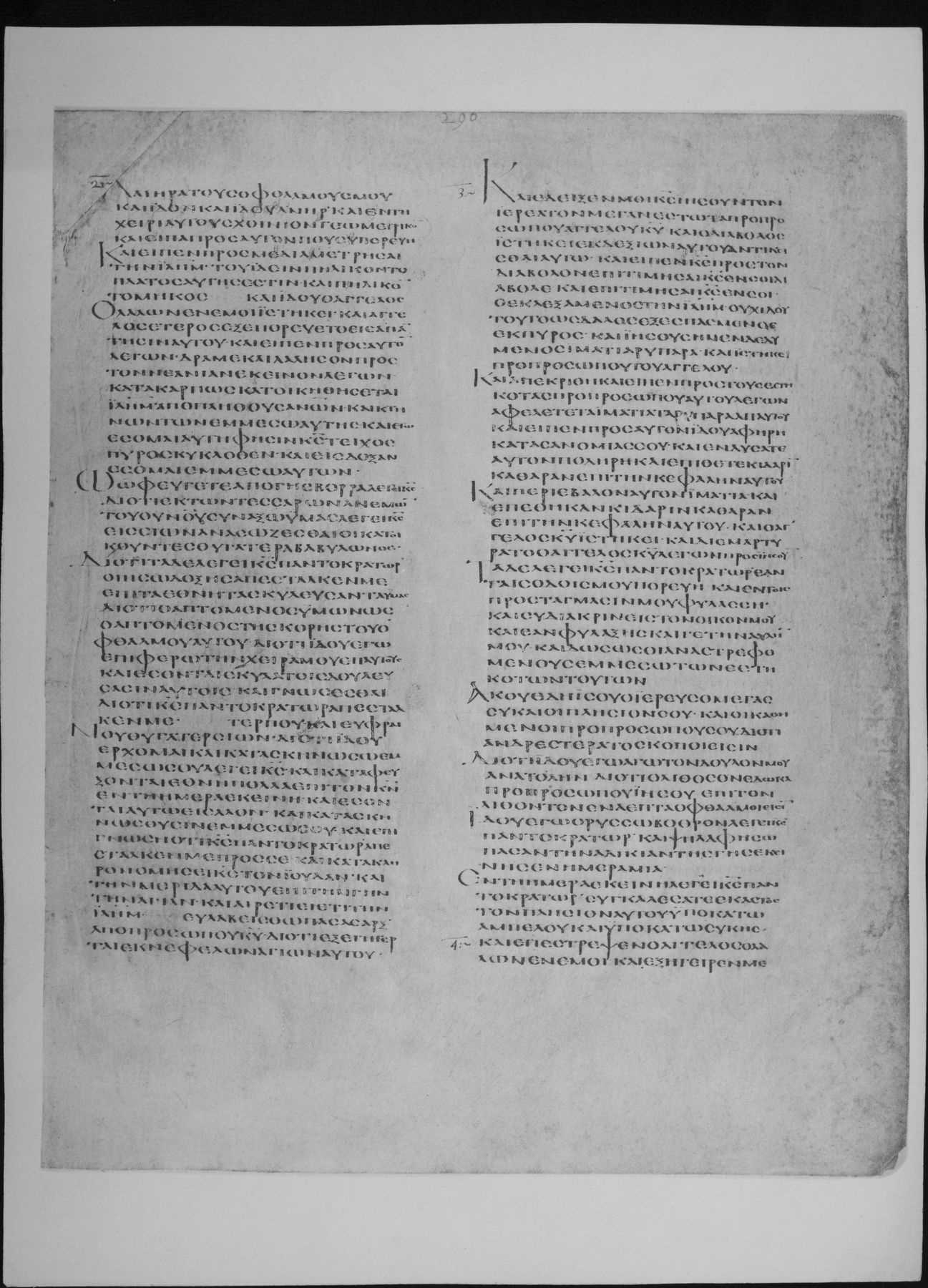
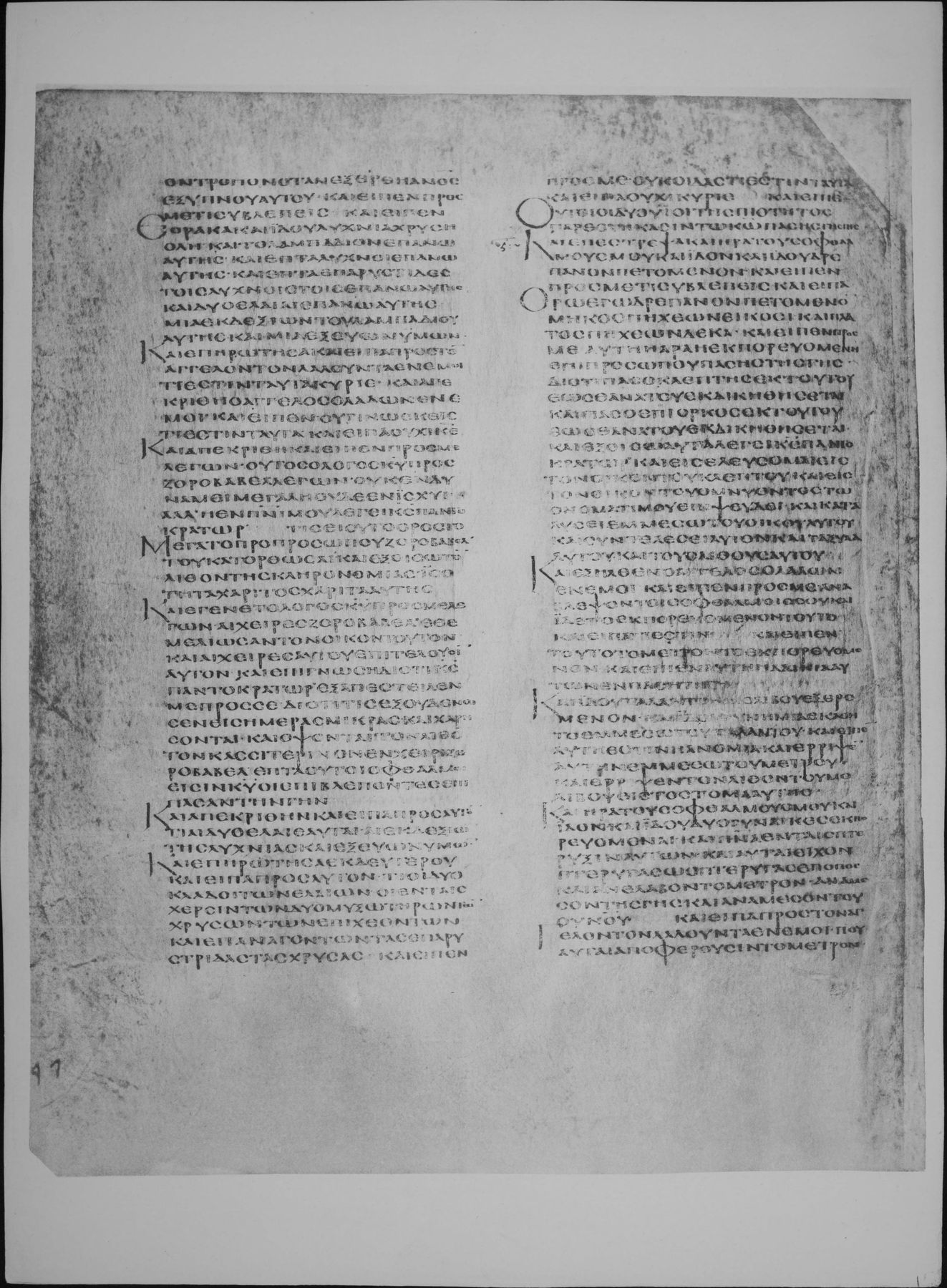
Zechariah 4 in the Greek Old Testament (the Septuagint) as written in Codex Alexandrinus, a Greek Bible copied in the fifth century, probably in Egypt, and now in the British Library (Royal MS 1 D. VI, the second of its four volumes). It is one of the three great early codices of the whole Greek Bible, with Codex Vaticanus and Codex Sinaiticus.
This entry meets the strict three-criteria standard of the Theosis Library:
- Manuscript scan: the pages of Codex Alexandrinus carrying this chapter (fol. 296r, fol. 296v), from the full-size photographic (autotype) facsimile published by the British Museum in 1879-1883, as digitised on the Internet Archive. The verse range of every page comes from the reduced photographic facsimile of 1936, which prints it beneath each plate, and the opening words of every page were read on the plate to confirm the page and the verse it begins with. Each section links to the page or pages that hold its verses. Folio numbers are those written at the head of each leaf and visible on the plates.
- Original text: Swete's edition, which here prints the text of Codex Vaticanus (Vat. gr. 1209), the base of his edition, and gives the readings of Alexandrinus only in his apparatus. The Greek column is therefore Vaticanus' text; where Alexandrinus differs, the plate shows what Alexandrinus reads.
- English translation: Sir Lancelot C. L. Brenton, The Septuagint Version of the Old Testament (1844; 1851 edition), a translation of the Greek, public domain, from the eBible.org text.
How was this verified? (Provenance)
Where on the image
Zechariah 4:1 is on fol. 296r (full-size facsimile of 1879-83, Internet Archive codex-alexandrinus leaf 616). The 1936 reduced facsimile prints beneath this page: Zech. ii. 1-iv. 1. Checked on the plate: the page begins at the start of Zechariah 2:1 (first words read: ΚΑΙ ΗΡΑ ΤΟΥΣ ΟΦΘΑΛΜΟΥΣ ΜΟΥ ΚΑΙ ΕΙΔΟΝ ΚΑΙ ΙΔΟΥ ΑΝΗΡ ΚΑΙ ΕΝ ΤΗ ΧΕΙΡΙ ΑΥΤΟΥ ΣΧΟΙΝΙΟΝ ΓΕΩΜΕΤΡΙΚΟΝ). Zechariah 4:1-8 is on fol. 296v (full-size facsimile of 1879-83, Internet Archive codex-alexandrinus leaf 617). The 1936 reduced facsimile prints beneath this page: Zech. iv. 1-v. 10. Checked on the plate: the page begins inside Zechariah 4:1 (first words read: ΑΝΘΡΩΠΟΝ ΟΤΑΝ ΕΞΕΓΕΡΘΗ ΕΚ ΥΠΝΟΥ ΑΥΤΟΥ ΚΑΙ ΕΙΠΕΝ ΠΡΟΣ ΜΕ ΤΙ ΣΥ ΒΛΕΠΕΙΣ).
1Καὶ ἐπέστρεψεν ὁ ἄγγελος ὁ λαλῶν ἐν ἐμοί, καὶ ἐξῆρέν με ὃν τρόπον ὅταν ἐξεγερθῇ ἄνθρωπος ἐξ ὕπνου αὐτοῦ· 2καὶ εἶπεν πρὸς μέ Τί σὺ βλέπεις; καὶ εἶπα Ἑόρακα, καὶ ἰδοὺ λυχνία χρυσῆ ὅλη, καὶ τὸ λαμπάδιον ἐπάνω αὐτῆς, καὶ ἑπτὰ λύχνοι ἐπάνω αὐτῆς, καὶ ἑπτὰ ἐπαρυστρίδες τοῖς λύχνοις τοῖς ἐπάνω αὐτῆς, 3καὶ δύο ἐλαῖαι ἐπάνω αὐτῆς, μία ἐκ δεξιῶν τοῦ λαμπαδίου αὐτῆς καὶ μία ἐξ εὐωνύμων. 4καὶ ἐπηρώτησα καὶ εἶπον πρὸς τὸν ἄγγελον τὸν λαλοῦντα ἐν ἐμοὶ λέγων Τί ἐστιν ταῦτα, κύριε; 5καὶ ἀπεκρίθη ὁ ἄγγελος ὁ λαλῶν ἐν ἐμοὶ καὶ εἶπεν πρὸς μὲ λέγων Οὐ γινώσκεις τί ἐστιν ταῦτα; καὶ εἶπα Οὐχί, κύριε. 6καὶ ἀπεκρίθη καὶ εἶπεν πρὸς μὲ λέγων Οὗτος ὁ λόγος Κυρίου πρὸς Ζοροβαβὲλ λέγων Οὐκ ἐν δυνάμει μεγάλῃ οὐδὲ ἐν ἰσχύι ἀλλ᾽ ἢ ἐν πνεύματί μου, λέγει Κύριος Παντοκράτωρ. 7τίς εἶ σύ, τὸ ὄρος τὸ μέγα τὸ πρὸ προσώπου Ζοροβαβέλ, τοῦ κατορθῶσαι; καὶ ἐξοίσω τὸν λίθον τῆς κληρονομίας ἰσότητα χάριτος χάριτα αὐτῆς. 8καὶ ἐγένετο λόγος Κυρίου πρὸς μὲ λέγων
1And the angel that talked with me returned, and awakened me, as when a man is awakened out of his sleep. 2And he said to me, What seest thou? And I said, I have seen, and behold a candlestick all of gold, and its bowl upon it, and seven lamps upon it, and seven oil funnels to the lamps upon it: 3and two olive-trees above it, one on the right of the bowl, and one on the left. 4And I inquired, and spoke to the angel that talked with me, saying, What are these things, my lord? 5And the angel that talked with me answered, and spoke to me, saying, Knowest thou not what these things are? And I said, No, my lord. 6And he answered and spoke to me, saying, This is the word of the Lord to Zorobabel, saying, 7Who art thou, the great mountain before Zorobabel, that thou shouldest prosper? whereas I will bring out the stone of the inheritance, the grace of it the equal of my grace. 8And the word of the Lord came to me, saying,
Where on the image
Zechariah 4:9-14 is on fol. 296v (full-size facsimile of 1879-83, Internet Archive codex-alexandrinus leaf 617). The 1936 reduced facsimile prints beneath this page: Zech. iv. 1-v. 10. Checked on the plate: the page begins inside Zechariah 4:1 (first words read: ΑΝΘΡΩΠΟΝ ΟΤΑΝ ΕΞΕΓΕΡΘΗ ΕΚ ΥΠΝΟΥ ΑΥΤΟΥ ΚΑΙ ΕΙΠΕΝ ΠΡΟΣ ΜΕ ΤΙ ΣΥ ΒΛΕΠΕΙΣ).
9Αἱ χεῖρες Ζοροβαβέλ, ἐθεμελίωσεν τὸν οἶκον τοῦτον, καὶ αἱ χεῖρες αὐτοῦ ἐπιτελέσουσιν αὐτόν, καὶ ἐπιγνώσῃ διότι Κύριος Παντοκράτωρ ἐξαπέσταλκέν με πρὸς σέ. 10διότι τίς ἐξουδένωσεν εἰς ἡμέρας μικράς; καὶ χαροῦνται καὶ ὄψονται τὸν λίθον τὸν κασσιτέρινον ἐν χειρὶ Ζοροβαβέλ· ἑπτὰ οὗτοι ὀφθαλμοί εἰσιν οἱ ἐπιβλέποντες ἐπὶ πᾶσαν τὴν γῆν. 11καὶ ἀπεκρίθην καὶ εἶπα πρὸς αὐτόν Τί αἱ δύο ἐλαῖαι αὗται αἱ ἐκ δεξιῶν τῆς λυχνίας καὶ ἐξ εὐωνύμων; 12καὶ ἐπηρώτησα ἐκ δευτέρου καὶ εἶπα πρὸς αὐτόν Τί οἱ δύο κλάδοι τῶν ἐλαιῶν οἱ ἐν ταῖς χερσὶν τῶν δύο μυξωτήρων τῶν χρυσῶν τῶν ἐπιχεόντων καὶ ἐπαναγόντων τὰς ἐπαρυστρίδας τὰς χρυσᾶς; 13καὶ εἶπεν πρὸς μέ Οὐκ οἶδας τί ἐστιν ταῦτα; καὶ εἶπα Οὐχί, κύριε. 14καὶ εἶπεν Οὗτοι οἱ δύο υἱοὶ τῆς πιότητος παρεστήκασιν κυρίῳ πάσης τῆς γῆς.
9The hands of Zorobabel have laid the foundation of this house, and his hands shall finish it: and thou shalt know that the Lord Almighty has sent me to thee. 10For who has despised the small days? surely they shall rejoice, and shall see the plummet of tin in the hand of Zorobabel: these are the seven eyes that look upon all the earth. 11And I answered, and said to him, What are these two olive-trees, which are on the right and left hand of the candlestick? 12And I asked the second time, and said to him, What are the two branches of the olive-trees that are by the side of the two golden pipes that pour into and communicate with the golden oil funnels? 13And he said to me, Knowest thou not what these are? and I said, No, my lord. 14And he said, These are the two anointed ones that stand by the Lord of the whole earth.
Cite
Sources
- Source: Codex Alexandrinus (British Library Royal MS 1 D. VI) via the British Museum photographic facsimiles of 1879-83 and 1936 (Internet Archive) + Swete's Septuagint + Brenton's English (holding institution)
- Critical edition: H. B. Swete, The Old Testament in Greek according to the Septuagint (1909)
← previous · → next · v cycle view · l back to library