Mesha Stele (Moabite Stone), Louvre AO 5066
Introduction
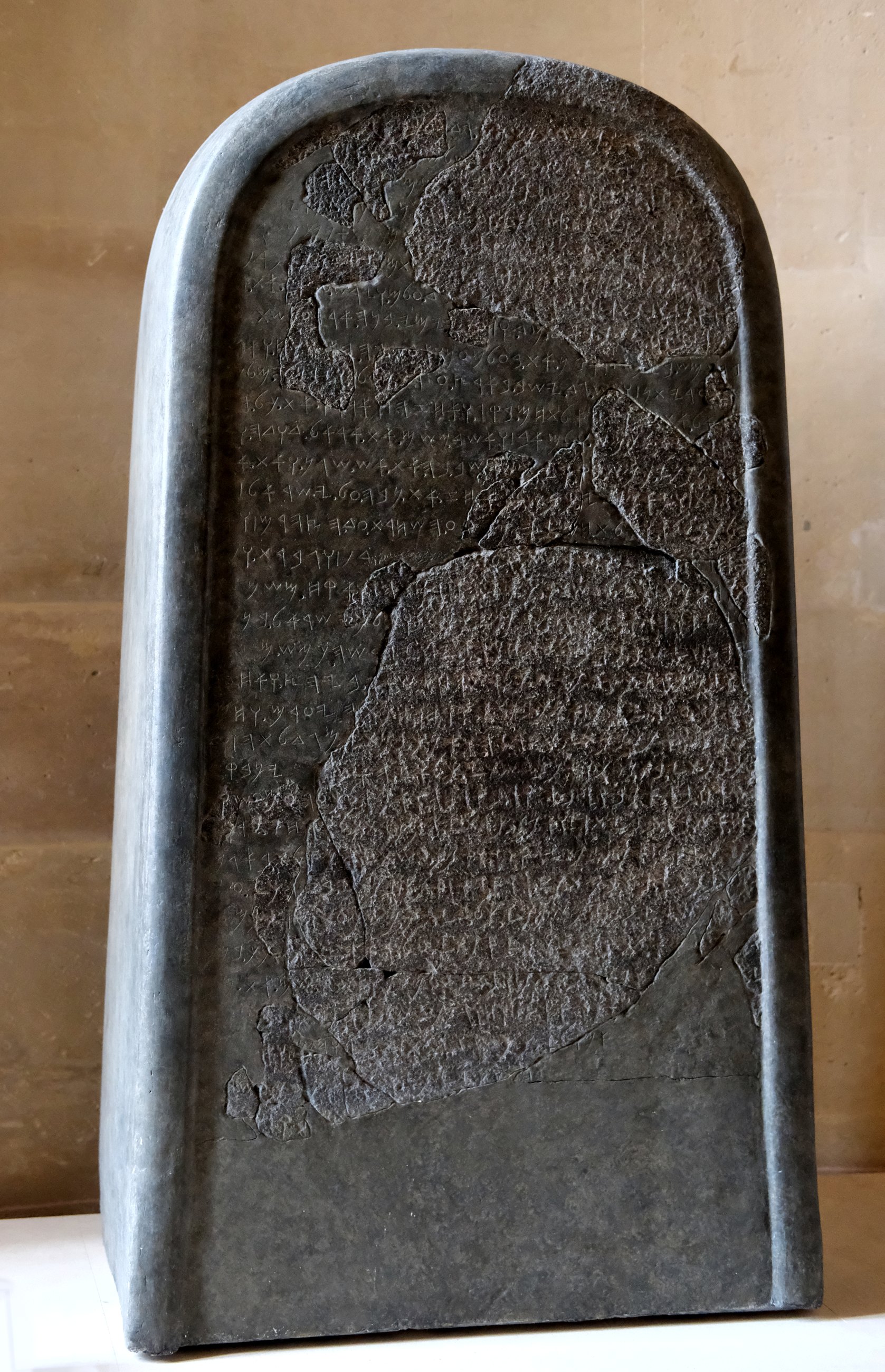
The Mesha Stele, or Moabite Stone, is a black basalt stele set up about 840 BCE by Mesha, king of Moab, at Dibon (Dhiban in Jordan). In 34 lines of Moabite, written in the old Hebrew-Phoenician alphabet, Mesha says that Omri, king of Israel, and his son oppressed Moab because the god Chemosh was angry with his land, and that Chemosh then gave Mesha victory: he took Ataroth, Nebo and Jahaz from Israel and dragged 'the vessels of YHWH' before Chemosh, and he rebuilt the towns of his kingdom. It is the longest Iron Age inscription from the lands east of the Jordan and names Omri, Israel and the God of Israel. Its story runs parallel to the account of Mesha's revolt in the Old Testament, 2 Kings 3:4-27.
The stele was seen by the missionary F. A. Klein in 1868. Before it could be removed, a paper squeeze was taken for Charles Clermont-Ganneau, and in 1869 the stone was broken up by the local people. The larger pieces were recovered and are now in the Louvre (AO 5066), set in a plaster restoration based on the squeeze.
The text is H. F. B. Compston's edition of 1919 in Hebrew square letters, with his line-by-line English translation. Square brackets mark his restorations, overlined letters are uncertain, and dots in the English mark words lost at the broken end of the stele. Each section groups a few lines and shows the photograph of the whole inscribed face.
How was this verified? (Provenance)
Where on the image
Lines 1-4 of the 34 lines on the inscribed face, which the photograph shows whole; the text runs right to left, line 1 under the rounded top. The stele was broken in 1869; the surviving pieces (rough, darker surface) are set in a plaster restoration (smooth surface) whose letters were supplied from the paper squeeze taken before the breakage, so part of these lines is on restored plaster rather than on the ancient stone. Line numbering follows Compston, who prints the text line for line with the stele.
1 אנך · משע · בן · כמש · ?? מלך · מאב · הד1 ʾnk · mšʿ · bn · kmš · ?? mlk · mʾb · hd2 יבני | אבי · מלך · על · מאב · שלשן · שת · ואנך · מלכ2 ybny | ʾby · mlk · ʿl · mʾb · šlšn · št · wʾnk · mlk3 תי · אחר · אבי | ואעש · הבמת · זאת · לכמש · בקרחה | ב[מת · י]3 ty · ʾḥr · ʾby | wʾʿš · hbmt · zʾt · lkmš · bqrḥh | b[mt · y]4 שע · כי · השעני · מכל · הש̅לכן · וכי · הראני · בכל · שנאי | עמר4 šʿ · ky · hšʿny · mkl · hš̅lkn · wky · hrʾny · bkl · šnʾy | ʿmr
1I am Méšaʿ son of Kᵉmôš ? king of Mōʾāḇ the Da-
2-ibonite. My father reigned over Mōʾāḇ thirty years and I reign-
3-ed after my father. And I made this high place for Kᵉmôš in Ḳrḥh. [High place of sal-]
4-vation, for he had saved me from all the assailants (?), and because he had caused me to look upon all my foes. ʿOmr-
Where on the image
Lines 5-9 of the 34 lines on the inscribed face, which the photograph shows whole; the text runs right to left, line 1 under the rounded top. The stele was broken in 1869; the surviving pieces (rough, darker surface) are set in a plaster restoration (smooth surface) whose letters were supplied from the paper squeeze taken before the breakage, so part of these lines is on restored plaster rather than on the ancient stone. Line numbering follows Compston, who prints the text line for line with the stele.
5 י · מלך · ישראל · ויענו · את · מאב · ימן · רבן · כי · י̅אנף · כמש · באר5 y · mlk · yšrʾl · wyʿnw · ʾt · mʾb · ymn · rbn · ky · y̅ʾnp · kmš · bʾr6 צה | ויחלפה · בנה · ויאמר · גם · הא · אענו · את · מאב | בימי · אמר · כ̅6 ṣh | wyḥlph · bnh · wyʾmr · gm · hʾ · ʾʿnw · ʾt · mʾb | bymy · ʾmr · k̅7 וארא · בה · ובבתה | וישראל · אבד · אבד · עלם · וירש · עמרי · את · [אר]7 wʾrʾ · bh · wbbth | wyšrʾl · ʾbd · ʾbd · ʿlm · wyrš · ʿmry · ʾt · [ʾr]8 ץ · מהדבא | וישב · בה · ימה̅ · וחצי · ימי · בנה · ארבען · שת · ו̅יש̅8 ṣ · mhdbʾ | wyšb · bh · ymh̅ · wḥṣy · ymy · bnh · ʾrbʿn · št · w̅yš̅9 בה · כמש · בימי | ואבן · את · בעלמען · ואעש · בה · האשוח · ואבן̅9 bh · kmš · bymy | wʾbn · ʾt · bʿlmʿn · wʾʿš · bh · hʾšwḥ · wʾbn̅
5-î was king of Yisrāʾēl, and he afflicted Mōʾāḇ days many, for Kᵉmôš was angry with his la-
6-nd. And his son succeeded him, and he too said I will afflict Mōʾāḇ. In my days he said s[o],
7and I looked upon him and upon his house. And Israel utterly perished everlastingly. And ʿOmrî possessed the [la-]
8-nd of Mᵉhēḏᵉḇā. And (Israel) dwelt therein, his days and half the days of his son, forty years; and
9Kᵉmôš restored it in my days. And I built Báʿal-mᵉ́ôn and I made therein the reservoir (?), and I built
Where on the image
Lines 10-13 of the 34 lines on the inscribed face, which the photograph shows whole; the text runs right to left, line 1 under the rounded top. The stele was broken in 1869; the surviving pieces (rough, darker surface) are set in a plaster restoration (smooth surface) whose letters were supplied from the paper squeeze taken before the breakage, so part of these lines is on restored plaster rather than on the ancient stone. Line numbering follows Compston, who prints the text line for line with the stele.
10 את · קריתן | ואש · גד · ישב · בארץ · עטרת · מעלם · ויבן · לה · מלך · י10 ʾt · qrytn | wʾš · gd · yšb · bʾrṣ · ʿṭrt · mʿlm · wybn · lh · mlk · y11 שראל · את · עטרת | ואלתחם · בקר · ואחזה | ואהרג · את · כל · העם · [מ]11 šrʾl · ʾt · ʿṭrt | wʾltḥm · bqr · wʾḥzh | wʾhrg · ʾt · kl · hʿm · [m]12 הקר · רית · לכמש · ולמאב | ואשב · משם · את · אראל · דודה · וא[ס]12 hqr · ryt · lkmš · wlmʾb | wʾšb · mšm · ʾt · ʾrʾl · dwdh · wʾ[s]13 חבה · לפני · כמש · בקרית | ואשב · בה · את · אש · שרן · ואת · אש13 ḥbh · lpny · kmš · bqryt | wʾšb · bh · ʾt · ʾš · šrn · wʾt · ʾš
10Ḳiryāṯēn. Now the men of Gaḏ had dwelt in the land of ʿᵃ̌ṭarôṯ from of old; and the king of Yi[srāʾēl (beginning of line 11)] built for himself
11ʿᵃ̌ṭarôṯ. And I fought against the city and took it. And I slew all the people [from]
12the city, a gazing-stock for Kᵉmôš and for Mōʾāḇ. And I restored (or captured) from thence the altar-hearth (?) of Dāwḏôh (or its tutelary spirit?), and I drag-
13-ged it before Kᵉmôš in Ḳᵉriyyôṯ. And I placed therein the men of Šrn and the men of
Where on the image
Lines 14-18 of the 34 lines on the inscribed face, which the photograph shows whole; the text runs right to left, line 1 under the rounded top. The stele was broken in 1869; the surviving pieces (rough, darker surface) are set in a plaster restoration (smooth surface) whose letters were supplied from the paper squeeze taken before the breakage, so part of these lines is on restored plaster rather than on the ancient stone. Line numbering follows Compston, who prints the text line for line with the stele.
14 מחרת | ויאמר · לי · כמש · לך · אחז · את · נבה · על · ישראל | וא̅14 mḥrt | wyʾmr · ly · kmš · lk · ʾḥz · ʾt · nbh · ʿl · yšrʾl | wʾ̅15 הלך · בללה · ואלתחם · בה · מבקע · השחרת · עד · הצהרם | ואח̅15 hlk · bllh · wʾltḥm · bh · mbqʿ · hšḥrt · ʿd · hṣhrm | wʾḥ̅16 זה · ואהרג · כלה̅ · שבעת · אלפן · ג[ב]רן · וגרן | וגברת · ו[גר]16 zh · wʾhrg · klh̅ · šbʿt · ʾlpn · g[b]rn · wgrn | wgbrt · w[gr]17 ת · ורחמת | כי · לעשתר · כמש · החרמתה | ואקח · משם · א[ת · כ]17 t · wrḥmt | ky · lʿštr · kmš · hḥrmth | wʾqḥ · mšm · ʾ[t · k]18 לי · יהוה · ואסחב · הם · לפני · כמש | ומלך · ישראל · בנה · א̅ת̅18 ly · yhwh · wʾsḥb · hm · lpny · kmš | wmlk · yšrʾl · bnh · ʾ̅t̅
14Mḥrṯ. And Kᵉmôš said unto me Go, seize Nᵉḇôh against Yisrāʾēl. And I
15went by night, and fought against it from dawn unto noon. And I sei-
16-zed it and slew all of it, 7000 men and men-sojourners and women & [women-sojourner-]
17-s, and damsels; for to ʿaštar-Kᵉmôš had I devoted it. And I took from thence the [ves-]
18-sels of Yahweh, and dragged them before Kᵉmôš. Now the king of Yisrāʾēl had built
Where on the image
Lines 19-21 of the 34 lines on the inscribed face, which the photograph shows whole; the text runs right to left, line 1 under the rounded top. The stele was broken in 1869; the surviving pieces (rough, darker surface) are set in a plaster restoration (smooth surface) whose letters were supplied from the paper squeeze taken before the breakage, so part of these lines is on restored plaster rather than on the ancient stone. Line numbering follows Compston, who prints the text line for line with the stele.
19 יהץ · וישב · בה · בהלתחמה · בי | ויגרשה · כמש · מפנ[י ו]19 yhṣ · wyšb · bh · bhltḥmh · by | wygršh · kmš · mpn[y w]20 אקח · ממאב · מאתן · אש · כל · רשה | ואשאה · ביהץ · ואחזה ·20 ʾqḥ · mmʾb · mʾtn · ʾš · kl · ršh | wʾšʾh · byhṣ · wʾḥzh ·21 לספת · על · דיבן | אנך · בנתי · קרחה · חמת · היערן · וחמת21 lspt · ʿl · dybn | ʾnk · bnty · qrḥh · ḥmt · hyʿrn · wḥmt
19Yáhaṣ, and dwelt therein while he fought against me. And Kᵉmôš drove him away from before me, and
20I took from Mōʾāḇ 200 men, all the head-men thereof; and I brought them up against Yáhaṣ, and seized it
21to add unto Daiḇôn. I built Ḳrḥh, the wall of Yᵉʿārîn (or the woods), and the wall of
Where on the image
Lines 22-25 of the 34 lines on the inscribed face, which the photograph shows whole; the text runs right to left, line 1 under the rounded top. The stele was broken in 1869; the surviving pieces (rough, darker surface) are set in a plaster restoration (smooth surface) whose letters were supplied from the paper squeeze taken before the breakage, so part of these lines is on restored plaster rather than on the ancient stone. Line numbering follows Compston, who prints the text line for line with the stele.
22 העפל | ואנך · בנתי · שעריה · ואנך · בנתי · מגדלתה | וא22 hʿpl | wʾnk · bnty · šʿryh · wʾnk · bnty · mgdlth | wʾ23 נך · בנתי · בת · מלך · ואנך · עשתי · כלאי · האש[וח · למ]ין · בקרב̅23 nk · bnty · bt · mlk · wʾnk · ʿšty · klʾy · hʾš[wḥ · lm]yn · bqrb̅24 הקר | ובר · אן · בקרב · הקר · בקרחה · ואמר · לכל · העם · עשו · ל̅24 hqr | wbr · ʾn · bqrb · hqr · bqrḥh · wʾmr · lkl · hʿm · ʿšw · l̅25 כם · אש · בר · בביתה | ואנך · כרתי · המכרתת · לקרחה · באסר25 km · ʾš · br · bbyth | wʾnk · krty · hmkrtt · lqrḥh · bʾsr
22ʿōp̄el (or the Aoropolis). And I built the gates thereof, and I built the towers thereof. And
23I built the king's house, and I made the two reser[voirs ? for wa]ter in the middle of
24the city. Now cistern there was none in the middle of the city, in Ḳrḥh. And I said to all the people, Make to
25you every man a cistern in his house. And I cut out the cutting for Ḳrḥh by means of the prisoner-
Where on the image
Lines 26-30 of the 34 lines on the inscribed face, which the photograph shows whole; the text runs right to left, line 1 under the rounded top. The stele was broken in 1869; the surviving pieces (rough, darker surface) are set in a plaster restoration (smooth surface) whose letters were supplied from the paper squeeze taken before the breakage, so part of these lines is on restored plaster rather than on the ancient stone. Line numbering follows Compston, who prints the text line for line with the stele.
26 [י] · ישראל | אנך · בנתי · ערער · ואנך · עשתי · המסלת · בארנן ·26 [y] · yšrʾl | ʾnk · bnty · ʿrʿr · wʾnk · ʿšty · hmslt · bʾrnn ·27 אנך · בנתי · בת · במת · כי · הרס · הא | אנך · בנתי · בצר · כי · עין ·27 ʾnk · bnty · bt · bmt · ky · hrs · hʾ | ʾnk · bnty · bṣr · ky · ʿyn ·28 ש · דיבן · חמשן · כי · כל · דיבן · משמעת | ואנך · מלכ̅28 š · dybn · ḥmšn · ky · kl · dybn · mšmʿt | wʾnk · mlk̅29 תי̅ … מאת · בקרן · אשר · יספתי · על · הארץ | ואנך · בנת29 ty̅ … mʾt · bqrn · ʾšr · yspty · ʿl · hʾrṣ | wʾnk · bnt30 י · [את ·] מ̅ה̅ד[ב]א · ובת · דבלתן | ובת · בעלמען · ואשא · שם · את · נק̅ד̅30 y · [ʾt ·] m̅h̅d[b]ʾ · wbt · dbltn | wbt · bʿlmʿn · wʾšʾ · šm · ʾt · nq̅d̅
26[-s captured from] Yisrāʾēl. I built ʿᵃ̌rōʿēr and I made the high-road by the Arnon.
27I built Bēṯ-bāmôṯ for it was destroyed. I built Béṣer for ruins
28[had it become. And the head-me]n of Daiḇôn were 50, for all Daiḇôn was loyal. And I reign-
29-ed [over] 100 in the cities which I added to the land. And I buil-
30-t Mᵃhēḏᵉ[ḇ]ā and Beṯ-diḇlāṯēn, and Beṯ-báʿal-mᵉʿôn; and I brought thither the sheep-masters (?)
Where on the image
Lines 31-34 of the 34 lines on the inscribed face, which the photograph shows whole; the text runs right to left, line 1 under the rounded top. The stele was broken in 1869; the surviving pieces (rough, darker surface) are set in a plaster restoration (smooth surface) whose letters were supplied from the paper squeeze taken before the breakage, so part of these lines is on restored plaster rather than on the ancient stone. Line numbering follows Compston, who prints the text line for line with the stele.
31 צאן · הארץ | וחורנן · ישב · בה · בת̅ · וק̅ · אש̅ …31 ṣʾn · hʾrṣ | wḥwrnn · yšb · bh · bt̅ · wq̅ · ʾš̅ …32 ו̅יאמר · לי · כמש · רד · הלתחם · בחורנן | ואר̅ד̅ …32 w̅yʾmr · ly · kmš · rd · hltḥm · bḥwrnn | wʾr̅d̅ …33 [ויש]בה · כמש · בימי · ועל · דה · משם · עש …33 [wyš]bh · kmš · bymy · wʿl · dh · mšm · ʿš …34 ש̅ת · שדק · ואנ …34 š̅t · šdq · wʾn …
31… sheep of the land. And Ḥôrōnēn, there dwelt therein ? ?
32… [And] Kᵉmôš said unto me, Go down, fight against Ḥôrōnēn. And I went down
33… and Kᵉmôš [resto]red it in my days. And … from thence
34… And I …
Notes
- Compston's English is printed line for line with the stele, so words broken between lines are hyphenated as he prints them.
- Each line is given in Compston's Hebrew square script (read right to left) and below it in a letter-for-letter Latin transliteration of that same text (ʾ b g d h w z ḥ ṭ y k l m n s ʿ p ṣ q r š t); the transliteration is mechanical and adds no reading of its own. · and | are the stele's word and sentence dividers; an overline marks a letter Compston gives as uncertain.
- Compston: "Words in italics are required by English idiom: they are not in the original. Words and letters within square brackets are restored conjecturally. Words within curved brackets are alternative renderings."
- Compston's note: line 3. Perhaps "Ḳᵉrēḥah" or "Ḳorḥāh"
- Compston's note: lines 4, 7. "Look upon," i.e., with exultation over a fallen foe. Cf. Ps. lix. 10 E.V.
- Compston's note: line 13. Šārōn (?)
- Compston's note: line 14. Maḥarāṯ (?)
- Compston's note: line 16. I.e., recognised settlers. Cf. 2 Sam. i. 13.
- Compston's note: line 21. See note, line 3.
- Compston's note: lines 24, 25. See note, line 3.
- Compston's note: line 30. See 2 Kings iii. 4.
Cite
Sources
- Source: Louvre AO 5066 photograph (Wikimedia Commons, CC BY-SA 4.0) + H. F. B. Compston's 1919 text and translation (public domain) (holding institution)
- Critical edition: H. F. B. Compston, The Inscription on the Stele of Mesa (1919)
← previous · → next · v cycle view · l back to library