Quran, Sura 72 (al-ǧinn) (Codex Parisino-petropolitanus)
Introduction
Sura 72 (al-ǧinn) as preserved on 1 folio side of the Codex Parisino-petropolitanus (Paris, BnF Arabe 328 (a) and (b)), one of the oldest surviving Quran manuscripts, written in hijazi script on parchment, c. 650-750 AD. Each section below is one folio side, and the image shown is that exact page.
- Manuscript scan: the specific folio side from Gallica (Bibliotheque nationale de France IIIF). The folio's sura:verse range was taken from the Corpus Coranicum "Manuscripta Coranica" record for that page, which states the first and last word on the page; the folio numbers of both services were cross-checked by comparing the two images pixel by pixel.
- Original text: the Arabic of the Tanzil Project Uthmani text (CC BY 3.0), reproduced unchanged, verse by verse.
- English: Marmaduke Pickthall, The Meaning of the Glorious Koran (1930), public domain, verse by verse.
Orthography: the codex is written in scriptio defectiva: no vowel signs, almost no consonantal dots, long vowels often unwritten, and letter shapes that differ from the printed Uthmani text. The modern text given here therefore differs orthographically from what is on the folio while conveying the same reading; readers should expect, for example, the basmala and words such as qala to be spelled with fewer letters on the page.
Numbering: verse numbers follow the standard Kufan (Cairo 1924) division used by Corpus Coranicum, Tanzil and Pickthall. Early codices mark verse ends with ink dots that in places divide the text differently, so a verse count made on the page may not match these numbers exactly. In Tanzil's text the basmala opening each sura (except sura 9) is printed as part of verse 1. Where a page begins or ends in the middle of a verse the whole verse is given and the word position is stated in the section heading.
Lacunae: the surviving Paris leaves do not carry every verse of this sura. Only the verses listed in the sections below are on the folios shown; the rest of the sura is lost or preserved in other fragments of the same codex (St Petersburg Marcel 18, Vatican Ar. 1605/1, London KFQ 60) that are not included here.
How was this verified? (Provenance)
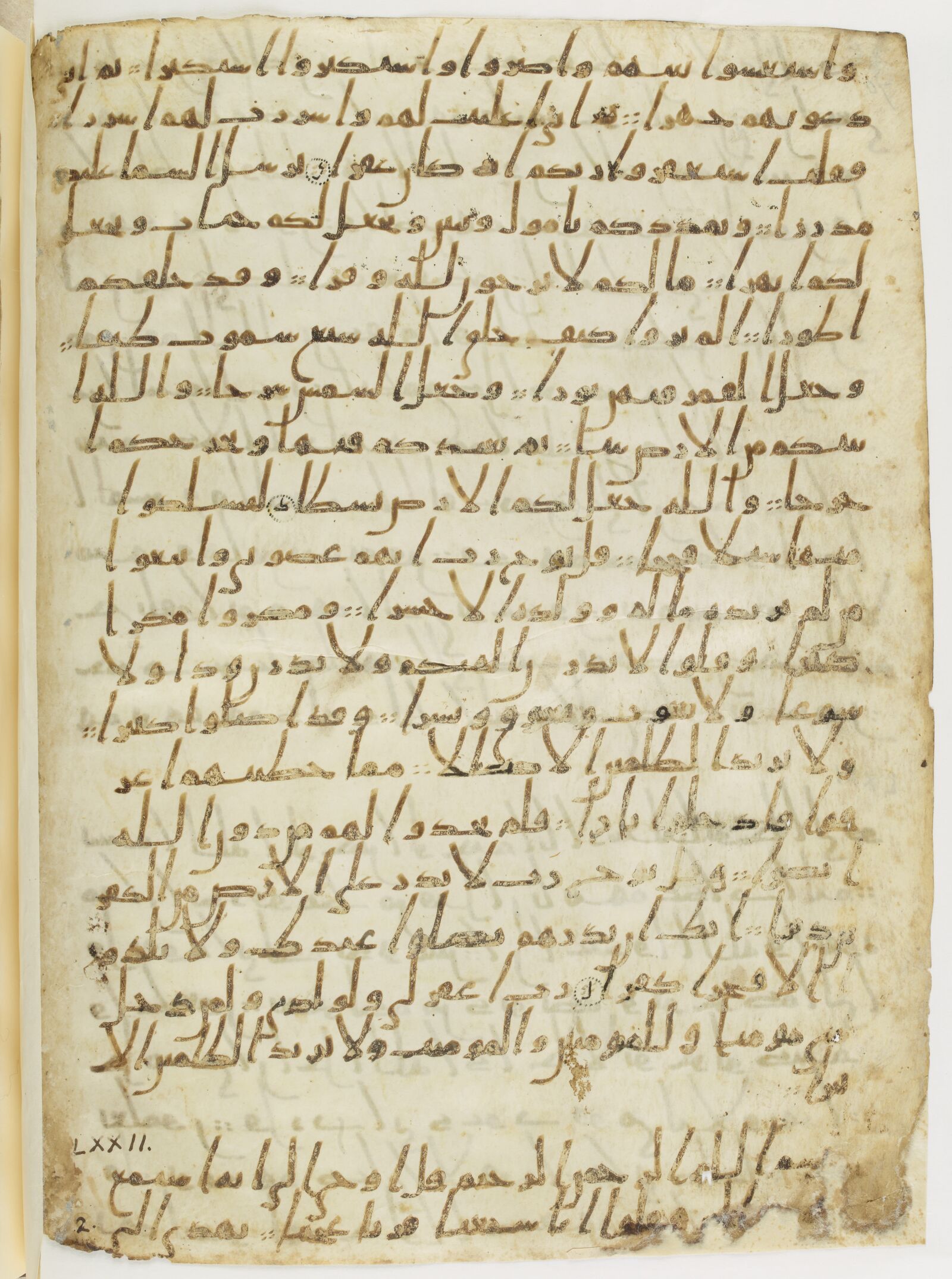
1بِسْمِ ٱللَّهِ ٱلرَّحْمَٰنِ ٱلرَّحِيمِ قُلْ أُوحِىَ إِلَىَّ أَنَّهُ ٱسْتَمَعَ نَفَرٌ مِّنَ ٱلْجِنِّ فَقَالُوٓا۟ إِنَّا سَمِعْنَا قُرْءَانًا عَجَبًا 2يَهْدِىٓ إِلَى ٱلرُّشْدِ فَـَٔامَنَّا بِهِۦ وَلَن نُّشْرِكَ بِرَبِّنَآ أَحَدًا
1Say (O Muhammad): It is revealed unto me that a company of the Jinn gave ear, and they said: Lo! we have heard a marvellous Qur'an, 2Which guideth unto righteousness, so we believe in it and we ascribe no partner unto our Lord.
Translator's Notes
- §:
- §:
Cite
Source & Cross-References
- Source text: Codex Parisino-petropolitanus (BnF Arabe 328) via Gallica IIIF + Corpus Coranicum folio mapping + Tanzil + Pickthall — view original
- Critical edition: Tanzil Uthmani text (CC BY 3.0); folio mapping Corpus Coranicum
← previous · → next · v cycle view · l back to library