Rigveda 1.15: Cycle of the gods
Introduction
Rigveda 1.15 is a hymn of 12 verses addressed to cycle of the gods. It stands in book (maṇḍala) 1, a collection of hymns by many families of poets. The Rigveda is the oldest collection of Sanskrit hymns, composed in the second half of the second millennium BCE and handed down orally for many centuries before it was written down.
The manuscript shown is Penn Ms. Coll. 390 Item 41 (University of Pennsylvania), an undated paper manuscript of the padapāṭha (the word-by-word recitation text, in which every word is written separately and compounds are split) of the whole Ṛgveda in Devanāgarī, 884 leaves in fascicles, 7-9 lines to the page, accents in red; this hymn stands on fol. 8r-8v. Each section below gives the verses that end on one page; the page boundaries were read on the images (the opening words of every page), not counted out. Where the manuscript is a padapāṭha (the word-by-word recitation text), the section shows Aufrecht's continuous (saṃhitā) text first and, as the edition text, the padapāṭha of the same verses, which is the form written on the page.
How was this verified? (Provenance)
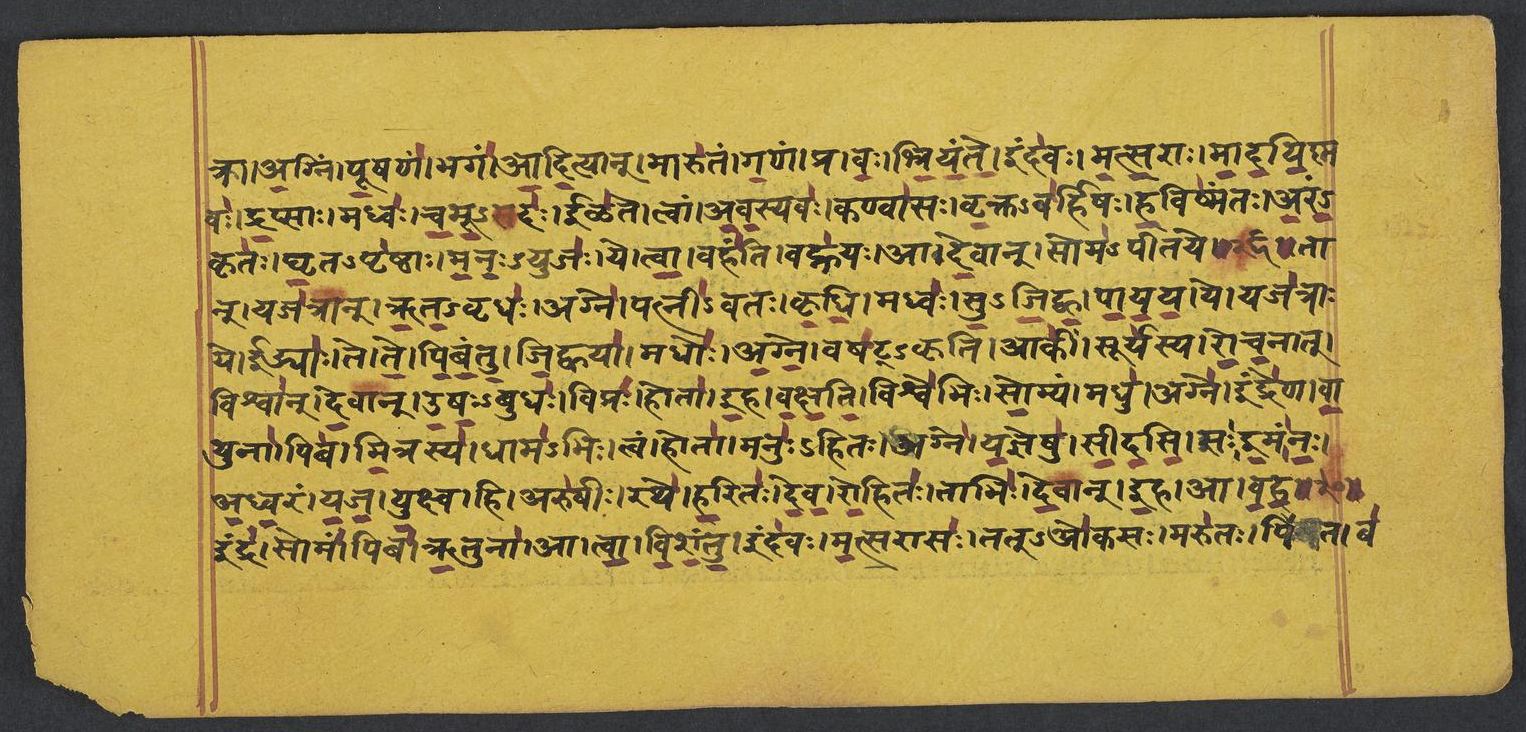
Where on the image
Penn Ms. Coll. 390 Item 41, fol. 8r (OPenn image 9, lower leaf). Checked on the image: the Rigveda text on this page begins in RV 1.14.3 ‹-mitrā agnim pūṣaṇam bhagam›. The next page with Rigveda text, fol. 8v, begins in RV 1.15.2 ‹ṛtunā potrāt yajñam pūnītana›. Verse 1.15.1 ends on this page.
1indra̱ soma̱m piba̍ ṛ̱tunā tvā̍ viśa̱ntv inda̍vaḥ | ma̱tsa̱rāsa̱s tado̍kasaḥ ||
Compare: Padapāṭha (word-by-word text written in the manuscript; Sansknet e-text via GRETIL)
1indra | somam | piba | ṛtunā | ā | tvā | viśantu | indavaḥ | matsarāsaḥ | tat-okasaḥ
1O INDRA drink the Soma juice with Rtu; let the cheering drops Sink deep within, which settle there.
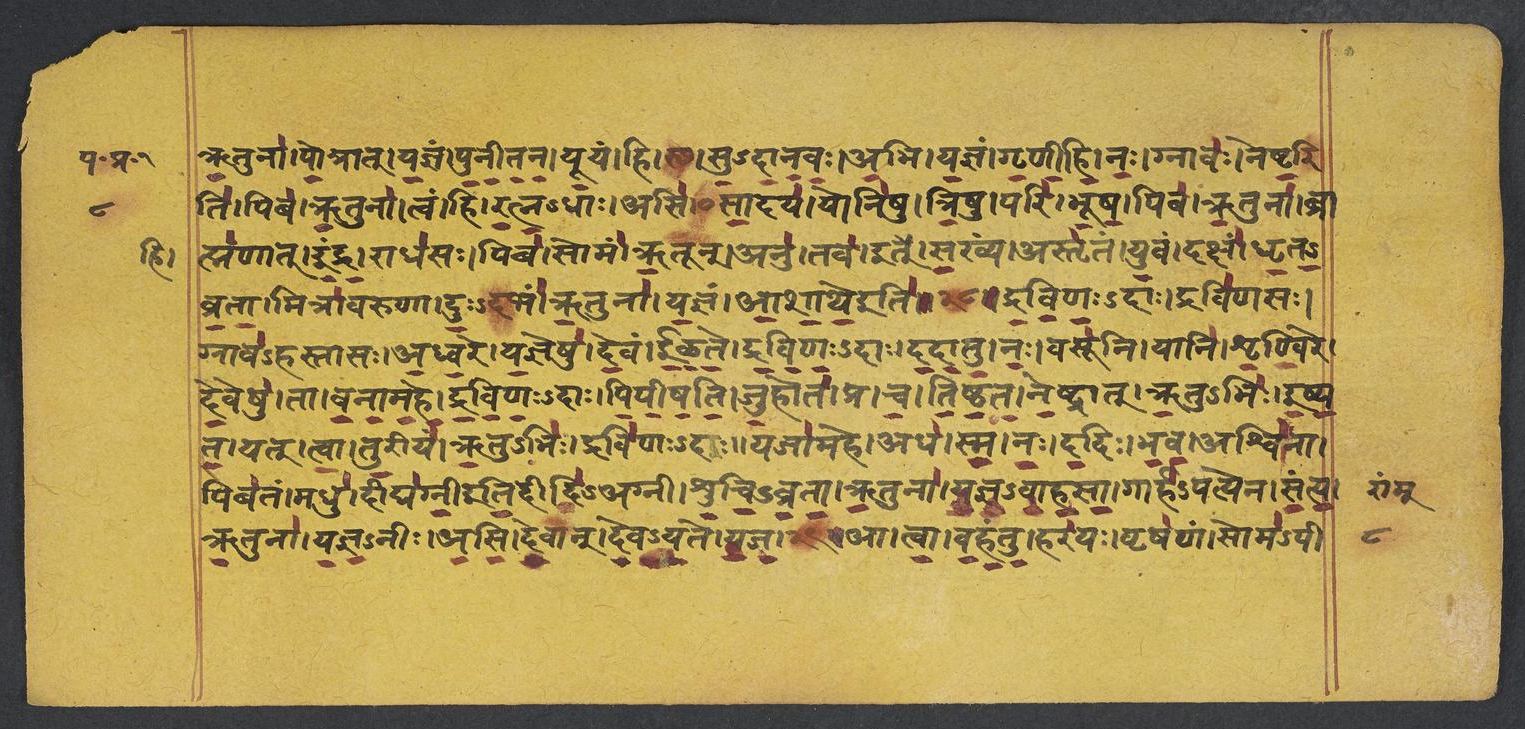
Where on the image
Penn Ms. Coll. 390 Item 41, fol. 8v (OPenn image 10, upper leaf). Checked on the image: the Rigveda text on this page begins in RV 1.15.2 ‹ṛtunā potrāt yajñam pūnītana›. The next page with Rigveda text, fol. 9r, begins in RV 1.16.1 ‹-soma-pītaye indra tvā sūra-cakṣasaḥ›. Verses 1.15.2-12 end on this page; 1.15.2 begins on fol. 8r.
2maru̍ta̱ḥ piba̍ta ṛ̱tunā̍ po̱trād ya̱jñam pu̍nītana | yū̱yaṁ hi ṣṭhā su̍dānavaḥ ||
3a̱bhi ya̱jñaṁ gṛ̍ṇīhi no̱ gnāvo̱ neṣṭa̱ḥ piba̍ ṛ̱tunā̍ | tvaṁ hi ra̍tna̱dhā asi̍ ||
4agne̍ de̱vām̐ i̱hā va̍ha sā̱dayā̱ yoni̍ṣu tri̱ṣu | pari̍ bhūṣa̱ piba̍ ṛ̱tunā̍ ||
5brāhma̍ṇād indra̱ rādha̍sa̱ḥ pibā̱ soma̍m ṛ̱tūm̐r anu̍ | taved dhi sa̱khyam astṛ̍tam ||
6yu̱vaṁ dakṣa̍ṁ dhṛtavrata̱ mitrā̍varuṇa dū̱ḻabha̍m | ṛ̱tunā̍ ya̱jñam ā̍śāthe ||
7dra̱vi̱ṇo̱dā dravi̍ṇaso̱ grāva̍hastāso adhva̱re | ya̱jñeṣu̍ de̱vam ī̍ḻate ||
8dra̱vi̱ṇo̱dā da̍dātu no̱ vasū̍ni̱ yāni̍ śṛṇvi̱re | de̱veṣu̱ tā va̍nāmahe ||
9dra̱vi̱ṇo̱dāḥ pi̍pīṣati ju̱hota̱ pra ca̍ tiṣṭhata | ne̱ṣṭrād ṛ̱tubhi̍r iṣyata ||
10yat tvā̍ tu̱rīya̍m ṛ̱tubhi̱r dravi̍ṇodo̱ yajā̍mahe | adha̍ smā no da̱dir bha̍va ||
11aśvi̍nā̱ piba̍ta̱m madhu̱ dīdya̍gnī śucivratā | ṛ̱tunā̍ yajñavāhasā ||
12gārha̍patyena santya ṛ̱tunā̍ yajña̱nīr a̍si | de̱vān de̍vaya̱te ya̍ja ||
Compare: Padapāṭha (word-by-word text written in the manuscript; Sansknet e-text via GRETIL)
2marutaḥ | pibata | ṛtunā | potrāt | yajñam | pūnītana | yūyam | hi | stha | su-dānavaḥ
3abhi | yajñam | gṛṇīhi | naḥ | grāvaḥ | neṣṭariti | piba | ṛtunā | tvam | hi | ratna-dhā | asi
4agne | devān | iha | ā | vaha | sādaya | yoniṣu | triṣu | pari | bhūṣa | piba | ṛtunā
5brāhmaṇāt | indra | rādhasaḥ | piba | somam | ṛtūn | anu | tava | it | hi | sakhyam | astṛtam
6yuvam | dakṣam | dhṛta-vratā | mitrāvaruṇā | duḥ-dabham | ṛtunā | yajñam | āśātheiti
7draviṇaḥ-dāḥ | draviṇasaḥ | grāva-hastāsaḥ | adhvare | yajñeṣu | devam | īḷate
8draviṇaḥ-dāḥ | dadātu | naḥ | vasūni | yāni | śṛṇvire | deveṣu | tā | vanāmahe
9draviṇaḥ-dāḥ | pipīṣati | juhota | pra | ca | tiṣṭhata | neṣṭrāt | ṛtu-bhiḥ | iṣyata
10yat | tvā | turīyam | ṛtu-bhiḥ | draviṇaḥ-daḥ | yajāmahe | adha | sma | naḥ | dadiḥ | bhava
11aśvinā | pibatam | madhu | dīdyagnī itidīdi-agnī | śuci-vratā | ṛtunā | yajña-vāhasā
12gārhapatyena | santya | ṛtunā | yajña-nīḥ | asi | devān | devayate | yaja
2Drink from the Purifier's cup, Maruts, with Rtu; sanctify The rite, for ye give precious gifts.
3O Neshṭar, with thy Dame accept our sacrifice; with R̥itudrink, For thou art he who giveth wealth.
4Bring the Gods, Agni; in the three appointed places set them down: Surround them, and with R̥itudrink.
5Drink Soma after the Rtus, from the Brahmana's bounty: undissolved, O Indra, is thy friendship's bond.
6Mitra, Varuṇa, ye whose ways are firm – a Power that none deceives-, With R̥ituye have reached the rite.
7The Soma-pressers, fain for wealth, praise the Wealth-giver in the rite, In sacrifices praise the God.
8May the Wealth-giver grant to us riches that shall be far renowned. These things we gain, among the Gods.
9He with the R̥ita fain would drink, Wealth-giver, from the Neshṭar's bowl. Haste, give your offering, and depart.
10As we this fourth time, Wealth-giver, honour thee with the Rtus, be A Giver bountiful to us.
11Drink ye the meath, O Aṣvins bright with flames, whose acts are pure. who with Rtus accept the sacrifice.
12With Rtu, through the house-fire, thou, kind Giver, guidest sacrifice: Worship the Gods for the pious man.
Notes
- Sanskrit: Aufrecht's edition (1877) with the Vedic accents, as entered by van Nooten and Holland (GRETIL).
- English: Ralph T. H. Griffith, The Hymns of the Rigveda (1889-1892; 2nd ed. 1896-1897), from the VedaWeb digital text; OCR slips in that text were corrected against the printed 2nd edition (data/sources/rigveda/griffith_errata.json).
- Padapāṭha (edition text): Sansknet e-text via GRETIL (CC BY-NC-SA 4.0).
Cite
Sources
- Source: Penn Ms. Coll. 390 Item 41 (undated (catalogued with Penn's 18th-19th c. Vedic manuscripts)), OPenn, Public Domain Mark + Aufrecht's accented text (GRETIL) + Griffith's English (VedaWeb) (holding institution)
- Critical edition: Aufrecht (1877), accented e-text via GRETIL
← previous · → next · v cycle view · l back to library