Rigveda 1.40: To Brahmanaspati
Introduction
Rigveda 1.40 is a hymn of 8 verses addressed to Brahmanaspati. It stands in book (maṇḍala) 1, a collection of hymns by many families of poets. The Rigveda is the oldest collection of Sanskrit hymns, composed in the second half of the second millennium BCE and handed down orally for many centuries before it was written down.
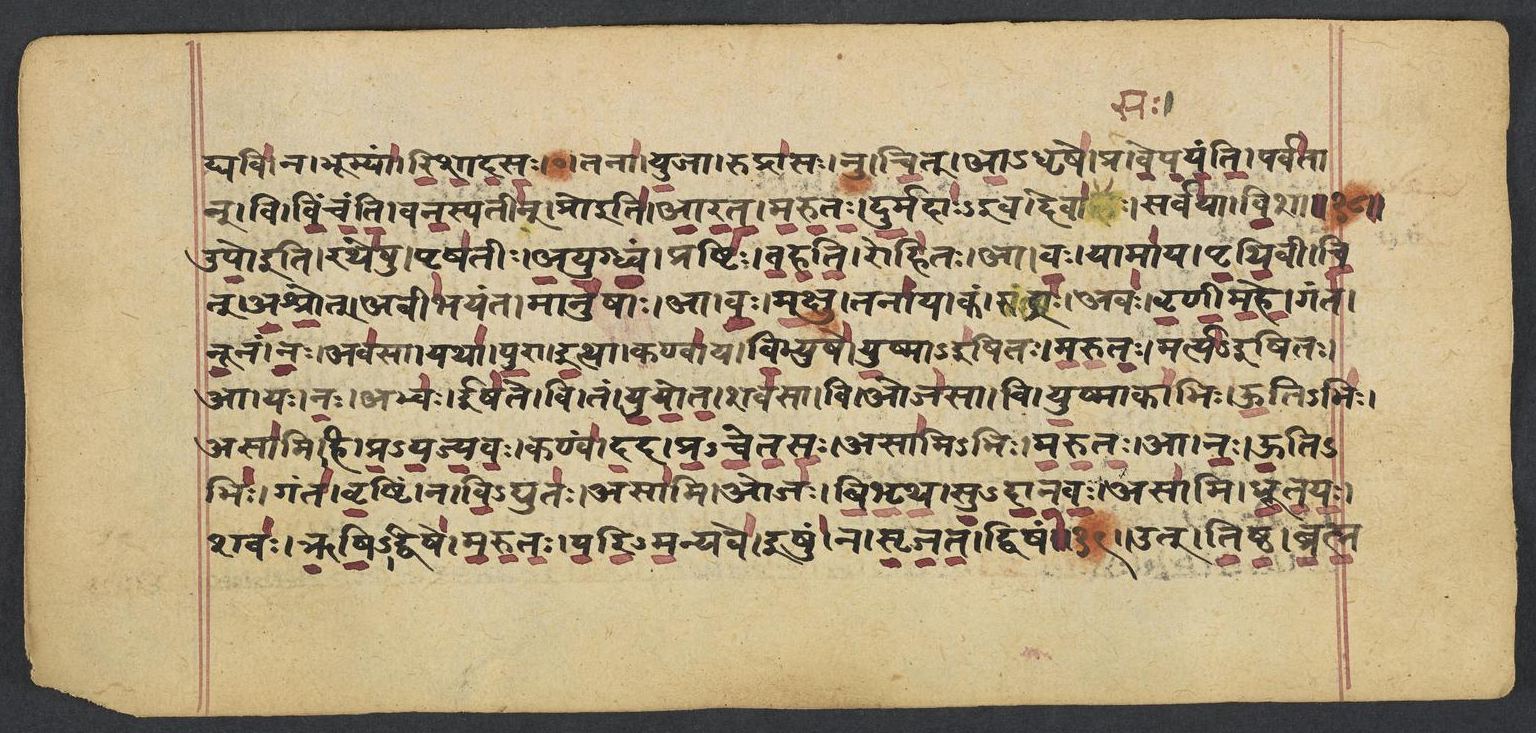
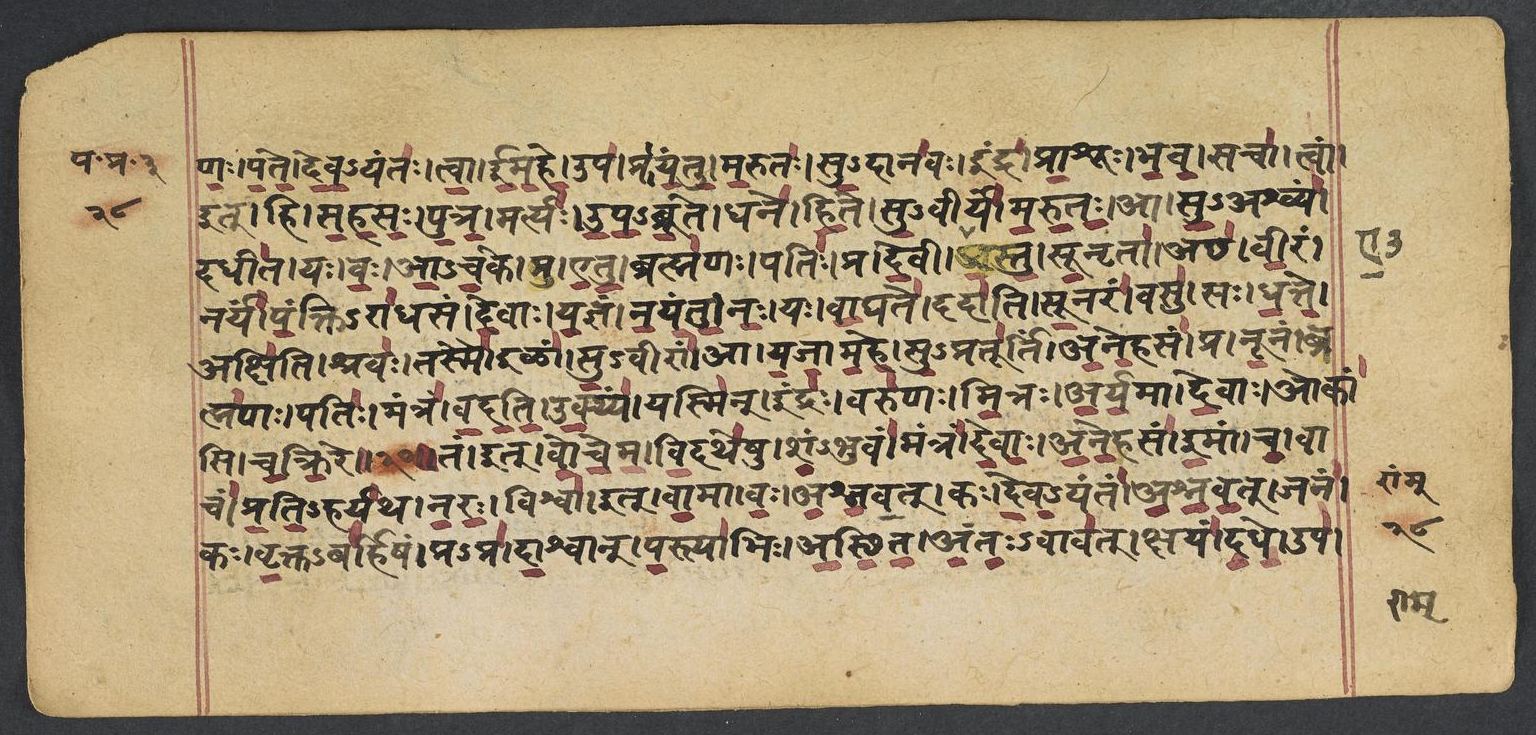
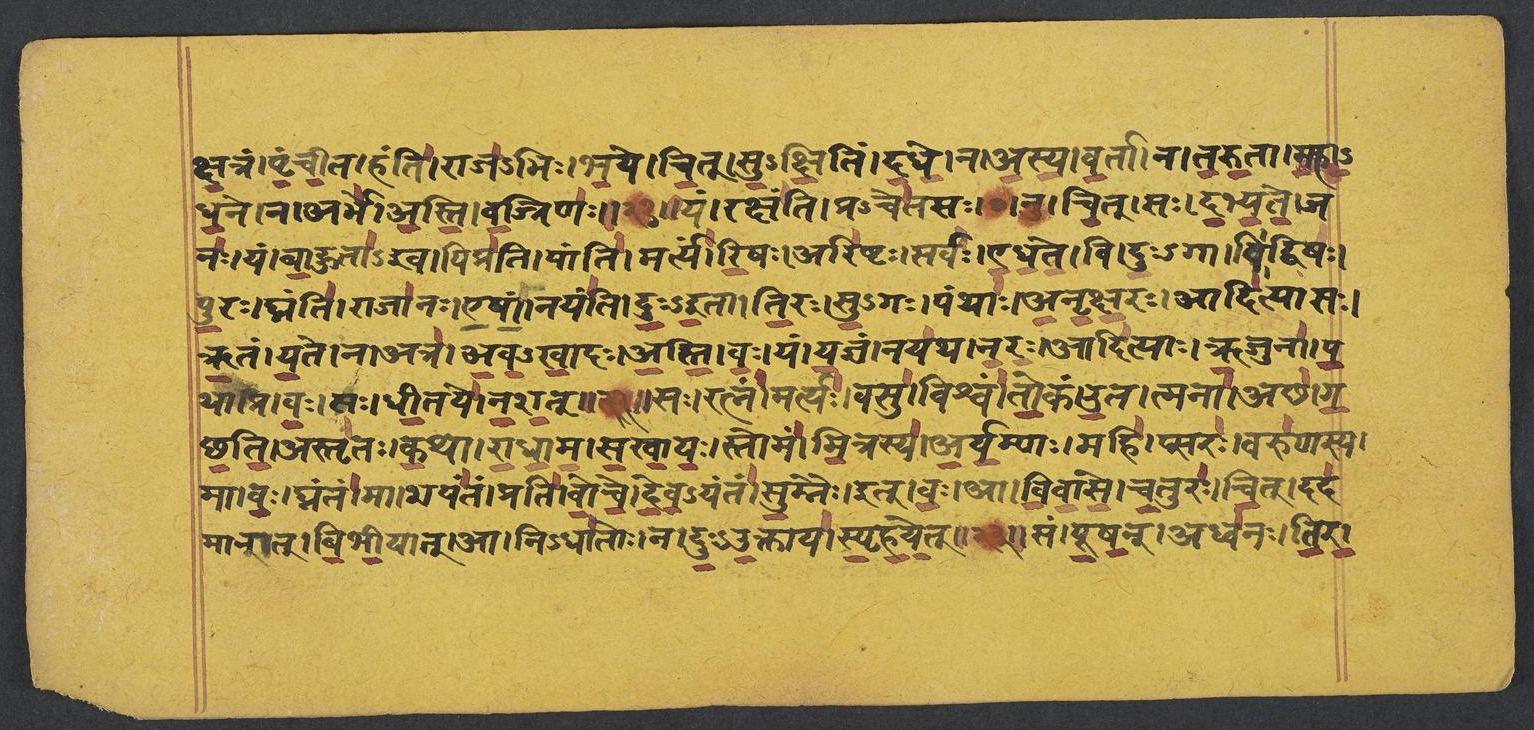
The manuscript shown is Penn Ms. Coll. 390 Item 41 (University of Pennsylvania), an undated paper manuscript of the padapāṭha (the word-by-word recitation text, in which every word is written separately and compounds are split) of the whole Ṛgveda in Devanāgarī, 884 leaves in fascicles, 7-9 lines to the page, accents in red; this hymn stands on fol. 28r-29r. Each section below gives the verses that end on one page; the page boundaries were read on the images (the opening words of every page), not counted out. Where the manuscript is a padapāṭha (the word-by-word recitation text), the section shows Aufrecht's continuous (saṃhitā) text first and, as the edition text, the padapāṭha of the same verses, which is the form written on the page.
How was this verified? (Provenance)
Where on the image
Penn Ms. Coll. 390 Item 41, fol. 28v (OPenn image 30, upper leaf). Checked on the image: the Rigveda text on this page begins in RV 1.40.1 ‹-brahmaṇaḥ pate deva-yantaḥ tvā›. The next page with Rigveda text, fol. 29r, begins in RV 1.40.8 ‹kṣatram pṛñcīta hanti rāja-bhiḥ›. Verses 1.40.1-7 end on this page; 1.40.1 begins on fol. 28r.
1ut ti̍ṣṭha brahmaṇas pate deva̱yanta̍s tvemahe | upa̱ pra ya̍ntu ma̱ruta̍ḥ su̱dāna̍va̱ indra̍ prā̱śūr bha̍vā̱ sacā̍ ||
2tvām id dhi sa̍hasas putra̱ martya̍ upabrū̱te dhane̍ hi̱te | su̱vīrya̍m maruta̱ ā svaśvya̱ṁ dadhī̍ta̱ yo va̍ āca̱ke ||
3praitu̱ brahma̍ṇa̱s pati̱ḥ pra de̱vy e̍tu sū̱nṛtā̍ | acchā̍ vī̱raṁ narya̍m pa̱ṅktirā̍dhasaṁ de̱vā ya̱jñaṁ na̍yantu naḥ ||
4yo vā̱ghate̱ dadā̍ti sū̱nara̱ṁ vasu̱ sa dha̍tte̱ akṣi̍ti̱ śrava̍ḥ | tasmā̱ iḻā̍ṁ su̱vīrā̱m ā ya̍jāmahe su̱pratū̍rtim ane̱hasa̍m ||
5pra nū̱nam brahma̍ṇa̱s pati̱r mantra̍ṁ vadaty u̱kthya̍m | yasmi̱nn indro̱ varu̍ṇo mi̱tro a̍rya̱mā de̱vā okā̍ṁsi cakri̱re ||
6tam id vo̍cemā vi̱dathe̍ṣu śa̱mbhuva̱m mantra̍ṁ devā ane̱hasa̍m | i̱māṁ ca̱ vāca̍m prati̱harya̍thā naro̱ viśved vā̱mā vo̍ aśnavat ||
7ko de̍va̱yanta̍m aśnava̱j jana̱ṁ ko vṛ̱ktaba̍rhiṣam | pra-pra̍ dā̱śvān pa̱styā̍bhir asthitānta̱rvāva̱t kṣaya̍ṁ dadhe ||
Compare: Padapāṭha (word-by-word text written in the manuscript; Sansknet e-text via GRETIL)
1ut | tiṣṭha | brahmaṇaḥ | pate | deva-yantaḥ | tvā | īmahe | upa | pra | yantu | marutaḥ | su-dānavaḥ | indra | prāsūḥ | bhava | sacā
2tvām | it | hi | sahasaḥ | putra | martyaḥ | upa-brūte | dhane | hite | su-vīryam | marutaḥ | ā | su-aśvyam | dadhīta | yaḥ | vaḥ | ācakre
3pra | etu | brahmaṇaḥ | patiḥ | pra | devī | etu | sūnṛtā | accha | vīram | naryam | paṅkti-rādhasam | devāḥ | yajñam | nayantu | naḥ
4yaḥ | vāghate | dadāti | sūnaram | vasu | saḥ | dhatte | akṣiti | śravaḥ | tasmai | iḷām | su-vīrām | ā | yajāmahe | su-pratūrtim | anehasam
5pra | nūnam | brahmaṇaḥ | patiḥ | mantram | vadati | ukthyam | yasmin | indraḥ | varuṇaḥ | mitraḥ | aryamā | devāḥ | okāṃsi | cakrire
6tam | it | vocema | vidatheṣu | śambhuvam | mantram | devāḥ | anehasam | imām | ca | vācam | prati-haryatha | naraḥ | viśvā | it | vāmā | vaḥ | aśnavat
7kaḥ | deva-yantam | aśnavat | janam | kaḥ | vṛkta-barhiṣam | pra-pra | dāśvān | pastyābhiḥ | asthita | antaḥ-vāvat | kṣayam | dadhe
1O BRAMANASPATI, stand up: God-serving men we pray to thee. May they who give good gifts, the Maruts, come to us. Indra, most swift, be thou with them.
2O Son of Strength, each mortal calls to thee for aid when spoil of battle waits for him. O Maruts, may this man who loves you well obtain wealth of good steeds and hero might.
3May Brahmaṇaspati draw nigh, may Sunrta the Goddess come, And Gods bring to this rite which gives the five-fold gift the Hero, lover of mankind.
4He who bestows a noble guerdon on the priest wins fame that never shall decay. For him we offer sacred hero-giving food, peerless and conquering easily.
5Now Brahmaṇaspati speaks forth aloud the solemn hymn of praise, Wherein Indra and Varuṇa, Mitra, Aryaman, the Gods, have made their dwelling place.
6May we in holy synods, Gods! recite that hymn, peerless, that brings felicity. If you, O Heroes, graciously accept this word, may it obtain all bliss from you.
7Who shall approach the pious? who the man whose sacred grass is trimmed? The offerer with his folk advances more and more: he fills his house with precious things.
Where on the image
Penn Ms. Coll. 390 Item 41, fol. 29r (OPenn image 30, lower leaf). Checked on the image: the Rigveda text on this page begins in RV 1.40.8 ‹kṣatram pṛñcīta hanti rāja-bhiḥ›. The next page with Rigveda text, fol. 29v, begins in RV 1.42.1 ‹vi aṃhaḥ vi-mucaḥ napāt›. Verse 1.40.8 ends on this page; 1.40.8 begins on fol. 28v.
8upa̍ kṣa̱tram pṛ̍ñcī̱ta hanti̱ rāja̍bhir bha̱ye ci̍t sukṣi̱tiṁ da̍dhe | nāsya̍ va̱rtā na ta̍ru̱tā ma̍hādha̱ne nārbhe̍ asti va̱jriṇa̍ḥ ||
Compare: Padapāṭha (word-by-word text written in the manuscript; Sansknet e-text via GRETIL)
8upa | kṣatram | pṛñcīta | hanti | rāja-bhiḥ | bhaye | cit | su-kṣitim | dadhe | na | asya | vartā | na | tarutā | mahādhane | na | arbhe | asti | vajriṇaḥ
8He amplifies his lordly might, with kings he slays: e'en mid alarms he dwells secure In great or lesser fight none checks him, none subdues,– the wielder of the thunderbolt.
Notes
- Sanskrit: Aufrecht's edition (1877) with the Vedic accents, as entered by van Nooten and Holland (GRETIL).
- English: Ralph T. H. Griffith, The Hymns of the Rigveda (1889-1892; 2nd ed. 1896-1897), from the VedaWeb digital text; OCR slips in that text were corrected against the printed 2nd edition (data/sources/rigveda/griffith_errata.json).
- Padapāṭha (edition text): Sansknet e-text via GRETIL (CC BY-NC-SA 4.0).
Cite
Sources
- Source: Penn Ms. Coll. 390 Item 41 (undated (catalogued with Penn's 18th-19th c. Vedic manuscripts)), OPenn, Public Domain Mark + Aufrecht's accented text (GRETIL) + Griffith's English (VedaWeb) (holding institution)
- Critical edition: Aufrecht (1877), accented e-text via GRETIL
← previous · → next · v cycle view · l back to library