Rigveda 1.92: To Usas and the Asvins
Introduction
Rigveda 1.92 is a hymn of 18 verses addressed to Usas and the Asvins. It stands in book (maṇḍala) 1, a collection of hymns by many families of poets. The Rigveda is the oldest collection of Sanskrit hymns, composed in the second half of the second millennium BCE and handed down orally for many centuries before it was written down.
The manuscript shown is Penn Ms. Coll. 390 Item 41 (University of Pennsylvania), an undated paper manuscript of the padapāṭha (the word-by-word recitation text, in which every word is written separately and compounds are split) of the whole Ṛgveda in Devanāgarī, 884 leaves in fascicles, 7-9 lines to the page, accents in red; this hymn stands on fol. 63r-64v. Each section below gives the verses that end on one page; the page boundaries were read on the images (the opening words of every page), not counted out. Where the manuscript is a padapāṭha (the word-by-word recitation text), the section shows Aufrecht's continuous (saṃhitā) text first and, as the edition text, the padapāṭha of the same verses, which is the form written on the page.
How was this verified? (Provenance)
Where on the image
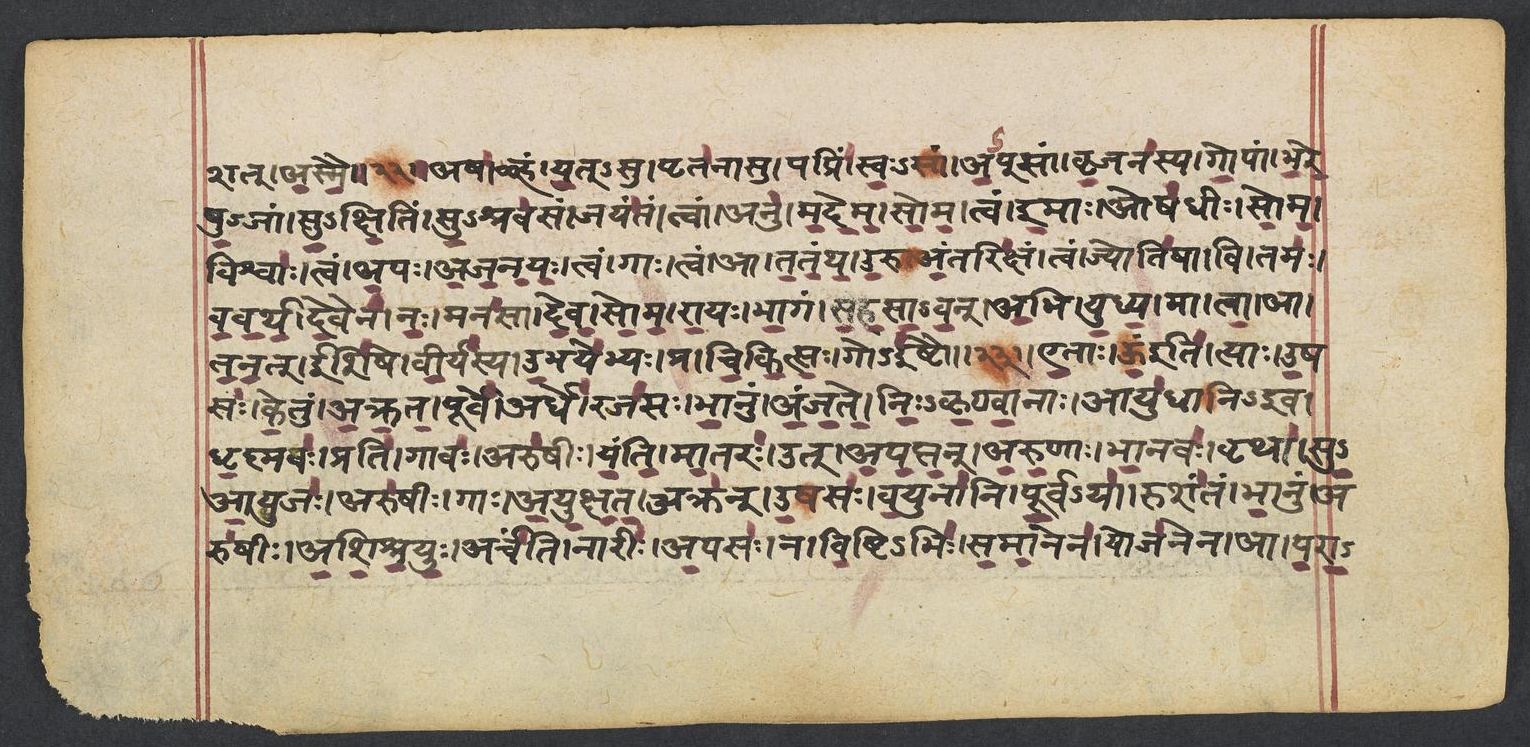
Penn Ms. Coll. 390 Item 41, fol. 63r (OPenn image 64, lower leaf). Checked on the image: the Rigveda text on this page begins in RV 1.91.20 ‹-dadāśat asmai›. The next page with Rigveda text, fol. 63v, begins in RV 1.92.3 ‹-parāvataḥ iṣam vahantīḥ su-kṛte›. Verses 1.92.1-2 end on this page.
1e̱tā u̱ tyā u̱ṣasa̍ḥ ke̱tum a̍krata̱ pūrve̱ ardhe̱ raja̍so bhā̱num a̍ñjate | ni̱ṣkṛ̱ṇvā̱nā āyu̍dhānīva dhṛ̱ṣṇava̱ḥ prati̱ gāvo 'ru̍ṣīr yanti mā̱tara̍ḥ ||
2ud a̍paptann aru̱ṇā bhā̱navo̱ vṛthā̍ svā̱yujo̱ aru̍ṣī̱r gā a̍yukṣata | akra̍nn u̱ṣāso̍ va̱yunā̍ni pū̱rvathā̱ ruśa̍ntam bhā̱num aru̍ṣīr aśiśrayuḥ ||
Compare: Padapāṭha (word-by-word text written in the manuscript; Sansknet e-text via GRETIL)
1etāḥ | oṃ iti | tyāḥ | uṣasaḥ | ketum | akrata | pūrve | ardhe | rajasaḥ | bhānum | añjate | niḥ-kṛṇvānāḥ | āyudhāni-iva | dhṛṣṇavaḥ | prati | gāvaḥ | aruṣīḥ | yanti | mātaraḥ
2ut | apaptan | aruṇāḥ | bhānavaḥ | vṛthā | su-āyujaḥ | aruṣīḥ | gāḥ | ayukṣata | akran | uṣasaḥ | vayunāni | pūrvathā | ruśantam | bhānum | aruṣīḥ | aśiśrayuḥ
1THESE Dawns have raised their banner; in the eastern half of the mid-air they spread abroad their shining light. Like heroes who prepare their weapons for the war, onward they come bright red in hue, the Mother Cows.
2Readily have the purple beams of light shot up; the Red Cows have they harnessed, easy to be yoked. The Dawns have brought distinct perception as before: red-hued, they have attained their fulgent brilliancy.
Where on the image
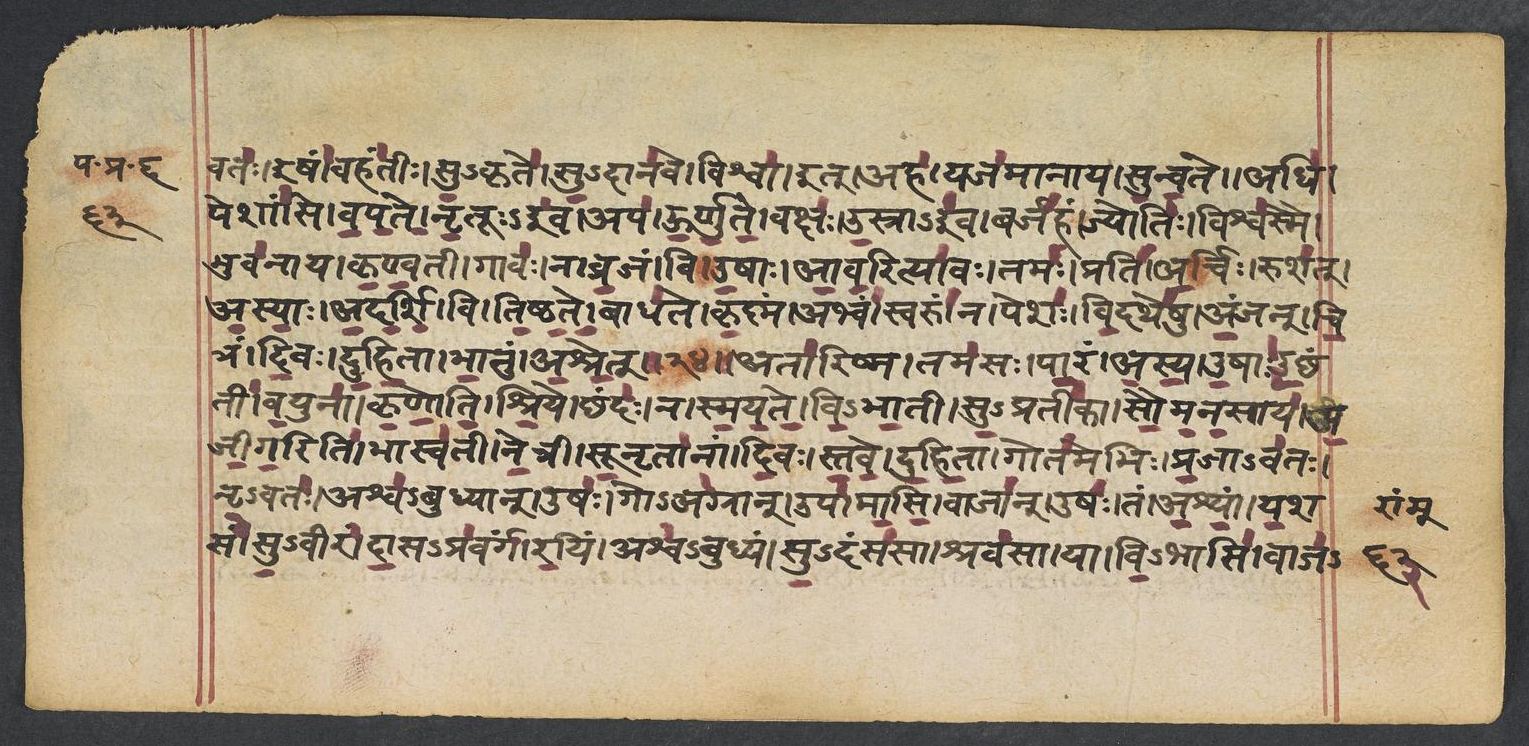
Penn Ms. Coll. 390 Item 41, fol. 63v (OPenn image 65, upper leaf). Checked on the image: the Rigveda text on this page begins in RV 1.92.3 ‹-parāvataḥ iṣam vahantīḥ su-kṛte›. The next page with Rigveda text, fol. 64r, begins in RV 1.92.8 ‹-vāja-prasūtā su-bhage bṛhantam›. Verses 1.92.3-7 end on this page; 1.92.3 begins on fol. 63r.
3arca̍nti̱ nārī̍r a̱paso̱ na vi̱ṣṭibhi̍ḥ samā̱nena̱ yoja̍ne̱nā pa̍rā̱vata̍ḥ | iṣa̱ṁ vaha̍ntīḥ su̱kṛte̍ su̱dāna̍ve̱ viśved aha̱ yaja̍mānāya sunva̱te ||
4adhi̱ peśā̍ṁsi vapate nṛ̱tūr i̱vāpo̍rṇute̱ vakṣa̍ u̱sreva̱ barja̍ham | jyoti̱r viśva̍smai̱ bhuva̍nāya kṛṇva̱tī gāvo̱ na vra̱jaṁ vy u1̱̍ṣā ā̍va̱r tama̍ḥ ||
5praty a̱rcī ruśa̍d asyā adarśi̱ vi ti̍ṣṭhate̱ bādha̍te kṛ̱ṣṇam abhva̍m | svaru̱ṁ na peśo̍ vi̱dathe̍ṣv a̱ñjañ ci̱traṁ di̱vo du̍hi̱tā bhā̱num a̍śret ||
6atā̍riṣma̱ tama̍sas pā̱ram a̱syoṣā u̱cchantī̍ va̱yunā̍ kṛṇoti | śri̱ye chando̱ na sma̍yate vibhā̱tī su̱pratī̍kā saumana̱sāyā̍jīgaḥ ||
7bhāsva̍tī ne̱trī sū̱nṛtā̍nāṁ di̱vaḥ sta̍ve duhi̱tā gota̍mebhiḥ | pra̱jāva̍to nṛ̱vato̱ aśva̍budhyā̱n uṣo̱ goa̍grā̱m̐ upa̍ māsi̱ vājā̍n ||
Compare: Padapāṭha (word-by-word text written in the manuscript; Sansknet e-text via GRETIL)
3arcanti | nārīḥ | apasaḥ | na | viṣṭi-bhiḥ | samānena | yojanena | ā | parāvataḥ | iṣam | vahantīḥ | su-kṛte | su-dānave | viśvā | it | aha | yajamānāya | sunvate
4adhi | peśāṃsi | vapate | nṛtūḥ-iva | apa | ūrṇute | vakṣaḥ | usrāiva barjaham | jyotiḥ | viśvasmai | bhuvanāya | kṛṇvatī | gāvaḥ | na | vrajam | vi | uṣāḥ | āvar ity āvaḥ tamaḥ
5prati | arciḥ | ruśat | asyāḥ | adarśi | vi | tiṣṭhate | bādhate | kṛṣṇam | abhvam | svarum | na | peśaḥ | vidatheṣu | añjan | citram | divaḥ | duhitā | bhānum | aśret
6atāriṣma | tamasaḥ | pāram | asya | uṣāḥ | ucchantī | vayunā | kṛṇoti | śriye | chandaḥ | na | smayate | vi-bhātī | su-pratīkā | saumanasāya | ajīgariti
7bhāsvatī | netrī | sūnṛtānām | divaḥ | stave | duhitā | gotamebhiḥ | prajāvataḥ | nṛ-vataḥ | aśva-budhyān | uṣaḥ | go--agrān | upa | māsi | vājān
3They sing their song like women active in their tasks, along their common path hither from far away, Bringing refreshment to the liberal devotee, yea, all things to the worshipper who pours the juice.
4She, like a dancer, puts her broidered garments on: as a cow yields her udder so she bares her breast. Creating light for all the world of life, the Dawn hath laid the darkness open as the cows their stall.
5We have beheld the brightness of her shining; it spreads and drives away the darksome monster. Like tints that deck the Post at sacrifices, Heaven's Daughter hath attained her wondrous splendour.
6We have o'erpast the limit of this darkness; Dawn breaking forth again brings clear perception. She like a flatterer smiles in light for glory, and fair of face hath wakened to rejoice us.
7The Gotamas have praised Heaven's radiant Daughter, the leader of the charm of pleasant voices. Dawn, thou conferrest on us strength with offspring and men, conspicuous with kine and horses.
Where on the image
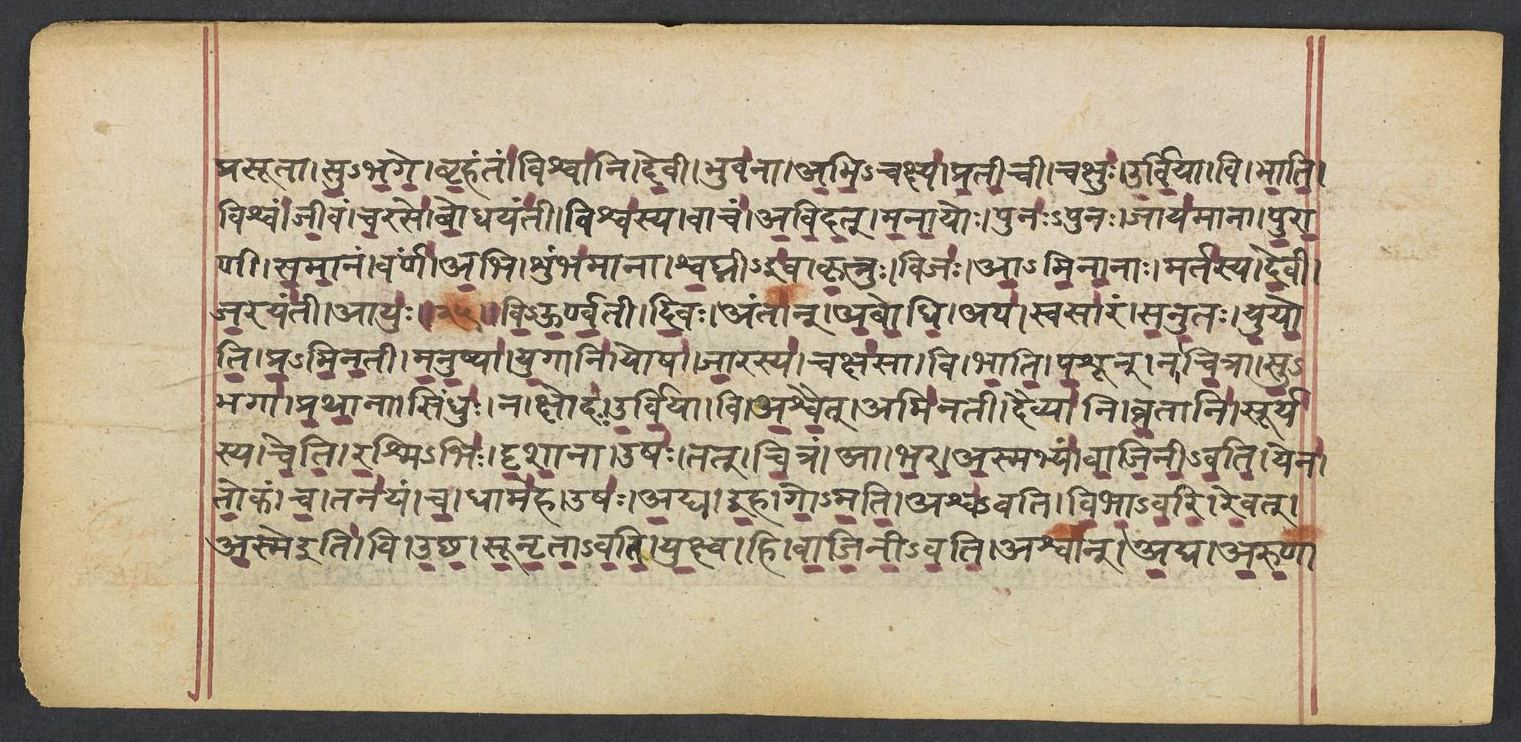
Penn Ms. Coll. 390 Item 41, fol. 64r (OPenn image 65, lower leaf). Checked on the image: the Rigveda text on this page begins in RV 1.92.8 ‹-vāja-prasūtā su-bhage bṛhantam›. The next page with Rigveda text, fol. 64v, begins in RV 1.92.15 ‹-aruṇān uṣaḥ atha naḥ›. Verses 1.92.8-14 end on this page; 1.92.8 begins on fol. 63v.
8uṣa̱s tam a̍śyāṁ ya̱śasa̍ṁ su̱vīra̍ṁ dā̱sapra̍vargaṁ ra̱yim aśva̍budhyam | su̱daṁsa̍sā̱ śrava̍sā̱ yā vi̱bhāsi̱ vāja̍prasūtā subhage bṛ̱hanta̍m ||
9viśvā̍ni de̱vī bhuva̍nābhi̱cakṣyā̍ pratī̱cī cakṣu̍r urvi̱yā vi bhā̍ti | viśva̍ṁ jī̱vaṁ ca̱rase̍ bo̱dhaya̍ntī̱ viśva̍sya̱ vāca̍m avidan manā̱yoḥ ||
10puna̍ḥ-puna̱r jāya̍mānā purā̱ṇī sa̍mā̱naṁ varṇa̍m a̱bhi śumbha̍mānā | śva̱ghnīva̍ kṛ̱tnur vija̍ āminā̱nā marta̍sya de̱vī ja̱raya̱nty āyu̍ḥ ||
11vyū̱rṇva̱tī di̱vo antā̍m̐ abo̱dhy apa̱ svasā̍raṁ sanu̱tar yu̍yoti | pra̱mi̱na̱tī ma̍nu̱ṣyā̍ yu̱gāni̱ yoṣā̍ jā̱rasya̱ cakṣa̍sā̱ vi bhā̍ti ||
12pa̱śūn na ci̱trā su̱bhagā̍ prathā̱nā sindhu̱r na kṣoda̍ urvi̱yā vy a̍śvait | ami̍natī̱ daivyā̍ni vra̱tāni̱ sūrya̍sya ceti ra̱śmibhi̍r dṛśā̱nā ||
13uṣa̱s tac ci̱tram ā bha̍rā̱smabhya̍ṁ vājinīvati | yena̍ to̱kaṁ ca̱ tana̍yaṁ ca̱ dhāma̍he ||
14uṣo̍ a̱dyeha go̍ma̱ty aśvā̍vati vibhāvari | re̱vad a̱sme vy u̍ccha sūnṛtāvati ||
Compare: Padapāṭha (word-by-word text written in the manuscript; Sansknet e-text via GRETIL)
8uṣaḥ | tam | aśyām | yaśasam | su-vīram | dāsa-pravargam | rayim | aśva-budhyam | su-daṃsasā | śravasā | yā | vi-bhāsi | vāja-prasūtā | su-bhage | bṛhantam
9viśvāni | devī | bhuvanā | abhi-cakṣya | pratīcī | cakṣuḥ | urviyā | vi | bhāti | viśvam | jīvam | carase | bodhayantī | viśvasya | vācam | avidat | manāyoḥ
10punaḥ-punaḥ | jāyamānā | purāṇī | samānam | varṇam | abhi | śumbhamānā | śvaghnī-iva | kṛtnuḥ | vijaḥ | āminānā | martasya | devī | jarayantī | āyuḥ
11vi-ūrṇvatī | divaḥ | antān | abodhi | apa | svasāram | sanutaḥ | yuyoti | pra-m inatī | manuṣyā | yugāni | yoṣā | jārasya | cakṣasā | vi | bhāti
12paśūn | na | citrā | su-bhagā | prathānā | sindhuḥ | na | kṣodaḥ | urviyā | vi | aśvait | aminatī | daivyāni | vratāni | sūryasya | ceti | raśmi-bhiḥ | dṛśānā
13uṣaḥ | tat | citram | ā | bhara | asmabhyam | vājinī-vati | yena | tokam | ca | tanayam | ca | dhāmahe
14uṣaḥ | adya | iha | go--mati | aśva-vati | vibhāvari | revat | asme | vi | uccha | sūnṛtāvati
8O thou who shinest forth in wondrous glory, urged onward by thy strength, auspicious Lady, Dawn, may I gain that wealth, renowned and ample, in brave sons, troops of slaves, far-famed for horses.
9Bending her looks on all the world, the Goddess shines, widely spreading with her bright eye westward. Waking to motion every living creature, she understands the voice of each adorer.
10Ancient of days, again again born newly, decking her beauty with the self-same raiment. The Goddess wastes away the life of mortals, like a skilled hunter cutting birds in pieces.
11She hath appeared discovering heaven's borders: to the far distance she drives off her Sister. Diminishing the days of human creatures, the Lady shines with all her lover's splendour.
12The bright, the blessed One shines forth extending her rays like kine, as a flood rolls his waters. Never transgressing the divine commandments, she is beheld visible with the sunbeams.
13O Dawn enriched with ample wealth, bestow on us the wondrous gift Wherewith we may support children and children's sons.
14Thou radiant mover of sweet sounds, with wealth of horses and of kine Shine thou on us this day, O Dawn auspiciously.
Where on the image
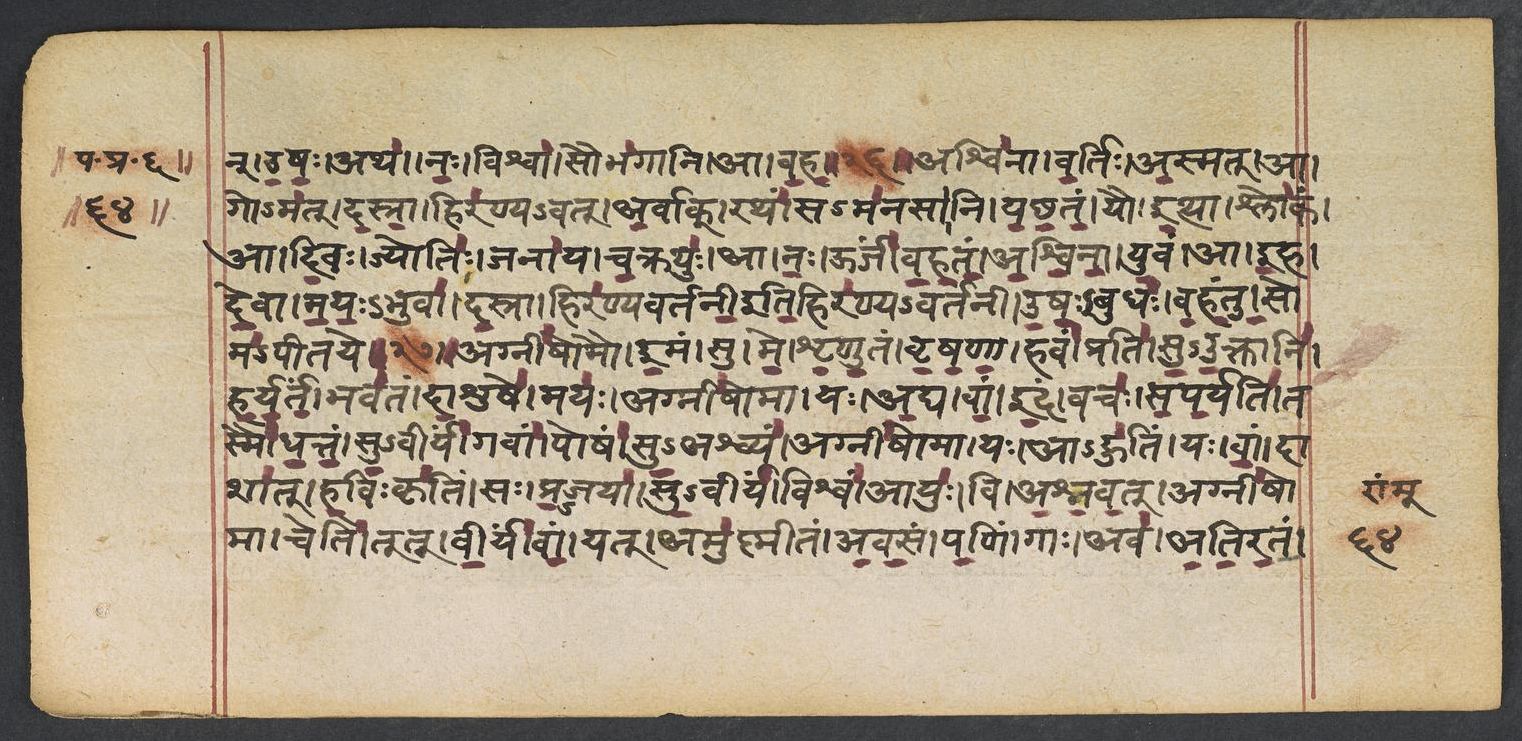
Penn Ms. Coll. 390 Item 41, fol. 64v (OPenn image 66, upper leaf). Checked on the image: the Rigveda text on this page begins in RV 1.92.15 ‹-aruṇān uṣaḥ atha naḥ›. The next page with Rigveda text, fol. 65r, begins in RV 1.93.4 ‹bṛsayasya śeṣaḥ avindatam jyotiḥ›. Verses 1.92.15-18 end on this page; 1.92.15 begins on fol. 64r.
15yu̱kṣvā hi vā̍jinīva̱ty aśvā̍m̐ a̱dyāru̱ṇām̐ u̍ṣaḥ | athā̍ no̱ viśvā̱ saubha̍gā̱ny ā va̍ha ||
16aśvi̍nā va̱rtir a̱smad ā goma̍d dasrā̱ hira̍ṇyavat | a̱rvāg ratha̱ṁ sama̍nasā̱ ni ya̍cchatam ||
17yāv i̱tthā śloka̱m ā di̱vo jyoti̱r janā̍ya ca̱krathu̍ḥ | ā na̱ ūrja̍ṁ vahatam aśvinā yu̱vam ||
18eha de̱vā ma̍yo̱bhuvā̍ da̱srā hira̍ṇyavartanī | u̱ṣa̱rbudho̍ vahantu̱ soma̍pītaye ||
Compare: Padapāṭha (word-by-word text written in the manuscript; Sansknet e-text via GRETIL)
15yukṣva | hi | vājinī-vati | aśvān | adya | aruṇān | uṣaḥ | atha | naḥ | viśvā | saubhagāni | ā | vaha
16aśvinā | vartiḥ | asmat | ā | go--mat | dasrā | hiraṇya-vat | arvāk | ratham | sa-manasā | ni | yacchatam
17yau | itthā | ślokam | ā | divaḥ | jyotiḥ | janāya | cakrathuh | ā | naḥ | ūrjam | vahatam | aśvinā | yuvam
18ā | iha | devā | mayaḥ-bhuvā | dasrā | hiraṇyavartanī itihiraṇya-vartanī | uṣaḥ-budhaḥ | vahantu | soma-pītaye
15O Dawn enriched with holy rites, yoke to thy car thy purple steeds, And then bring thou unto us all felicities.
16O Aṣvins wonderful in act, do ye unanimous direct Your chariot to our home wealthy in kine and gold.
17Ye who brought down the hymn from heaven, a light that giveth light to man, Do ye, O Aṣvins, bring strength hither unto us.
18Hither may they who wake at dawn bring, to drink Soma both the Gods Health-givers Wonder-Workers, borne on paths of gold.
Notes
- Sanskrit: Aufrecht's edition (1877) with the Vedic accents, as entered by van Nooten and Holland (GRETIL).
- English: Ralph T. H. Griffith, The Hymns of the Rigveda (1889-1892; 2nd ed. 1896-1897), from the VedaWeb digital text; OCR slips in that text were corrected against the printed 2nd edition (data/sources/rigveda/griffith_errata.json).
- Padapāṭha (edition text): Sansknet e-text via GRETIL (CC BY-NC-SA 4.0).
Cite
Sources
- Source: Penn Ms. Coll. 390 Item 41 (undated (catalogued with Penn's 18th-19th c. Vedic manuscripts)), OPenn, Public Domain Mark + Aufrecht's accented text (GRETIL) + Griffith's English (VedaWeb) (holding institution)
- Critical edition: Aufrecht (1877), accented e-text via GRETIL
← previous · → next · v cycle view · l back to library