Rigveda 10.133: To Indra
Introduction
Rigveda 10.133 is a hymn of 7 verses addressed to Indra. It stands in book (maṇḍala) 10, the last and latest book. The Rigveda is the oldest collection of Sanskrit hymns, composed in the second half of the second millennium BCE and handed down orally for many centuries before it was written down.
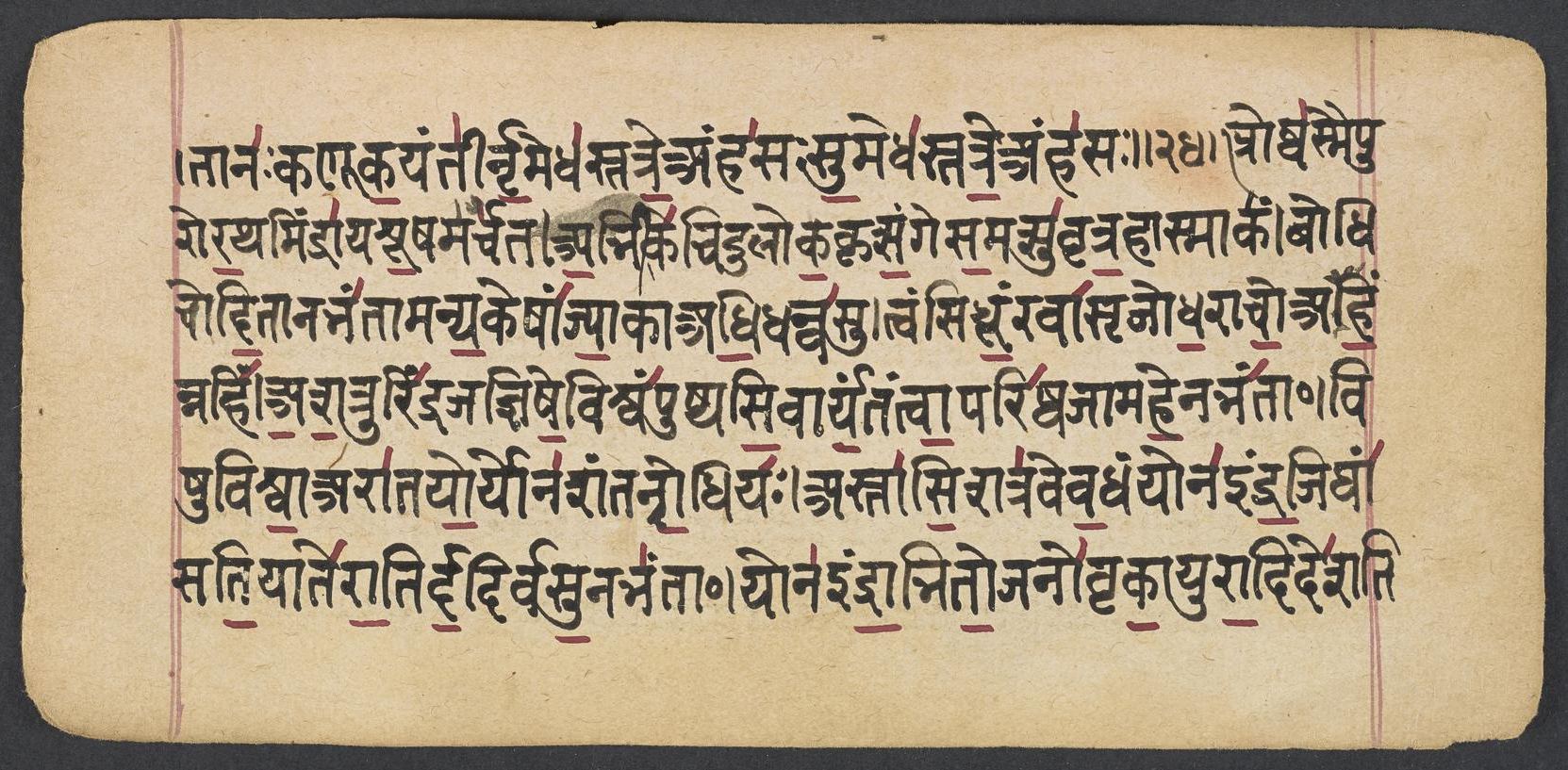
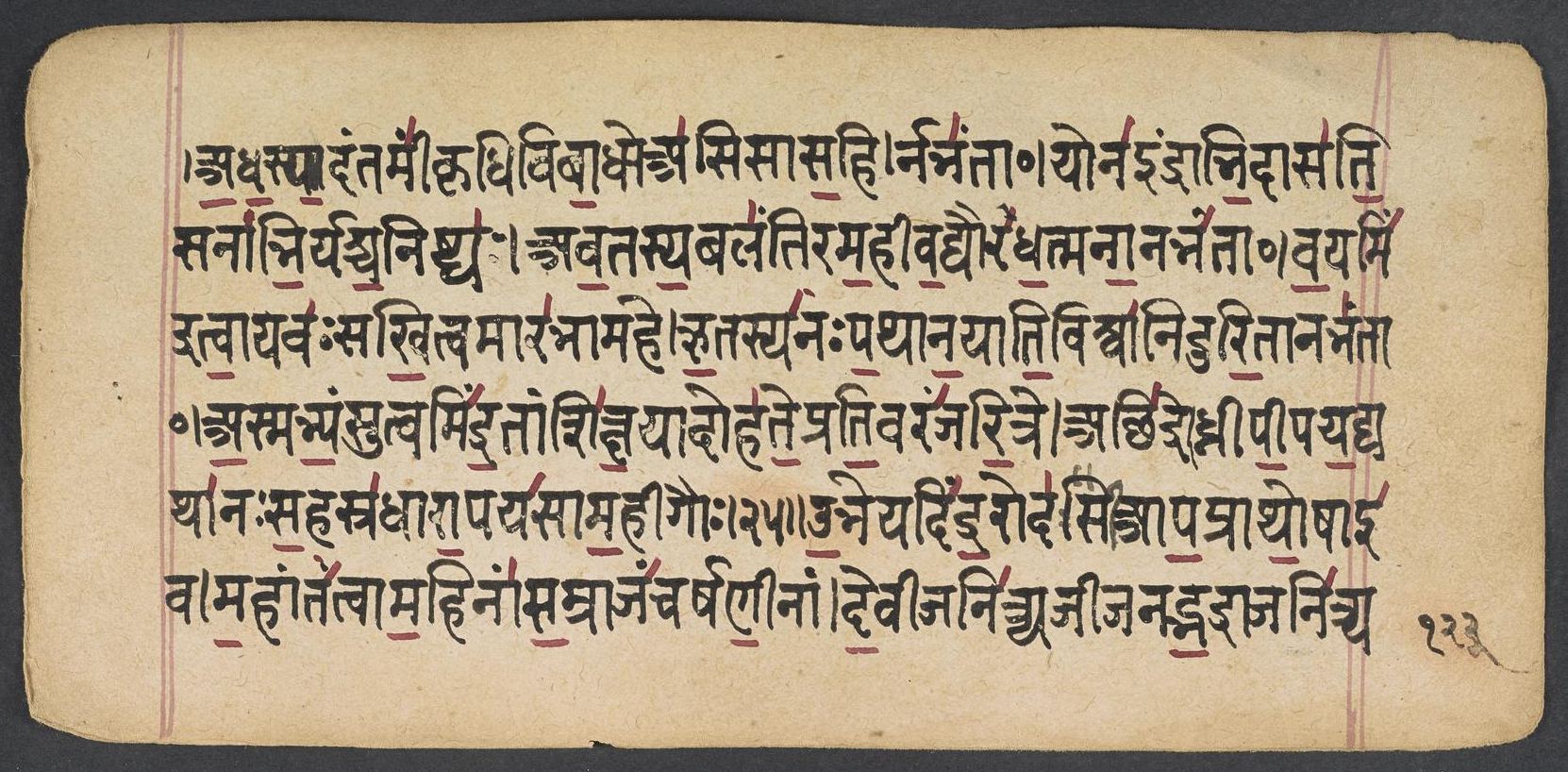
The manuscript shown is Penn Ms. Coll. 390 Item 48 (University of Pennsylvania), a paper manuscript of the eighth aṣṭaka (RV 10.46-10.191) of the Ṛgveda Saṃhitā in Devanāgarī, 158 leaves, 6 lines to the page, with the accents marked in red; the scribe's colophon on fol. 158 gives Saṃvat 1768 (1711 CE); this hymn stands on fol. 122r-122v. Each section below gives the verses that end on one page; the page boundaries were read on the images (the opening words of every page), not counted out. Like most Rigveda manuscripts, Penn Ms. Coll. 390 Item 48 writes a repeated refrain in short form after its first occurrence (for example kasmai° for kasmai devāya haviṣā vidhema); the Sanskrit shown is the full text of Aufrecht's edition.
How was this verified? (Provenance)
Where on the image
Penn Ms. Coll. 390 Item 48, fol. 122r (OPenn image 121, lower leaf). Checked on the image: the Rigveda text on this page begins in RV 10.132.7 ‹tā naḥ kaṇūkayantīr nṛmedhas›. The next page with Rigveda text, fol. 122v, begins in RV 10.133.4 ‹adhaspadaṁ tam īṁ kṛdhi›. Verses 10.133.1-3 end on this page.
1pro ṣv a̍smai purora̱tham indrā̍ya śū̱ṣam a̍rcata | a̱bhīke̍ cid u loka̱kṛt sa̱ṁge sa̱matsu̍ vṛtra̱hāsmāka̍m bodhi codi̱tā nabha̍ntām anya̱keṣā̍ṁ jyā̱kā adhi̱ dhanva̍su ||
2tvaṁ sindhū̱m̐r avā̍sṛjo 'dha̱rāco̱ aha̱nn ahi̍m | a̱śa̱trur i̍ndra jajñiṣe̱ viśva̍m puṣyasi̱ vārya̱ṁ taṁ tvā̱ pari̍ ṣvajāmahe̱ nabha̍ntām anya̱keṣā̍ṁ jyā̱kā adhi̱ dhanva̍su ||
3vi ṣu viśvā̱ arā̍tayo̱ 'ryo na̍śanta no̱ dhiya̍ḥ | astā̍si̱ śatra̍ve va̱dhaṁ yo na̍ indra̱ jighā̍ṁsati̱ yā te̍ rā̱tir da̱dir vasu̱ nabha̍ntām anya̱keṣā̍ṁ jyā̱kā adhi̱ dhanva̍su ||
1SING strength to Indra that shall set his chariot in the foremost place. Giver of room in closest fight, slayer of foes in shock of war, be thou our great encourager. Let the weak bowstrings break upon the bows of feeble enemies.
2Thou didst destroy the Dragon: thou sentest the rivers down to earth. Foeless, O Indra, wast thou born. Thou tendest well each choicest thing. Therefore we draw us close to thee. Let the weak bowstrings break upon the bows of feeble enemies.
3Destroyed be all malignities and all our enemy's designs. Thy bolt thou castest, at the foe, O Indra, who would smite us dead: thy liberal bounty gives us wealth.
Where on the image
Penn Ms. Coll. 390 Item 48, fol. 122v (OPenn image 122, upper leaf). Checked on the image: the Rigveda text on this page begins in RV 10.133.4 ‹adhaspadaṁ tam īṁ kṛdhi›. The next page with Rigveda text, fol. 123r, begins in RV 10.134.1 ‹-ajījanat›. Verses 10.133.4-7 end on this page; 10.133.4 begins on fol. 122r.
4yo na̍ indrā̱bhito̱ jano̍ vṛkā̱yur ā̱dide̍śati | a̱dha̱spa̱daṁ tam ī̍ṁ kṛdhi vibā̱dho a̍si sāsa̱hir nabha̍ntām anya̱keṣā̍ṁ jyā̱kā adhi̱ dhanva̍su ||
5yo na̍ indrābhi̱dāsa̍ti̱ sanā̍bhi̱r yaś ca̱ niṣṭya̍ḥ | ava̱ tasya̱ bala̍ṁ tira ma̱hīva̱ dyaur adha̱ tmanā̱ nabha̍ntām anya̱keṣā̍ṁ jyā̱kā adhi̱ dhanva̍su ||
6va̱yam i̍ndra tvā̱yava̍ḥ sakhi̱tvam ā ra̍bhāmahe | ṛ̱tasya̍ naḥ pa̱thā na̱yāti̱ viśvā̍ni duri̱tā nabha̍ntām anya̱keṣā̍ṁ jyā̱kā adhi̱ dhanva̍su ||
7a̱smabhya̱ṁ su tvam i̍ndra̱ tāṁ śi̍kṣa̱ yā doha̍te̱ prati̱ vara̍ṁ jari̱tre | acchi̍drodhnī pī̱paya̱d yathā̍ naḥ sa̱hasra̍dhārā̱ paya̍sā ma̱hī gauḥ ||
4The robber people round about, Indra, who watch and aim at us,– Trample them down beneath thy foot; a conquering scatterer art thou.
5Whoso assails us, Indra, be the man a stranger or akin, Bring down, thyself, his strength although it be as vast as are the heavens.
6Close to thy friendship do we cling, O Indra, and depend, or, thee. Lead us beyond all pain and grief along the path of holy Law.
7Do thou bestow upon us her, O Indra, who yields according to the singer's longing, That the great Cow may, with exhaustless udder, pouring a thousand streams, give milk to feed us.
Notes
- Sanskrit: Aufrecht's edition (1877) with the Vedic accents, as entered by van Nooten and Holland (GRETIL).
- English: Ralph T. H. Griffith, The Hymns of the Rigveda (1889-1892; 2nd ed. 1896-1897), from the VedaWeb digital text; OCR slips in that text were corrected against the printed 2nd edition (data/sources/rigveda/griffith_errata.json).
Cite
Sources
- Source: Penn Ms. Coll. 390 Item 48 (1711 CE (colophon: Saṃvat 1768)), OPenn, Public Domain Mark + Aufrecht's accented text (GRETIL) + Griffith's English (VedaWeb) (holding institution)
- Critical edition: Aufrecht (1877), accented e-text via GRETIL
← previous · → next · v cycle view · l back to library