Rigveda 10.153: To Indra
Introduction
Rigveda 10.153 is a hymn of 5 verses addressed to Indra. It stands in book (maṇḍala) 10, the last and latest book. The Rigveda is the oldest collection of Sanskrit hymns, composed in the second half of the second millennium BCE and handed down orally for many centuries before it was written down.
The manuscript shown is Penn Ms. Coll. 390 Item 48 (University of Pennsylvania), a paper manuscript of the eighth aṣṭaka (RV 10.46-10.191) of the Ṛgveda Saṃhitā in Devanāgarī, 158 leaves, 6 lines to the page, with the accents marked in red; the scribe's colophon on fol. 158 gives Saṃvat 1768 (1711 CE); this hymn stands on fol. 136v-137r. Each section below gives the verses that end on one page; the page boundaries were read on the images (the opening words of every page), not counted out. Like most Rigveda manuscripts, Penn Ms. Coll. 390 Item 48 writes a repeated refrain in short form after its first occurrence (for example kasmai° for kasmai devāya haviṣā vidhema); the Sanskrit shown is the full text of Aufrecht's edition.
How was this verified? (Provenance)
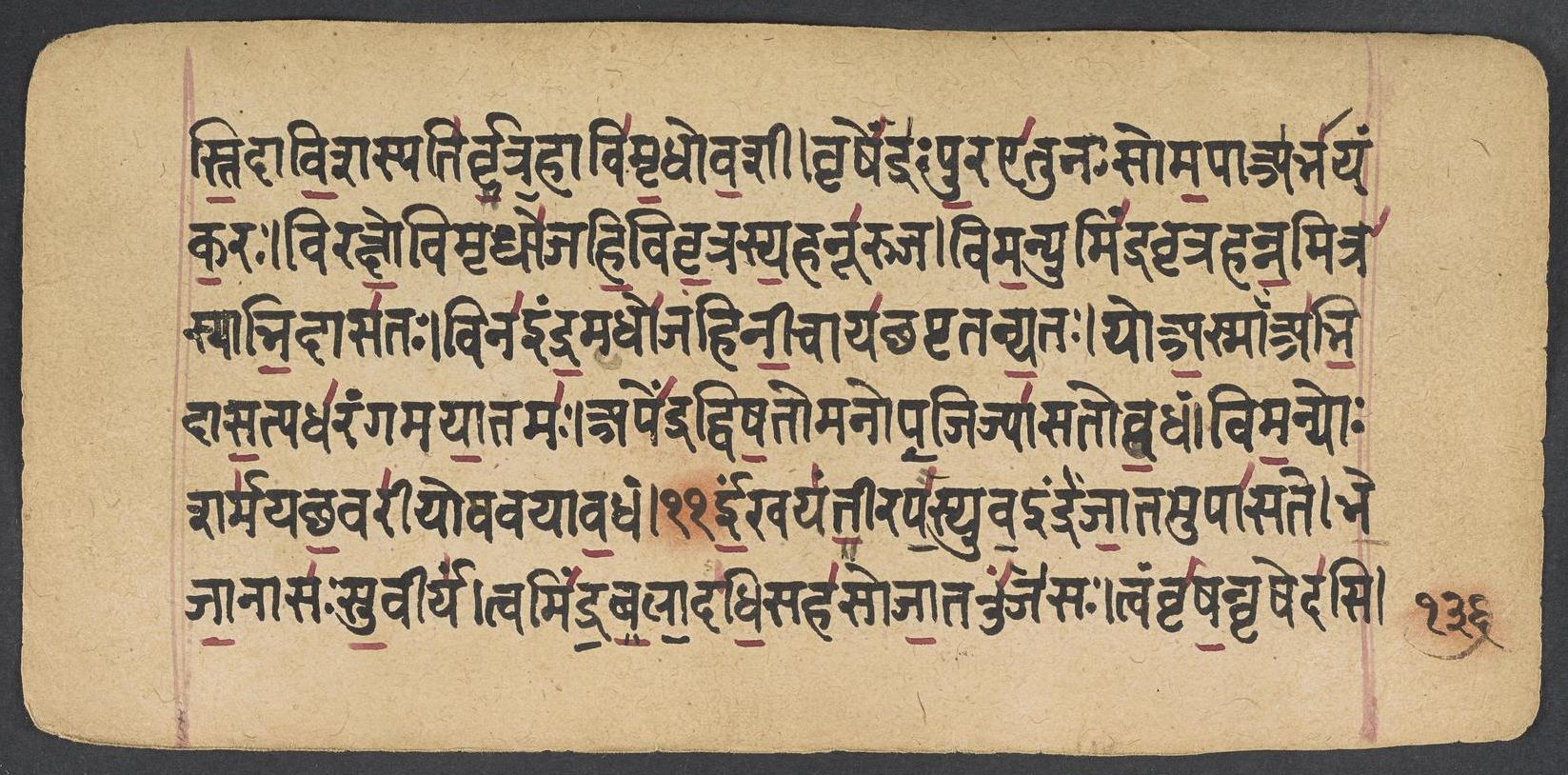
Where on the image
Penn Ms. Coll. 390 Item 48, fol. 136v (OPenn image 136, upper leaf). Checked on the image: the Rigveda text on this page begins in RV 10.152.2 ‹svastidā viśas patir vṛtrahā›. The next page with Rigveda text, fol. 137r, begins in RV 10.153.3 ‹tvam indrāsi vṛtrahā vy›. Verses 10.153.1-2 end on this page.
1ī̱ṅkhaya̍ntīr apa̱syuva̱ indra̍ṁ jā̱tam upā̍sate | bhe̱jā̱nāsa̍ḥ su̱vīrya̍m ||
2tvam i̍ndra̱ balā̱d adhi̱ saha̍so jā̱ta oja̍saḥ | tvaṁ vṛ̍ṣa̱n vṛṣed a̍si ||
1SWAYING about, the Active Ones came nigh to Indra at his birth, And shared his great heroic might.
2Based upon strength and victory and power, O Indra is thy birth: Thou, Mighty One, art strong indeed.
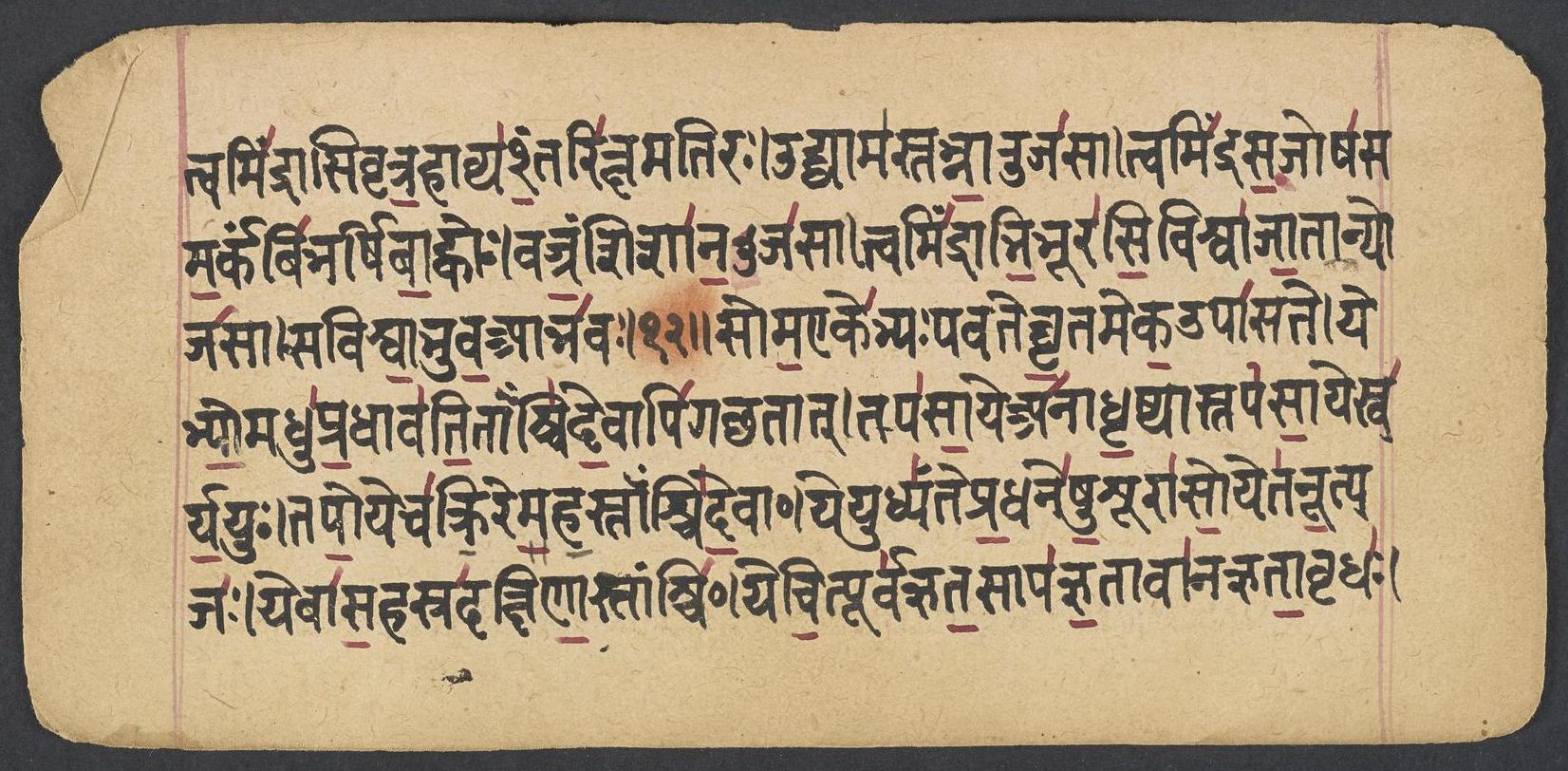
Where on the image
Penn Ms. Coll. 390 Item 48, fol. 137r (OPenn image 136, lower leaf). Checked on the image: the Rigveda text on this page begins in RV 10.153.3 ‹tvam indrāsi vṛtrahā vy›. The next page with Rigveda text, fol. 137v, begins in RV 10.154.4 ‹pitṝn tapasvato yama tām̐ś›. Verses 10.153.3-5 end on this page.
3tvam i̍ndrāsi vṛtra̱hā vy a1̱̍ntari̍kṣam atiraḥ | ud dyām a̍stabhnā̱ oja̍sā ||
4tvam i̍ndra sa̱joṣa̍sam a̱rkam bi̍bharṣi bā̱hvoḥ | vajra̱ṁ śiśā̍na̱ oja̍sā ||
5tvam i̍ndrābhi̱bhūr a̍si̱ viśvā̍ jā̱tāny oja̍sā | sa viśvā̱ bhuva̱ ābha̍vaḥ ||
3Thou art the Vr̥itra-slayer, thou, Indra, hast spread the firmament: Thou hast with might upheld the heavens.
4Thou, Indra, bearest in thine arms the lightning that accords with thee, Whetting thy thunderbolt with might.
5Thou, Indra, art preeminent over all creatures in thy might: Thou hast pervaded every place.
Notes
- Sanskrit: Aufrecht's edition (1877) with the Vedic accents, as entered by van Nooten and Holland (GRETIL).
- English: Ralph T. H. Griffith, The Hymns of the Rigveda (1889-1892; 2nd ed. 1896-1897), from the VedaWeb digital text; OCR slips in that text were corrected against the printed 2nd edition (data/sources/rigveda/griffith_errata.json).
Cite
Sources
- Source: Penn Ms. Coll. 390 Item 48 (1711 CE (colophon: Saṃvat 1768)), OPenn, Public Domain Mark + Aufrecht's accented text (GRETIL) + Griffith's English (VedaWeb) (holding institution)
- Critical edition: Aufrecht (1877), accented e-text via GRETIL
← previous · → next · v cycle view · l back to library