Rigveda 10.157: To all the gods
Introduction
Rigveda 10.157 is a hymn of 5 verses addressed to all the gods. It stands in book (maṇḍala) 10, the last and latest book. The Rigveda is the oldest collection of Sanskrit hymns, composed in the second half of the second millennium BCE and handed down orally for many centuries before it was written down.
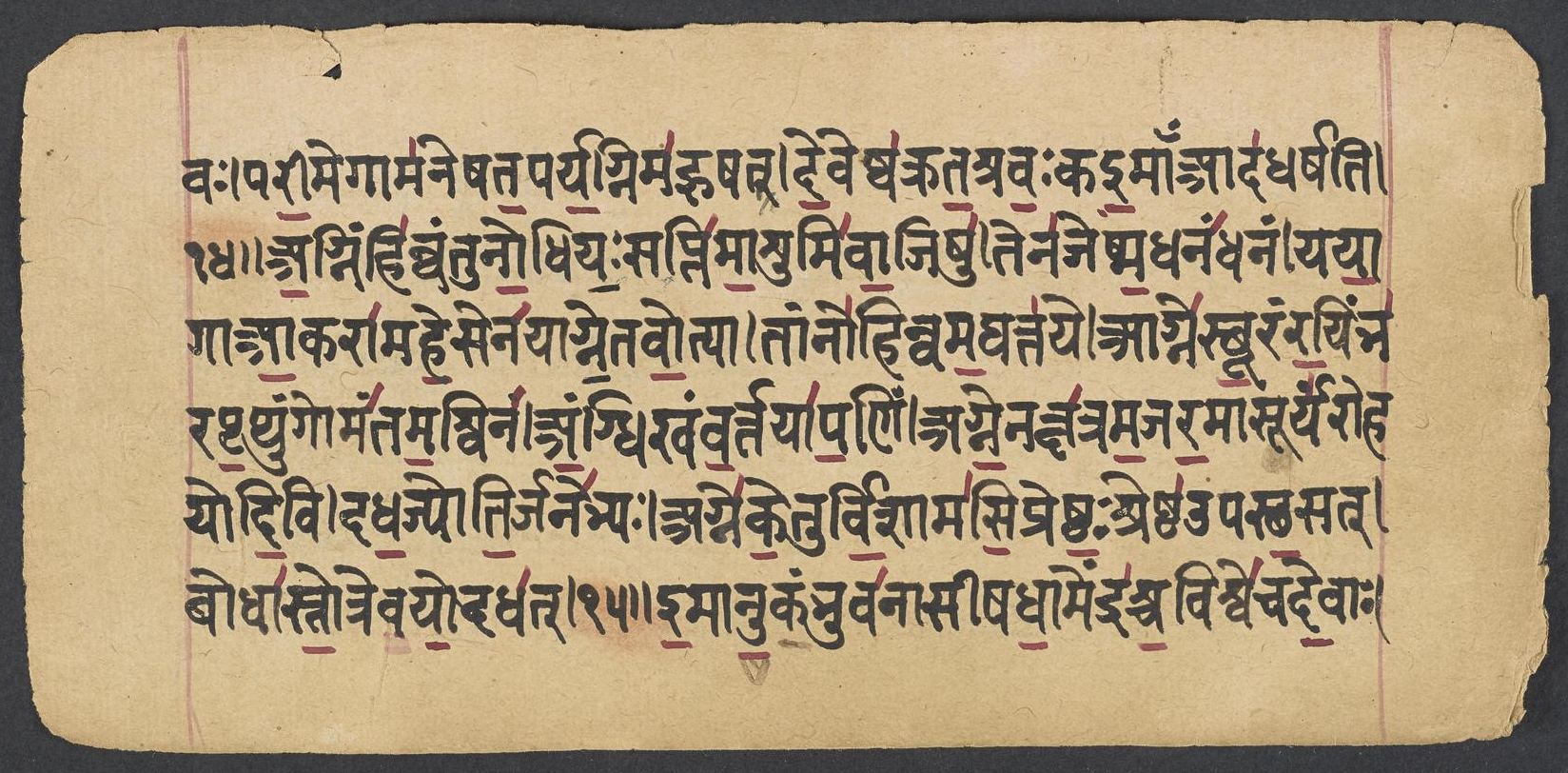
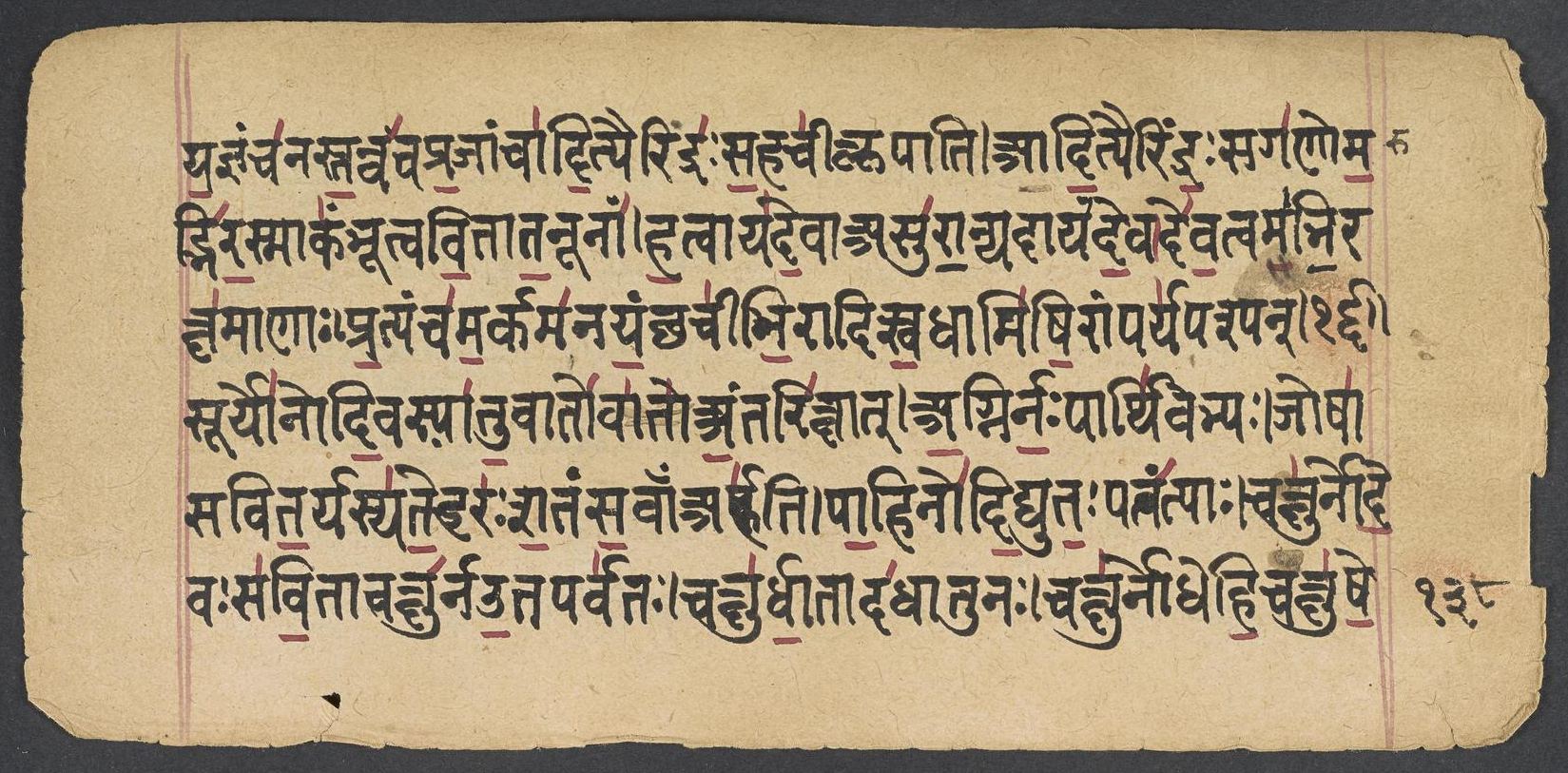
The manuscript shown is Penn Ms. Coll. 390 Item 48 (University of Pennsylvania), a paper manuscript of the eighth aṣṭaka (RV 10.46-10.191) of the Ṛgveda Saṃhitā in Devanāgarī, 158 leaves, 6 lines to the page, with the accents marked in red; the scribe's colophon on fol. 158 gives Saṃvat 1768 (1711 CE); this hymn stands on fol. 138r-138v. Each section below gives the verses that end on one page; the page boundaries were read on the images (the opening words of every page), not counted out. Like most Rigveda manuscripts, Penn Ms. Coll. 390 Item 48 writes a repeated refrain in short form after its first occurrence (for example kasmai° for kasmai devāya haviṣā vidhema); the Sanskrit shown is the full text of Aufrecht's edition.
How was this verified? (Provenance)
Where on the image
Penn Ms. Coll. 390 Item 48, fol. 138r (OPenn image 137, lower leaf). Checked on the image: the Rigveda text on this page begins in RV 10.155.4 ‹-budbudayāśavaḥ›. The next page with Rigveda text, fol. 138v, begins in RV 10.157.2 ‹yajñaṁ ca nas tanvaṁ›. Verse 10.157.1 ends on this page.
1i̱mā nu ka̱m bhuva̍nā sīṣadhā̱mendra̍ś ca̱ viśve̍ ca de̱vāḥ ||
1WE will, with Indra and all Gods to aid us, bring these existing worlds into subjection.
Where on the image
Penn Ms. Coll. 390 Item 48, fol. 138v (OPenn image 138, upper leaf). Checked on the image: the Rigveda text on this page begins in RV 10.157.2 ‹yajñaṁ ca nas tanvaṁ›. The next page with Rigveda text, fol. 139r, begins in RV 10.158.4 ‹-cakṣuṣe cakṣur vikhyai tanūbhyaḥ›. Verses 10.157.2-5 end on this page.
2ya̱jñaṁ ca̍ nas ta̱nva̍ṁ ca pra̱jāṁ cā̍di̱tyair indra̍ḥ sa̱ha cī̍kḷpāti ||
3ā̱di̱tyair indra̱ḥ saga̍ṇo ma̱rudbhi̍r a̱smāka̍m bhūtv avi̱tā ta̱nūnā̍m ||
4ha̱tvāya̍ de̱vā asu̍rā̱n yad āya̍n de̱vā de̍va̱tvam a̍bhi̱rakṣa̍māṇāḥ ||
5pra̱tyañca̍m a̱rkam a̍naya̱ñ chacī̍bhi̱r ād it sva̱dhām i̍ṣi̱rām pary a̍paśyan ||
2Our sacrifice, our bodies, and our offspring, let Indra form together with Âdityas.
3With the Âdityas, with the band of Maruts, may Indra be Protector of our bodies.
4As when the Gods came, after they had slaughtered the Asuras, keeping safe their Godlike nature,
5Brought the Sun hitherward with mighty powers, and looked about them on their vigorous Godhead.
Notes
- Sanskrit: Aufrecht's edition (1877) with the Vedic accents, as entered by van Nooten and Holland (GRETIL).
- English: Ralph T. H. Griffith, The Hymns of the Rigveda (1889-1892; 2nd ed. 1896-1897), from the VedaWeb digital text; OCR slips in that text were corrected against the printed 2nd edition (data/sources/rigveda/griffith_errata.json).
Cite
Sources
- Source: Penn Ms. Coll. 390 Item 48 (1711 CE (colophon: Saṃvat 1768)), OPenn, Public Domain Mark + Aufrecht's accented text (GRETIL) + Griffith's English (VedaWeb) (holding institution)
- Critical edition: Aufrecht (1877), accented e-text via GRETIL
← previous · → next · v cycle view · l back to library