Rigveda 10.159: A woman's hymn of triumph
Introduction
Rigveda 10.159 is a hymn of 6 verses addressed to a woman's hymn of triumph. It stands in book (maṇḍala) 10, the last and latest book. The Rigveda is the oldest collection of Sanskrit hymns, composed in the second half of the second millennium BCE and handed down orally for many centuries before it was written down.
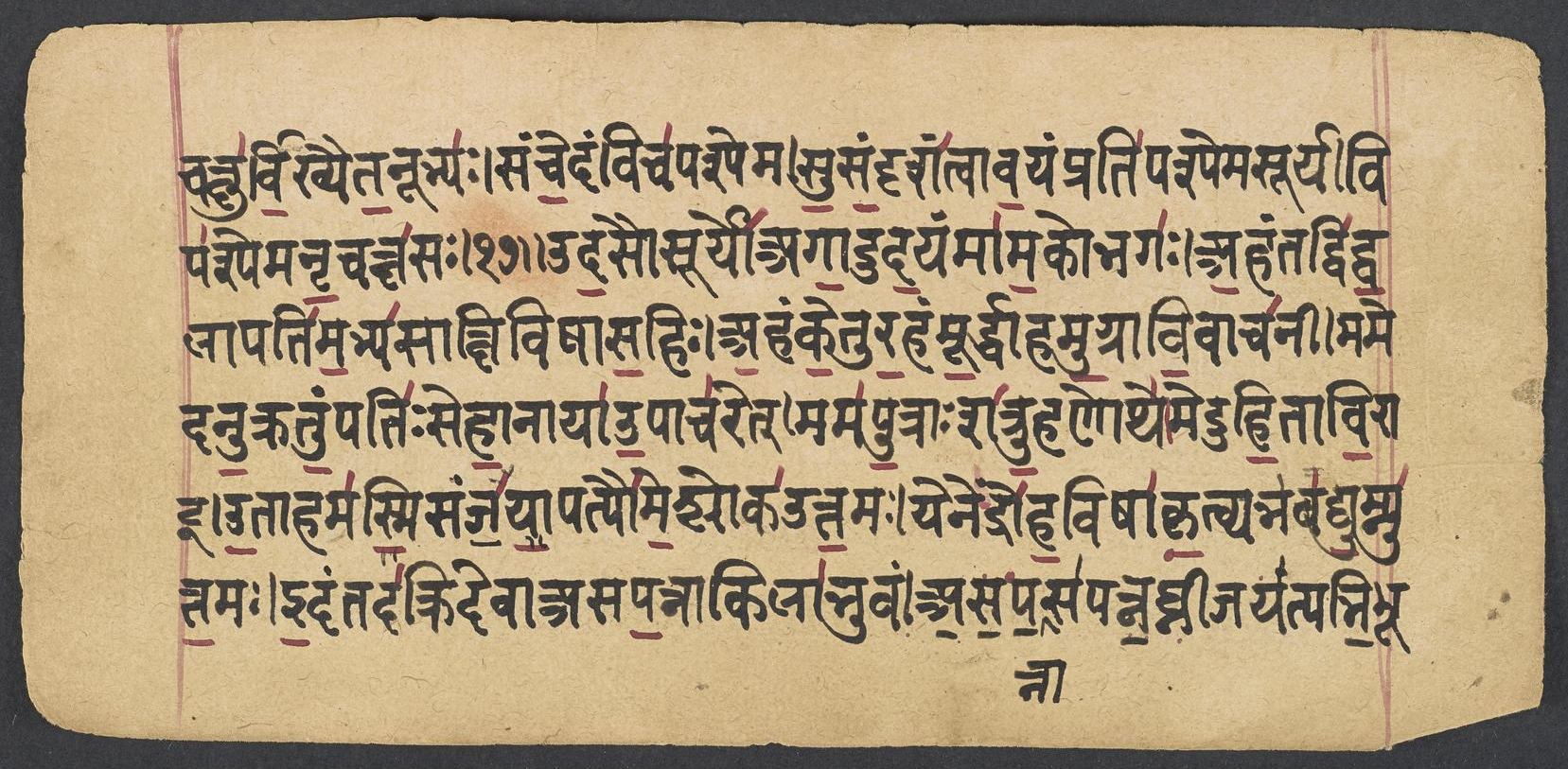
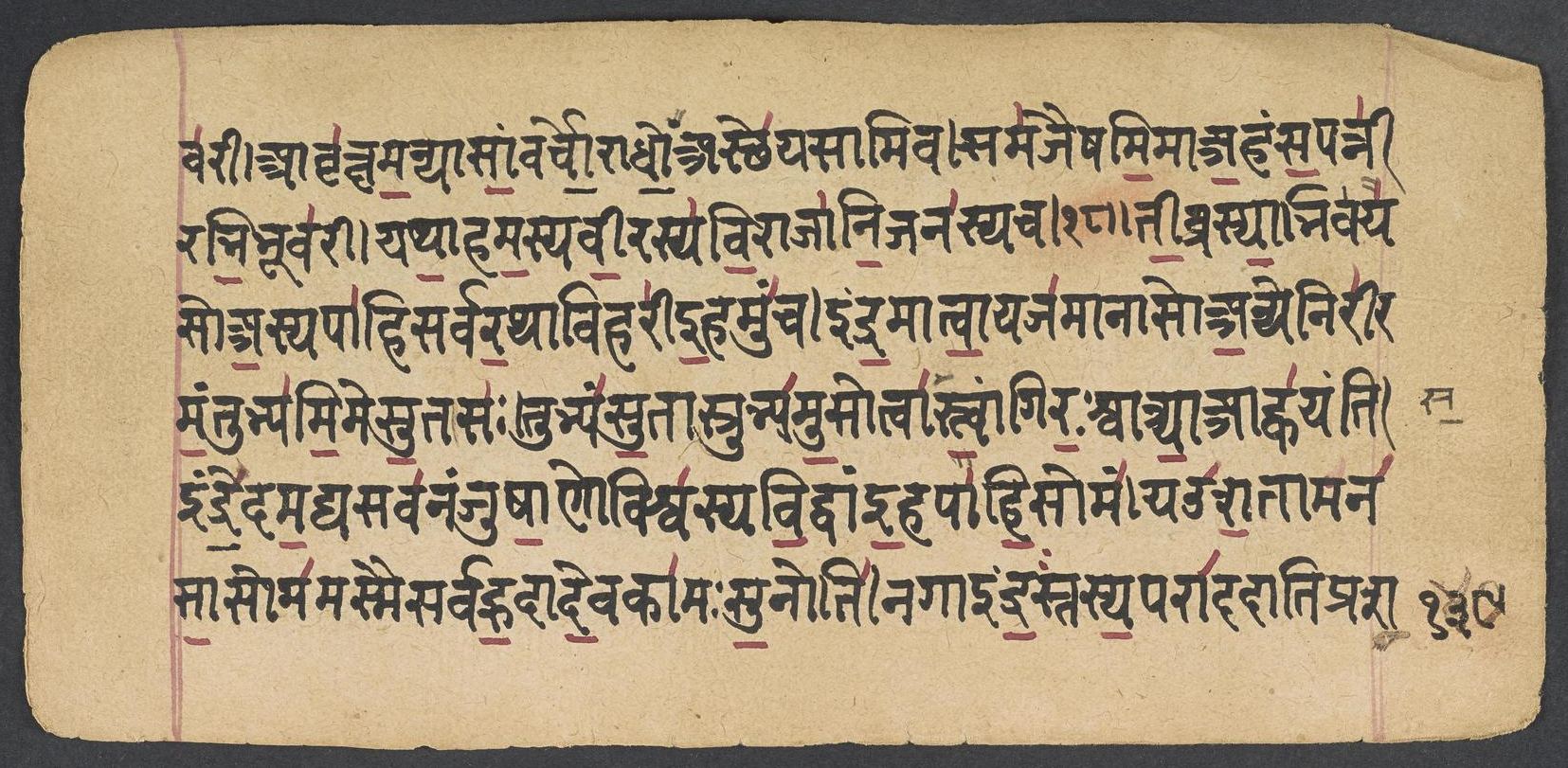
The manuscript shown is Penn Ms. Coll. 390 Item 48 (University of Pennsylvania), a paper manuscript of the eighth aṣṭaka (RV 10.46-10.191) of the Ṛgveda Saṃhitā in Devanāgarī, 158 leaves, 6 lines to the page, with the accents marked in red; the scribe's colophon on fol. 158 gives Saṃvat 1768 (1711 CE); this hymn stands on fol. 139r-139v. Each section below gives the verses that end on one page; the page boundaries were read on the images (the opening words of every page), not counted out. Like most Rigveda manuscripts, Penn Ms. Coll. 390 Item 48 writes a repeated refrain in short form after its first occurrence (for example kasmai° for kasmai devāya haviṣā vidhema); the Sanskrit shown is the full text of Aufrecht's edition.
How was this verified? (Provenance)
Where on the image
Penn Ms. Coll. 390 Item 48, fol. 139r (OPenn image 138, lower leaf). Checked on the image: the Rigveda text on this page begins in RV 10.158.4 ‹-cakṣuṣe cakṣur vikhyai tanūbhyaḥ›. The next page with Rigveda text, fol. 139v, begins in RV 10.159.5 ‹-abhibhūvarī›. Verses 10.159.1-4 end on this page.
1ud a̱sau sūryo̍ agā̱d ud a̱yam mā̍ma̱ko bhaga̍ḥ | a̱haṁ tad vi̍dva̱lā pati̍m a̱bhy a̍sākṣi viṣāsa̱hiḥ ||
2a̱haṁ ke̱tur a̱ham mū̱rdhāham u̱grā vi̱vāca̍nī | mamed anu̱ kratu̱m pati̍ḥ sehā̱nāyā̍ u̱pāca̍ret ||
3mama̍ pu̱trāḥ śa̍tru̱haṇo 'tho̍ me duhi̱tā vi̱rāṭ | u̱tāham a̍smi saṁja̱yā patyau̍ me̱ śloka̍ utta̱maḥ ||
4yenendro̍ ha̱viṣā̍ kṛ̱tvy abha̍vad dyu̱mny u̍tta̱maḥ | i̱daṁ tad a̍kri devā asapa̱tnā kilā̍bhuvam ||
1YON Sun hath mounted up, and this my happy fate hath mounted high. I knowing this, as conqueror have won my husband for mine own.
2I am the banner and the head, a mighty arbitress am I: I am victorious, and my Lord shall be submissive to my will.
3My Sons are slayers of the foe, my Daughter is a ruling Queen: I am victorious: o'er my Lord my song of triumph is supreme.
4Oblation, that which Indra gave and thus grew glorious and most high,– This have I offered, O ye Gods, and rid me of each rival wife.
Where on the image
Penn Ms. Coll. 390 Item 48, fol. 139v (OPenn image 139, upper leaf). Checked on the image: the Rigveda text on this page begins in RV 10.159.5 ‹-abhibhūvarī›. The next page with Rigveda text, fol. 140r, begins in RV 10.160.3 ‹-praśastam ic cārum asmai›. Verses 10.159.5-6 end on this page; 10.159.5 begins on fol. 139r.
5a̱sa̱pa̱tnā sa̍patna̱ghnī jaya̍nty abhi̱bhūva̍rī | āvṛ̍kṣam a̱nyāsā̱ṁ varco̱ rādho̱ asthe̍yasām iva ||
6sam a̍jaiṣam i̱mā a̱haṁ sa̱patnī̍r abhi̱bhūva̍rī | yathā̱ham a̱sya vī̱rasya̍ vi̱rājā̍ni̱ jana̍sya ca ||
5Destroyer of the rival wife, Sole Spouse, victorious, conqueror, The others' glory have I seized as 'twere the wealth of weaker Dames.
6I have subdued as conqueror these rivals, these my fellow-wives, That I may hold imperial sway over this Hero and the folk.
Notes
- Sanskrit: Aufrecht's edition (1877) with the Vedic accents, as entered by van Nooten and Holland (GRETIL).
- English: Ralph T. H. Griffith, The Hymns of the Rigveda (1889-1892; 2nd ed. 1896-1897), from the VedaWeb digital text; OCR slips in that text were corrected against the printed 2nd edition (data/sources/rigveda/griffith_errata.json).
Cite
Sources
- Source: Penn Ms. Coll. 390 Item 48 (1711 CE (colophon: Saṃvat 1768)), OPenn, Public Domain Mark + Aufrecht's accented text (GRETIL) + Griffith's English (VedaWeb) (holding institution)
- Critical edition: Aufrecht (1877), accented e-text via GRETIL
← previous · → next · v cycle view · l back to library