Rigveda 10.176: To Agni
Introduction
Rigveda 10.176 is a hymn of 4 verses addressed to Agni. It stands in book (maṇḍala) 10, the last and latest book. The Rigveda is the oldest collection of Sanskrit hymns, composed in the second half of the second millennium BCE and handed down orally for many centuries before it was written down.
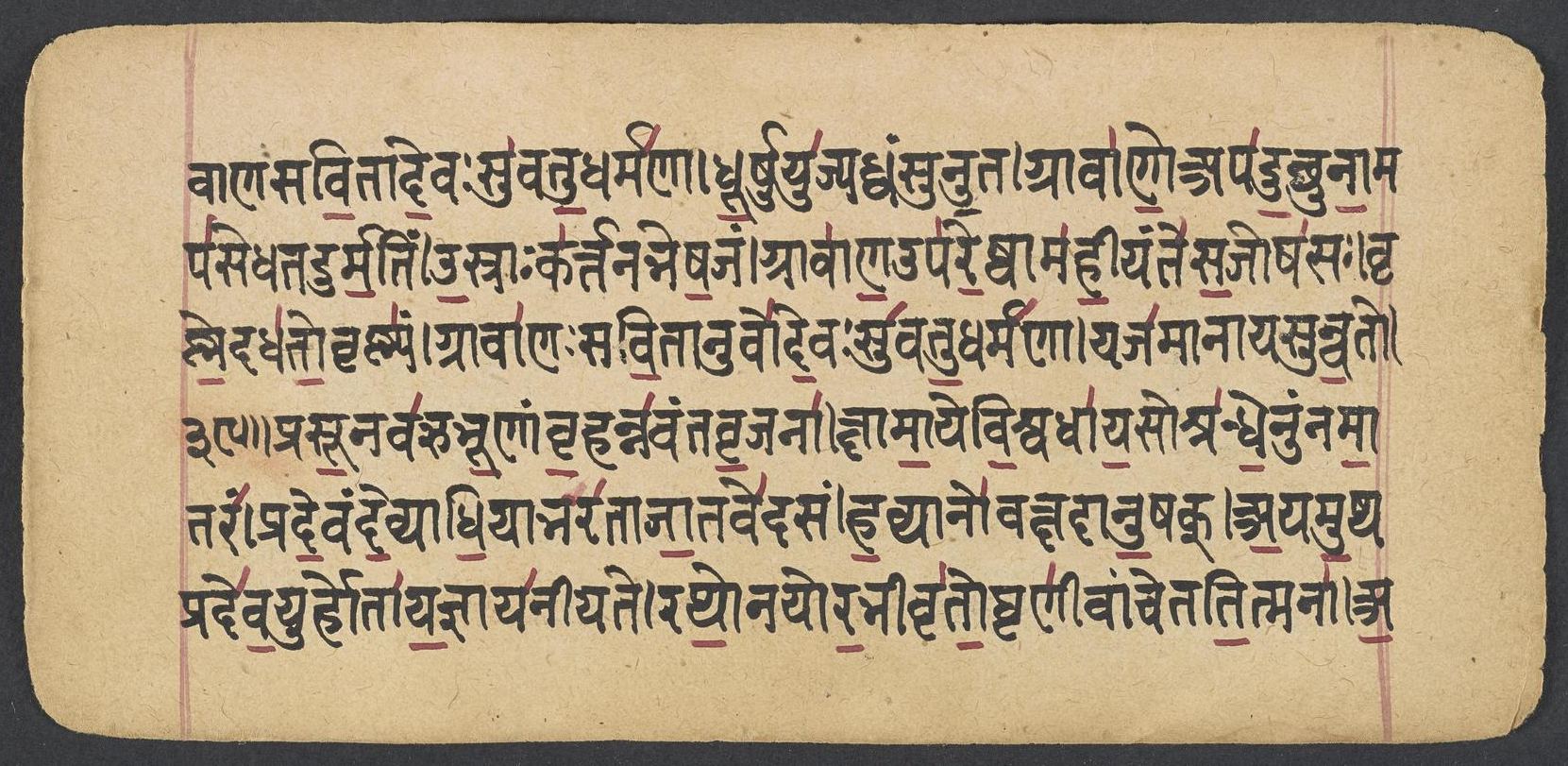
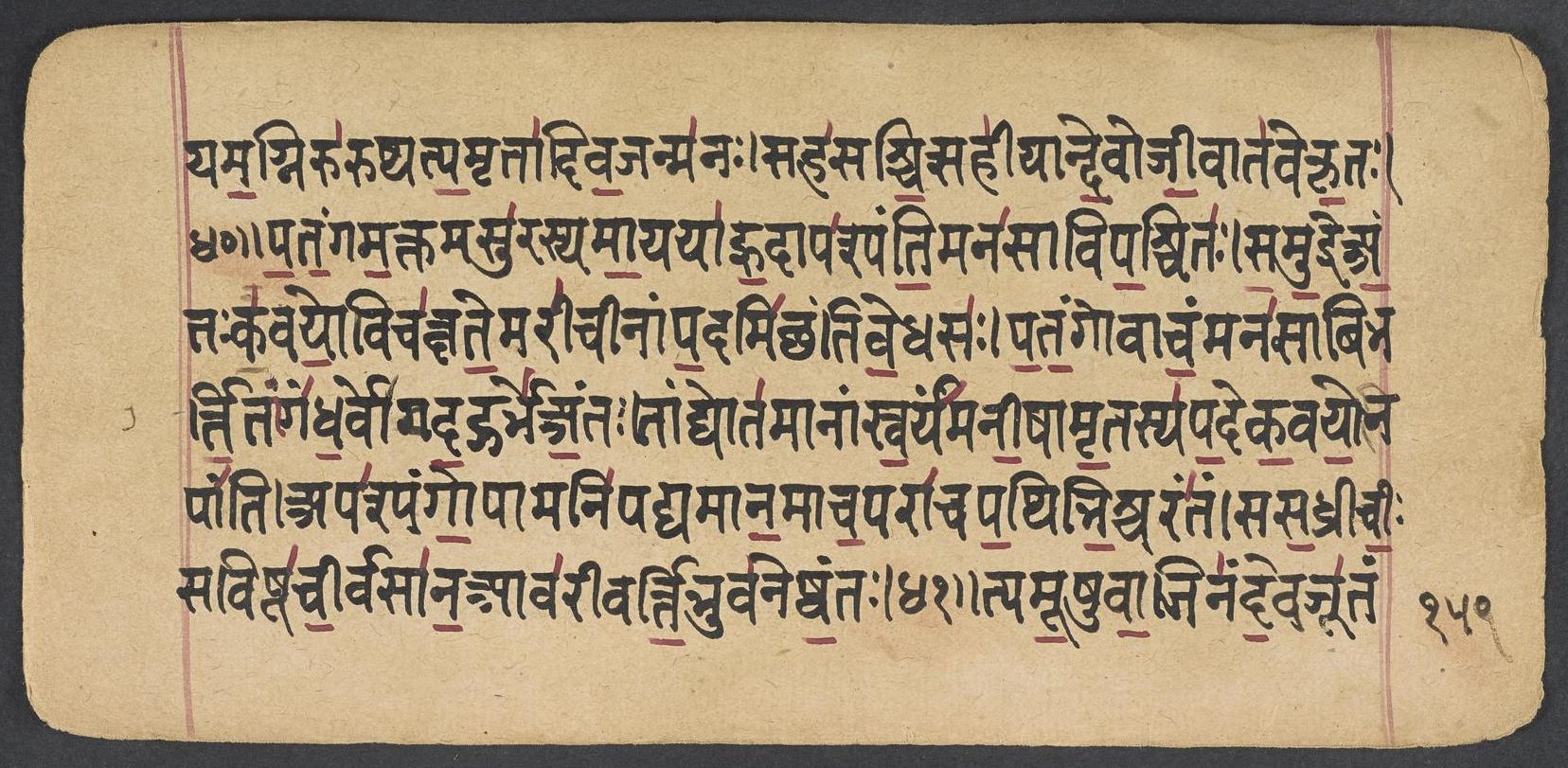
The manuscript shown is Penn Ms. Coll. 390 Item 48 (University of Pennsylvania), a paper manuscript of the eighth aṣṭaka (RV 10.46-10.191) of the Ṛgveda Saṃhitā in Devanāgarī, 158 leaves, 6 lines to the page, with the accents marked in red; the scribe's colophon on fol. 158 gives Saṃvat 1768 (1711 CE); this hymn stands on fol. 150r-150v. Each section below gives the verses that end on one page; the page boundaries were read on the images (the opening words of every page), not counted out. Like most Rigveda manuscripts, Penn Ms. Coll. 390 Item 48 writes a repeated refrain in short form after its first occurrence (for example kasmai° for kasmai devāya haviṣā vidhema); the Sanskrit shown is the full text of Aufrecht's edition.
How was this verified? (Provenance)
Where on the image
Penn Ms. Coll. 390 Item 48, fol. 150r (OPenn image 149, lower leaf). Checked on the image: the Rigveda text on this page begins in RV 10.175.1 ‹-grāvāṇaḥ savitā devaḥ suvatu›. The next page with Rigveda text, fol. 150v, begins in RV 10.176.4 ‹ayam agnir uruṣyaty amṛtād›. Verses 10.176.1-3 end on this page.
1pra sū̱nava̍ ṛbhū̱ṇām bṛ̱han na̍vanta vṛ̱janā̍ | kṣāmā̱ ye vi̱śvadhā̍ya̱so 'śna̍n dhe̱nuṁ na mā̱tara̍m ||
2pra de̱vaṁ de̱vyā dhi̱yā bhara̍tā jā̱tave̍dasam | ha̱vyā no̍ vakṣad ānu̱ṣak ||
3a̱yam u̱ ṣya pra de̍va̱yur hotā̍ ya̱jñāya̍ nīyate | ratho̱ na yor a̱bhīvṛ̍to̱ ghṛṇī̍vāñ cetati̱ tmanā̍ ||
1WITH hymns of praise their sons have told aloud the R̥ibhus' mighty deeds. Who, all-supporting, have enjoyed the earth as, twere a mother cow.
2Bring forth the God with song divine, being Jâtavedas hitherward, To bear our gifts at once to heaven.
3He here, a God-devoted Priest, led forward comes to sacrifice. Like a car covered for the road, he, glowing, knows, himself, the way.
Where on the image
Penn Ms. Coll. 390 Item 48, fol. 150v (OPenn image 150, upper leaf). Checked on the image: the Rigveda text on this page begins in RV 10.176.4 ‹ayam agnir uruṣyaty amṛtād›. The next page with Rigveda text, fol. 151r, begins in RV 10.178.1 ‹sahāvānaṁ tarutāraṁ rathānām›. Verse 10.176.4 ends on this page.
4a̱yam a̱gnir u̍ruṣyaty a̱mṛtā̍d iva̱ janma̍naḥ | saha̍saś ci̱t sahī̍yān de̱vo jī̱vāta̍ve kṛ̱taḥ ||
4This Agni rescues from distress, as 'twere from the Immortal Race, A God yet mightier than strength, a God who hath been made for life.
Notes
- Sanskrit: Aufrecht's edition (1877) with the Vedic accents, as entered by van Nooten and Holland (GRETIL).
- English: Ralph T. H. Griffith, The Hymns of the Rigveda (1889-1892; 2nd ed. 1896-1897), from the VedaWeb digital text; OCR slips in that text were corrected against the printed 2nd edition (data/sources/rigveda/griffith_errata.json).
Cite
Sources
- Source: Penn Ms. Coll. 390 Item 48 (1711 CE (colophon: Saṃvat 1768)), OPenn, Public Domain Mark + Aufrecht's accented text (GRETIL) + Griffith's English (VedaWeb) (holding institution)
- Critical edition: Aufrecht (1877), accented e-text via GRETIL
← previous · → next · v cycle view · l back to library