Rigveda 10.191: Hymn of concord (Samjnana)
Introduction
Rigveda 10.191 is a hymn of 4 verses addressed to hymn of unison. It stands in book (maṇḍala) 10, the last and latest book. The Rigveda is the oldest collection of Sanskrit hymns, composed in the second half of the second millennium BCE and handed down orally for many centuries before it was written down.
The manuscript shown is Penn Ms. Coll. 390 Item 48 (University of Pennsylvania), a paper manuscript of the eighth aṣṭaka (RV 10.46-10.191) of the Ṛgveda Saṃhitā in Devanāgarī, 158 leaves, 6 lines to the page, with the accents marked in red; the scribe's colophon on fol. 158 gives Saṃvat 1768 (1711 CE); this hymn stands on fol. 155r-155v. Each section below gives the verses that end on one page; the page boundaries were read on the images (the opening words of every page), not counted out. Like most Rigveda manuscripts, Penn Ms. Coll. 390 Item 48 writes a repeated refrain in short form after its first occurrence (for example kasmai° for kasmai devāya haviṣā vidhema); the Sanskrit shown is the full text of Aufrecht's edition.
How was this verified? (Provenance)
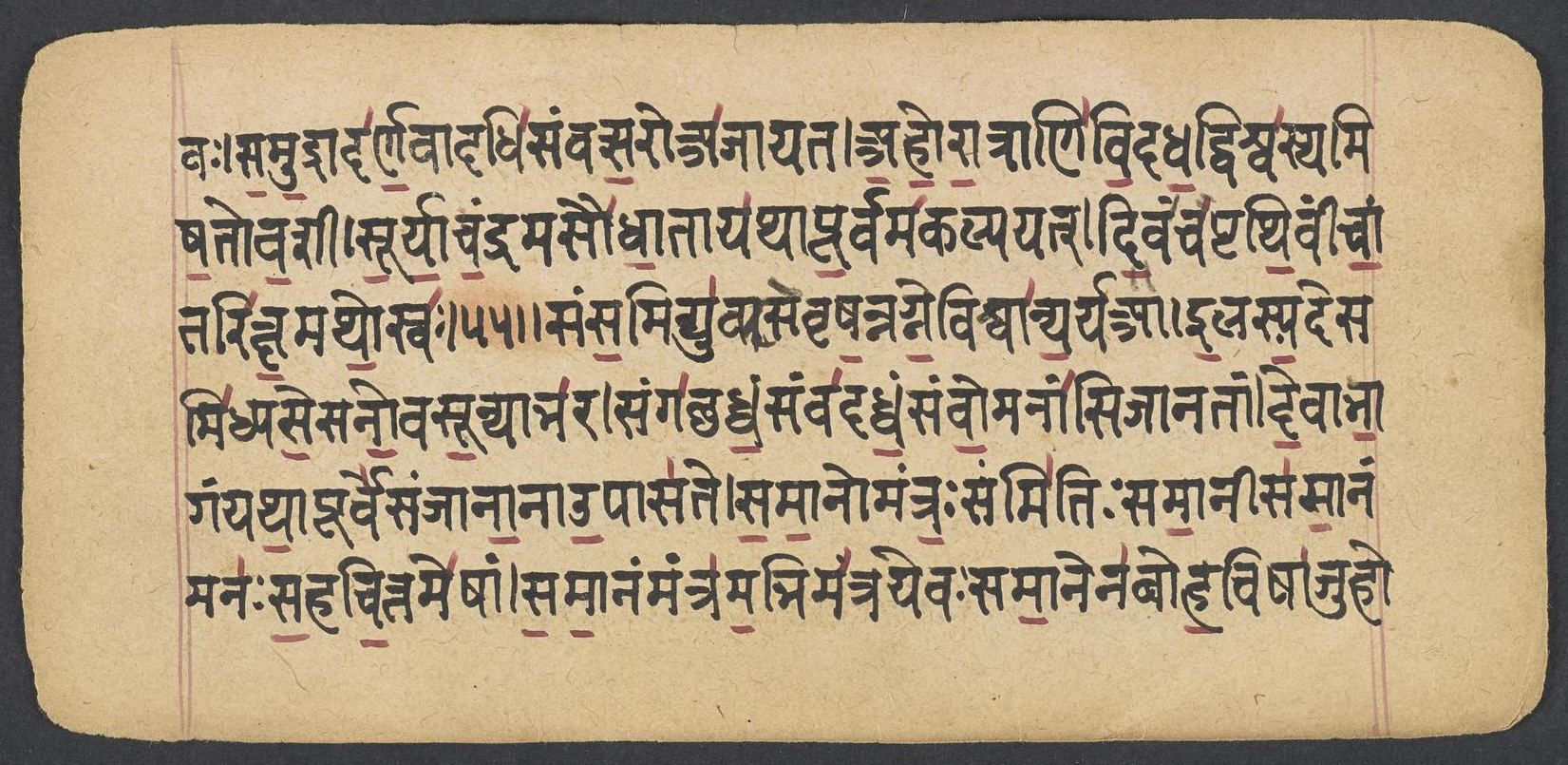
Where on the image
Penn Ms. Coll. 390 Item 48, fol. 155r (OPenn image 154, lower leaf). Checked on the image: the Rigveda text on this page begins in RV 10.190.1 ‹-arṇavaḥ›. The next page with Rigveda text, fol. 155v, begins in RV 10.191.4 ‹samānī va ākūtiḥ samānā›. Verses 10.191.1-3 end on this page.
1saṁ-sa̱m id yu̍vase vṛṣa̱nn agne̱ viśvā̍ny a̱rya ā | i̱ḻas pa̱de sam i̍dhyase̱ sa no̱ vasū̱ny ā bha̍ra ||
2saṁ ga̍cchadhva̱ṁ saṁ va̍dadhva̱ṁ saṁ vo̱ manā̍ṁsi jānatām | de̱vā bhā̱gaṁ yathā̱ pūrve̍ saṁjānā̱nā u̱pāsa̍te ||
3sa̱mā̱no mantra̱ḥ sami̍tiḥ samā̱nī sa̍mā̱nam mana̍ḥ sa̱ha ci̱ttam e̍ṣām | sa̱mā̱nam mantra̍m a̱bhi ma̍ntraye vaḥ samā̱nena̍ vo ha̱viṣā̍ juhomi ||
1THOU, mighty Agni, gatherest up all that is precious for thy friend. Bring us all treasures as thou art enkindled in libation's place
2Assemble, speak together: let your minds be all of one accord, As ancient Gods unanimous sit down to their appointed share.
3The place is common, common the assembly, common the mind, so be their thought united. A common purpose do I lay before you, and worship with your general oblation.
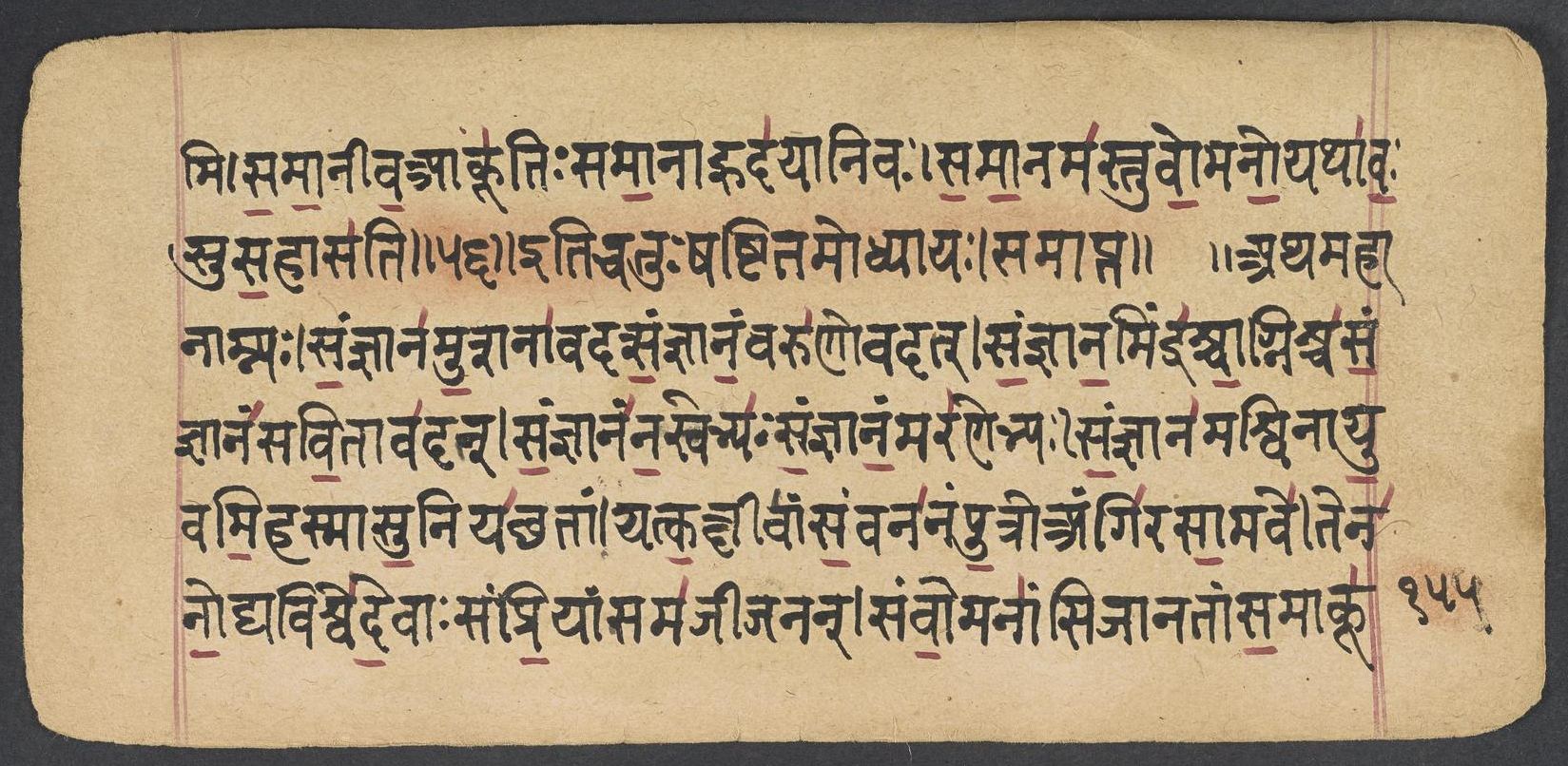
Where on the image
Penn Ms. Coll. 390 Item 48, fol. 155v (OPenn image 155, upper leaf). Checked on the image: the Rigveda text on this page begins in RV 10.191.4 ‹samānī va ākūtiḥ samānā›. 10.191.4 ends in line 2 with a varga number and the colophon iti catuḥṣaṣṭitamo 'dhyāyaḥ samāptaḥ; the Mahanamni verses follow (to fol. 158r). Verse 10.191.4 ends on this page.
4sa̱mā̱nī va̱ ākū̍tiḥ samā̱nā hṛda̍yāni vaḥ | sa̱mā̱nam a̍stu vo̱ mano̱ yathā̍ va̱ḥ susa̱hāsa̍ti ||
4One and the same be your resolve, and be your minds of one accord. United be the thoughts of all that all may happily agree.
Notes
- Sanskrit: Aufrecht's edition (1877) with the Vedic accents, as entered by van Nooten and Holland (GRETIL).
- English: Ralph T. H. Griffith, The Hymns of the Rigveda (1889-1892; 2nd ed. 1896-1897), from the VedaWeb digital text; OCR slips in that text were corrected against the printed 2nd edition (data/sources/rigveda/griffith_errata.json).
Cite
Sources
- Source: Penn Ms. Coll. 390 Item 48 (1711 CE (colophon: Saṃvat 1768)), OPenn, Public Domain Mark + Aufrecht's accented text (GRETIL) + Griffith's English (VedaWeb) (holding institution)
- Critical edition: Aufrecht (1877), accented e-text via GRETIL
← previous · → next · v cycle view · l back to library