Rigveda 10.48: Indra's praise of himself
Introduction
Rigveda 10.48 is a hymn of 11 verses addressed to Indra's praise of himself. It stands in book (maṇḍala) 10, the last and latest book. The Rigveda is the oldest collection of Sanskrit hymns, composed in the second half of the second millennium BCE and handed down orally for many centuries before it was written down.
The manuscript shown is Penn Ms. Coll. 390 Item 48 (University of Pennsylvania), a paper manuscript of the eighth aṣṭaka (RV 10.46-10.191) of the Ṛgveda Saṃhitā in Devanāgarī, 158 leaves, 6 lines to the page, with the accents marked in red; the scribe's colophon on fol. 158 gives Saṃvat 1768 (1711 CE); this hymn stands on fol. 3v-5r. Each section below gives the verses that end on one page; the page boundaries were read on the images (the opening words of every page), not counted out. Like most Rigveda manuscripts, Penn Ms. Coll. 390 Item 48 writes a repeated refrain in short form after its first occurrence (for example kasmai° for kasmai devāya haviṣā vidhema); the Sanskrit shown is the full text of Aufrecht's edition.
How was this verified? (Provenance)
Where on the image
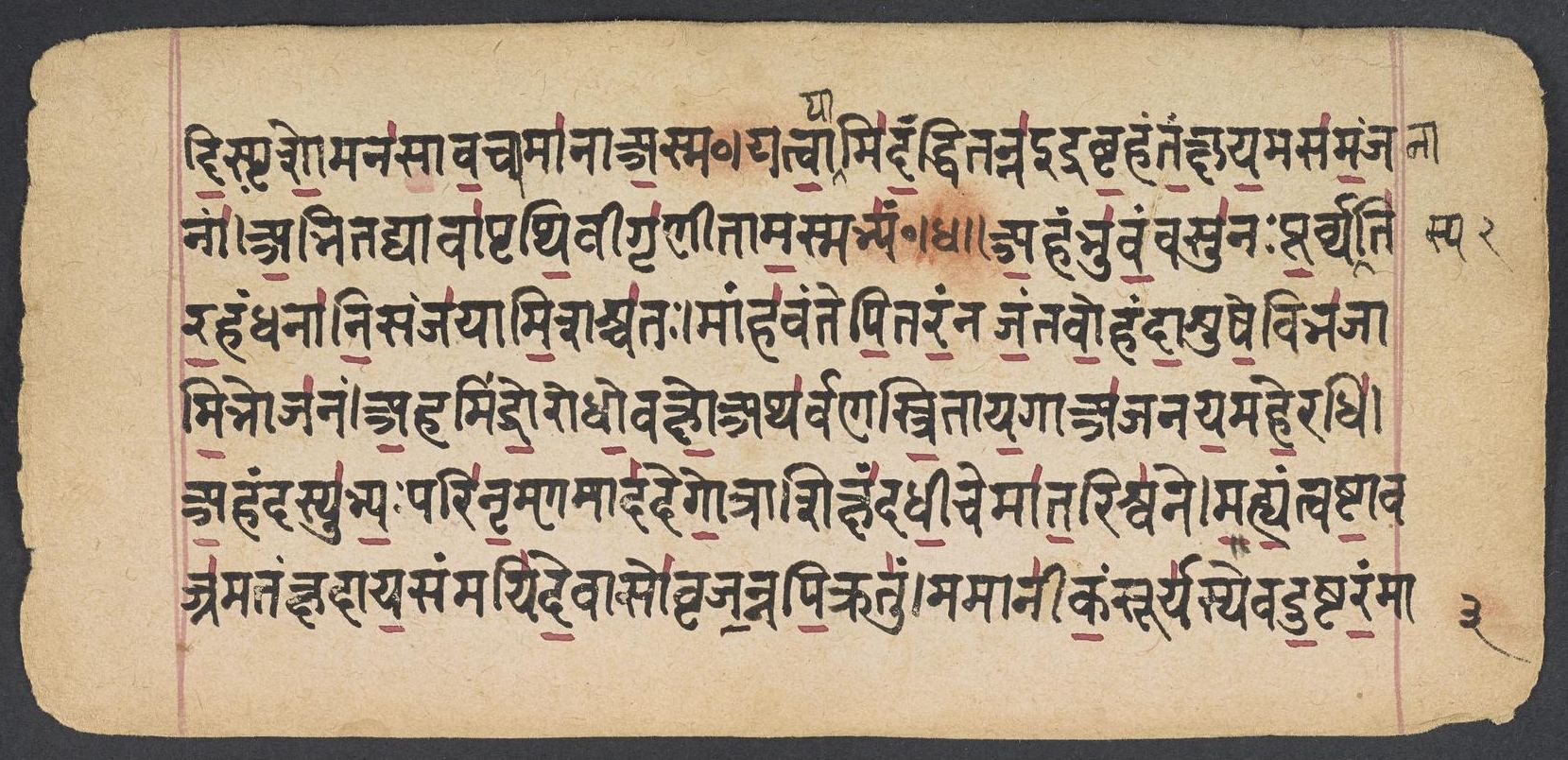
Penn Ms. Coll. 390 Item 48, fol. 3v (OPenn image 3, upper leaf). Checked on the image: the Rigveda text on this page begins in RV 10.47.7 ‹-hṛdispṛśo manasā vacyamānā asmabhyaṁ›. The next page with Rigveda text, fol. 4r, begins in RV 10.48.3 ‹-mām āryanti kṛtena kartvena›. Verses 10.48.1-2 end on this page.
1a̱ham bhu̍va̱ṁ vasu̍naḥ pū̱rvyas pati̍r a̱haṁ dhanā̍ni̱ saṁ ja̍yāmi̱ śaśva̍taḥ | māṁ ha̍vante pi̱tara̱ṁ na ja̱ntavo̱ 'haṁ dā̱śuṣe̱ vi bha̍jāmi̱ bhoja̍nam ||
2a̱ham indro̱ rodho̱ vakṣo̱ atha̍rvaṇas tri̱tāya̱ gā a̍janaya̱m ahe̱r adhi̍ | a̱haṁ dasyu̍bhya̱ḥ pari̍ nṛ̱mṇam ā da̍de go̱trā śikṣa̍n dadhī̱ce mā̍ta̱riśva̍ne ||
1I WAS the first possessor of all precious gear: the wealth of every man I win and gather up. On me as on a Father living creatures call; I deal enjoyment to the man who offers gifts.
2I, Indra, am Atharvan's stay and firm support: I brought forth kine to Trita from the Dragon's grasp. I stripped the Dasyus of their manly might, and gave the cattle-stalls to Matarigvan and Dadhyach.
Where on the image
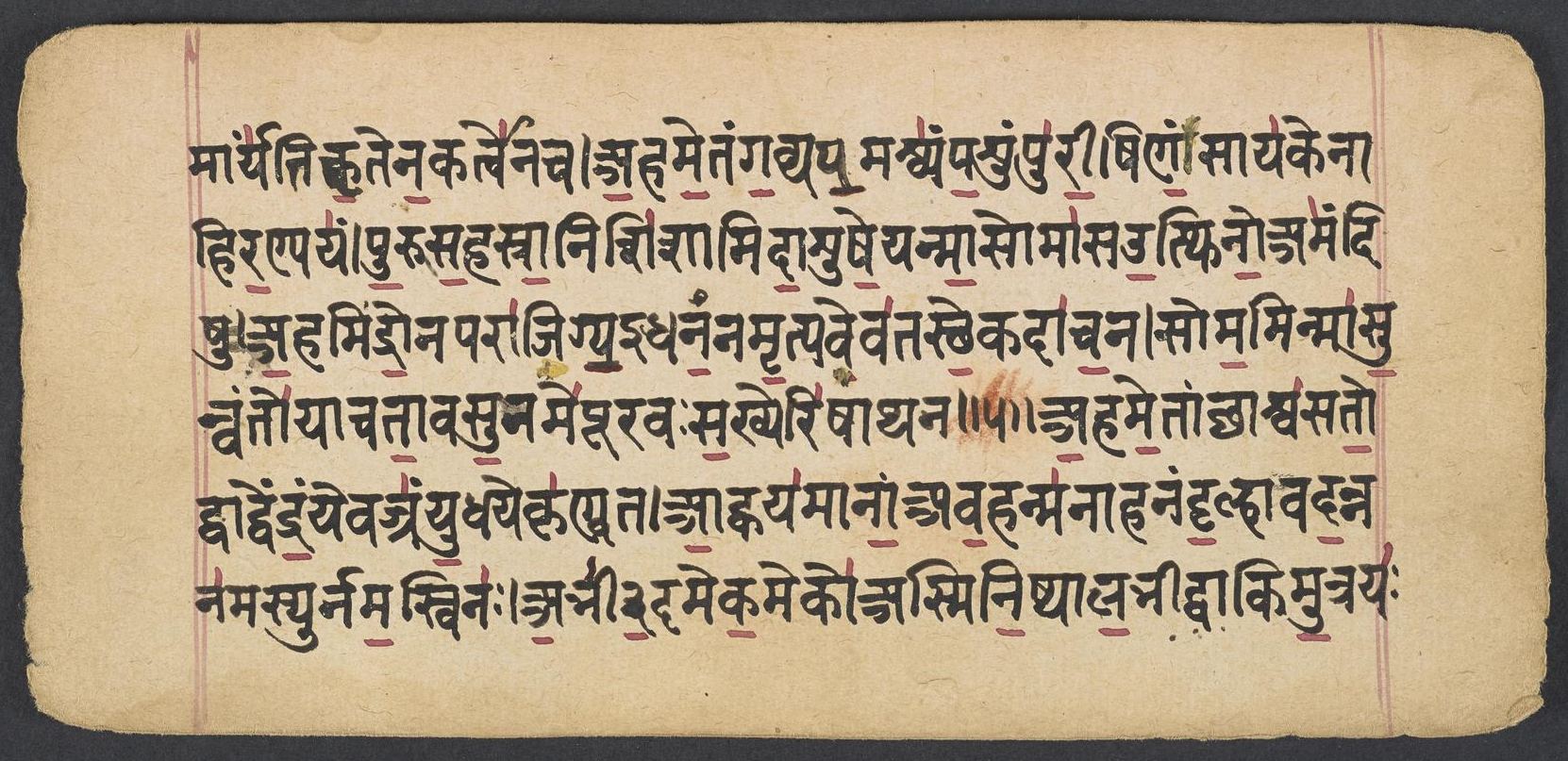
Penn Ms. Coll. 390 Item 48, fol. 4r (OPenn image 3, lower leaf). Checked on the image: the Rigveda text on this page begins in RV 10.48.3 ‹-mām āryanti kṛtena kartvena›. The next page with Rigveda text, fol. 4v, begins in RV 10.48.7 ‹karanti›. Verses 10.48.3-6 end on this page; 10.48.3 begins on fol. 3v.
3mahya̱ṁ tvaṣṭā̱ vajra̍m atakṣad āya̱sam mayi̍ de̱vāso̍ 'vṛja̱nn api̱ kratu̍m | mamānī̍ka̱ṁ sūrya̍syeva du̱ṣṭara̱m mām ārya̍nti kṛ̱tena̱ kartve̍na ca ||
4a̱ham e̱taṁ ga̱vyaya̱m aśvya̍m pa̱śum pu̍rī̱ṣiṇa̱ṁ sāya̍kenā hira̱ṇyaya̍m | pu̱rū sa̱hasrā̱ ni śi̍śāmi dā̱śuṣe̱ yan mā̱ somā̍sa u̱kthino̱ ama̍ndiṣuḥ ||
5a̱ham indro̱ na parā̍ jigya̱ id dhana̱ṁ na mṛ̱tyave 'va̍ tasthe̱ kadā̍ ca̱na | soma̱m in mā̍ su̱nvanto̍ yācatā̱ vasu̱ na me̍ pūravaḥ sa̱khye ri̍ṣāthana ||
6a̱ham e̱tāñ chāśva̍sato̱ dvā-dvendra̱ṁ ye vajra̍ṁ yu̱dhaye 'kṛ̍ṇvata | ā̱hvaya̍mānā̱m̐ ava̱ hanma̍nāhanaṁ dṛ̱ḻhā vada̱nn ana̍masyur nama̱svina̍ḥ ||
3For me hath Tvashṭar forged the iron thunderbolt: in me the Gods have centred intellectual power. My sheen is like the Sun's insufferably bright: men honour me as Lord for past and future deeds.
4I won myself these herds of cattle, steeds and kine, and gold in ample store, with my destructive bolt. I give full many a thousand to the worshipper, what time the Somas and the lauds have made me glad.
5Indra am I none ever wins my wealth from me never at any time am I a thrall to death. Pressing the Soma, ask riches from me alone: ye, Pûrus, in my friendship shall not suffer harm.
6These, breathing loud in fury, two and two, who caused Indra to bring his bolt of thunder to the fray, The challengers, I struck with deadly weapon down: firm stand what words the God speaks to his worshippers. This One by stronger might I conquered singly; yea, also two: shall three prevail against me? Like many sheaves upon the floor I thrash them. How can my foes, the Indraless, revile me?
Where on the image
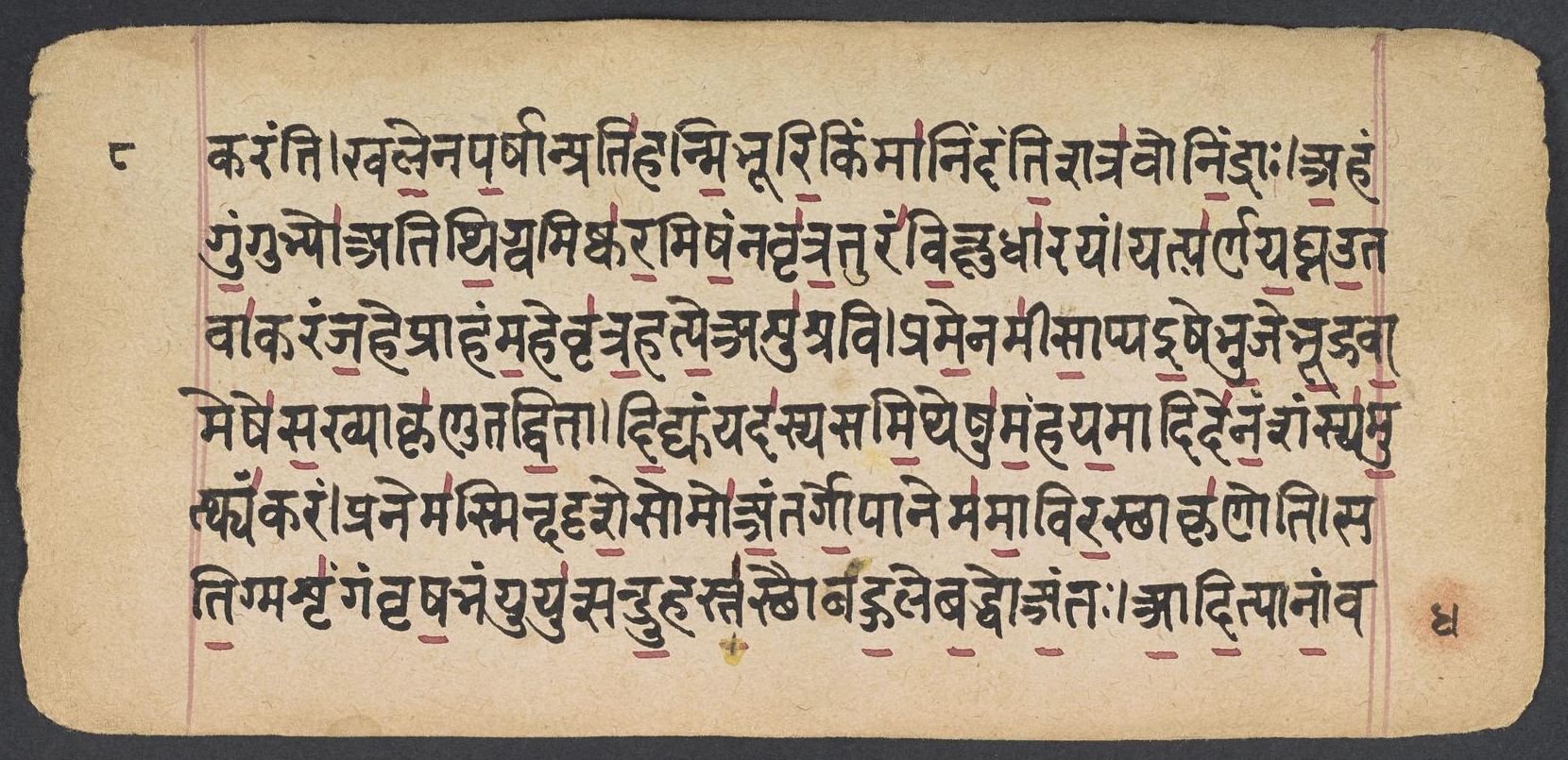
Penn Ms. Coll. 390 Item 48, fol. 4v (OPenn image 4, upper leaf). Checked on the image: the Rigveda text on this page begins in RV 10.48.7 ‹karanti›. The next page with Rigveda text, fol. 5r, begins in RV 10.48.11 ‹-vasūnāṁ rudriyāṇāṁ devo devānāṁ›. Verses 10.48.7-10 end on this page; 10.48.7 begins on fol. 4r.
7a̱bhī̱3̱̍dam eka̱m eko̍ asmi ni̱ṣṣāḻ a̱bhī dvā kim u̱ traya̍ḥ karanti | khale̱ na pa̱rṣān prati̍ hanmi̱ bhūri̱ kim mā̍ nindanti̱ śatra̍vo 'ni̱ndrāḥ ||
8a̱haṁ gu̱ṅgubhyo̍ atithi̱gvam iṣka̍ra̱m iṣa̱ṁ na vṛ̍tra̱tura̍ṁ vi̱kṣu dhā̍rayam | yat pa̍rṇaya̱ghna u̱ta vā̍ karañja̱he prāham ma̱he vṛ̍tra̱hatye̱ aśu̍śravi ||
9pra me̱ namī̍ sā̱pya i̱ṣe bhu̱je bhū̱d gavā̱m eṣe̍ sa̱khyā kṛ̍ṇuta dvi̱tā | di̱dyuṁ yad a̍sya sami̱theṣu̍ ma̱ṁhaya̱m ād id e̍na̱ṁ śaṁsya̍m u̱kthya̍ṁ karam ||
10pra nema̍smin dadṛśe̱ somo̍ a̱ntar go̱pā nema̍m ā̱vir a̱sthā kṛ̍ṇoti | sa ti̱gmaśṛ̍ṅgaṁ vṛṣa̱bhaṁ yuyu̍tsan dru̱has ta̍sthau bahu̱le ba̱ddho a̱ntaḥ ||
7This One by stronger might I conquered singly; yea, also two: shall three prevail against me? Like many sheaves upon the floor I thrash them. How can my foes, the Indraless, revile me?
8Against the Gungus I made Âtithigva strong, and kept him mid the folk like Vr̥itra-conquering strength, When I won glory in the great foe-slaying fight, in battle where Karanja fell, and Parṇaya.
9With food for mine enjoyment Sâpya Namî came: he joined me as a friend of old in search of kine. As I bestowed on him an arrow for the fight I made him worthy of the song apd hymn of praise.
10One of the two hath Soma, seen within it; the Herdsman with the bone shows forth the other. He, fain to fight the Bull whose horns were sharpened, stood fettered in the demon's ample region.
Where on the image
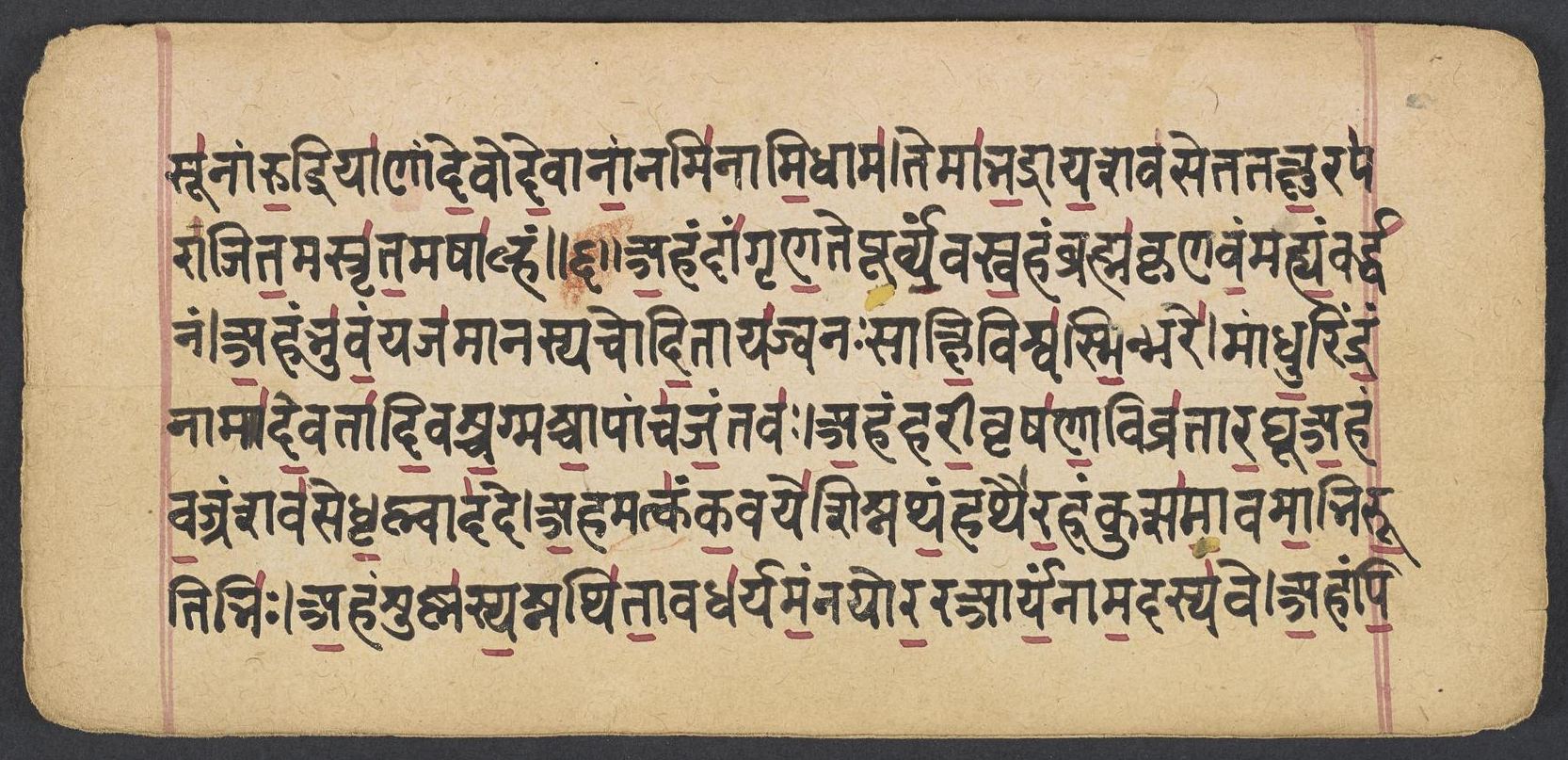
Penn Ms. Coll. 390 Item 48, fol. 5r (OPenn image 4, lower leaf). Checked on the image: the Rigveda text on this page begins in RV 10.48.11 ‹-vasūnāṁ rudriyāṇāṁ devo devānāṁ›. The next page with Rigveda text, fol. 5v, begins in RV 10.49.4 ‹-piteva vetasūm̐r abhiṣṭaye tugraṁ›. Verse 10.48.11 ends on this page; 10.48.11 begins on fol. 4v.
11ā̱di̱tyānā̱ṁ vasū̍nāṁ ru̱driyā̍ṇāṁ de̱vo de̱vānā̱ṁ na mi̍nāmi̱ dhāma̍ | te mā̍ bha̱drāya̱ śava̍se tatakṣu̱r apa̍rājita̱m astṛ̍ta̱m aṣā̍ḻham ||
11I, as a God, ne'er violate the statutes of Gods, of Vasus, Rudriyas, Âdityas. These Gods have formed me for auspicious vigour, unconquered and invincible for ever.
Notes
- Sanskrit: Aufrecht's edition (1877) with the Vedic accents, as entered by van Nooten and Holland (GRETIL).
- English: Ralph T. H. Griffith, The Hymns of the Rigveda (1889-1892; 2nd ed. 1896-1897), from the VedaWeb digital text; OCR slips in that text were corrected against the printed 2nd edition (data/sources/rigveda/griffith_errata.json).
Cite
Sources
- Source: Penn Ms. Coll. 390 Item 48 (1711 CE (colophon: Saṃvat 1768)), OPenn, Public Domain Mark + Aufrecht's accented text (GRETIL) + Griffith's English (VedaWeb) (holding institution)
- Critical edition: Aufrecht (1877), accented e-text via GRETIL
← previous · → next · v cycle view · l back to library