Rigveda 3.60: To the Ribhus and Indra
Introduction
Rigveda 3.60 is a hymn of 7 verses addressed to the Ribhus and Indra. It stands in book (maṇḍala) 3, the family book of Viśvāmitra. The Rigveda is the oldest collection of Sanskrit hymns, composed in the second half of the second millennium BCE and handed down orally for many centuries before it was written down.
The manuscript shown is Penn Ms. Coll. 390 Item 41 (University of Pennsylvania), an undated paper manuscript of the padapāṭha (the word-by-word recitation text, in which every word is written separately and compounds are split) of the whole Ṛgveda in Devanāgarī, 884 leaves in fascicles, 7-9 lines to the page, accents in red; this hymn stands on fol. 247v-248v. Each section below gives the verses that end on one page; the page boundaries were read on the images (the opening words of every page), not counted out. Where the manuscript is a padapāṭha (the word-by-word recitation text), the section shows Aufrecht's continuous (saṃhitā) text first and, as the edition text, the padapāṭha of the same verses, which is the form written on the page.
How was this verified? (Provenance)
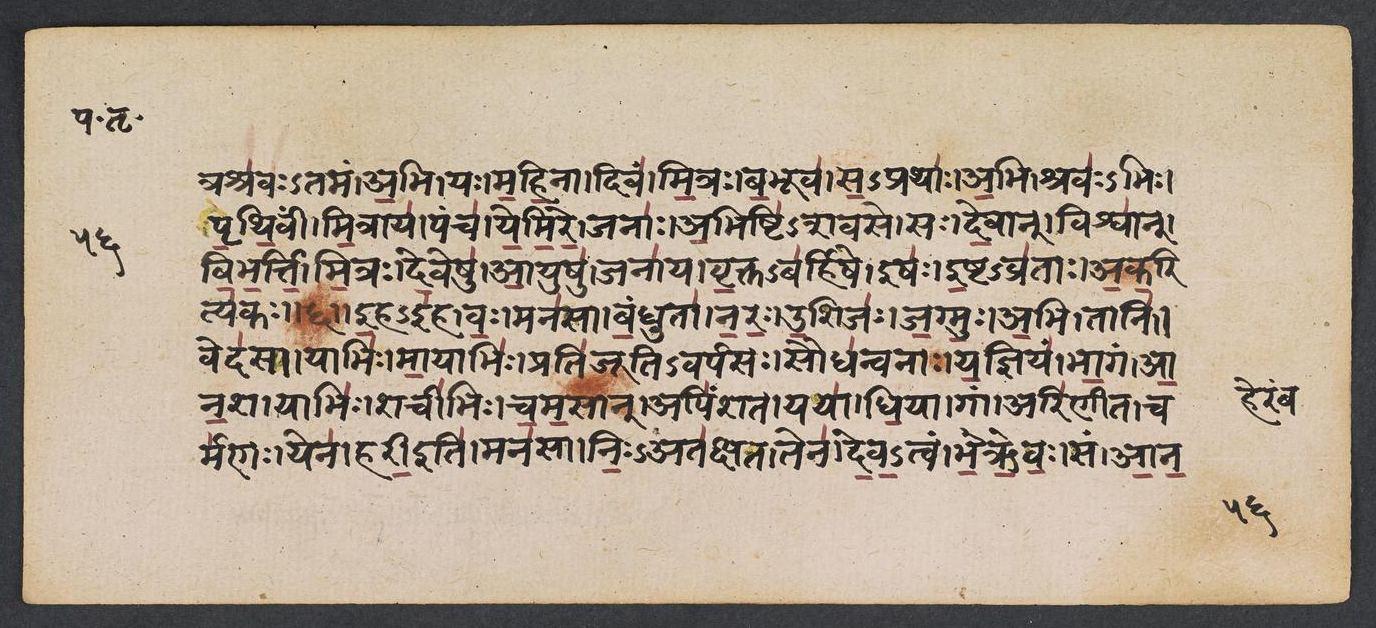
Where on the image
Penn Ms. Coll. 390 Item 41, fol. 247v (numbered 56v by the scribe) (OPenn image 248, upper leaf). Checked on the image: the Rigveda text on this page begins in RV 3.59.6 ‹-citraśravaḥ-tamam›. The next page with Rigveda text, fol. 248r (numbered 57r by the scribe), begins in RV 3.60.2 ‹-ānaśa›. Verse 3.60.1 ends on this page.
1i̱heha̍ vo̱ mana̍sā ba̱ndhutā̍ nara u̱śijo̍ jagmur a̱bhi tāni̱ veda̍sā | yābhi̍r mā̱yābhi̱ḥ prati̍jūtivarpasa̱ḥ saudha̍nvanā ya̱jñiya̍m bhā̱gam ā̍na̱śa ||
Compare: Padapāṭha (word-by-word text written in the manuscript; Sansknet e-text via GRETIL)
1iha-iha | vaḥ | manasā | bandhutā | naraḥ | uśijaḥ | jagmuḥ | abhi | tāni | vedasā | yābhiḥ | māyābhiḥ | pratijūti-varpasaḥ | saudhanvanāḥ | yajñiyam | bhagam | ānaśa
1HERE is your ghostly kinship, here, O Men: they came desirous to these holy rites with store of wealth, With wondrous arts, whereby, with schemes to meet each need, Ye gained, Sudhanvan's Sons! your share in sacrifice.
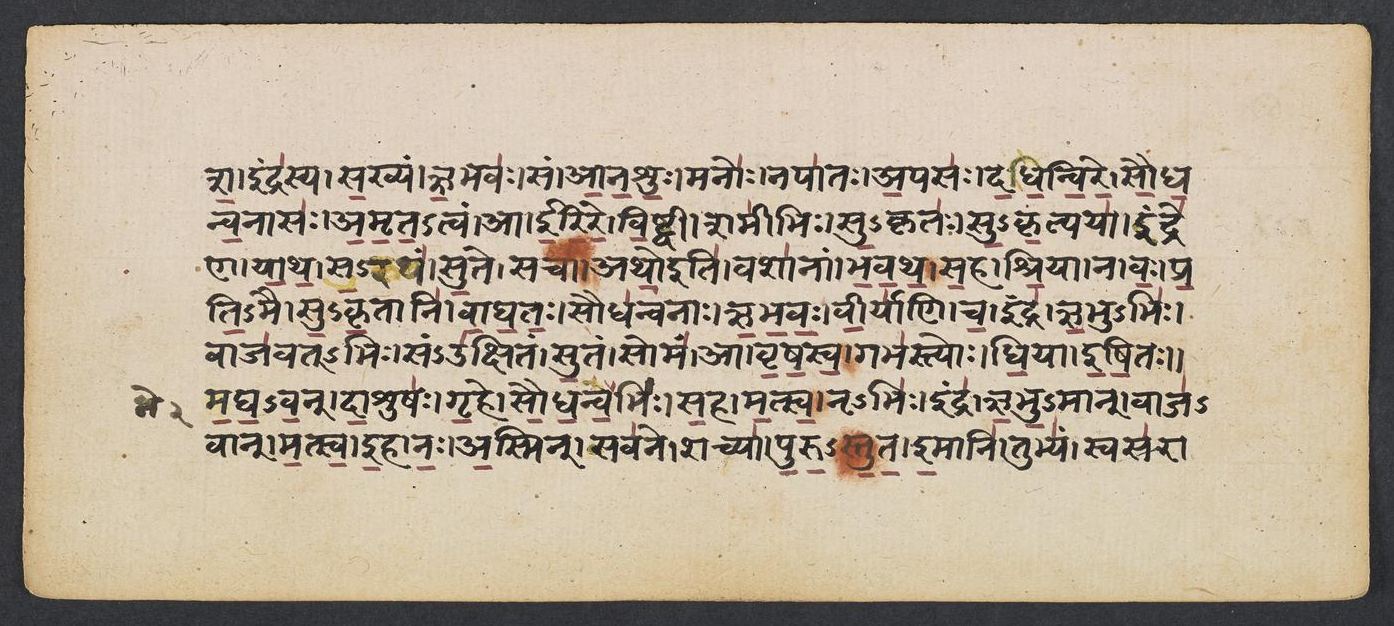
Where on the image
Penn Ms. Coll. 390 Item 41, fol. 248r (numbered 57r by the scribe) (OPenn image 248, lower leaf). Checked on the image: the Rigveda text on this page begins in RV 3.60.2 ‹-ānaśa›. The next page with Rigveda text, fol. 248v (numbered 57v by the scribe), begins in RV 3.60.6 ‹-svasarāṇi yemire vratā devānām›. Verses 3.60.2-5 end on this page; 3.60.2 begins on fol. 247v (numbered 56v by the scribe).
2yābhi̱ḥ śacī̍bhiś cama̱sām̐ api̍ṁśata̱ yayā̍ dhi̱yā gām ari̍ṇīta̱ carma̍ṇaḥ | yena̱ harī̱ mana̍sā ni̱rata̍kṣata̱ tena̍ deva̱tvam ṛ̍bhava̱ḥ sam ā̍naśa ||
3indra̍sya sa̱khyam ṛ̱bhava̱ḥ sam ā̍naśu̱r mano̱r napā̍to a̱paso̍ dadhanvire | sau̱dha̱nva̱nāso̍ amṛta̱tvam eri̍re vi̱ṣṭvī śamī̍bhiḥ su̱kṛta̍ḥ sukṛ̱tyayā̍ ||
4indre̍ṇa yātha sa̱ratha̍ṁ su̱te sacā̱m̐ atho̱ vaśā̍nām bhavathā sa̱ha śri̱yā | na va̍ḥ prati̱mai su̍kṛ̱tāni̍ vāghata̱ḥ saudha̍nvanā ṛbhavo vī̱ryā̍ṇi ca ||
5indra̍ ṛ̱bhubhi̱r vāja̍vadbhi̱ḥ samu̍kṣitaṁ su̱taṁ soma̱m ā vṛ̍ṣasvā̱ gabha̍styoḥ | dhi̱yeṣi̱to ma̍ghavan dā̱śuṣo̍ gṛ̱he sau̍dhanva̱nebhi̍ḥ sa̱ha ma̍tsvā̱ nṛbhi̍ḥ ||
Compare: Padapāṭha (word-by-word text written in the manuscript; Sansknet e-text via GRETIL)
2yābhiḥ | śacībhiḥ | camasām | apiṃśata | yayā | dhiyā | gām | ariṇīta | carmaṇaḥ | yena | harī iti | manasā | niḥ-atakṣata | tena | deva-tvam | ṛbhavaḥ | sam | ānaśa
3indrasya | sakhyam | ṛbhavaḥ | sam | ānaśuḥ | manoḥ | napātaḥ | apasaḥ | dadhanvire | saudhanvanāsaḥ | amṛta-tvam | ā | īrire | viṣṭavī | śamībhiḥ | su-kṛtaḥ | su-kṛtyayā
4indreṇa | yātha | sa-ratham | sute | sacā | atho iti | vaśānām | bhavatha | saha | śriyā | na | vaḥ | prati-mai | su-kṛtāni | vāghataḥ | saudhanvanāḥ | ṛbhavaḥ | vīryāṇi ca
5indra | ṛbhu-bhiḥ | vājavat-bhiḥ | sam-ukṣitam | sutam | somam | ā | vṛṣasva | gabhastyoḥ | dhiyā | iṣitaḥ | maghavan | dāśuṣaḥ | gṛhe | saudhanvanebhiḥ | saha | matsva | nṛ-bhiḥ
2The mighty powers wherewith. ye formed the chalices, the thought by which ye drew the cow from out the hide, The intellect wherewith ye wrought the two Bay Steeds,– through these, O R̥ibhus, ye attained divinity.
3Friendship with Indra have the R̥ibhus, fully gained: grandsons of Manu, they skilfully urged the work. Sudhanvan's Children won them everlasting life, serving with holy rites, pious with noble acts.
4:In company with Indra come ye to the juice, then gloriously shall your wishes be fulfilled. Not to be paragoned, ye Priests, are your good deeds, nor your heroic acts, R̥ibhus, Sudhanvan's Sons.
5O Indra, with the R̥ibhus, Mighty Ones, pour down the Soma juice effused, well-blent, from both thy hands. Maghavan, urged by song, in the drink-offerer's house rejoice thee with the Heroes, with Sudhanvan's Sons.
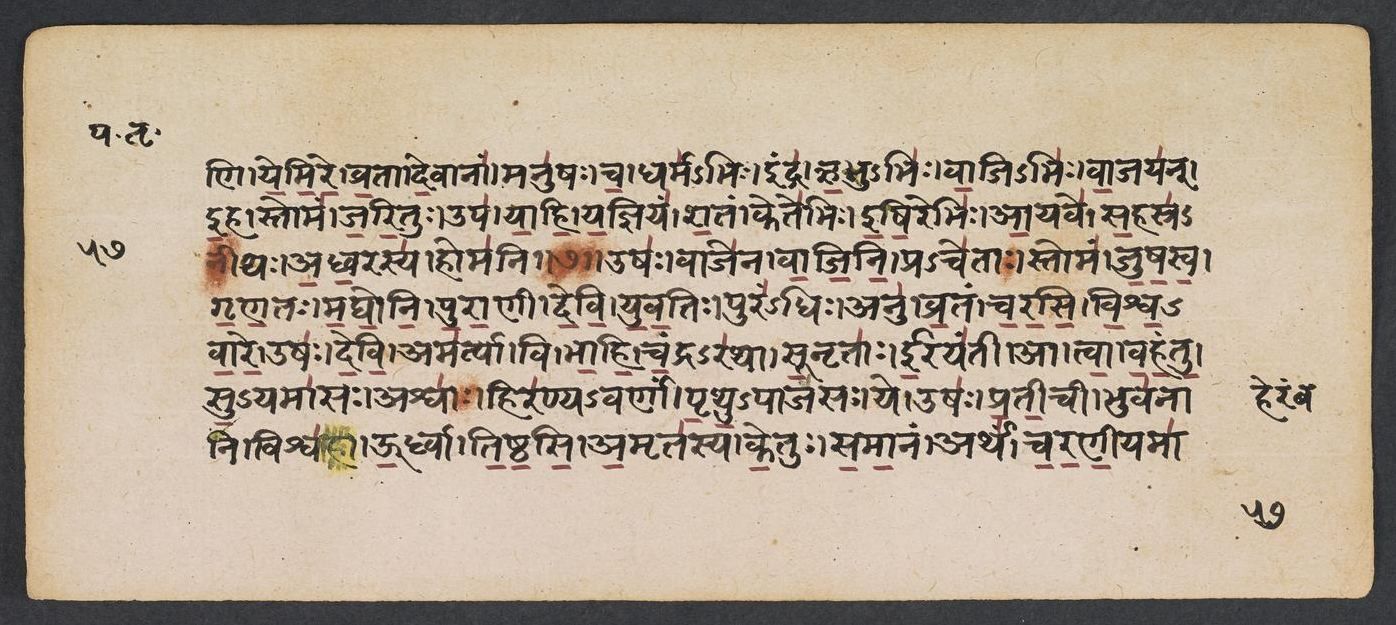
Where on the image
Penn Ms. Coll. 390 Item 41, fol. 248v (numbered 57v by the scribe) (OPenn image 249, upper leaf). Checked on the image: the Rigveda text on this page begins in RV 3.60.6 ‹-svasarāṇi yemire vratā devānām›. The next page with Rigveda text, fol. 249r (numbered 58r by the scribe), begins in RV 3.61.3 ‹-caraṇīyamānā cakram-iva navyasi ā›. Verses 3.60.6-7 end on this page; 3.60.6 begins on fol. 248r (numbered 57r by the scribe).
6indra̍ ṛbhu̱mān vāja̍vān matsve̱ha no̱ 'smin sava̍ne̱ śacyā̍ puruṣṭuta | i̱māni̱ tubhya̱ṁ svasa̍rāṇi yemire vra̱tā de̱vānā̱m manu̍ṣaś ca̱ dharma̍bhiḥ ||
7indra̍ ṛ̱bhubhi̍r vā̱jibhi̍r vā̱jaya̍nn i̱ha stoma̍ṁ jari̱tur upa̍ yāhi ya̱jñiya̍m | śa̱taṁ kete̍bhir iṣi̱rebhi̍r ā̱yave̍ sa̱hasra̍ṇītho adhva̱rasya̱ homa̍ni ||
Compare: Padapāṭha (word-by-word text written in the manuscript; Sansknet e-text via GRETIL)
6indra | ṛbhu-mān | vāja-vān | matsva | iha | naḥ | asmin | savane | śacyā | puru-stuta | imāni | tubhyam | svasarāṇi | yemire | vratā | devānām | manuṣaḥ | ca | dharma-bhiḥ
7indra | ṛbhu-bhiḥ | vāji-bhiḥ | vājayan | iha | stomam | jarituḥ | upa | yāhi | yajñi yam | śatam | ketebhiḥ | iṣirebhiḥ | āyave | sahasra-nīthaḥ | adhvarasya | homani
6With R̥ibhu near, and Vâja, Indra, here exult, with Saci, praised of many, in the juice we pour. These homes wherein we dwell have turned themselves to thee, -devotions to the Gods, as laws of men ordain.
7Come with the mighty R̥ibhus, Indra, come to us, strengthening with thy help the singer's holy praise; At hundred eager calls come to the living man, with thousand arts attend the act of sacrifice.
Notes
- Sanskrit: Aufrecht's edition (1877) with the Vedic accents, as entered by van Nooten and Holland (GRETIL).
- English: Ralph T. H. Griffith, The Hymns of the Rigveda (1889-1892; 2nd ed. 1896-1897), from the VedaWeb digital text; OCR slips in that text were corrected against the printed 2nd edition (data/sources/rigveda/griffith_errata.json).
- Padapāṭha (edition text): Sansknet e-text via GRETIL (CC BY-NC-SA 4.0).
Cite
Sources
- Source: Penn Ms. Coll. 390 Item 41 (undated (catalogued with Penn's 18th-19th c. Vedic manuscripts)), OPenn, Public Domain Mark + Aufrecht's accented text (GRETIL) + Griffith's English (VedaWeb) (holding institution)
- Critical edition: Aufrecht (1877), accented e-text via GRETIL
← previous · → next · v cycle view · l back to library