Rigveda 4.53: To Savitri
Introduction
Rigveda 4.53 is a hymn of 7 verses addressed to Savitri. It stands in book (maṇḍala) 4, the family book of Vāmadeva. The Rigveda is the oldest collection of Sanskrit hymns, composed in the second half of the second millennium BCE and handed down orally for many centuries before it was written down.
The manuscript shown is Penn Ms. Coll. 390 Item 41 (University of Pennsylvania), an undated paper manuscript of the padapāṭha (the word-by-word recitation text, in which every word is written separately and compounds are split) of the whole Ṛgveda in Devanāgarī, 884 leaves in fascicles, 7-9 lines to the page, accents in red; this hymn stands on fol. 312r-313r. Each section below gives the verses that end on one page; the page boundaries were read on the images (the opening words of every page), not counted out. Where the manuscript is a padapāṭha (the word-by-word recitation text), the section shows Aufrecht's continuous (saṃhitā) text first and, as the edition text, the padapāṭha of the same verses, which is the form written on the page.
How was this verified? (Provenance)
Where on the image
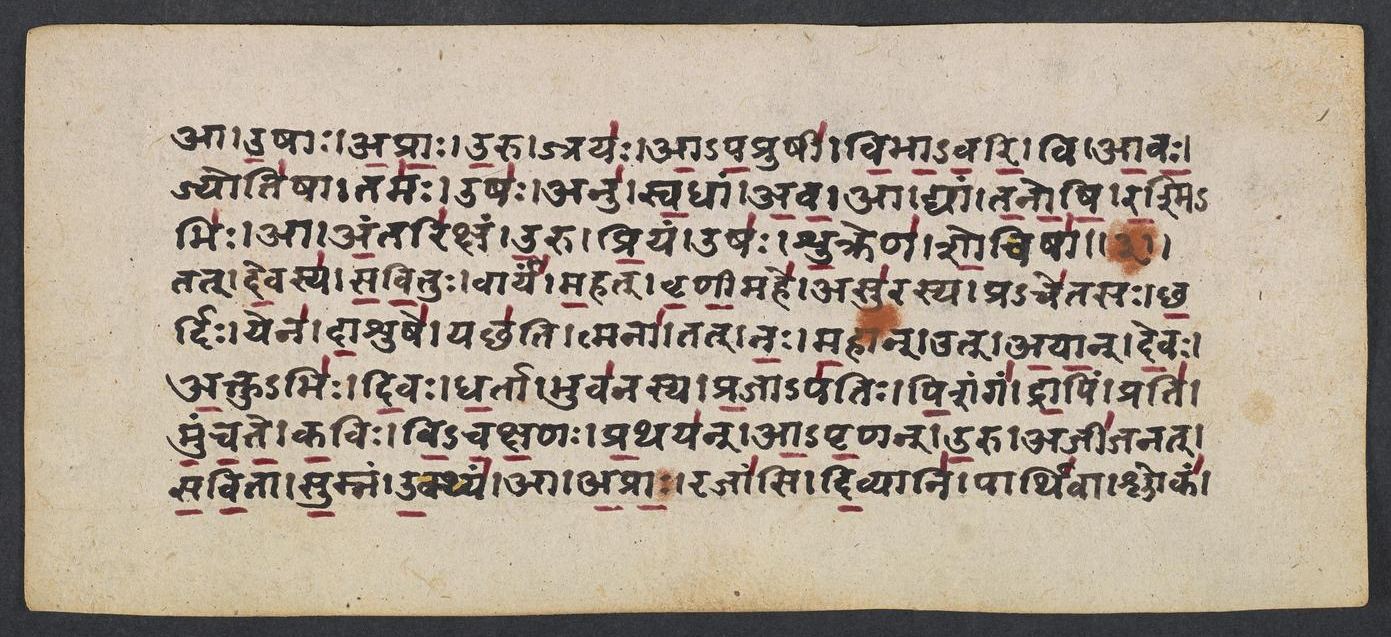
Penn Ms. Coll. 390 Item 41, fol. 312r (numbered 121r by the scribe) (OPenn image 312, lower leaf). Checked on the image: the Rigveda text on this page begins in RV 4.52.5 ‹ā uṣāḥ aprāḥ uru›. The next page with Rigveda text, fol. 312v (numbered 121v by the scribe), begins in RV 4.53.3 ‹devaḥ kṛṇute svāya dharmaṇe›. Verses 4.53.1-2 end on this page.
1tad de̱vasya̍ savi̱tur vārya̍m ma̱had vṛ̍ṇī̱mahe̱ asu̍rasya̱ prace̍tasaḥ | cha̱rdir yena̍ dā̱śuṣe̱ yaccha̍ti̱ tmanā̱ tan no̍ ma̱hām̐ ud a̍yān de̱vo a̱ktubhi̍ḥ ||
2di̱vo dha̱rtā bhuva̍nasya pra̱jāpa̍tiḥ pi̱śaṅga̍ṁ drā̱pim prati̍ muñcate ka̱viḥ | vi̱ca̱kṣa̱ṇaḥ pra̱thaya̍nn āpṛ̱ṇann u̱rv ajī̍janat savi̱tā su̱mnam u̱kthya̍m ||
Compare: Padapāṭha (word-by-word text written in the manuscript; Sansknet e-text via GRETIL)
1tat | devasya | savituḥ | vāryam | mahat | vṛṇīmahe | asurasya | pracetasaḥ | chardiḥ | yena | dāśuṣe | yacchati | tmanā | tat | naḥ | mahān | ut | ayān | devaḥ | aktu-bhiḥ
2divaḥ | dhartā | bhuvanasya | prajāpatiḥ | piśaṅgam | drāpim | prati | muñcate | kaviḥ | vi-cakṣaṇaḥ | prathayan | āpṛṇan | uru | ajījanat | savitā | sumnam | ukthyam
1OF Savitar the God, the sapient Asura, we crave this great gift which is worthy of our choice, Wherewith he freely grants his worshiper defence. This with his rays the Great God hath vouchsafed to us.
2Sustainer of the heaven, Lord of the whole world's life, the Sage, he putteth on his golden-coloured mail. Clear-sighted, spreading far, filling the spacious realm, Savitar hath brought forth bliss that deserveth laud.
Where on the image
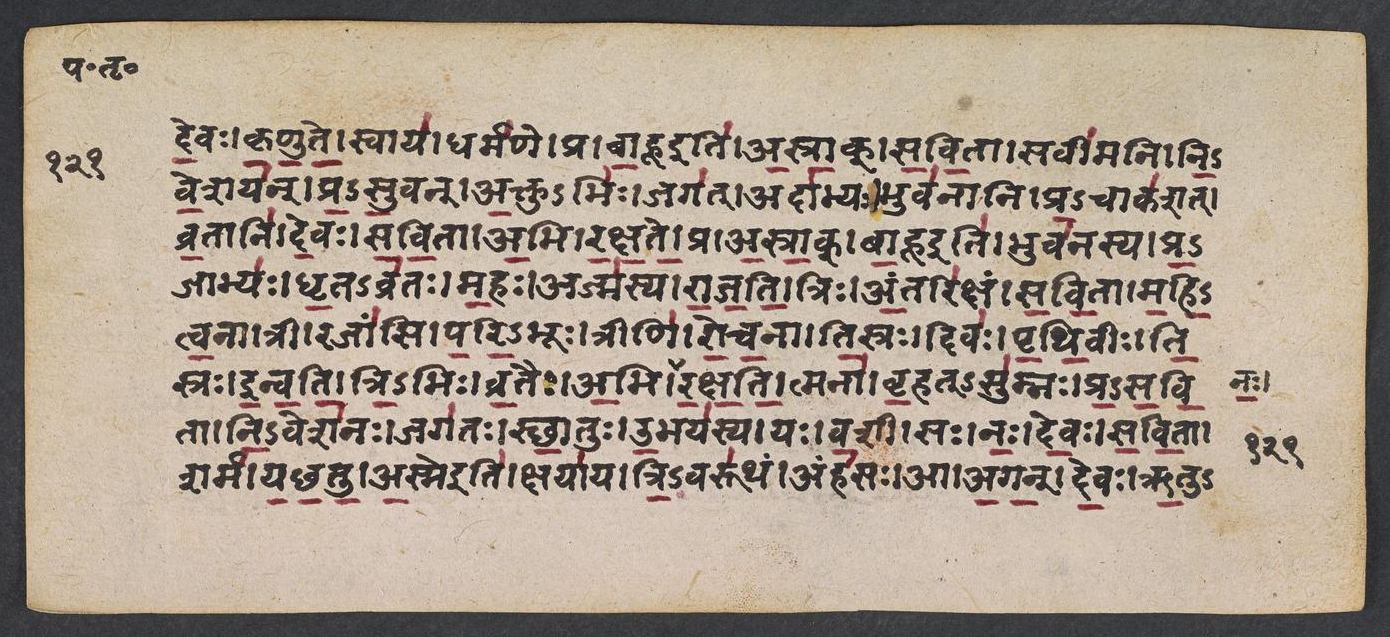
Penn Ms. Coll. 390 Item 41, fol. 312v (numbered 121v by the scribe) (OPenn image 313, upper leaf). Checked on the image: the Rigveda text on this page begins in RV 4.53.3 ‹devaḥ kṛṇute svāya dharmaṇe›. The next page with Rigveda text, fol. 313r (numbered 122r by the scribe), begins in RV 4.53.7 ‹-ṛtu-bhiḥ vardhatu kṣayam dadhātu›. Verses 4.53.3-6 end on this page; 4.53.3 begins on fol. 312r (numbered 121r by the scribe).
3āprā̱ rajā̍ṁsi di̱vyāni̱ pārthi̍vā̱ śloka̍ṁ de̱vaḥ kṛ̍ṇute̱ svāya̱ dharma̍ṇe | pra bā̱hū a̍srāk savi̱tā savī̍mani nive̱śaya̍n prasu̱vann a̱ktubhi̱r jaga̍t ||
4adā̍bhyo̱ bhuva̍nāni pra̱cāka̍śad vra̱tāni̍ de̱vaḥ sa̍vi̱tābhi ra̍kṣate | prāsrā̍g bā̱hū bhuva̍nasya pra̱jābhyo̍ dhṛ̱tavra̍to ma̱ho ajma̍sya rājati ||
5trir a̱ntari̍kṣaṁ savi̱tā ma̍hitva̱nā trī rajā̍ṁsi pari̱bhus trīṇi̍ roca̱nā | ti̱sro diva̍ḥ pṛthi̱vīs ti̱sra i̍nvati tri̱bhir vra̱tair a̱bhi no̍ rakṣati̱ tmanā̍ ||
6bṛ̱hatsu̍mnaḥ prasavī̱tā ni̱veśa̍no̱ jaga̍taḥ sthā̱tur u̱bhaya̍sya̱ yo va̱śī | sa no̍ de̱vaḥ sa̍vi̱tā śarma̍ yacchatv a̱sme kṣayā̍ya tri̱varū̍tha̱m aṁha̍saḥ ||
Compare: Padapāṭha (word-by-word text written in the manuscript; Sansknet e-text via GRETIL)
3ā | aprāḥ | rajāṃsi | divyāni | pārthivā | ślokam | devaḥ | kṛṇute | svāya | dharmaṇe | pra | bāhū iti | asrāk | savitā | savīmani | ni-veśayan | pra-suvan | aktu-bhiḥ | jagat
4adābhyaḥ | bhuvanāni | pra-cākaśat | vratāni | devaḥ | savitā | abhi | rakṣate | pra | asrāk | bāhū iti | bhuvanasya | pra-jābhyaḥ | dhṛta-vrataḥ | mahaḥ | ajmasya | rājati
5triḥ | antarikṣam | savitā | mahi-tvanā | trī | rajāṃsi | pari-bhūḥ | trīṇi | rocanā | tisraḥ | divaḥ | pṛthivīḥ | tisraḥ | invati | tri-bhiḥ | vrataiḥ | abhi | naḥ | rakṣati | tmanā
6bṛhat-sumnaḥ | pra-savitā | ni-veśanaḥ | jagataḥ | sthātuḥ | ubhayasya | yaḥ | vaśī | saḥ | naḥ | devaḥ | savitā | śarma | yacchatu | asme iti | kṣayāya | tri-varūtham | aṃhasaḥ
3He hath filled full the regions of the heaven and earth: the God for his own strengthening waketh up the hymn. Savitar hath stretched out his arms to cherish life, producing with his rays and lulling all that moves.
4Lighting all living creatures, neer to be deceived, Savitar, God, protects each holy ordinance. He hath stretched out his arms to all the folk of earth, and, with his laws observed, rules his own mighty course.
5Savitar thrice surrounding with his mightiness mid-air, three regions, and the triple sphere of light, Sets the three heavens in motion and the threefold earth, and willingly protects us with his triple law.
6Most gracious God, who brings to life and lulls to rest, he who controls the world, what moves not and what moves, May he vouchsafe us shelter, -Savitar the God,– for tranquil life, with triple bar against distress.
Where on the image
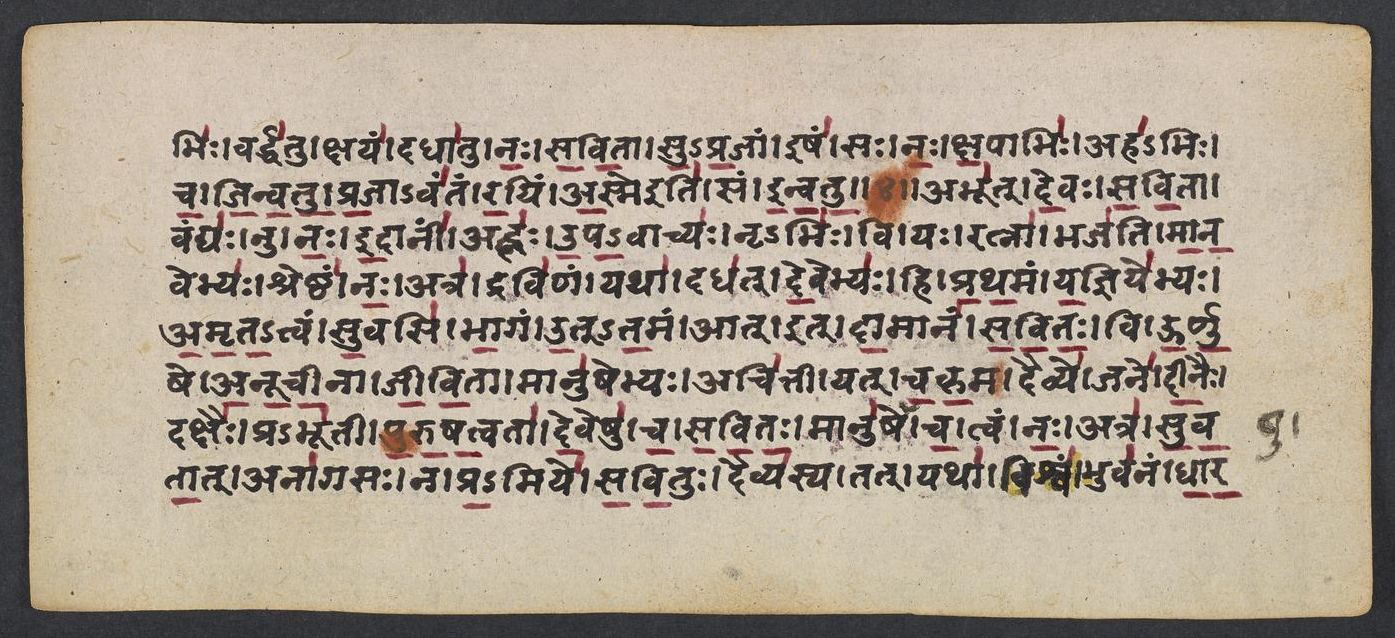
Penn Ms. Coll. 390 Item 41, fol. 313r (numbered 122r by the scribe) (OPenn image 313, lower leaf). Checked on the image: the Rigveda text on this page begins in RV 4.53.7 ‹-ṛtu-bhiḥ vardhatu kṣayam dadhātu›. The next page with Rigveda text, fol. 313v (numbered 122v by the scribe), begins in RV 4.54.4 ‹-dhārayiṣyati yat pṛthivyāḥ variman›. Verse 4.53.7 ends on this page; 4.53.7 begins on fol. 312v (numbered 121v by the scribe).
7āga̍n de̱va ṛ̱tubhi̱r vardha̍tu̱ kṣaya̱ṁ dadhā̍tu naḥ savi̱tā su̍pra̱jām iṣa̍m | sa na̍ḥ kṣa̱pābhi̱r aha̍bhiś ca jinvatu pra̱jāva̍ntaṁ ra̱yim a̱sme sam i̍nvatu ||
Compare: Padapāṭha (word-by-word text written in the manuscript; Sansknet e-text via GRETIL)
7ā | agan | devaḥ | ṛtu-bhiḥ | vardhatu | kṣayam | dadhātu | naḥ | savitā | su-prajām | iṣam | saḥ | naḥ | kṣapābhiḥ | aha-bhiḥ | ca | jinvatu | prajāvantam | rayim | asme iti | sam | invatu
7With the year's seasons hath Savitar, God, come nigh: may he prosper our home, give food and noble sons. May he invigorate us through the days and nights, and may he send us opulence with progeny.
Notes
- Sanskrit: Aufrecht's edition (1877) with the Vedic accents, as entered by van Nooten and Holland (GRETIL).
- English: Ralph T. H. Griffith, The Hymns of the Rigveda (1889-1892; 2nd ed. 1896-1897), from the VedaWeb digital text; OCR slips in that text were corrected against the printed 2nd edition (data/sources/rigveda/griffith_errata.json).
- Padapāṭha (edition text): Sansknet e-text via GRETIL (CC BY-NC-SA 4.0).
Cite
Sources
- Source: Penn Ms. Coll. 390 Item 41 (undated (catalogued with Penn's 18th-19th c. Vedic manuscripts)), OPenn, Public Domain Mark + Aufrecht's accented text (GRETIL) + Griffith's English (VedaWeb) (holding institution)
- Critical edition: Aufrecht (1877), accented e-text via GRETIL
← previous · → next · v cycle view · l back to library