Rigveda 5.52: To the Maruts
Introduction
Rigveda 5.52 is a hymn of 17 verses addressed to the Maruts. It stands in book (maṇḍala) 5, the family book of the Atri clan. The Rigveda is the oldest collection of Sanskrit hymns, composed in the second half of the second millennium BCE and handed down orally for many centuries before it was written down.
The manuscript shown is Penn Ms. Coll. 390 Item 41 (University of Pennsylvania), an undated paper manuscript of the padapāṭha (the word-by-word recitation text, in which every word is written separately and compounds are split) of the whole Ṛgveda in Devanāgarī, 884 leaves in fascicles, 7-9 lines to the page, accents in red; this hymn stands on fol. 369r-370v. Each section below gives the verses that end on one page; the page boundaries were read on the images (the opening words of every page), not counted out. Where the manuscript is a padapāṭha (the word-by-word recitation text), the section shows Aufrecht's continuous (saṃhitā) text first and, as the edition text, the padapāṭha of the same verses, which is the form written on the page.
How was this verified? (Provenance)
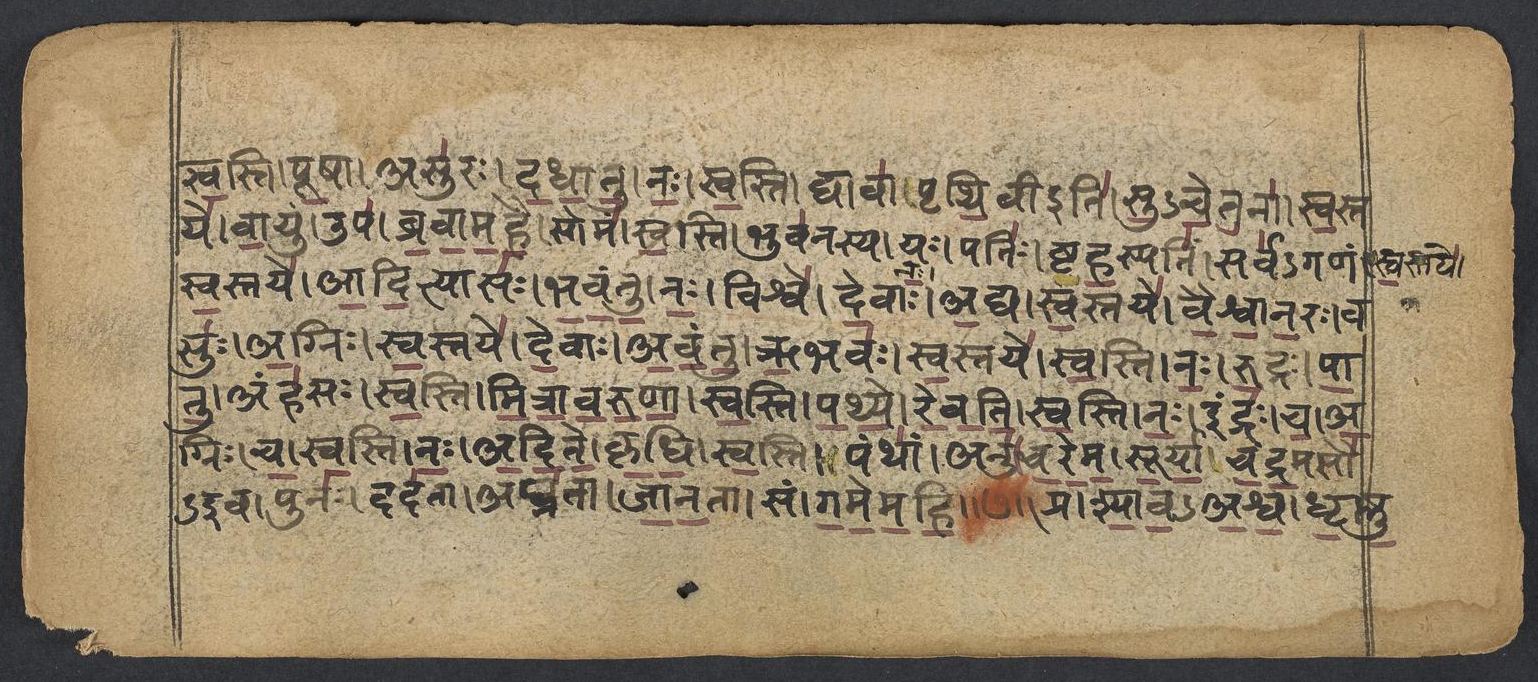
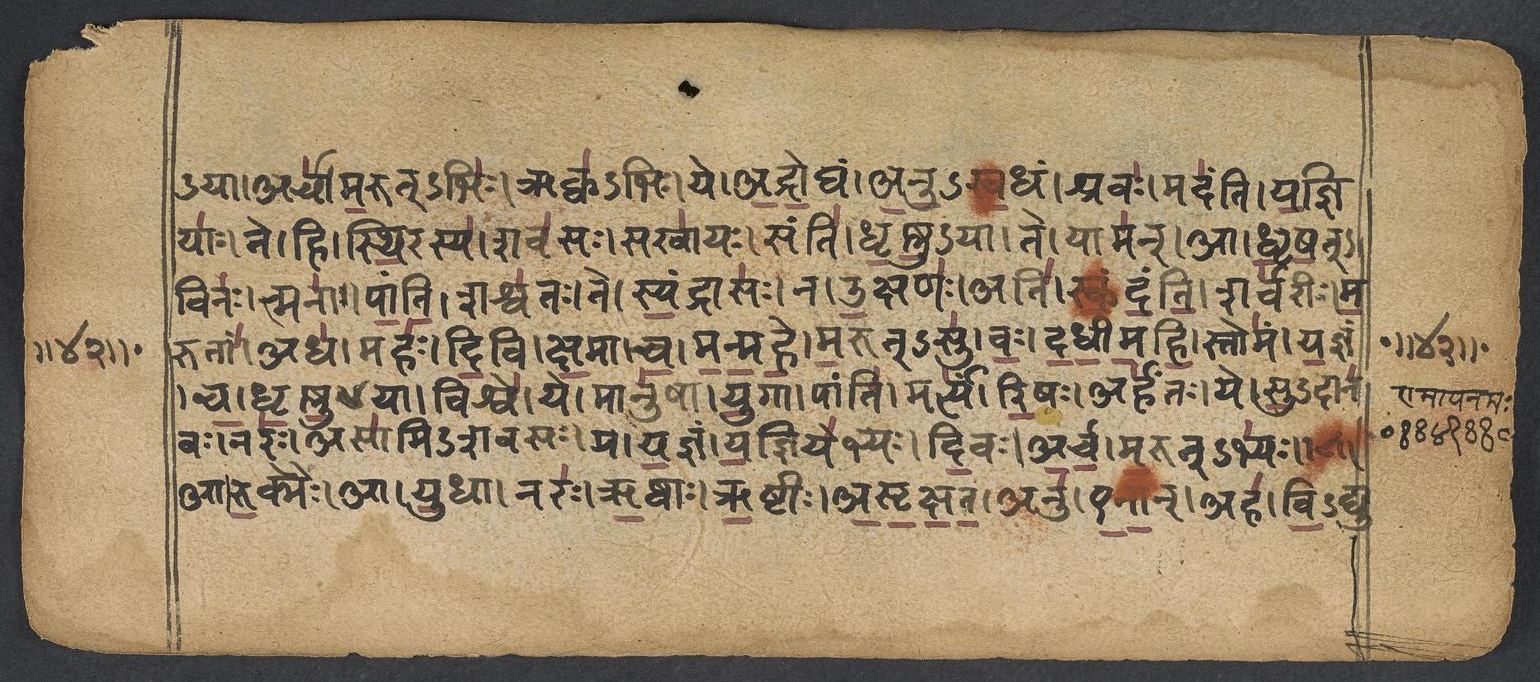
Where on the image
Penn Ms. Coll. 390 Item 41, fol. 369v (numbered 42v by the scribe) (OPenn image 370, upper leaf). Checked on the image: the Rigveda text on this page begins in RV 5.52.1 ‹-dhṛṣṇu-yā arca marut-bhiḥ ṛkva-bhiḥ›. The next page with Rigveda text, fol. 370r (numbered 43r by the scribe), begins in RV 5.52.6 ‹-vi-dyutaḥ marutaḥ jajjhatīḥ-iva bhānuḥ›. Verses 5.52.1-5 end on this page; 5.52.1 begins on fol. 369r (numbered 42r by the scribe).
1pra śyā̍vāśva dhṛṣṇu̱yārcā̍ ma̱rudbhi̱r ṛkva̍bhiḥ | ye a̍dro̱gham a̍nuṣva̱dhaṁ śravo̱ mada̍nti ya̱jñiyā̍ḥ ||
2te hi sthi̱rasya̱ śava̍sa̱ḥ sakhā̍ya̱ḥ santi̍ dhṛṣṇu̱yā | te yāma̱nn ā dhṛ̍ṣa̱dvina̱s tmanā̍ pānti̱ śaśva̍taḥ ||
3te sya̱ndrāso̱ nokṣaṇo 'ti̍ ṣkandanti̱ śarva̍rīḥ | ma̱rutā̱m adhā̱ maho̍ di̱vi kṣa̱mā ca̍ manmahe ||
4ma̱rutsu̍ vo dadhīmahi̱ stoma̍ṁ ya̱jñaṁ ca̍ dhṛṣṇu̱yā | viśve̱ ye mānu̍ṣā yu̱gā pānti̱ martya̍ṁ ri̱ṣaḥ ||
5arha̍nto̱ ye su̱dāna̍vo̱ naro̱ asā̍miśavasaḥ | pra ya̱jñaṁ ya̱jñiye̍bhyo di̱vo a̍rcā ma̱rudbhya̍ḥ ||
Compare: Padapāṭha (word-by-word text written in the manuscript; Sansknet e-text via GRETIL)
1pra | śyāva-aśva | dhṛṣṇu-yā | arca | marut-bhiḥ | ṛkva-bhiḥ | ye | adrogham | anu-svadham | śravaḥ | madanti | yajñiyāḥ
2te | hi | sthirasya | śavasaḥ | sakhāyaḥ | santi | dhṛṣṇu-yā | te | yāman | ā | dhṛṣat-vinaḥ | tmanā | pānti | śaśvataḥ
3te | spandrāsaḥ | na | ukṣaṇaḥ | ati | skandanti | śarvarīḥ | marutām | adha | mahaḥ | divi | kṣamā | ca | manmahe
4marut-su | vaḥ | dadhīmahi | stomam | yajñam | ca | dhṛṣṇu-yā | viśve | ye | mānuṣā | yugā | pānti | martyam | riṣaḥ
5arhantaḥ | ye | su-dānavaḥ | naraḥ | asāmi-śavasaḥ | pra | yajñam | yajñiyebhyaḥ | divaḥ | arca | marut-bhyaḥ
1SING boldly forth, Ṣyâvâṣva, with the Maruts who are loud in song, Who, holy, as their wont is, joy in glory that is free from guile.
2For in their boldness they are friends of firm and sure heroic strength. They in their course, bold-spirited, guard all men of their own accord.
3Like steers in rapid motion they advance and overtake the nights; And thus the Maruts' power in heaven and on the earth we celebrate.
4With boldness to your Maruts let us offer laud and sacrifice: Who all, through ages of mankind, guard mortal man from injury.
5Praiseworthy, givers of good gifts, Heroes with full and perfect strength – To Maruts, Holy Ones of heaven, will I extol the sacrifice.
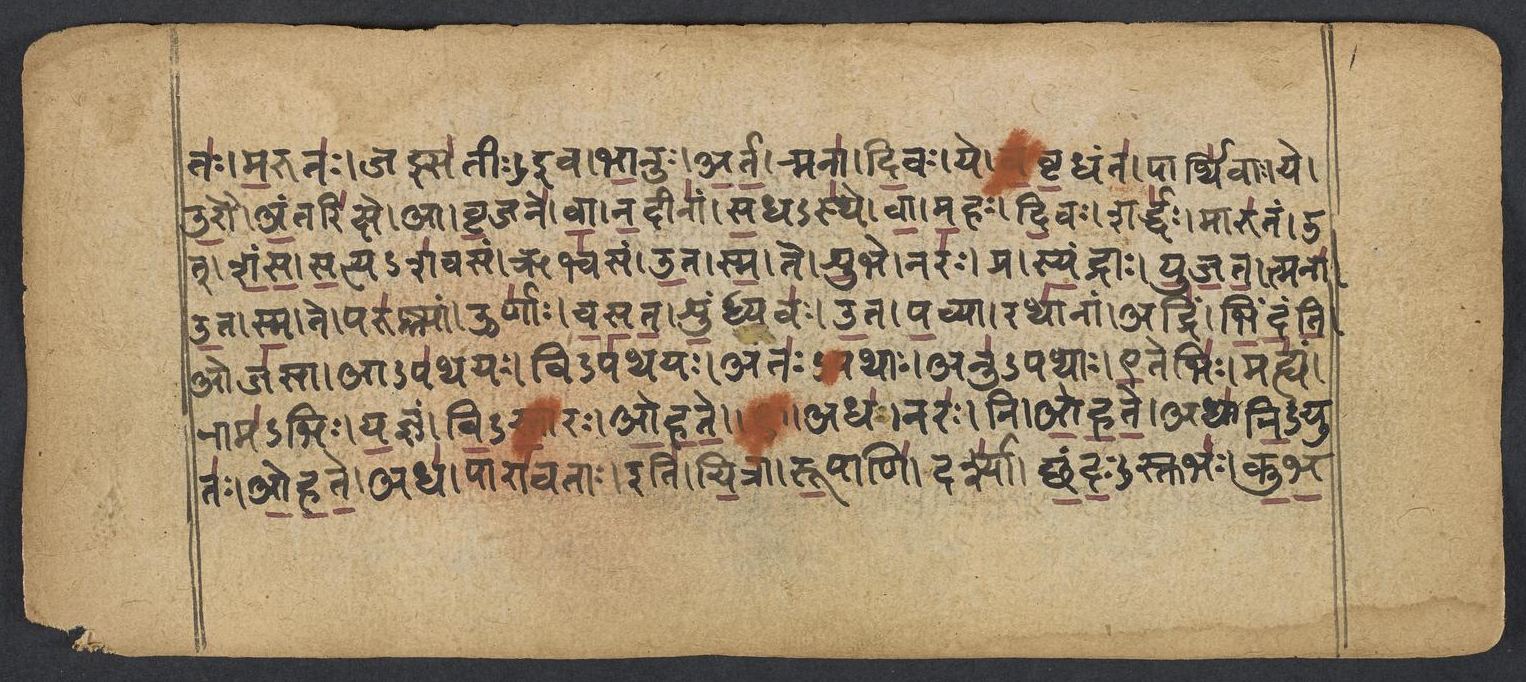
Where on the image
Penn Ms. Coll. 390 Item 41, fol. 370r (numbered 43r by the scribe) (OPenn image 370, lower leaf). Checked on the image: the Rigveda text on this page begins in RV 5.52.6 ‹-vi-dyutaḥ marutaḥ jajjhatīḥ-iva bhānuḥ›. The next page with Rigveda text, fol. 370v (numbered 43v by the scribe), begins in RV 5.52.12 ‹-kubhanyavaḥ utsam ā kīriṇaḥ›. Verses 5.52.6-11 end on this page; 5.52.6 begins on fol. 369v (numbered 42v by the scribe).
6ā ru̱kmair ā yu̱dhā nara̍ ṛ̱ṣvā ṛ̱ṣṭīr a̍sṛkṣata | anv e̍nā̱m̐ aha̍ vi̱dyuto̍ ma̱ruto̱ jajjha̍tīr iva bhā̱nur a̍rta̱ tmanā̍ di̱vaḥ ||
7ye vā̍vṛ̱dhanta̱ pārthi̍vā̱ ya u̱rāv a̱ntari̍kṣa̱ ā | vṛ̱jane̍ vā na̱dīnā̍ṁ sa̱dhasthe̍ vā ma̱ho di̱vaḥ ||
8śardho̱ māru̍ta̱m uc cha̍ṁsa sa̱tyaśa̍vasa̱m ṛbhva̍sam | u̱ta sma̱ te śu̱bhe nara̱ḥ pra sya̱ndrā yu̍jata̱ tmanā̍ ||
9u̱ta sma̱ te paru̍ṣṇyā̱m ūrṇā̍ vasata śu̱ndhyava̍ḥ | u̱ta pa̱vyā rathā̍nā̱m adri̍m bhinda̱nty oja̍sā ||
10āpa̍thayo̱ vipa̍tha̱yo 'nta̍spathā̱ anu̍pathāḥ | e̱tebhi̱r mahya̱ṁ nāma̍bhir ya̱jñaṁ vi̍ṣṭā̱ra o̍hate ||
11adhā̱ naro̱ ny o̍ha̱te 'dhā̍ ni̱yuta̍ ohate | adhā̱ pārā̍vatā̱ iti̍ ci̱trā rū̱pāṇi̱ darśyā̍ ||
Compare: Padapāṭha (word-by-word text written in the manuscript; Sansknet e-text via GRETIL)
6ā | rukmaiḥ | ā | yudhā | naraḥ | ṛṣvāḥ | ṛṣṭīḥ | asṛkṣata | anu | enān | aha | vi-dyutaḥ | marutaḥ | jajjhatīḥ-iva | bhānuḥ | arta | tmanā | divaḥ
7ye | vavṛdhanta | pārthivāḥ | ye | urau | antarikṣe | ā | vṛjane | vā | nadīnām | sadha-sthe | vā | mahaḥ | divaḥ
8śardhaḥ | mārutam | ut | śaṃsa | satya-śavasam | ṛbhvasam | uta | sma | te | śubhe | naraḥ | pra | spandrāḥ | yujata | tmanā
9uta | sma | te | paruṣṇyām | ūrṇāḥ | vasata | śundhyavaḥ | uta | pavyā | rathānām | adrim | bhindanti | ojasā
10āpathayaḥ | vi-pathayaḥ | antaḥ-pathāḥ | anu-pathāḥ | etebhiḥ | mahyam | nāma-bhiḥ | yajñam | vi-stāraḥ | ohate
11adha | naraḥ | ni | ohate | adha | ni-yutaḥ | ohate | adha | pārāvatāḥ | iti | citrā | rūpāṇi | darśyā
6The lofty Heroes cast their spears and weapons bright with gleaming gold. After these Maruts followed close, like laughing lightning from the sky, a splendour of its own accord.
7They who waxed mighty, of the earth, they who are in the wide mid-air, Or in the rivers' compass, or in the abode of ample heaven.
8Praise thou the Maruts' company, the valorous and truly strong, The Heroes, hasting, by themselves have yoked their deer for victory.
9Fair-gleaming, on Parushṇî they have clothed themselves in robes of wool, And with their chariot tires they cleave the rock asunder in their might.
10Whether as wanderers from the way or speeders on or to the path, Under these names the spreading band tend well the sacrifice for me.
11To this the Heroes well attend, well do their teams attend to this. Visible are their varied forms. Behold, they are Pârâvatas.
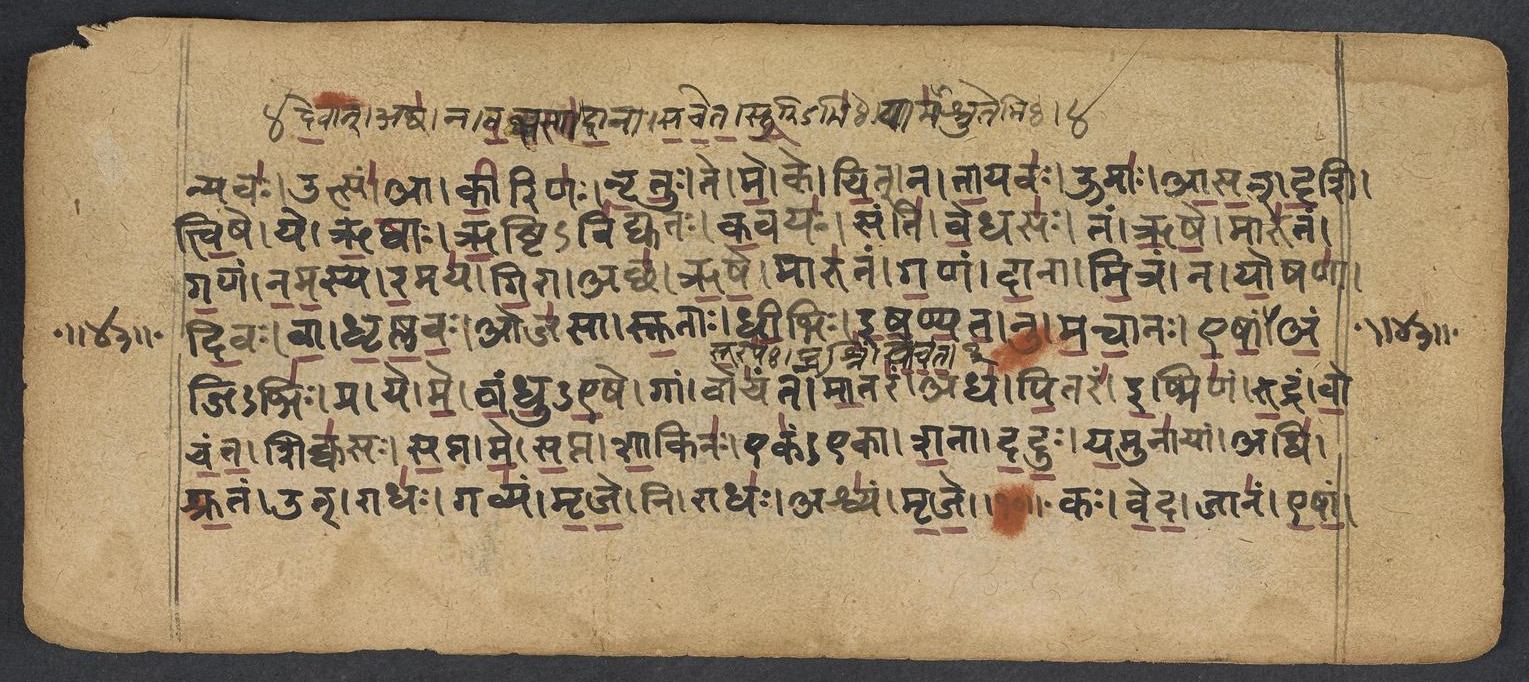
Where on the image
Penn Ms. Coll. 390 Item 41, fol. 370v (numbered 43v by the scribe) (OPenn image 371, upper leaf). Checked on the image: the Rigveda text on this page begins in RV 5.52.12 ‹-kubhanyavaḥ utsam ā kīriṇaḥ›. The next page with Rigveda text, fol. 371r (numbered 44r by the scribe), begins in RV 5.53.1 ‹kaḥ vā purā sumneṣu›. Verses 5.52.12-17 end on this page; 5.52.12 begins on fol. 370r (numbered 43r by the scribe).
12cha̱nda̱ḥstubha̍ḥ kubha̱nyava̱ utsa̱m ā kī̱riṇo̍ nṛtuḥ | te me̱ ke ci̱n na tā̱yava̱ ūmā̍ āsan dṛ̱śi tvi̱ṣe ||
13ya ṛ̱ṣvā ṛ̱ṣṭivi̍dyutaḥ ka̱vaya̱ḥ santi̍ ve̱dhasa̍ḥ | tam ṛ̍ṣe̱ māru̍taṁ ga̱ṇaṁ na̍ma̱syā ra̱mayā̍ gi̱rā ||
14accha̍ ṛṣe̱ māru̍taṁ ga̱ṇaṁ dā̱nā mi̱traṁ na yo̱ṣaṇā̍ | di̱vo vā̍ dhṛṣṇava̱ oja̍sā stu̱tā dhī̱bhir i̍ṣaṇyata ||
15nū ma̍nvā̱na e̍ṣāṁ de̱vām̐ acchā̱ na va̱kṣaṇā̍ | dā̱nā sa̍ceta sū̱ribhi̱r yāma̍śrutebhir a̱ñjibhi̍ḥ ||
16pra ye me̍ bandhve̱ṣe gāṁ voca̍nta sū̱raya̱ḥ pṛśni̍ṁ vocanta mā̱tara̍m | adhā̍ pi̱tara̍m i̱ṣmiṇa̍ṁ ru̱draṁ vo̍canta̱ śikva̍saḥ ||
17sa̱pta me̍ sa̱pta śā̱kina̱ eka̍m-ekā śa̱tā da̍duḥ | ya̱munā̍yā̱m adhi̍ śru̱tam ud rādho̱ gavya̍m mṛje̱ ni rādho̱ aśvya̍m mṛje ||
Compare: Padapāṭha (word-by-word text written in the manuscript; Sansknet e-text via GRETIL)
12chandaḥ-stubhaḥ | kubhanyavaḥ | utsam | ā | kīriṇaḥ | nṛtuḥ | te | me | ke | cit | na | tāyavaḥ | ūmāḥ | āsan | dṛśi | tviṣe
13yaḥ | ṛṣvāḥ | ṛṣṭi-vidyutaḥ | kavayaḥ | santi | vedhasaḥ | tam | ṛṣe | mārutam | gaṇam | namasya | ramaya | girā
14accha | ṛṣe | mārutam | gaṇam | dānā | mitram | na | yoṣaṇā | divaḥ | vā | dhṛṣṇavaḥ | ojasā | stutāḥ | dhībhiḥ | iṣaṇyata
15nu | manvānaḥ | eṣām | devān | accha | na | vakṣaṇā | dānā | saceta | sūri-bhiḥ | yāma-śrutebhiḥ | añji-bhiḥ
16pra | ye | me | bandhu-eṣe | gām | vocanta | sūrayaḥ | pṛśnim | vocanta | mātaram | adha | pitaram | iṣmiṇam | rudram | vocanta | śikvasaḥ
17sapta | me | sapta | śākinaḥ | ekam-ekā | śatā | daduḥ | yamunāyām | adhi | śṛutam | ut | rādhaḥ | gavyam | mṛje | ni | rādhaḥ | aśvyam | mṛje
12Hymn-singing, seeking water, they, praising, have danced about the spring. What are they unto me? No thieves, but helpers, splendid to behold.
13Sublime, with lightnings for their spears, Sages and Orderers are they. R̥ishi, adore that Marut host, and make them happy with thy song.
14R̥ishi, invite the Marut band with offerings, as a maid her friend. From heaven, too, Bold Ones, in your might haste hither glorified with songs.
15Thinking of these now let him come, as with the escort of the Gods, And with the splendid Princes, famed for rapid courses, to the gifts.
16Princes, who, when I asked their kin, named Pr̥iṣni as their Mother-cow, And the impetuous Rudra they, the Mighty Ones, declared their Sire.
17The mighty ones, the seven times seven, have singly given me hundred gifts. I have obtained on Yamunâ famed wealth in kine and wealth in steeds.
Notes
- Sanskrit: Aufrecht's edition (1877) with the Vedic accents, as entered by van Nooten and Holland (GRETIL).
- English: Ralph T. H. Griffith, The Hymns of the Rigveda (1889-1892; 2nd ed. 1896-1897), from the VedaWeb digital text; OCR slips in that text were corrected against the printed 2nd edition (data/sources/rigveda/griffith_errata.json).
- Padapāṭha (edition text): Sansknet e-text via GRETIL (CC BY-NC-SA 4.0).
Cite
Sources
- Source: Penn Ms. Coll. 390 Item 41 (undated (catalogued with Penn's 18th-19th c. Vedic manuscripts)), OPenn, Public Domain Mark + Aufrecht's accented text (GRETIL) + Griffith's English (VedaWeb) (holding institution)
- Critical edition: Aufrecht (1877), accented e-text via GRETIL
← previous · → next · v cycle view · l back to library