Rigveda 5.61: To the Maruts and Syavasva
Introduction
Rigveda 5.61 is a hymn of 19 verses addressed to the Maruts and Syavasva. It stands in book (maṇḍala) 5, the family book of the Atri clan. The Rigveda is the oldest collection of Sanskrit hymns, composed in the second half of the second millennium BCE and handed down orally for many centuries before it was written down.
The manuscript shown is Penn Ms. Coll. 390 Item 41 (University of Pennsylvania), an undated paper manuscript of the padapāṭha (the word-by-word recitation text, in which every word is written separately and compounds are split) of the whole Ṛgveda in Devanāgarī, 884 leaves in fascicles, 7-9 lines to the page, accents in red; this hymn stands on fol. 380v-382r. Each section below gives the verses that end on one page; the page boundaries were read on the images (the opening words of every page), not counted out. Where the manuscript is a padapāṭha (the word-by-word recitation text), the section shows Aufrecht's continuous (saṃhitā) text first and, as the edition text, the padapāṭha of the same verses, which is the form written on the page.
How was this verified? (Provenance)
Where on the image
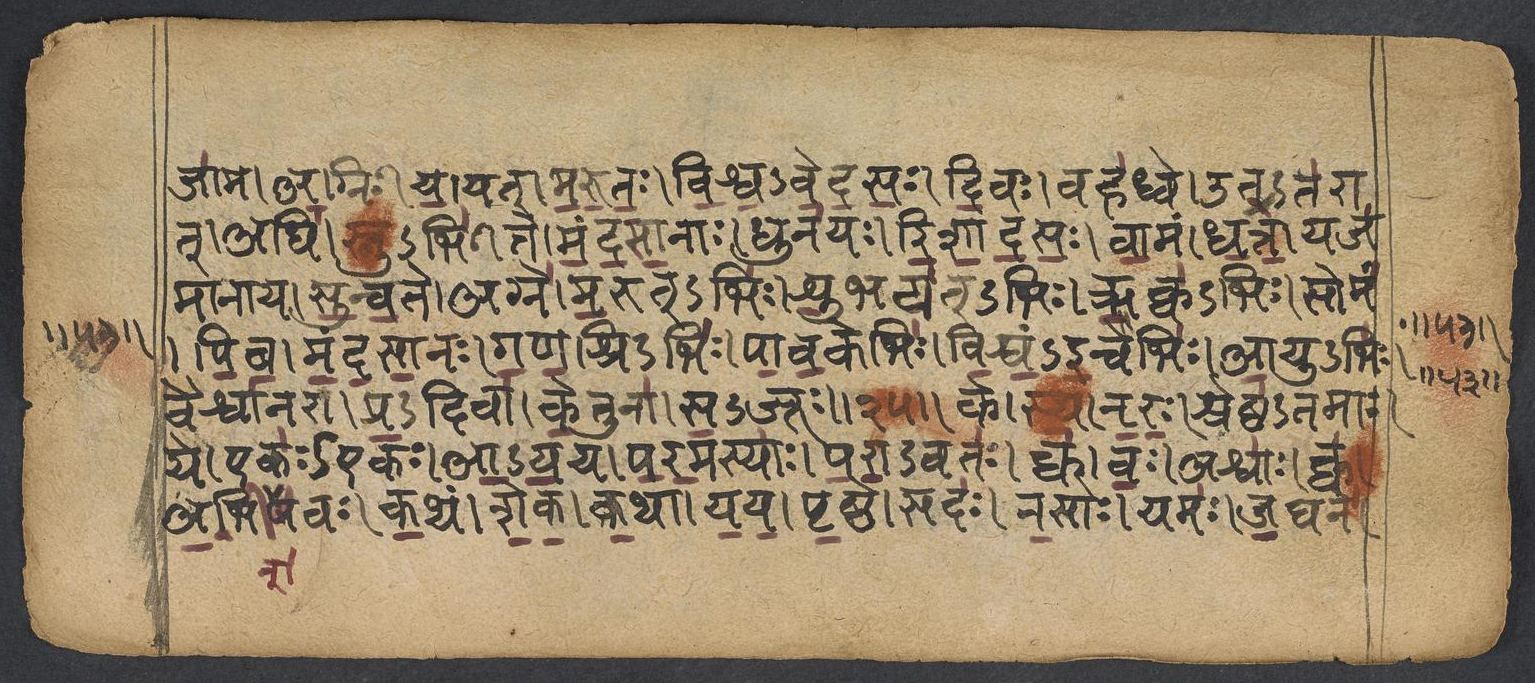
Penn Ms. Coll. 390 Item 41, fol. 380v (numbered 53v by the scribe) (OPenn image 381, upper leaf). Checked on the image: the Rigveda text on this page begins in RV 5.60.6 ‹-yajāma›. The next page with Rigveda text, fol. 381r (numbered 54r by the scribe), begins in RV 5.61.3 ‹codaḥ eṣām vi sakthāni›. Verses 5.61.1-2 end on this page.
1ke ṣṭhā̍ nara̱ḥ śreṣṭha̍tamā̱ ya eka̍-eka āya̱ya | pa̱ra̱masyā̍ḥ parā̱vata̍ḥ ||
2kva1̱̍ vo 'śvā̱ḥ kvā̱3̱̍bhīśa̍vaḥ ka̱thaṁ śe̍ka ka̱thā ya̍ya | pṛ̱ṣṭhe sado̍ na̱sor yama̍ḥ ||
Compare: Padapāṭha (word-by-word text written in the manuscript; Sansknet e-text via GRETIL)
1kaḥ | stha | naraḥ | śreṣṭha-tamāḥ | ye | ekaḥ-ekaḥ | āyaya | paramasyāḥ | parāvataḥ
2kva | vaḥ | aśvāḥ | kva | abhīśavaḥ | katham | śeka | kathā | yaya | pṛṣṭhe | sadaḥ | nasoḥ | yamaḥ
1O HEROES lordliest of all, who are ye that have singly come Forth from a region most remote?
2Where are your horses, where the reins? How came ye? how had ye the power? Rein was on nose and seat on back.
Where on the image
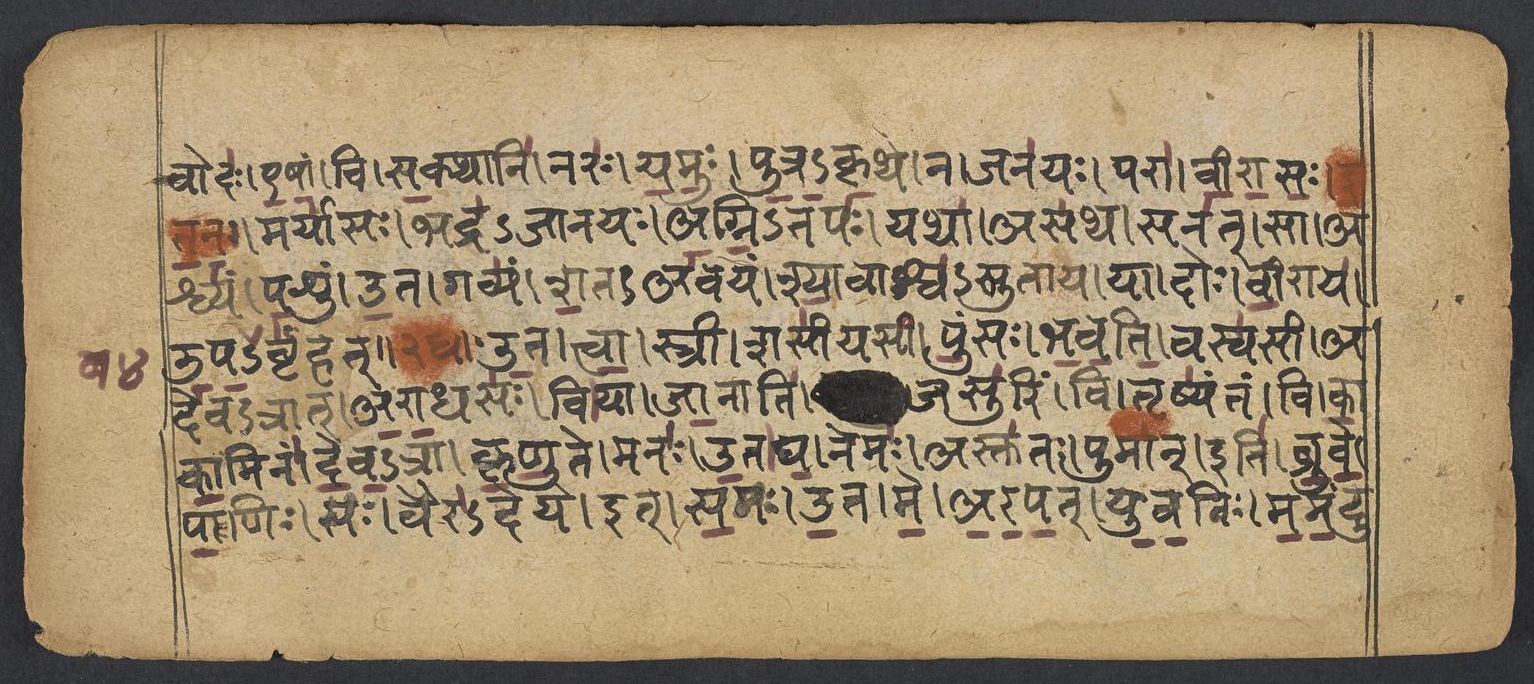
Penn Ms. Coll. 390 Item 41, fol. 381r (numbered 54r by the scribe) (OPenn image 381, lower leaf). Checked on the image: the Rigveda text on this page begins in RV 5.61.3 ‹codaḥ eṣām vi sakthāni›. The next page with Rigveda text, fol. 381v (numbered 54v by the scribe), begins in RV 5.61.9 ‹-mamanduṣī prati śyāvāya vartanim›. Verses 5.61.3-8 end on this page; 5.61.3 begins on fol. 380v (numbered 53v by the scribe).
3ja̱ghane̱ coda̍ eṣā̱ṁ vi sa̱kthāni̱ naro̍ yamuḥ | pu̱tra̱kṛ̱the na jana̍yaḥ ||
4parā̍ vīrāsa etana̱ maryā̍so̱ bhadra̍jānayaḥ | a̱gni̱tapo̱ yathāsa̍tha ||
5sana̱t sāśvya̍m pa̱śum u̱ta gavya̍ṁ śa̱tāva̍yam | śyā̱vāśva̍stutāya̱ yā dor vī̱rāyo̍pa̱barbṛ̍hat ||
6u̱ta tvā̱ strī śaśī̍yasī pu̱ṁso bha̍vati̱ vasya̍sī | ade̍vatrād arā̱dhasa̍ḥ ||
7vi yā jā̱nāti̱ jasu̍ri̱ṁ vi tṛṣya̍nta̱ṁ vi kā̱mina̍m | de̱va̱trā kṛ̍ṇu̱te mana̍ḥ ||
8u̱ta ghā̱ nemo̱ astu̍ta̱ḥ pumā̱m̐ iti̍ bruve pa̱ṇiḥ | sa vaira̍deya̱ it sa̱maḥ ||
Compare: Padapāṭha (word-by-word text written in the manuscript; Sansknet e-text via GRETIL)
3jaghane | codaḥ | eṣām | vi | sakthāni | naraḥ | yamuḥ | putra-kṛthe | na | janayaḥ
4parā | vīrāsaḥ | itana | maryāsaḥ | bhadra-jānayaḥ | agni-tapaḥ | yathā | asatha
5sanat | sā | aśvyam | paśum | uta | gavyam | śata-avayam | śyāvāśva-stutāya | yā | doḥ | vīrāya | upa-barbṛhat
6uta | tvā | strī | śaśīyasī | puṃsaḥ | bhavati | vasyasī | adeva-trāt | arādhasaḥ
7vi | yā | jānāti | jasurim | vi | tṛṣyantam | vi | kāminam | deva-trā | kṛṇute | manaḥ
8uta | gha | nemaḥ | astutaḥ | pumān | iti | bruve | paṇiḥ | saḥ | vaira-deye | it | samaḥ
3The whip is laid upon the flank. The heroes stretch their thighs apart, Like women when the babe is born.
4Go ye, O Heroes, far away, ye bridegrooms with a lovely Spouse That ye may warm you at the fire.
5May she gain cattle for her meed, hundreds of sheep and steeds and kine, Who threw embracing arms around the hero whom gyavaiva praised.
6Yea, many a woman is more firm and better than the man who turns Away from Gods, andoffers not.
7She who discerns the weak and worn, the man who thirsts and is in want She sets her mind upon the Gods.
8And yet full many a one, unpraised, mean niggard, is entitled man: Only in weregild is he such.
Where on the image
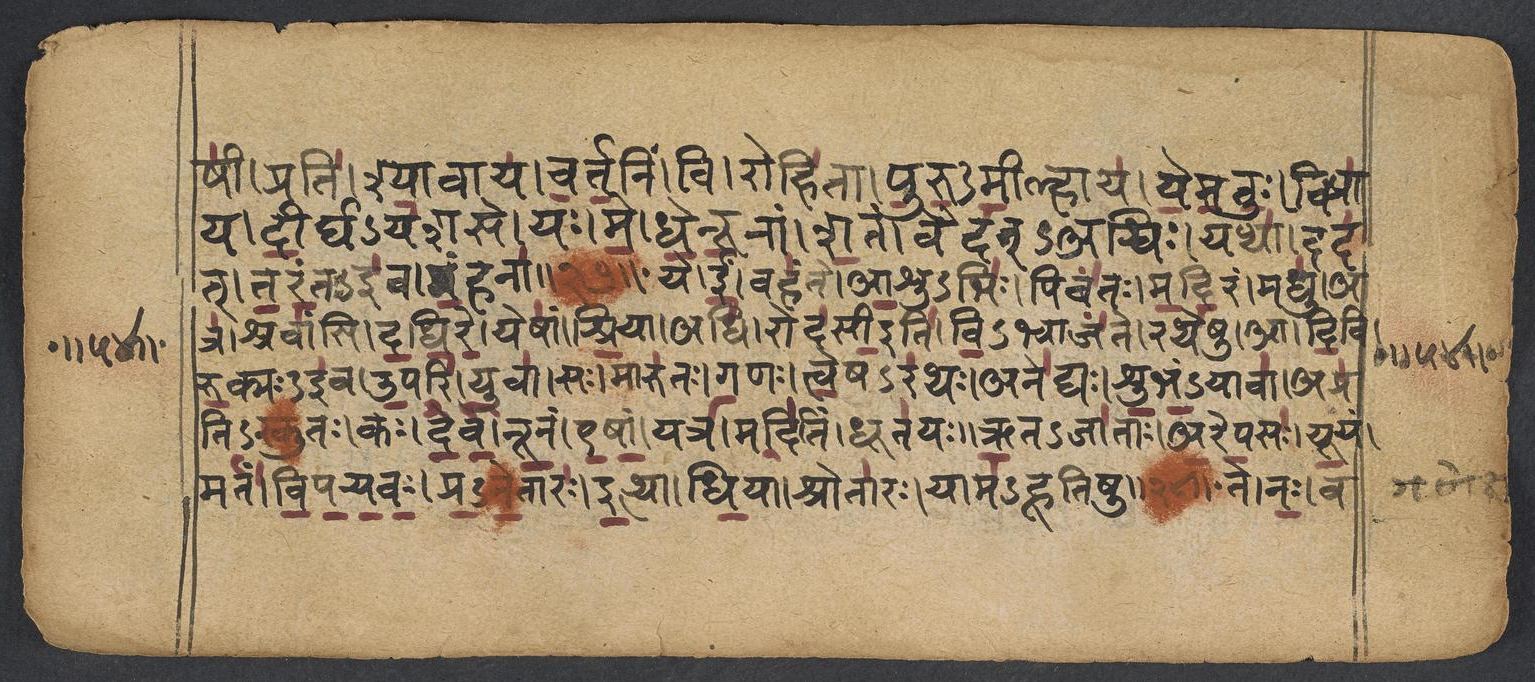
Penn Ms. Coll. 390 Item 41, fol. 381v (numbered 54v by the scribe) (OPenn image 382, upper leaf). Checked on the image: the Rigveda text on this page begins in RV 5.61.9 ‹-mamanduṣī prati śyāvāya vartanim›. The next page with Rigveda text, fol. 382r (numbered 55r by the scribe), begins in RV 5.61.16 ‹-vasūni kāmyā puru-candrāḥ riśādasaḥ›. Verses 5.61.9-15 end on this page; 5.61.9 begins on fol. 381r (numbered 54r by the scribe).
9u̱ta me̍ 'rapad yuva̱tir ma̍ma̱nduṣī̱ prati̍ śyā̱vāya̍ varta̱nim | vi rohi̍tā purumī̱ḻhāya̍ yematu̱r viprā̍ya dī̱rghaya̍śase ||
10yo me̍ dhenū̱nāṁ śa̱taṁ vaida̍daśvi̱r yathā̱ dada̍t | ta̱ra̱nta i̍va ma̱ṁhanā̍ ||
11ya ī̱ṁ vaha̍nta ā̱śubhi̱ḥ piba̍nto madi̱ram madhu̍ | atra̱ śravā̍ṁsi dadhire ||
12yeṣā̍ṁ śri̱yādhi̱ roda̍sī vi̱bhrāja̍nte̱ rathe̱ṣv ā | di̱vi ru̱kma i̍vo̱pari̍ ||
13yuvā̱ sa māru̍to ga̱ṇas tve̱ṣara̍tho̱ ane̍dyaḥ | śu̱bha̱ṁyāvāpra̍tiṣkutaḥ ||
14ko ve̍da nū̱nam e̍ṣā̱ṁ yatrā̱ mada̍nti̱ dhūta̍yaḥ | ṛ̱tajā̍tā are̱pasa̍ḥ ||
15yū̱yam marta̍ṁ vipanyavaḥ praṇe̱tāra̍ i̱tthā dhi̱yā | śrotā̍ro̱ yāma̍hūtiṣu ||
Compare: Padapāṭha (word-by-word text written in the manuscript; Sansknet e-text via GRETIL)
9uta | me | arapat | yuvatiḥ | mamanduṣī | prati | śyāvāya | vartanim | vi | rohitā | puru-mīḷhāya | yematuḥ | viprāya | dīrgha-yaśase
10yaḥ | me | dhenūnām | śatam | vaidat-aśviḥ | yathā | dadat | tarantaḥ-iva | maṃhanā
11ye | īm | vahante | āśu-bhiḥ | pibantaḥ | madiram | madhu | atra | śravāṃsi | dadhire
12yeṣām | śriyā | adhi | rodasī iti | vi-bhrājante | ratheṣu | ā | divi | rukmaḥ-iva | upari
13yuvā | saḥ | mārutaḥ | gaṇaḥ | tveṣa-rathaḥ | anedyaḥ | śubham-yāvā | aprati-skutaḥ
14kaḥ | veda | nūnam | eṣām | yatra | madanti | dhūtayaḥ | ṛta-jātāḥ | arepasaḥ
15yūyam | martam | vipanyavaḥ | pra-netāraḥ | itthā | dhiyā | śrotāraḥ | yāma-hūtiṣu
9And she, the young, the joyous-spirited, divulged the path to Ṣyâva, yea, to me. Two red steeds carried me to Purumîḷha's side, that sage of far-extended fame,
10Him who, like Vaidadaṣvi, like Taranta, hath bestowed on me A hundred cows in liberal gift.
11They who are borne by rapid steeds, drinking the meath that gives delight, They have attained high glories here.
12They by whose splendour both the worlds are over-spread they shine on cars As the gold gleams above in heaven.
13That Marut band is ever young, borne on bright cars, unblamable, Moving to victory, checked by none.
14Who knoweth, verily, of these where the All-shakers take delight, Born, spotless, after sacred Law?
15Guides are ye, lovers of the song to mortal man through holy hymn, And hearers when he cries for help.
Where on the image
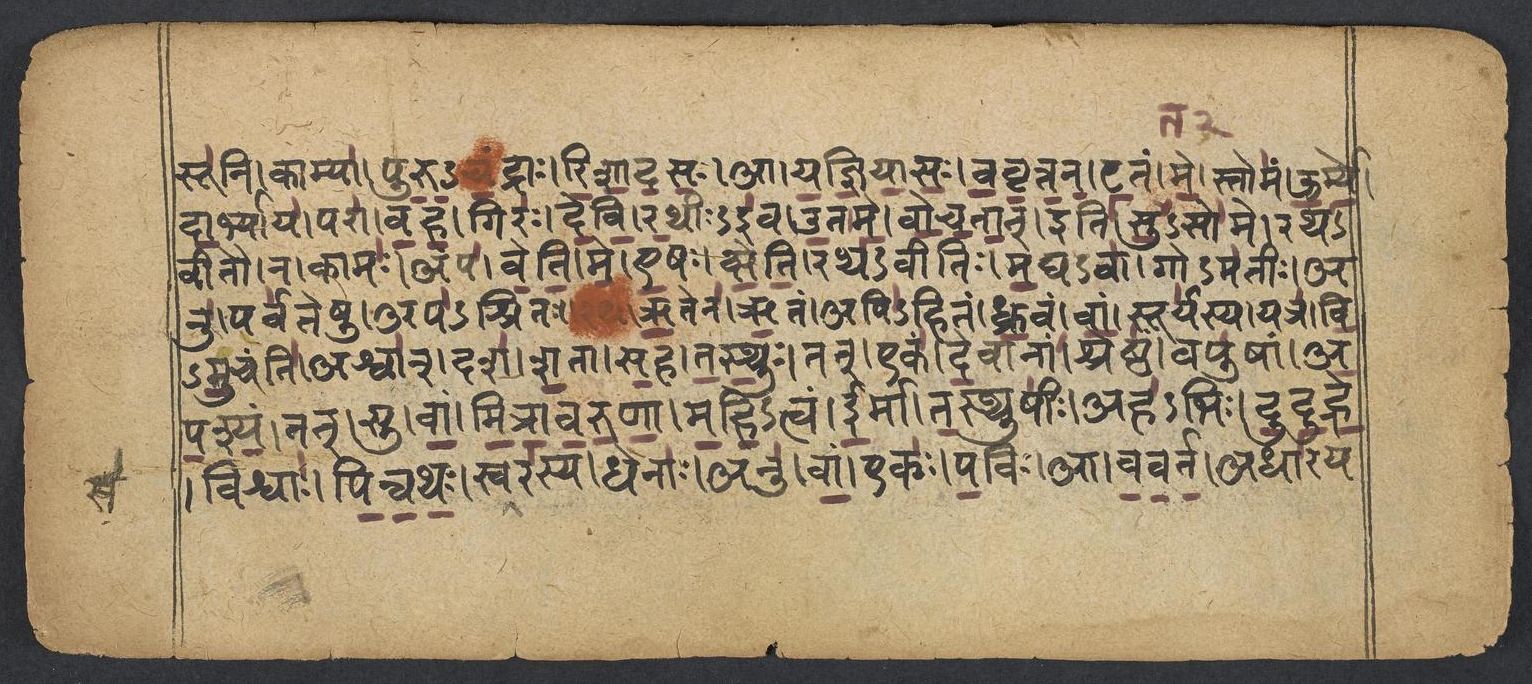
Penn Ms. Coll. 390 Item 41, fol. 382r (numbered 55r by the scribe) (OPenn image 382, lower leaf). Checked on the image: the Rigveda text on this page begins in RV 5.61.16 ‹-vasūni kāmyā puru-candrāḥ riśādasaḥ›. The next page with Rigveda text, fol. 382v (numbered 55v by the scribe), begins in RV 5.62.3 ‹-adhārayatam pṛthivīm uta dyām›. Verses 5.61.16-19 end on this page; 5.61.16 begins on fol. 381v (numbered 54v by the scribe).
16te no̱ vasū̍ni̱ kāmyā̍ puruśca̱ndrā ri̍śādasaḥ | ā ya̍jñiyāso vavṛttana ||
17e̱tam me̱ stoma̍m ūrmye dā̱rbhyāya̱ parā̍ vaha | giro̍ devi ra̱thīr i̍va ||
18u̱ta me̍ vocatā̱d iti̍ su̱taso̍me̱ ratha̍vītau | na kāmo̱ apa̍ veti me ||
19e̱ṣa kṣe̍ti̱ ratha̍vītir ma̱ghavā̱ goma̍tī̱r anu̍ | parva̍te̱ṣv apa̍śritaḥ ||
Compare: Padapāṭha (word-by-word text written in the manuscript; Sansknet e-text via GRETIL)
16te | naḥ | vasūni | kāmyā | puru-candrāḥ | riśādasaḥ | ā | yajñiyāsaḥ | vavṛttana
17etam | me | stomam | ūrmye | dārbhyāya | parā | vaha | giraḥ | devi | rathīḥ-iva
18uta | me | vocatāt | iti | suta-some | ratha-vītau | na | kāmaḥ | apa | veti | me
19eṣaḥ | kṣeti | ratha-vītiḥ | magha-vā | go--matīḥ | anu | parvateṣu | apa-śritaḥ
16Do ye, destroyers of the foe, worshipful and exceeding bright, Send down the treasures that we crave.
17OUrmya, bear thou far away to Dârbhya this my hymn of praise, Songs, Goddess, as if chariot-borne.
18From me to Rathavîti say, when he hath pressed the Soma juice, The wish I had departeth not.
19This wealthy Rathavîti dwells among the people rich in kine, Among the mountains, far withdrawn.
Notes
- Sanskrit: Aufrecht's edition (1877) with the Vedic accents, as entered by van Nooten and Holland (GRETIL).
- English: Ralph T. H. Griffith, The Hymns of the Rigveda (1889-1892; 2nd ed. 1896-1897), from the VedaWeb digital text; OCR slips in that text were corrected against the printed 2nd edition (data/sources/rigveda/griffith_errata.json).
- Padapāṭha (edition text): Sansknet e-text via GRETIL (CC BY-NC-SA 4.0).
Cite
Sources
- Source: Penn Ms. Coll. 390 Item 41 (undated (catalogued with Penn's 18th-19th c. Vedic manuscripts)), OPenn, Public Domain Mark + Aufrecht's accented text (GRETIL) + Griffith's English (VedaWeb) (holding institution)
- Critical edition: Aufrecht (1877), accented e-text via GRETIL
← previous · → next · v cycle view · l back to library