Rigveda 5.83: To Parjanya
Introduction
Rigveda 5.83 is a hymn of 10 verses addressed to Parjanya. It stands in book (maṇḍala) 5, the family book of the Atri clan. The Rigveda is the oldest collection of Sanskrit hymns, composed in the second half of the second millennium BCE and handed down orally for many centuries before it was written down.
The manuscript shown is Penn Ms. Coll. 390 Item 41 (University of Pennsylvania), an undated paper manuscript of the padapāṭha (the word-by-word recitation text, in which every word is written separately and compounds are split) of the whole Ṛgveda in Devanāgarī, 884 leaves in fascicles, 7-9 lines to the page, accents in red; this hymn stands on fol. 397r-398r. Each section below gives the verses that end on one page; the page boundaries were read on the images (the opening words of every page), not counted out. Where the manuscript is a padapāṭha (the word-by-word recitation text), the section shows Aufrecht's continuous (saṃhitā) text first and, as the edition text, the padapāṭha of the same verses, which is the form written on the page.
How was this verified? (Provenance)
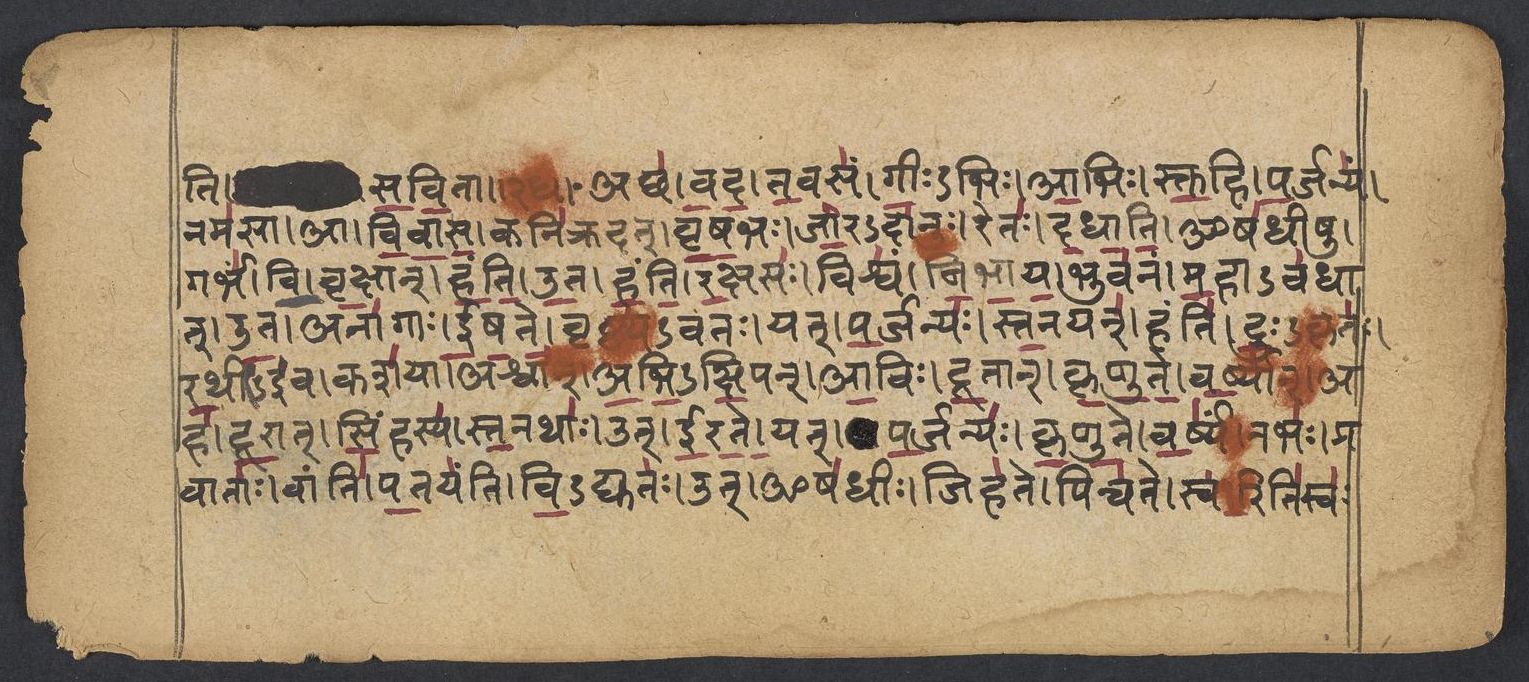
Where on the image
Penn Ms. Coll. 390 Item 41, fol. 397r (numbered 70r by the scribe) (OPenn image 397, lower leaf). Checked on the image: the Rigveda text on this page begins in RV 5.82.9 ‹-suvāti savitā›. The next page with Rigveda text, fol. 397v (numbered 70v by the scribe), begins in RV 5.83.4 ‹irā viśvasmai bhuvanāya jāyate›. Verses 5.83.1-3 end on this page.
1acchā̍ vada ta̱vasa̍ṁ gī̱rbhir ā̱bhiḥ stu̱hi pa̱rjanya̱ṁ nama̱sā vi̍vāsa | kani̍kradad vṛṣa̱bho jī̱radā̍nū̱ reto̍ dadhā̱ty oṣa̍dhīṣu̱ garbha̍m ||
2vi vṛ̱kṣān ha̍nty u̱ta ha̍nti ra̱kṣaso̱ viśva̍m bibhāya̱ bhuva̍nam ma̱hāva̍dhāt | u̱tānā̍gā īṣate̱ vṛṣṇyā̍vato̱ yat pa̱rjanya̍ḥ sta̱naya̱n hanti̍ du̱ṣkṛta̍ḥ ||
3ra̱thīva̱ kaśa̱yāśvā̍m̐ abhikṣi̱pann ā̱vir dū̱tān kṛ̍ṇute va̱rṣyā̱3̱̍m̐ aha̍ | dū̱rāt si̱ṁhasya̍ sta̱nathā̱ ud ī̍rate̱ yat pa̱rjanya̍ḥ kṛṇu̱te va̱rṣya1̱̍ṁ nabha̍ḥ ||
Compare: Padapāṭha (word-by-word text written in the manuscript; Sansknet e-text via GRETIL)
1accha | vada | tavasam | gīḥ-bhiḥ | ābhiḥ | stuhi | parjanyam | namasā | vivāsa | kanikradat | vṛṣabhaḥ | jīra-dānuḥ | retaḥ | dadhāti | oṣadhīṣu | garbham
2vi | vṛkṣān | hanti | uta | hanti | rakṣasaḥ | viśvam | bibhāya | bhuvanam | mahāvadhāt | uta | anāgāḥ | īṣate | vṛṣṇya-vataḥ | yat | parjanyaḥ | stanayan | hanti | duḥ-kṛtaḥ
3rathī-iva | kaśayā | aśvān | abhi-kṣipan | āviḥ | dūtān | kṛṇute | varṣyān | aha | dūrāt | siṃhasya | stanathāḥ | ut | īrate | yat | parjanyaḥ | kṛṇute | varṣyam | nabhaḥ
1SING with these songs thy welcome to the Mighty, with adoration praise and call Parjanya. The Bull, loud roaring, swift to send his bounty, lays in the plants the seed. for germination.
2He smites the trees apart, he slays the demons: all life fears him who wields the mighty weapon. From him exceeding strong flees e'en the guiltless, when thundering Parjanya smites the wicked.
3Like a car-driver whipping on his horses, he makes the messengers of rain spring forward. Far off resounds the roaring of the lion, what time Parjanya fills the sky with rain-cloud.
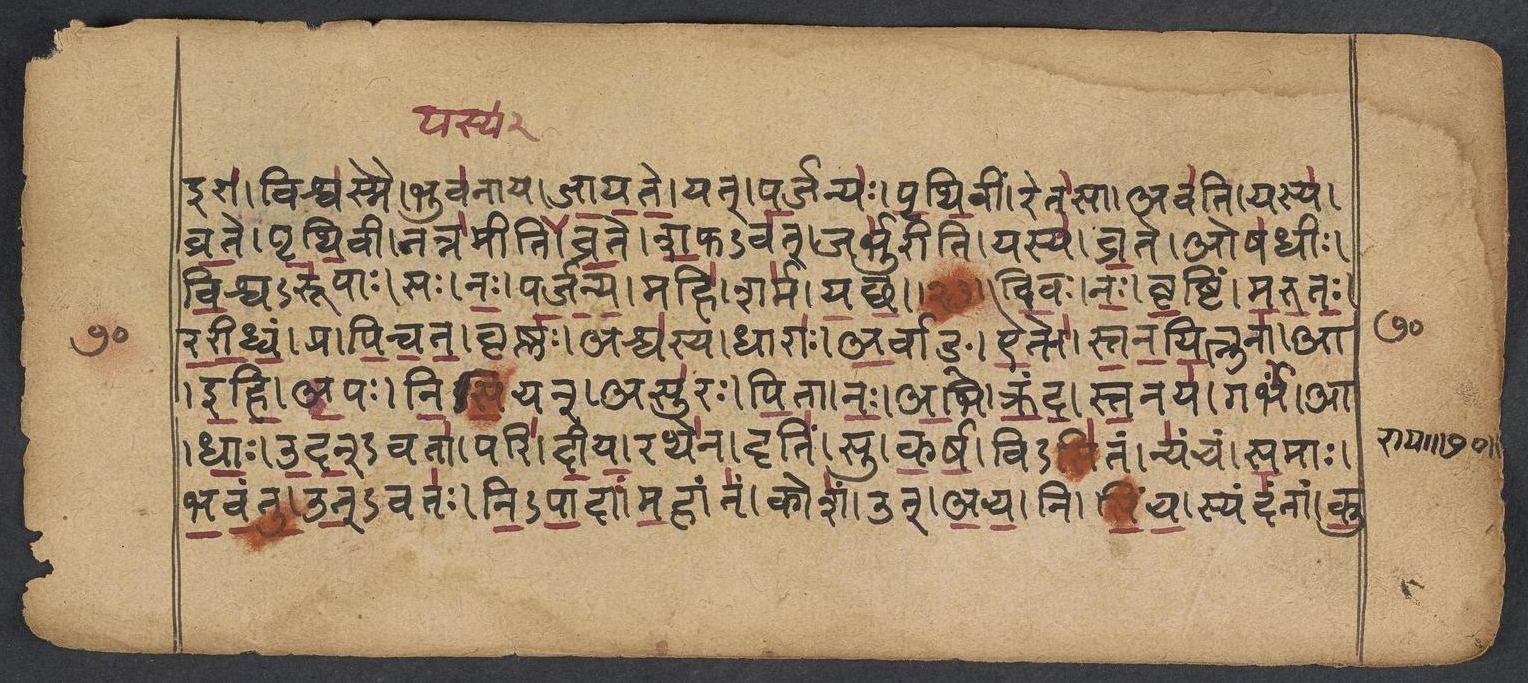
Where on the image
Penn Ms. Coll. 390 Item 41, fol. 397v (numbered 70v by the scribe) (OPenn image 398, upper leaf). Checked on the image: the Rigveda text on this page begins in RV 5.83.4 ‹irā viśvasmai bhuvanāya jāyate›. The next page with Rigveda text, fol. 398r (numbered 71r by the scribe), begins in RV 5.83.8 ‹-kulyāḥ vi-sitāḥ purastāt ghṛtena›. Verses 5.83.4-7 end on this page; 5.83.4 begins on fol. 397r (numbered 70r by the scribe).
4pra vātā̱ vānti̍ pa̱taya̍nti vi̱dyuta̱ ud oṣa̍dhī̱r jiha̍te̱ pinva̍te̱ sva̍ḥ | irā̱ viśva̍smai̱ bhuva̍nāya jāyate̱ yat pa̱rjanya̍ḥ pṛthi̱vīṁ reta̱sāva̍ti ||
5yasya̍ vra̱te pṛ̍thi̱vī nanna̍mīti̱ yasya̍ vra̱te śa̱phava̱j jarbhu̍rīti | yasya̍ vra̱ta oṣa̍dhīr vi̱śvarū̍pā̱ḥ sa na̍ḥ parjanya̱ mahi̱ śarma̍ yaccha ||
6di̱vo no̍ vṛ̱ṣṭim ma̍ruto rarīdhva̱m pra pi̍nvata̱ vṛṣṇo̱ aśva̍sya̱ dhārā̍ḥ | a̱rvāṅ e̱tena̍ stanayi̱tnunehy a̱po ni̍ṣi̱ñcann asu̍raḥ pi̱tā na̍ḥ ||
7a̱bhi kra̍nda sta̱naya̱ garbha̱m ā dhā̍ uda̱nvatā̱ pari̍ dīyā̱ rathe̍na | dṛti̱ṁ su ka̍rṣa̱ viṣi̍ta̱ṁ nya̍ñcaṁ sa̱mā bha̍vantū̱dvato̍ nipā̱dāḥ ||
Compare: Padapāṭha (word-by-word text written in the manuscript; Sansknet e-text via GRETIL)
4pra | vātāḥ | vānti | patayanti | vi-dyutaḥ | ut | oṣadhīḥ | jihate | pinvate | svaḥ | irā | viśvasmai | bhuvanāya | jāyate | yat | parjanyaḥ | pṛthivīm | retasā | avati
5yasya | vrate | pṛthivī | nannamīti | yasya | vrate | śapha-vat | jarbhurīti | yasya | vrate | oṣadhīḥ | viśva-rūpāḥ | saḥ | naḥ | parjanya | mahi | śarma | yaccha
6divaḥ | naḥ | vṛṣṭim | marutaḥ | rarīdhvam | pra | pinvata | vṛṣṇaḥ | aśvasya | dhārāḥ | arvāṅ | etena | stanayitnunā | ā | ihi | apaḥ | ni-siñcan | asuraḥ | p itā | nāḥ
7abhi | kranda | stanaya | garbham | ā | dhāḥ | udan-vatā | pari | dīya | rathena | dṛtim | su | karṣa | vi-sitam | nyañcam | samāḥ | bhavantu | ut-vataḥ | ni-pādāḥ
4Forth burst the winds, down come the lightning-flashes: the plants shoot up, the realm of light is streaming. Food springs abundant for all living creatures, what time Parjanya quickens earth with moisture.
5Thou at whose bidding earth bows low before thee, at whose command hoofed cattle fly in terror, At whose behest the plants assume all colours, even thou Parjanya, yield us great protection.
6Send down for us the rain of heaven, ye Maruts, and let the Stallion's flood descend in torrents. Come hither with this thunder while thou pourest the waters down, our heavenly Lord and Father.
7Thunder and roar: the germ of life deposit. Fly round us on thy chariot waterladen. Thine opened water-skin draw with thee downward, and let the hollows and the heights be level.
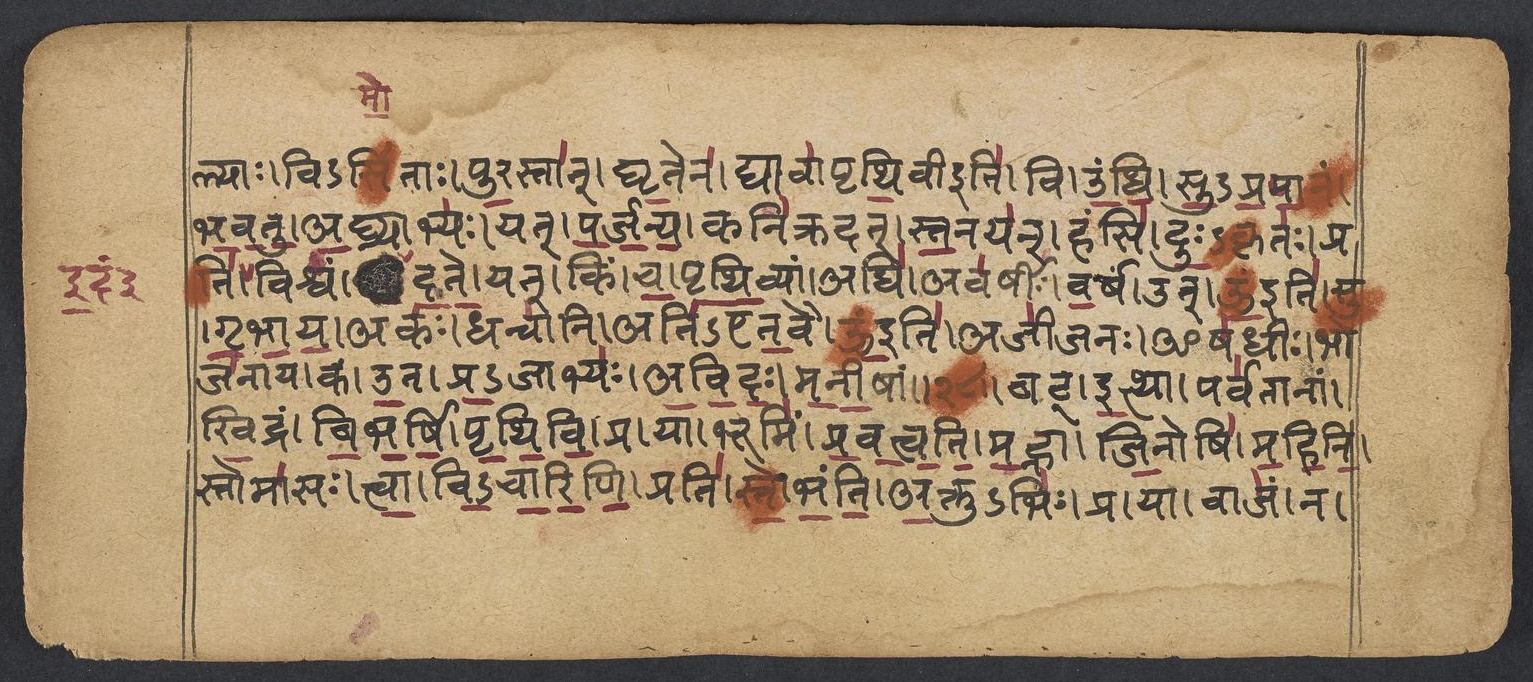
Where on the image
Penn Ms. Coll. 390 Item 41, fol. 398r (numbered 71r by the scribe) (OPenn image 398, lower leaf). Checked on the image: the Rigveda text on this page begins in RV 5.83.8 ‹-kulyāḥ vi-sitāḥ purastāt ghṛtena›. The next page with Rigveda text, fol. 398v (numbered 71v by the scribe), begins in RV 5.84.2 ‹heṣantam perum asyasi arjuni›. Verses 5.83.8-10 end on this page; 5.83.8 begins on fol. 397v (numbered 70v by the scribe).
8ma̱hānta̱ṁ kośa̱m ud a̍cā̱ ni ṣi̍ñca̱ syanda̍ntāṁ ku̱lyā viṣi̍tāḥ pu̱rastā̍t | ghṛ̱tena̱ dyāvā̍pṛthi̱vī vy u̍ndhi suprapā̱ṇam bha̍vatv a̱ghnyābhya̍ḥ ||
9yat pa̍rjanya̱ kani̍kradat sta̱naya̱n haṁsi̍ du̱ṣkṛta̍ḥ | pratī̱daṁ viśva̍m modate̱ yat kiṁ ca̍ pṛthi̱vyām adhi̍ ||
10ava̍rṣīr va̱rṣam ud u̱ ṣū gṛ̍bhā̱yāka̱r dhanvā̱ny atye̍ta̱vā u̍ | ajī̍jana̱ oṣa̍dhī̱r bhoja̍nāya̱ kam u̱ta pra̱jābhyo̍ 'vido manī̱ṣām ||
Compare: Padapāṭha (word-by-word text written in the manuscript; Sansknet e-text via GRETIL)
8mahāntam | kośam | ut | aca | ni | siñca | syandantām | kulyāḥ | vi-sitāḥ | purastāt | ghṛtena | dyāvāpṛthivī iti | vi | undhi | su-prapānam | bhavatu | aghnyābhyaḥ
9yat | parjanya | kanikradat | stanayan | haṃsi | duḥ-kṛtaḥ | prati | idam | viśvam | modate | yat | kim | ca | pṛthivyām | adhi
10avarṣīḥ | varṣam | ut | oṃ iti | su | gṛbhāya | akaḥ | dhanvāni | ati-etavai | oṃ iti | ajījanaḥ | oṣadhīḥ | bhojanāya | kam | uta | pra-jābhyaḥ | avidaḥ | manīṣām
8Lift up the mighty vessel, pour down water, and let the liberated streams rush forward. Saturate both the earth and heaven with fatness, and for the cows let there be drink abundant.
9When thou, with thunder and with roar, Parjanya, smitest sinners down, This universe exults thereat, yea, all that is upon the earth.
10Thou hast poured down the rain-flood now withhold it. Thou hast made desert places fit for travel. Thou hast made herbs to grow for our enjoyment: yea, thou hast won thee praise from living creatures.
Notes
- Sanskrit: Aufrecht's edition (1877) with the Vedic accents, as entered by van Nooten and Holland (GRETIL).
- English: Ralph T. H. Griffith, The Hymns of the Rigveda (1889-1892; 2nd ed. 1896-1897), from the VedaWeb digital text; OCR slips in that text were corrected against the printed 2nd edition (data/sources/rigveda/griffith_errata.json).
- Padapāṭha (edition text): Sansknet e-text via GRETIL (CC BY-NC-SA 4.0).
Cite
Sources
- Source: Penn Ms. Coll. 390 Item 41 (undated (catalogued with Penn's 18th-19th c. Vedic manuscripts)), OPenn, Public Domain Mark + Aufrecht's accented text (GRETIL) + Griffith's English (VedaWeb) (holding institution)
- Critical edition: Aufrecht (1877), accented e-text via GRETIL
← previous · → next · v cycle view · l back to library