Rigveda 5.86: To Indra and Agni
Introduction
Rigveda 5.86 is a hymn of 6 verses addressed to Indra and Agni. It stands in book (maṇḍala) 5, the family book of the Atri clan. The Rigveda is the oldest collection of Sanskrit hymns, composed in the second half of the second millennium BCE and handed down orally for many centuries before it was written down.
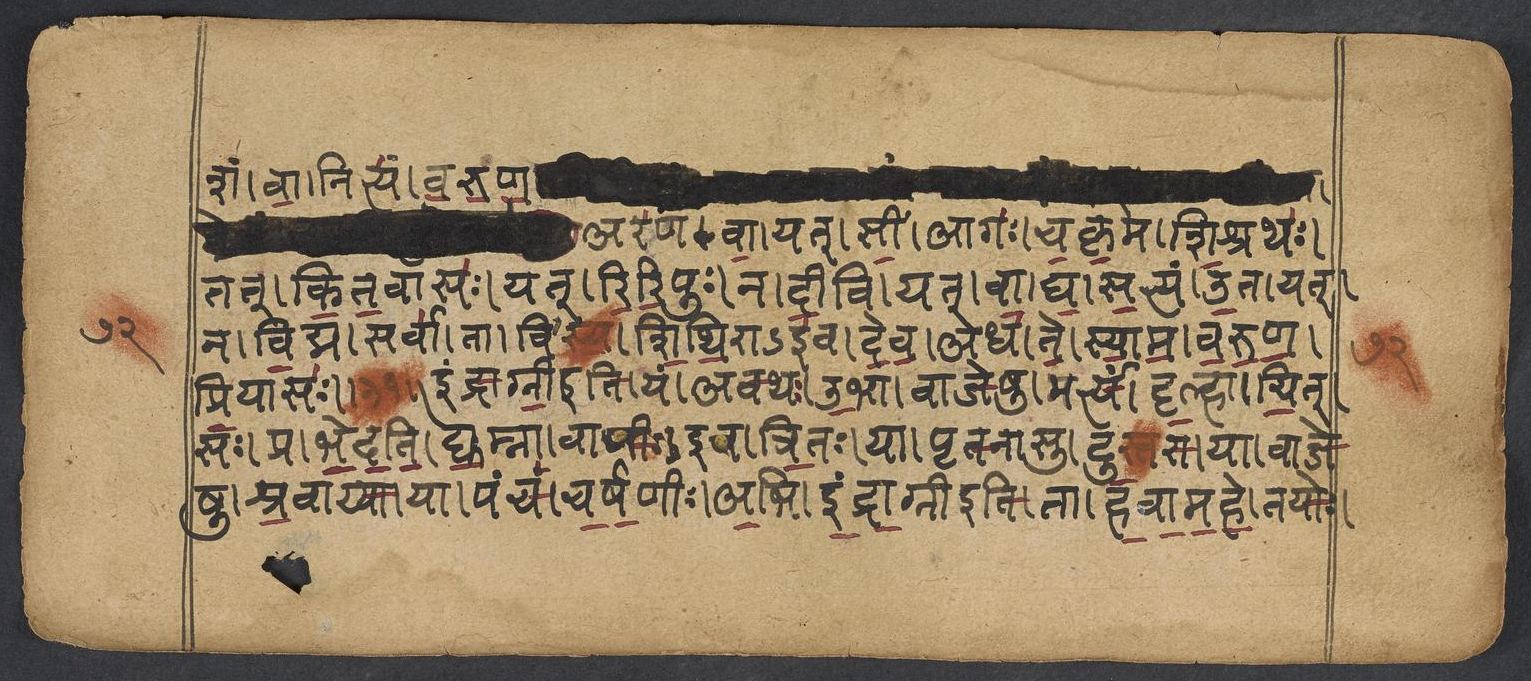
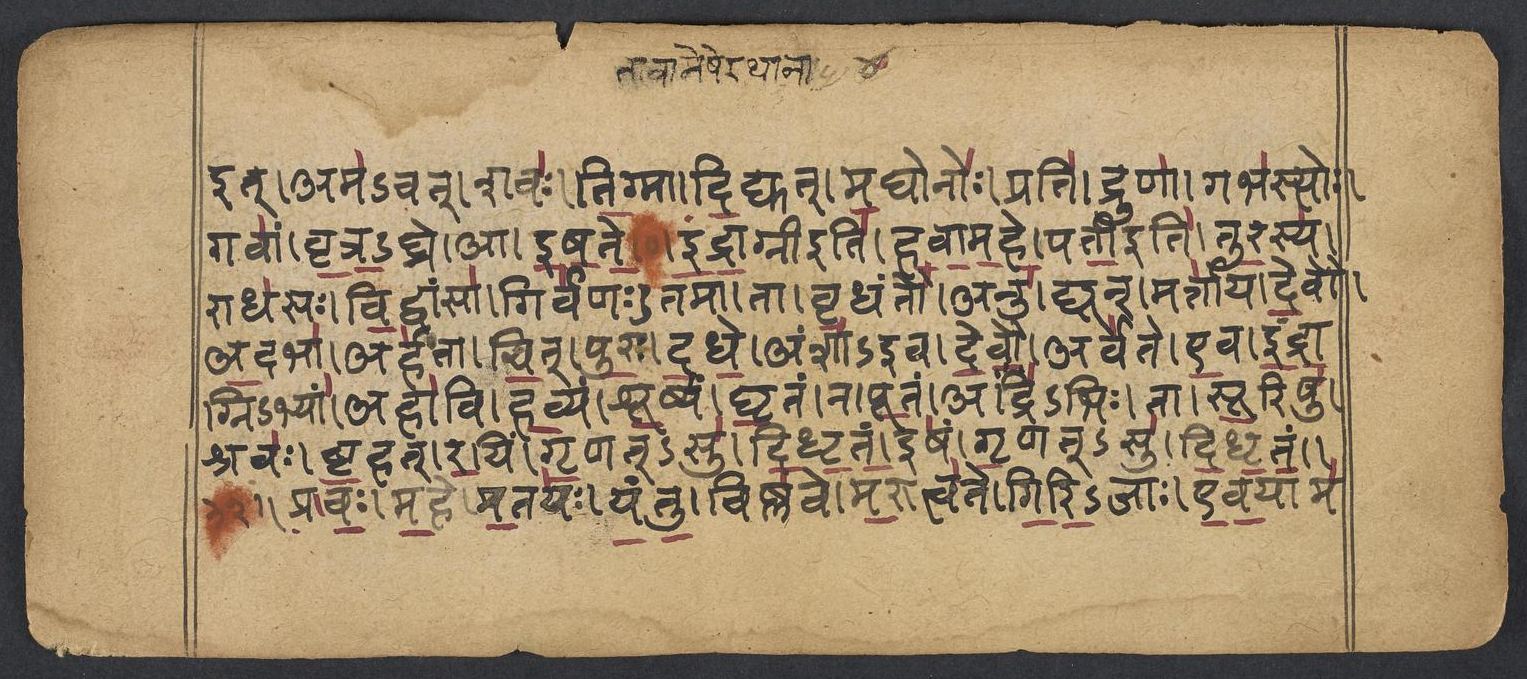
The manuscript shown is Penn Ms. Coll. 390 Item 41 (University of Pennsylvania), an undated paper manuscript of the padapāṭha (the word-by-word recitation text, in which every word is written separately and compounds are split) of the whole Ṛgveda in Devanāgarī, 884 leaves in fascicles, 7-9 lines to the page, accents in red; this hymn stands on fol. 399v-400r. Each section below gives the verses that end on one page; the page boundaries were read on the images (the opening words of every page), not counted out. Where the manuscript is a padapāṭha (the word-by-word recitation text), the section shows Aufrecht's continuous (saṃhitā) text first and, as the edition text, the padapāṭha of the same verses, which is the form written on the page.
How was this verified? (Provenance)
Where on the image
Penn Ms. Coll. 390 Item 41, fol. 399v (numbered 72v by the scribe) (OPenn image 400, upper leaf). Checked on the image: the Rigveda text on this page begins in RV 5.85.7 ‹-veśam vā nityam varuṇa›. The next page with Rigveda text, fol. 400r (numbered 73r by the scribe), begins in RV 5.86.3 ‹it ama-vat śavaḥ tigmā›. Verses 5.86.1-2 end on this page.
1indrā̍gnī̱ yam ava̍tha u̱bhā vāje̍ṣu̱ martya̍m | dṛ̱ḻhā ci̱t sa pra bhe̍dati dyu̱mnā vāṇī̍r iva tri̱taḥ ||
2yā pṛta̍nāsu du̱ṣṭarā̱ yā vāje̍ṣu śra̱vāyyā̍ | yā pañca̍ carṣa̱ṇīr a̱bhī̍ndrā̱gnī tā ha̍vāmahe ||
Compare: Padapāṭha (word-by-word text written in the manuscript; Sansknet e-text via GRETIL)
1indrāgnī iti | yam | avathaḥ | ubhā | vājeṣu | martyam | dṛḷhā | cit | saḥ | pra | bhedati | dyumnā | vāṇīḥ-iva | tritaḥ
2yā | pṛtanāsu | dustarā | yā | vājeṣu | śravāyyā | yā | pañca | carṣaṇīḥ | abhi | indrāgnī iti | tā | havāmahe
1THE mortal man whom ye, the Twain, Indra and Agni, help in fight, Breaks through e'en strongly-guarded wealth as Trita burst his way through reeds.
2The Twain invincible in war, worthy to be renowned in frays, Lords of the Fivefold. People, these, Indra and Agni, we invoke.
Where on the image
Penn Ms. Coll. 390 Item 41, fol. 400r (numbered 73r by the scribe) (OPenn image 400, lower leaf). Checked on the image: the Rigveda text on this page begins in RV 5.86.3 ‹it ama-vat śavaḥ tigmā›. The next page with Rigveda text, fol. 400v (numbered 73v by the scribe), begins in RV 5.87.1 ‹-evayāmarut pra śardhāya pra-yajyave›. Verses 5.86.3-6 end on this page; 5.86.3 begins on fol. 399v (numbered 72v by the scribe).
3tayo̱r id ama̍va̱c chava̍s ti̱gmā di̱dyun ma̱ghono̍ḥ | prati̱ druṇā̱ gabha̍styo̱r gavā̍ṁ vṛtra̱ghna eṣa̍te ||
4tā vā̱m eṣe̱ rathā̍nām indrā̱gnī ha̍vāmahe | patī̍ tu̱rasya̱ rādha̍so vi̱dvāṁsā̱ girva̍ṇastamā ||
5tā vṛ̱dhantā̱v anu̱ dyūn martā̍ya de̱vāv a̱dabhā̍ | arha̍ntā cit pu̱ro da̱dhe 'ṁśe̍va de̱vāv arva̍te ||
6e̱vendrā̱gnibhyā̱m ahā̍vi ha̱vyaṁ śū̱ṣya̍ṁ ghṛ̱taṁ na pū̱tam adri̍bhiḥ | tā sū̱riṣu̱ śravo̍ bṛ̱had ra̱yiṁ gṛ̱ṇatsu̍ didhṛta̱m iṣa̍ṁ gṛ̱ṇatsu̍ didhṛtam ||
Compare: Padapāṭha (word-by-word text written in the manuscript; Sansknet e-text via GRETIL)
3tayoḥ | it | ama-vat | śavaḥ | tigmā | didyut | maghonoḥ | prati | druṇā | gabhastyoḥ | gavām | vṛtra-ghne | ā | īṣate
4ā | vām | eṣe | rathānām | indrāgnī iti | havāmahe | patī iti | turasya | rādhasaḥ | vidvāṃsā | girvaṇaḥ-tamā
5tā | vṛdhantau | anu | dyūn | martāya | devau | adabhā | arhantā | cit | puraḥ | dadhe | aṃśāiva | devau | arvate
6eva | indrāgni-bhyām | ahāvi | havyam | sūṣyam | ghṛtam | na | pūtam | adri-bhiḥ | tā | sūriṣu | śravaḥ | bṛhat | rayim | gṛṇat-su | didhṛtam | iṣam | gṛṇat-su | didhṛtam
3Impetuous is their strength, and keen the lightning of the mighty Pair, Which from their arms speeds with the car to Vr̥itra's slayer for the kine.
4Indra and Agni, we invoke you both, as such, to send your cars: Lords of quick-coming bounty, ye who know, chief lovers of the song.
5These who give increase day by day, Gods without guile for mortal man, Worthy themselves, I honour most, Two Gods as partners, for my horse.
6The strength-bestowing offering thus to Indra-Agni hath been paid, as butter, purified by stones. Deal to our princes high renown, deal wealth to those who sing your praise, deal food to those who sing your praise.
Notes
- Sanskrit: Aufrecht's edition (1877) with the Vedic accents, as entered by van Nooten and Holland (GRETIL).
- English: Ralph T. H. Griffith, The Hymns of the Rigveda (1889-1892; 2nd ed. 1896-1897), from the VedaWeb digital text; OCR slips in that text were corrected against the printed 2nd edition (data/sources/rigveda/griffith_errata.json).
- Padapāṭha (edition text): Sansknet e-text via GRETIL (CC BY-NC-SA 4.0).
Cite
Sources
- Source: Penn Ms. Coll. 390 Item 41 (undated (catalogued with Penn's 18th-19th c. Vedic manuscripts)), OPenn, Public Domain Mark + Aufrecht's accented text (GRETIL) + Griffith's English (VedaWeb) (holding institution)
- Critical edition: Aufrecht (1877), accented e-text via GRETIL
← previous · → next · v cycle view · l back to library