Rigveda 7.73: To Asvins
Introduction
Rigveda 7.73 is a hymn of 5 verses addressed to Asvins. It stands in book (maṇḍala) 7, the family book of Vasiṣṭha. The Rigveda is the oldest collection of Sanskrit hymns, composed in the second half of the second millennium BCE and handed down orally for many centuries before it was written down.
The manuscript shown is Penn Ms. Coll. 390 Item 41 (University of Pennsylvania), an undated paper manuscript of the padapāṭha (the word-by-word recitation text, in which every word is written separately and compounds are split) of the whole Ṛgveda in Devanāgarī, 884 leaves in fascicles, 7-9 lines to the page, accents in red; this hymn stands on fol. 539r-539v. Each section below gives the verses that end on one page; the page boundaries were read on the images (the opening words of every page), not counted out. Where the manuscript is a padapāṭha (the word-by-word recitation text), the section shows Aufrecht's continuous (saṃhitā) text first and, as the edition text, the padapāṭha of the same verses, which is the form written on the page.
How was this verified? (Provenance)
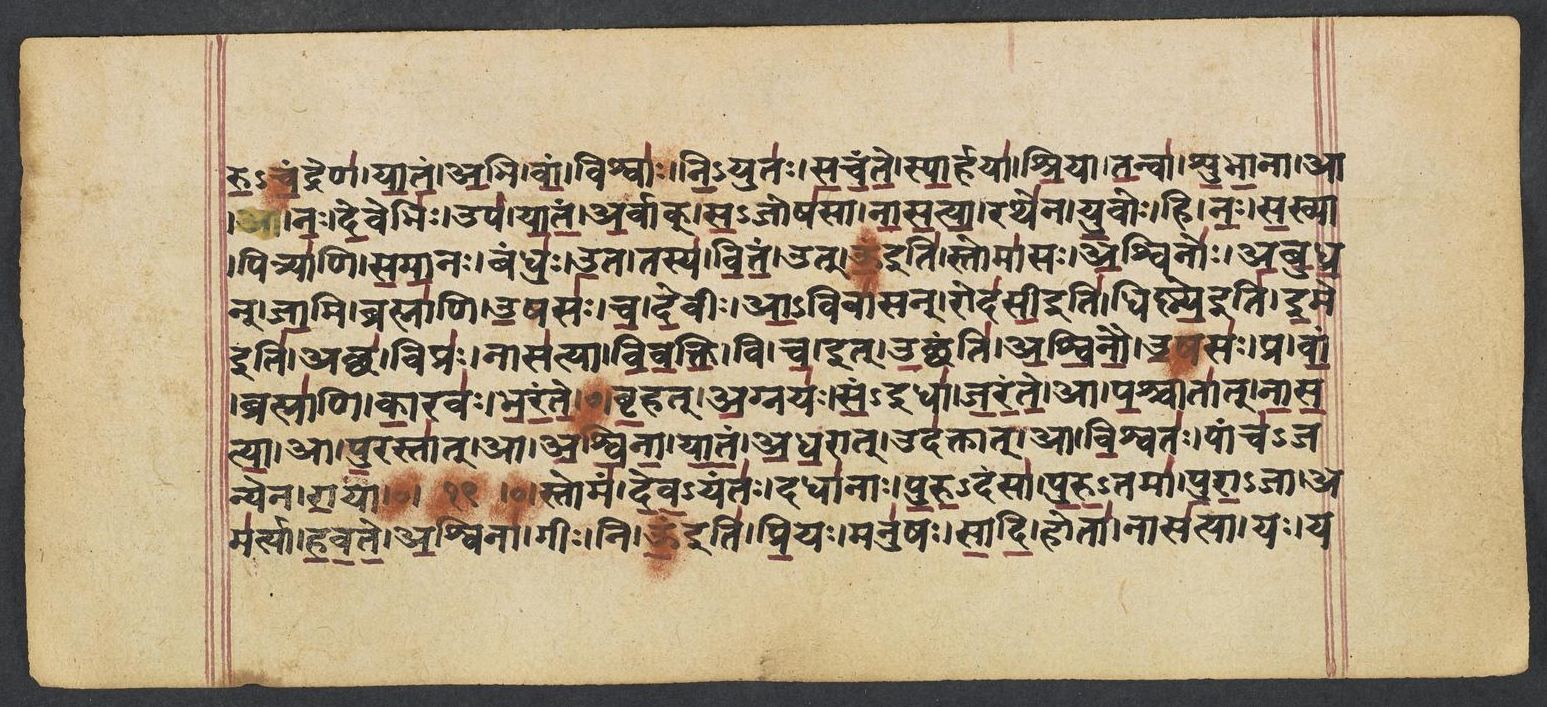
Where on the image
Penn Ms. Coll. 390 Item 41, fol. 539r (numbered 60r by the scribe) (OPenn image 539, lower leaf). Checked on the image: the Rigveda text on this page begins in RV 7.72.1 ‹-puru-candreṇa yātam abhi vām›. The next page with Rigveda text, fol. 539v (numbered 60v by the scribe), begins in RV 7.73.2 ‹-yajate vandate ca aśnītam›. Verse 7.73.1 ends on this page.
1atā̍riṣma̱ tama̍sas pā̱ram a̱sya prati̱ stoma̍ṁ deva̱yanto̱ dadhā̍nāḥ | pu̱ru̱daṁsā̍ puru̱tamā̍ purā̱jāma̍rtyā havate a̱śvinā̱ gīḥ ||
Compare: Padapāṭha (word-by-word text written in the manuscript; Sansknet e-text via GRETIL)
1atāriṣma | tamasaḥ | pāram | asya | prati | stomam | deva-yantaḥ | dadhānāḥ | puru-daṃsā | puru-tamā | purājā | amartyā | havate | aśvinā | gīḥ
1WE have o'erpassed the limit of this darkness while, worshipping the Gods, we sang their praises. The song invoketh both Immortal Aṣvins far-reaching, born of old, great WonderWorkers.
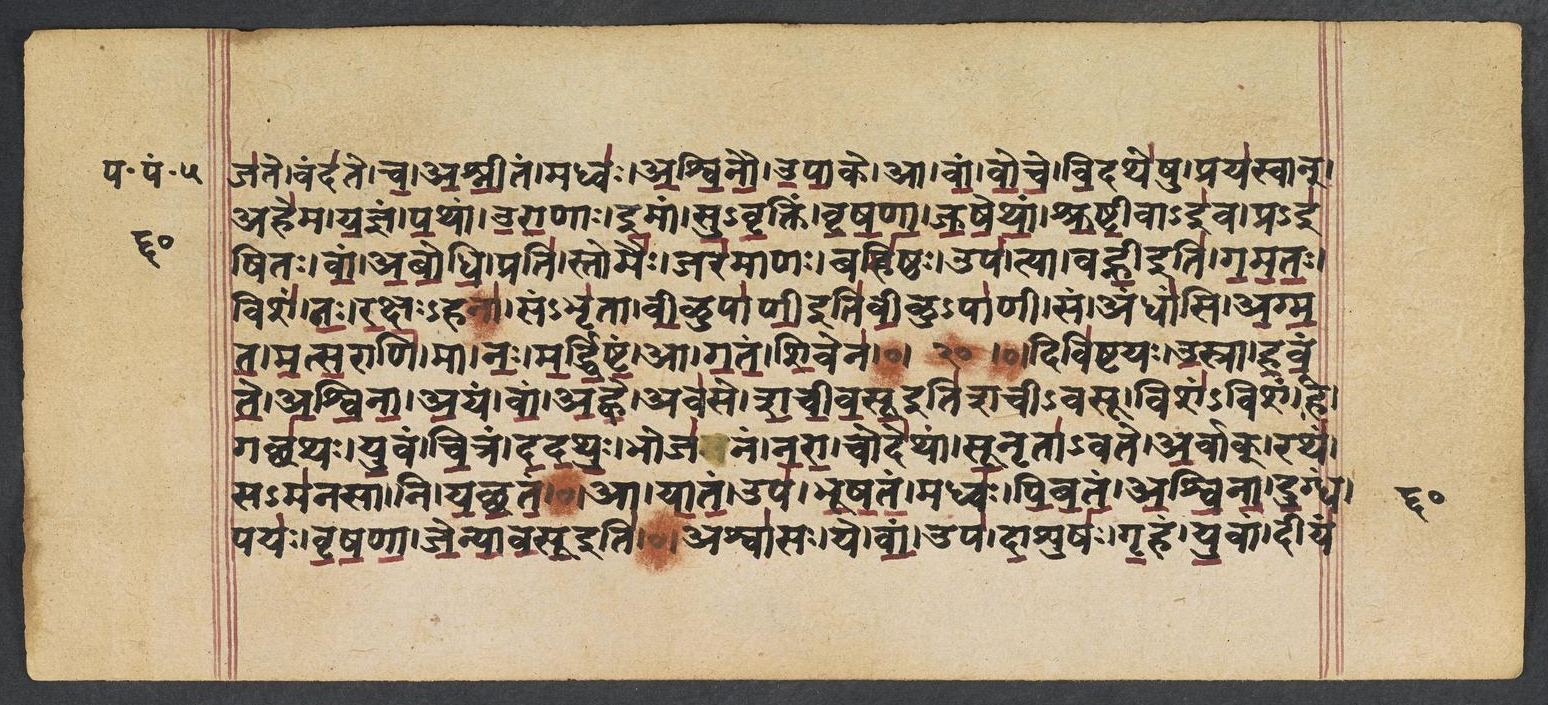
Where on the image
Penn Ms. Coll. 390 Item 41, fol. 539v (numbered 60v by the scribe) (OPenn image 540, upper leaf). Checked on the image: the Rigveda text on this page begins in RV 7.73.2 ‹-yajate vandate ca aśnītam›. The next page with Rigveda text, fol. 540r (numbered 61r by the scribe), begins in RV 7.74.4 ‹-dīyanti bibhrataḥ makṣuyu-bhiḥ narā›. Verses 7.73.2-5 end on this page; 7.73.2 begins on fol. 539r (numbered 60r by the scribe).
2ny u̍ pri̱yo manu̍ṣaḥ sādi̱ hotā̱ nāsa̍tyā̱ yo yaja̍te̱ vanda̍te ca | a̱śnī̱tam madhvo̍ aśvinā upā̱ka ā vā̍ṁ voce vi̱dathe̍ṣu̱ praya̍svān ||
3ahe̍ma ya̱jñam pa̱thām u̍rā̱ṇā i̱māṁ su̍vṛ̱ktiṁ vṛ̍ṣaṇā juṣethām | śru̱ṣṭī̱veva̱ preṣi̍to vām abodhi̱ prati̱ stomai̱r jara̍māṇo̱ vasi̍ṣṭhaḥ ||
4upa̱ tyā vahnī̍ gamato̱ viśa̍ṁ no rakṣo̱haṇā̱ sambhṛ̍tā vī̱ḻupā̍ṇī | sam andhā̍ṁsy agmata matsa̱rāṇi̱ mā no̍ mardhiṣṭa̱m ā ga̍taṁ śi̱vena̍ ||
5ā pa̱ścātā̍n nāsa̱tyā pu̱rastā̱d āśvi̍nā yātam adha̱rād uda̍ktāt | ā vi̱śvata̱ḥ pāñca̍janyena rā̱yā yū̱yam pā̍ta sva̱stibhi̱ḥ sadā̍ naḥ ||
Compare: Padapāṭha (word-by-word text written in the manuscript; Sansknet e-text via GRETIL)
2ni | oṃ iti | priyaḥ | manuṣaḥ | sādi | hotā | nāsatyā | yaḥ | yajate | vandate | ca | aśnītam | madhvaḥ | aśvinau | upāke | ā | vām | voce | vidatheṣu | prayasvān
3ahema | yajñam | pathām | urāṇāḥ | imām | su-vṛktim | vṛṣaṇā | juṣethām | śruṣṭīvāiva | pra-iṣitaḥ | vām | abodhi | prati | stomaiḥ | jaramāṇaḥ | vasiṣṭhaḥ
4upa | tyā | vahnī iti | gamataḥ | viśam | naḥ | rakṣaḥ-hanā | sam-bhṛtā | vīḷupāṇī itivīḷu-pāṇī | sam | andhāṃsi | agmata | matsarāṇi | mā | naḥ | mardhiṣṭam | ā | gatam | śivena
5ā | paścātāt | nāsatyā | ā | purastāt | ā | aśvinā | yātam | adharāt | udaktāt | ā | viśvataḥ | pāñca-janyena | rāyā | yūyam | pāta | svasti-bhiḥ | sadā | naḥ
2And, O Nâsatyas, man's dear Priest is seated, who brings to sacrifice and offers worship, Be near and taste the pleasant juice, O Aṣvins: with food, I call you to the sacrifices.
3We choosing you, have let our worship follow its course: ye Steers, accept this hymn with favour. Obeying you as your appointed servant, Vasishṭha singing hath with lauds aroused you.
4And these Two Priests come nigh unto our people, united, demon-slayers, mighty-handed. The juices that exhilarate are mingled. Injure us not, but come with happy fortune.
5Come from the west, come from the east, Nâsatyas, come, Aṣvins, from below and from above us. Bring wealth from all sides for the Fivefold People. Preserve us evermore, ye Gods, with blessings.
Notes
- Sanskrit: Aufrecht's edition (1877) with the Vedic accents, as entered by van Nooten and Holland (GRETIL).
- English: Ralph T. H. Griffith, The Hymns of the Rigveda (1889-1892; 2nd ed. 1896-1897), from the VedaWeb digital text; OCR slips in that text were corrected against the printed 2nd edition (data/sources/rigveda/griffith_errata.json).
- Padapāṭha (edition text): Sansknet e-text via GRETIL (CC BY-NC-SA 4.0).
Cite
Sources
- Source: Penn Ms. Coll. 390 Item 41 (undated (catalogued with Penn's 18th-19th c. Vedic manuscripts)), OPenn, Public Domain Mark + Aufrecht's accented text (GRETIL) + Griffith's English (VedaWeb) (holding institution)
- Critical edition: Aufrecht (1877), accented e-text via GRETIL
← previous · → next · v cycle view · l back to library