Rigveda 7.75: To Usas
Introduction
Rigveda 7.75 is a hymn of 8 verses addressed to Usas. It stands in book (maṇḍala) 7, the family book of Vasiṣṭha. The Rigveda is the oldest collection of Sanskrit hymns, composed in the second half of the second millennium BCE and handed down orally for many centuries before it was written down.
The manuscript shown is Penn Ms. Coll. 390 Item 41 (University of Pennsylvania), an undated paper manuscript of the padapāṭha (the word-by-word recitation text, in which every word is written separately and compounds are split) of the whole Ṛgveda in Devanāgarī, 884 leaves in fascicles, 7-9 lines to the page, accents in red; this hymn stands on fol. 540r-540v. Each section below gives the verses that end on one page; the page boundaries were read on the images (the opening words of every page), not counted out. Where the manuscript is a padapāṭha (the word-by-word recitation text), the section shows Aufrecht's continuous (saṃhitā) text first and, as the edition text, the padapāṭha of the same verses, which is the form written on the page.
How was this verified? (Provenance)
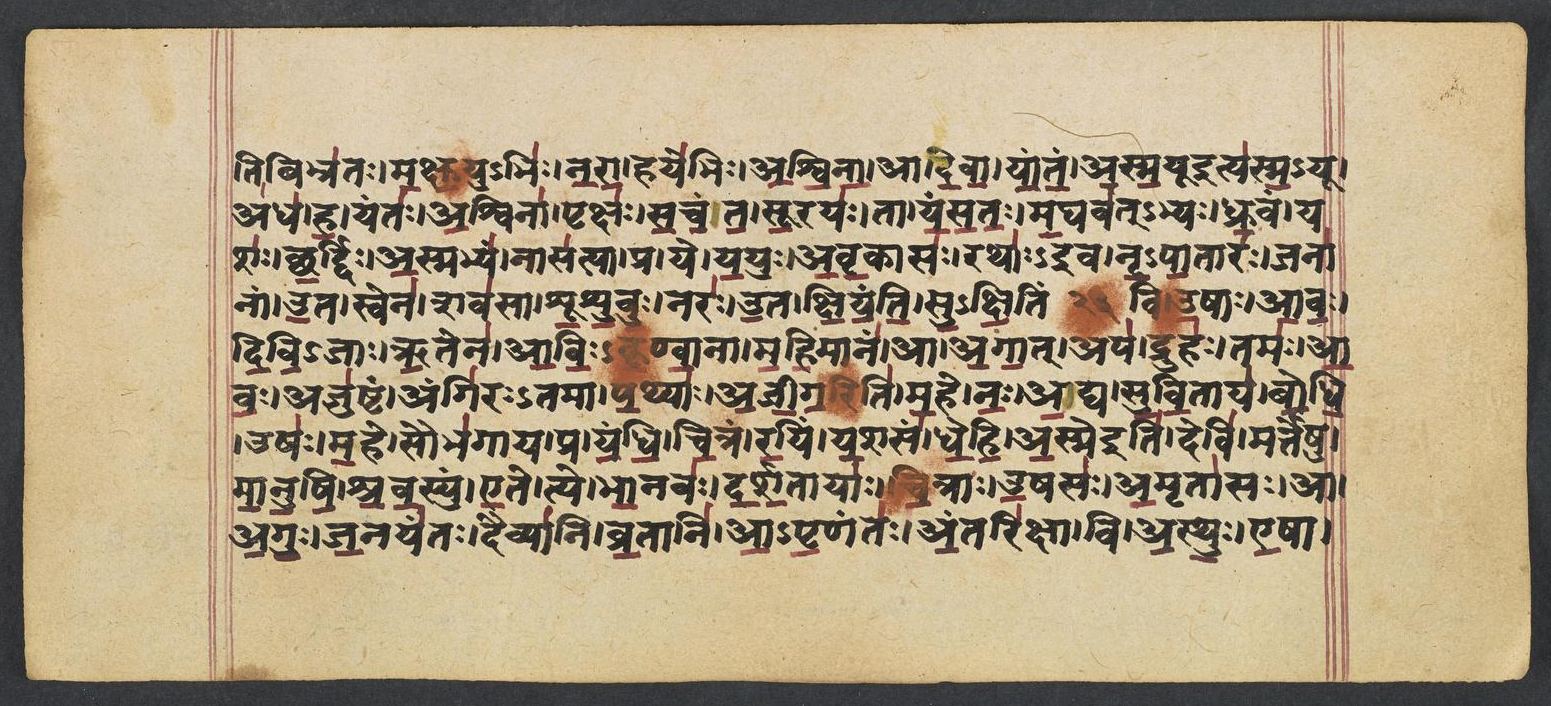
Where on the image
Penn Ms. Coll. 390 Item 41, fol. 540r (numbered 61r by the scribe) (OPenn image 540, lower leaf). Checked on the image: the Rigveda text on this page begins in RV 7.74.4 ‹-dīyanti bibhrataḥ makṣuyu-bhiḥ narā›. The next page with Rigveda text, fol. 540v (numbered 61v by the scribe), begins in RV 7.75.4 ‹syā yujānā parākāt pañca›. Verses 7.75.1-3 end on this page.
1vy u1̱̍ṣā ā̍vo divi̱jā ṛ̱tenā̍viṣkṛṇvā̱nā ma̍hi̱māna̱m āgā̍t | apa̱ druha̱s tama̍ āva̱r aju̍ṣṭa̱m aṅgi̍rastamā pa̱thyā̍ ajīgaḥ ||
2ma̱he no̍ a̱dya su̍vi̱tāya̍ bo̱dhy uṣo̍ ma̱he saubha̍gāya̱ pra ya̍ndhi | ci̱traṁ ra̱yiṁ ya̱śasa̍ṁ dhehy a̱sme devi̱ marte̍ṣu mānuṣi śrava̱syum ||
3e̱te tye bhā̱navo̍ darśa̱tāyā̍ś ci̱trā u̱ṣaso̍ a̱mṛtā̍sa̱ āgu̍ḥ | ja̱naya̍nto̱ daivyā̍ni vra̱tāny ā̍pṛ̱ṇanto̍ a̱ntari̍kṣā̱ vy a̍sthuḥ ||
Compare: Padapāṭha (word-by-word text written in the manuscript; Sansknet e-text via GRETIL)
1vi | uṣāḥ | āvaḥ | divi-jāḥ | ṛtena | āviḥ-kṛṇvānā | mahimānam | ā | agāt | apa | druhaḥ | tamaḥ | āvaḥ | ajuṣṭam | aṅgiraḥ-tamā | pathyāḥ | ajīgariti
2mahe | naḥ | adya | suvitāya | bodhi | uṣaḥ | mahe | saubhagāya | pra | yandhi | citram | rayim | yaśasam | dhehi | asme iti | devi | marteṣu | mānuṣi | śravasyum
3ete | tye | bhānavaḥ | darśatāyāḥ | citrāḥ | uṣasaḥ | amṛtāsaḥ | ā | aguḥ | janayantaḥ | daivyāni | vratāni | āpṛṇantaḥ | antarikṣā | vi | asthuḥ
1BORN in the heavens the Dawn hath flushed, and showing her majesty is come as Law ordaineth. She hath uncovered fiends and hateful darkness; best of Angirases, hath waked the pathways.
2Rouse us this day to high and happy fortune: to great felicity, O Dawn, promote us. Vouchsafe us manifold and splendid riches, famed among mortals, man-befriending Goddess!
3See, lovely Morning's everlasting splendours, bright with their varied colours, have approached us. Filling the region of mid-air, producing the rites of holy worship, they have mounted.
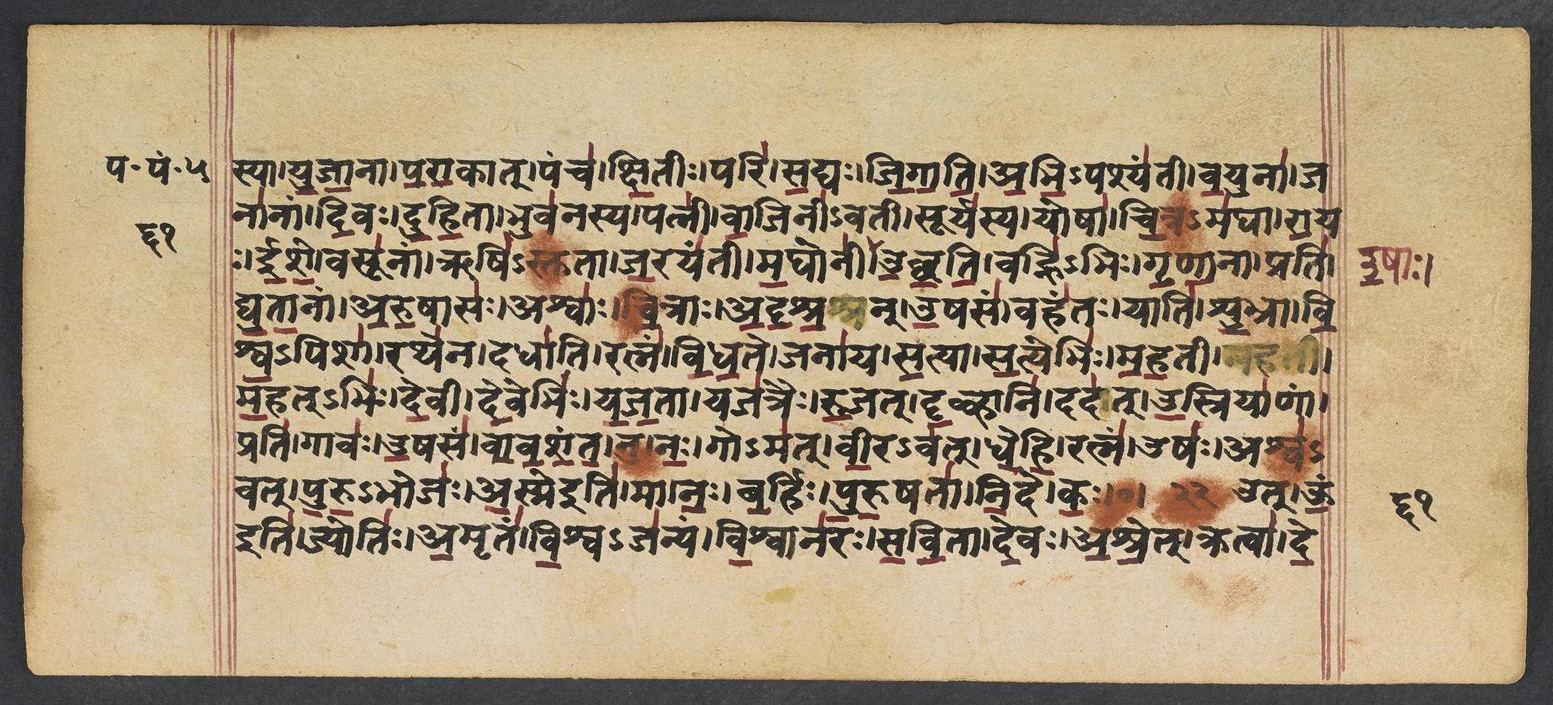
Where on the image
Penn Ms. Coll. 390 Item 41, fol. 540v (numbered 61v by the scribe) (OPenn image 541, upper leaf). Checked on the image: the Rigveda text on this page begins in RV 7.75.4 ‹syā yujānā parākāt pañca›. The next page with Rigveda text, fol. 541r (numbered 62r by the scribe), begins in RV 7.76.1 ‹-devānām ajaniṣṭa cakṣuḥ āviḥ›. Verses 7.75.4-8 end on this page; 7.75.4 begins on fol. 540r (numbered 61r by the scribe).
4e̱ṣā syā yu̍jā̱nā pa̍rā̱kāt pañca̍ kṣi̱tīḥ pari̍ sa̱dyo ji̍gāti | a̱bhi̱paśya̍ntī va̱yunā̱ janā̍nāṁ di̱vo du̍hi̱tā bhuva̍nasya̱ patnī̍ ||
5vā̱jinī̍vatī̱ sūrya̍sya̱ yoṣā̍ ci̱trāma̍ghā rā̱ya ī̍śe̱ vasū̍nām | ṛṣi̍ṣṭutā ja̱raya̍ntī ma̱ghony u̱ṣā u̍cchati̱ vahni̍bhir gṛṇā̱nā ||
6prati̍ dyutā̱nām a̍ru̱ṣāso̱ aśvā̍ś ci̱trā a̍dṛśrann u̱ṣasa̱ṁ vaha̍ntaḥ | yāti̍ śu̱bhrā vi̍śva̱piśā̱ rathe̍na̱ dadhā̍ti̱ ratna̍ṁ vidha̱te janā̍ya ||
7sa̱tyā sa̱tyebhi̍r maha̱tī ma̱hadbhi̍r de̱vī de̱vebhi̍r yaja̱tā yaja̍traiḥ | ru̱jad dṛ̱ḻhāni̱ dada̍d u̱sriyā̍ṇā̱m prati̱ gāva̍ u̱ṣasa̍ṁ vāvaśanta ||
8nū no̱ goma̍d vī̱rava̍d dhehi̱ ratna̱m uṣo̱ aśvā̍vat puru̱bhojo̍ a̱sme | mā no̍ ba̱rhiḥ pu̍ru̱ṣatā̍ ni̱de ka̍r yū̱yam pā̍ta sva̱stibhi̱ḥ sadā̍ naḥ ||
Compare: Padapāṭha (word-by-word text written in the manuscript; Sansknet e-text via GRETIL)
4eṣā | syā | yujānā | parākāt | pañca | kṣitīḥ | pari | sadyaḥ | jigāti | abhi-paśyantī | vayunā | janānām | divaḥ | duhitā | bhuvanasya | patnī
5vājinī-vatī | sūryasya | yoṣā | citra-maghā | rāyaḥ | īśe | vasūnām | ṛṣi-stutā | jarayantī | maghonī | uṣāḥ | ucchati | vahni-bhiḥ | gṛṇānā
6prati | dyutānām | aruṣāsaḥ | aśvāḥ | citrāḥ | adṛśran | uṣasam | vahantaḥ | yāti | śubhrā | viśva-piśā | rathena | dadhāti | ratnam | vidhate | janāya
7satyā | satyebhiḥ | mahatī | mahat-bhiḥ | devī | devebhiḥ | yajatā | yajatraiḥ | rujat | dṛḷhāni | dadat | usriyānām | prati | gāvaḥ | uṣasam | vāvaśanta
8nu | naḥ | go--mat | vīra-vat | dhehi | ratnam | uṣaḥ | aśva-vat | puru-bhojaḥ | asme iti | mā | naḥ | barhiḥ | puruṣatā | nide | kaḥ | yūyam | pāta | svasti-bhiḥ | sadā | naḥ
4She yokes her chariot far away, and swiftly visits the lands where the Five Tribes are settled, Looking upon the works and ways of mortals, Daughter of Heaven, the world's Imperial Lady.
5She who is rich in spoil, the Spouse of Sûrya, wondrously opulent, rules all wealth and treasures. Consumer of our youth, the seers extol her: lauded by priests rich Dawn shines out refulgent.
6Apparent are the steeds of varied colour, the red steeds carrying resplendent Morning. On her all-lovely car she comes, the Fair One, and brings rich treasure for her faithful servant.
7True with the True and Mighty with the Mighty, with Gods a Goddess, Holy with the Holy, She brake strong fences down and gave the cattle: the kine were lowing as they greeted Morning.
8O Dawn, now give us wealth in kine and heroes, and horses, fraught with manifold enjoyment. Protect our sacred grass from man's reproaches. Preserve us evermore, ye Gods, with blessings.
Notes
- Sanskrit: Aufrecht's edition (1877) with the Vedic accents, as entered by van Nooten and Holland (GRETIL).
- English: Ralph T. H. Griffith, The Hymns of the Rigveda (1889-1892; 2nd ed. 1896-1897), from the VedaWeb digital text; OCR slips in that text were corrected against the printed 2nd edition (data/sources/rigveda/griffith_errata.json).
- Padapāṭha (edition text): Sansknet e-text via GRETIL (CC BY-NC-SA 4.0).
Cite
Sources
- Source: Penn Ms. Coll. 390 Item 41 (undated (catalogued with Penn's 18th-19th c. Vedic manuscripts)), OPenn, Public Domain Mark + Aufrecht's accented text (GRETIL) + Griffith's English (VedaWeb) (holding institution)
- Critical edition: Aufrecht (1877), accented e-text via GRETIL
← previous · → next · v cycle view · l back to library