Rigveda 7.77: To Usas
Introduction
Rigveda 7.77 is a hymn of 6 verses addressed to Usas. It stands in book (maṇḍala) 7, the family book of Vasiṣṭha. The Rigveda is the oldest collection of Sanskrit hymns, composed in the second half of the second millennium BCE and handed down orally for many centuries before it was written down.
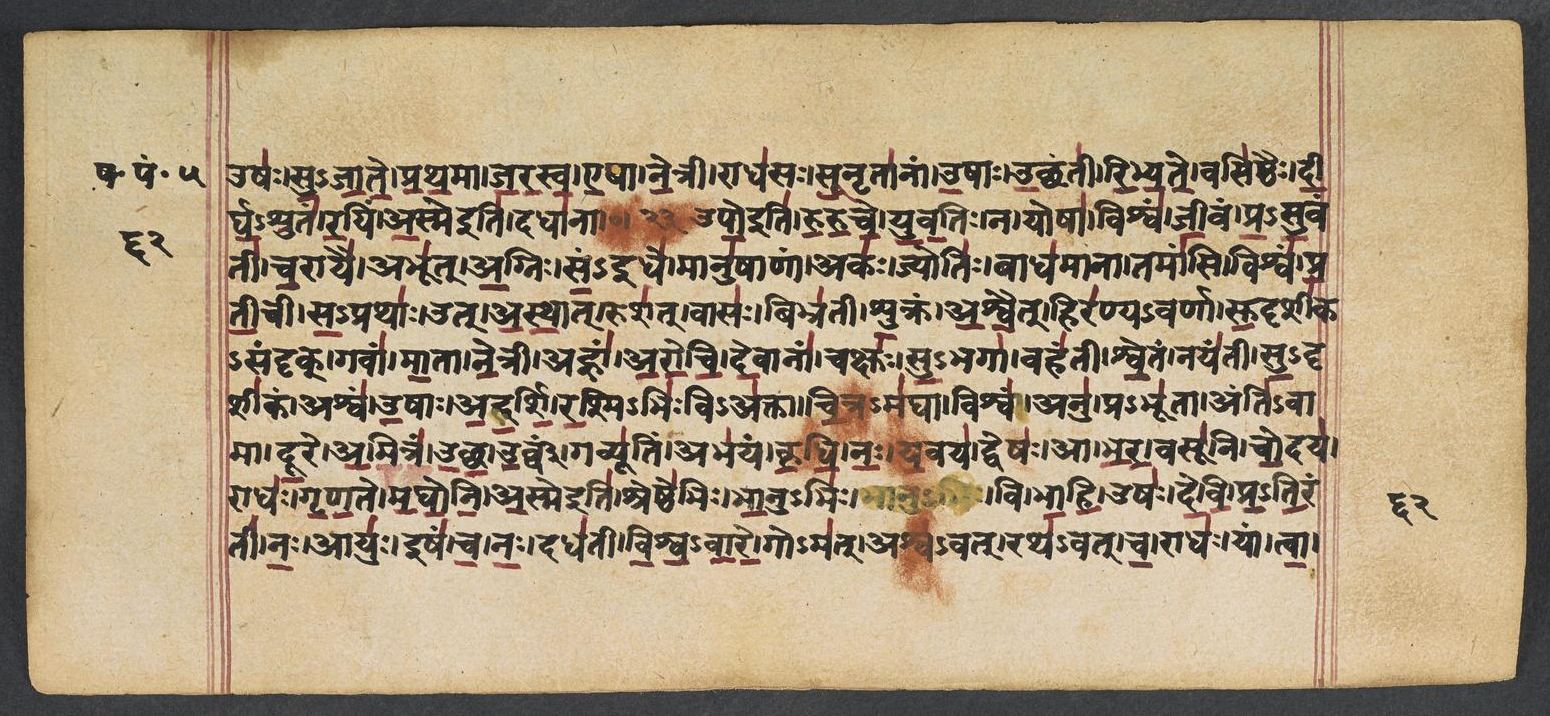
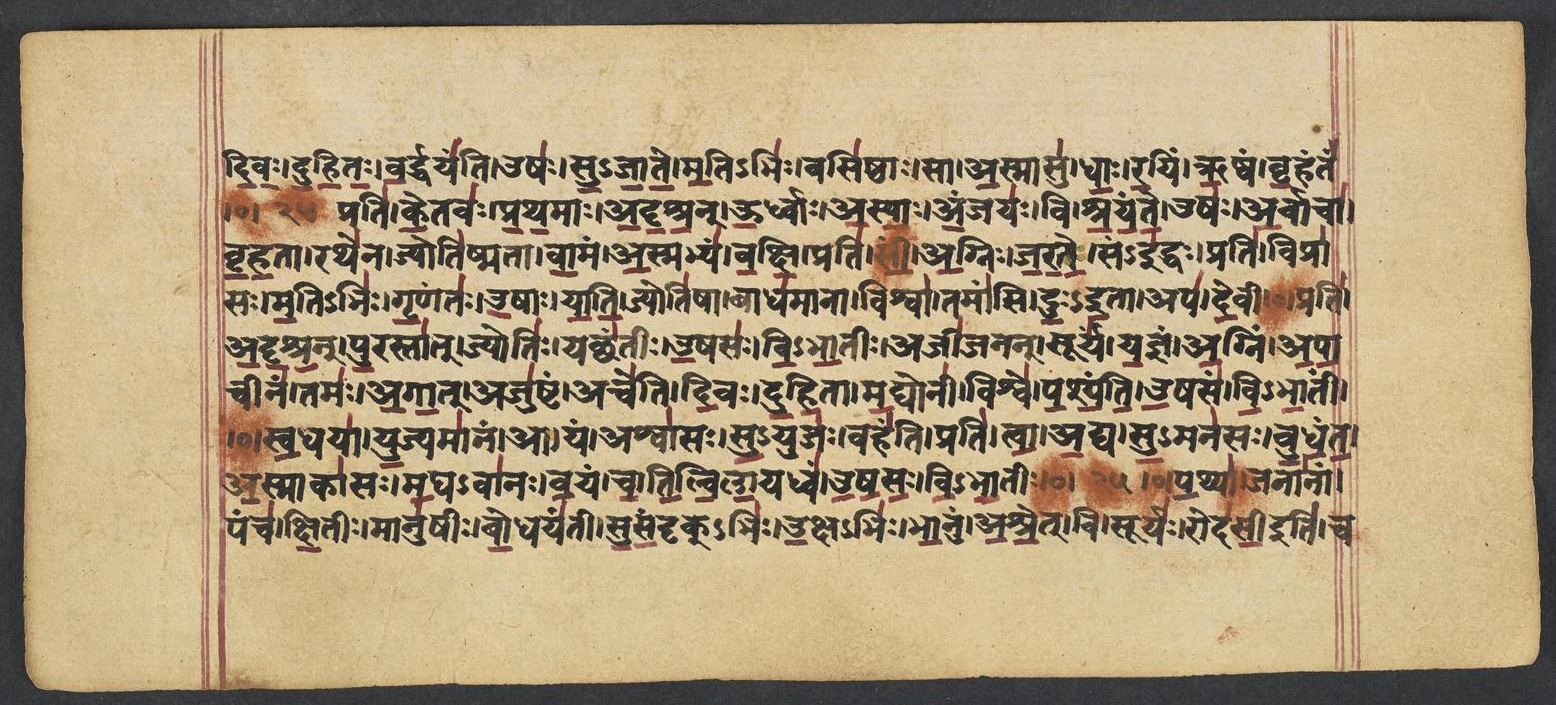
The manuscript shown is Penn Ms. Coll. 390 Item 41 (University of Pennsylvania), an undated paper manuscript of the padapāṭha (the word-by-word recitation text, in which every word is written separately and compounds are split) of the whole Ṛgveda in Devanāgarī, 884 leaves in fascicles, 7-9 lines to the page, accents in red; this hymn stands on fol. 541v-542r. Each section below gives the verses that end on one page; the page boundaries were read on the images (the opening words of every page), not counted out. Where the manuscript is a padapāṭha (the word-by-word recitation text), the section shows Aufrecht's continuous (saṃhitā) text first and, as the edition text, the padapāṭha of the same verses, which is the form written on the page.
How was this verified? (Provenance)
Where on the image
Penn Ms. Coll. 390 Item 41, fol. 541v (numbered 62v by the scribe) (OPenn image 542, upper leaf). Checked on the image: the Rigveda text on this page begins in RV 7.76.6 ‹uṣaḥ su-jāte prathamā jarasva›. The next page with Rigveda text, fol. 542r (numbered 63r by the scribe), begins in RV 7.77.6 ‹divaḥ duhitaḥ vardhayanti uṣaḥ›. Verses 7.77.1-5 end on this page.
1upo̍ ruruce yuva̱tir na yoṣā̱ viśva̍ṁ jī̱vam pra̍su̱vantī̍ ca̱rāyai̍ | abhū̍d a̱gniḥ sa̱midhe̱ mānu̍ṣāṇā̱m aka̱r jyoti̱r bādha̍mānā̱ tamā̍ṁsi ||
2viśva̍m pratī̱cī sa̱prathā̱ ud a̍sthā̱d ruśa̱d vāso̱ bibhra̍tī śu̱kram a̍śvait | hira̍ṇyavarṇā su̱dṛśī̍kasaṁdṛ̱g gavā̍m mā̱tā ne̱try ahnā̍m aroci ||
3de̱vānā̱ṁ cakṣu̍ḥ su̱bhagā̱ vaha̍ntī śve̱taṁ naya̍ntī su̱dṛśī̍ka̱m aśva̍m | u̱ṣā a̍darśi ra̱śmibhi̱r vya̍ktā ci̱trāma̍ghā̱ viśva̱m anu̱ prabhū̍tā ||
4anti̍vāmā dū̱re a̱mitra̍m uccho̱rvīṁ gavyū̍ti̱m abha̍yaṁ kṛdhī naḥ | yā̱vaya̱ dveṣa̱ ā bha̍rā̱ vasū̍ni co̱daya̱ rādho̍ gṛṇa̱te ma̍ghoni ||
5a̱sme śreṣṭhe̍bhir bhā̱nubhi̱r vi bhā̱hy uṣo̍ devi prati̱rantī̍ na̱ āyu̍ḥ | iṣa̍ṁ ca no̱ dadha̍tī viśvavāre̱ goma̱d aśvā̍va̱d ratha̍vac ca̱ rādha̍ḥ ||
Compare: Padapāṭha (word-by-word text written in the manuscript; Sansknet e-text via GRETIL)
1upo iti | ruruce | yuvatiḥ | na | yoṣā | viśvam | jīvam | pra-suvantī | carāyai | abhūt | agniḥ | sam-idhe | mānuṣāṇām | akaḥ | jyotiḥ | bādhamānā | tamāṃsi
2viśvam | pratīcī | sa-prathāḥ | ut | asthāt | ruśat | vāsaḥ | bibhratī | śukram | aśvait | hiraṇya-varṇā | sudṛśīka-sandṛk | gavām | mātā | netrī | ahnām | aroci
3devānām | cakṣuḥ | su-bhagā | vahantī | śvetam | nayantī | su-dṛśīkam | aśvam | uṣāḥ | adarśi | raśmi-bhiḥ | vi-aktā | citra-maghā | viśvam | anu | pra-bhūtā
4anti-vāmā | dūre | amitram | uccha | urvīm | gavyūtim | abhayam | kṛdhi | naḥ | yavaya | dveṣaḥ | ā | bhara | vasūni | codaya | rādhaḥ | gṛṇate | maghoni
5asme iti | śreṣṭhebhiḥ | bhānu-bhiḥ | vi | bhāhi | uṣaḥ | devi | pra-tirantī | naḥ | āyuḥ | iṣam | ca | naḥ | dadhatī | viśva-vāre | go--mat | aśva-vat | ratha-vat | ca | rādhaḥ
1SHE hath shone brightly like a youthful woman, stirring to motion every living creature. Agni hath come to feed on mortal? fuel. She hath made light and chased away the darkness.
2Turned to this All, far-spreading, she hath risen and shone in brightness with white robes about her. She hath beamed forth lovely with golden colours, Mother of kine, Guide of the days she bringeth.
3Bearing the Gods' own Eye, auspicious Lady, leading her Courser white and fair to look on, Distinguished by her beams Dawn shines apparent, come forth to all the world with wondrous treasure.
4Draw nigh with wealth and dawn away the foeman: prepare for us wide pasture free from danger. Drive away those who hate us, bring us riches: pour bounty, opulent Lady, on the singer.
5Send thy most excellent beams to shine and light us, giving us lengthened days, O Dawn, O Goddess, Granting us food, thou who hast all things precious, and bounty rich in chariots, kine, and horses.
Where on the image
Penn Ms. Coll. 390 Item 41, fol. 542r (numbered 63r by the scribe) (OPenn image 542, lower leaf). Checked on the image: the Rigveda text on this page begins in RV 7.77.6 ‹divaḥ duhitaḥ vardhayanti uṣaḥ›. The next page with Rigveda text, fol. 542v (numbered 63v by the scribe), begins in RV 7.79.1 ‹-cakṣasā āvar ity āvaḥ›. Verse 7.77.6 ends on this page; 7.77.6 begins on fol. 541v (numbered 62v by the scribe).
6yāṁ tvā̍ divo duhitar va̱rdhaya̱nty uṣa̍ḥ sujāte ma̱tibhi̱r vasi̍ṣṭhāḥ | sāsmāsu̍ dhā ra̱yim ṛ̱ṣvam bṛ̱hanta̍ṁ yū̱yam pā̍ta sva̱stibhi̱ḥ sadā̍ naḥ ||
Compare: Padapāṭha (word-by-word text written in the manuscript; Sansknet e-text via GRETIL)
6yān | tvā | divaḥ | duhitaḥ | vardhayanti | uṣaḥ | su-jāte | mati-bhiḥ | vasiṣṭhāḥ | sā | asmāsu | dhāḥ | rayim | ṛṣvam | bṛhantam | yūyam | pāta | svasti-bhiḥ | sadā | naḥ
6O Ushas, nobly-born, Daughter of Heaven, whom the Vasishṭhas with their hymns make mighty, Bestow thou on us vast and glorious riches. Preserve us evermore, ye Gods, with blessings.
Notes
- Sanskrit: Aufrecht's edition (1877) with the Vedic accents, as entered by van Nooten and Holland (GRETIL).
- English: Ralph T. H. Griffith, The Hymns of the Rigveda (1889-1892; 2nd ed. 1896-1897), from the VedaWeb digital text; OCR slips in that text were corrected against the printed 2nd edition (data/sources/rigveda/griffith_errata.json).
- Padapāṭha (edition text): Sansknet e-text via GRETIL (CC BY-NC-SA 4.0).
Cite
Sources
- Source: Penn Ms. Coll. 390 Item 41 (undated (catalogued with Penn's 18th-19th c. Vedic manuscripts)), OPenn, Public Domain Mark + Aufrecht's accented text (GRETIL) + Griffith's English (VedaWeb) (holding institution)
- Critical edition: Aufrecht (1877), accented e-text via GRETIL
← previous · → next · v cycle view · l back to library