1 Corinthians, Chapter 14
Introduction
This entry meets the strict three-criteria standard of the Theosis Library:
- Manuscript scan: The actual folio of Codex Sinaiticus containing this passage, from the Codex Sinaiticus Project (codexsinaiticus.org). Library folio reference: 272.
- Original text: The Codex Sinaiticus Project's verbatim transcription of the folio shown, letter for letter as the scribe wrote it (no accents, lunate sigma ϲ, nomina sacra such as θϲ for θεός and κϲ for κύριος). Beneath it, for comparison, the reading of Tischendorf's 8th critical edition (1869). Where the two differ, the transcription is what the manuscript actually says.
- English translation: The King James Version (1611), retrieved verbatim from the public-domain bible-api.com endpoint.
How was this verified? (Provenance)
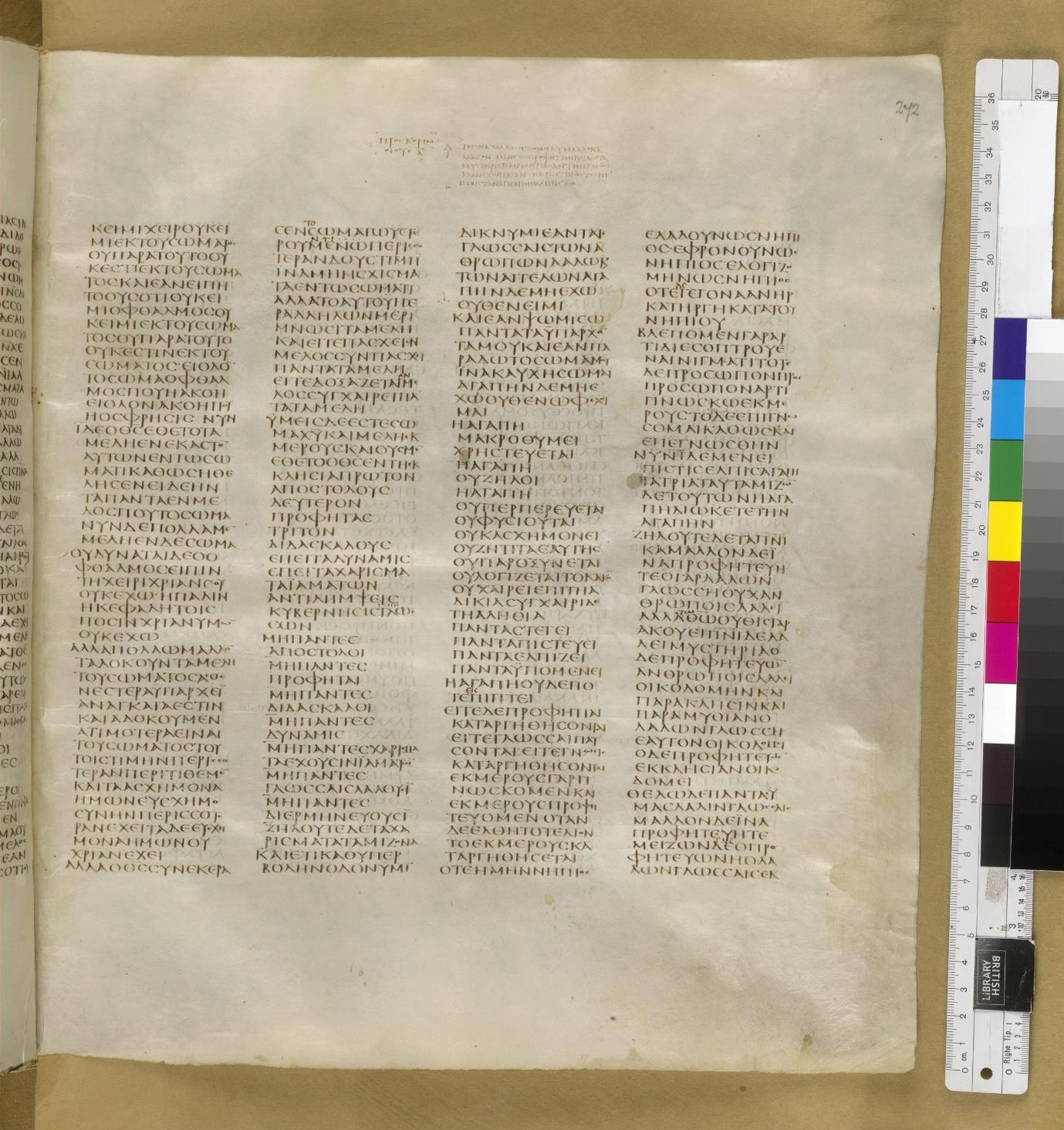
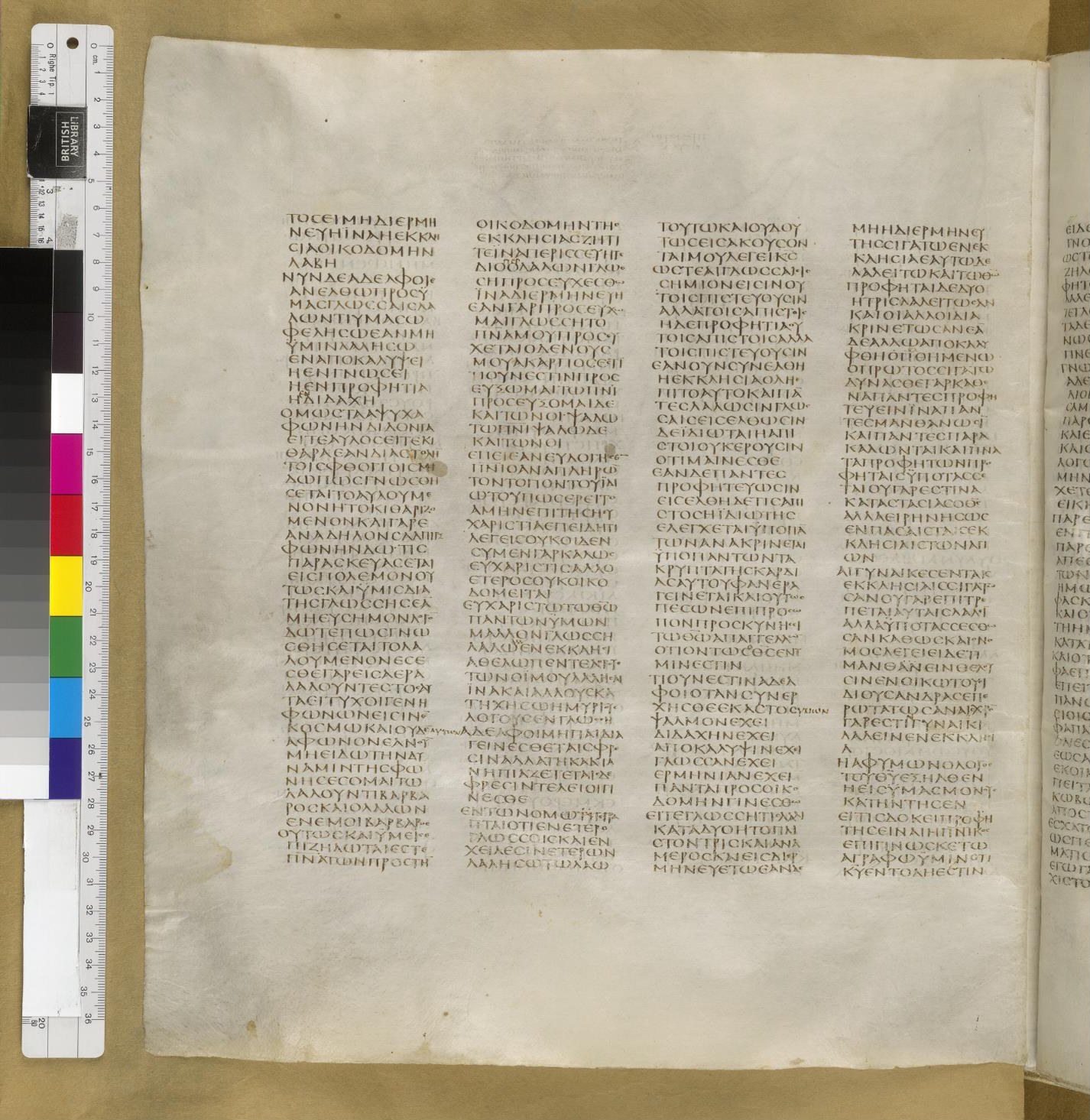
1διωκετε την αγαπην ζηλουτε δε τα πνικα μαλλον δε ϊνα προφητευητε 2ο γαρ λαλων γλωϲϲη ουχ ανθρωποιϲ λαλει αλλα θω ουθιϲ γαρ ακουει πνι δε λαλει μυϲτηρια 3ο δε προφητευω ανθρωποιϲ λαλει οικοδομην και παρακληϲιν και παραμυθιαν 4ο λαλων γλωϲϲη εαυτον οικοδομει ο δε προφητευω εκκληϲιαν οικοδομει 5θελω δε πανταϲ ϋμαϲ λαλιν γλωϲϲαιϲ μαλλον δε ϊνα προφητευητε μειζων δε ο προφητευων η ο λαλων γλωϲϲαιϲ εκ τοϲ ει μη διερμηνευη ϊνα η εκκληϲια οικοδομην λαβη6νυν δε αδελφοι εαν ελθω προϲ ϋμαϲ γλωϲϲαιϲ λαλων τι υμαϲ ωφεληϲω εαν μη ϋμιν λαληϲω εν αποκαλυψει η εν γνωϲει η εν προφητια η διδαχη 7ομωϲ τα αψυχα φωνην διδοντα ειτε αυλοϲ ειτε κιθαρα · εαν διαϲτολη τοιϲ φθογγοιϲ μη δω πωϲ γνωϲθηϲεται το αυλουμενον η το κιθαριζομενον 8και γαρ εαν αδηλον ϲαλπιγξ φωνην δω · τιϲ παραϲκευαϲεται ειϲ πολεμον
Compare: Tischendorf 8th edition (1869)
1Διώκετε τὴν ἀγάπην, ζηλοῦτε δὲ τὰ πνευματικά, μᾶλλον δὲ ἵνα προφητεύητε. 2ὁ γὰρ λαλῶν γλώσσῃ οὐκ ἀνθρώποις λαλεῖ ἀλλὰ θεῷ, οὐδεὶς γὰρ ἀκούει, πνεύματι δὲ λαλεῖ μυστήρια· 3ὁ δὲ προφητεύων ἀνθρώποις λαλεῖ οἰκοδομὴν καὶ παράκλησιν καὶ παραμυθίαν. 4ὁ λαλῶν γλώσσῃ ἑαυτὸν οἰκοδομεῖ· ὁ δὲ προφητεύων ἐκκλησίαν οἰκοδομεῖ. 5θέλω δὲ πάντας ὑμᾶς λαλεῖν γλώσσαις, μᾶλλον δὲ ἵνα προφητεύητε· μείζων δὲ ὁ προφητεύων ἢ ὁ λαλῶν γλώσσαις, ἐκτὸς εἰ μὴ διερμηνεύῃ, ἵνα ἡ ἐκκλησία οἰκοδομὴν λάβῃ. 6νῦν δέ, ἀδελφοί, ἐὰν ἔλθω πρὸς ὑμᾶς γλώσσαις λαλῶν, τί ὑμᾶς ὠφελήσω, ἐὰν μὴ ὑμῖν λαλήσω ἢ ἐν ἀποκαλύψει ἢ ἐν γνώσει ἢ ἐν προφητείᾳ ἢ διδαχῇ; 7ὅμως τὰ ἄψυχα φωνὴν διδόντα, εἴτε αὐλὸς εἴτε κιθάρα, ἐὰν διαστολὴν τοῖς φθόγγοις μὴ δῷ, πῶς γνωσθήσεται τὸ αὐλούμενον ἢ τὸ κιθαριζόμενον; 8καὶ γὰρ ἐὰν ἄδηλον σάλπιγξ φωνὴν δῷ, τίς παρασκευάσεται εἰς πόλεμον;
1Follow after charity, and desire spiritual gifts, but rather that ye may prophesy. 2For he that speaketh in an unknown tongue speaketh not unto men, but unto God: for no man understandeth him; howbeit in the spirit he speaketh mysteries. 3But he that prophesieth speaketh unto men to edification, and exhortation, and comfort. 4He that speaketh in an unknown tongue edifieth himself; but he that prophesieth edifieth the church. 5I would that ye all spake with tongues, but rather that ye prophesied: for greater is he that prophesieth than he that speaketh with tongues, except he interpret, that the church may receive edifying. 6Now, brethren, if I come unto you speaking with tongues, what shall I profit you, except I shall speak to you either by revelation, or by knowledge, or by prophesying, or by doctrine? 7And even things without life giving sound, whether pipe or harp, except they give a distinction in the sounds, how shall it be known what is piped or harped? 8For if the trumpet give an uncertain sound, who shall prepare himself to the battle?
9ουτωϲ και ϋμιϲ δια τηϲ γλωϲϲηϲ εα μη ευϲημον λογο δωτε πωϲ γνωϲθηϲεται το λαλουμενον εϲεϲθε γαρ ειϲ αερα λαλουντεϲ 10τοϲαυτα ει τυχοι γενη φωνων ειϲιν ε κοϲμω και ουδε αφωνον 11εαν ου μη ειδω την δυναμιν τηϲ φωνηϲ εϲομαι τω λαλουντι βαρβαροϲ και ο λαλων εν εμοι βαρβαροϲ 12ουτωϲ και ϋμειϲ επι ζηλωται εϲτε πνατων προϲ τη οικοδομην τηϲ εκκληϲιαϲ ζητιτε ϊνα περιϲϲευητε 13διο ο λαλων γλωϲϲη προϲευχεϲθω ϊνα διερμηνευη 14εαν γαρ προϲευχωμαι γλωϲϲη το πνα μου προϲευχεται ο δε νουϲ μου ακαρποϲ εϲτι 15τι ουν εϲτιν προϲευξωμαι τω πνι προϲευξομαι δε και τω νοι · ψαλω τω πνι ψαλω δε και τω νοι 16επει εαν ευλογηϲ πνι ο αναπληρω τον τοπον του ϊδιωτου πωϲ ερει το αμην επι τη ϲη ευχαριϲτια επειδη τι λεγειϲ ουκ οιδεν
Compare: Tischendorf 8th edition (1869)
9οὕτως καὶ ὑμεῖς διὰ τῆς γλώσσης ἐὰν μὴ εὔσημον λόγον δῶτε, πῶς γνωσθήσεται τὸ λαλούμενον; ἔσεσθε γὰρ εἰς ἀέρα λαλοῦντες. 10τοσαῦτα εἰ τύχοι γένη φωνῶν εἰσιν ἐν κόσμῳ, καὶ οὐδὲν ἄφωνον· 11ἐὰν οὖν μὴ εἰδῶ τὴν δύναμιν τῆς φωνῆς, ἔσομαι τῷ λαλοῦντι βάρβαρος καὶ ὁ λαλῶν ἐν ἐμοὶ βάρβαρος. 12οὕτως καὶ ὑμεῖς, ἐπεὶ ζηλωταί ἐστε πνευμάτων, πρὸς τὴν οἰκοδομὴν τῆς ἐκκλησίας ζητεῖτε ἵνα περισσεύητε. 13διὸ ὁ λαλῶν γλώσσῃ προσευχέσθω ἵνα διερμηνεύῃ. 14ἐὰν γὰρ προσεύχωμαι γλώσσῃ, τὸ πνεῦμά μου προσεύχεται, ὁ δὲ νοῦς μου ἄκαρπός ἐστιν. 15τί οὖν ἐστιν; προσεύξομαι τῷ πνεύματι, προσεύξομαι δὲ καὶ τῷ νοΐ· ψαλῶ τῷ πνεύματι, ψαλῶ δὲ καὶ τῷ νοΐ. 16ἐπεὶ ἐὰν εὐλογῇς πνεύματι, ὁ ἀναπληρῶν τὸν τόπον τοῦ ἰδιώτου πῶς ἐρεῖ τὸ ἀμήν ἐπὶ τῇ σῇ εὐχαριστίᾳ, ἐπειδὴ τί λέγεις οὐκ οἶδεν;
9So likewise ye, except ye utter by the tongue words easy to be understood, how shall it be known what is spoken? for ye shall speak into the air. 10There are, it may be, so many kinds of voices in the world, and none of them is without signification. 11Therefore if I know not the meaning of the voice, I shall be unto him that speaketh a barbarian, and he that speaketh shall be a barbarian unto me. 12Even so ye, forasmuch as ye are zealous of spiritual gifts, seek that ye may excel to the edifying of the church. 13Wherefore let him that speaketh in an unknown tongue pray that he may interpret. 14For if I pray in an unknown tongue, my spirit prayeth, but my understanding is unfruitful. 15What is it then? I will pray with the spirit, and I will pray with the understanding also: I will sing with the spirit, and I will sing with the understanding also. 16Else when thou shalt bless with the spirit, how shall he that occupieth the room of the unlearned say Amen at thy giving of thanks, seeing he understandeth not what thou sayest?
17ϲυ μεν γαρ καλωϲ ευχαριϲτιϲ αλλ ο ετεροϲ ουκ οικοδομειται 18ευχαριϲτω τω θω παντων ϋμων μαλλον γλωϲϲη λαλω 19εν εκκληϲια θελω πεντε λογουϲ τω νοϊ μου λαληϲαι ϊνα και αλλουϲ κατηχηϲω η μυριουϲ λογουϲ εν γλωϲϲη 20αδελφοι μη παιδια γεινεϲθε ταιϲ φρεϲιν αλλα τη κακια νηπιαζετε ταιϲ δε φρεϲιν τελειοι γινεϲθε 21εν τω νομω τι γεγραπται οτι εν ετερογλωϲϲοιϲ και εν χειλεϲιν ετερων λαληϲω τω λαω τουτω και ουδ ουτωϲ ειϲακουϲονται μου λεγει κϲ 22ωϲτε αι γλωϲϲαι ειϲ ϲημιον ειϲιν ου τοιϲ πιϲτευουϲιν αλλα τοιϲ απιϲτοιϲ η δε προφητια ου τοιϲ απιϲτοιϲ αλλα τοιϲ πιϲτευουϲιν 23εαν ουν ϲυνελθη η εκκληϲια ολη επι το αυτο και πατεϲ λαλωϲιν γλωϲϲαιϲ ειϲελθωϲιν δε ϊδιωται η απιϲτοι ουκ ερουϲιν οτι μαινεϲθε 24εαν δε παντεϲ προφητευωϲιν ειϲελθη δε τιϲ απιϲτοϲ η ϊδιωτηϲ ελεγχεται ϋπο πατων ανακρινεται ϋπο παντων
Compare: Tischendorf 8th edition (1869)
17σὺ μὲν γὰρ καλῶς εὐχαριστεῖς, ἀλλ’ ὁ ἕτερος οὐκ οἰκοδομεῖται. 18εὐχαριστῶ τῷ θεῷ, πάντων ὑμῶν μᾶλλον γλώσσῃ λαλῶ· 19ἀλλὰ ἐν ἐκκλησίᾳ θέλω πέντε λόγους τῷ νοΐ μου λαλῆσαι, ἵνα καὶ ἄλλους κατηχήσω, ἢ μυρίους λόγους ἐν γλώσσῃ. 20Ἀδελφοί, μὴ παιδία γίνεσθε ταῖς φρεσίν, ἀλλὰ τῇ κακίᾳ νηπιάζετε, ταῖς δὲ φρεσὶν τέλειοι γίνεσθε. 21ἐν τῷ νόμῳ γέγραπται ὅτι ἐν ἑτερογλώσσοις καὶ ἐν χείλεσιν ἑτέρων λαλήσω τῷ λαῷ τούτῳ, καὶ οὐδ’ οὕτως εἰσακούσονταί μου, λέγει κύριος. 22ὥστε αἱ γλῶσσαι εἰς σημεῖόν εἰσιν οὐ τοῖς πιστεύουσιν ἀλλὰ τοῖς ἀπίστοις, ἡ δὲ προφητεία οὐ τοῖς ἀπίστοις ἀλλὰ τοῖς πιστεύουσιν. 23ἐὰν οὖν συνέλθῃ ἡ ἐκκλησία ὅλη ἐπὶ τὸ αὐτὸ καὶ πάντες λαλῶσιν γλώσσαις, εἰσέλθωσιν δὲ ἰδιῶται ἢ ἄπιστοι, οὐκ ἐροῦσιν ὅτι μαίνεσθε; 24ἐὰν δὲ πάντες προφητεύωσιν, εἰσέλθῃ δέ τις ἄπιστος ἢ ἰδιώτης, ἐλέγχεται ὑπὸ πάντων, ἀνακρίνεται ὑπὸ πάντων,
17For thou verily givest thanks well, but the other is not edified. 18I thank my God, I speak with tongues more than ye all: 19Yet in the church I had rather speak five words with my understanding, that by my voice I might teach others also, than ten thousand words in an unknown tongue. 20Brethren, be not children in understanding: howbeit in malice be ye children, but in understanding be men. 21In the law it is written, With men of other tongues and other lips will I speak unto this people; and yet for all that will they not hear me, saith the Lord. 22Wherefore tongues are for a sign, not to them that believe, but to them that believe not: but prophesying serveth not for them that believe not, but for them which believe. 23If therefore the whole church be come together into one place, and all speak with tongues, and there come in those that are unlearned, or unbelievers, will they not say that ye are mad? 24But if all prophesy, and there come in one that believeth not, or one unlearned, he is convinced of all, he is judged of all:
25τα κρυπτα τηϲ καρδιαϲ αυτου φανερα γεινεται και ουτωϲ πεϲων επι προϲωπον προϲκυνηϲει τω θω απαγγελλω οτι οντωϲ θϲ εν υμιν εϲτιν 26τι ουν εϲτιν αδελφοι οταν ϲυνερχηϲθε εκαϲτοϲ ψαλμον εχει διδαχην εχει αποκαλυψιν εχει γλωϲϲαν εχει ερμηνιαν εχει παντα προϲ οικοδομην γινεϲθω 27ειτε γλωϲϲη τιϲ λαλι κατα δυο η το πλιϲτον τριϲ και ανα μεροϲ και ειϲ διερμηνευετω 28εαν δε μη η διερμηνευτηϲ ϲιγατω εν εκκληϲια εαυτω δε λαλειτω και τω θω 29προφηται δε δυο η τριϲ λαλειτωϲαν και οι αλλοι διακρινετωϲαν 30εα δε αλλω αποκαλυφθη οπθημενω ο πρωτοϲ ϲιγατω 31δυναϲθε γαρ καθ ενα παντεϲ προφητευειν ϊνα παντεϲ μανθανωϲι και παντεϲ παρακαλωνται 32και πνατα προφητων προφηταιϲ ϋποταϲϲεται
Compare: Tischendorf 8th edition (1869)
25τὰ κρυπτὰ τῆς καρδίας αὐτοῦ φανερὰ γίνεται, καὶ οὕτως πεσὼν ἐπὶ πρόσωπον προσκυνήσει τῷ θεῷ, ἀπαγγέλλων ὅτι ὄντως θεὸς ἐν ὑμῖν ἐστιν. 26Τί οὖν ἐστίν, ἀδελφοί; ὅταν συνέρχησθε, ἕκαστος ψαλμὸν ἔχει, διδαχὴν ἔχει, ἀποκάλυψιν ἔχει, γλῶσσαν ἔχει, ἑρμηνείαν ἔχει· πάντα πρὸς οἰκοδομὴν γινέσθω. 27εἴτε γλώσσῃ τις λαλεῖ, κατὰ δύο ἢ τὸ πλεῖστον τρεῖς, καὶ ἀνὰ μέρος, καὶ εἷς διερμηνευέτω· 28ἐὰν δὲ μὴ ᾖ διερμηνευτής, σιγάτω ἐν ἐκκλησίᾳ, ἑαυτῷ δὲ λαλείτω καὶ τῷ θεῷ. 29προφῆται δὲ δύο ἢ τρεῖς λαλείτωσαν, καὶ οἱ ἄλλοι διακρινέτωσαν· 30ἐὰν δὲ ἄλλῳ ἀποκαλυφθῇ καθημένῳ, ὁ πρῶτος σιγάτω. 31δύνασθε γὰρ καθ’ ἕνα πάντες προφητεύειν, ἵνα πάντες μανθάνωσιν καὶ πάντες παρακαλῶνται, 32καὶ πνεύματα προφητῶν προφήταις ὑποτάσσεται·
25And thus are the secrets of his heart made manifest; and so falling down on his face he will worship God, and report that God is in you of a truth. 26How is it then, brethren? when ye come together, every one of you hath a psalm, hath a doctrine, hath a tongue, hath a revelation, hath an interpretation. Let all things be done unto edifying. 27If any man speak in an unknown tongue, let it be by two, or at the most by three, and that by course; and let one interpret. 28But if there be no interpreter, let him keep silence in the church; and let him speak to himself, and to God. 29Let the prophets speak two or three, and let the other judge. 30If any thing be revealed to another that sitteth by, let the first hold his peace. 31For ye may all prophesy one by one, that all may learn, and all may be comforted. 32And the spirits of the prophets are subject to the prophets.
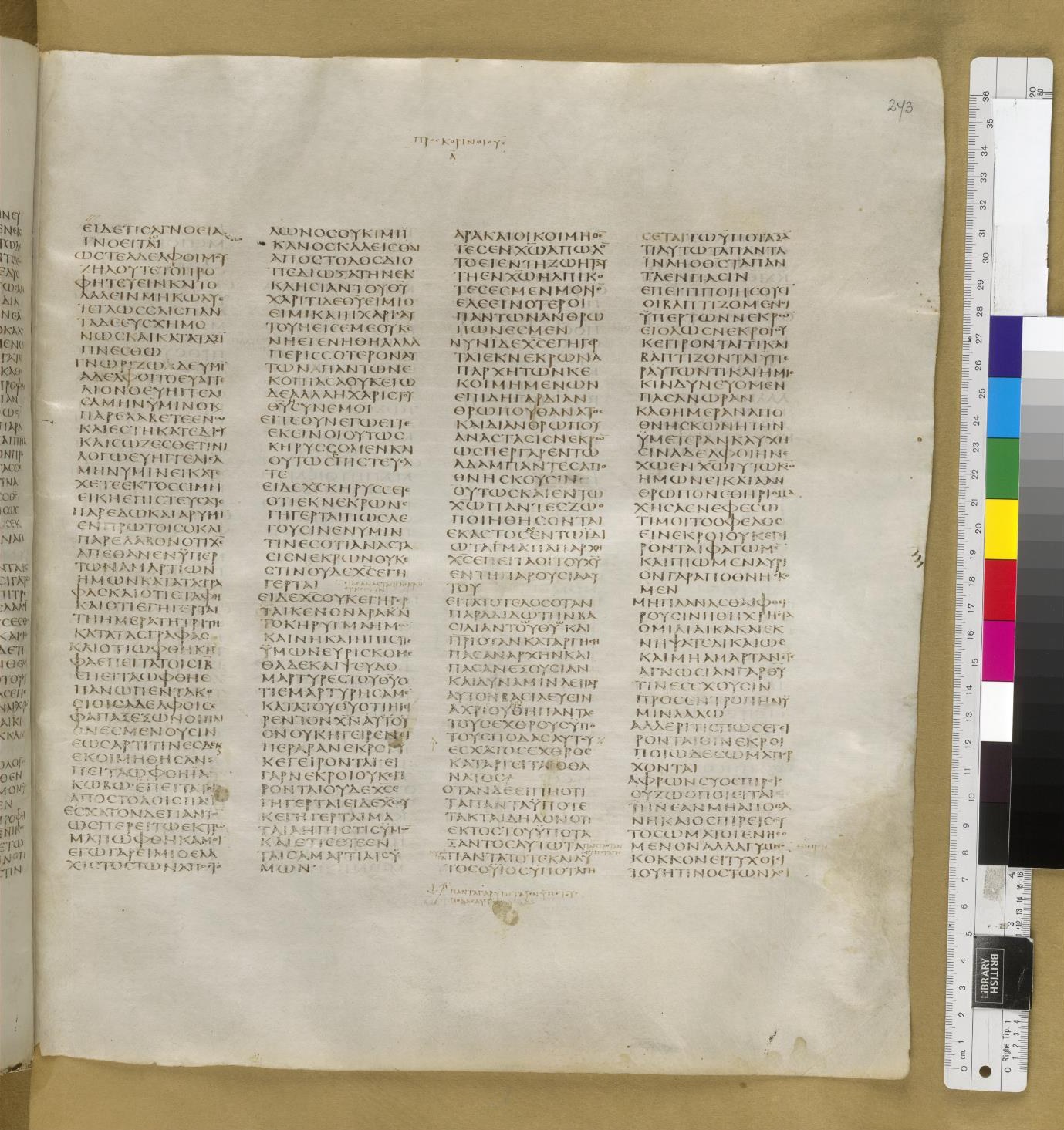
33ου γαρ εϲτιν ακαταϲταϲιαϲ ο θϲ αλλα ειρηνηϲ ωϲ εν παϲαιϲ ταιϲ εκκληϲιαιϲ των αγιων 34αι γυναικεϲ εν ταιϲ εκκληϲιαιϲ ϲιγατωϲαν ου γαρ επιτρεπεται αυταιϲ λαλει αλλα ϋποταϲϲεϲθωϲαν καθωϲ και ο νομοϲ λεγει 35ει δε τι μανθανειν θελουϲιν εν οικω τουϲ ιδιουϲ ανδραϲ επερωτατωϲαν αιϲχρο γαρ εϲτι γυναικι λαλειν εν εκκληϲια 36η αφ υμων ο λογοϲ του θυ εξηλθεν η ειϲ ϋμαϲ μονουϲ κατηντηϲεν 37ει τιϲ δοκει προφητηϲ ειναι η πνικοϲ επιγινωϲκετω α γραφω υμιν οτι κυ εντολη εϲτιν38ει δε τιϲ αγνοει αγνοειται 39ωϲτε αδελφοι μου ζηλουτε το προφητευειν και το λαλειν μη κωλυετε γλωϲϲαιϲ 40παντα δε ευϲχημονωϲ και κατα ταξι γινεϲθω
Compare: Tischendorf 8th edition (1869)
33οὐ γάρ ἐστιν ἀκαταστασίας ὁ θεὸς ἀλλὰ εἰρήνης. Ὡς ἐν πάσαις ταῖς ἐκκλησίαις τῶν ἁγίων, 34αἱ γυναῖκες ἐν ταῖς ἐκκλησίαις σιγάτωσαν, οὐ γὰρ ἐπιτρέπεται αὐταῖς λαλεῖν· ἀλλὰ ὑποτασσέσθωσαν, καθὼς καὶ ὁ νόμος λέγει. 35Εἰ δέ τι μαθεῖν θέλουσιν, ἐν οἴκῳ τοὺς ἰδίους ἄνδρας ἐπερωτάτωσαν, αἰσχρὸν γάρ ἐστιν γυναικὶ λαλεῖν ἐν ἐκκλησίᾳ. 36ἢ ἀφ’ ὑμῶν ὁ λόγος τοῦ θεοῦ ἐξῆλθεν, ἢ εἰς ὑμᾶς μόνους κατήντησεν; 37Εἴ τις δοκεῖ προφήτης εἶναι ἢ πνευματικός, ἐπιγινωσκέτω ἃ γράφω ὑμῖν ὅτι κυρίου ἐστίν· 38εἰ δέ τις ἀγνοεῖ, ἀγνοεῖται. 39ὥστε, ἀδελφοί μου, ζηλοῦτε τὸ προφητεύειν, καὶ τὸ λαλεῖν μὴ κωλύετε γλώσσαις· 40πάντα δὲ εὐσχημόνως καὶ κατὰ τάξιν γινέσθω.
33For God is not the author of confusion, but of peace, as in all churches of the saints. 34Let your women keep silence in the churches: for it is not permitted unto them to speak; but they are commanded to be under obedience, as also saith the law. 35And if they will learn any thing, let them ask their husbands at home: for it is a shame for women to speak in the church. 36What? came the word of God out from you? or came it unto you only? 37If any man think himself to be a prophet, or spiritual, let him acknowledge that the things that I write unto you are the commandments of the Lord. 38But if any man be ignorant, let him be ignorant. 39Wherefore, brethren, covet to prophesy, and forbid not to speak with tongues. 40Let all things be done decently and in order.
Cite
Source & Cross-References
- Source text: Codex Sinaiticus folio + transcription (codexsinaiticus.org) + Tischendorf 8th edition (bolls.life) + KJV (bible-api.com) — view original
- Critical edition: Tischendorf 8th edition (1869) / Codex Sinaiticus transcription
← previous · → next · v cycle view · l back to library