1 Peter, Chapter 4
Introduction
This entry meets the strict three-criteria standard of the Theosis Library:
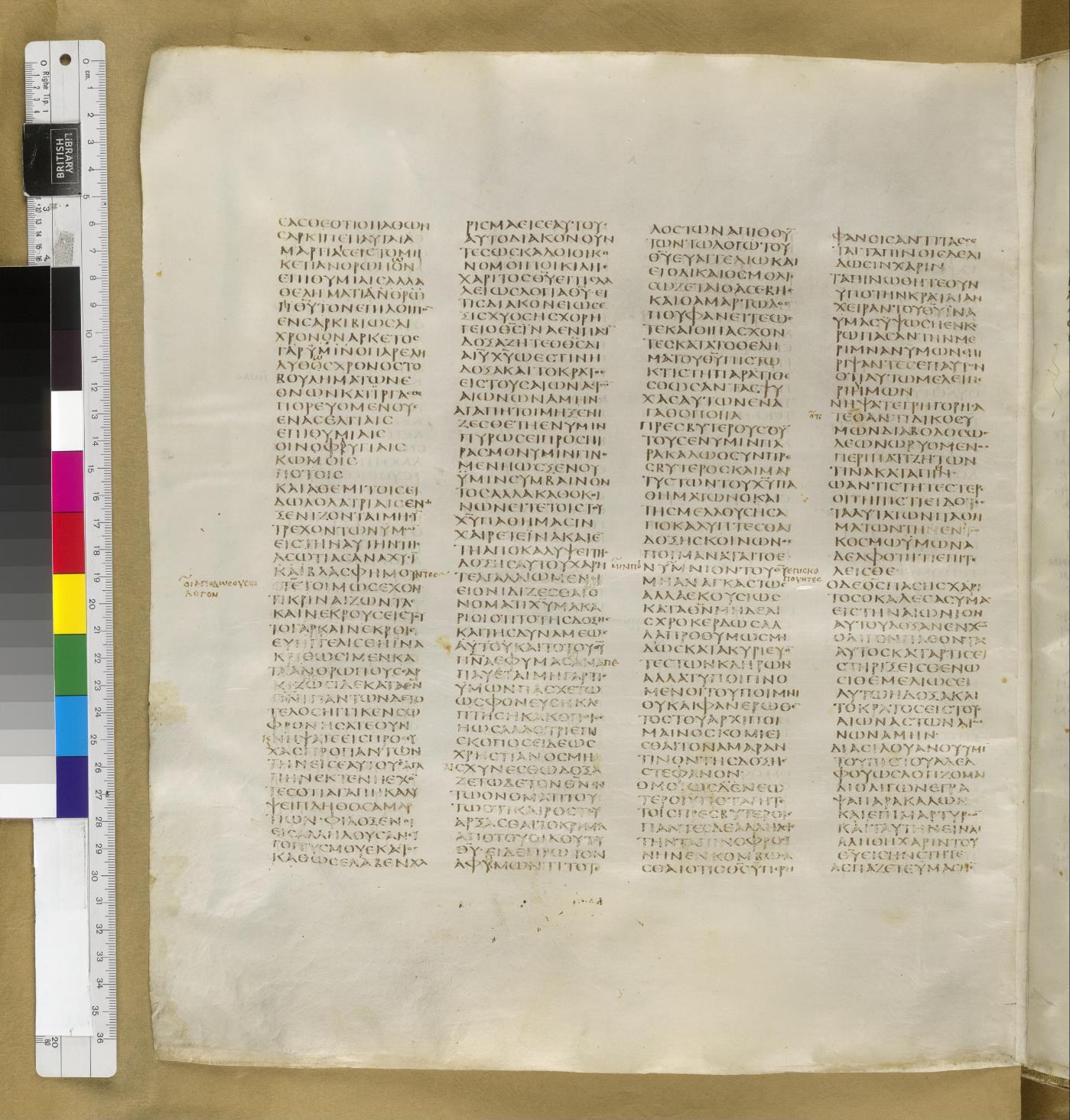
- Manuscript scan: The actual folio of Codex Sinaiticus containing this passage, from the Codex Sinaiticus Project (codexsinaiticus.org). Library folio reference: 320.
- Original text: The Codex Sinaiticus Project's verbatim transcription of the folio shown, letter for letter as the scribe wrote it (no accents, lunate sigma ϲ, nomina sacra such as θϲ for θεός and κϲ for κύριος). Beneath it, for comparison, the reading of Tischendorf's 8th critical edition (1869). Where the two differ, the transcription is what the manuscript actually says.
- English translation: The King James Version (1611), retrieved verbatim from the public-domain bible-api.com endpoint.
How was this verified? (Provenance)
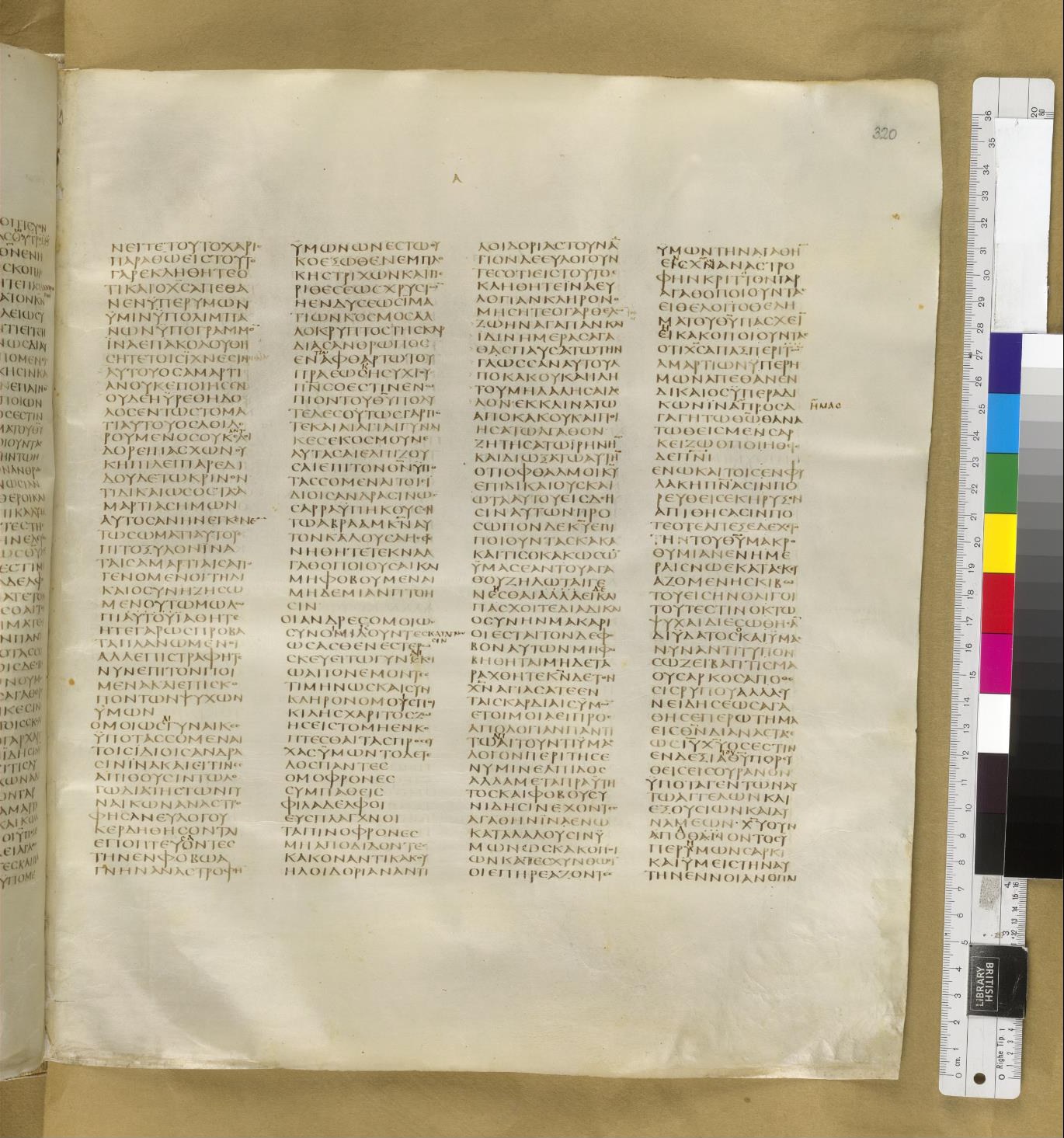
1χυ ουν αποθανοντοϲ υπερ υμων ϲαρκι και ϋμειϲ την αυτην εννοιαν οπλι ϲαϲθε οτι ο παθων ϲαρκι πεπαυται αμαρτιαϲ2ειϲ το μηκετι ανθρωπον επιθυμιαιϲ αλλα θεληματι ανθρωπου τον επιλοιπο εν ϲαρκι βιωϲαι χρονον 3αρκετοϲ γαρ ϋμιν ο παρεληλυθοϲ χρονοϲ το βουλημα των εθνων κατϊργαϲθε πορευμενουϲ εν αϲελγιαιϲ επιθυμιαιϲ οινοφρυγιαιϲ κωμοιϲ ποτοιϲ και αθεμιτοιϲ ειδωλολατριαιϲ 4εν ω ξενιζονται μη ϲυτρεχοντων ϋμω ειϲ την αυτην τηϲ αϲωτιαϲ αναχυϲι και βλαϲφημουϲι 5οι ετοιμωϲ εχοντι κριναι ζωνταϲ και νεκρουϲ
Compare: Tischendorf 8th edition (1869)
1Χριστοῦ οὖν παθόντος σαρκὶ καὶ ὑμεῖς τὴν αὐτὴν ἔννοιαν ὁπλίσασθε, ὅτι ὁ παθὼν σαρκὶ πέπαυται ἁμαρτίας, 2εἰς τὸ μηκέτι ἀνθρώπων ἐπιθυμίαις ἀλλὰ θελήματι θεοῦ τὸν ἐπίλοιπον ἐν σαρκὶ βιῶσαι χρόνον. 3ἀρκετὸς γὰρ ὁ παρεληλυθὼς χρόνος τὸ βούλημα τῶν ἐθνῶν κατειργάσθαι, πεπορευμένους ἐν ἀσελγείαις, ἐπιθυμίαις, οἰνοφλυγίαις, κώμοις, πότοις, καὶ ἀθεμίτοις εἰδωλολατρίαις. 4ἐν ᾧ ξενίζονται μὴ συντρεχόντων ὑμῶν εἰς τὴν αὐτὴν τῆς ἀσωτίας ἀνάχυσιν, βλασφημοῦντες· 5οἳ ἀποδώσουσιν λόγον τῷ ἑτοίμως ἔχοντι κρῖναι ζῶντας καὶ νεκρούς.
1Forasmuch then as Christ hath suffered for us in the flesh, arm yourselves likewise with the same mind: for he that hath suffered in the flesh hath ceased from sin; 2That he no longer should live the rest of his time in the flesh to the lusts of men, but to the will of God. 3For the time past of our life may suffice us to have wrought the will of the Gentiles, when we walked in lasciviousness, lusts, excess of wine, revellings, banquetings, and abominable idolatries: 4Wherein they think it strange that ye run not with them to the same excess of riot, speaking evil of you: 5Who shall give account to him that is ready to judge the quick and the dead.
6ειϲ τουτο γαρ και νεκροιϲ ευηγγελιϲθη ϊνα κριθωϲι μεν κατα ανθρωπουϲ ϲαρκι · ζωϲι δε κατα θν πνι 7παντων δε το τελοϲ ηγγικεν ϲωφρονηϲατε ουν νηψατε ειϲ προϲευχαϲ 8προ παντων την ειϲ εαυτουϲ αγαπην εκτενη εχοτεϲ οτι αγαπη καλυψει πληθοϲ αμαρτιων · 9φιλοξενοι ειϲ αλληλουϲ ανευ γογγυϲμου 10εκαϲτοϲ καθωϲ ελαβεν χαριϲμα ειϲ εαυτουϲ αυτο διακονουντεϲ ωϲ καλοι οικονομοι ποικιληϲ χαριτοϲ θυ
Compare: Tischendorf 8th edition (1869)
6εἰς τοῦτο γὰρ καὶ νεκροῖς εὐηγγελίσθη ἵνα κριθῶσι μὲν κατὰ ἀνθρώπους σαρκὶ ζῶσι δὲ κατὰ θεὸν πνεύματι. 7Πάντων δὲ τὸ τέλος ἤγγικεν. σωφρονήσατε οὖν καὶ νήψατε εἰς προσευχάς· 8πρὸ πάντων τὴν εἰς ἑαυτοὺς ἀγάπην ἐκτενῆ ἔχοντες, ὅτι ἀγάπη καλύπτει πλῆθος ἁμαρτιῶν· 9φιλόξενοι εἰς ἀλλήλους ἄνευ γογγυσμοῦ· 10ἕκαστος καθὼς ἔλαβεν χάρισμα, εἰς ἑαυτοὺς αὐτὸ διακονοῦντες ὡς καλοὶ οἰκονόμοι ποικίλης χάριτος θεοῦ.
6For for this cause was the gospel preached also to them that are dead, that they might be judged according to men in the flesh, but live according to God in the spirit. 7But the end of all things is at hand: be ye therefore sober, and watch unto prayer. 8And above all things have fervent charity among yourselves: for charity shall cover the multitude of sins. 9Use hospitality one to another without grudging. 10As every man hath received the gift, even so minister the same one to another, as good stewards of the manifold grace of God.
11ει τιϲ λαλει ωϲ λογια θυ · ει τιϲ διακονει ωϲ εξ ιϲχυοϲ ηϲ χορηγει ο θϲ ϊνα εν παϲι δοξαζητε ο θϲ δια ιυ χυ ω εϲτιν η δοξα και το κρατοϲ ειϲ τουϲ αιωναϲ τω αιωνων αμην · 12αγαπητοι μη ξενιζεϲθε τη εν υμιν πυρωϲει προϲ πιραϲμον υμιν γινομενη ωϲ ξενου ϋμιν ϲυμβαινοντοϲ 13αλλα καθο κοινωνειτε τοιϲ του χυ παθημαϲιν χαιρετε ϊνα και ε τη αποκαλυψει τηϲ δοξηϲ αυτου χαρητε αγαλλιωμενοι 14ει ονιδιζεϲθαι ονοματι χυ μακαριοι οτι το τηϲ δοξηϲ και τηϲ δυναμεωϲ αυτου και το του θυ πνα εφ υμαϲ αναπαυεται 15μη γαρ τιϲ ϋμων παϲχετω ωϲ φονευϲ η κλεπτηϲ η κακοποιοϲ η ωϲ αλλοτριεπιϲκοποϲ
Compare: Tischendorf 8th edition (1869)
11εἴ τις λαλεῖ, ὡς λόγια θεοῦ· εἴ τις διακονεῖ, ὡς ἐξ ἰσχύος ἧς χορηγεῖ ὁ θεός· ἵνα ἐν πᾶσιν δοξάζηται ὁ θεὸς διὰ Ἰησοῦ Χριστοῦ, ᾧ ἐστιν ἡ δόξα καὶ τὸ κράτος εἰς τοὺς αἰῶνας τῶν αἰώνων· ἀμήν. 12Ἀγαπητοί, μὴ ξενίζεσθε τῇ ἐν ὑμῖν πυρώσει πρὸς πειρασμὸν ὑμῖν γινομένῃ ὡς ξένου ὑμῖν συμβαίνοντος, 13ἀλλὰ καθὸ κοινωνεῖτε τοῖς τοῦ Χριστοῦ παθήμασιν χαίρετε, ἵνα καὶ ἐν τῇ ἀποκαλύψει τῆς δόξης αὐτοῦ χαρῆτε ἀγαλλιώμενοι. 14εἰ ὀνειδίζεσθε ἐν ὀνόματι Χριστοῦ, μακάριοι, ὅτι τὸ τῆς δόξης καὶ τὸ τοῦ θεοῦ πνεῦμα ἐφ’ ὑμᾶς ἀναπαύεται. 15μὴ γάρ τις ὑμῶν πασχέτω ὡς φονεὺς ἢ κλέπτης ἢ κακοποιὸς ἢ ὡς ἀλλοτριεπίσκοπος·
11If any man speak, let him speak as the oracles of God; if any man minister, let him do it as of the ability which God giveth: that God in all things may be glorified through Jesus Christ, to whom be praise and dominion for ever and ever. Amen. 12Beloved, think it not strange concerning the fiery trial which is to try you, as though some strange thing happened unto you: 13But rejoice, inasmuch as ye are partakers of Christ’s sufferings; that, when his glory shall be revealed, ye may be glad also with exceeding joy. 14If ye be reproached for the name of Christ, happy are ye; for the spirit of glory and of God resteth upon you: on their part he is evil spoken of, but on your part he is glorified. 15But let none of you suffer as a murderer, or as a thief, or as an evildoer, or as a busybody in other men’s matters.
16ει δε ωϲ χρηϲτιανοϲ μη εϲχυνεϲθω δοξαζετω δε τον θν εν τω ονοματι τουτω 17οτι καιροϲ του αρξαϲθαι το κριμα απο του οικου του θυ · ει δε πρωτον αφ υμων τι το τελοϲ των απιθουτων τω λογω του θυ ευαγγελιω 18και ει ο δικαιοϲ μολιϲ ϲωζεται ο αϲεβηϲ και ο αμαρτωλοϲ που φανειτε 19ωϲτε και οι παϲχοντεϲ κατα το θελημα του θυ πιϲτω κτιϲτη παρατιθεϲθωϲαν ταϲ ψυχαϲ αυτων εν αγαθοποιια
Compare: Tischendorf 8th edition (1869)
16εἰ δὲ ὡς Χριστιανός, μὴ αἰσχυνέσθω, δοξαζέτω δὲ τὸν θεὸν ἐν τῷ ὀνόματι τούτῳ. 17ὅτι καιρὸς τοῦ ἄρξασθαι τὸ κρίμα ἀπὸ τοῦ οἴκου τοῦ θεοῦ· εἰ δὲ πρῶτον ἀφ’ ἡμῶν, τί τὸ τέλος τῶν ἀπειθούντων τῷ τοῦ θεοῦ εὐαγγελίῳ; 18καὶ εἰ ὁ δίκαιος μόλις σῴζεται, ὁ ἀσεβὴς καὶ ἁμαρτωλὸς ποῦ φανεῖται; 19ὥστε καὶ οἱ πάσχοντες κατὰ τὸ θέλημα τοῦ θεοῦ πιστῷ κτίστῃ παρατιθέσθωσαν τὰς ψυχὰς αὐτῶν ἐν ἀγαθοποιΐᾳ.
16Yet if any man suffer as a Christian, let him not be ashamed; but let him glorify God on this behalf. 17For the time is come that judgment must begin at the house of God: and if it first begin at us, what shall the end be of them that obey not the gospel of God? 18And if the righteous scarcely be saved, where shall the ungodly and the sinner appear? 19Wherefore let them that suffer according to the will of God commit the keeping of their souls to him in well doing, as unto a faithful Creator.
Cite
Source & Cross-References
- Source text: Codex Sinaiticus folio + transcription (codexsinaiticus.org) + Tischendorf 8th edition (bolls.life) + KJV (bible-api.com) — view original
- Critical edition: Tischendorf 8th edition (1869) / Codex Sinaiticus transcription
← previous · → next · v cycle view · l back to library