Epistle of Barnabas, Chapter 10
Introduction
This entry meets the strict three-criteria standard of the Theosis Library:
- Manuscript scan: The actual folio(s) of Codex Sinaiticus containing this chapter, from the Codex Sinaiticus Project (codexsinaiticus.org). Each section links to the specific folio holding its verses.
- Original text: The Codex Sinaiticus Project's verbatim transcription of the folio shown (uncial letters, lunate sigma, nomina sacra preserved).
- English translation: J. B. Lightfoot, The Apostolic Fathers (1891), public domain, retrieved verbatim from Lightfoot 1891 via earlychristianwritings.com transcription.
Why this is here: Codex Sinaiticus binds this text after Revelation, alongside the canonical books. Reading it on the same parchment as the Gospels is primary evidence for how a 4th-century Christian community treated it.
How was this verified? (Provenance)
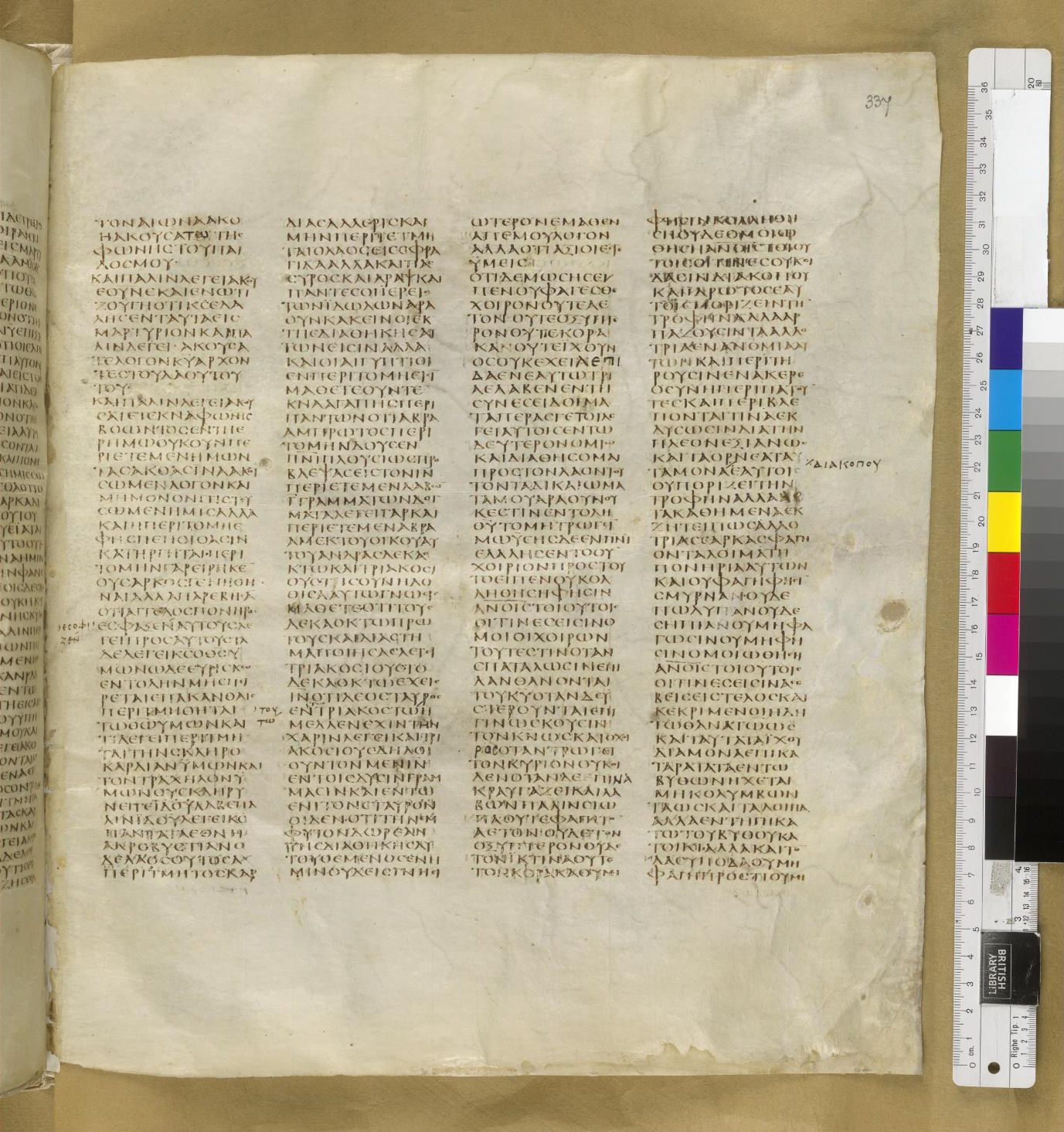
1οτι δε μωϲηϲ ειπεν ου φαγεϲθε χοιρον ουτε αετον · ουτε οξυπτερον ουτε κορακαν ουτε ϊχθυν οϲ ουκ εχει μεριδα εν εαυτω τρια ελαβεν εν τη ϲυνεϲει δογματα 2περαϲ γε τοι λεγει αυτοιϲ εν τω δευτερονομιω και διαθηϲομαι προϲ τον λαον τουτον τα δικαιωματα μου αρα ουν ουκ εϲτιν εντολη θυ το μη τρωγει μωυϲηϲ δε εν πνι ελαληϲεν 3το ου χοιριον προϲ τουτο ειπεν ου κολληθηϲη φηϲιν ανοιϲ τοιουτοιϲ οιτινεϲ ειϲιν ομοιοι χοιρων τουτεϲτιν οταν ϲπαταλωϲιν επιλανθανονται του κυ οταν δε ϋϲτερουνται επιγινωϲκουϲιν τον κν ωϲ και ο χοιροϲ οταν τρωγει τον κυριον ουκ οιδεν οταν δε επικραυγαζει και λαβων παλιν ϲιωπα · 4ουτε φαγη το αετον · ουδε τον οξυπτερον ουδε τον ϊκτινα ουτε τον κορακα ου μη φηϲιν κολληθηϲη ουδε ομοιωθηϲη ανοιϲ τοιουτοιϲ οιτινεϲ ουκ οιδαϲιν δια κοπου και ϊδρωτοϲ εαυτοιϲ ποριζειν τη τροφην αλλα αρπαζουϲιν τα αλλοτρια εν ανομια αυτων και περιτηρουϲιν εν ακερεοϲυνη περιπατουτεϲ και περιβλεπονται τινα εκδυϲωϲιν δια την πλεονεξιαν ωϲ και τα ορνεα ταυτα μονα εαυτοιϲ ου ποριζει την τροφην αλλα και τα καθημενα εκζητει πωϲ αλλοτριαϲ ϲαρκαϲ φαγη οντα λοιμα τη πονηρια αυτων 5και ου φαγη φηϲι ϲμυρναν · ουδε πωλυπαν ουδε ϲηπιαν ου μη φαγωϲιν ου μη φηϲιν ομοιωθηϲη ανοιϲ τοιουτοιϲ οιτινεϲ ειϲιν αϲεβειϲ ειϲ τελοϲ και κεκριμενοι ηδη τω θανατω ωϲ και ταυτα τα ϊχθυδια μονα επικαταρατα τα εν τω βυθω νηχεται μη κολυμβωντα ωϲ και τα λοιπα αλλα εν τη γη κατω του βυθου κατοικι ·
1But forasmuch as Moses said; Ye shall not eat seine nor eagle nor falcon nor crow nor any fish which hath no scale upon it , he received in his understanding three ordinances. 2Yea and further He saith unto them in Deuteronomy; And I will lay as a covenant upon this people My ordinances. So then it is not a commandment of God that they should not bite with their teeth, but Moses spake it in spirit. 3Accordingly he mentioned the swine with this intent. Thou shalt not cleave, saith he, to such men who are like unto swine; that is, when they are in luxury they forget the Lord, but when they are in want they recognize the Lord, just as the swine when it eateth knoweth not his lord, but when it is hungry it crieth out, and when it has received food again it is silent. 4Neither shalt thou eat eagle nor falcon nor kite nor crow. Thou shalt not, He saith, cleave unto, or be likened to, such men who now not how to provide food for themselves by toil and sweat, but in their lawlessness seize what belongeth to others, and as if they were walking in guilelessness watch and search about for some one to rob in their rapacity, just as these birds alone do not provide food for themselves, but sit idle and seek how they may eat the meat that belongeth to others, being pestilent in their evil-doings. 5And thou shalt not eat, saith He, lamprey nor polypus nor cuttle fish . Thou shalt not, He meaneth, become like unto such men, who are desperately wicked, and are already condemned to death, just as these fishes alone are accursed and swim in the depths, not swimming on the surface like the rest, but dwell on the ground beneath the deep sea.
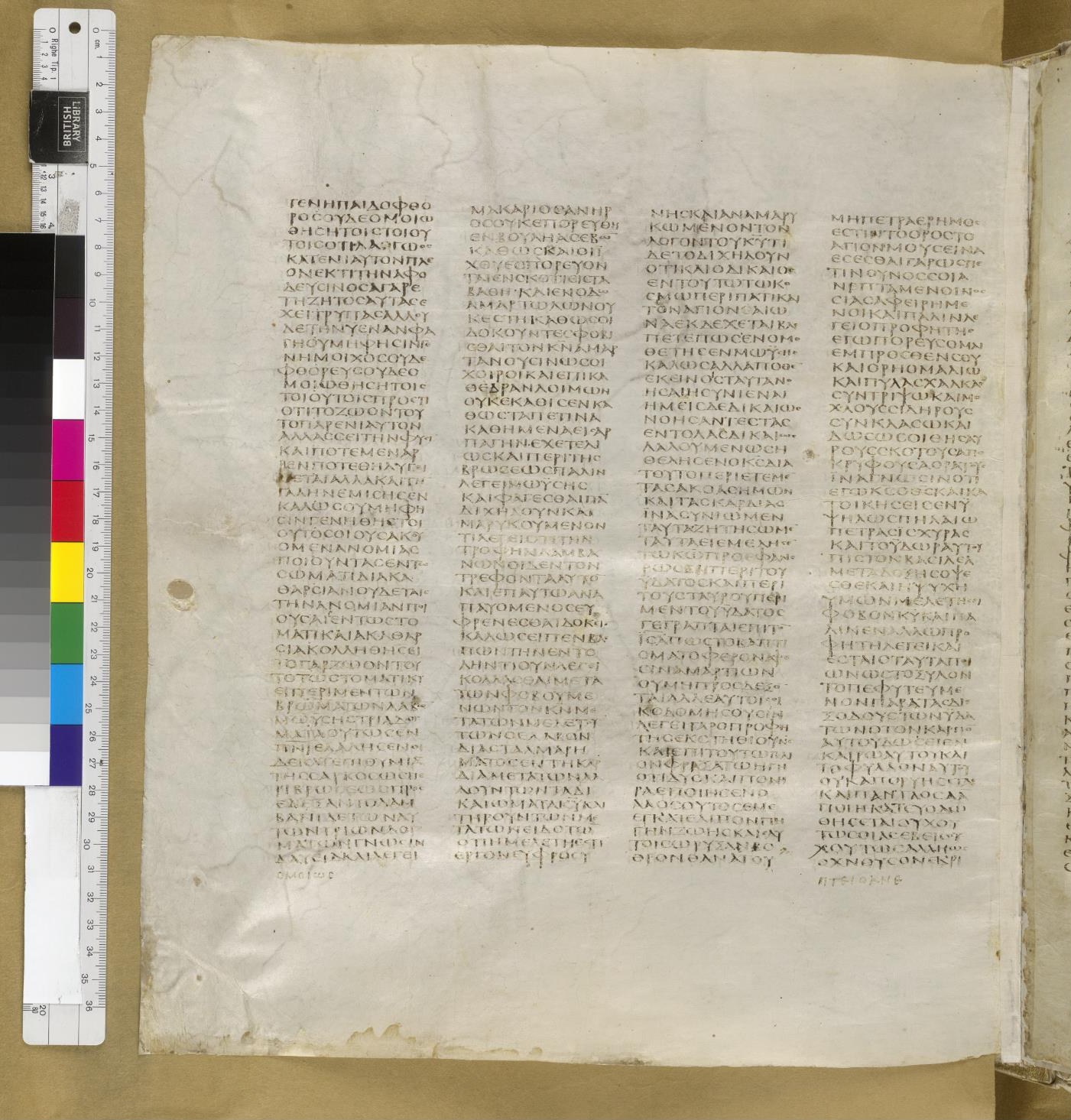
6αλλα και το δαϲυποδα ου μη φαγη προϲ τι ου μη γενη παιδοφθοροϲ ουδε ομοιωθηϲη τοιϲ τοιουτοιϲ οτι λαογωοϲ κατ ενιαυτον πλεονεκτι την αφοδευϲιν οϲα γαρ ετη ζη τοϲαυταϲ εχει τρυπαϲ 7αλλ ουδε την ϋεναν φαγη ου μη φηϲιν γενη μοιχοϲ ουδε φθορευϲ ουδε ομοιωθηϲη τοιϲ τοιουτοιϲ προϲ τι οτι το ζωον τουτο παρ ενιαυτον αλλαϲϲει την φυϲι και ποτε μεν αρρεν ποτε θηλυ γειν̣εται 8αλλα και τη γαλην εμιϲηϲεν καλωϲ ου μη φηϲιν γενηθηϲ τοιουτοϲ οιουϲ ακουομεν ανομιαϲ ποιουνταϲ εν τω ϲωματι δι ακαθαρϲιαν ουδε ταιϲ την ανομιαν ποιουϲαι εν τω ϲτοματι και ακαθαρϲια κολληθηϲει το γαρ ζωον τουτο τω ϲτοματι κυει 9περι μεν των βρωματων λαβω μωυϲηϲ τρια δογματα ουτωϲ εν πνι ελαληϲεν οι δε κατ επιθυμια τηϲ ϲαρκοϲ ωϲ περι βρωϲεωϲ προϲεδεξαντο 10λαμβανι δε των αυτων τριων δογματων γνωϲιν δαυειδ και λεγει μακαριοϲ ανηρ οϲ ουκ επορευθη εν βουλη αϲεβω καθωϲ και οι ιχθυεϲ πορευονται εν ϲκοτι ειϲ τα βαθη · και εν οδω αμαρτωλων ουκ εϲτη καθωϲ οι δοκουντεϲ φοβιϲθαι τον κν αμαρτανουϲιν ωϲ οι χοιροι και επι καθεδραν λοιμων ουκ εκαθιϲεν καθωϲ τα πετινα καθημενα ειϲ αρπαγην · εχε τελιωϲ και περι τηϲ βρωϲεωϲ
6Moreover thou shalt not eat the hare. Why so? Thou shalt not be found a corrupter of boys, nor shalt thou become like such persons; for the hare gaineth one passage in the body every year; for according to the number of years it lives it has just so many orifices. 7Again, neither shalt thou eat the hyena; thou shalt not, saith He, become an adulterer or a fornicator, neither shalt thou resemble such persons. Why so? Because this animal changeth its nature year by year, and becometh at one time male and at another female. 8Moreover He hath hated the weasel also and with good reason. Thou shalt not, saith He, become such as those men of whom we hear as working iniquity with their mouth for uncleanness, neither shalt thou cleave unto impure women who work iniquity with their mouth. For this animal conceiveth with its mouth. 9Concerning meats then Moses received three decrees to this effect and uttered them in a spiritual sense; but they accepted them according to the lust of the flesh, as though they referred to eating. 10And David also receiveth knowledge of the same three decrees, and saith; Blessed is the man who hath not gone in the council of the ungodly --even as the fishes go in darkness into the depths; and hath not stood in the path of sinners --just as they who pretend to fear the Lord sin like swine; and hath not sat on the seat of the destroyers --as the birds that are seated for prey. Ye have now the complete lesson concerning eating.
11παλιν λεγει μωυϲηϲ και φαγεϲθαι πα διχηλουν και μαρυκουμενον τι λεγει οτι την τροφην λαμβανων οιδεν τον τρεφοντα αυτο και επ αυτω αναπαυομενοϲ ευφρενεϲθαι δοκει · καλωϲ ειπεν βλεπων την εντολην τι ουν λεγει κολλαϲθαι μετα των φοβουμενων τον κν μετα των μελετουτων ο ελαβον διαϲταλμα ρηματοϲ εν τη καρδια μετα των λαλουντων τα δικαιωματα κυ και τηρουντων μετα των ειδοτω οτι η μελετη εϲτι εργον ευφροϲυνηϲ και αναμαρυκωμενοντον λογον του κυ τι δε το διχηλουν οτι και ο δικαιοϲ εν τουτω τω κοϲμω περιπατι και τον αγιον ο̣ αιωνα εκδεχεται βλεπετε πωϲ ˙ ενομοθετηϲεν μωϋϲηϲ καλωϲ 12αλλα ποθε εκεινοϲ ταυτα νοηϲαι η ϲυνιεναι ημειϲ δε δικαιωϲ νοηϲαντεϲ ταϲ εντολαϲ δικαιωϲ λαλουμεν ωϲ ηθεληϲεν ο κϲ δια τουτο περιετεμε ταϲ ακοαϲ ημων και ταϲ καρδιαϲ ινα ϲυνιωμεν ταυτα ·
11Again Moses saith; Ye shall everything that divideth the hoof and cheweth the cud. What meaneth he? He that receiveth the food knoweth Him that giveth him the food, and being refreshed appeareth to rejoice in him. Well said he, having regard to the commandment. What then meaneth he? Cleave unto those that fear the Lord, with those who meditate in their heart on the distinction of the word which they have received, with those who tell of the ordinances of the Lord and keep them, with those who know that meditation is a work of gladness and who chew the cud of the word of the Lord. But why that which divideth the hoof? Because the righteous man both walketh in this world, and at the same time looketh for the holy world to come. Ye see how wise a lawgiver Moses was. 12But whence should they perceive or understand these things? Howbeit we having justly perceived the commandments tell them as the Lord willed. To this end He circumcised our ears and hearts, that we might understand these things.
Cite
Source & Cross-References
- Source text: Codex Sinaiticus folio + transcription (codexsinaiticus.org) + J. B. Lightfoot, The Apostolic Fathers (1891) — view original
- Critical edition: Tischendorf 8th edition (1869) / Codex Sinaiticus transcription
← previous · → next · v cycle view · l back to library