The Babylonian Theodicy (dialogue of the sufferer and his friend)
Introduction
The sufferer complains that he is an orphan, poor and oppressed while the wicked prosper; his friend answers that the ways of the gods are unknowable and that the pious are rewarded in the end. At the close the friend concedes that the gods made humans prone to falsehood, and the sufferer asks for mercy from his god and goddess.
The Babylonian Theodicy is a dialogue in 27 stanzas of 11 lines between a sufferer and his friend about the injustice of the world. Each stanza begins with the same sign, and the initial signs together form an acrostic that names the author, Saggil-kinam-ubbib, an incantation priest, as a worshipper of god and king. This page follows the line numbering of the electronic Babylonian Library edition.
How this page is built. Each section is a run of consecutive lines as written on one photographed clay tablet. For every line the eBL edition (https://www.ebl.lmu.de/corpus/L/2/1/SB/-) lists the manuscripts that carry it, with each tablet's own column and line numbers; the tablet chosen for each run is the photographed copy of the work with the most signs preserved there. Commentaries and texts that only quote a line are never chosen. School and excerpt tablets are used only for lines that no photographed library copy preserves as well, and only where they carry the line as text; their sections say so. The original text is eBL's transliteration of that tablet's signs (not a modern composite text): square brackets mark broken signs, x an illegible sign, # a damaged sign, ? an uncertain reading, and words in {braces} are determinatives; the notes give a key to every sign used on this page, and eBL's layout codes are written out in words (for example '(line break)' or '(blank space)'). Superscript numbers are the line numbers of the eBL edition, used in both the Akkadian and the English. The English is B. R. Foster's translation in the eBL edition (CC BY-NC-SA 4.0), one line of English per line of the text; italics mark uncertain renderings, as in the source. Where the tablet is broken, the English still translates the whole line of eBL's composite text; each section's note names the lines that are broken on its tablet.
Finding a line on the photograph. Each section names the tablet, the face and column, and the tablet's own line numbers (a prime, as in 5', counts from the first preserved line of a broken column). On a tablet with six columns the obverse carries columns i-iii from left to right; the reverse, turned over from bottom to top, carries columns iv-vi from right to left. The photographs often show the obverse above the reverse with the edges around them; a fragment preserves only part of this layout.
This page shows 258 of the 288 lines of the eBL edition (90%), from 10 tablets in the British Museum: K.8463 (Nineveh), BM.35405, K.9290 (Nineveh), BM.36704, BM.40098, K.17235 (Nineveh), K.1743 (Nineveh), BM.47745, BM.94273, K.3452 (Nineveh).
Lines not shown. 30 of the 288 lines of the eBL edition are not shown, because no photographed copy of the work used here carries them: 89 (no manuscript preserves it); 109-110, 111-119 (no manuscript preserves it); 157 (no manuscript preserves it); 158-171 (photograph does not show these lines (visual check): K.5932); 172 (photograph does not show these lines (visual check): K.5932; quotation in another text: K.4267); 173-174 (photograph does not show these lines (visual check): K.5932); 192 (no photograph in eBL: VAT.10567 (Vorderasiatisches Museum, Berlin); commentary: BM.66882); 290-293 (no photograph in eBL: BM.34773, BM.34633); 294-297 (no photograph in eBL: BM.34773, BM.34633; commentary: BM.66882). A line is shown only on a photographed tablet that carries it as text. Commentaries and other texts that quote a line (letters, rituals, god lists) are not used as witnesses, because they carry it with explanations or inside another text; tablets without a photograph in eBL are not used, because the line could not be shown on its tablet.
How was this verified? (Provenance)
Where on the image
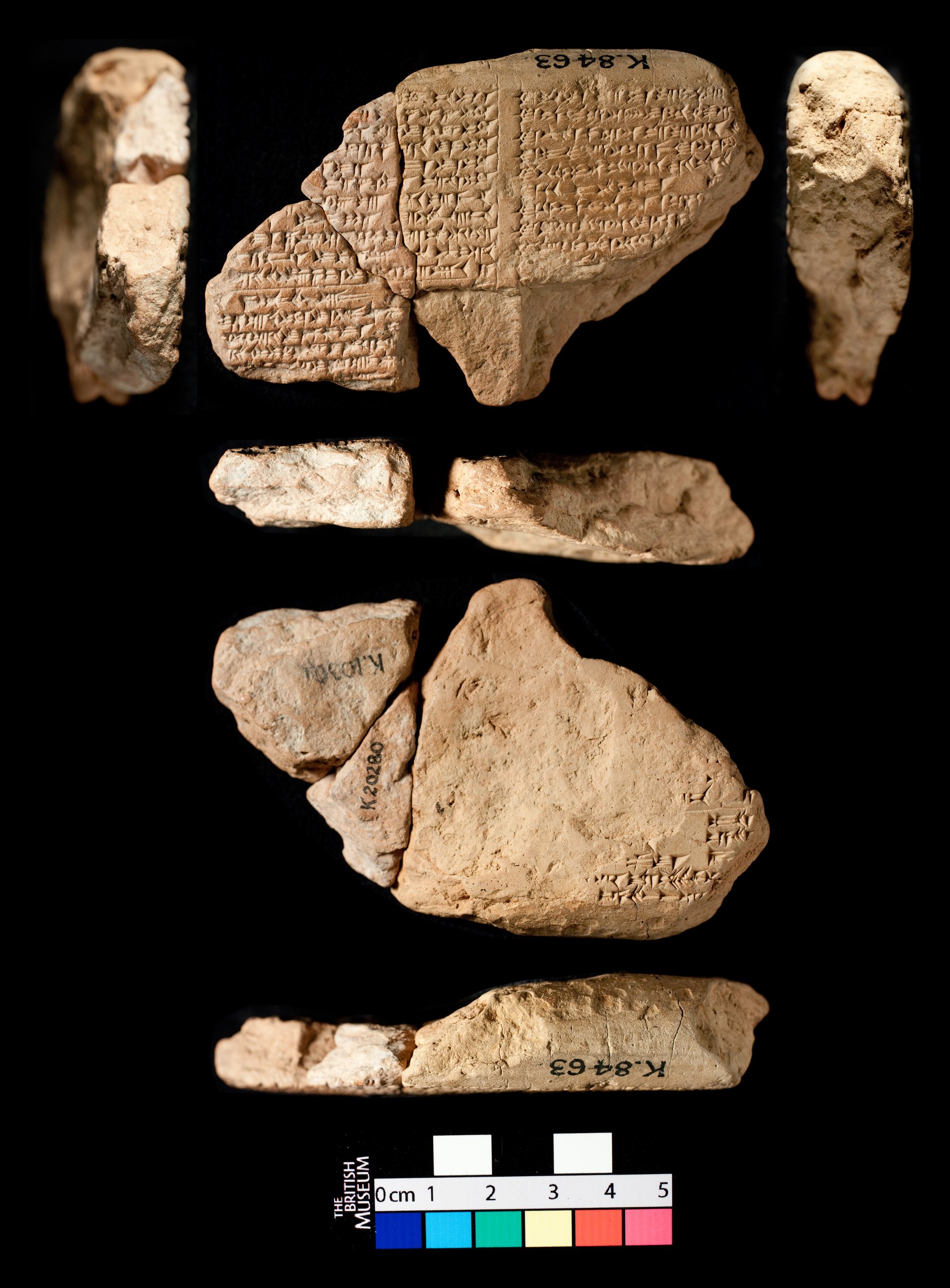
British Museum K.8463: column i, the tablet's own lines 1 to 17. eBL's corpus edition (https://www.ebl.lmu.de/corpus/L/2/1/SB/-) attributes SB 1-17 to this manuscript at these column and line numbers. Photograph checked: obverse, reverse and edges of three joined pieces, inks K.8463, K.103.. and K.20280 (eBL: K.8463+K.10301+K.20280). Two obverse columns of about 17 and 10 lines, and about 6 lines at the lower right of the mostly blank reverse; consistent with eBL's columns i (17), ii (10) and iii (8). On this tablet of lines 1, 17 only one to three signs survive and lines 2-16 are partly broken (square brackets and x in the Akkadian). The English of these lines translates eBL's composite text, so it includes words that are not preserved on this tablet but are restored from other manuscripts or by the editors. Square brackets in the English mark eBL's restorations in its composite text; words that survive on other tablets carry no brackets even where this tablet is broken.
1[x x (x) ... x x lu]-uq#-bi-ka
2[x x x x x x x nam-ra-ṣ]i l[u]-ša₂-an-ni#-ka
3[x x (x x) x x x (x x) x-š]a₂?-tu₂ kar#-šu-uk-ka
4[x x x x x x x k]a-a-ša₂ [l]ud-lul-ka
5[x x x x x x m]a!?-ṣi [m]a-la-ka
6[x x x x x x] iš-ša₂-n[i]n iš-te-ka
7[x x x x x x] ni#-is#-sa-ta [l]u-u-ta-mi₃-šu₂
8[a-ga-mir-m]a i-ši#-ra lu#-mun lib₃-bi
9[a-hu-ra-ku]-ma za-ru-u₂#-a ši-ma-[t]a ub-ti-il
10[a-ga-rin-n]u a-lit-tu₂ i-ta#-ru KUR.NU.GI₄
11[x x (x) x x x i-z]i-bu-in-ni-ma ba#-li# ta#-ru-u-a
12[x x x x ib-r]i ša₂ taq-bu-u₂ i#-dir#-tu₄#
13[x x (x)-i]a sah-hi-ka tu-šak#-pi-d[u x x x]
14[x x x ṭ]e₃-en-ga tu-maš-ši-la l[a x x x]
15[x x x x z]i-mi-ka uk#-ku-li-i[š x x x x]
16[x x x x a]b-bu#-ni?# il#-la-ku# u₂-r[u-uh x x x]
17[x x x x x x x x q]a-bu#-u₂# [x x x x]
1[O my] sagacious [brother], come, let me tell you,
2The distress [I have seen, time and again], I would recount to you.
3Such deep misery [as has befallen me, may it weigh heavy] on your feelings,
4[In …] most distressful, I will always sing your praises:
5Where be the man of insight so able to advise?
6Whence the man of knowledge comparable to you?
7Where else to such a counsellor my woe could I relate?
8I was at a loss when heartache came upon me,
9I was the youngest child when fate carried off him who begot me,
10She who brought me into the world departed to the land of no return,
11My father and mother left me with no one to care for me!
12Considerate friend, what you tell is a sorrowful tale,
13My dear friend, you have let your creativity harbor ill.
14You make your estimable discretion feeble-minded,
15You alter your bright expression to a scowl.
16Our fathers are given up that they go death’s way,
17They will cross the river Hubur, as is commanded from of old.
Where on the image
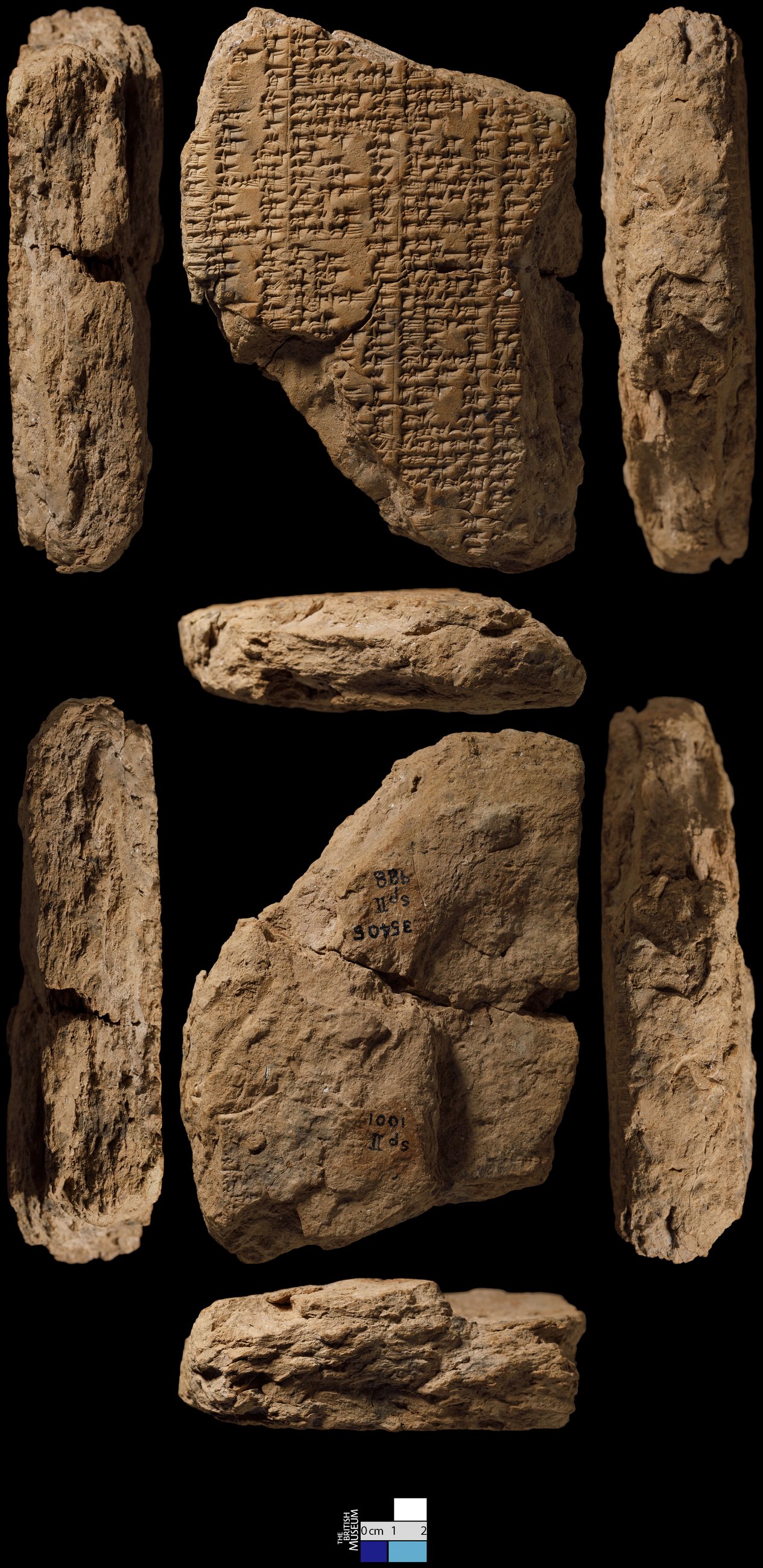
British Museum BM.35405: column i, the tablet's own lines 1' to 30'. eBL's corpus edition (https://www.ebl.lmu.de/corpus/L/2/1/SB/-) attributes SB 18-47 to this manuscript at these column and line numbers. Photograph checked: obverse, reverse and edges of two joined pieces, ink 35405 with Sp II 988 and Sp II 1001 (eBL: BM.35405+Sp-II.1001). About 40 lines with vertical rulings on the obverse and a blank reverse, consistent with eBL's column i (40). On this tablet of lines 18-19 only one to three signs survive and lines 20-47 are partly broken (square brackets and x in the Akkadian). The English of these lines translates eBL's composite text, so it includes words that are not preserved on this tablet but are restored from other manuscripts or by the editors. Square brackets in the English mark eBL's restorations in its composite text; words that survive on other tablets carry no brackets even where this tablet is broken.
18[na-aṭ-la-t]a-ma# | UG₃#-[MEŠ | x x x | x x x x]
19[na-ah?]-šu | bu-kur₂ [x x | x x x x | x x x x x]
20[na-am]-ra-a | EN meš-r[e-e | x x x x x | x x x]
21[na]-ṭil | pa-an DINGIR-ma# | r[a?-ši | x x x]
22[na-a]k-di | pa-li-ih# {d}iš-tar | u₂-k[am@v-mar | x x]
23[ku-u]p-pu | ib-ri lib₃-ba-ka | ša₂ la i-qat₂-t[u-u₂ | x x x]
24[ku-m]ur-re-e | gi-piš tam-ti₃ | ša₂ la i-šu-u₂# | m[i-ṭi-ta]
25ku#-a-šu₂ | lu-uṣ-ṣi-iš-ka | li-mad | a#-lak#-[tu₂]
26qu₂#-lam-mu | a-na sur-ru | ši-me | qa-ba-a#-[a]
27ku-ut-tum₃ | gat-ti | ma-ku-u₂ | ha-ša₂-h[u]
28ku-ši-ri | ši-ti-qa | e-te-ti-iq | mut-tu-t[u]
29ku-bu-uk-ku | i-te-niš | ba-ṭi-il | iš-d[i-hu]
30ku#-u₂-ru | u ni-is-sa-tu₄ | u₂#-qat₂-ti-ru | zi-m[u-u₂-a]
31ku#-ru-um | sa-hi-ia# | a-na neš-be₂-e | ne₂-s[a-an-ni]
32ku#-ru-un-nu | nap-šat UG₃-MEŠ | ṭa-pa-piš# | ru-u[q?-qan-ni]
33ku#-un-nam-ma-a | u₄-mu dum-qi₂ | a-lak-ta-šu₂ | a-la[m-mad]
34sa#-an-qa | pi#-ia | ša₂-du-u₂ | mil-[ki]
35sa#-ad-ri | pak-ka-ku | dub-bu-biš | t[u-še-(e)-mi]
36[sa]-ap#-hu | [l]a ṭe₃-mi₃ | te#-te#-mid | x [x (x x)]
37[sa]-miš₂ | ur*-qa-ka# | nu-us-su-qa | t[u-maš?-šil?]
38[sa-an-ta]k-ku# | [l]a na-par-ka-a | ša₂ tah-ši-hu | na x [x (x x)]
39[sa-ba]-as*# | qad₃#-mi | ina su-up-pi-ia | i-x-[x x (x)]
40[sa-lit-t]u₄ | {d}iš-tar | i-ta-ri | i-n[a!? x x (x)]
41[x x x (x) | la] šu#-te#-šu#-ru | i-rem-mu | a-n[a x x]
42[x x x (x) | x mi-š]a₂-ri | kaq-da₃-a | su-h[ur]
43[x x x x | x] x-ka | ta-ha-na-at | liš-k[un (x)]
44[x x x (x) | li?-b]e₂-eš | nak-ru-tu₂ | li-[gi-sak-ku]
45[x x x x | ru-ʾ]-u₂#-a | a-ta-haz | mi-[lik-ka]
46[x x x | du-uš-š]u*-pu | si₃#-qar | šap*-[ti-ka]
47[x x x | ne₂-m]e*-qi₂* | ga-(erased: x)-na | lu-u[q-bi-ka]
18When you survey teeming humankind all around,
19If the poor man’s son is thriving, someone helped him prosper,
20Who did favors for the sleek and wealthy?
21He who looks to his god has a protector,
22The diffident man who reveres his goddess will garner wealth.
23My friend, your heart is a wellspring of depth unplumbed,
24The upsurging swell of the ocean that brooks no diminishment.
25To you, then, let me pose my questions, learn my drift,
26Hearken to me but for a moment, hear my declaration.
27Want and craving make up the covering of my body,
28I have outlived my success, (my) prime is past,
29(My) energies are gone feeble, (my) prospering is over,
30Moaning and woe have clouded [my] features.
31The sustenance from my tilth nowhere near suffices [me],
32Of the fruit of the vine, what sustains humankind, I am far from having enough.
33Can happy times be a certainty for me? I wish I knew how that might come about!
34My well-thought-out speech is the peak of good advice,
35Your wonted wisdom you transmute into ranting,
36You bring forward scatter-brained, irrational […],
37You render your choicest reasoning like a mountebank.
38As to your everlasting, unremitting desire is […]
39The angry god […] at the prayer of […].
40The estranged goddess returns upon supp[lication].
41If the … […] one gone astray […] forbearance,
42Seek constantly after the […] of doing what’s right.
43[The harshest …] will surely show kindness,
44He will lay wide [the way], he will surely grant [you] clemency.
45[I] have bowed [down before you], my [companion], I have absorbed [your] wisdom,
46[I have taken to heart the] honeyed discourse of [your] lips.
47Come, let me tell you what I understand:
Where on the image
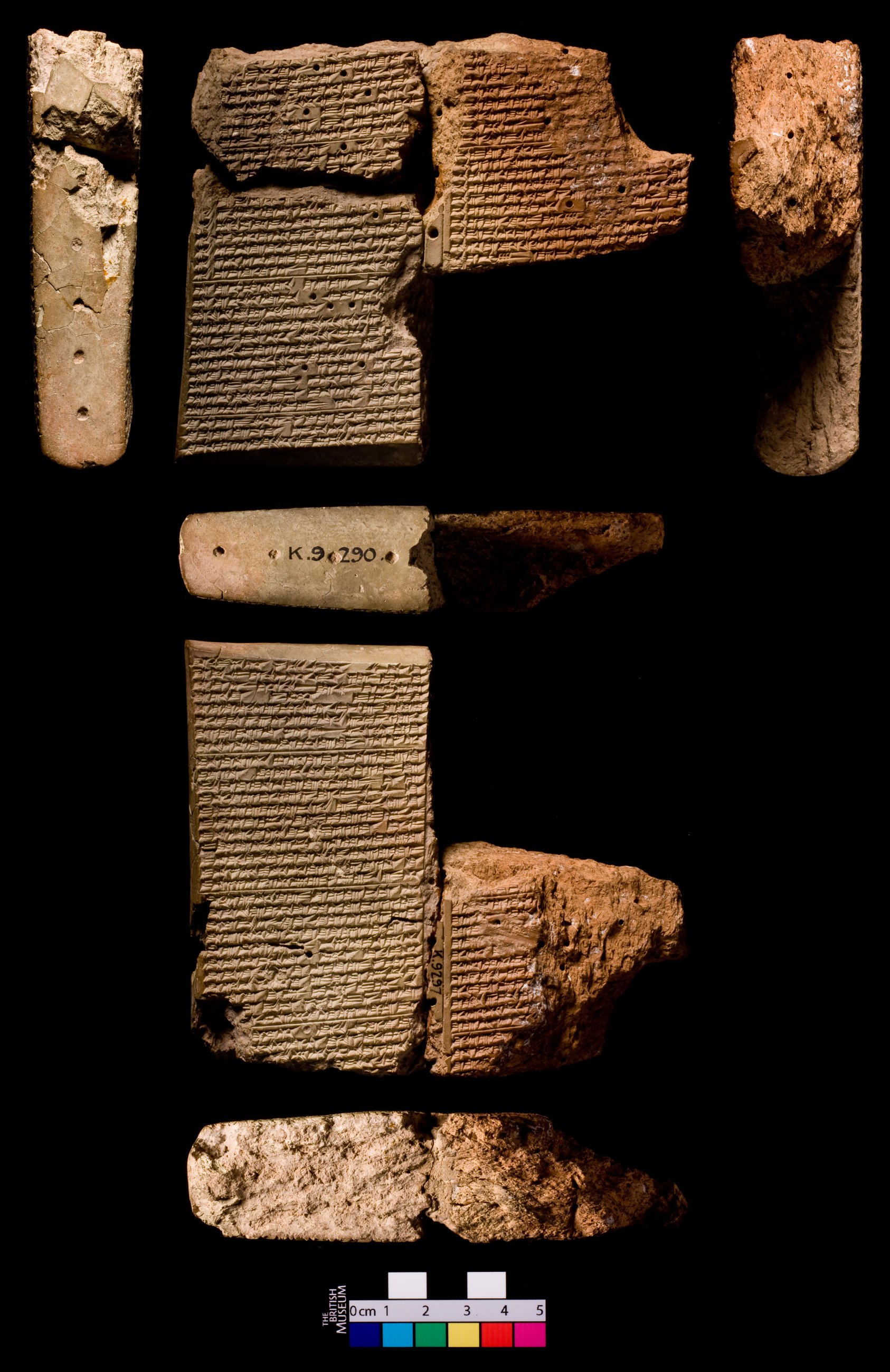
British Museum K.9290: column i, the tablet's own lines 1' to 17'. eBL's corpus edition (https://www.ebl.lmu.de/corpus/L/2/1/SB/-) attributes SB 48-64 to this manuscript at these column and line numbers. Photograph checked: obverse, reverse and edges of two joined pieces, inks K.9290 and K.9297. Two columns on each face, about 33 and 19 lines on the obverse and 35 and 16 on the reverse; consistent with eBL's 103 lines in columns i to iv. On this tablet of line 59 only one to three signs survive and lines 48-58, 60-62 are partly broken (square brackets and x in the Akkadian). The English of these lines translates eBL's composite text, so it includes words that are not preserved on this tablet but are restored from other manuscripts or by the editors. Square brackets in the English mark eBL's restorations in its composite text; words that survive on other tablets carry no brackets even where this tablet is broken. Lines 63-64 are complete on this tablet.
48[x x x] ser₂#-re#-mu# ša₂# iṭ#-pu#-pu# šu#-muh# [x x]
49[ak-kab]-ti#-i pak-ki DINGIR u₂-zu-un-šu ib-š[i]
50[ag-g]u la-bu ša₂ i-tak-ka-lu du-muq ši-r[i]
51[ak-k]i-mil-ti DINGIR-t[i]-i# šup-ṭu-ri u₂-bil maṣ-hat-s[u]
52[ak-ka]b-ti EN pa-an# [š]a₂ uṣ-ṣu-bu-šu₂ na-ha-šu₂
53[aq-r]a-a# ṣa-ri-ri# i-hi-ṭa a-na {d}ma-mi
54[ak]-la-ma-a nin-[d]a-ba-a i-liš u₂-šab-bab*#
55[ak]-ru-ub SA₂.DU₁₁#-e il-tim-ma qi₂-bi-ti e*#-[ni]
56[gi-š]im-ma-ru iṣ# [m]aš-re-e a-hi aq-r[u]
57[gi-mi]l na-ga[b] ne#-me-qi₂ il-lu-uk u[r-x (x x)]
58[gi-na-t]a-m[a am-ma]-tiš₂# ne₂-si# mi-lik [x x]
59[x x x x x x x x x i-n]a x x-[x]
60[gi]-mil# qar-ba#-ti₃# ir#-hi#-ṣu# [x x x x x (x)]
61ge-er bu-li la-ba ša₂ tah-su-su# ga#-na# bit#-r[i]
62gi-il-lat UR.MAH i-pu-šu pe-ta-as-su haš-t[u₄]
63gi-is maš-re-e EN pa-ni ša₂ qur-ru-nu ma-ak-ku-ru
64gi-riš ina u₄-um la ši-ma-ti i-qa-am-mi₃-šu₂ ma-al-ku
48The onager, the wild ass, that had its fill of lush wild grasses,
49Did it have a care for the weighty wisdom of the gods?
50The savage lion that fed himself from the choicest meat,
51Did it bring its flour offerings to appease a goddess’s wrath?
52As to the rich magnate whose prosperity keeps increasing,
53Did he weigh out precious gold to the mother goddess?
54Have I withheld my offerings when I sacrificed to the god?
55When blessing the regular sacrifice to my goddess, have I ever been at fault?
56O date palm, wealth-giving tree, my treasured brother,
57Perfect in all wisdom, O gem [of wisdom]!
58If you are indeed fixed as the earth, the reasoning [of the gods] is far beyond (you).
59Consider on the […] that magnificent wild ass of the plain,
60An arrow will turn upon that one who trod every lea.
61Come, contemplate that lion you were thinking of, livestock’s bane,
62For the atrocities the lion committed, a pit yawns for him.
63The well-heeled rich man who hoarded up possessions,
64A sovereign will put him to the flames before his time.
Where on the image
British Museum K.9290: column i, the tablet's own lines 18' to 33'. eBL's corpus edition (https://www.ebl.lmu.de/corpus/L/2/1/SB/-) attributes SB 65-80 to this manuscript at these column and line numbers. Photograph checked: obverse, reverse and edges of two joined pieces, inks K.9290 and K.9297. Two columns on each face, about 33 and 19 lines on the obverse and 35 and 16 on the reverse; consistent with eBL's 103 lines in columns i to iv. On this tablet lines 65-72, 75 are partly broken (square brackets and x in the Akkadian). The English of these lines translates eBL's composite text, so it includes words that are not preserved on this tablet but are restored from other manuscripts or by the editors. Square brackets in the English mark eBL's restorations in its composite text; words that survive on other tablets carry no brackets even where this tablet is broken. Lines 73-74, 76-80 are complete on this tablet.
65ge-er-ri an-nu-tu-u₂ i-ku-šu a-la-ka tah-ši-i[h]
66gi-mil du-um-qi₂ ša₂ DINGIR da-ra-a ši-te-ʾ-[e]
67il-ta-nu ṭe₃-en-ga ma-nit UG₃-MEŠ ṭa-a#-[bu]
68il-lu nu-us-su-qu mi-lik-ka d[am-qu]
69il-te-en zik-ra mut-ta-ka# lut-t[i-ir]
70il-la-ku u₂-ru-uh dum-qi₂ la muš-te-ʾ-u i₃-l[i₂]
71il-tap-ni i-te-en-šu₂ muš-te-mi-qu ša {d#}[iš-tar-ti]
72il-li-gi-mi-ia-a-ma ṭe₃-em# DINGIR as-h[u-ur]
73il-la-ba-an KIR₄ u te-mi-qi₂ e-še-ʾe {d}iš#-tar#-ti#
74il-ku ša la ne₂-me-li a-ša₂-aṭ ab#-ša₂-nu
75il-ta-kan DINGIR ki-i maš-re-e [k]a-tu-ta
76il-an-nu ku-uṣ-ṣu-du pa-na-an-ni lil-li
77il-ta-qu-u₂ har-ha-ru-u₂ a-na at-taš-pil
78ki-na ra-aš₂ uz-ni ša₂ tuš-ta-ad-di-nu la mur-qa
79ki-it-ta <ta>-ta-du-ma u₂-ṣur-ti DINGIR ta-na-ṣu
80ki-du-de-e DINGIR ana la šu-uṣ-ṣu-ru tah-ši-hu ka-bat-tuk
65Would you wish to go the way these have gone?
66Seek after virtue’s reward from (your) god all your days.
67Your reasoning is a cool breeze, a breath of fresh air for humankind,
68Most particular friend, your advice is excellent.
69Let me put but one matter before you:
70Those who seek not after a god can go the road of favor,
71Those who pray to a goddess have grown poor and destitute.
72Indeed, in my youth I heeded the will of (my) god,
73With prayer and supplication I besought (my) goddess.
74I bore a yoke of profitless servitude:
75(My) god decreed (for me) penury instead of wealth.
76A cripple rises above me, a fool is ahead of me,
77A vile lackey is in the ascendant, I am demoted.
78Truly, O knowledgeable one, your ponderings are devoid of common sense,
79You have cast off truth, you have spurned divine design.
80In your emotional state you have felt an urge to disregard observances due (your) god,
Where on the image
British Museum K.8463: column ii, the tablet's own lines 3 to 10. eBL's corpus edition (https://www.ebl.lmu.de/corpus/L/2/1/SB/-) attributes SB 81-88 to this manuscript at these column and line numbers. Photograph checked: obverse, reverse and edges of three joined pieces, inks K.8463, K.103.. and K.20280 (eBL: K.8463+K.10301+K.20280). Two obverse columns of about 17 and 10 lines, and about 6 lines at the lower right of the mostly blank reverse; consistent with eBL's columns i (17), ii (10) and iii (8). On this tablet of line 88 only one to three signs survive and lines 81-87 are partly broken (square brackets and x in the Akkadian). The English of these lines translates eBL's composite text, so it includes words that are not preserved on this tablet but are restored from other manuscripts or by the editors. Square brackets in the English mark eBL's restorations in its composite text; words that survive on other tablets carry no brackets even where this tablet is broken. eBL gives no English for line(s) 88.
81ki-nu-te me-si {d}iš-ta-ri t[e-te-eq x x x]
82ki-i qe₂-reb# AN-e šib-qi₂ DINGIR-MEŠ [x x x]
83qi₂-bat pi-i {d}il-ti ul iš-še#-[ma?-a? x x x x x x]
84ki-niš lit-mu-da-ma s[a-ga-a x x x x]
85ki-pi-du-ši-na-ma ana UG₃-ME[Š x x x x x (x x x)]
86ki-ib#-si il-ti šu-hu-za x [x (x x x) x x (x x x)]
87qe₂#-ru-ub ṭe₃-en-ši-n[a x x (x x x) x x (x x x)]
88ki#-[x]-x-tu₂?# mar?#-[x (x x x) x x (x x x) x x (x x x)]
81You have transgressed and neglected the sound rules of (your) goddess.
82The strategy of a god is as far [beyond (you)] as innermost heaven,
83The command of a goddess is inaudible, […] cannot be detected.
84Teeming humanity well understands codes of behavior,
85But what they themselves plan for people […]
86To instruct in the ways of a goddess […]
87In their own minds […]
88(no English for this line in the eBL edition)
Where on the image
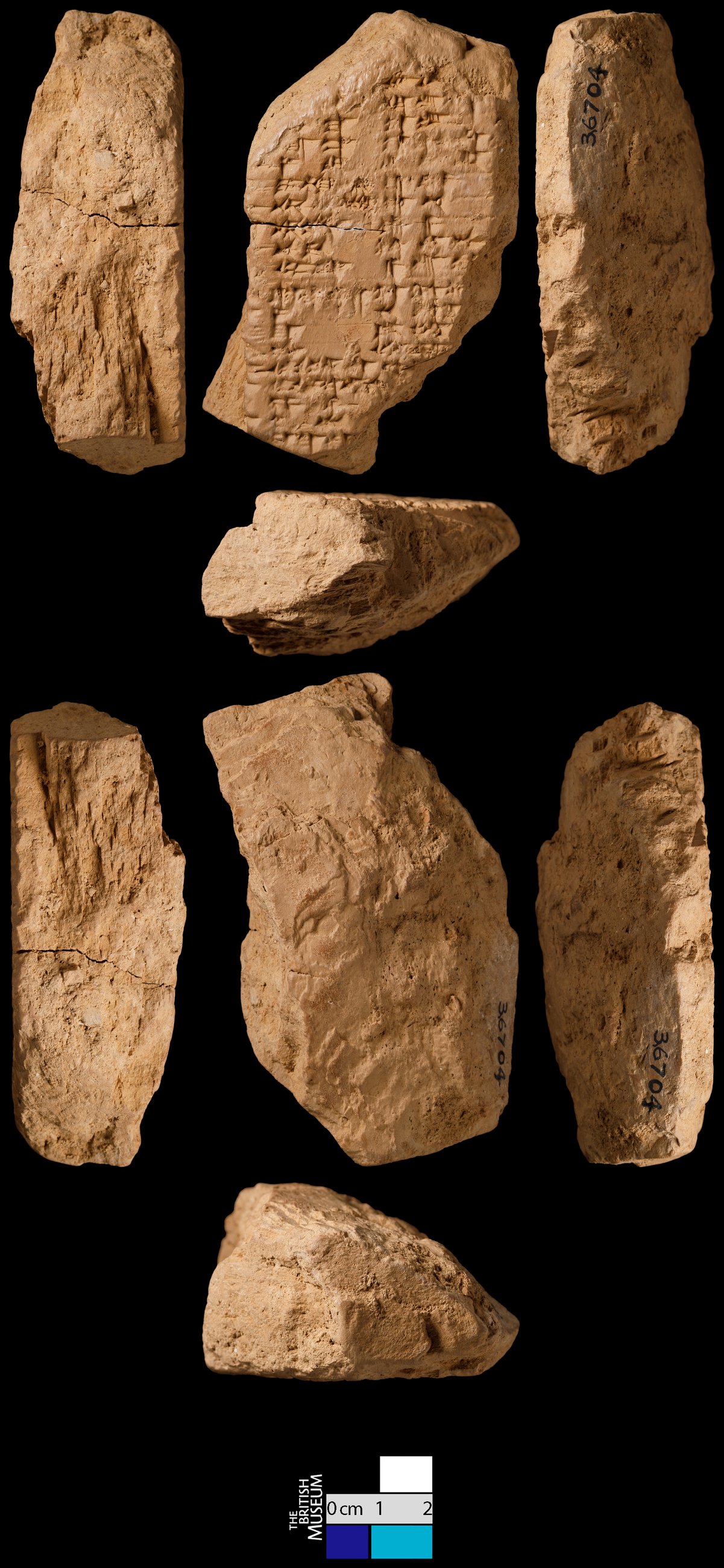
British Museum BM.36704: column ii, the tablet's own lines 1' to 19'. eBL's corpus edition (https://www.ebl.lmu.de/corpus/L/2/1/SB/-) attributes SB 90-108 to this manuscript at these column and line numbers. Photograph checked: obverse, reverse and edges of a fragment about 4.5 cm long, ink 36704 on the reverse and edge. About 15 lines in large script with vertical rulings on the obverse and a blank reverse; close to eBL's column ii (19) once broken lines at the edges are counted. On this tablet of lines 90-91, 101, 103, 106-108 only one to three signs survive and lines 92-100, 102, 104-105 are partly broken (square brackets and x in the Akkadian). The English of these lines translates eBL's composite text, so it includes words that are not preserved on this tablet but are restored from other manuscripts or by the editors. Square brackets in the English mark eBL's restorations in its composite text; words that survive on other tablets carry no brackets even where this tablet is broken. eBL gives no English for line(s) 90, 91, 106, 107, 108.
90[x x (x x) | x x (x x) | x]-x-pu | ši#/di# [x (x)]
91[x x (x x) | x x (x x) | x]-x-ka | u₂-ka[l?-x]
92[x x (x x) | x x (x x)] | x-ba/ma-ku/ba/ma | šit-t[u₂?]
93[x x (x x) | x x (x x) | ṣ]i-is-su?# | x-li?#-x
94[x x (x x) | x (x x)]-x | ša₂-ru-ri?# | ir?#-ri-x
95[x x (x x) | x (x x)]-x | i-dar-ri#-su# | qar*#-[bat]
96[x x (x x) | x (x x)-n]u | ti-bu?#-us#-su# | be [x]
97[x x (x x) | x x (x x)] | ti-rik# ŠU+MIN# | a-[x]
98[x x (x x) | x (x x)]-x | mit-ha-riš# | x tag# [x]
99[x x (x x) | x x (x x)] | mi-na-a | u₂*#-ši[r₃?-x]
100[x x (x x) | x (x x)]-x | ki#-ma# la# x-a?#-ta?# | uš?#-ta?#-[x]
101[x x (x x) | x (x x)]-x | ša₂-niš | ta?#-x-[x]
102[x x (x x) | x (x x)-t]u₄/ṣ]u/a]š₂ | šu-kun | uz-[ni-ka]
103[x x (x x) | x (x x)]-x | du-gul# | ar?#-[x (x)]
104[x x (x x) | x (x x)]-x | ul il*#-ma?#-du?# | x [x (x x)]
105[x x (x x) | x (x x)]-x | ul i#-te?#-x-ru?# | [x x (x x)]
106[x x (x x) | x (x x)]-x | dan?#-ni-x | [x x (x x)]
107[x x (x x) | x x (x x)] | x-mu-[x | x x (x x)]
108[x x (x x) | x x (x x)] | x-ku?#/ma?#-la#-[x | x x (x x)]
90(no English for this line in the eBL edition)
91(no English for this line in the eBL edition)
92[…] sleep,
93[…] … its rising,
94[…] … rays.
95[…] trampling the lea,
96[…] … its onrush.
97[…] …, slain by the hand,
98[…] all of ….
99[…], what will I […]?
100[…] … like someone without …,
101[…] you […] otherwise.
102Pay attention [to …],
103Look at […] …!
104[…] … have not learned […],
105[…] … have not … […].
106(no English for this line in the eBL edition)
107(no English for this line in the eBL edition)
108(no English for this line in the eBL edition)
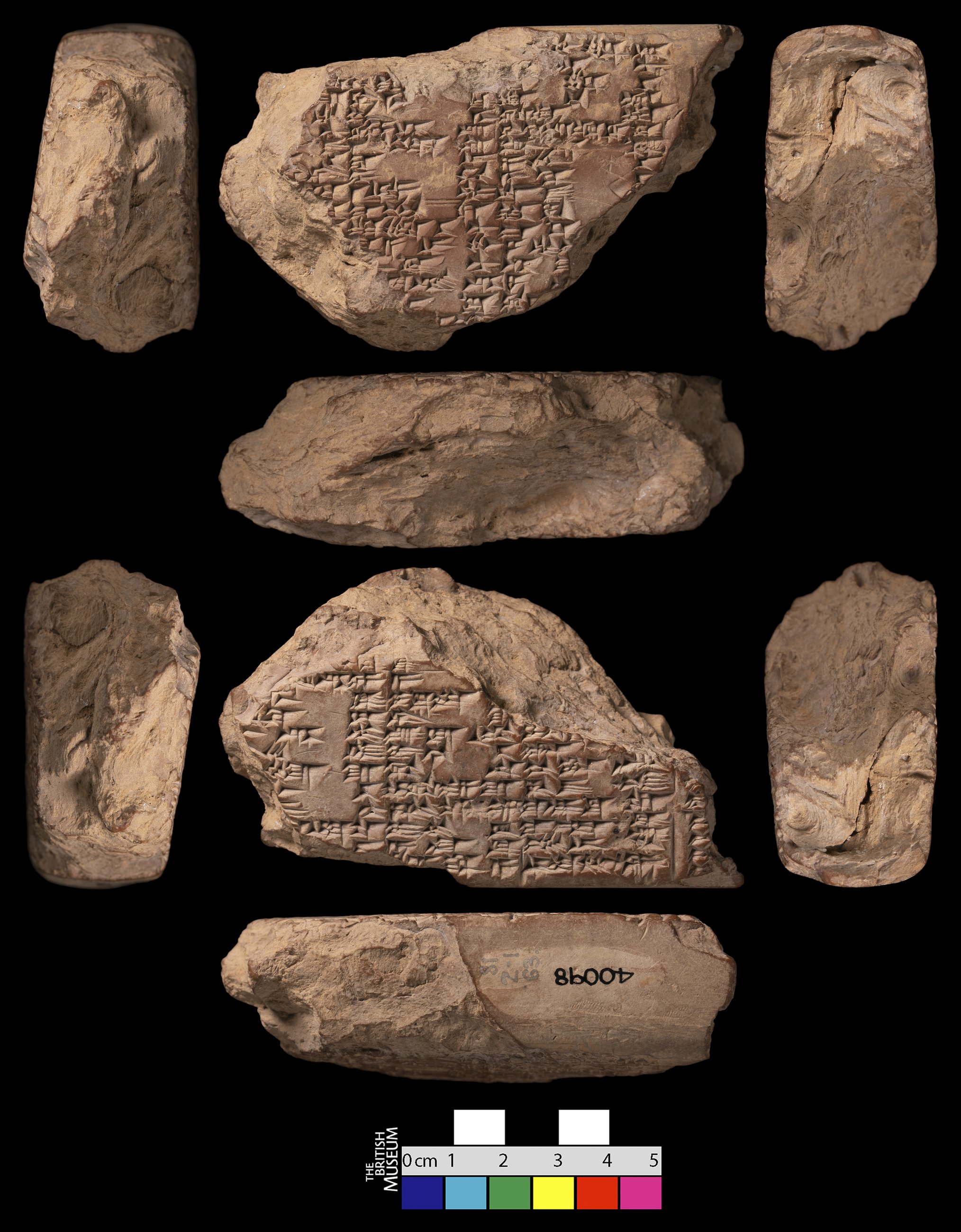
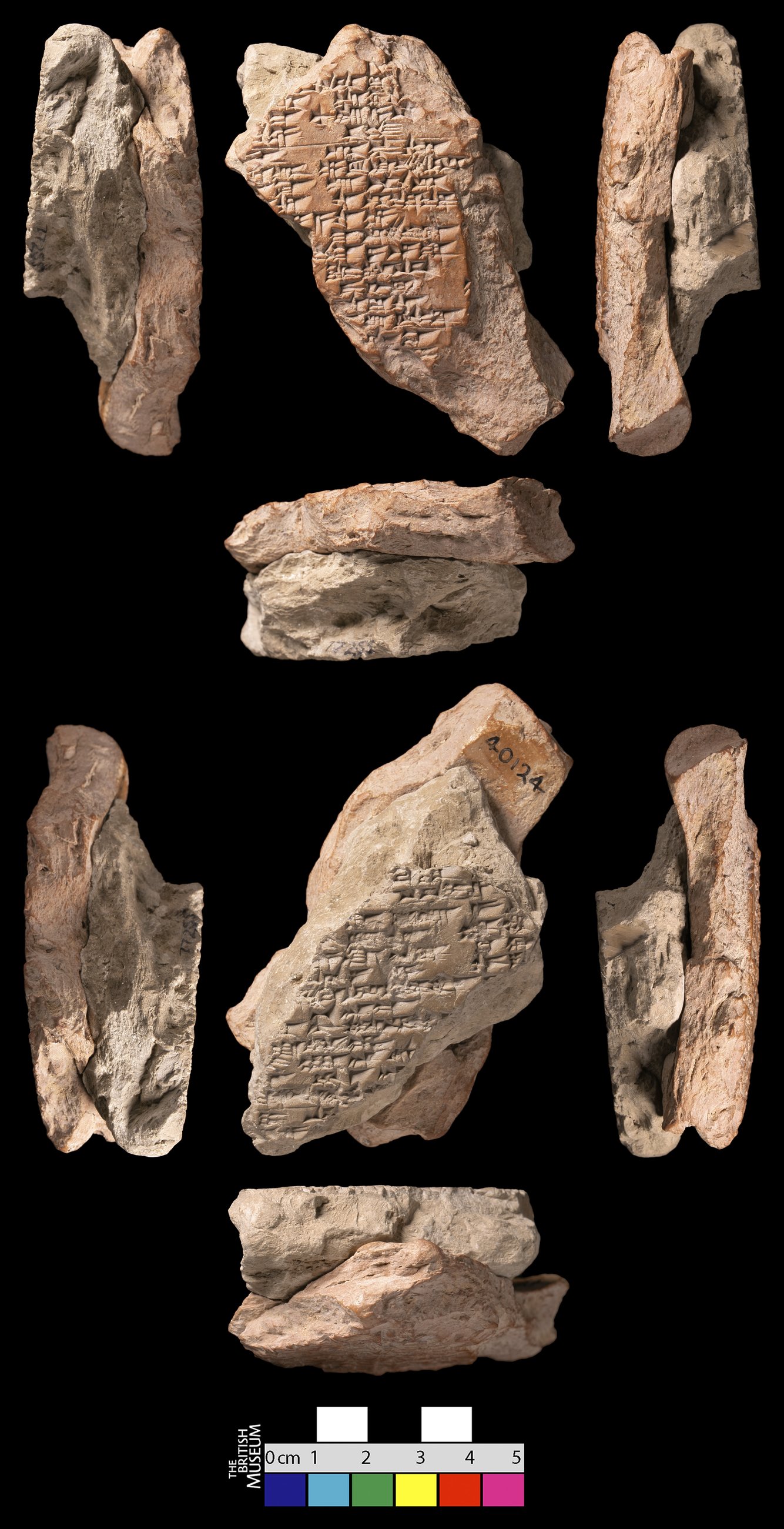
Where on the image
British Museum BM.40098: column ii, the tablet's own lines 1' to 5'. eBL's corpus edition (https://www.ebl.lmu.de/corpus/L/2/1/SB/-) attributes SB 120-124 to this manuscript at these column and line numbers. Photograph checked: obverse, reverse and edges of a fragment about 6 cm wide, ink 40098 on the bottom edge. About 14 lines on the obverse, about 12 on the reverse, and a strip of about 8 lines from another column beyond a vertical ruling; with the linked piece BM.40124+BM.77255 the set comes close to eBL's 64 lines in columns i to iv. eBL treats BM.40098 + BM.40124 as one manuscript and holds a separate photograph of each of these pieces; it does not say which piece carries which line, so the photographs of BM.40098 + BM.40124 are linked, and the lines are on one or more of them. On this tablet of lines 120-121 only one to three signs survive and lines 122-124 are partly broken (square brackets and x in the Akkadian). The English of these lines translates eBL's composite text, so it includes words that are not preserved on this tablet but are restored from other manuscripts or by the editors. Square brackets in the English mark eBL's restorations in its composite text; words that survive on other tablets carry no brackets even where this tablet is broken. eBL gives no English for line(s) 120.
120[x x (x x x) | (x)] x-ba*#-ra#-a!?# | [x x (x x x) | x x (x x x)]
121[x x (x x x) | i]t?-ti-ia | [x x (x x x) x x (x x x)]
122[(x) x x x] | ru#-u₈?#-u₂-a | š[i?-x (x x x) | x x (x x x)]
123[up-tar-ri-i]r | ur#-qa-ka# | uh#-[tap?-pi? | x x (x x x)]
124[x x (x)]-e?# | la mit-lu#-ku# | si?#-[x (x x) | x x (x x x)]
120(no English for this line in the eBL edition)
121[…] with me […]
122[…], my friend, … […]
123Your reasoning [has been] crushed, [your] … has been [shattered].
124[…] the one without counsel […]
Where on the image
British Museum K.9290: column ii, the tablet's own lines 1' to 19'. eBL's corpus edition (https://www.ebl.lmu.de/corpus/L/2/1/SB/-) attributes SB 125-143 to this manuscript at these column and line numbers. Photograph checked: obverse, reverse and edges of two joined pieces, inks K.9290 and K.9297. Two columns on each face, about 33 and 19 lines on the obverse and 35 and 16 on the reverse; consistent with eBL's 103 lines in columns i to iv. On this tablet of line 125 only one to three signs survive and lines 126-136, 138, 140-143 are partly broken (square brackets and x in the Akkadian). The English of these lines translates eBL's composite text, so it includes words that are not preserved on this tablet but are restored from other manuscripts or by the editors. Square brackets in the English mark eBL's restorations in its composite text; words that survive on other tablets carry no brackets even where this tablet is broken. Lines 137, 139 are complete on this tablet.
125[u]b-ba[l x x x x x (x x) x x (x x x)]
126[u]p-te-eṣ-ṣa-am#-ma# [x x x x x x (x x x) x x (x x x)]
127[u]b-tel-li {d#}NE#.[GI x x (x x x) x x (x x x)]
128[u]p-te-en-ni li-gi#-m[a-šu₂ x x (x x x) x x (x x x)]
129[u]p-te-ṣi-id UG₃-MEŠ [x x (x x x) x x (x x x)]
130[u]p-te-eh-hir ša₃-s[ur-ru? x x (x x x) x x (x x x)]
131[u]p-te-eq an [x x (x) x x (x x x) x x (x x x)]
132[u]b-te-ʾ-i hi-ši[h-ti x x (x) x x (x x x) x x (x x x)]
133[b]i-i-ta lu-ud-di x x x [(x x) x x (x x x)]
134[b]i-ša₂-a a-a ah-ši-ih x x [(x x x) x x (x x x)]
135bi#-il-lu-de-e DINGIR lu-miš par#-ṣ[i lu-ka]b-bi#-i[s]
136be₂#-e-ra lu-na-ak-kis lu-kaš#-x x ak#-lu
137bi-ir-ta lu-ul-lik ne₂-sa-a#-ti# lu#-hu-uz
138be₂-e-ra lu-up-ti a#-t[ap-pi] lu-maš-šir₃
139be₂-e-ra ki-di ra-qiš lu#-ur#-tap-pu-ud
140bi-it-bi-ti-iš lu-ter-ru-ba# lu#-ne₂#-eʾ bu-bu-t[i]
141bi-ri-iš lu-ut-te-ʾe-lu-me su-le-e lu-ṣa-a#-[a-ud]
142[p]i₂-is-nu-qiš ana qer-bi lu#-t[er-ru-ba x x (x x x)]
143be₂#-e#-šu₂# dum#-qu# [x x x x x (x x x)]
125[…] brings the fish of the marsh,
126His back is broken, […],
127The [most raging] fire is always put out.
128The […]’s offspring is crushed.
129The [most numerous …] people are scattered.
130The midwife is convened [at the bed of the woman in labor],
131I have paid heed to [my] god, […]
132I have sought [to do] what […] demanded, […]
133I will forsake home […]
134I will crave no property […]
135I will ignore (my) god’s regulations, [I will] trample on (his) rites.
136I will slaughter a calf, I will […] the food,
137I will go on the road, I will learn my way around distant places.
138I will open up the well, I will release watercourse,
139I will roam about the far outdoors like a fugitive.
140I will stave off hunger by forcing entry from house to house,
141Ravenous, I will cast about, prowling the streets.
142Helpless, I will keep entering […].
143Good fortune lies afar off, my fate […].
Where on the image
British Museum BM.40098: column iii, the tablet's own lines 6' to 18'. eBL's corpus edition (https://www.ebl.lmu.de/corpus/L/2/1/SB/-) attributes SB 144-156 to this manuscript at these column and line numbers. Photograph checked: obverse, reverse and edges of a fragment about 6 cm wide, ink 40098 on the bottom edge. About 14 lines on the obverse, about 12 on the reverse, and a strip of about 8 lines from another column beyond a vertical ruling; with the linked piece BM.40124+BM.77255 the set comes close to eBL's 64 lines in columns i to iv. eBL treats BM.40098 + BM.40124 as one manuscript and holds a separate photograph of each of these pieces; it does not say which piece carries which line, so the photographs of BM.40098 + BM.40124 are linked, and the lines are on one or more of them. On this tablet of lines 149, 151-153, 155-156 only one to three signs survive and lines 144-148, 150, 154 are partly broken (square brackets and x in the Akkadian). The English of these lines translates eBL's composite text, so it includes words that are not preserved on this tablet but are restored from other manuscripts or by the editors. Square brackets in the English mark eBL's restorations in its composite text; words that survive on other tablets carry no brackets even where this tablet is broken. eBL gives no English for line(s) 152, 153, 154, 156.
144[i]b-ri | ub-lam-[ma | x x (x x x) | x x (x x x)]
145[e]p-šet UG₃-MEŠ | la tah-ši-hu#-[ši? | x x (x x x) | x x (x x x)]
146[i]b-šu-u₂ | ina ṣur-ri-[ka | x x (x x x) | x x (x x x)]
147[i]p-ru-ud | pak-ka-ka-[ma? | x x (x x x) | x x (x x x)]
148[ib-x] (x) ša₂?#/ṣa?#-a-tu₂ | UG₃-[MEŠ | x x (x x x) | x x (x x x)]
149[ib-ni?]-ma | NAM.U₁₈.[LU? | x x (x x x) | x x (x x x)]
150[ib-ta?-t]aq-ma | ša₂-sur-ra-[tu₄ | x x (x x x) | x x (x x x)]
151[ib]-lul | it-ti-[ša₂? | x x (x x x) | x x (x x x)]
152[ip-(x)]-PA | rak-ku-x | [x x (x x x) | x x (x x x)]
153[IB-x-t]a? | lu-ut-x | [x x (x x x) | x x (x x x)]
154[IB-x]-x | u₂-gu-um-m[a? | x x (x x x) | x x (x x x)]
155[ma-x-x] | lib₃#-ba-[ka? | x x (x x x) | x x (x x x)]
156[ma-x-x] | x-[š]ur?-x [x | x x (x x x) | x x (x x x)]
144My friend, [you have] resolved [upon …]
145The activity of humankind, which you had no urge to […],
146[…] are in your mind,
147Your discretion has forsaken [you …]
148[…] … the people […]
149[… created] the human race, […]
150Then … the midwife cut [the umbilical cord …]
151[…] mixed with [her …]
152(no English for this line in the eBL edition)
153(no English for this line in the eBL edition)
154(no English for this line in the eBL edition)
155[…] your heart, […]
156(no English for this line in the eBL edition)
Where on the image
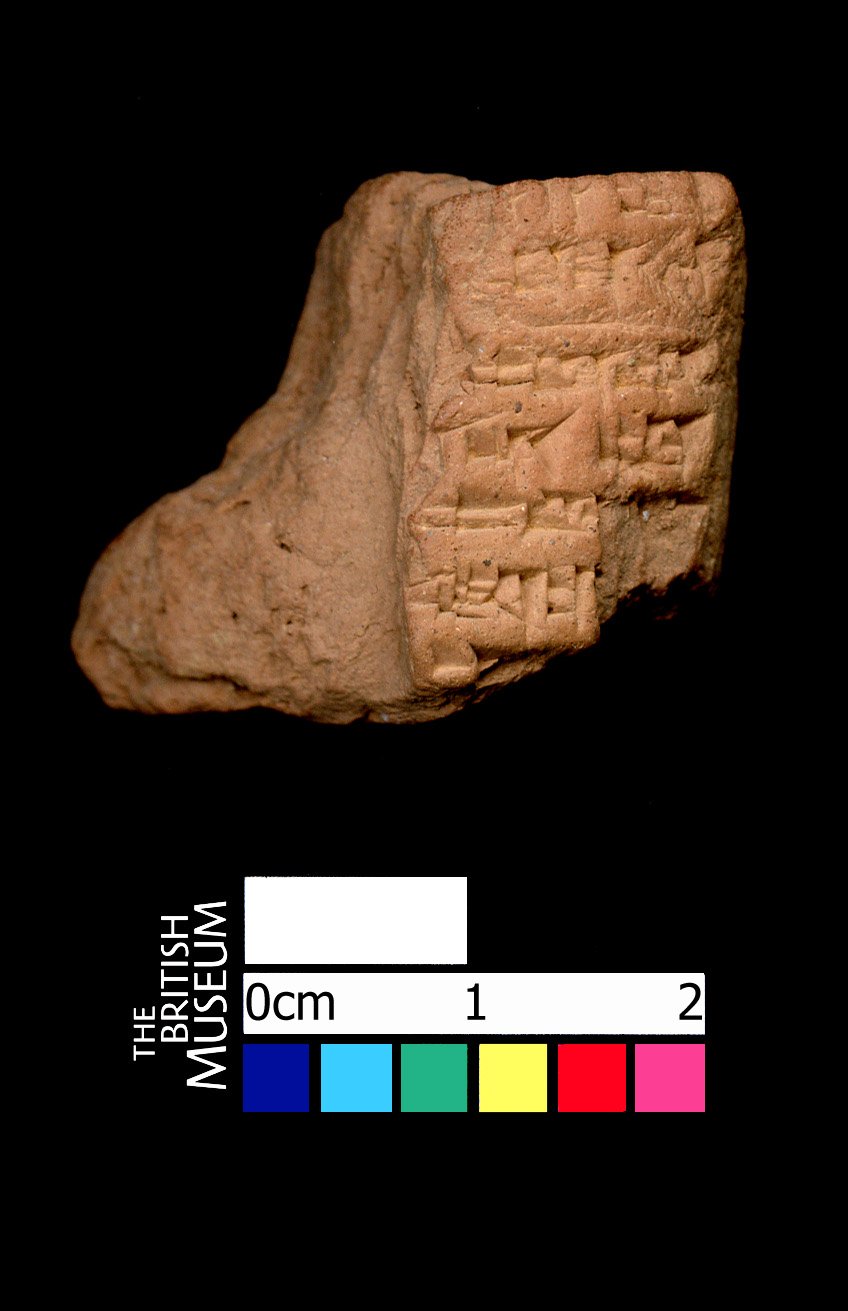
British Museum K.17235: column iii, the tablet's own line 1'. eBL's corpus edition (https://www.ebl.lmu.de/corpus/L/2/1/SB/-) attributes SB 175 to this manuscript at these column and line numbers. Photograph checked: one face of a small fragment about 2 cm across, no ink number visible; about seven or eight line-ends along the preserved right edge. Consistent with eBL's seven line-ends of column iii. On this tablet of line 175 only one to three signs survive. The English of this line translates eBL's composite text, so it includes words that are not preserved on this tablet but are restored from other manuscripts or by the editors. Square brackets in the English mark eBL's restorations in its composite text; words that survive on other tablets carry no brackets even where this tablet is broken.
175[x x x x x x x x x (x)]-a-a#-at#
175To him whose far-away … […]
Where on the image
British Museum K.9290: column iii, the tablet's own lines 1' to 16'. eBL's corpus edition (https://www.ebl.lmu.de/corpus/L/2/1/SB/-) attributes SB 176-191 to this manuscript at these column and line numbers. Photograph checked: obverse, reverse and edges of two joined pieces, inks K.9290 and K.9297. Two columns on each face, about 33 and 19 lines on the obverse and 35 and 16 on the reverse; consistent with eBL's 103 lines in columns i to iv. On this tablet of lines 181, 190-191 only one to three signs survive and lines 176-180, 182-189 are partly broken (square brackets and x in the Akkadian). The English of these lines translates eBL's composite text, so it includes words that are not preserved on this tablet but are restored from other manuscripts or by the editors. Square brackets in the English mark eBL's restorations in its composite text; words that survive on other tablets carry no brackets even where this tablet is broken. eBL gives no English for line(s) 188, 189, 190, 191.
176[aš₂-ša₂]-nu#-ti#-ma# du#-uš#-[šu-pa x x x x x]
177ma#-a[n-nu l]e-e i-na e[r-šu-(u₂)-ti x x x]
178ma-an-nu# i#-na e[n!?-qu-ti x x x x x]
179ma-a-t[a] na#-[aṭ-la-ku-ma x x x x x]
180ma-la a#-b[ar-ru-u₂ x x x x x x x x x (x x)]
181ma-ar š[ar-ri x x x x x (x x)]
182ma-ar ka-ti-i u?# m[i?-re-ni-i x x x x x (x)]
183ma-aṣ-ṣar bu-uq-l[i x x x x x x]
184ma-di-id ru-uš#-š[i?-i x x x x]
185ma-lil er-qu nap#-t[an? x x x x x x]
186ma-ar kab-ti u₃# š[a₂-ri-i x x x x x x]
187ma-qit EN meš-re#-e[m-ma x x x x x]
188šu-ʾ-u₂ t[a-mu-u x x x x x (x)]
189šu-ut mah-r[a x (x x) x x x x x x x (x)]
190šu-um la# [x x (x x) x x (x x x) x x x x x]
191šu#-ur#-[ru-uk x x x x x x x x (x x)]
176To the successors, sweet […] yoke.
177Who among the wise is able to advise you?
178Who among the astute is on a level with you?
179As I look upon the land, […] its counsel,
180What people I see, […] is more powerful.
181The son of a king is clad [in rags],
182The son of the destitute and naked is dressed in [fine raiment].
183The malster demands payment in gold,
184While he who counted red gold shoulders a [debt].
185He who made do with vegetables [sates himself] at a princely banquet,
186While the son of the magnate and rich man (has only) carob to eat.
187The man of substance is fallen, his assets are gone.
188(no English for this line in the eBL edition)
189(no English for this line in the eBL edition)
190(no English for this line in the eBL edition)
191(no English for this line in the eBL edition)
Where on the image
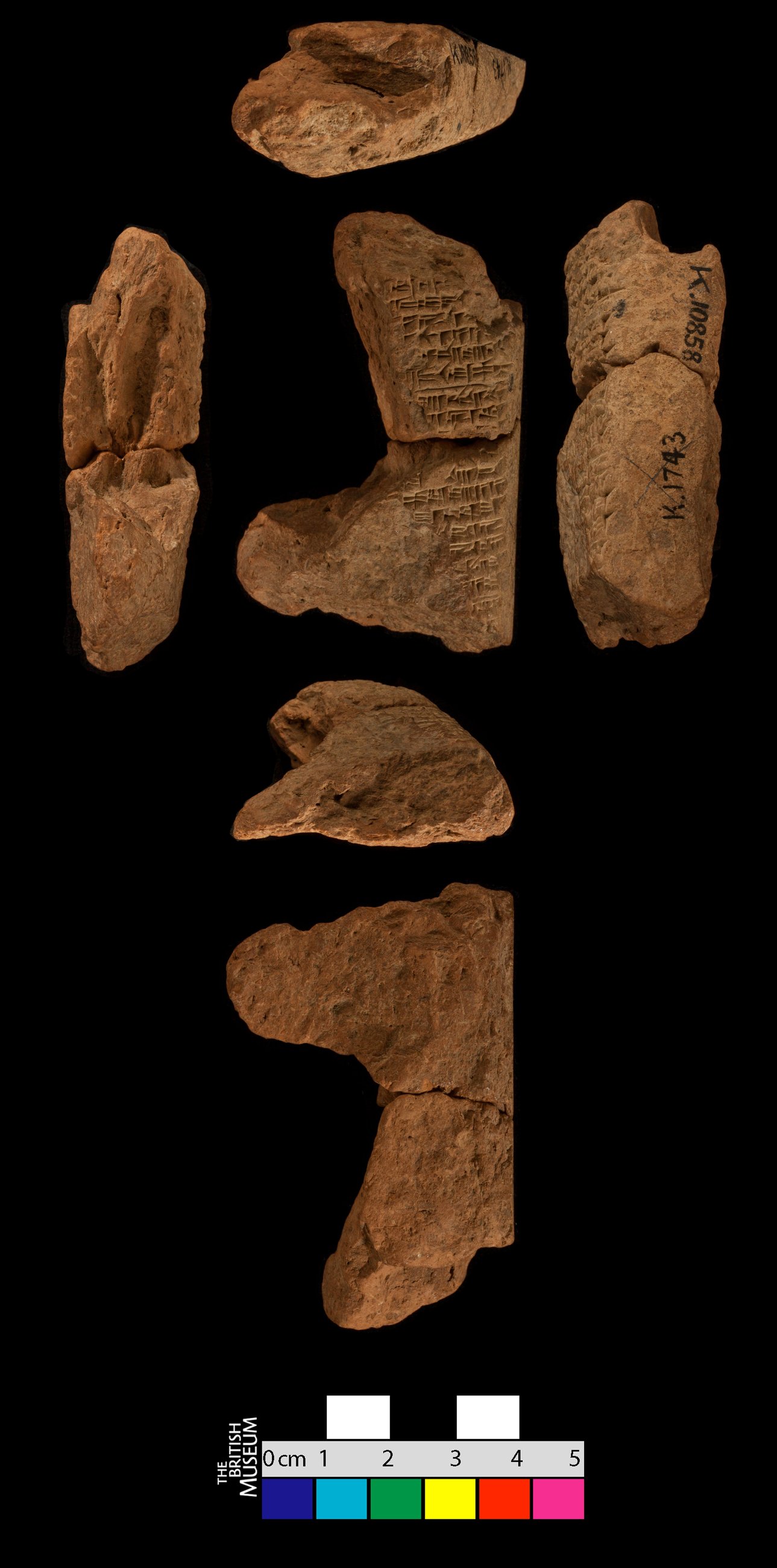
British Museum K.1743: column iii, the tablet's own lines 1' to 12'. eBL's corpus edition (https://www.ebl.lmu.de/corpus/L/2/1/SB/-) attributes SB 193-204 to this manuscript at these column and line numbers. Photograph checked: obverse, reverse and edges of two joined pieces, inks K.1743 and K.10858 on the edge (eBL: K.1743+K.10858). About 18 lines on one face and a blank other face, consistent with eBL's column iii (19). On this tablet of lines 193-194, 199-200, 202-203 only one to three signs survive and lines 195-198, 201, 204 are partly broken (square brackets and x in the Akkadian). The English of these lines translates eBL's composite text, so it includes words that are not preserved on this tablet but are restored from other manuscripts or by the editors. Square brackets in the English mark eBL's restorations in its composite text; words that survive on other tablets carry no brackets even where this tablet is broken. eBL gives no English for line(s) 193, 194, 195.
193[x x x x x x x (x x)] x la# mar!?# x!? [x (x)]
194[(x x) x x x x x nam-maš-šu]-u₂# i-d[a-x (x)]
195[x x (x x x x x x) x-le]-e?# ša₂-ni-tu₂ x [x]
196[x (x) x x x x i-lu-um-m]a qa-a-a-a[š₂]
197[x x x x x x x x x] {d#}iš-tar-ri#
198[x x x x x x x meš-ru]-u₂# u la-pa-nu
199[x x x x x x x x (x x) t]a-šim-te
200[x x x x x x x x x x x x t]a-mal-lik
201[x x x x x (x x) mu-ti]-i# ru#-uq#-ma#
202[x x x x x (x x)] u₂#-bi#-la#
203[x x x x x (x x x) ip-pa-rak]-ki# lib₃-bi
204[x x x x x x šu-hu-z]a šap-ta-a-a
193(no English for this line in the eBL edition)
194(no English for this line in the eBL edition)
195(no English for this line in the eBL edition)
196The prolongation [of life is a god’s] to grant,
197The … […] a goddess (alone) [ordains].
198Wealth and poverty are ordained since times of yore.
199… […] discernment
200You are masterful, you teach the people all wisdom,
201[… a scholar (…)], “My death is far in the future.”
202[…] the “egghead” brought in.
203[The hidden …] my heart [does not] cease,
204My discourse was [blessed], wise, well schooled,
Where on the image
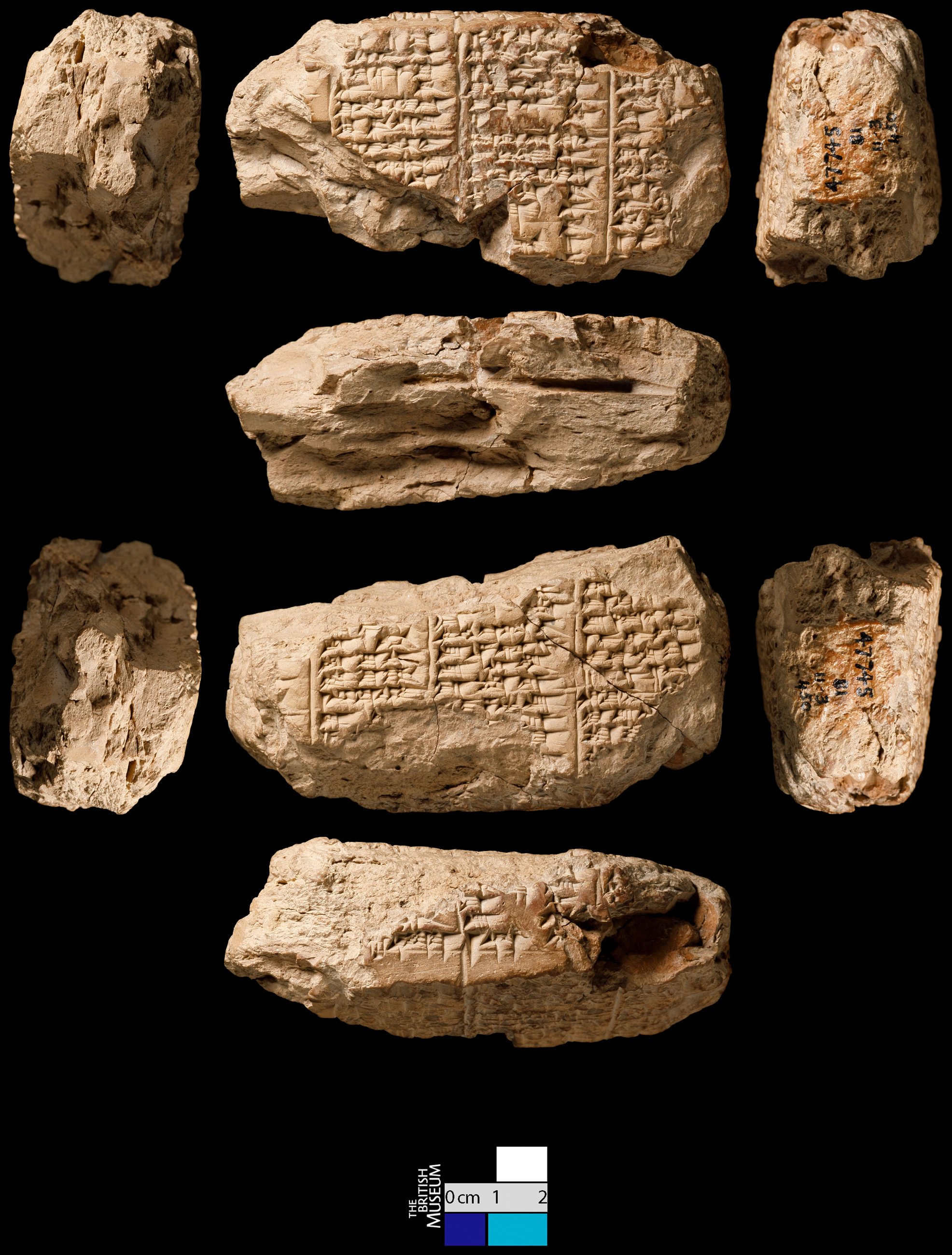
British Museum BM.47745: column iii, the tablet's own lines 3' to 16. eBL's corpus edition (https://www.ebl.lmu.de/corpus/L/2/1/SB/-) attributes SB 205-220 to this manuscript at these column and line numbers. Photograph checked: obverse, reverse and edges of a fragment about 8 cm wide, ink 47745 on the side edge. About 13 lines with vertical rulings on the obverse, and about 10 on the reverse plus 2 on the bottom edge; broadly consistent with eBL's columns ii (14) and iii (18). On this tablet of lines 213-216, 218 only one to three signs survive and lines 205-212, 217, 219-220 are partly broken (square brackets and x in the Akkadian). The English of these lines translates eBL's composite text, so it includes words that are not preserved on this tablet but are restored from other manuscripts or by the editors. Square brackets in the English mark eBL's restorations in its composite text; words that survive on other tablets carry no brackets even where this tablet is broken.
205[x x (x x)] | tup*#-pa*#-šu₂*# | ma-li šu-ki*#-a?#-m[i?]
206[x x (x x x)] en-qu | mi-hi-iṣ-ta-šu₂ | u₂-ša₂-da*-an-ni
207[ka-aṣ-ru-t]u₂ | ed-lu-tu₂* | u₂-pat-ta-a | ana pa-ni-ia
208[x x (x)] x | uk-ku-piš | u₂-ru-uh | dum-qi₂-im-ma
209[x (x x)] x | ana hu-ur pi-i | su-le-e | <<a>> a-ṣa-a-du
210[x (x x)] x | ip-si[l₂] | ha#-aš₂#-ša₂-mu-u₂ | ru-ku-ub LUG[AL]
211[x x (x)] x | a-l[i*-lu | x (x)] qe₂#-reb | hur-sa-an-[nu]
212[x x x x | x x | ṣur-r]a-ku | tu-š[ar-ša₂]
213[x x (x x x x x x) x x x | ne₂-me-q]i₂? | tu#-ṭ[ar?-rid]
214[x x | x x | šum-m]i? | [x x x]
215[x x x x (x x x) | x x x | x x x] | t[up-šik-ku]
216[x x x | x x (x x) | x ka-bit-t]e | š[it-kun]
217[x x (x x) | x x (x x) | p]al-ku#-u₂ | ni#-[bit-su]
218[x x (x) | x x (x)] | ba-ši | ṣ[a!?-bu-u-šu]
219[x x x | (x) x i₃]-li₂ | u₂-ṣur# | m[e-si-šu]
220[x x | (x)] x-ir*# ši-pil-ma | ana SIG₅-t[u₄ | [x x x]
205[…] his tablet, replete with the scribal art,
206The learned [in …] revealed to me its writing,
207He opened my eyes to knotty and impenetrable things.
208It seems that the course of my good fortune was fleeting,
209I prowl the streets [looking] for [something (?)] for the emptiness of (my) mouth.
210[…] has turned away, the thoroughbred mount of a king.
211[… the] hero among the mountains.
212You have let your subtle mind wander,
213[…] you have driven wisdom away,
214[You] have spurned [propriety], you have besmirched (every) code.
215Far will be the workman’s basket from the … of the one who is lofty in […],
216[The … lower-class man] is established as a person of importance,
217[…] he is called a scholar,
218“His head is held high, he gets what he wants.”
219Follow in the way of a god, observe his rites,
220[…], keep low, stand ready for good fortune!
Where on the image
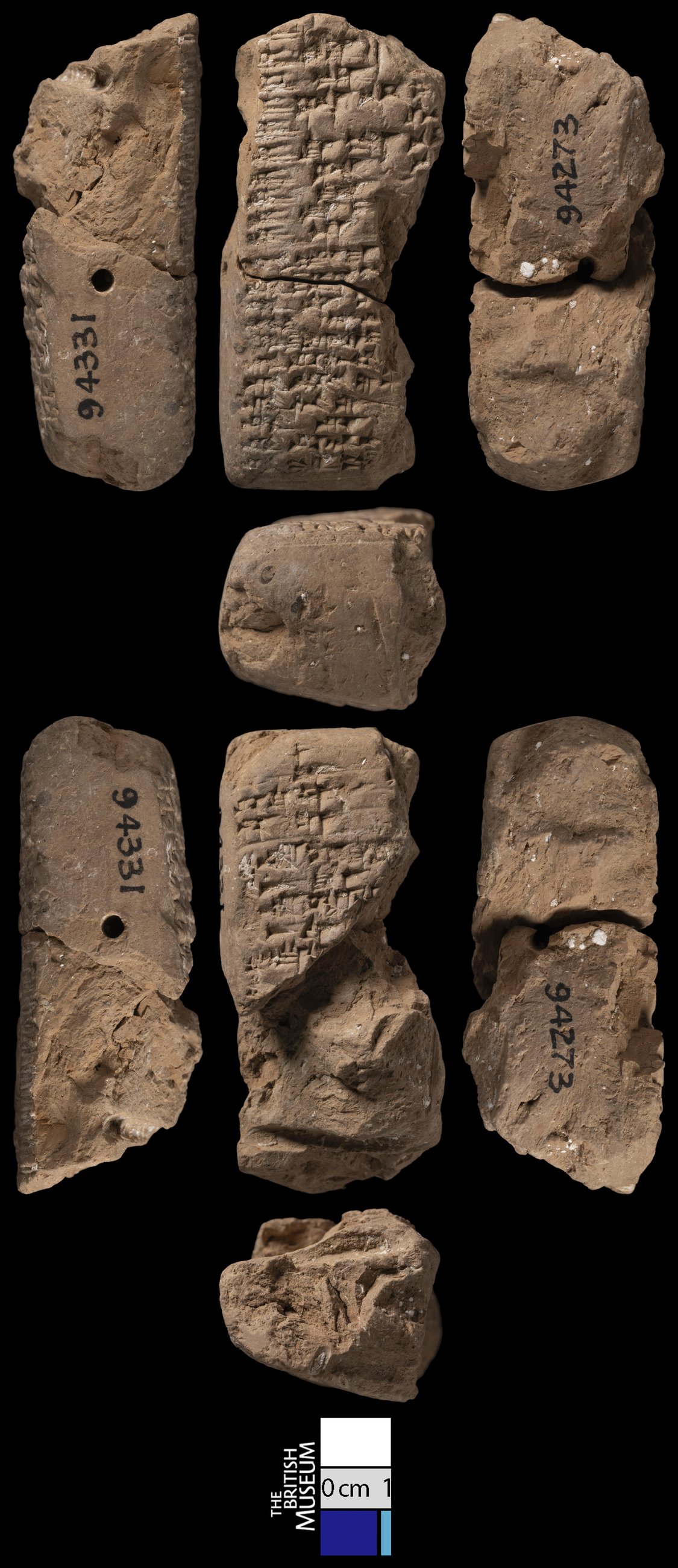
British Museum BM.94273: column iv, the tablet's own lines 5a to 10. eBL's corpus edition (https://www.ebl.lmu.de/corpus/L/2/1/SB/-) attributes SB 221-228 to this manuscript at these column and line numbers. Photograph checked: obverse, reverse and edges of two joined pieces, inks 94273 and 94331 (eBL: BM.94273+BM.94331). About 22 lines of small script on the obverse and about 12 on the upper reverse, consistent with eBL's columns i (22) and iv (12). On this tablet lines 222, 225 are entirely broken, of lines 223, 226-228 only one to three signs survive and lines 221, 224 are partly broken (square brackets and x in the Akkadian). The English of these lines translates eBL's composite text, so it includes words that are not preserved on this tablet but are restored from other manuscripts or by the editors. Square brackets in the English mark eBL's restorations in its composite text; words that survive on other tablets carry no brackets even where this tablet is broken.
221pu-uh sak#-ki#-lu# [x x x x x x : ]
222[x x (x x x) x x (x x x) x x x x x x x]
223bu-ša#-[a | x x x | x x x x | x x x x (x)]
224[p]u-uh#-hu-ru i[l-lat x x x x x x (x) : ]
225[x x x x (x x) x x x x x x x (x)]
226[p]u-ut-[tu-u₂ | x x x x x | x x x | x x x]
227pu-uq-q[a-ak x x x x (x) x x (x x) x x (x x) (...)]
228b[u-liš | x x | x x x (x) | (x x) x x]
221Taking the miser’s place, the scoundrel …,
222[He who has nothing], everyone (calls him) a villain.
223(While) he who amasses goods is (considered) tireless (and) of [...],
224When they (sc. the people) assemble as a group, each armed with their mug,
225Beasts […] to the disobedient … […],
226Chapels are open, […] let them be my shelter.
227(Although) I was attentive to the will of [(my) god, I …],
228Should I become beastlike, … […] …
Where on the image
British Museum K.8463: column iii, the tablet's own lines 1' to 6'. eBL's corpus edition (https://www.ebl.lmu.de/corpus/L/2/1/SB/-) attributes SB 229-234 to this manuscript at these column and line numbers. Photograph checked: obverse, reverse and edges of three joined pieces, inks K.8463, K.103.. and K.20280 (eBL: K.8463+K.10301+K.20280). Two obverse columns of about 17 and 10 lines, and about 6 lines at the lower right of the mostly blank reverse; consistent with eBL's columns i (17), ii (10) and iii (8). On this tablet of lines 229-230 only illegible traces (x) survive, of lines 231-233 only one to three signs survive and line 234 is partly broken (square brackets and x in the Akkadian). The English of these lines translates eBL's composite text, so it includes words that are not preserved on this tablet but are restored from other manuscripts or by the editors. Square brackets in the English mark eBL's restorations in its composite text; words that survive on other tablets carry no brackets even where this tablet is broken.
229[x x x x x x (x) x x (x x)] x [x x (x x x)]
230[x x x x x x x x x] x x x [x x x (x x)]
231[x x x x x x (x)] x bi (erased: x) a [x x x x (x x)]
232[x x x x x] i-te-[niš? x x x]
233[x x x ṣur]-ri# e-te-[me x x x]
234[x x x ri]t?-pa-šu ni-[x x x x x (x)]
229Should I … my pride […]
230Like a stand-in, my ineptitude … […]
231I am snuffed out for lack of … […]
232A mountain of plenty, its [yield] has withered,
233He of wide comprehension has become like a deaf man,
234He whose mind reached out in every direction, … […].
Where on the image
British Museum K.9290: column iv, the tablet's own lines 1 to 18. eBL's corpus edition (https://www.ebl.lmu.de/corpus/L/2/1/SB/-) attributes SB 235-252 to this manuscript at these column and line numbers. Photograph checked: obverse, reverse and edges of two joined pieces, inks K.9290 and K.9297. Two columns on each face, about 33 and 19 lines on the obverse and 35 and 16 on the reverse; consistent with eBL's 103 lines in columns i to iv. Every line of this section is complete on this tablet; the English translates eBL's composite text, which may follow other manuscripts where they differ in wording.
235ša har-ha-ri ša tah-ši-hu bu-na-šu
236ša-am-mi e-bu-ri di-šu₂ za-mar i-hal-liq
237ša la DINGIR is-hap-pu ra-ši ma-ak-ku-ra
238ša#-ga-šu kak-ka-šu₂ i-red-di-šu
239ša# la tu-ba-ʾu-u₂ ṭe₃-em DINGIR mi-nu-u₂ ku-šir₃-ka
240ša-di-id ni-ir DINGIR lu-u₂ ba-hi sa-di-ir a-kal-šu₂
241ša-a-ra ṭa-a-ba ša₂ DINGIR-MEŠ ši-te-ʾ-e-ma
242ša MU.AN.NA tu-hal-li-qu ta-rab a-na sur-ri
243i-na ad-na-a-ti ab-re-e-ma šit-na-a i-da-a-tu
244i-lu a-na šar-ra-bi ul pa-ri-is a-lak-ta
245i-šad-da-ad i-na miṭ-ra-ta za-ru-u₂ {giš}MA₂
246i-na qe₂-reb {giš}dun-ni ra-mi bu-kur₂-šu
247i-lak-kid lab-biš ra-bi a-hi u₂-ru-uh-šu
248i-li-iṣ-ma dup!(KIŠIB)-pu-šu-u₂ pa-ra-a i-red-di
249i-na su-qi₂ zi-lul-liš# i#-ṣa-a-a-ad ap-lu₄
250i-šar-ra-ak ter-den-nu a-na ka-ti-i ti-u₂-ta
251i-na ma-har qad₃-mi ša₂ ad-da-mu-ṣu mi-na-a u₂-at-tar
252i-na ša₂-pal aš₂-pal-ti-ia kit-mu#-sa-ku a-na-ku
235As for the vile lackey whose good fortune you craved,
236The verdure of the harvest, the pasture, will soon disappear.
237The godless reprobate who is grasping of possessions,
238The weapon of his deathblow is coming up behind him.
239Unless you heed the will of (your) god, what will be your gain?
240He who bears a god’s yoke will never want for food, though it may be meager.
241Seek after the favorable breeze of the gods,
242What you lost over a year you will recoup in a moment.
243I have looked around in society, indications are the contrary:
244God does not block the progress of a demon.
245A father hauls a boat up a channel,
246While his firstborn sprawls in bed.
247The eldest son sprints ahead like a lion,
248The younger brother is content to drive a donkey.
249The heir strolls the streets like an idler,
250The younger son makes provision for the destitute.
251What has it profited me that I knelt before a deity?
252It is I who must (now) bow before my inferior!
Where on the image
British Museum K.9290: column iv, the tablet's own lines 19 to 35. eBL's corpus edition (https://www.ebl.lmu.de/corpus/L/2/1/SB/-) attributes SB 253-269 to this manuscript at these column and line numbers. Photograph checked: obverse, reverse and edges of two joined pieces, inks K.9290 and K.9297. Two columns on each face, about 33 and 19 lines on the obverse and 35 and 16 on the reverse; consistent with eBL's 103 lines in columns i to iv. On this tablet lines 254-258, 260, 263-269 are partly broken (square brackets and x in the Akkadian). The English of these lines translates eBL's composite text, so it includes words that are not preserved on this tablet but are restored from other manuscripts or by the editors. Square brackets in the English mark eBL's restorations in its composite text; words that survive on other tablets carry no brackets even where this tablet is broken. Lines 253, 259, 261-262 are complete on this tablet.
253i-na-a-ṣa-an-ni a-hu-ru-u₂ ša₂-ru#-u₂ u šam-hu
254[l]e-ʾ-u₂ pal-ku-u₂ šu-e ta-šim-ti
255[l]i-it-mu-um-ma ṣur-ra-ka DINGIR ta-da-a-a-aṣ
256[l]i-ib-bi DINGIR ki-ma qe₂-reb AN-e ne₂-si-ma
257[l]e-e₂-a-us-su šup-šu-qat-ma UG₃-MEŠ la lam#-da#
258[l]i-pit ŠU {d#}a#-ru#-ru# mit-ha-riš na-piš-ti
259li-il-li-du min₃-su ka-liš la mur-ri
260li-it-tu b[u]-ur#-šu reš-tu-u₂ ša₂-pil-ma
261li-gi-mu-ša₂ ar-ku-u₂ ma-ṣi šit-tin-šu
262li#-il#-lu ma-ru pa#-na-a i-al-lad
263[le-ʾu-u]m qar-du ša₂ ša₂-ni-i ni-bit-su
264[li-ʾi-i]d mi-na-a pak-ki DINGIR-ma UG₃-MEŠ la lam-da
265[u₂-taq-qam]-ma ib-ri li-mad ši-ib-qi₂-i[a]
266[u₂-ṣur n]u-us-su-qa si₃-qar₂ at-me₂-e-a#
267[x x x x x] a#-mat kab-ti ša₂ lit-mu-da ša₂-ga-š[a₂]
268[x x x x x x x x l]a i-pu-šu₂ hi-bi[l-ta]
269[x x x x x x x an]-zil#-la#-šu₂# ki[t-tu₄]
253The riffraff despise me, as do the rich and proud.
254Adept scholar, master of discernment,
255You blaspheme in the anguish of your thoughts.
256Divine purpose is as far beyond (you) as innermost heaven,
257It is too difficult to be conversant with, people cannot understand it.
258Among all living creatures, the handiwork of the birth-goddess,
259Why should offspring be completely without a say?
260The cow’s first calf is inferior,
261Her subsequent offspring is twice as big.
262The first child is born a weakling,
263The second is known as a capable warrior.
264Even if one (tries to) apprehend divine wisdom, people cannot understand it.
265Pay attention, my friend, learn my (next) parry,
266Consider the well-chosen diction of my speech.
267They extol the words of an important man who is accomplished in murder,
268They denigrate the powerless who has committed no crime.
269They esteem truthful the wicked to whom truth is abhorrent,
Where on the image
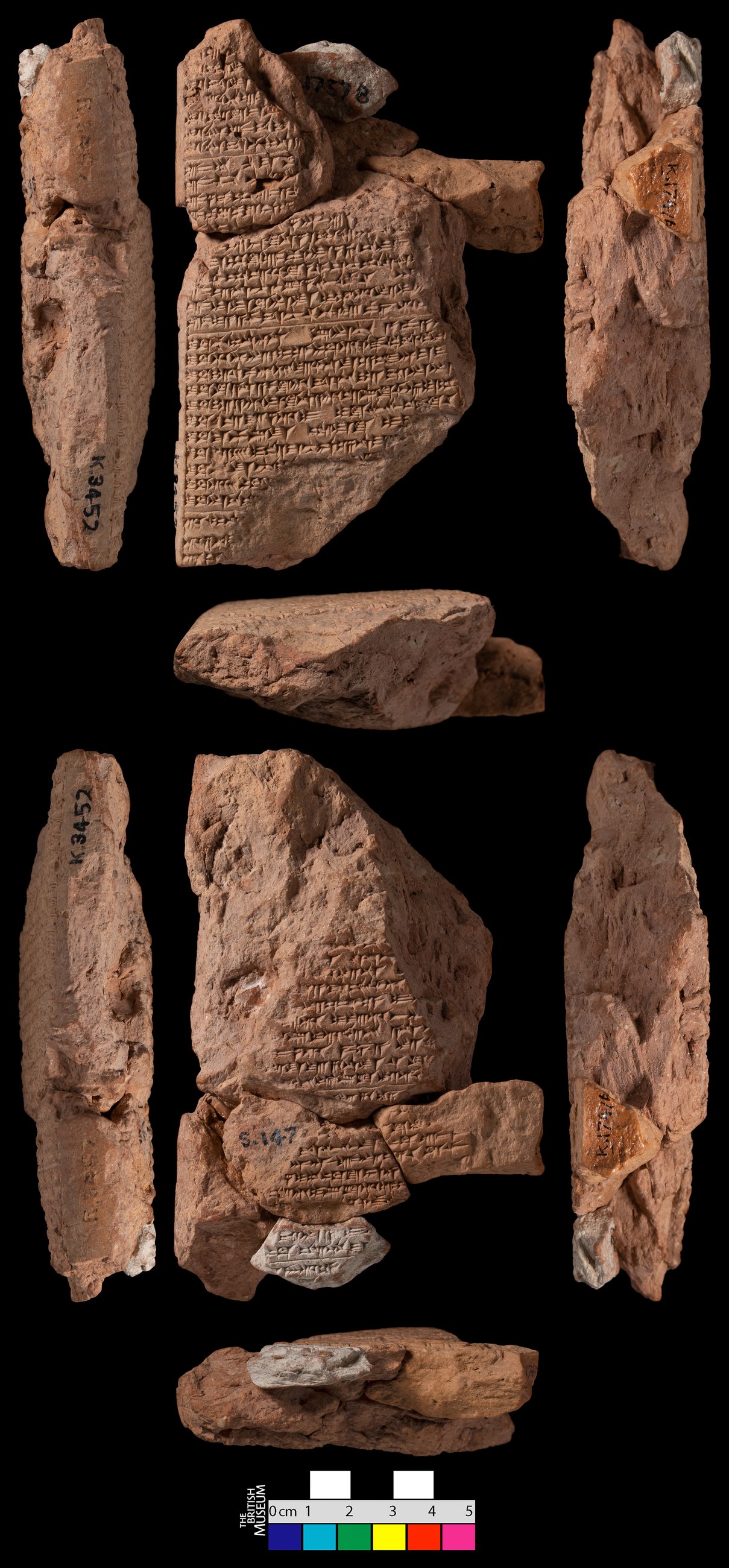
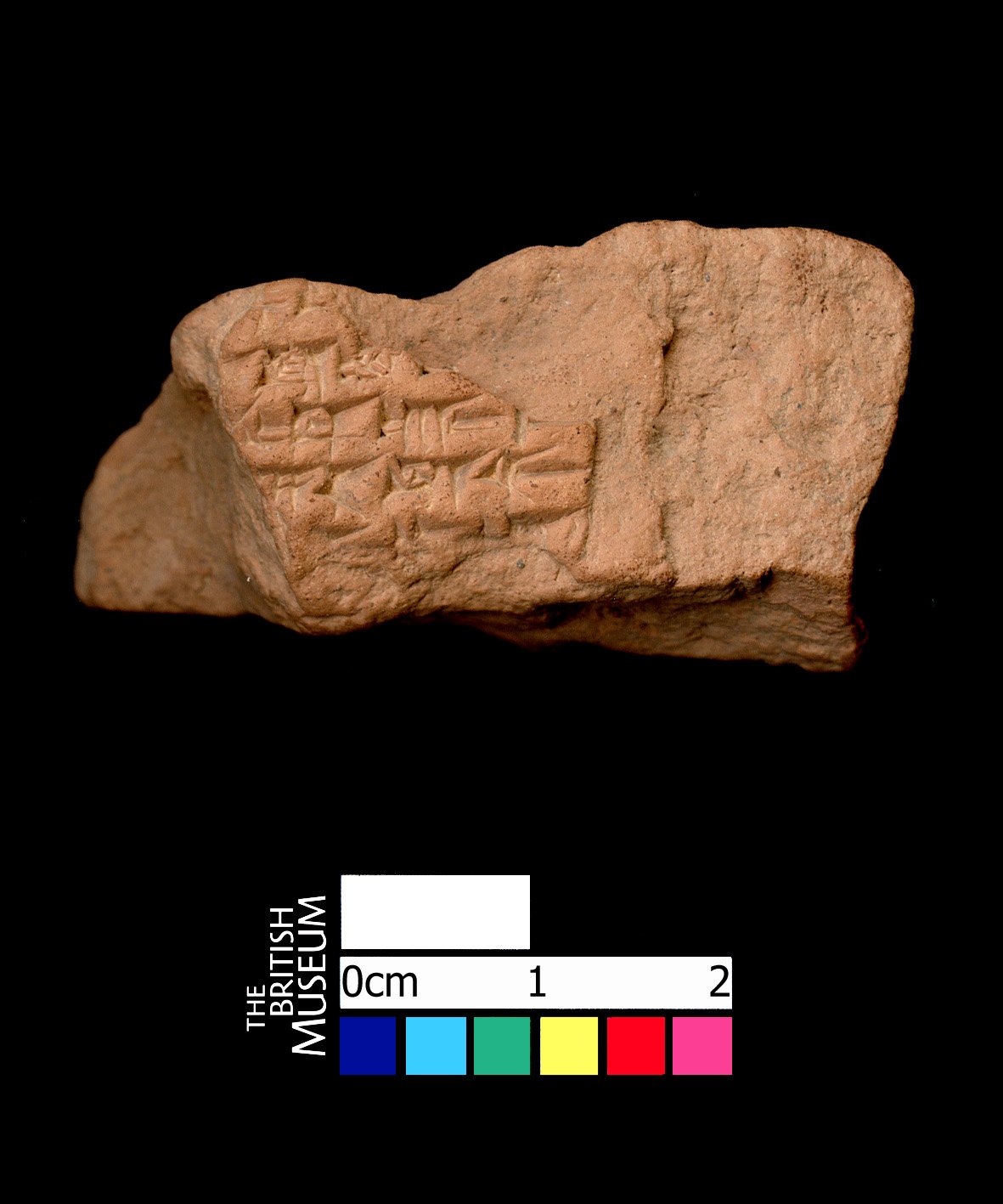
British Museum K.3452: column iv, the tablet's own lines 13' to 32'. eBL's corpus edition (https://www.ebl.lmu.de/corpus/L/2/1/SB/-) attributes SB 270-289 to this manuscript at these column and line numbers. Photograph checked: obverse, reverse and edges of several joined pieces, inks K.3452, S.147 and 17578 (eBL: K.3452+K.17474+K.17578+Sm.147). About 35 lines on the obverse and about 25 on the reverse across the joined pieces; with the linked piece K.17474 this is consistent with eBL's columns i (24) and iv (32). eBL treats K.3452 + K.17474 as one manuscript and holds a separate photograph of each of these pieces; it does not say which piece carries which line, so the photographs of K.3452 + K.17474 are linked, and the lines are on one or more of them. On this tablet of line 289 only one to three signs survive and lines 270-278, 280, 282-288 are partly broken (square brackets and x in the Akkadian). The English of these lines translates eBL's composite text, so it includes words that are not preserved on this tablet but are restored from other manuscripts or by the editors. Square brackets in the English mark eBL's restorations in its composite text; words that survive on other tablets carry no brackets even where this tablet is broken. Lines 279, 281 are complete on this tablet.
270[u₂-ṭ]a-ra#-du# ki-na ša₂ ṭe₃-em DINGIR pu-u[q-qu]
271[u₂]-ma-al-lu-u₂ pa-šal-la ša₂ ha-bi-la ni-[ṣir-ta]
272[u₂]-raq-qu iš-pik-ki ša₂ pi-is-nu-qu te-ʾu-u₂#-[ut-su]
273u₂#-dan-na-nu šal-ṭu ša₂ pu-hur-šu₂ an-[ni]
274u₂-la-la ib-ba-tu i-dar-ri-su la# l[e?-e-a]
275u₂# ia-a-ši et-nu-šu₂ be-el pa-ni re-d[an-ni]
276šar qad₃-mi <<na>> {d}na-ru (written over erased x) ba-nu-u a-pa-a-t[i]
277šar-hu {d}zu-lum-mar ka-ri-ṣu ṭi-iṭ-ṭi-š[in*]
278šar-ra-tu₂ pa-ti-iq-ta-ši-na šu-e-tu₄ {d}ma-m[a]
279šar-ku a-na a-me-lu-ti et-gu-ra da-ba-ba
280sar-ra-a-ti la ki-na-a-ti iš-ru-ku-ši sa-at-tak-[(ku)]
281šar-hi-iš ša ša₂-ri-i i-dab-bu-bu dum#-qi₂#-šu₂
282šar-ma maš-ru-šu il-la-ku i-d[a-a-šu₂]
283[š]ar-ra#-qiš i-lam-ma-nu du-un-na-ma-a# a!?#-[me-la]
284šar-ku#-šu nu-ul-la#-a#-ti# i-k[ap-pu-du-šu₂ x x]
285sar-re-eš# ka-l[a x x x x x x x x x x x x x x x]
286šar-ba-bi-iš# [x x x x x x x x x x x x x x]
287re-me₂-na-a#-t[a? x x x x x x x x x x]
288re-ṣa-am-m[a x x x x x x x x x x]
289re-e-š[u!? x x x x x x x x x x]
270They drive away the truthful man who heeds the will of god.
271They fill the oppressor’s strongroom with treasure,
272The larder of the helpless they empty of [his] provisions.
273They shore up the tyrant whose all is crime,
274They ruin the weak, they oppress the powerless.
275And as for me, without means, a magnate harasses me.
276Enlil, king of the gods, who created teeming humankind,
277Majestic Ea, who pinched off their clay,
278The queen who fashioned them, mistress Mami,
279Gave perverse words to the human race,
280They endowed them in perpetuity with lies and falsehood.
281Solemnly they speak well of a rich man,
282“He’s the king,” they say, “riches attend him.”
283They malign a poor man as a thief,
284They lavish malice upon him, they conspire to kill him.
285Like a criminal, they make him suffer every evil because he has no vault.
286They make him go numb with fear, they snuff him out like an ember.
287You are sympathetic, my friend, be considerate of (my) misfortune.
288Help me, see (my) distress, you should be cognizant of it.
289I am a suppliant, versatile servant,
Notes
- Akkadian: eBL transliteration of the signs on the photographed tablet (manuscript-level ATF), not a composite text.
- English: B. R. Foster's translation in the eBL edition; it renders eBL's composite text, including restorations from other tablets.
- Line numbers: eBL edition. Each section also gives the tablet's own column and line numbers.
- Signs in the Akkadian: [ ] broken away; x illegible sign; # damaged sign; ? uncertain reading; ! sign corrected by the editor; * collated sign; ... broken signs of unknown number; ( ) signs perhaps broken away; { } determinative; < > sign omitted by the scribe, supplied by the editor; << >> sign written in error by the scribe; / alternative readings; : divider sign written on the tablet; @v and similar: variant or modified form of a sign; | division between the parts of a line written in separate columns on the tablet.
Cite
Sources
- Source: British Museum tablet photographs + eBL manuscript transliterations (eBL corpus edition L II.1, Theodicy, SB -) + English of the eBL edition (B. R. Foster (eBL edition)) (holding institution)
- Critical edition: electronic Babylonian Library, Theodicy, manuscript transliterations
← previous · → next · v cycle view · l back to library