Acts, Chapter 25 (Codex Vaticanus)
Introduction
Acts 25 from Codex Vaticanus (4th c.).
How was this verified? (Provenance)
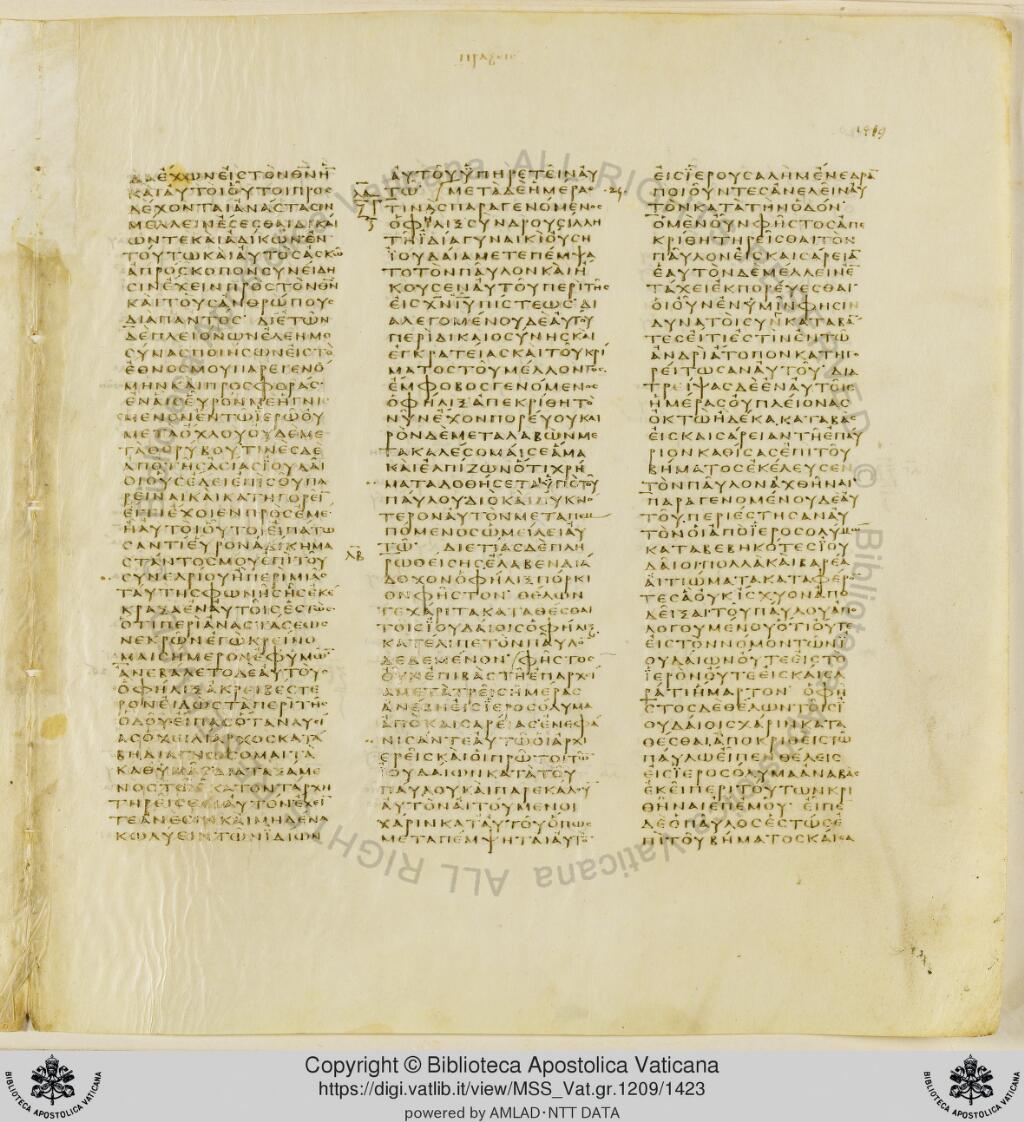
1Φῆστος οὖν ἐπιβὰς τῇ ἐπαρχείῳ μετὰ τρεῖς ἡμέρας ἀνέβη εἰς Ἱεροσόλυμα ἀπὸ Καισαρίας, 2ἐνεφάνισάν τε αὐτῷ οἱ ἀρχιερεῖς καὶ οἱ πρῶτοι τῶν Ἰουδαίων κατὰ τοῦ Παύλου, καὶ παρεκάλουν αὐτὸν 3αἰτούμενοι χάριν κατ’ αὐτοῦ ὅπως μεταπέμψηται αὐτὸν εἰς Ἱερουσαλήμ, ἐνέδραν ποιοῦντες ἀνελεῖν αὐτὸν κατὰ τὴν ὁδόν. 4ὁ μὲν οὖν Φῆστος ἀπεκρίθη τηρεῖσθαι τὸν Παῦλον εἰς Καισάριαν, ἑαυτὸν δὲ μέλλειν ἐν τάχει ἐκπορεύεσθαι· 5οἱ οὖν ἐν ὑμῖν, φησίν, δυνατοὶ συνκαταβάντες εἴ τί ἐστιν ἐν τῷ ἀνδρὶ ἄτοπον κατηγορείτωσαν αὐτοῦ. 6διατρίψας δὲ ἐν αὐτοῖς ἡμέρας οὐ πλείους ὀκτὼ ἢ δέκα, καταβὰς εἰς Καισάριαν, τῇ ἐπαύριον καθίσας ἐπὶ τοῦ βήματος ἐκέλευσεν τὸν Παῦλον ἀχθῆναι. 7παραγενομένου δὲ αὐτοῦ περιέστησαν αὐτὸν οἱ ἀπὸ Ἱεροσολύμων καταβεβηκότες Ἰουδαῖοι, πολλὰ καὶ βαρέα αἰτιώματα καταφέροντες ἃ οὐκ ἴσχυον ἀποδεῖξαι, 8τοῦ Παύλου ἀπολογουμένου ὅτι οὔτε εἰς τὸν νόμον τῶν Ἰουδαίων οὔτε εἰς τὸ ἱερὸν οὔτε εἰς Καίσαρά τι ἥμαρτον. 9ὁ Φῆστος δὲ θέλων τοῖς Ἰουδαίοις χάριν καταθέσθαι ἀποκριθεὶς τῷ Παύλῳ εἶπεν, θέλεις εἰς Ἱεροσόλυμα ἀναβὰς ἐκεῖ περὶ τούτων κριθῆναι ἐπ’ ἐμοῦ; 10εἶπεν δὲ ὁ Παῦλος· ἑστὼς ἐπὶ τοῦ βήματος Καίσαρός εἰμι, οὗ με δεῖ κρίνεσθαι. Ἰουδαίους οὐδὲν ἠδίκηκα, ὡς καὶ σὺ κάλλιον ἐπιγινώσκεις.
1Now when Festus was come into the province, after three days he ascended from Caesarea to Jerusalem. 2Then the high priest and the chief of the Jews informed him against Paul, and besought him, 3And desired favour against him, that he would send for him to Jerusalem, laying wait in the way to kill him. 4But Festus answered, that Paul should be kept at Caesarea, and that he himself would depart shortly thither. 5Let them therefore, said he, which among you are able, go down with me, and accuse this man, if there be any wickedness in him. 6And when he had tarried among them more than ten days, he went down unto Caesarea; and the next day sitting on the judgment seat commanded Paul to be brought. 7And when he was come, the Jews which came down from Jerusalem stood round about, and laid many and grievous complaints against Paul, which they could not prove. 8While he answered for himself, Neither against the law of the Jews, neither against the temple, nor yet against Caesar, have I offended any thing at all. 9But Festus, willing to do the Jews a pleasure, answered Paul, and said, Wilt thou go up to Jerusalem, and there be judged of these things before me? 10Then said Paul, I stand at Caesar’s judgment seat, where I ought to be judged: to the Jews have I done no wrong, as thou very well knowest.
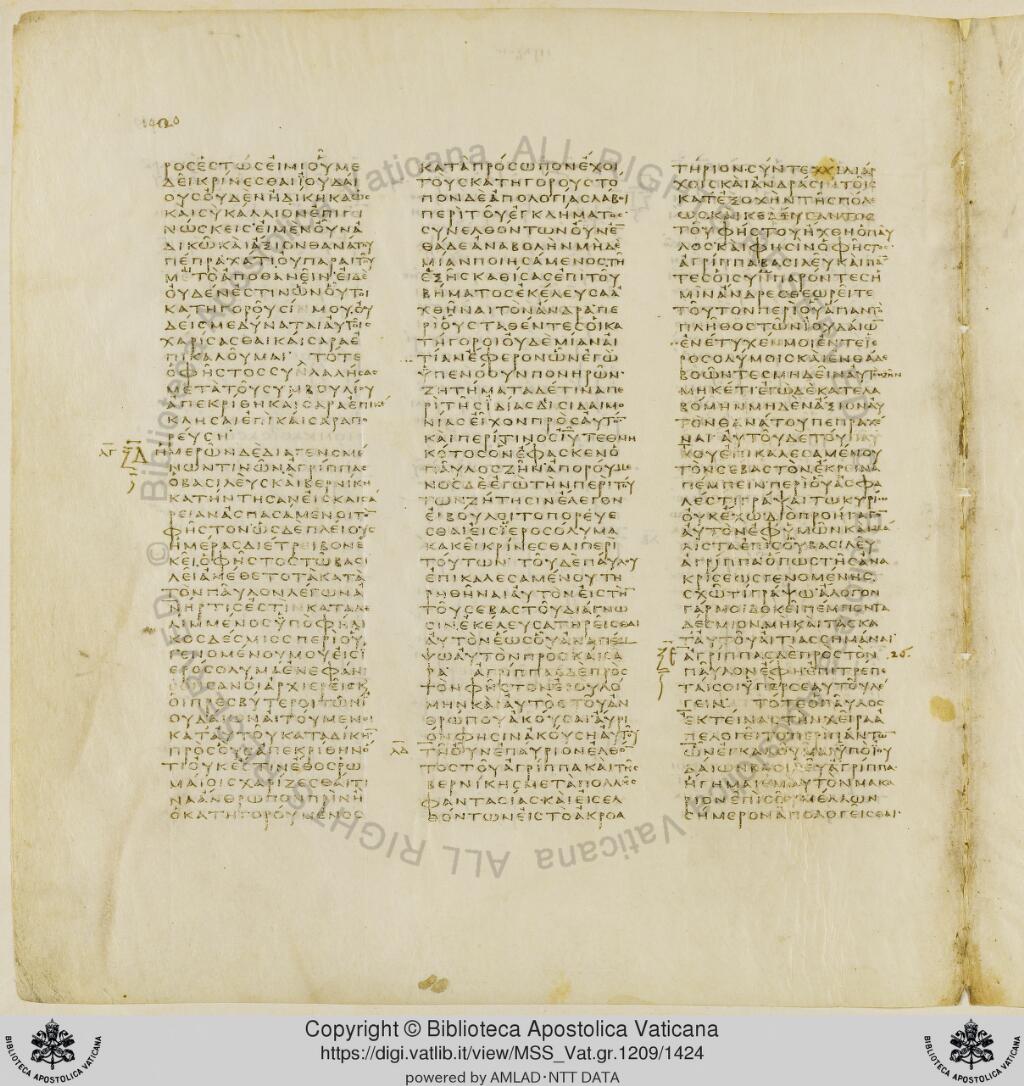
10εἶπεν δὲ ὁ Παῦλος· ἑστὼς ἐπὶ τοῦ βήματος Καίσαρός εἰμι, οὗ με δεῖ κρίνεσθαι. Ἰουδαίους οὐδὲν ἠδίκηκα, ὡς καὶ σὺ κάλλιον ἐπιγινώσκεις. 11εἰ μὲν οὖν ἀδικῶ καὶ ἄξιον θανάτου πέπραχά τι, οὐ παραιτοῦμαι τὸ ἀποθανεῖν· εἰ δὲ οὐδέν ἐστιν ὧν οὗτοι κατηγοροῦσίν μου, οὐδείς με δύναται αὐτοῖς χαρίσασθαι· Καίσαρα ἐπικαλοῦμαι. 12τότε ὁ Φῆστος συνλαλήσας μετὰ τοῦ συμβουλίου ἀπεκρίθη, Καίσαρα ἐπικέκλησαι, ἐπὶ Καίσαρα πορεύσῃ. 13Ἡμερῶν δὲ διαγενομένων τινῶν Ἀγρίππας ὁ βασιλεὺς καὶ Βερνίκη κατήντησαν εἰς Καισάριαν ἀσπασάμενοι τὸν Φῆστον. 14ὡς δὲ πλείους ἡμέρας διέτριβον ἐκεῖ, ὁ Φῆστος τῷ βασιλεῖ ἀνέθετο τὰ κατὰ τὸν Παῦλον λέγων, ἀνήρ τίς ἐστιν καταλελειμμένος ὑπὸ Φήλικος δέσμιος, 15περὶ οὗ γενομένου μου εἰς Ἱεροσόλυμα ἐνεφάνισαν οἱ ἀρχιερεῖς καὶ οἱ πρεσβύτεροι τῶν Ἰουδαίων, αἰτούμενοι κατ’ αὐτοῦ καταδίκην· 16πρὸς οὓς ἀπεκρίθην ὅτι οὐκ ἔστιν ἔθος Ῥωμαίοις χαρίζεσθαί τινα ἄνθρωπον πρὶν ἢ ὁ κατηγορούμενος κατὰ πρόσωπον ἔχοι τοὺς κατηγόρους τόπον τε ἀπολογίας λάβοι περὶ τοῦ ἐγκλήματος. 17συνελθόντων οὖν αὐτῶν ἐνθάδε ἀναβολὴν μηδεμίαν ποιησάμενος τῇ ἑξῆς καθίσας ἐπὶ τοῦ βήματος ἐκέλευσα ἀχθῆναι τὸν ἄνδρα· 18περὶ οὗ σταθέντες οἱ κατήγοροι οὐδεμίαν αἰτίαν ἔφερον ὧν ἐγὼ ὑπενόουν πονηράν, 19ζητήματα δέ τινα περὶ τῆς ἰδίας δεισιδαιμονίας εἶχον πρὸς αὐτὸν καὶ περί τινος Ἰησοῦ τεθνηκότος, ὃν ἔφασκεν ὁ Παῦλος ζῆν. 20ἀπορούμενος δὲ ἐγὼ τὴν περὶ τούτων ζήτησιν ἔλεγον εἰ βούλοιτο πορεύεσθαι εἰς Ἱεροσόλυμα κἀκεῖ κρίνεσθαι περὶ τούτων. 21τοῦ δὲ Παύλου ἐπικαλεσαμένου τηρηθῆναι αὐτὸν εἰς τὴν τοῦ Σεβαστοῦ διάγνωσιν, ἐκέλευσα τηρεῖσθαι αὐτὸν ἕως οὗ ἀναπέμψω αὐτὸν πρὸς Καίσαρα. 22Ἀγρίππας δὲ πρὸς τὸν Φῆστον, ἐβουλόμην καὶ αὐτὸς τοῦ ἀνθρώπου ἀκοῦσαι. αὔριον, φησίν, ἀκούσῃ αὐτοῦ. 23Τῇ οὖν ἐπαύριον ἐλθόντος τοῦ Ἀγρίππα καὶ τῆς Βερνίκης μετὰ πολλῆς φαντασίας καὶ εἰσελθόντων εἰς τὸ ἀκροατήριον σύν τε χιλιάρχοις καὶ ἀνδράσιν τοῖς κατ’ ἐξοχὴν τῆς πόλεως, καὶ κελεύσαντος τοῦ Φήστου ἤχθη ὁ Παῦλος. 24καί φησιν ὁ Φῆστος· Ἀγρίππα βασιλεῦ καὶ πάντες οἱ συνπαρόντες ἡμῖν ἄνδρες, θεωρεῖτε τοῦτον περὶ οὗ ἅπαν τὸ πλῆθος τῶν Ἰουδαίων ἐνέτυχόν μοι ἔν τε Ἱεροσολύμοις καὶ ἐνθάδε, βοῶντες μὴ δεῖν αὐτὸν ζῆν μηκέτι. 25ἐγὼ δὲ κατελαβόμην μηδὲν ἄξιον αὐτὸν θανάτου πεπραχέναι, αὐτοῦ δὲ τούτου ἐπικαλεσαμένου τὸν Σεβαστὸν ἔκρινα πέμπειν. 26περὶ οὗ ἀσφαλές τι γράψαι τῷ κυρίῳ οὐκ ἔχω· διὸ προήγαγον αὐτὸν ἐφ’ ὑμῶν καὶ μάλιστα ἐπὶ σοῦ, βασιλεῦ Ἀγρίππα, ὅπως τῆς ἀνακρίσεως γενομένης σχῶ τί γράψω· 27ἄλογον γάρ μοι δοκεῖ πέμποντα δέσμιον μὴ καὶ τὰς κατ’ αὐτοῦ αἰτίας σημᾶναι.
10Then said Paul, I stand at Caesar’s judgment seat, where I ought to be judged: to the Jews have I done no wrong, as thou very well knowest. 11For if I be an offender, or have committed any thing worthy of death, I refuse not to die: but if there be none of these things whereof these accuse me, no man may deliver me unto them. I appeal unto Caesar. 12Then Festus, when he had conferred with the council, answered, Hast thou appealed unto Caesar? unto Caesar shalt thou go. 13And after certain days king Agrippa and Bernice came unto Caesarea to salute Festus. 14And when they had been there many days, Festus declared Paul’s cause unto the king, saying, There is a certain man left in bonds by Felix: 15About whom, when I was at Jerusalem, the chief priests and the elders of the Jews informed me, desiring to have judgment against him. 16To whom I answered, It is not the manner of the Romans to deliver any man to die, before that he which is accused have the accusers face to face, and have licence to answer for himself concerning the crime laid against him. 17Therefore, when they were come hither, without any delay on the morrow I sat on the judgment seat, and commanded the man to be brought forth. 18Against whom when the accusers stood up, they brought none accusation of such things as I supposed: 19But had certain questions against him of their own superstition, and of one Jesus, which was dead, whom Paul affirmed to be alive. 20And because I doubted of such manner of questions, I asked him whether he would go to Jerusalem, and there be judged of these matters. 21But when Paul had appealed to be reserved unto the hearing of Augustus, I commanded him to be kept till I might send him to Caesar. 22Then Agrippa said unto Festus, I would also hear the man myself. To morrow, said he, thou shalt hear him. 23And on the morrow, when Agrippa was come, and Bernice, with great pomp, and was entered into the place of hearing, with the chief captains, and principal men of the city, at Festus’ commandment Paul was brought forth. 24And Festus said, King Agrippa, and all men which are here present with us, ye see this man, about whom all the multitude of the Jews have dealt with me, both at Jerusalem, and also here, crying that he ought not to live any longer. 25But when I found that he had committed nothing worthy of death, and that he himself hath appealed to Augustus, I have determined to send him. 26Of whom I have no certain thing to write unto my lord. Wherefore I have brought him forth before you, and specially before thee, O king Agrippa, that, after examination had, I might have somewhat to write. 27For it seemeth to me unreasonable to send a prisoner, and not withal to signify the crimes laid against him.
Cite
Source & Cross-References
- Source text: Codex Vaticanus via Vatican IIIF + NTVMR verse mapping + Tischendorf + KJV — view original
- Critical edition: Tischendorf 8th edition (1869)
← previous · → next · v cycle view · l back to library