Luke, Chapter 20 (Codex Vaticanus)
Introduction
Luke 20 from Codex Vaticanus (4th c.).
How was this verified? (Provenance)
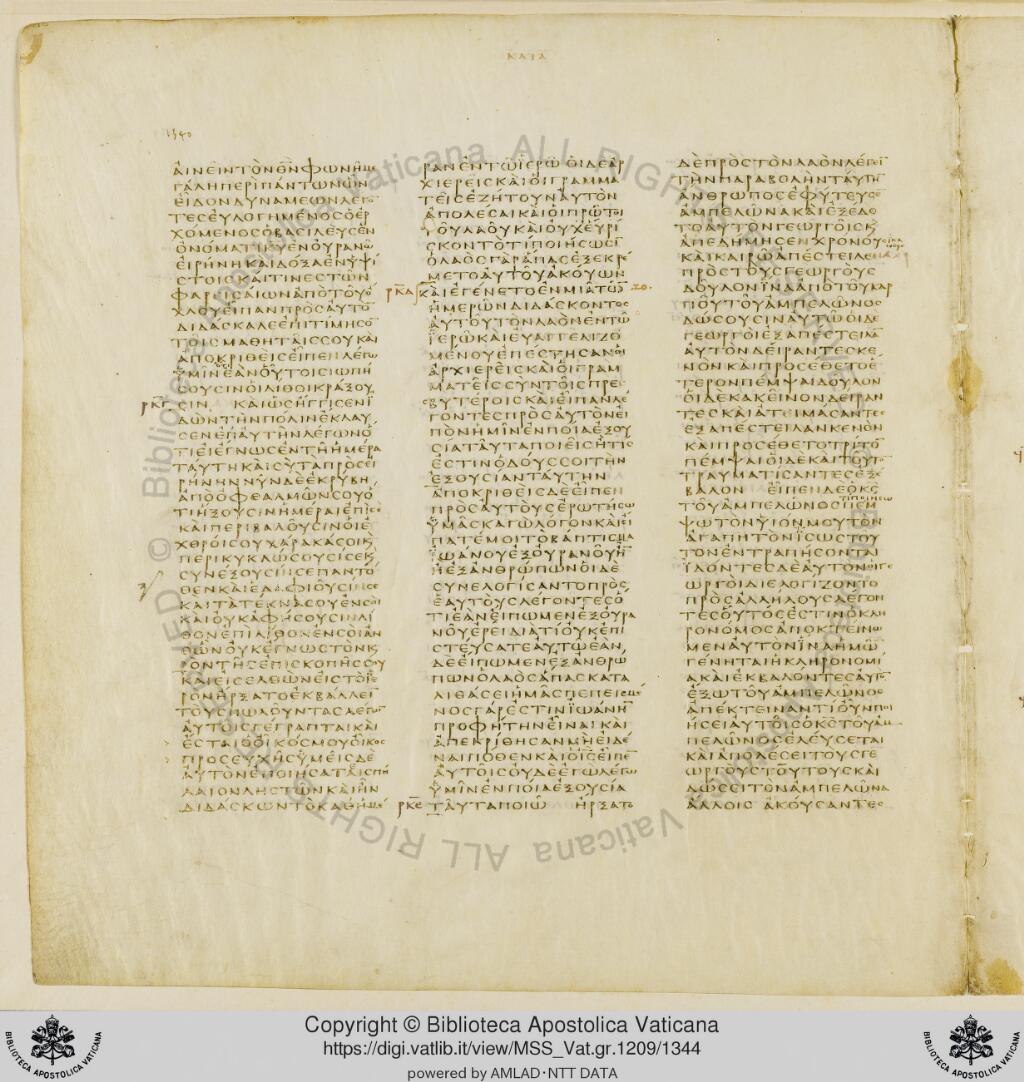
1Καὶ ἐγένετο ἐν μιᾷ τῶν ἡμερῶν διδάσκοντος αὐτοῦ τὸν λαὸν ἐν τῷ ἱερῷ καὶ εὐαγγελιζομένου ἐπέστησαν οἱ ἱερεῖς καὶ οἱ γραμματεῖς σὺν τοῖς πρεσβυτέροις, 2καὶ εἶπαν λέγοντες πρὸς αὐτόν· εἰπὸν ἡμῖν ἐν ποίᾳ ἐξουσίᾳ ταῦτα ποιεῖς, ἢ τίς ἐστιν ὁ δούς σοι τὴν ἐξουσίαν ταύτην. 3ἀποκριθεὶς δὲ εἶπεν πρὸς αὐτούς· ἐρωτήσω ὑμᾶς κἀγὼ λόγον, καὶ εἴπατέ μοι· 4τὸ βάπτισμα τὸ Ἰωάννου ἐξ οὐρανοῦ ἦν ἢ ἐξ ἀνθρώπων; 5οἱ δὲ συνελογίσαντο πρὸς ἑαυτοὺς λέγοντες ὅτι ἐὰν εἴπωμεν· ἐξ οὐρανοῦ, ἐρεῖ· διατί οὐκ ἐπιστεύσατε αὐτῷ; 6ἐὰν δὲ εἴπωμεν· ἐξ ἀνθρώπων, ὁ λαὸς ἅπας καταλιθάσει ἡμᾶς· πεπεισμένος γάρ ἐστιν Ἰωάννην προφήτην εἶναι. 7καὶ ἀπεκρίθησαν μὴ εἰδέναι πόθεν. 8καὶ ὁ Ἰησοῦς εἶπεν αὐτοῖς· οὐδὲ ἐγὼ λέγω ὑμῖν ἐν ποίᾳ ἐξουσίᾳ ταῦτα ποιῶ. 9Ἤρξατο δὲ πρὸς τὸν λαὸν λέγειν τὴν παραβολὴν ταύτην. ἄνθρωπός ἐφύτευσεν ἀμπελῶνα καὶ ἐξέδετο αὐτὸν γεωργοῖς, καὶ ἀπεδήμησεν χρόνους ἱκανούς. 10καὶ καιρῷ ἀπέστειλεν πρὸς τοὺς γεωργοὺς δοῦλον, ἵνα ἀπὸ τοῦ καρποῦ τοῦ ἀμπελῶνος δώσουσιν αὐτῷ· οἱ δὲ γεωργοὶ ἐξαπέστειλαν αὐτὸν δείραντες κενόν. 11καὶ προσέθετο ἕτερον πέμψαι δοῦλον· οἱ δὲ κἀκεῖνον δείραντες καὶ ἀτιμάσαντες ἐξαπέστειλαν κενόν. 12καὶ προσέθετο τρίτον πέμψαι· οἱ δὲ καὶ τοῦτον τραυματίσαντες ἐξέβαλον. 13εἶπεν δὲ ὁ κύριος τοῦ ἀμπελῶνος· τί ποιήσω; πέμψω τὸν υἱόν μου τὸν ἀγαπητόν· ἴσως τοῦτον ἐντραπήσονται. 14ἰδόντες δὲ αὐτὸν οἱ γεωργοὶ διελογίζοντο πρὸς ἀλλήλους λέγοντες· οὗτός ἐστιν ὁ κληρονόμος· ἀποκτείνωμεν αὐτόν, ἵνα ἡμῶν γένηται ἡ κληρονομία. 15καὶ ἐκβαλόντες αὐτὸν ἔξω τοῦ ἀμπελῶνος ἀπέκτειναν. τί οὖν ποιήσει αὐτοῖς ὁ κύριος τοῦ ἀμπελῶνος; 16ἐλεύσεται καὶ ἀπολέσει τοὺς γεωργοὺς τούτους, καὶ δώσει τὸν ἀμπελῶνα ἄλλοις. ἀκούσαντες δὲ εἶπαν· μὴ γένοιτο.
1And it came to pass, that on one of those days, as he taught the people in the temple, and preached the gospel, the chief priests and the scribes came upon him with the elders, 2And spake unto him, saying, Tell us, by what authority doest thou these things? or who is he that gave thee this authority? 3And he answered and said unto them, I will also ask you one thing; and answer me: 4The baptism of John, was it from heaven, or of men? 5And they reasoned with themselves, saying, If we shall say, From heaven; he will say, Why then believed ye him not? 6But and if we say, Of men; all the people will stone us: for they be persuaded that John was a prophet. 7And they answered, that they could not tell whence it was. 8And Jesus said unto them, Neither tell I you by what authority I do these things. 9Then began he to speak to the people this parable; A certain man planted a vineyard, and let it forth to husbandmen, and went into a far country for a long time. 10And at the season he sent a servant to the husbandmen, that they should give him of the fruit of the vineyard: but the husbandmen beat him, and sent him away empty. 11And again he sent another servant: and they beat him also, and entreated him shamefully, and sent him away empty. 12And again he sent a third: and they wounded him also, and cast him out. 13Then said the lord of the vineyard, What shall I do? I will send my beloved son: it may be they will reverence him when they see him. 14But when the husbandmen saw him, they reasoned among themselves, saying, This is the heir: come, let us kill him, that the inheritance may be ours. 15So they cast him out of the vineyard, and killed him. What therefore shall the lord of the vineyard do unto them? 16He shall come and destroy these husbandmen, and shall give the vineyard to others. And when they heard it, they said, God forbid.
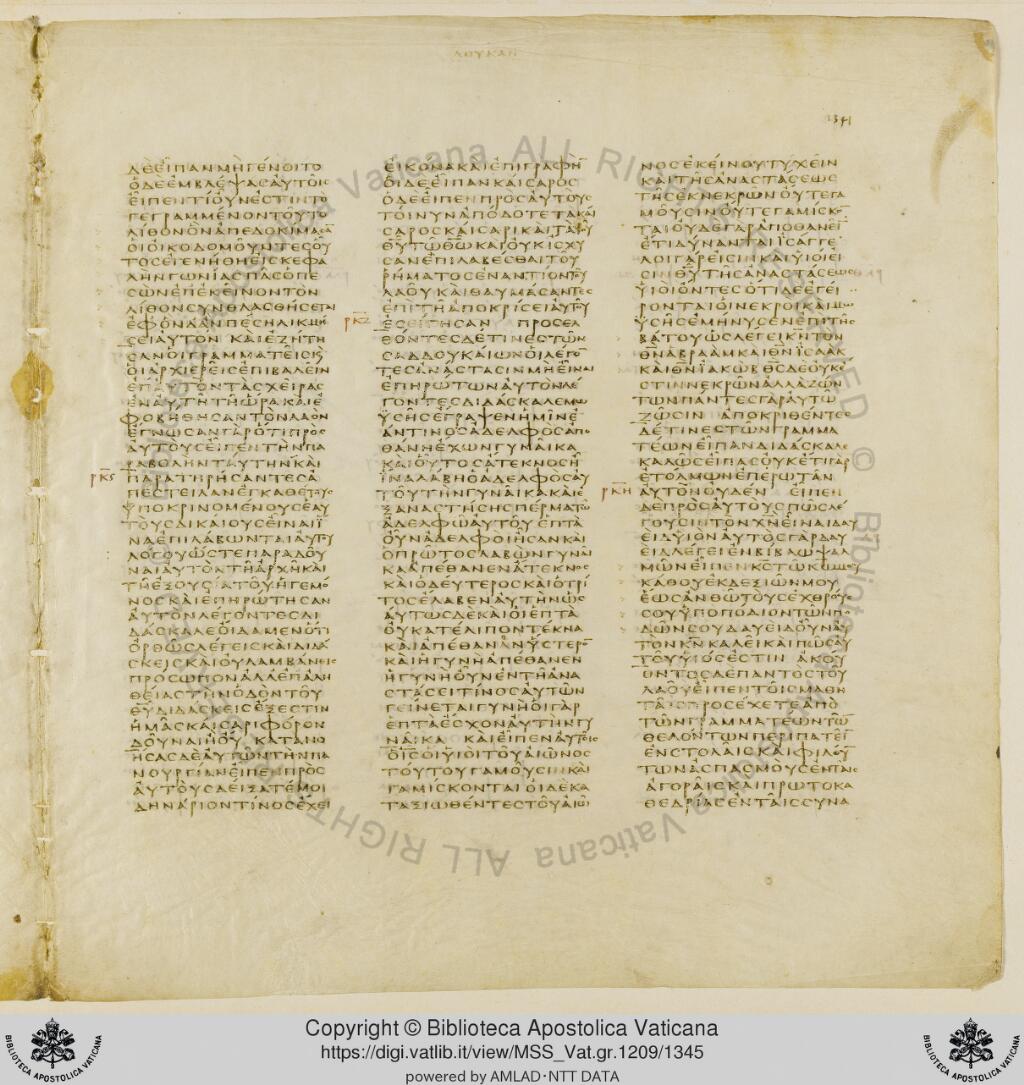
16ἐλεύσεται καὶ ἀπολέσει τοὺς γεωργοὺς τούτους, καὶ δώσει τὸν ἀμπελῶνα ἄλλοις. ἀκούσαντες δὲ εἶπαν· μὴ γένοιτο. 17ὁ δὲ ἐμβλέψας αὐτοῖς εἶπεν· τί οὖν ἐστιν τὸ γεγραμμένον τοῦτο· λίθον ὃν ἀπεδοκίμασαν οἱ οἰκοδομοῦντες, οὗτος ἐγενήθη εἰς κεφαλὴν γωνίας; 18πᾶς ὁ πεσὼν ἐπ’ ἐκεῖνον τὸν λίθον συνθλασθήσεται· ἐφ’ ὃν δ’ ἂν πέσῃ, λικμήσει αὐτόν. 19καὶ ἐζήτησαν οἱ γραμματεῖς καὶ οἱ ἀρχιερεῖς ἐπιβαλεῖν ἐπ’ αὐτὸν τὰς χεῖρας ἐν αὐτῇ τῇ ὥρᾳ, καὶ ἐφοβήθησαν τὸν λαόν· ἔγνωσαν γὰρ ὅτι πρὸς αὐτοὺς εἶπεν τὴν παραβολὴν ταύτην. 20Καὶ παρατηρήσαντες ἀπέστειλαν ἐνκαθέτους ὑποκρινομένους ἑαυτοὺς δικαίους εἶναι, ἵνα ἐπιλάβωνται αὐτοῦ λόγου, ὥστε παραδοῦναι αὐτὸν τῇ ἀρχῇ καὶ τῇ ἐξουσίᾳ τοῦ ἡγεμόνος. 21καὶ ἐπηρώτησαν αὐτὸν λέγοντες· διδάσκαλε, οἴδαμεν ὅτι ὀρθῶς λέγεις καὶ διδάσκεις καὶ οὐ λαμβάνεις πρόσωπον, ἀλλ’ ἐπ’ ἀληθείας τὴν ὁδὸν τοῦ θεοῦ διδάσκεις· 22ἔξεστιν ἡμᾶς Καίσαρι φόρον δοῦναι ἢ οὔ; 23κατανοήσας δὲ αὐτῶν τὴν πανουργίαν εἶπεν πρὸς αὐτούς· 24δείξατέ μοι δηνάριον. τίνος ἔχει εἰκόνα καὶ ἐπιγραφήν; οἱ δὲ εἶπαν· Καίσαρος. 25ὁ δὲ εἶπεν πρὸς αὐτούς· τοίνυν ἀπόδοτε τὰ Καίσαρος Καίσαρι καὶ τὰ τοῦ θεοῦ τῷ θεῷ. 26καὶ οὐκ ἴσχυσαν ἐπιλαβέσθαι αὐτοῦ ῥήματος ἐναντίον τοῦ λαοῦ, καὶ θαυμάσαντες ἐπὶ τῇ ἀποκρίσει αὐτοῦ ἐσίγησαν. 27Προσελθόντες δέ τινες τῶν Σαδδουκαίων, οἱ ἀντιλέγοντες ἀνάστασιν μὴ εἶναι, ἐπηρώτησαν αὐτὸν 28λέγοντες· διδάσκαλε, Μωϋσῆς ἔγραψεν ἡμῖν, ἐάν τινος ἀδελφὸς ἀποθάνῃ ἔχων γυναῖκα, καὶ οὗτος ἄτεκνος ᾖ, ἵνα λάβῃ ὁ ἀδελφὸς αὐτοῦ τὴν γυναῖκα καὶ ἐξαναστήσῃ σπέρμα τῷ ἀδελφῷ αὐτοῦ. 29ἑπτὰ οὖν ἀδελφοὶ ἦσαν. καὶ ὁ πρῶτος λαβὼν γυναῖκα ἀπέθανεν ἄτεκνος· 30καὶ ὁ δεύτερος 31καὶ ὁ τρίτος ἔλαβεν αὐτήν, ὡσαύτως δὲ καὶ οἱ ἑπτὰ οὐ κατέλιπον τέκνα καὶ ἀπέθανον. 32ὕστερον καὶ ἡ γυνὴ ἀπέθανεν. 33ἡ γυνὴ οὖν ἐν τῇ ἀναστάσει τίνος αὐτῶν γίνεται γυνή; οἱ γὰρ ἑπτὰ ἔσχον αὐτὴν γυναῖκα. 34καὶ εἶπεν αὐτοῖς ὁ Ἰησοῦς· οἱ υἱοὶ τοῦ αἰῶνος τούτου γαμοῦσιν καὶ γαμίσκονται, 35οἱ δὲ καταξιωθέντες τοῦ αἰῶνος ἐκείνου τυχεῖν καὶ τῆς ἀναστάσεως τῆς ἐκ νεκρῶν οὔτε γαμοῦσιν οὔτε γαμίζονται· 36οὔτε γὰρ ἀποθανεῖν ἔτι δύνανται, ἰσάγγελοι γάρ εἰσίν, καὶ υἱοί εἰσίν θεοῦ τῆς ἀναστάσεως υἱοὶ ὄντες. 37ὅτι δὲ ἐγείρονται οἱ νεκροί, καὶ Μωϋσῆς ἐμήνυσεν ἐπὶ τῆς βάτου, ὡς λέγει κύριον τὸν θεὸν Ἀβραὰμ καὶ θεὸν Ἰσαὰκ καὶ θεὸν Ἰακώβ· 38θεὸς δὲ οὐκ ἔστιν νεκρῶν ἀλλὰ ζώντων· πάντες γὰρ αὐτῷ ζῶσιν. 39ἀποκριθέντες δέ τινες τῶν γραμματέων εἶπαν· διδάσκαλε, καλῶς εἶπας· 40οὐκέτι γὰρ ἐτόλμων ἐπερωτᾶν αὐτὸν οὐδέν. 41Εἶπεν δὲ πρὸς αὐτούς· πῶς λέγουσιν τὸν Χριστὸν εἶναι Δαυεὶδ υἱόν, 42αὐτὸς γὰρ Δαυεὶδ λέγει ἐν βίβλῳ ψαλμῶν· εἶπεν ὁ κύριος τῷ κυρίῳ μου· κάθου ἐκ δεξιῶν μου 43ἕως ἂν θῶ τοὺς ἐχθρούς σου ὑποπόδιον τῶν ποδῶν σου; 44Δαυεὶδ οὖν κύριον αὐτὸν καλεῖ, καὶ πῶς αὐτοῦ υἱός ἐστιν; 45Ἀκούοντος δὲ παντὸς τοῦ λαοῦ εἶπεν τοῖς μαθηταῖς· 46προσέχετε ἀπὸ τῶν γραμματέων τῶν θελόντων περιπατεῖν ἐν στολαῖς καὶ φιλούντων ἀσπασμοὺς ἐν ταῖς ἀγοραῖς καὶ πρωτοκαθεδρίας ἐν ταῖς συναγωγαῖς καὶ πρωτοκλισίας ἐν τοῖς δείπνοις,
16He shall come and destroy these husbandmen, and shall give the vineyard to others. And when they heard it, they said, God forbid. 17And he beheld them, and said, What is this then that is written, The stone which the builders rejected, the same is become the head of the corner? 18Whosoever shall fall upon that stone shall be broken; but on whomsoever it shall fall, it will grind him to powder. 19And the chief priests and the scribes the same hour sought to lay hands on him; and they feared the people: for they perceived that he had spoken this parable against them. 20And they watched him, and sent forth spies, which should feign themselves just men, that they might take hold of his words, that so they might deliver him unto the power and authority of the governor. 21And they asked him, saying, Master, we know that thou sayest and teachest rightly, neither acceptest thou the person of any, but teachest the way of God truly: 22Is it lawful for us to give tribute unto Caesar, or no? 23But he perceived their craftiness, and said unto them, Why tempt ye me? 24Shew me a penny. Whose image and superscription hath it? They answered and said, Caesar’s. 25And he said unto them, Render therefore unto Caesar the things which be Caesar’s, and unto God the things which be God’s. 26And they could not take hold of his words before the people: and they marvelled at his answer, and held their peace. 27Then came to him certain of the Sadducees, which deny that there is any resurrection; and they asked him, 28Saying, Master, Moses wrote unto us, If any man’s brother die, having a wife, and he die without children, that his brother should take his wife, and raise up seed unto his brother. 29There were therefore seven brethren: and the first took a wife, and died without children. 30And the second took her to wife, and he died childless. 31And the third took her; and in like manner the seven also: and they left no children, and died. 32Last of all the woman died also. 33Therefore in the resurrection whose wife of them is she? for seven had her to wife. 34And Jesus answering said unto them, The children of this world marry, and are given in marriage: 35But they which shall be accounted worthy to obtain that world, and the resurrection from the dead, neither marry, nor are given in marriage: 36Neither can they die any more: for they are equal unto the angels; and are the children of God, being the children of the resurrection. 37Now that the dead are raised, even Moses shewed at the bush, when he calleth the Lord the God of Abraham, and the God of Isaac, and the God of Jacob. 38For he is not a God of the dead, but of the living: for all live unto him. 39Then certain of the scribes answering said, Master, thou hast well said. 40And after that they durst not ask him any question at all. 41And he said unto them, How say they that Christ is David’s son? 42And David himself saith in the book of Psalms, The LORD said unto my Lord, Sit thou on my right hand, 43Till I make thine enemies thy footstool. 44David therefore calleth him Lord, how is he then his son? 45Then in the audience of all the people he said unto his disciples, 46Beware of the scribes, which desire to walk in long robes, and love greetings in the markets, and the highest seats in the synagogues, and the chief rooms at feasts;
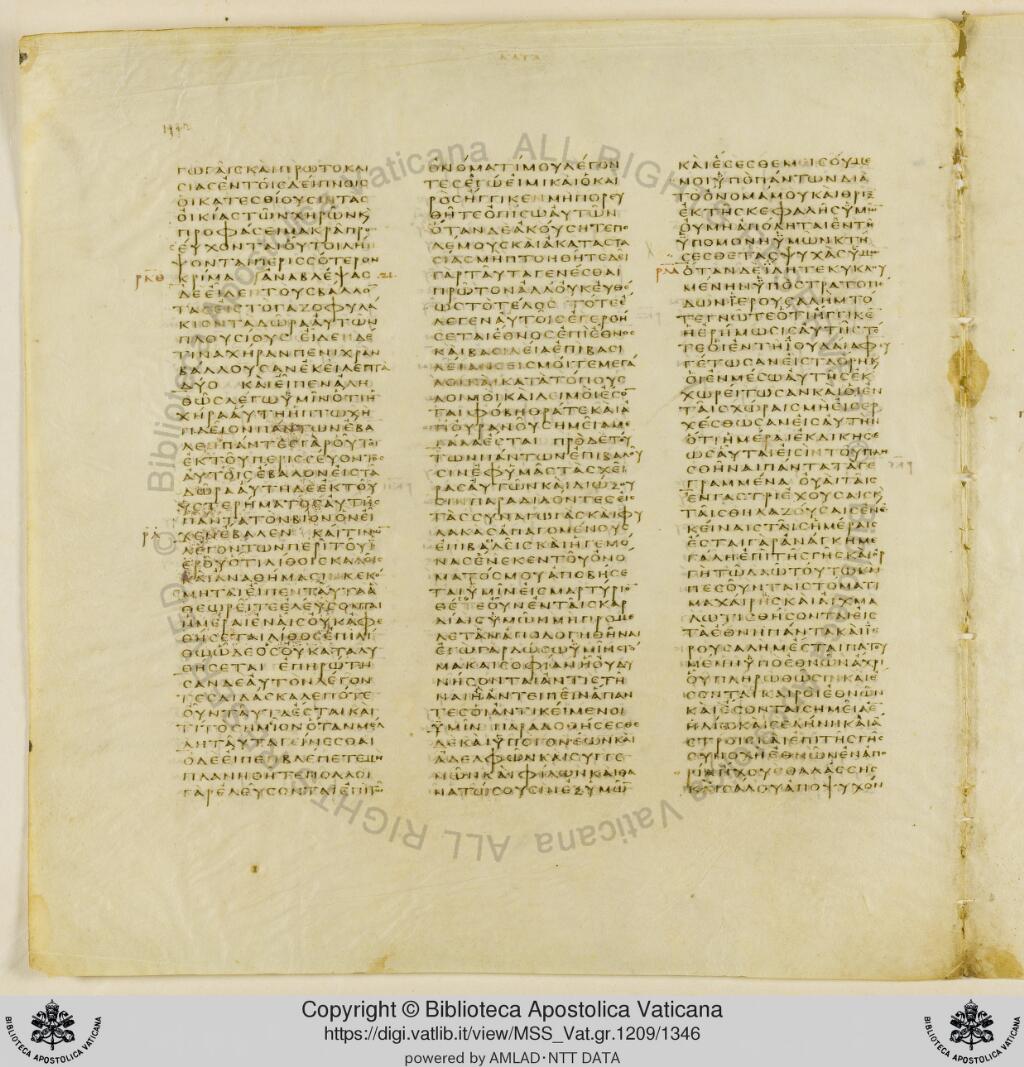
46προσέχετε ἀπὸ τῶν γραμματέων τῶν θελόντων περιπατεῖν ἐν στολαῖς καὶ φιλούντων ἀσπασμοὺς ἐν ταῖς ἀγοραῖς καὶ πρωτοκαθεδρίας ἐν ταῖς συναγωγαῖς καὶ πρωτοκλισίας ἐν τοῖς δείπνοις, 47οἳ κατεσθίουσιν τὰς οἰκίας τῶν χηρῶν καὶ προφάσει μακρὰ προσεύχονται· οὗτοι λήμψονται περισσότερον κρίμα.
46Beware of the scribes, which desire to walk in long robes, and love greetings in the markets, and the highest seats in the synagogues, and the chief rooms at feasts; 47Which devour widows’ houses, and for a shew make long prayers: the same shall receive greater damnation.
Cite
Source & Cross-References
- Source text: Codex Vaticanus via Vatican IIIF + NTVMR verse mapping + Tischendorf + KJV — view original
- Critical edition: Tischendorf 8th edition (1869)
← previous · → next · v cycle view · l back to library