Romans, Chapter 7 (Codex Vaticanus)
Introduction
Romans 7 from Codex Vaticanus (4th c.).
How was this verified? (Provenance)
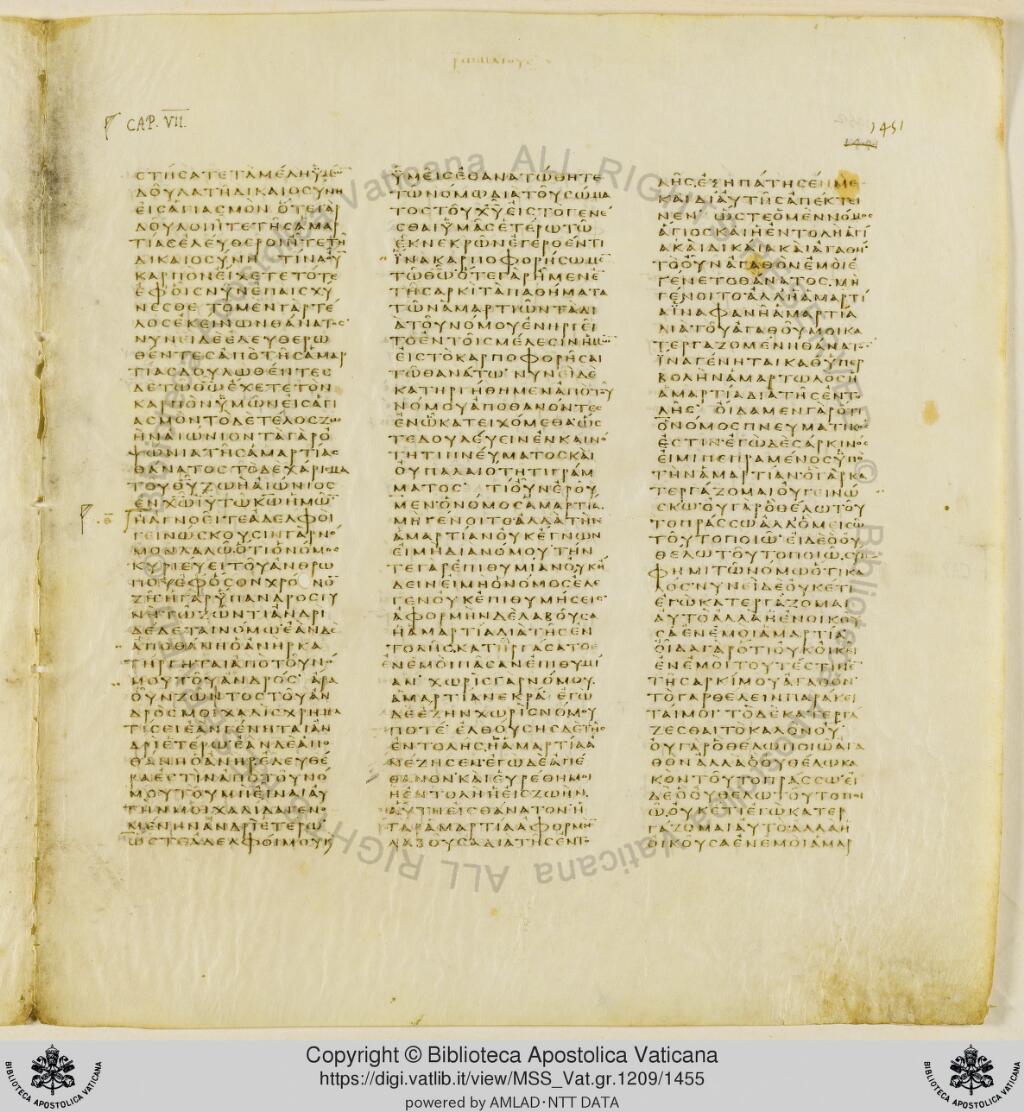
1Ἢ ἀγνοεῖτε, ἀδελφοί, γινώσκουσιν γὰρ νόμον λαλῶ, ὅτι ὁ νόμος κυριεύει τοῦ ἀνθρώπου ἐφ’ ὅσον χρόνον ζῇ; 2ἡ γὰρ ὕπανδρος γυνὴ τῷ ζῶντι ἀνδρὶ δέδεται νόμῳ· ἐὰν δὲ ἀποθάνῃ ὁ ἀνήρ, κατήργηται ἀπὸ τοῦ νόμου τοῦ ἀνδρός. 3ἄρα οὖν ζῶντος τοῦ ἀνδρὸς μοιχαλὶς χρηματίσει ἐὰν γένηται ἀνδρὶ ἑτέρῳ· ἐὰν δὲ ἀποθάνῃ ὁ ἀνήρ, ἐλευθέρα ἐστὶν ἀπὸ τοῦ νόμου, τοῦ μὴ εἶναι αὐτὴν μοιχαλίδα γενομένην ἀνδρὶ ἑτέρῳ. 4ὥστε, ἀδελφοί μου, καὶ ὑμεῖς ἐθανατώθητε τῷ νόμῳ διὰ τοῦ σώματος τοῦ Χριστοῦ, εἰς τὸ γενέσθαι ὑμᾶς ἑτέρῳ, τῷ ἐκ νεκρῶν ἐγερθέντι, ἵνα καρποφορήσωμεν τῷ θεῷ. 5ὅτε γὰρ ἦμεν ἐν τῇ σαρκί, τὰ παθήματα τῶν ἁμαρτιῶν τὰ διὰ τοῦ νόμου ἐνηργεῖτο ἐν τοῖς μέλεσιν ἡμῶν εἰς τὸ καρποφορῆσαι τῷ θανάτῳ· 6νυνὶ δὲ κατηργήθημεν ἀπὸ τοῦ νόμου, ἀποθανόντες ἐν ᾧ κατειχόμεθα, ὥστε δουλεύειν ἡμᾶς ἐν καινότητι πνεύματος καὶ οὐ παλαιότητι γράμματος. 7Τί οὖν ἐροῦμεν; ὁ νόμος ἁμαρτία; μὴ γένοιτο· ἀλλὰ τὴν ἁμαρτίαν οὐκ ἔγνων εἰ μὴ διὰ νόμου, τήν τε γὰρ ἐπιθυμίαν οὐκ ᾔδειν εἰ μὴ ὁ νόμος ἔλεγεν, οὐκ ἐπιθυμήσεις. 8ἀφορμὴν δὲ λαβοῦσα ἡ ἁμαρτία διὰ τῆς ἐντολῆς κατηργάσατο ἐν ἐμοὶ πᾶσαν ἐπιθυμίαν· χωρὶς γὰρ νόμου ἁμαρτία νεκρά. 9ἐγὼ δὲ ἔζων χωρὶς νόμου ποτέ· ἐλθούσης δὲ τῆς ἐντολῆς ἡ ἁμαρτία ἀνέζησεν, 10ἐγὼ δὲ ἀπέθανον, καὶ εὑρέθη μοι ἡ ἐντολὴ ἡ εἰς ζωὴν αὕτη εἰς θάνατον· 11ἡ γὰρ ἁμαρτία ἀφορμὴν λαβοῦσα διὰ τῆς ἐντολῆς ἐξηπάτησέν με καὶ δι’ αὐτῆς ἀπέκτεινεν. 12ὥστε ὁ μὲν νόμος ἅγιος, καὶ ἡ ἐντολὴ ἁγία καὶ δικαία καὶ ἀγαθή. 13τὸ οὖν ἀγαθὸν ἐμοὶ ἐγένετο θάνατος; μὴ γένοιτο· ἀλλὰ ἡ ἁμαρτία, ἵνα φανῇ ἁμαρτία, διὰ τοῦ ἀγαθοῦ μοι κατεργαζομένη θάνατον· ἵνα γένηται καθ’ ὑπερβολὴν ἁμαρτωλὸς ἡ ἁμαρτία διὰ τῆς ἐντολῆς. 14οἴδαμεν γὰρ ὅτι ὁ νόμος πνευματικός ἐστιν· ἐγὼ δὲ σάρκινός εἰμι, πεπραμένος ὑπὸ τὴν ἁμαρτίαν. 15ὃ γὰρ κατεργάζομαι οὐ γινώσκω· οὐ γὰρ ὃ θέλω τοῦτο πράσσω, ἀλλ’ ὃ μισῶ τοῦτο ποιῶ. 16εἰ δὲ ὃ οὐ θέλω τοῦτο ποιῶ, σύμφημι τῷ νόμῳ ὅτι καλός. 17νυνὶ δὲ οὐκέτι ἐγὼ κατεργάζομαι αὐτὸ ἀλλὰ ἡ ἐνοικοῦσα ἐν ἐμοὶ ἁμαρτία. 18οἶδα γὰρ ὅτι οὐκ οἰκεῖ ἐν ἐμοί, τοῦτ’ ἔστιν ἐν τῇ σαρκί μου, ἀγαθόν· τὸ γὰρ θέλειν παράκειταί μοι, τὸ δὲ κατεργάζεσθαι τὸ καλὸν οὔ· 19οὐ γὰρ ὃ θέλω ποιῶ ἀγαθόν, ἀλλὰ ὃ οὐ θέλω κακὸν τοῦτο πράσσω. 20εἰ δὲ ὃ οὐ θέλω ἐγὼ τοῦτο ποιῶ, οὐκέτι ἐγὼ κατεργάζομαι αὐτὸ ἀλλὰ ἡ οἰκοῦσα ἐν ἐμοὶ ἁμαρτία.
1Know ye not, brethren, (for I speak to them that know the law,) how that the law hath dominion over a man as long as he liveth? 2For the woman which hath an husband is bound by the law to her husband so long as he liveth; but if the husband be dead, she is loosed from the law of her husband. 3So then if, while her husband liveth, she be married to another man, she shall be called an adulteress: but if her husband be dead, she is free from that law; so that she is no adulteress, though she be married to another man. 4Wherefore, my brethren, ye also are become dead to the law by the body of Christ; that ye should be married to another, even to him who is raised from the dead, that we should bring forth fruit unto God. 5For when we were in the flesh, the motions of sins, which were by the law, did work in our members to bring forth fruit unto death. 6But now we are delivered from the law, that being dead wherein we were held; that we should serve in newness of spirit, and not in the oldness of the letter. 7What shall we say then? Is the law sin? God forbid. Nay, I had not known sin, but by the law: for I had not known lust, except the law had said, Thou shalt not covet. 8But sin, taking occasion by the commandment, wrought in me all manner of concupiscence. For without the law sin was dead. 9For I was alive without the law once: but when the commandment came, sin revived, and I died. 10And the commandment, which was ordained to life, I found to be unto death. 11For sin, taking occasion by the commandment, deceived me, and by it slew me. 12Wherefore the law is holy, and the commandment holy, and just, and good. 13Was then that which is good made death unto me? God forbid. But sin, that it might appear sin, working death in me by that which is good; that sin by the commandment might become exceeding sinful. 14For we know that the law is spiritual: but I am carnal, sold under sin. 15For that which I do I allow not: for what I would, that do I not; but what I hate, that do I. 16If then I do that which I would not, I consent unto the law that it is good. 17Now then it is no more I that do it, but sin that dwelleth in me. 18For I know that in me (that is, in my flesh,) dwelleth no good thing: for to will is present with me; but how to perform that which is good I find not. 19For the good that I would I do not: but the evil which I would not, that I do. 20Now if I do that I would not, it is no more I that do it, but sin that dwelleth in me.
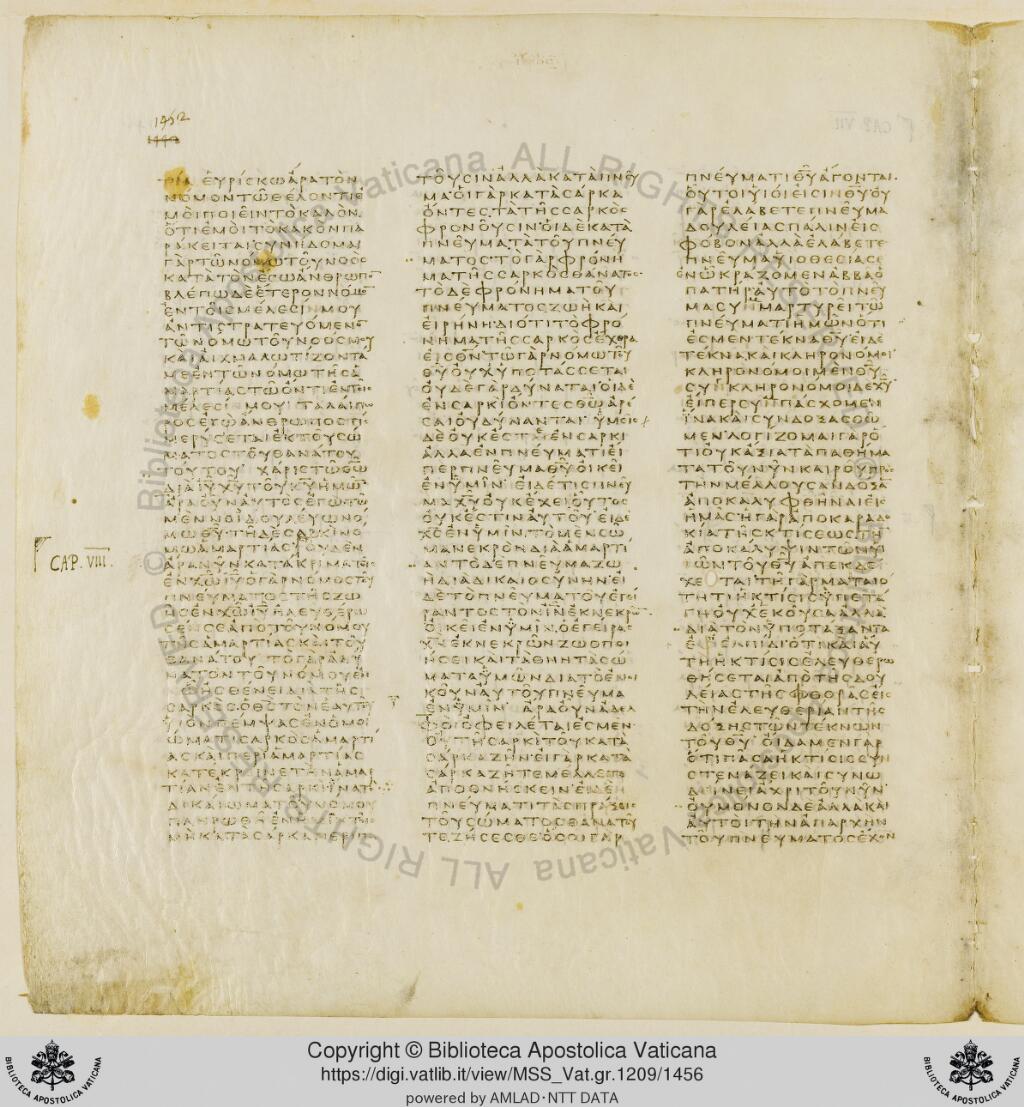
20εἰ δὲ ὃ οὐ θέλω ἐγὼ τοῦτο ποιῶ, οὐκέτι ἐγὼ κατεργάζομαι αὐτὸ ἀλλὰ ἡ οἰκοῦσα ἐν ἐμοὶ ἁμαρτία. 21εὑρίσκω ἄρα τὸν νόμον τῷ θέλοντι ἐμοὶ ποιεῖν τὸ καλὸν ὅτι ἐμοὶ τὸ κακὸν παράκειται· 22συνήδομαι γὰρ τῷ νόμῳ τοῦ θεοῦ κατὰ τὸν ἔσω ἄνθρωπον, 23βλέπω δὲ ἕτερον νόμον ἐν τοῖς μέλεσίν μου ἀντιστρατευόμενον τῷ νόμῳ τοῦ νοός μου καὶ αἰχμαλωτίζοντά με ἐν τῷ νόμῳ τῆς ἁμαρτίας τῷ ὄντι ἐν τοῖς μέλεσίν μου. 24ταλαίπωρος ἐγὼ ἄνθρωπος· τίς με ῥύσεται ἐκ τοῦ σώματος τοῦ θανάτου τούτου; 25χάρις δὲ τῷ θεῷ διὰ Ἰησοῦ Χριστοῦ τοῦ κυρίου ἡμῶν. ἄρα οὖν αὐτὸς ἐγὼ τῷ νοῒ δουλεύω νόμῳ θεοῦ, τῇ δὲ σαρκὶ νόμῳ ἁμαρτίας.
20Now if I do that I would not, it is no more I that do it, but sin that dwelleth in me. 21I find then a law, that, when I would do good, evil is present with me. 22For I delight in the law of God after the inward man: 23But I see another law in my members, warring against the law of my mind, and bringing me into captivity to the law of sin which is in my members. 24O wretched man that I am! who shall deliver me from the body of this death? 25I thank God through Jesus Christ our Lord. So then with the mind I myself serve the law of God; but with the flesh the law of sin.
Cite
Source & Cross-References
- Source text: Codex Vaticanus via Vatican IIIF + NTVMR verse mapping + Tischendorf + KJV — view original
- Critical edition: Tischendorf 8th edition (1869)
← previous · → next · v cycle view · l back to library