Matthew, Chapter 19 (Codex Washingtonianus)
Introduction
Matthew 19 from Codex Washingtonianus (the Freer Gospels, Gregory-Aland 032, Freer Gallery of Art F1906.274), a parchment codex of the four Gospels written in Egypt in the late 4th or early 5th century and bought by Charles Lang Freer from the dealer Ali Arabi at Giza in 1906. It is one of the oldest nearly complete Gospel books in existence. The Gospels stand in the so-called Western order, Matthew, John, Luke, Mark, and the text is famously block-mixed: the copyist drew on several exemplars of different textual character, so the text type changes in blocks within a single Gospel. After Mark 16:14 the codex carries the Freer Logion, a saying found in no other manuscript. Two passages are lost to damage: Mark 15:13-37 and John 14:26-16:6.
- Scan: each section is shown with the actual page of the codex that carries those verses, from the Freer Gallery's own photographs of F1906.274 served by the Smithsonian IIIF service (ids.si.edu). Which page holds which verse comes from the verse index of the Center for the Study of New Testament Manuscripts (CSNTM), whose photographs of the codex are the same shots; every CSNTM page was matched to its Smithsonian image by pixel comparison before use. Where a verse begins on one page and ends on the next, both pages are listed. Verses the index cannot place on a surviving page are not shown.
- Greek: Constantin von Tischendorf's Editio octava critica maior (1869-72, public domain), verbatim from bolls.life. This is a printed critical edition, not a transcription of Washingtonianus itself: the codex has many readings of its own, and where it differs from Tischendorf the manuscript reading can be checked on the page image. Numbering: Tischendorf omits a few verses that the KJV prints (they are in the English column only).
- English: the King James Version (1611, public domain), verbatim from bible-api.com. The KJV translates the later Byzantine text, so it will not always match the Greek shown or the reading of the codex.
How was this verified? (Provenance)
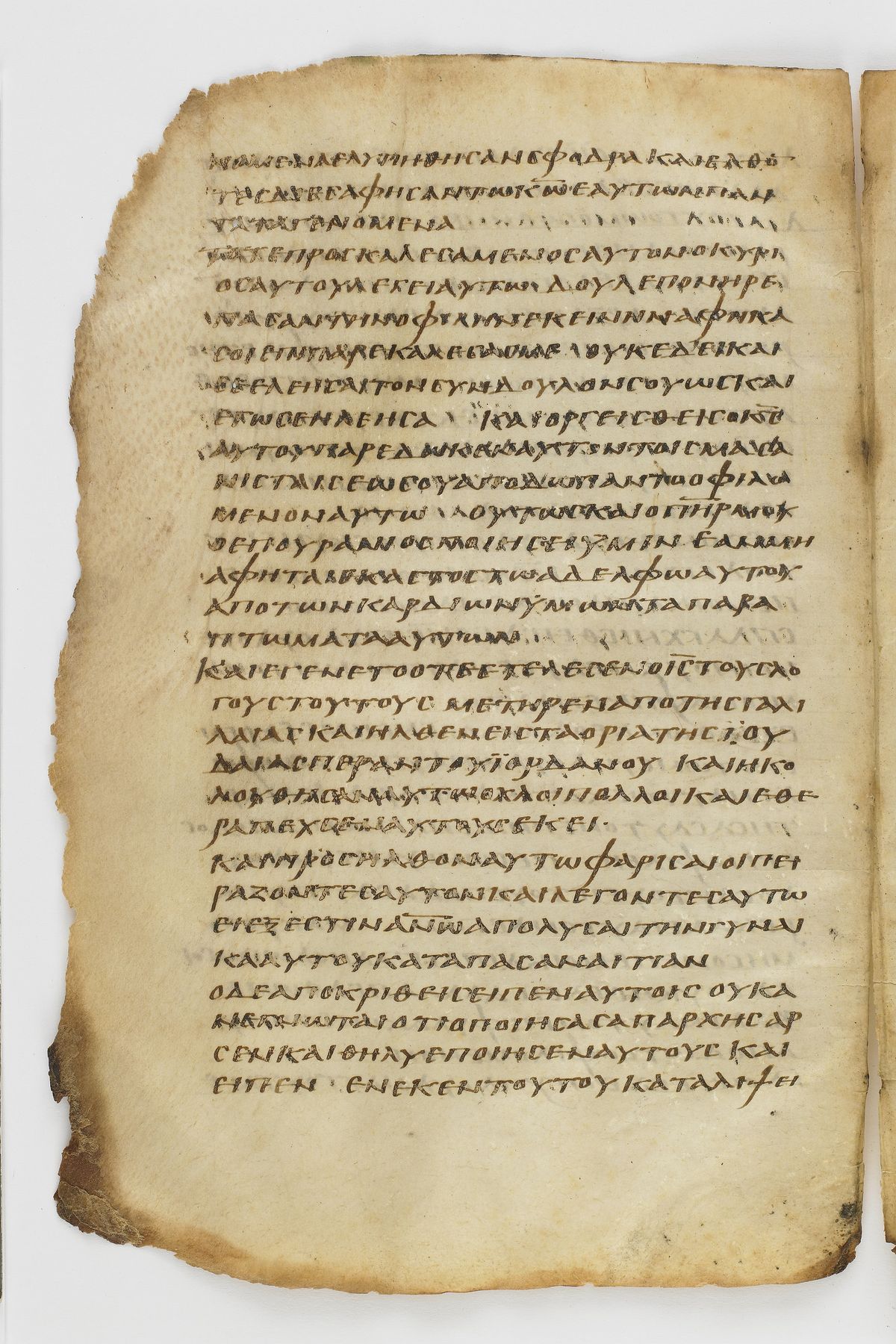
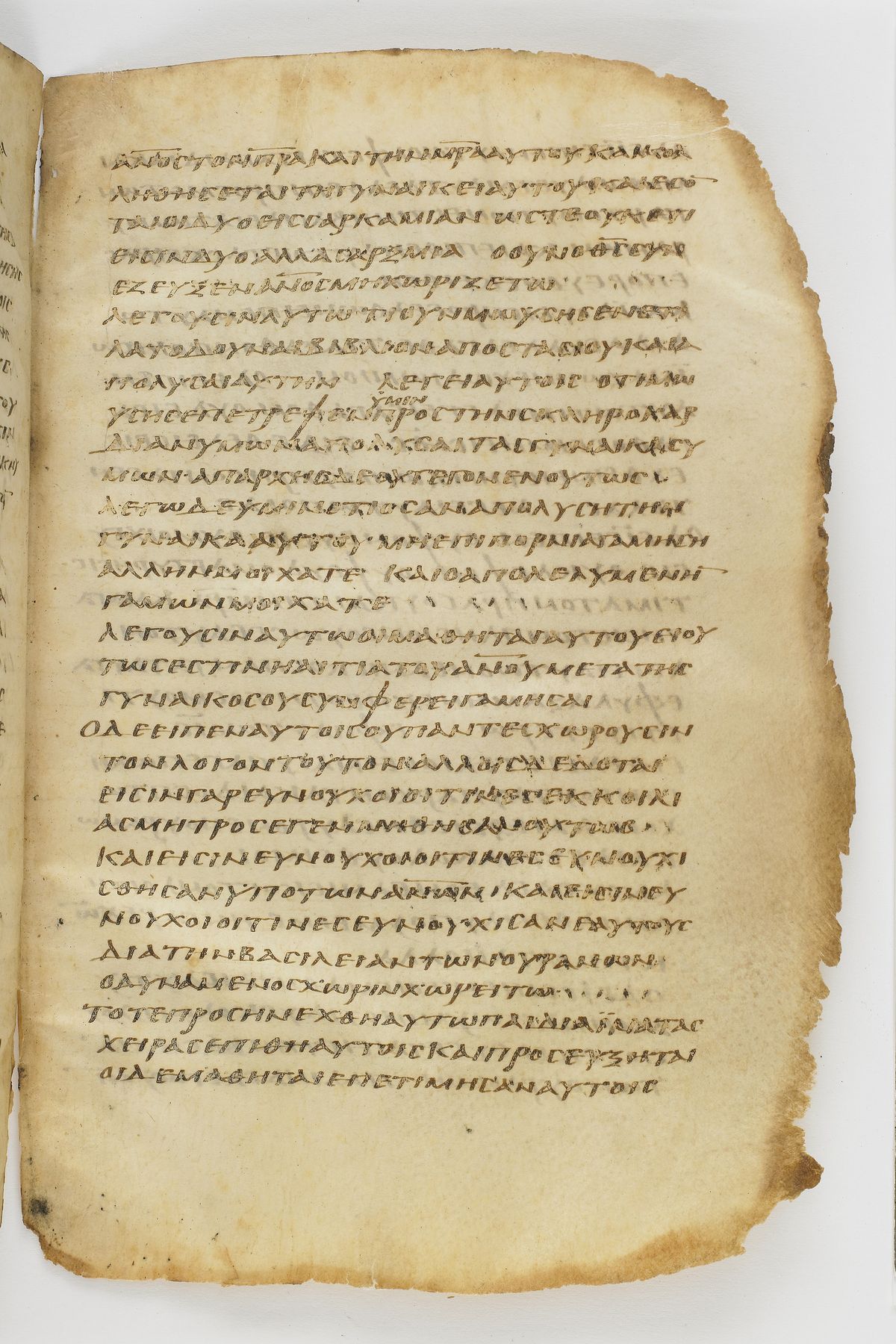
1Καὶ ἐγένετο ὅτε ἐτέλεσεν ὁ Ἰησοῦς τοὺς λόγους τούτους, μετῆρεν ἀπὸ τῆς Γαλιλαίας καὶ ἦλθεν εἰς τὰ ὅρια τῆς Ἰουδαίας πέραν τοῦ Ἰορδάνου. 2καὶ ἠκολούθησαν αὐτῷ ὄχλοι πολλοί, καὶ ἐθεράπευσεν αὐτοὺς ἐκεῖ. 3Καὶ προσῆλθον αὐτῷ οἱ Φαρισαῖοι πειράζοντες αὐτὸν καὶ λέγοντες· εἰ ἔξεστιν ἀπολῦσαι τὴν γυναῖκα αὐτοῦ κατὰ πᾶσαν αἰτίαν; 4ὁ δὲ ἀποκριθεὶς εἶπεν· οὐκ ἀνέγνωτε ὅτι ὁ ποιήσας ἀπ’ ἀρχῆς ἄρσεν καὶ θῆλυ ἐποίησεν αὐτούς; 5καὶ εἶπεν· ἕνεκα τούτου καταλείψει ἄνθρωπος τὸν πατέρα καὶ τὴν μητέρα καὶ κολληθήσεται τῇ γυναικὶ αὐτοῦ, καὶ ἔσονται οἱ δύο εἰς σάρκα μίαν. 6ὥστε οὐκέτι εἰσὶν δύο ἀλλὰ σὰρξ μία. ὃ οὖν ὁ θεὸς συνέζευξεν ἄνθρωπος μὴ χωριζέτω. 7λέγουσιν αὐτῷ· τί οὖν Μωϋσῆς ἐνετείλατο δοῦναι βιβλίον ἀποστασίου καὶ ἀπολῦσαι; 8λέγει αὐτοῖς· ὅτι Μωϋσῆς πρὸς τὴν σκληροκαρδίαν ὑμῶν ἐπέτρεψεν ὑμῖν ἀπολῦσαι τὰς γυναῖκας ὑμῶν· ἀπ’ ἀρχῆς δὲ οὐ γέγονεν οὕτως.
1And it came to pass, that when Jesus had finished these sayings, he departed from Galilee, and came into the coasts of Judaea beyond Jordan; 2And great multitudes followed him; and he healed them there. 3The Pharisees also came unto him, tempting him, and saying unto him, Is it lawful for a man to put away his wife for every cause? 4And he answered and said unto them, Have ye not read, that he which made them at the beginning made them male and female, 5And said, For this cause shall a man leave father and mother, and shall cleave to his wife: and they twain shall be one flesh? 6Wherefore they are no more twain, but one flesh. What therefore God hath joined together, let not man put asunder. 7They say unto him, Why did Moses then command to give a writing of divorcement, and to put her away? 8He saith unto them, Moses because of the hardness of your hearts suffered you to put away your wives: but from the beginning it was not so.
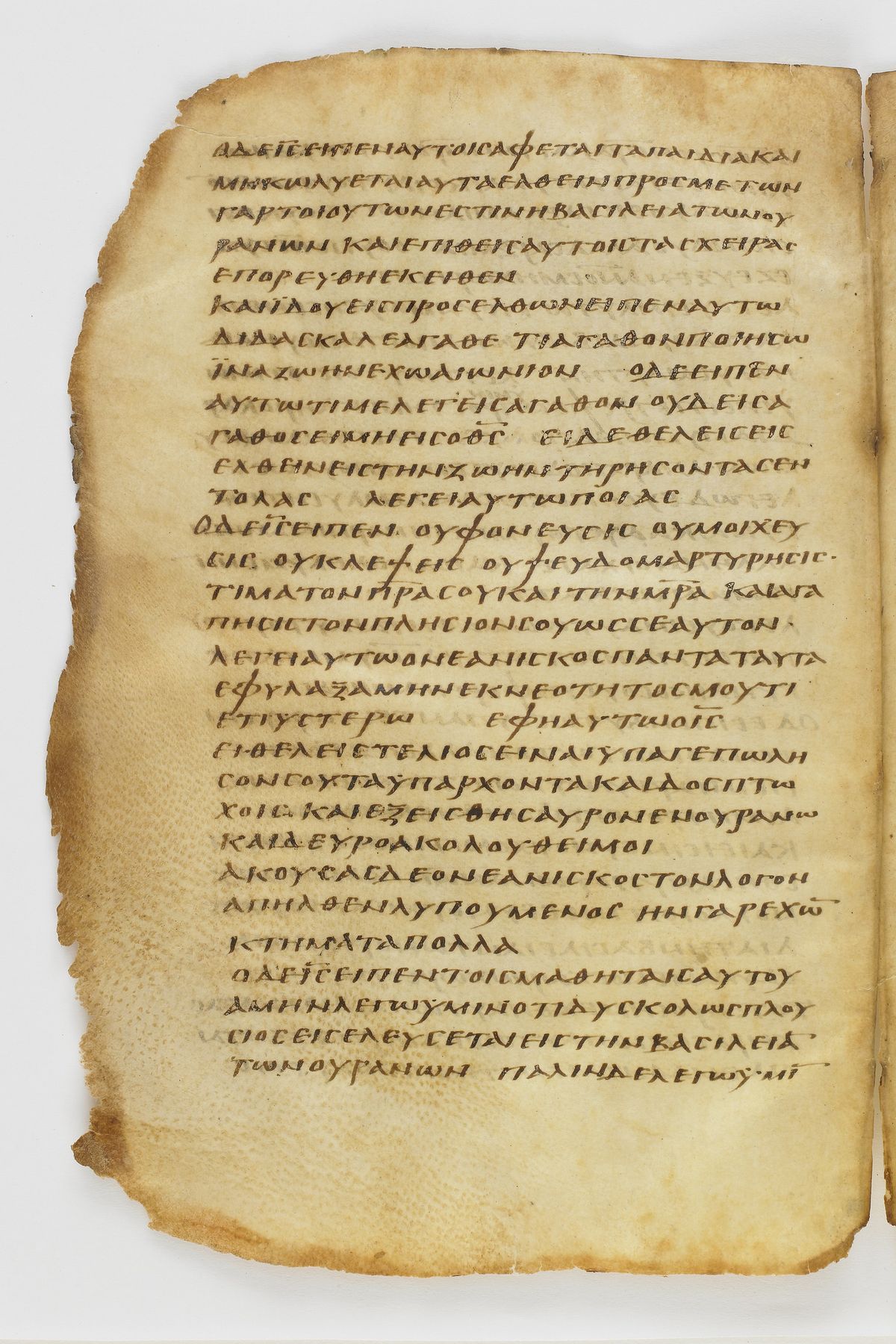
9λέγω δὲ ὑμῖν ὅτι ὃς ἂν ἀπολύσῃ τὴν γυναῖκα αὐτοῦ μὴ ἐπὶ πορνείᾳ καὶ γαμήσῃ ἄλλην, μοιχᾶται. 10λέγουσιν αὐτῷ οἱ μαθηταὶ· εἰ οὕτως ἐστὶν ἡ αἰτία τοῦ ἀνθρώπου μετὰ τῆς γυναικός, οὐ συμφέρει γαμῆσαι. 11ὁ δὲ εἶπεν αὐτοῖς· οὐ πάντες χωροῦσιν τὸν λόγον τοῦτον, ἀλλ’ οἷς δέδοται. 12εἰσὶν γὰρ εὐνοῦχοι οἵτινες ἐκ κοιλίας μητρὸς ἐγεννήθησαν οὕτως, καὶ εἰσὶν εὐνοῦχοι οἵτινες εὐνουχίσθησαν ὑπὸ τῶν ἀνθρώπων, καὶ εἰσὶν εὐνοῦχοι οἵτινες εὐνούχισαν ἑαυτοὺς διὰ τὴν βασιλείαν τῶν οὐρανῶν. ὁ δυνάμενος χωρεῖν χωρείτω. 13Τότε προσηνέχθησαν αὐτῷ παιδία, ἵνα τὰς χεῖρας ἐπιθῇ αὐτοῖς καὶ προσεύξηται· οἱ δὲ μαθηταὶ ἐπετίμησαν αὐτοῖς. 14ὁ δὲ Ἰησοῦς εἶπεν αὐτοῖς· ἄφετε τὰ παιδία καὶ μὴ κωλύετε αὐτὰ ἐλθεῖν πρός ἐμέ· τῶν γὰρ τοιούτων ἐστὶν ἡ βασιλεία τῶν οὐρανῶν. 15καὶ ἐπιθεὶς τὰς χεῖρας αὐτοῖς ἐπορεύθη ἐκεῖθεν. 16Καὶ ἰδοὺ εἷς προσελθὼν αὐτῷ εἶπεν· διδάσκαλε, τί ἀγαθὸν ποιήσω ἵνα σχῶ ζωὴν αἰώνιον;
9And I say unto you, Whosoever shall put away his wife, except it be for fornication, and shall marry another, committeth adultery: and whoso marrieth her which is put away doth commit adultery. 10His disciples say unto him, If the case of the man be so with his wife, it is not good to marry. 11But he said unto them, All men cannot receive this saying, save they to whom it is given. 12For there are some eunuchs, which were so born from their mother’s womb: and there are some eunuchs, which were made eunuchs of men: and there be eunuchs, which have made themselves eunuchs for the kingdom of heaven’s sake. He that is able to receive it, let him receive it. 13Then were there brought unto him little children, that he should put his hands on them, and pray: and the disciples rebuked them. 14But Jesus said, Suffer little children, and forbid them not, to come unto me: for of such is the kingdom of heaven. 15And he laid his hands on them, and departed thence. 16And, behold, one came and said unto him, Good Master, what good thing shall I do, that I may have eternal life?
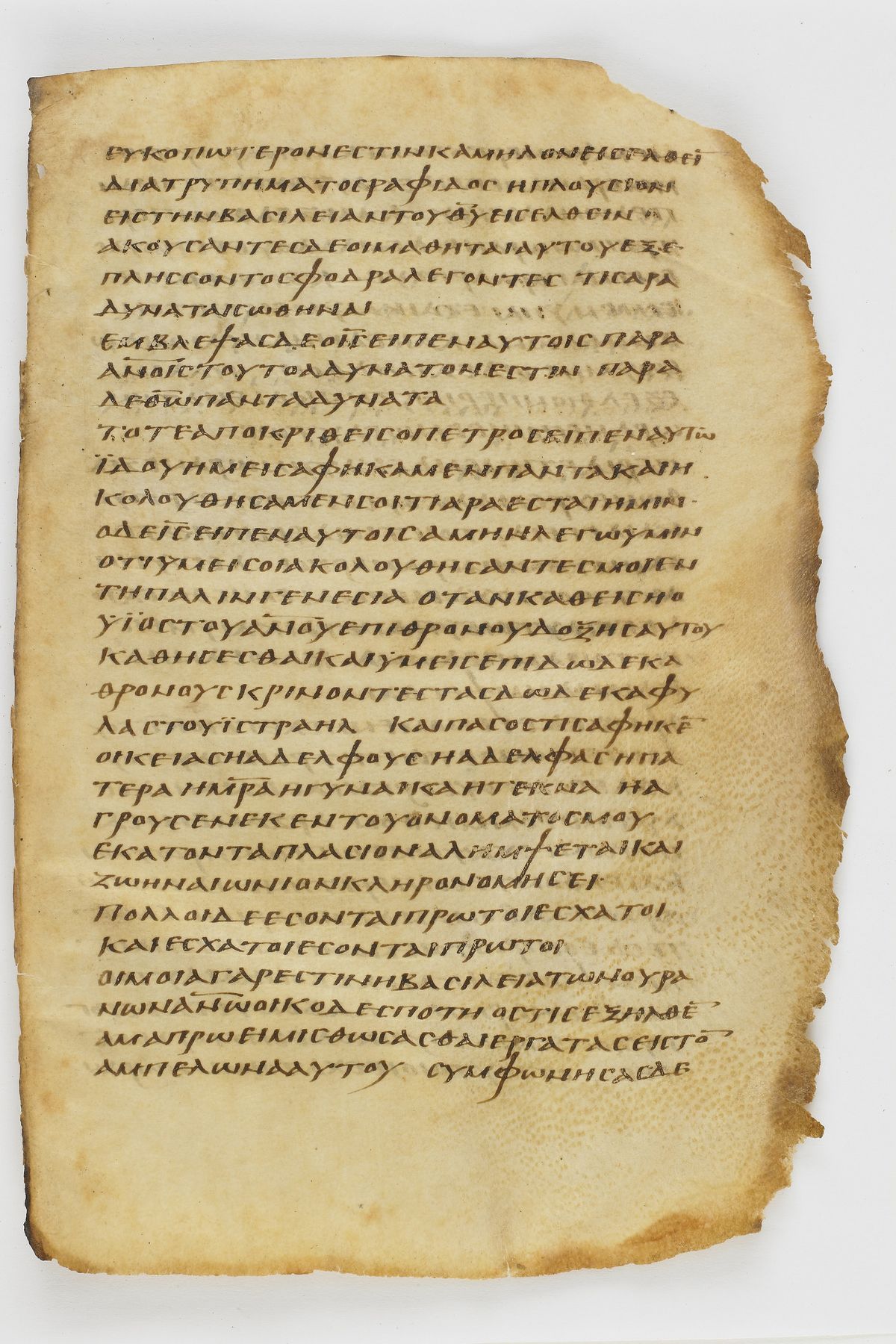
17ὁ δὲ εἶπεν αὐτῷ, τί με ἐρωτᾷς περὶ τοῦ ἀγαθοῦ; εἷς ἐστιν ὁ ἀγαθός. εἰ δὲ θέλεις εἰς τὴν ζωὴν εἰσελθεῖν, τήρησον τὰς ἐντολάς. 18ποίας; φησίν ὁ δὲ Ἰησοῦς εἶπεν· τὸ οὐ φονεύσεις, οὐ μοιχεύσεις, οὐ κλέψεις, οὐ ψευδομαρτυρήσεις, 19τίμα τὸν πατέρα καὶ τὴν μητέρα, καί, ἀγαπήσεις τὸν πλησίον σου ὡς σεαυτόν. 20λέγει αὐτῷ ὁ νεανίσκος· πάντα ταῦτα ἐφύλαξα· τί ἔτι ὑστερῶ; 21ἔφη αὐτῷ ὁ Ἰησοῦς, εἰ θέλεις τέλειος εἶναι, ὕπαγε πώλησόν σου τὰ ὑπάρχοντα καὶ δὸς πτωχοῖς, καὶ ἕξεις θησαυρὸν ἐν οὐρανοῖς, καὶ δεῦρο ἀκολούθει μοι. 22ἀκούσας δὲ ὁ νεανίσκος ἀπῆλθεν λυπούμενος· ἦν γὰρ ἔχων κτήματα πολλά. 23Ὁ δὲ Ἰησοῦς εἶπεν τοῖς μαθηταῖς αὐτοῦ· ἀμὴν λέγω ὑμῖν ὅτι πλούσιος δυσκόλως εἰσελεύσεται εἰς τὴν βασιλείαν τῶν οὐρανῶν. 24πάλιν δὲ λέγω ὑμῖν ὅτι εὐκοπώτερόν ἐστιν κάμηλον διὰ τρυπήματος ῥαφίδος εἰσελθεῖν ἢ πλούσιον εἰς τὴν βασιλείαν τῶν οὐρανῶν.
17And he said unto him, Why callest thou me good? there is none good but one, that is, God: but if thou wilt enter into life, keep the commandments. 18He saith unto him, Which? Jesus said, Thou shalt do no murder, Thou shalt not commit adultery, Thou shalt not steal, Thou shalt not bear false witness, 19Honour thy father and thy mother: and, Thou shalt love thy neighbour as thyself. 20The young man saith unto him, All these things have I kept from my youth up: what lack I yet? 21Jesus said unto him, If thou wilt be perfect, go and sell that thou hast, and give to the poor, and thou shalt have treasure in heaven: and come and follow me. 22But when the young man heard that saying, he went away sorrowful: for he had great possessions. 23Then said Jesus unto his disciples, Verily I say unto you, That a rich man shall hardly enter into the kingdom of heaven. 24And again I say unto you, It is easier for a camel to go through the eye of a needle, than for a rich man to enter into the kingdom of God.
25ἀκούσαντες δὲ οἱ μαθηταὶ ἐξεπλήσσοντο σφόδρα λέγοντες· τίς ἄρα δύναται σωθῆναι; 26ἐμβλέψας δὲ ὁ Ἰησοῦς εἶπεν αὐτοῖς· παρὰ ἀνθρώποις τοῦτο ἀδύνατόν ἐστιν, παρὰ δὲ θεῷ δυνατά πάντα. 27Τότε ἀποκριθεὶς ὁ Πέτρος εἶπεν αὐτῷ· ἰδοὺ ἡμεῖς ἀφήκαμεν πάντα καὶ ἠκολουθήσαμέν σοι· τί ἄρα ἔσται ἡμῖν; 28ὁ δὲ Ἰησοῦς εἶπεν αὐτοῖς· ἀμὴν λέγω ὑμῖν ὅτι ὑμεῖς οἱ ἀκολουθήσαντές μοι, ἐν τῇ παλινγενεσίᾳ, ὅταν καθίσῃ ὁ υἱὸς τοῦ ἀνθρώπου ἐπὶ θρόνου δόξης αὐτοῦ, καθίσεσθε καὶ αὐτοὶ ἐπὶ δώδεκα θρόνους κρίνοντες τὰς δώδεκα φυλὰς τοῦ Ἰσραήλ. 29καὶ πᾶς ὅστις ἀφῆκεν ἀδελφοὺς ἢ ἀδελφὰς ἢ πατέρα ἢ μητέρα ἢ τέκνα ἢ ἀγροὺς ἢ οἰκίας ἕνεκα τοῦ ἐμοῦ ὀνόματός, πολλαπλασίονα λήμψεται καὶ ζωὴν αἰώνιον κληρονομήσει. 30πολλοὶ δὲ ἔσονται πρῶτοι ἔσχατοι καὶ ἔσχατοι πρῶτοι.
25When his disciples heard it, they were exceedingly amazed, saying, Who then can be saved? 26But Jesus beheld them, and said unto them, With men this is impossible; but with God all things are possible. 27Then answered Peter and said unto him, Behold, we have forsaken all, and followed thee; what shall we have therefore? 28And Jesus said unto them, Verily I say unto you, That ye which have followed me, in the regeneration when the Son of man shall sit in the throne of his glory, ye also shall sit upon twelve thrones, judging the twelve tribes of Israel. 29And every one that hath forsaken houses, or brethren, or sisters, or father, or mother, or wife, or children, or lands, for my name’s sake, shall receive an hundredfold, and shall inherit everlasting life. 30But many that are first shall be last; and the last shall be first.
Cite
Source & Cross-References
- Source text: Codex Washingtonianus (Freer Gospels, GA 032) via Smithsonian/Freer IIIF + CSNTM verse index + Tischendorf + KJV — view original
- Critical edition: Tischendorf 8th edition (1869)
← previous · → next · v cycle view · l back to library