Aeschylus, Prometheus Bound 1-435: Prometheus chained; the daughters of Ocean and Oceanus
Introduction
Prometheus Bound, handed down under the name of Aeschylus (died 456 BCE), opens at the edge of the world in Scythia. Power and Force bring the Titan Prometheus, and Hephaestus, against his will, nails him to the rock for stealing fire and giving it to mortals (1-87). Left alone, Prometheus calls on sky, winds, rivers, sea, Earth and Sun to witness what a god suffers from the gods (88-127). The daughters of Oceanus arrive on a winged car (128-192); Prometheus tells them how, when the gods fell to strife, he took the side of Zeus and by his counsel Cronus and the Titans were cast into Tartarus, and how he saved mankind when Zeus planned to destroy it and make a new race, giving them blind hopes and fire (193-283). Oceanus comes to advise submission and offers to plead with Zeus; Prometheus sends him away, recalling the punishments of Atlas and Typhon (284-396). The chorus laments, and all the peoples of the earth with it (397-435). The next entry continues with Prometheus' speech on the arts he gave to mankind (436-525).
The pages shown are from Florence, Biblioteca Medicea Laurenziana, Plut. 32.9, the Medicean manuscript of the 10th century (Aeschylus siglum M). The play begins on fol. 147v below its title and hypothesis; each section below is one page of the manuscript, from fol. 147v to the first part of fol. 152v, with ancient commentary (scholia) in the margins. The first and last verse of every page were read on the images. The Greek is Smyth's edition (1922), not a transcription of the manuscript. The English is Smyth's Loeb translation of the same year, which has no line numbers; it is cut at the speech start or sentence end nearest each page break, and each section gives its exact English line range.
How was this verified? (Provenance)
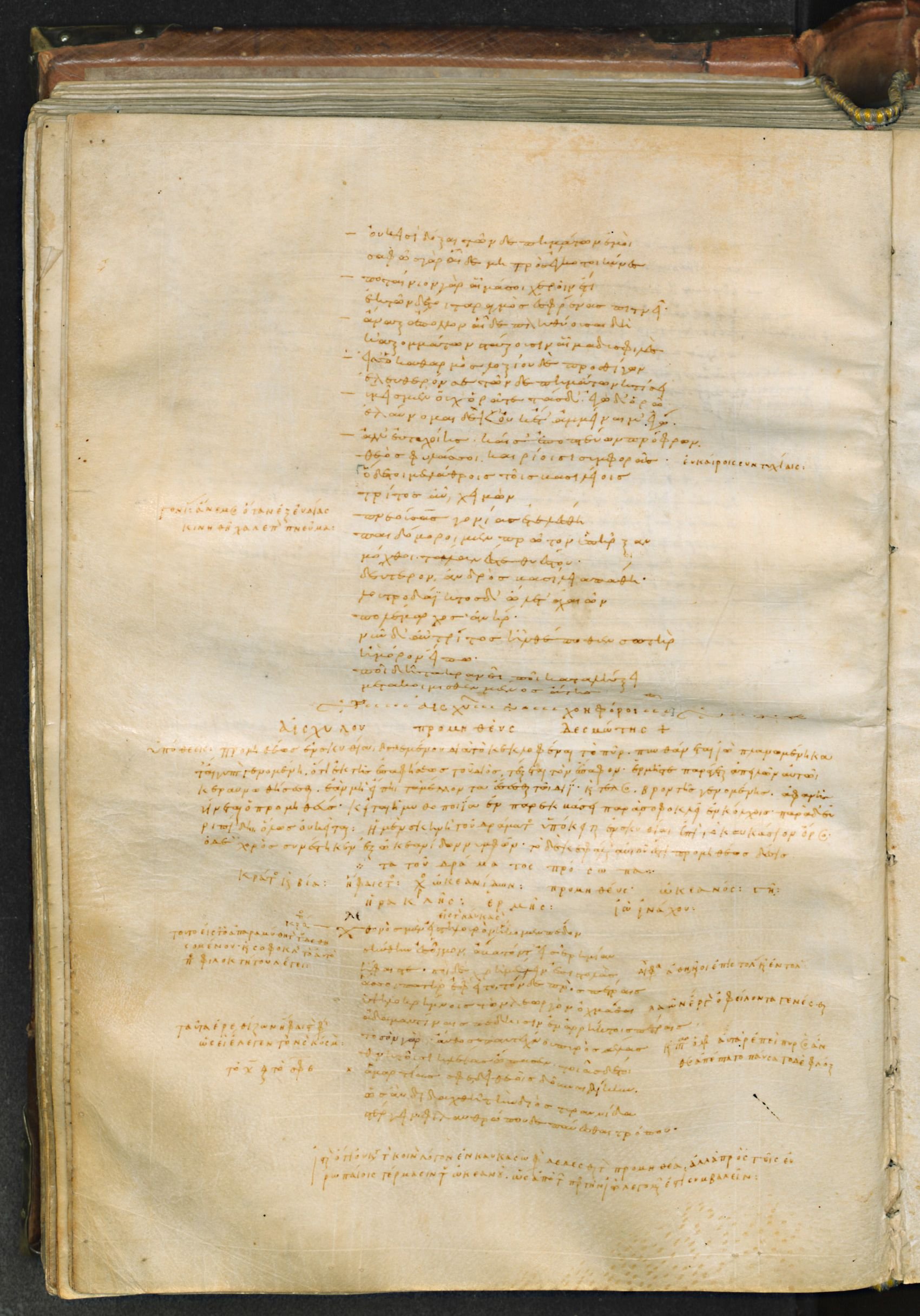
Where on the image
Laur. Plut. 32.9 fol. 147v: Prometheus Bound 1-11, from ‹χθονὸς μὲν ἐς τηλουρὸν ἥκομεν πέδον› on its first verse line (1) to ‹στέργειν φιλανθρώπου δὲ παύεσθαι τρόπου› on its last (11); read on contrast-enhanced crops of the page image. The upper part of the page holds the end of the Choephori (from 1053-1054 οὐκ εἰσὶ δόξαι τῶνδε πημάτων ἐμοί· σαφῶς γὰρ αἵδε μητρὸς ἔγκοτοι κύνες to the closing anapaests, τρίτος αὖ χειμών ..., with a gloss on γονίας in the left margin, and the subscription naming Aeschylus' Choephori); then the title of Prometheus Bound, the hypothesis and the list of characters; the play begins below them, and its first 11 lines end the page above a scholion. English here: 1-11; the English begins with Smyth's opening stage direction. The Greek shown is Smyth's edited text; the manuscript's spelling, accents and some readings differ. Viewer: https://tecabml.contentdm.oclc.org/digital/collection/plutei/id/710898
Κράτος
1Χθονὸς μὲν ἐς τηλουρὸν ἥκομεν πέδον,
2Σκύθην ἐς οἷμον, ἄβατον εἰς ἐρημίαν.
3Ἥφαιστε, σοὶ δὲ χρὴ μέλειν ἐπιστολὰς
4ἅς σοι πατὴρ ἐφεῖτο, τόνδε πρὸς πέτραις
5ὑψηλοκρήμνοις τὸν λεωργὸν ὀχμάσαι
6ἀδαμαντίνων δεσμῶν ἐν ἀρρήκτοις πέδαις.
7τὸ σὸν γὰρ ἄνθος, παντέχνου πυρὸς σέλας,
8θνητοῖσι κλέψας ὤπασεν. τοιᾶσδέ τοι
9ἁμαρτίας σφε δεῖ θεοῖς δοῦναι δίκην,
10ὡς ἂν διδαχθῇ τὴν Διὸς τυραννίδα
11στέργειν, φιλανθρώπου δὲ παύεσθαι τρόπου.
1[Enter Power and Force, bringing with them Prometheus captive; also Hephaestus]
Power
To earth’s remotest confines we are come, to the Scythian tract, an untrodden solitude. And now, Hephaestus, thine is the charge to observe the mandates laid upon thee by the Father—to clamp this miscreant upon the high-beetling crags in shackles of binding adamant that cannot be broken. For thine own pride, even flashing fire, source of all arts, he hath purloined and bestowed upon mortal creatures. Such is his offence; wherefore he is bound to make requital to the gods, that so he may be lessoned to brook the sovereignty of Zeus and forbear his championship of man.
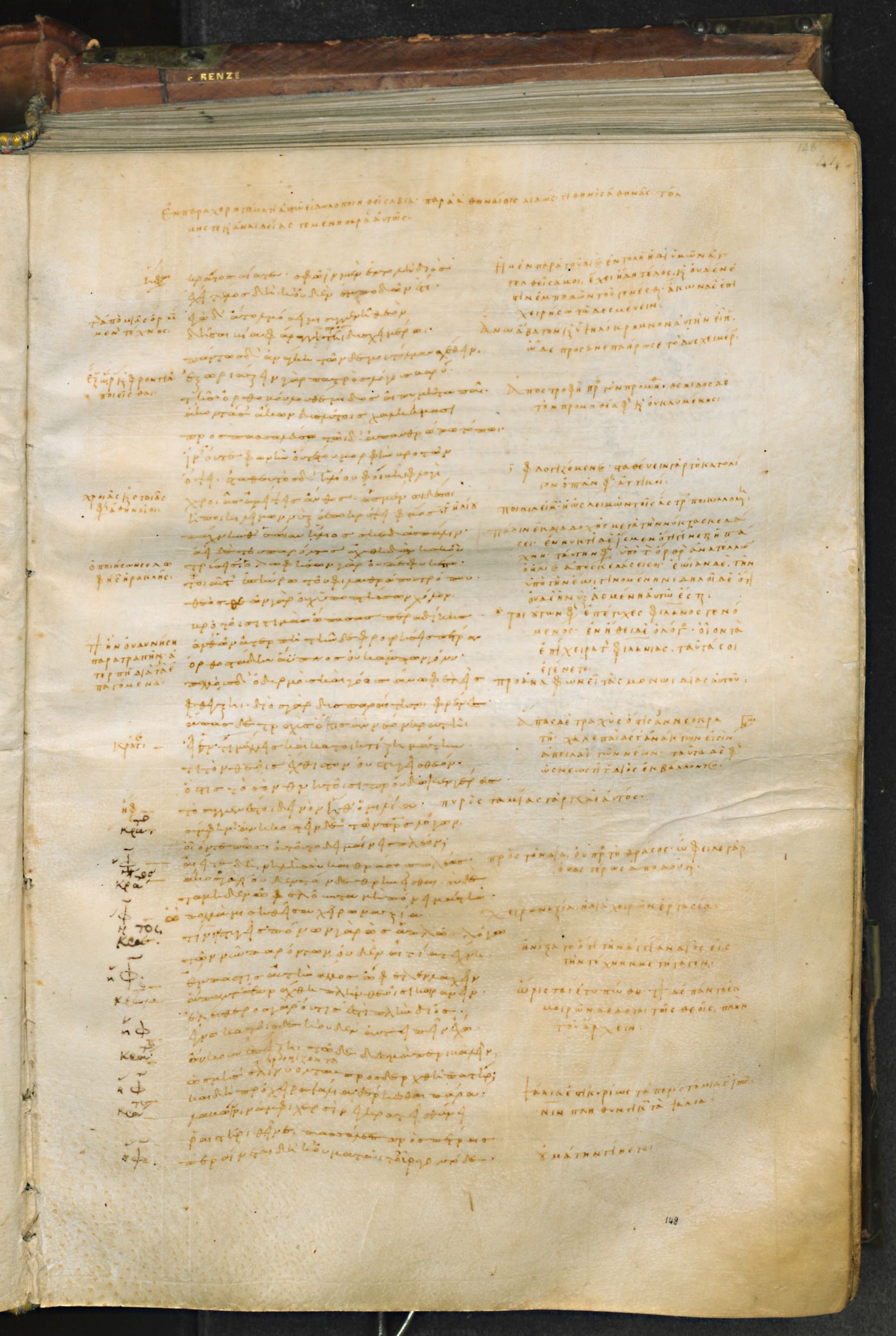
Where on the image
Laur. Plut. 32.9 fol. 148r: Prometheus Bound 12-57, from ‹κράτος βία σφῷν μὲν ἐντολὴ διὸς› on its first verse line (12) to ‹περαίνεται δὴ κοὐ ματᾷ τοὔργον τόδε› on its last (57); read on contrast-enhanced crops of the page image, and checked against the first verse of the next page. A scholion in the upper margin. English here: 12-57; cut where Hephaestus' speech begins (12), the same line as the Greek. The Greek shown is Smyth's edited text; the manuscript's spelling, accents and some readings differ. Viewer: https://tecabml.contentdm.oclc.org/digital/collection/plutei/id/710899
Ἥφαιστος
12Κράτος Βία τε, σφῷν μὲν ἐντολὴ Διὸς
13ἔχει τέλος δὴ κοὐδὲν ἐμποδὼν ἔτι·
14ἐγὼ δʼ ἄτολμός εἰμι συγγενῆ θεὸν
15δῆσαι βίᾳ φάραγγι πρὸς δυσχειμέρῳ.
16πάντως δʼ ἀνάγκη τῶνδέ μοι τόλμαν σχεθεῖν·
17ἐξωριάζειν γὰρ πατρὸς λόγους βαρύ.
18τῆς ὀρθοβούλου Θέμιδος αἰπυμῆτα παῖ,
19ἄκοντά σʼ ἄκων δυσλύτοις χαλκεύμασι
20προσπασσαλεύσω τῷδʼ ἀπανθρώπῳ πάγῳ
21ἵνʼ οὔτε φωνὴν οὔτε του μορφὴν βροτῶν
22ὄψει, σταθευτὸς δʼ ἡλίου φοίβῃ φλογὶ
23χροιᾶς ἀμείψεις ἄνθος. ἀσμένῳ δέ σοι
24ἡ ποικιλείμων νὺξ ἀποκρύψει φάος,
25πάχνην θʼ ἑῴαν ἥλιος σκεδᾷ πάλιν·
26ἀεὶ δὲ τοῦ παρόντος ἀχθηδὼν κακοῦ
27τρύσει σʼ· ὁ λωφήσων γὰρ οὐ πέφυκέ πω.
28τοιαῦτʼ ἐπηύρω τοῦ φιλανθρώπου τρόπου.
29θεὸς θεῶν γὰρ οὐχ ὑποπτήσσων χόλον
30βροτοῖσι τιμὰς ὤπασας πέρα δίκης.
31ἀνθʼ ὧν ἀτερπῆ τήνδε φρουρήσεις πέτραν
32ὀρθοστάδην, ἄυπνος, οὐ κάμπτων γόνυ·
33πολλοὺς δʼ ὀδυρμοὺς καὶ γόους ἀνωφελεῖς
34φθέγξῃ· Διὸς γὰρ δυσπαραίτητοι φρένες.
35ἅπας δὲ τραχὺς ὅστις ἂν νέον κρατῇ.
Κράτος
36εἶεν, τί μέλλεις καὶ κατοικτίζῃ μάτην;
37τί τὸν θεοῖς ἔχθιστον οὐ στυγεῖς θεόν,
38ὅστις τὸ σὸν θνητοῖσι προὔδωκεν γέρας;
Ἥφαιστος
39τὸ συγγενές τοι δεινὸν ἥ θʼ ὁμιλία.
Κράτος
40σύμφημʼ· ἀνηκουστεῖν δὲ τῶν πατρὸς λόγων
41οἷόν τε πῶς; οὐ τοῦτο δειμαίνεις πλέον;
Ἥφαιστος
42αἰεί γε δὴ νηλὴς σὺ καὶ θράσους πλέως.
Κράτος
43ἄκος γὰρ οὐδὲν τόνδε θρηνεῖσθαι. σὺ δὲ
44τὰ μηδὲν ὠφελοῦντα μὴ πόνει μάτην.
Ἥφαιστος
45ὦ πολλὰ μισηθεῖσα χειρωναξία.
Κράτος
46τί νιν στυγεῖς; πόνων γὰρ ὡς ἁπλῷ λόγῳ
47τῶν νῦν παρόντων οὐδὲν αἰτία τέχνη.
Ἥφαιστος
48ἔμπας τις αὐτὴν ἄλλος ὤφελεν λαχεῖν.
Κράτος
49ἅπαντʼ ἐπαχθῆ πλὴν θεοῖσι κοιρανεῖν·
50ἐλεύθερος γὰρ οὔτις ἐστὶ πλὴν Διός.
Ἥφαιστος
51ἔγνωκα τοῖσδε κοὐδὲν ἀντειπεῖν ἔχω.
Κράτος
52οὔκουν ἐπείξῃ τῷδε δεσμὰ περιβαλεῖν,
53ὡς μή σʼ ἐλινύοντα προσδερχθῇ πατήρ;
Ἥφαιστος
54καὶ δὴ πρόχειρα ψάλια δέρκεσθαι πάρα.
Κράτος
55βαλών νιν ἀμφὶ χερσὶν ἐγκρατεῖ σθένει
56ῥαιστῆρι θεῖνε, πασσάλευε πρὸς πέτραις.
Ἥφαιστος
57περαίνεται δὴ κοὐ ματᾷ τοὔργον τόδε.
Hephaestus
12Power and Force, for you indeed the behest of Zeus is now fulfilled, and naught remains to stay you. But for me—I cannot nerve myself to bind amain a kindred god upon this rocky cleft assailed by cruel winter. Yet, come what may, I am constrained to summon courage to this deed; for ’tis perilous to disregard the commandments of the Father.
Lofty-minded son of Themis who counselleth aright, against my will, no less than thine, I must rivet thee with brazen bonds no hand can loose to this desolate crag, where nor voice nor form of mortal man shall meet thy ken; but, scorched by the sun’s bright beams, thou shalt lose the fair bloom of thy flesh. And glad shalt thou be when spangled-robed night shall veil his brightness and when the sun shall scatter again the rime of morn. Evermore the burthen of thy present ill shall wear thee out; for thy deliverer is not yet born.
Such guerdon hast thou gained from thy championship of man. For, god though thou art, thou didst not quail before the wrath of the gods, but didst bestow honours upon mortal creatures beyond their due. Wherefore on this joyless rock thou must stand sentinel, erect, sleepless, thy knee unbent. And many a groan and unavailing lament thou shalt utter; for the heart of Zeus is obdurate, and everyone is harsh whose power is new.
Power
Well, why dally and vent in vain thy pity? Why dost thou not detest a god most hateful to the gods, since he hath betrayed thy prerogative to mortals?
Hephaestus
A strangely potent tie is kinship—and companionship as well.
Power
I grant it; yet to refuse to obey the commands of the Father—is this possible? Hast thou not still greater fear of that?
Hephaestus
Aye, thou art ever pitiless and steeped in insolence.
Power
Aye, for it boots naught to bemoan this fellow. Have done with losing thy labour at a task unprofitable.
Hephaestus
Oh handicraft that I have learned so much to loathe!
Power
Why hate it? Since in good truth thy craft is in no wise to blame for these present troubles.
Hephaestus
Nevertheless, would that it had fallen to another’s lot!
Power
Each office has its burthen except to be lord of heaven; for none is free save only Zeus.
Hephaestus
I have realized it by this sight here; gainsay it I cannot.
Power
Haste thee then to cast the fetters about him, lest the Father behold thee loitering.
Hephaestus
Well, there then! The bracelets are ready, as thou mayest see.
Power
Cast them about his wrists and with might and main smite with thy hammer; rivet him to the rocks.
Hephaestus
There! The work is getting on and is not done amiss.
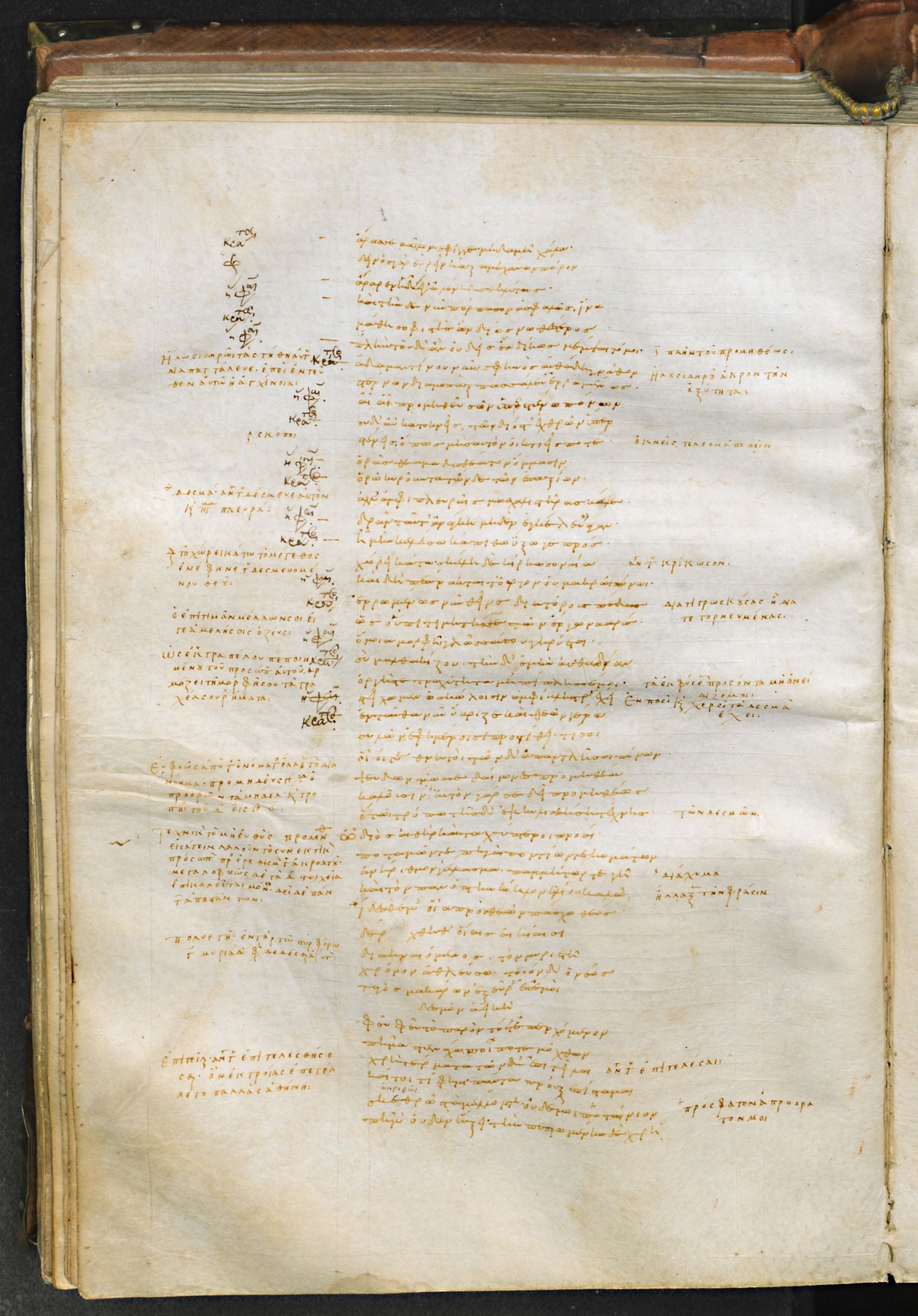
Where on the image
Laur. Plut. 32.9 fol. 148v: Prometheus Bound 58-103, from ‹ἄρασσε μᾶλλον σφίγγε μηδαμῇ χάλα› on its first verse line (58) to ‹πῆμ' οὐδὲν ἥξει τὴν πεπρωμένην δὲ χρὴ› on its last (103); read on contrast-enhanced crops of the page image, and checked against the first verse of the next page. English here: 58-102; cut where Power's line 58 begins, the same line as the Greek. The Greek shown is Smyth's edited text; the manuscript's spelling, accents and some readings differ. Viewer: https://tecabml.contentdm.oclc.org/digital/collection/plutei/id/710900
Κράτος
58ἄρασσε μᾶλλον, σφίγγε, μηδαμῇ χάλα.
59δεινὸς γὰρ εὑρεῖν κἀξ ἀμηχάνων πόρον.
Ἥφαιστος
60ἄραρεν ἥδε γʼ ὠλένη δυσεκλύτως.
Κράτος
61καὶ τήνδε νῦν πόρπασον ἀσφαλῶς, ἵνα
62μάθῃ σοφιστὴς ὢν Διὸς νωθέστερος.
Ἥφαιστος
63πλὴν τοῦδʼ ἂν οὐδεὶς ἐνδίκως μέμψαιτό μοι.
Κράτος
64ἀδαμαντίνου νῦν σφηνὸς αὐθάδη γνάθον
65στέρνων διαμπὰξ πασσάλευʼ ἐρρωμένως.
Ἥφαιστος
66αἰαῖ, Προμηθεῦ, σῶν ὑπερστένω πόνων.
Κράτος
67σὺ δʼ αὖ κατοκνεῖς τῶν Διός τʼ ἐχθρῶν ὕπερ
68στένεις; ὅπως μὴ σαυτὸν οἰκτιεῖς ποτε.
Ἥφαιστος
69ὁρᾷς θέαμα δυσθέατον ὄμμασιν.
Κράτος
70ὁρῶ κυροῦντα τόνδε τῶν ἐπαξίων.
71ἀλλʼ ἀμφὶ πλευραῖς μασχαλιστῆρας βάλε.
Ἥφαιστος
72δρᾶν ταῦτʼ ἀνάγκη, μηδὲν ἐγκέλευʼ ἄγαν.
Κράτος
73ἦ μὴν κελεύσω κἀπιθωύξω γε πρός.
74χώρει κάτω, σκέλη δὲ κίρκωσον βίᾳ.
Ἥφαιστος
75καὶ δὴ πέπρακται τοὔργον οὐ μακρῷ πόνῳ.
Κράτος
76ἐρρωμένως νῦν θεῖνε διατόρους πέδας·
77ὡς οὑπιτιμητής γε τῶν ἔργων βαρύς.
Ἥφαιστος
78ὅμοια μορφῇ γλῶσσά σου γηρύεται.
Κράτος
79σὺ μαλθακίζου, τὴν δʼ ἐμὴν αὐθαδίαν
80ὀργῆς τε τραχύτητα μὴ ʼπίπλησσέ μοι.
Ἥφαιστος
81στείχωμεν, ὡς κώλοισιν ἀμφίβληστρʼ ἔχει.
Κράτος
82ἐνταῦθα νῦν ὕβριζε καὶ θεῶν γέρα
83συλῶν ἐφημέροισι προστίθει. τί σοι
84οἷοί τε θνητοὶ τῶνδʼ ἀπαντλῆσαι πόνων;
85ψευδωνύμως σε δαίμονες Προμηθέα
86καλοῦσιν· αὐτὸν γάρ σε δεῖ προμηθέως,
87ὅτῳ τρόπῳ τῆσδʼ ἐκκυλισθήσῃ τέχνης.
Προμηθεύς
88ὦ δῖος αἰθὴρ καὶ ταχύπτεροι πνοαί,
89ποταμῶν τε πηγαί, ποντίων τε κυμάτων
90ἀνήριθμον γέλασμα, παμμῆτόρ τε γῆ,
91καὶ τὸν πανόπτην κύκλον ἡλίου καλῶ.
92ἴδεσθέ μʼ οἷα πρὸς θεῶν πάσχω θεός.
93δέρχθηθʼ οἵαις αἰκείαισιν
94διακναιόμενος τὸν μυριετῆ
95χρόνον ἀθλεύσω.
96τοιόνδʼ ὁ νέος ταγὸς μακάρων
97ἐξηῦρʼ ἐπʼ ἐμοὶ δεσμὸν ἀεικῆ.
98φεῦ φεῦ, τὸ παρὸν τό τʼ ἐπερχόμενον
99πῆμα στενάχω, πῇ ποτε μόχθων
100χρὴ τέρματα τῶνδʼ ἐπιτεῖλαι.
101καίτοι τί φημι; πάντα προυξεπίσταμαι
102σκεθρῶς τὰ μέλλοντʼ, οὐδέ μοι ποταίνιον
103πῆμʼ οὐδὲν ἥξει. τὴν πεπρωμένην δὲ χρὴ
Power
58Strike harder, clamp him tight, leave nothing loose; for he is wondrous clever at finding a way even out of desperate straits.
Hephaestus
This arm, at least, is fixed beyond all loosening.
Power
Now rivet this one too and securely, that he may learn, for all his cleverness, that he is but a dullard compared to Zeus.
Hephaestus
None but he could justly blame my work.
Power
Now straight through his chest drive the adamantine wedge’s stubborn edge with thy full force.
Hephaestus
Alas, Prometheus, I groan over thy pangs.
Power
What! Shrinking again and groaning over the foes of Zeus? Look to it lest the day come when thou shalt grieve for thyself.
Hephaestus
Thou seest a spectacle grievous for eyes to behold.
Power
I see this fellow getting his deserts. Come, cast the girths about his sides.
Hephaestus
Do this I must; spare me thy needless ordering.
Power
Of a truth, I’ll order thee, aye and more—I’ll hound thee on. Get thee down below, and ring his legs by force.
§Hephaestus
There now! The work’s done and with no long labour.
Power
Now hammer the galling fetters with thy full force; for the appraiser of our work is severe.
Hephaestus
The utterance of thy tongue matches thy face.
Power
Play the woman an thou wilt, but cast not in my teeth my stubborn will and my relentless mood.
Hephaestus
Let us begone, since he has got the meshes on his limbs. [Exit
Power
There now, indulge thy insolence, keep on wresting from the gods their honours to give them to creatures of a day. Are mortals able to lighten this thy load of woe? Falsely hight the gods call thee Prometheus, for thou hast thyself need of one to take forethought how thou shalt extricate thyself from this handiwork. [Exeunt Power and Force
Prometheus
O thou bright sky of heaven, ye swift-winged breezes, ye river-waters, and multitudinous laughter of the waves of ocean, O universal mother Earth, and thou, all-seeing orb of the sun, to you I call! Behold what I, a god, endure of evil from the gods.
Behold, with what shameful woes I am racked and must wrestle throughout the countless years of time apportioned me. Such is the ignominious bondage the new Commander of the Blessed hath contrived against me. Woe! Woe! For misery present and misery to come I groan, not knowing where it is fated deliverance from these woes shall dawn.
And yet, what do I say? All that is to be I know full well and in advance, nor shall any affliction come upon me unforeseen.
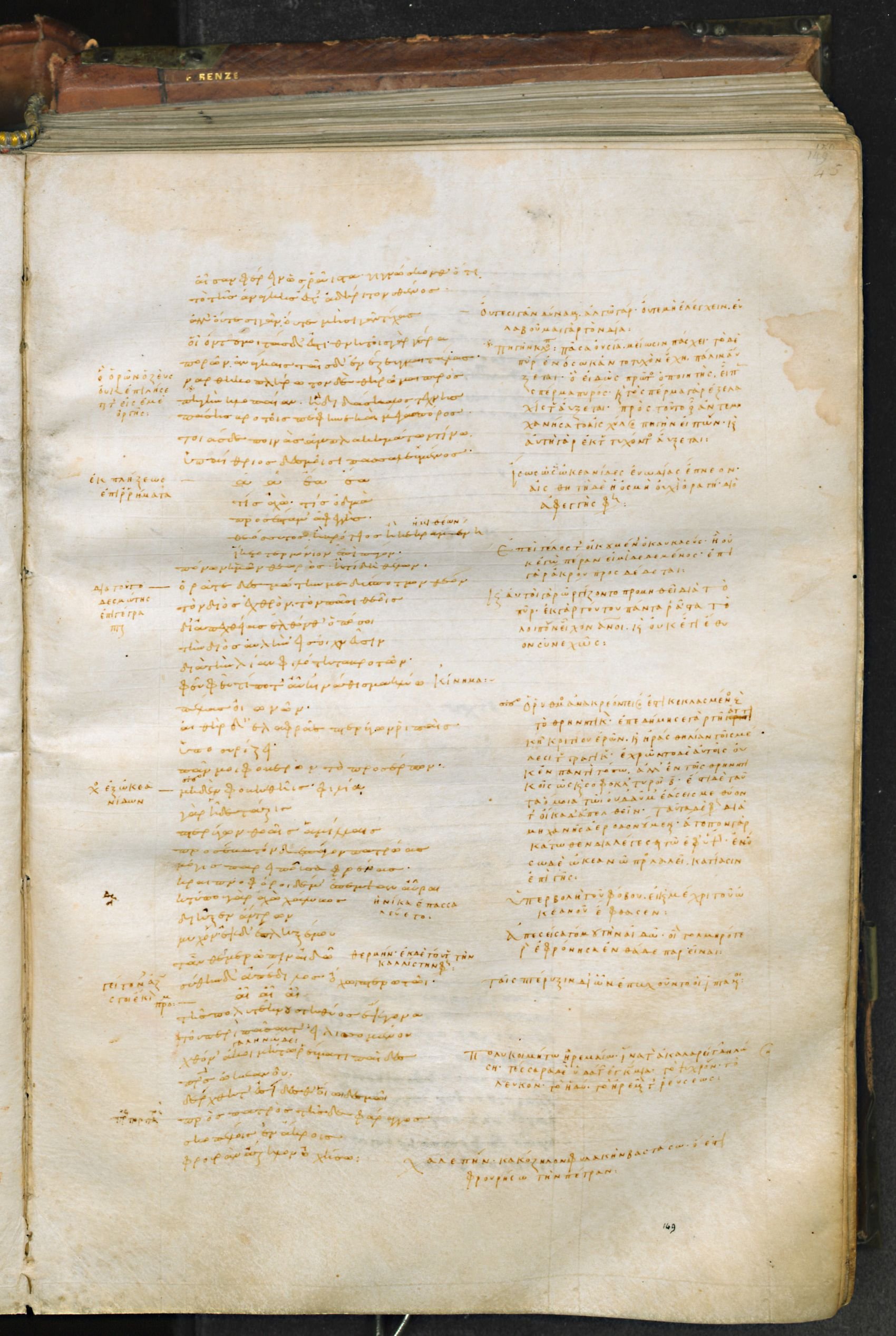
Where on the image
Laur. Plut. 32.9 fol. 149r: Prometheus Bound 104-143, from ‹αἶσαν φέρειν ὡς ῥᾷστα γιγνώσκονθ' ὅτι› on its first verse line (104) to ‹φρουρὰν ἄζηλον ὀχήσω› on its last (143); read on contrast-enhanced crops of the page image, and checked against the first verse of the next page. The anapaests of 136-143 are written in short lines; the last line of the page is the end of 143. English here: 103-143; Smyth's sentence for 103-105 (My allotted doom ... brooketh no resistance.) begins one line before the page break and is given with this page. The Greek shown is Smyth's edited text; the manuscript's spelling, accents and some readings differ. Viewer: https://tecabml.contentdm.oclc.org/digital/collection/plutei/id/710901
Προμηθεύς
104αἶσαν φέρειν ὡς ῥᾷστα, γιγνώσκονθʼ ὅτι
105τὸ τῆς ἀνάγκης ἔστʼ ἀδήριτον σθένος.
106ἀλλʼ οὔτε σιγᾶν οὔτε μὴ σιγᾶν τύχας
107οἷόν τέ μοι τάσδʼ ἐστί. θνητοῖς γὰρ γέρα
108πορὼν ἀνάγκαις ταῖσδʼ ἐνέζευγμαι τάλας.
109ναρθηκοπλήρωτον δὲ θηρῶμαι πυρὸς
110πηγὴν κλοπαίαν, ἣ διδάσκαλος τέχνης
111πάσης βροτοῖς πέφηνε καὶ μέγας πόρος.
112τοιῶνδε ποινὰς ἀμπλακημάτων τίνω
113ὑπαιθρίοις δεσμοῖς πεπασσαλευμένος.
114ἆ ἆ ἔα ἔα.
115τίς ἀχώ, τίς ὀδμὰ προσέπτα μʼ ἀφεγγής,
116θεόσυτος, ἢ βρότειος, ἢ κεκραμένη;
117ἵκετο τερμόνιον ἐπὶ πάγον
118πόνων ἐμῶν θεωρός, ἢ τί δὴ θέλων;
119ὁρᾶτε δεσμώτην με δύσποτμον θεόν
120τὸν Διὸς ἐχθρόν, τὸν πᾶσι θεοῖς
121διʼ ἀπεχθείας ἐλθόνθʼ ὁπόσοι
122τὴν Διὸς αὐλὴν εἰσοιχνεῦσιν,
123διὰ τὴν λίαν φιλότητα βροτῶν.
124φεῦ φεῦ, τί ποτʼ αὖ κινάθισμα κλύω
125πέλας οἰωνῶν; αἰθὴρ δʼ ἐλαφραῖς
126πτερύγων ῥιπαῖς ὑποσυρίζει.
127πᾶν μοι φοβερὸν τὸ προσέρπον.
Χορός
128μηδὲν φοβηθῇς· φιλία
128bγὰρ ἅδε τάξις πτερύγων
129θοαῖς ἁμίλλαις προσέβα
130τόνδε πάγον, πατρῴας
131μόγις παρειποῦσα φρένας.
132κραιπνοφόροι δέ μʼ ἔπεμψαν αὖραι·
133κτύπου γὰρ ἀχὼ χάλυβος
130bδιῇξεν ἄντρων μυχόν, ἐκ
134δʼ ἔπληξέ μου τὰν θεμερῶπιν αἰδῶ·
135σύθην δʼ ἀπέδιλος ὄχῳ πτερωτῷ.
Προμηθεύς
136αἰαῖ αἰαῖ,
137τῆς πολυτέκνου Τηθύος ἔκγονα,
138τοῦ περὶ πᾶσάν θʼ εἱλισσομένου
139χθόνʼ ἀκοιμήτῳ ῥεύματι παῖδες
140πατρὸς, Ὠκεανοῦ,
141δέρχθητʼ, ἐσίδεσθʼ οἵῳ δεσμῷ,
142προσπορπατὸς τῆσδε φάραγγος
143σκοπέλοις ἐν ἄκροις
143bφρουρὰν ἄζηλον ὀχήσω.
103My allotted doom I needs must bear as lightly as I may, knowing that the might of Necessity brooketh no resistance. Yet to be silent or not silent about this my fate is beyond my power. For it is because I bestowed good gifts on mortals that this yoke of constraint hath been bound upon me to my misery. I hunted out and stored in fennel stalk the stolen source of fire that hath proved to mortals a teacher in every art and a means to mighty ends. Such is the offence for which I pay the penalty, riveted in fetters beneath the open sky.
Ha! Hold! What murmur, what scent wingeth to me, its source invisible, heavenly or human, or blent of both? Hath there come to this crag at the confines of the world someone to stare upon my sufferings—or with what intent? Behold me, an ill-fated god, immanacled, the foe of Zeus, me who have incurred the enmity of all who resort unto the court of Zeus, by reason of my too great love for mankind. Ha! What’s this? What may be this rustling stir I hear again hard by, of birds? The air whirs with the light rush of pinions. Whatever approaches is fraught with alarm for me.
[The Daughters of Oceanus enter on a winged car
Chorus
Be not alarmed! For this our band hath come in winged rivalry of speed unto this crag in love to thee, having won our sire’s consent as best we might. The swift-coursing breezes bore me on; for the reverberation of the clang of iron pierced our inmost cave’’s recess and drove my grave-miened modesty away in fright; and I set off in haste unsandalled on a winged car.
Prometheus
Alas! Alas! Offspring of fruitful Tethys and of him who with his sleepless current encircleth the whole earth, children of your father Oceanus, behold, look on me, pinioned by what fetters, upon the summit crag of this ravine, I am to hold my unenviable watch.
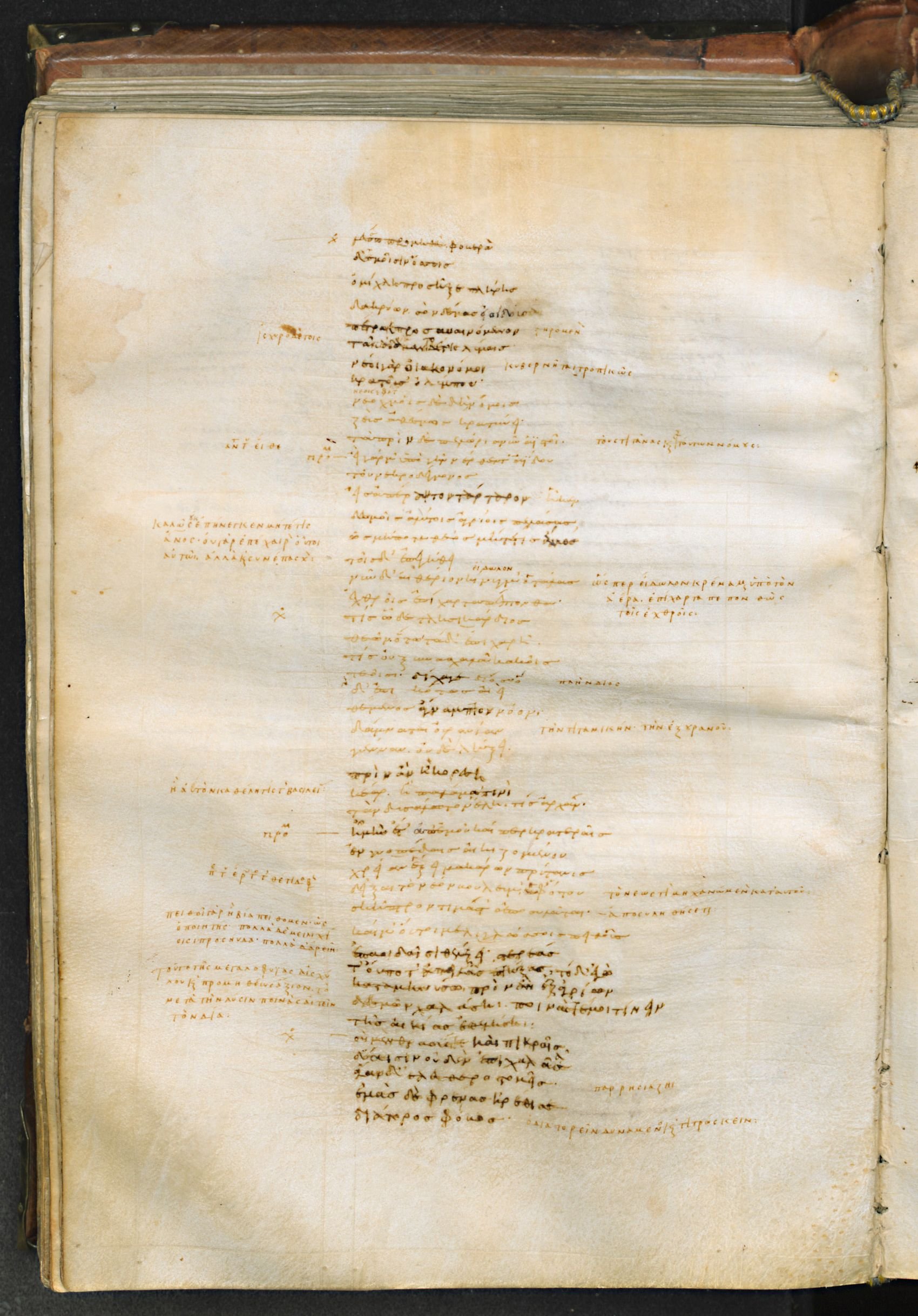
Where on the image
Laur. Plut. 32.9 fol. 149v: Prometheus Bound 144-183, from ‹λεύσσω προμηθεῦ φοβερὰ› on its first verse line (144) to ‹ἐμὰς δὲ φρένας ἐρέθισε διάτορος φόβος› on its last (183); read on contrast-enhanced crops of the page image, and checked against the first verse of the next page. The lyric lines (144-183) are divided differently from Smyth's line numbers in places; first and last words identify the range. English here: 144-182; cut where the chorus begins (144), the same line as the Greek. The Greek shown is Smyth's edited text; the manuscript's spelling, accents and some readings differ. Viewer: https://tecabml.contentdm.oclc.org/digital/collection/plutei/id/710902
Χορός
144λεύσσω, Προμηθεῦ· φοβερὰ
145δʼ ἐμοῖσιν ὄσσοις ὀμίχλα
146προσῇξε πλήρης δακρύων
147σὸν δέμας εἰσιδούσᾳ
148πέτραις προσαυαινόμενον
149ταῖσδʼ ἀδαμαντοδέτοισι λύμαις.
150νέοι γὰρ οἰακονόμοι
151κρατοῦσʼ, Ὀλύμπου· νεοχμοῖς
150aδὲ δὴ νόμοις Ζεὺς ἀθέτως κρατύνει.
151aτὰ πρὶν δὲ πελώρια νῦν ἀιστοῖ.
Προμηθεύς
152εἰ γάρ μʼ ὑπὸ γῆν νέρθεν θʼ Ἅιδου
153τοῦ νεκροδέγμονος εἰς ἀπέρατον
154Τάρταρον ἧκεν,
155δεσμοῖς ἀλύτοις ἀγρίως πελάσας,
156ὡς μήτε θεὸς μήτε τις ἄλλος
157τοῖσδʼ ἐπεγήθει.
158νῦν δʼ αἰθέριον κίνυγμʼ ὁ τάλας
159ἐχθροῖς ἐπίχαρτα πέπονθα.
Χορός
160τίς ὧδε τλησικάρδιος
161θεῶν, ὅτῳ τάδʼ ἐπιχαρῆ;
162τίς οὐ ξυνασχαλᾷ κακοῖς
163τεοῖσι, δίχα γε Διός; ὁ δʼ ἐπικότως ἀεὶ
164θέμενος ἄγναμπτον νόον
165δάμναται Οὐρανίαν
166γένναν, οὐδὲ λήξει, πρὶν ἂν ἢ κορέσῃ κέαρ ἢ παλάμᾳ τινὶ
167τὰν δυσάλωτον ἕλῃ τις ἀρχάν.
Προμηθεύς
168ἦ μὴν ἔτʼ ἐμοῦ, καίπερ κρατεραῖς
169ἐν γυιοπέδαις αἰκιζομένου,
170χρείαν ἕξει μακάρων πρύτανις,
171δεῖξαι τὸ νέον βούλευμʼ ὑφʼ ὅτου
172σκῆπτρον τιμάς τʼ ἀποσυλᾶται.
173καί μʼ οὔτι μελιγλώσσοις πειθοῦς
174ἐπαοιδαῖσιν θέλξει, στερεάς τʼ
175οὔποτʼ ἀπειλὰς πτήξας τόδʼ ἐγὼ
176καταμηνύσω,
177πρὶν ἂν ἐξ ἀγρίων δεσμῶν χαλάσῃ
178ποινάς τε τίνειν
179τῆσδʼ αἰκείας ἐθελήσῃ.
Χορός
180σὺ μὲν θρασύς τε καὶ πικραῖς
181δύαισιν οὐδὲν ἐπιχαλᾷς,
182ἄγαν δʼ ἐλευθεροστομεῖς.
183ἐμὰς δὲ φρένας ἐρέθισε διάτορος φόβος·
Chorus
144I behold, Prometheus; and in my alarm for thee there spread o’er mine eyes a mist all filled with tears as I saw thy body withering ignominiously upon this rock in these bonds of adamant. For new rulers lord it in heaven, and with new-fangled laws Zeus wieldeth arbitrary sway; and that which was mighty of old he now bringeth to naught.
Prometheus
Oh that he had hurled me below the earth, aye neath Hades, the entertainer of the dead, into impassable Tartarus, and had ruthlessly fastened me in fetters no hand can loose, that so nor god nor other kind had now gloated over this my agony! But, as it is, a plaything of the winds, to my misery, I suffer ills whereat my foes exult.
Chorus
Who of the gods is so hard of heart as to make thy misery cause of exultation? Who feels not with thee the pang of thy woes—save only Zeus? But he in rancour hath set his soul inflexibly and keepeth in subjection the race sprung from Uranus; nor will he make an end, until either he hath satiated his soul or, by some device of guile, another seize his impregnable empire.
Prometheus
Verily the day shall yet come when, though I be thus tortured in stubborn fetters, the Prince of the Blessed shall have need of me to reveal the new design and by whom he shall be stripped of his sceptre and his dignities. Not by persuasion’s honied enchantments shall he charm me; and never will I, cowering before his dire threats, divulge this secret, until he shall release me from my cruel bonds and desire to proffer satisfaction for this outrage.
Chorus
Bold art thou, and batest not a jot for all thy bitter pangs, and thou givest too much licence to thy tongue.
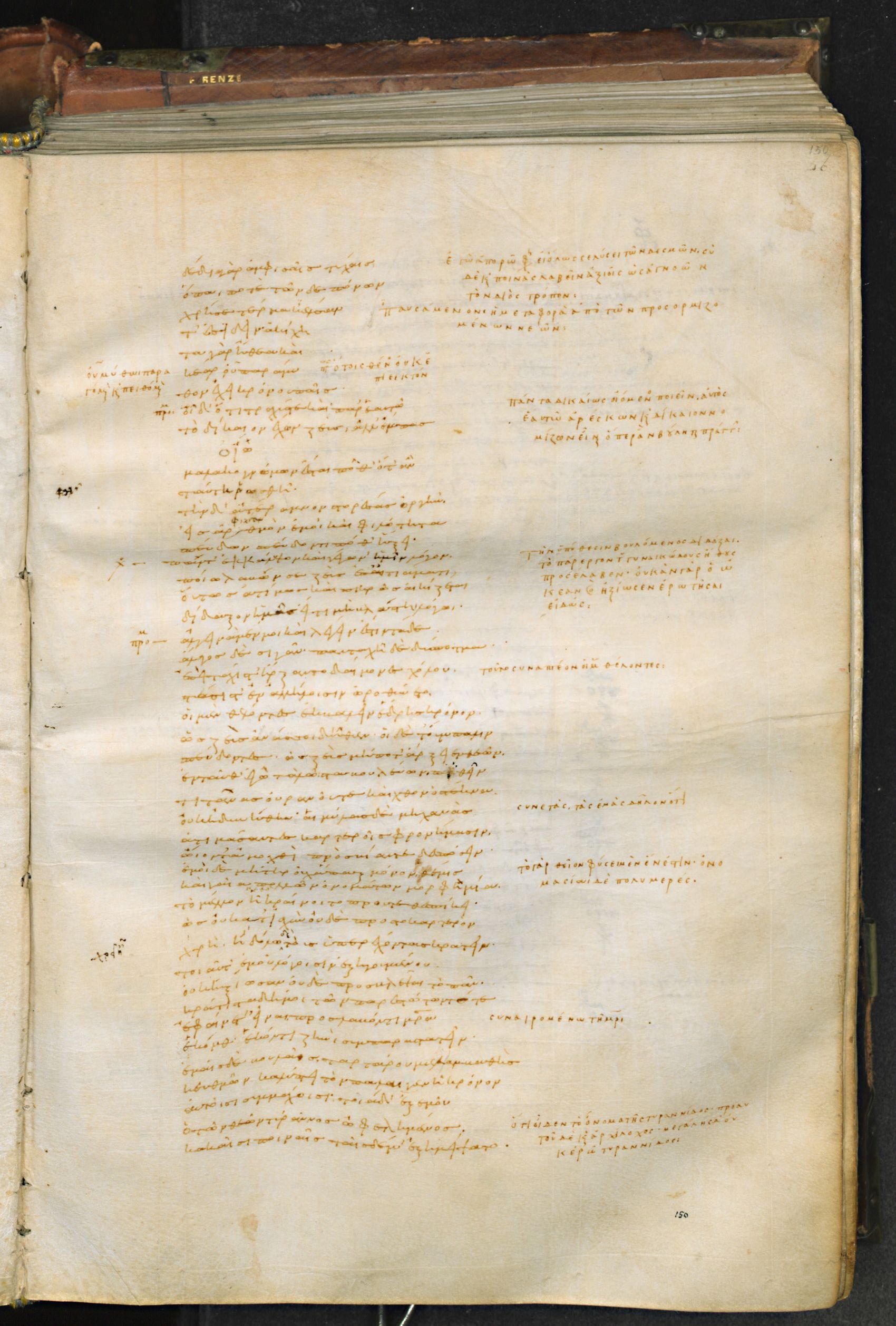
Where on the image
Laur. Plut. 32.9 fol. 150r: Prometheus Bound 184-225, from ‹δέδια γὰρ ἀμφὶ σαῖς τύχαις› on its first verse line (184) to ‹κακαῖσι ποιναῖς ταῖσδέ μ' ἐξημείψατο› on its last (225); read on contrast-enhanced crops of the page image, and checked against the first verse of the next page. English here: 183-227; the chorus' sentence for 183-188 (But my soul is agitated ... against entreaty.) begins one line before the page break and is given with this page. The Greek shown is Smyth's edited text; the manuscript's spelling, accents and some readings differ. Viewer: https://tecabml.contentdm.oclc.org/digital/collection/plutei/id/710903
Χορός
184δέδια δʼ ἀμφὶ σαῖς τύχαις,
185πᾷ ποτε τῶνδε πόνων
186χρή σε τέρμα κέλ-
187σαντʼ ἐσιδεῖν· ἀκίχητα γὰρ ἤθεα καὶ κέαρ
188ἀπαράμυθον ἔχει Κρόνου παῖς.
Προμηθεύς
189οἶδʼ ὅτι τραχὺς καὶ παρʼ ἑαυτῷ
190τὸ δίκαιον ἔχων Ζεύς. ἀλλʼ ἔμπας [ὀίω]
191μαλακογνώμων
192ἔσται ποθʼ, ὅταν ταύτῃ ῥαισθῇ·
193τὴν δʼ ἀτέραμνον στορέσας ὀργὴν
194εἰς ἀρθμὸν ἐμοὶ καὶ φιλότητα
195σπεύδων σπεύδοντί ποθʼ ἥξει.
Χορός
196πάντʼ ἐκκάλυψον καὶ γέγωνʼ ἡμῖν λόγον,
197ποίῳ λαβών σε Ζεὺς ἐπʼ αἰτιάματι,
198οὕτως ἀτίμως καὶ πικρῶς αἰκίζεται·
199δίδαξον ἡμᾶς, εἴ τι μὴ βλάπτει λόγῳ.
Προμηθεύς
200ἀλγεινὰ μέν μοι καὶ λέγειν ἐστὶν τάδε,
200bἄλγος δὲ σιγᾶν, πανταχῇ δὲ δύσποτμα.
201ἐπεὶ τάχιστʼ ἤρξαντο δαίμονες χόλου
202στάσις τʼ ἐν ἀλλήλοισιν ὠροθύνετο,
203οἱ μὲν θέλοντες ἐκβαλεῖν ἕδρας Κρόνον,
204ὡς Ζεὺς ἀνάσσοι δῆθεν, οἱ δὲ τοὔμπαλιν
205σπεύδοντες, ὡς Ζεὺς μήποτʼ ἄρξειεν θεῶν,
206ἐνταῦθʼ ἐγὼ τὰ λῷστα βουλεύων πιθεῖν
207Τιτᾶνας, Οὐρανοῦ τε καὶ Χθονὸς τέκνα,
208οὐκ ἠδυνήθην. αἱμύλας δὲ μηχανὰς
209ἀτιμάσαντες καρτεροῖς φρονήμασιν
210ᾤοντʼ ἀμοχθεὶ πρὸς βίαν τε δεσπόσειν·
211ἐμοὶ δὲ μήτηρ οὐχ ἅπαξ μόνον Θέμις,
212καὶ Γαῖα, πολλῶν ὀνομάτων μορφὴ μία,
213τὸ μέλλον ᾗ κραίνοιτο προυτεθεσπίκει,
214ὡς οὐ κατʼ ἰσχὺν οὐδὲ πρὸς τὸ καρτερόν
215χρείη, δόλῳ δὲ τοὺς ὑπερσχόντας κρατεῖν.
216τοιαῦτʼ ἐμοῦ λόγοισιν ἐξηγουμένου
217οὐκ ἠξίωσαν οὐδὲ προσβλέψαι τὸ πᾶν.
218κράτιστα δή μοι τῶν παρεστώτων τότε
219ἐφαίνετʼ εἶναι προσλαβόντα μητέρα
220ἑκόνθʼ ἑκόντι Ζηνὶ συμπαραστατεῖν.
221ἐμαῖς δὲ βουλαῖς Ταρτάρου μελαμβαθὴς
222κευθμὼν καλύπτει τὸν παλαιγενῆ Κρόνον
223αὐτοῖσι συμμάχοισι. τοιάδʼ ἐξ ἐμοῦ
224ὁ τῶν θεῶν τύραννος ὠφελημένος
225κακαῖσι ποιναῖς ταῖσδὲ μʼ ἐξημείψατο.
183But my soul is agitated by piercing fear, and I am in dread about thy fate, wondering to what haven thou must steer thy barque to see an end of thy voyage of sorrow. For inexorable are the ways of Cronus’ son and his heart is hardened against entreaty.
Prometheus
I know that Zeus is harsh and keepeth justice in his own hands; but nevertheless one day he shall be mild of mood, when in that wise he hath been crushed. Then, calming down his stubborn wrath, he shall at last come into bond and amity with me, eager no less to welcome him.
Chorus
Unfold the whole story and declare to us upon what charge Zeus hath taken thee that he thus visits thee with ignominious and bitter outrage. Instruct us, unless, indeed, there be some harm in telling.
Prometheus
Painful is it to me even to tell the tale, painful to keep it silent—my case is hapless every way.
When first the heavenly powers were moved to wrath, and mutual dissension was stirred up amongst them, some bent on casting Cronus from his seat that Zeus, forsooth, might reign; others, eager for the contrary end, that Zeus might never win mastery over the gods—then it was that I, albeit advising them for the best, was unable to persuade the Titans, children of Heaven and Earth; but they, disdaining counsels of craft, in the pride of their strength thought to gain the mastery without a struggle and by force. Full oft my mother Themis, or Earth (one form she hath but many names), had foretold to me the way in which the future was fated to come to pass—how that it was not by brute strength and not through violence, but by guile that those who should gain the upper hand were destined to prevail. For all that I set this forth by argument to them, they did not deign even to regard my advice one whit. Therefore of what was then before me the best choice seemed to be that I, joining my mother with me, should range myself, a welcome volunteer, on the side of Zeus; and it is by reason of my counsel that the cavernous gloom of Tartarus now hides ancient Cronus and his allies withal. Such profit did the tyrant of heaven have of me and with such foul return as this did he make requital; for it is a disease that somehow inheres in tyranny to have no faith in friends.
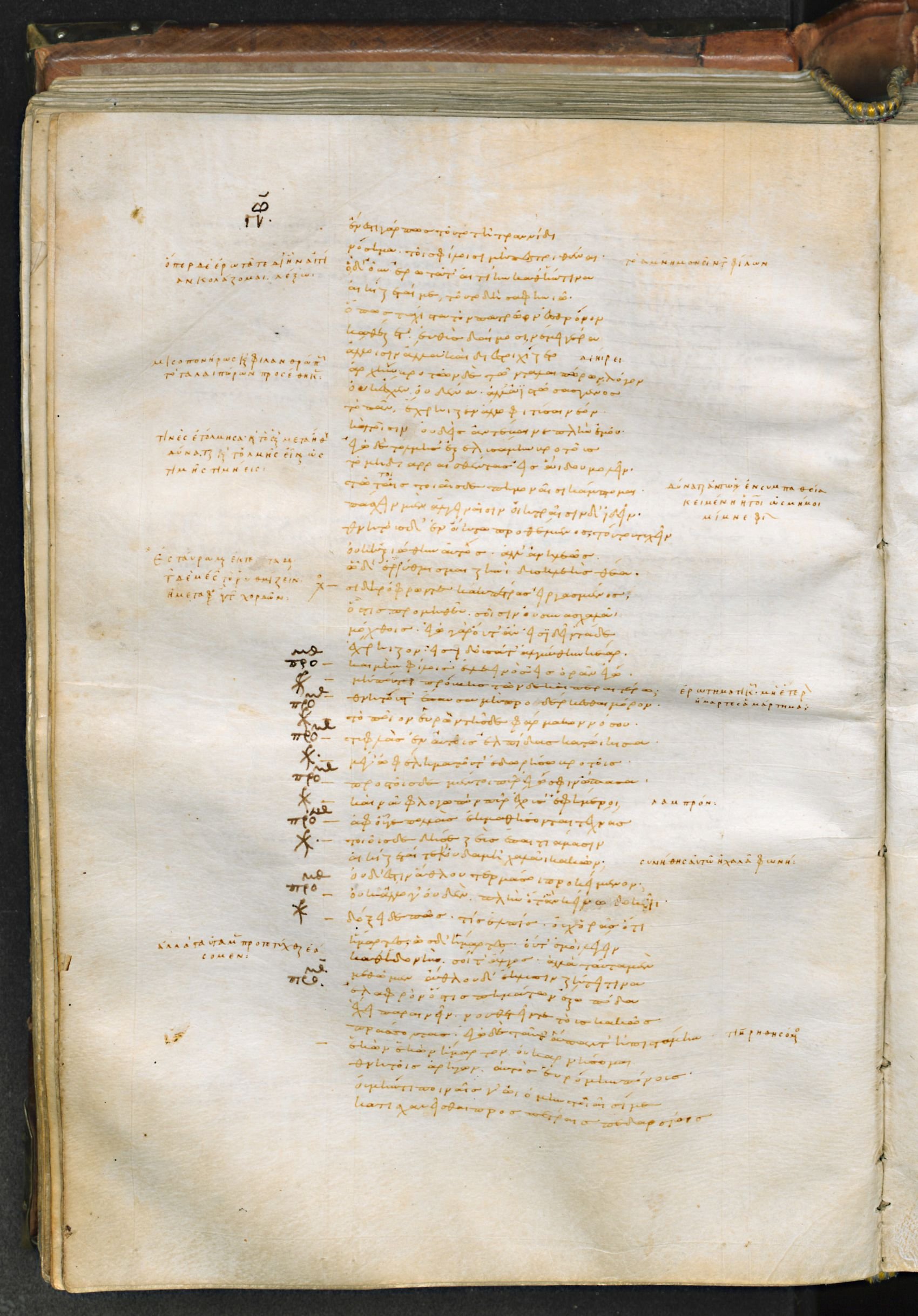
Where on the image
Laur. Plut. 32.9 fol. 150v: Prometheus Bound 226-271, from ‹ἔνεστι γάρ πως τοῦτο τῇ τυραννίδι› on its first verse line (226) to ‹κατισχνανεῖσθαι πρὸς πέτραις πεδαρσίοις› on its last (271); read on contrast-enhanced crops of the page image, and checked against the first verse of the next page. English here: 228-272; Smyth's sentence for 223-227 (Such profit did the tyrant ... no faith in friends.) ends two lines after the page break and is given whole with the page before; the English here begins with 228. The Greek shown is Smyth's edited text; the manuscript's spelling, accents and some readings differ. Viewer: https://tecabml.contentdm.oclc.org/digital/collection/plutei/id/710904
Προμηθεύς
226ἔνεστι γάρ πως τοῦτο τῇ τυραννίδι
227νόσημα, τοῖς φίλοισι μὴ πεποιθέναι.
228ὃ δʼ οὖν ἐρωτᾶτʼ, αἰτίαν καθʼ ἥντινα
229αἰκίζεταί με, τοῦτο δὴ σαφηνιῶ.
230ὅπως τάχιστα τὸν πατρῷον ἐς θρόνον
231καθέζετʼ, εὐθὺς δαίμοσιν νέμει γέρα
232ἄλλοισιν ἄλλα καὶ διεστοιχίζετο
233ἀρχήν· βροτῶν δὲ τῶν ταλαιπώρων λόγον
234οὐκ ἔσχεν οὐδένʼ, ἀλλʼ ἀιστώσας γένος
235τὸ πᾶν ἔχρῃζεν ἄλλο φιτῦσαι νέον.
236καὶ τοῖσιν οὐδεὶς ἀντέβαινε πλὴν ἐμοῦ.
237ἐγὼ δʼ ἐτόλμησʼ· ἐξελυσάμην βροτοὺς
238τὸ μὴ διαρραισθέντας εἰς Ἅιδου μολεῖν.
239τῷ τοι τοιαῖσδε πημοναῖσι κάμπτομαι,
240πάσχειν μὲν ἀλγειναῖσιν, οἰκτραῖσιν δʼ ἰδεῖν·
241θνητοὺς δʼ ἐν οἴκτῳ προθέμενος, τούτου τυχεῖν
242οὐκ ἠξιώθην αὐτός, ἀλλὰ νηλεῶς
243ὧδʼ ἐρρύθμισμαι, Ζηνὶ δυσκλεὴς θέα.
Χορός
244σιδηρόφρων τε κἀκ πέτρας εἰργασμένος
245ὅστις, Προμηθεῦ, σοῖσιν οὐ συνασχαλᾷ
246μόχθοις· ἐγὼ γὰρ οὔτʼ ἂν εἰσιδεῖν τάδε
247ἔχρῃζον εἰσιδοῦσά τʼ ἠλγύνθην κέαρ.
Προμηθεύς
248καὶ μὴν φίλοις ⟨γʼ⟩ ἐλεινὸς εἰσορᾶν ἐγώ.
Χορός
249μή πού τι προύβης τῶνδε καὶ περαιτέρω;
Προμηθεύς
250θνητούς γʼ ἔπαυσα μὴ προδέρκεσθαι μόρον.
Χορός
251τὸ ποῖον εὑρὼν τῆσδε φάρμακον νόσου;
Προμηθεύς
252τυφλὰς ἐν αὐτοῖς ἐλπίδας κατῴκισα.
Χορός
253μέγʼ ὠφέλημα τοῦτʼ ἐδωρήσω βροτοῖς.
Προμηθεύς
254πρὸς τοῖσδε μέντοι πῦρ ἐγώ σφιν ὤπασα.
Χορός
255καὶ νῦν φλογωπὸν πῦρ ἔχουσʼ ἐφήμεροι;
Προμηθεύς
256ἀφʼ οὗ γε πολλὰς ἐκμαθήσονται τέχνας.
Χορός
257τοιοῖσδε δή σε Ζεὺς ἐπʼ αἰτιάμασιν—
Προμηθεύς
258αἰκίζεταί τε κοὐδαμῇ χαλᾷ κακῶν.
Χορός
259οὐδʼ ἔστιν ἄθλου τέρμα σοι προκείμενον;
Προμηθεύς
260οὐκ ἄλλο γʼ οὐδέν, πλὴν ὅταν κείνῳ δοκῇ.
Χορός
261δόξει δὲ πῶς; τίς ἐλπίς; οὐχ ὁρᾷς ὅτι
262ἥμαρτες; ὡς δʼ ἥμαρτες οὔτʼ ἐμοὶ λέγειν
263καθʼ ἡδονὴν σοί τʼ ἄλγος. ἀλλὰ ταῦτα μὲν
264μεθῶμεν, ἄθλου δʼ ἔκλυσιν ζήτει τινά.
Προμηθεύς
265ἐλαφρὸν ὅστις πημάτων ἔξω πόδα
266ἔχει παραινεῖν νουθετεῖν τε τὸν κακῶς
267πράσσοντʼ· ἐγὼ δὲ ταῦθʼ ἅπαντʼ ἠπιστάμην.
268ἑκὼν ἑκὼν ἥμαρτον, οὐκ ἀρνήσομαι·
269θνητοῖς ἀρήγων αὐτὸς ηὑρόμην πόνους.
270οὐ μήν τι ποιναῖς γʼ ᾠόμην τοίαισί με
271κατισχνανεῖσθαι πρὸς πέτραις πεδαρσίοις,
228However, touching your question for what cause he torments me, this I will now make clear.
Soon as ever he had seated himself upon his father’s throne, he forthwith assigned to the deities their several privileges and apportioned unto them their proper powers. But of wretched mortals he took no heed, but desired to bring the whole race to nothingness and to create another, a new one, in its stead. Against this purpose none dared make stand save I myself—I only had the courage; I saved mortals so that they did not descend, blasted utterly, unto the house of Death. Therefore am I bent by so grievous tortures, painful to suffer, piteous to behold. I that gave mortals first place in my pity, I am deemed unworthy to win this pity for myself, but am thus mercilessly disciplined, a spectacle that shames the fame of Zeus.
Chorus
A heart of iron and fashioned out of rock, Prometheus, is he who feels no compassion at thy miseries. For myself, I should not have desired to see them; and now that I see them I am pained to the heart.
Prometheus
Aye, to my friends indeed I am a spectacle of pity.
Chorus
Thou didst not perchance transgress even somewhat beyond this offence?
Prometheus
Aye, I caused mortals no longer to foresee their doom.
Chorus
Of what sort was the cure thou didst find for this affliction?
Prometheus
I caused blind hopes to dwell within their breasts.
Chorus
A great boon was this thou gavest to mortals.
Prometheus
And besides it was I that gave them fire.
Chorus
What! Do creatures of a day now have flame-eyed fire?
Prometheus
Aye, and therefrom they shall learn many arts.
Chorus
Was it then on a charge like this that Zeus—
Prometheus
Torments me and in no wise gives me respite from pain.
Chorus
And is there no end assigned thee of thine ordeal?
Prometheus
Nay, none save when it seemeth to him good.
Chorus
But how shall it seem good? What hope is there? Seest thou not that thou hast erred? And yet how thou hast erred is no pleasant matter of discourse for me, while for thee ’tis pain. But let us quit this theme; and do thou seek some release from thine ordeal.
Prometheus
’Tis easy for him who keeps his foot free from harm to counsel and admonish him who is in misery. Myself I knew all this the while. Of mine own will, aye, of mine own will I erred—gainsay it I cannot. In succouring mortals I found suffering for myself; nevertheless I thought not to be punished thus— to waste away upon cliffs in mid-air, my portion this desolate and drear crag.
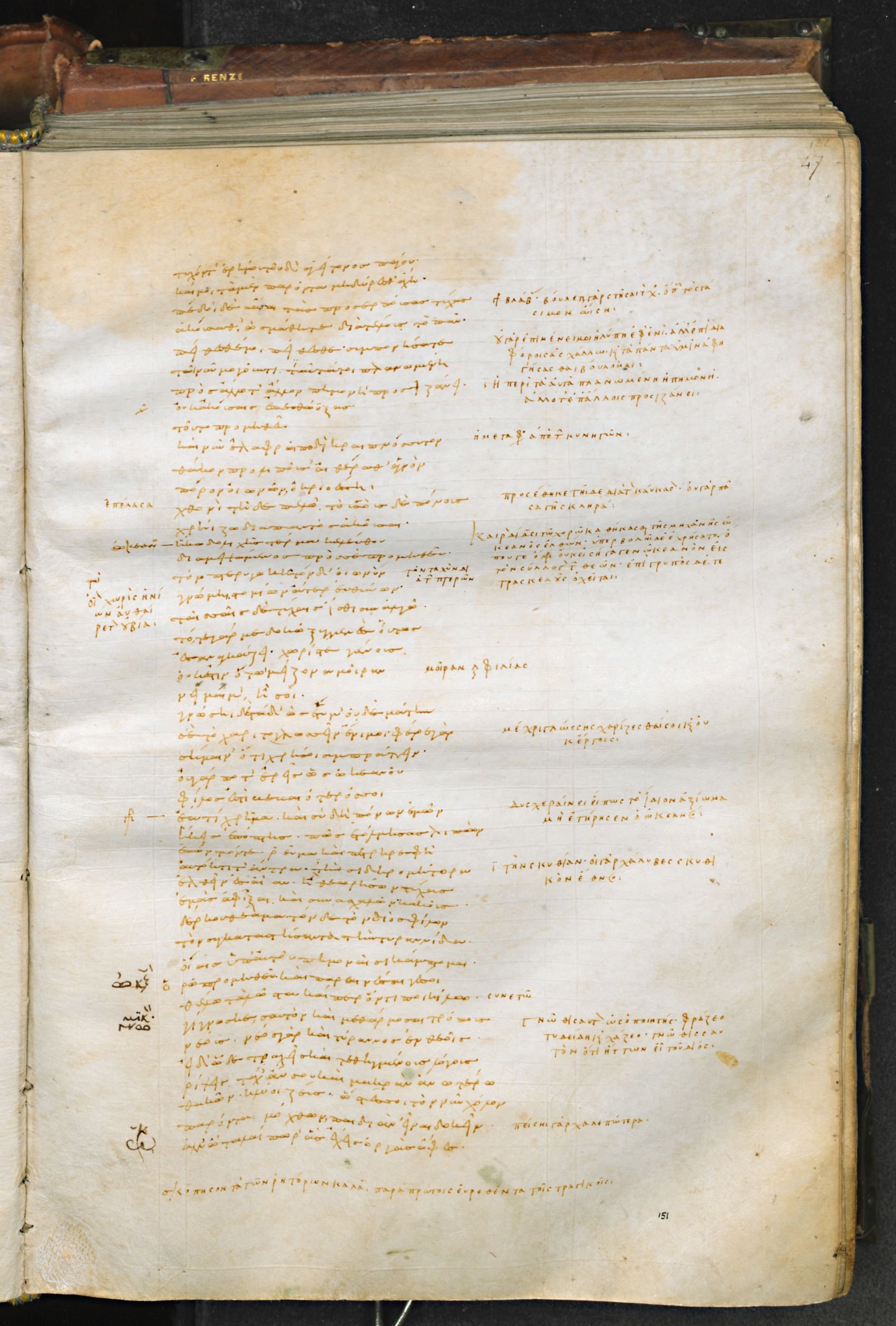
Where on the image
Laur. Plut. 32.9 fol. 151r: Prometheus Bound 272-317, from ‹τυχόντ' ἐρήμου τοῦδ' ἀγείτονος πάγου› on its first verse line (272) to ‹ἀλλ' ὦ ταλαίπωρ' ἃς ἔχεις ὀργὰς ἄφες› on its last (317); read on contrast-enhanced crops of the page image, and checked against the first verse of the next page. English here: 273-318; Smyth's sentence for 270-272 (Not indeed did I think ... drear crag.) ends one line after the page break and is given whole with the page before; the English here begins with 273. The Greek shown is Smyth's edited text; the manuscript's spelling, accents and some readings differ. Viewer: https://tecabml.contentdm.oclc.org/digital/collection/plutei/id/710905
Προμηθεύς
272τυχόντʼ ἐρήμου τοῦδʼ ἀγείτονος πάγου.
273καί μοι τὰ μὲν παρόντα μὴ δύρεσθʼ ἄχη,
274πέδοι δὲ βᾶσαι τὰς προσερπούσας τύχας
275ἀκούσαθʼ, ὡς μάθητε διὰ τέλους τὸ πᾶν.
276πίθεσθέ μοι πίθεσθε, συμπονήσατε
277τῷ νῦν μογοῦντι. ταὐτά τοι πλανωμένη
278πρὸς ἄλλοτʼ ἄλλον πημονὴ προσιζάνει.
Χορός
279οὐκ ἀκούσαις ἐπεθώυξας
280τοῦτο, Προμηθεῦ.
281καὶ νῦν ἐλαφρῷ ποδὶ κραιπνόσυτον
282θᾶκον προλιποῦσʼ, αἰθέρα θʼ ἁγνὸν
283πόρον οἰωνῶν, ὀκριοέσσῃ
284χθονὶ τῇδε πελῶ, τοὺς σοὺς δὲ πόνους
285χρῄζω διὰ παντὸς ἀκοῦσαι.
Ὠκεανός
286ἥκω δολιχῆς τέρμα κελεύθου
287διαμειψάμενος πρὸς σέ, Προμηθεῦ,
288τὸν πτερυγωκῆ τόνδʼ οἰωνὸν
289γνώμῃ στομίων ἄτερ εὐθύνων·
290ταῖς σαῖς δὲ τύχαις, ἴσθι, συναλγῶ.
291τὸ τε γάρ με, δοκῶ, συγγενὲς οὕτως
292ἐσαναγκάζει,
293χωρίς τε γένους οὐκ ἔστιν ὅτῳ
294μείζονα μοῖραν νείμαιμʼ ἢ σοί.
295γνώσῃ δὲ τάδʼ ὡς ἔτυμʼ, οὐδὲ μάτην
296χαριτογλωσσεῖν ἔνι μοι· φέρε γὰρ
297σήμαινʼ ὅ τι χρή σοι συμπράσσειν·
298οὐ γάρ ποτʼ ἐρεῖς ὡς Ὠκεανοῦ
299φίλος ἐστὶ βεβαιότερός σοι.
Προμηθεύς
300ἔα· τί χρῆμα λεύσσω; καὶ σὺ δὴ πόνων ἐμῶν
301ἥκεις ἐπόπτης; πῶς ἐτόλμησας, λιπὼν
302ἐπώνυμόν τε ῥεῦμα καὶ πετρηρεφῆ
303αὐτόκτιτʼ ἄντρα, τὴν σιδηρομήτορα
304ἐλθεῖν ἐς αἶαν; ἦ θεωρήσων τύχας
305ἐμὰς ἀφῖξαι καὶ συνασχαλῶν κακοῖς;
306δέρκου θέαμα, τόνδε τὸν Διὸς φίλον,
307τὸν συγκαταστήσαντα τὴν τυραννίδα,
308οἵαις ὑπʼ αὐτοῦ πημοναῖσι κάμπτομαι.
Ὠκεανός
309ὁρῶ, Προμηθεῦ, καὶ παραινέσαι γέ σοι
310θέλω τὰ λῷστα, καίπερ ὄντι ποικίλῳ.
311γίγνωσκε σαυτὸν καὶ μεθάρμοσαι τρόπους
312νέους· νέος γὰρ καὶ τύραννος ἐν θεοῖς.
313εἰ δʼ ὧδε τραχεῖς καὶ τεθηγμένους λόγους
314ῥίψεις, τάχʼ ἄν σου καὶ μακρὰν ἀνωτέρω
315θακῶν κλύοι Ζεύς, ὥστε σοι τὸν νῦν ὄχλον
316παρόντα μόχθων παιδιὰν εἶναι δοκεῖν.
317ἀλλʼ, ὦ ταλαίπωρʼ, ἃς ἔχεις ὀργὰς ἄφες,
273And now, I pray ye, bewail no more my present woes; alight on the ground and listen to my oncoming fortunes that ye may be told them from end to end. Consent, I pray you, oh consent. Take part in the trouble of him who is now in sore distress. Of a truth, affliction wandereth impartially abroad and alighteth upon all in turn.
Chorus
Not to unwilling ears hast thou made this appeal, Prometheus. And so now with light foot I will quit my swift-speeding seat and the pure air, the pathway of birds, and draw nigh to this rugged ground; for I am fain to hear the whole story of thy woes.
[Enter Oceanus on a winged steed
Oceanus
I am come to the goal of a long journey in my passage to thee, Prometheus, guiding by mine own will, without a bit, this swift-winged bird. For thy fate, thou may’st be sure, I feel compassion. Kinship, methinks, constraineth me to this; and, apart from blood, there is none to whom I should pay greater respect than to thee. Thou shalt know this for simple sooth and that it is not in me to utter vain and glozing words; come, tell me—what aid can I render thee? For thou shalt never say thou hast a friend more loyal than Oceanus.
Prometheus
Ha! What have we here? So then thou too hast come to stare upon my sufferings? How didst thou summon courage to quit the stream that bears thy name and the rock-roofed caves thou thyself hast made and come unto this land, the mother of iron? Is it that thou hast come to gaze upon my state and join thy grief to my distress? Behold a spectacle—me here, the friend of Zeus, who helped him to establish his sovereign sway, by what anguish I am bent even by him!
Oceanus
I behold, Prometheus; and moreover, am fain to give thee counsel for the best, for all that thou art subtle. Learn to know thyself and adapt to thyself new ways; for new likewise is the ruler among the gods. But if thou hurlest forth words so harsh and of such whetted edge, peradventure Zeus may hear thee, though throned afar, high in the heavens, so that thy present multitude of sorrows shall seem but childish sport. But, oh wretched sufferer, put away thy wrathful mood and try to find releasement from these miseries.
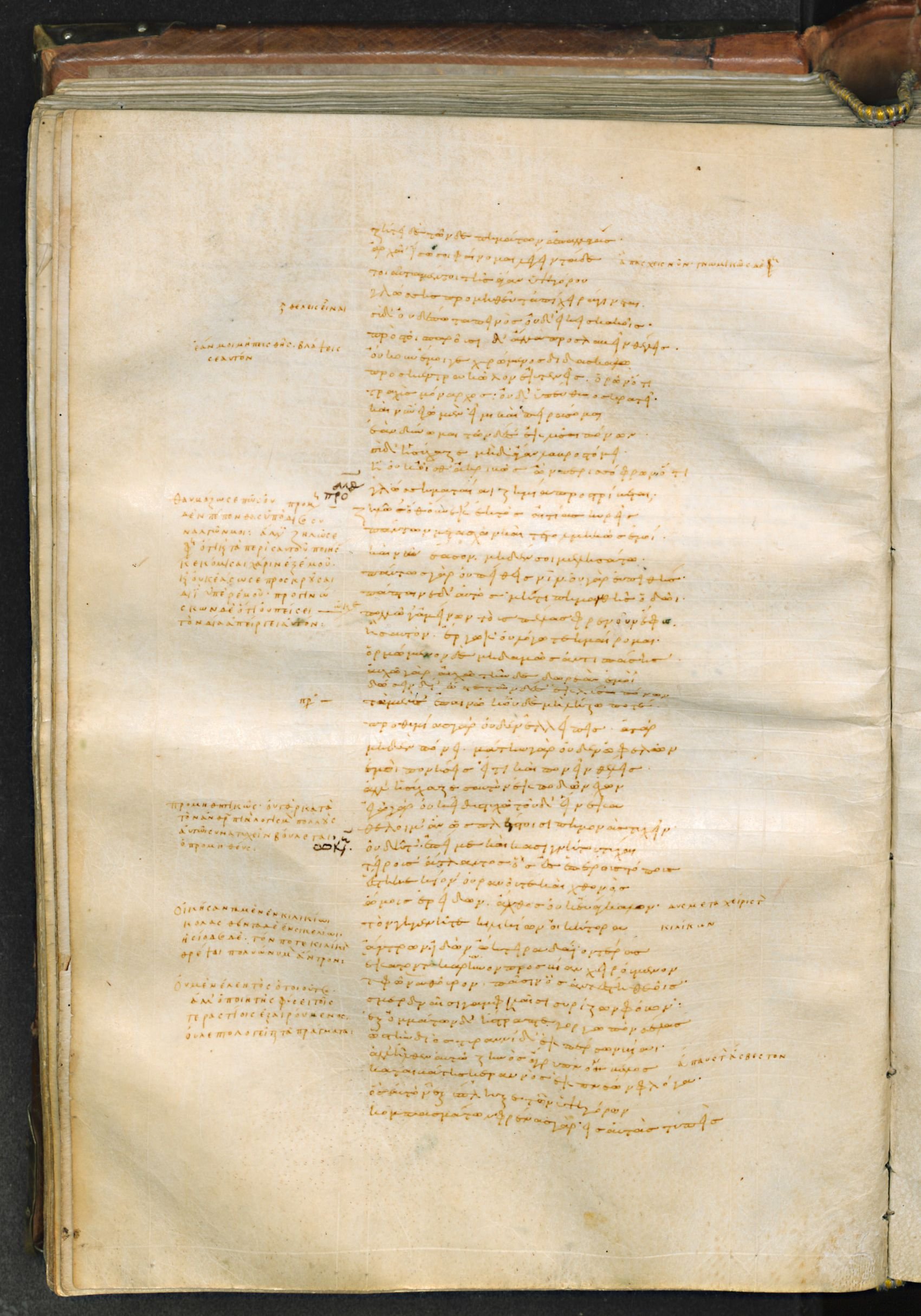
Where on the image
Laur. Plut. 32.9 fol. 151v: Prometheus Bound 318-363, from ‹ζήτει δὲ τῶνδε πημάτων ἀπαλλαγάς› on its first verse line (318) to ‹κομπασμάτων· φρένας γὰρ εἰς αὐτὰς τυπεὶς› on its last (363); read on contrast-enhanced crops of the page image, and checked against the first verse of the next page. English here: 319-364; Oceanus' sentence for 317-318 (But, oh wretched sufferer ... from these miseries.) runs one line on each side of the page break and is given whole with the page before; the English here begins with 319. The Greek shown is Smyth's edited text; the manuscript's spelling, accents and some readings differ. Viewer: https://tecabml.contentdm.oclc.org/digital/collection/plutei/id/710906
Ὠκεανός
318ζήτει δὲ τῶνδε πημάτων ἀπαλλαγάς.
319ἀρχαῖʼ ἴσως σοι φαίνομαι λέγειν τάδε·
320τοιαῦτα μέντοι τῆς ἄγαν ὑψηγόρου
321γλώσσης, Προμηθεῦ, τἀπίχειρα γίγνεται.
322σὺ δʼ οὐδέπω ταπεινὸς οὐδʼ εἴκεις κακοῖς,
323πρὸς τοῖς παροῦσι δʼ ἄλλα προσλαβεῖν θέλεις.
324οὔκουν ἔμοιγε χρώμενος διδασκάλῳ
325πρὸς κέντρα κῶλον ἐκτενεῖς, ὁρῶν ὅτι
326τραχὺς μόναρχος οὐδʼ ὑπεύθυνος κρατεῖ.
327καὶ νῦν ἐγὼ μὲν εἶμι καὶ πειράσομαι
328ἐὰν δύνωμαι τῶνδέ σʼ ἐκλῦσαι πόνων.
329σὺ δʼ ἡσύχαζε μηδʼ ἄγαν λαβροστόμει.
330ἢ οὐκ οἶσθʼ ἀκριβῶς ὢν περισσόφρων ὅτι
331γλώσσῃ ματαίᾳ ζημία προστρίβεται;
Προμηθεύς
332ζηλῶ σʼ ὁθούνεκʼ ἐκτὸς αἰτίας κυρεῖς
333τούτων μετασχεῖν καὶ τετολμηκὼς ἐμοί.
334καὶ νῦν ἔασον μηδέ σοι μελησάτω.
335πάντως γὰρ οὐ πείσεις νιν· οὐ γὰρ εὐπιθής.
336πάπταινε δʼ αὐτὸς μή τι πημανθῇς ὁδῷ.
Ὠκεανός
337πολλῷ γʼ ἀμείνων τοὺς πέλας φρενοῦν ἔφυς
338ἢ σαυτόν· ἔργῳ κοὐ λόγῳ τεκμαίρομαι.
340ὁρμώμενον δὲ μηδαμῶς ἀντισπάσῃς.
341αὐχῶ γὰρ αὐχῶ τήνδε δωρεὰν ἐμοὶ
342δώσειν Δίʼ, ὥστε τῶνδέ σʼ ἐκλῦσαι πόνων.
Προμηθεύς
343τὰ μὲν σʼ ἐπαινῶ κοὐδαμῇ λήξω ποτέ·
343bπροθυμίας γὰρ οὐδὲν ἐλλείπεις. ἀτὰρ
344μηδὲν πόνει. μάτην γὰρ οὐδὲν ὠφελῶν
345ἐμοὶ πονήσεις, εἴ τι καὶ πονεῖν θέλεις.
346ἀλλʼ ἡσύχαζε σαυτὸν ἐκποδὼν ἔχων·
347ἐγὼ γὰρ οὐκ, εἰ δυστυχῶ, τοῦδʼ εἵνεκα
348θέλοιμʼ ἂν ὡς πλείστοισι πημονὰς τυχεῖν.
349οὐ δῆτʼ ἐπεί με καὶ κασιγνήτου τύχαι
350τείρουσʼ Ἄτλαντος, ὃς πρὸς ἑσπέρους τόπους
351ἕστηκε κίονʼ οὐρανοῦ τε καὶ χθονὸς
352ὤμοις ἐρείδων, ἄχθος οὐκ εὐάγκαλον.
353τὸν γηγενῆ τε Κιλικίων οἰκήτορα
354ἄντρων ἰδὼν ᾤκτιρα, δάιον τέρας
355ἑκατογκάρανον πρὸς βίαν χειρούμενον
356Τυφῶνα θοῦρον· πᾶσιν [ὅς] ἀντέστη θεοῖς,
357σμερδναῖσι γαμφηλαῖσι συρίζων φόβον·
358ἐξ ὀμμάτων δʼ ἤστραπτε γοργωπὸν σέλας,
359ὡς τὴν Διὸς τυραννίδʼ ἐκπέρσων βίᾳ·
360ἀλλʼ ἦλθεν αὐτῷ Ζηνὸς ἄγρυπνον βέλος,
361καταιβάτης κεραυνὸς ἐκπνέων φλόγα,
362ὃς αὐτὸν ἐξέπληξε τῶν ὑψηγόρων
363κομπασμάτων. φρένας γὰρ εἰς αὐτὰς τυπεὶς
319Perchance this advice may seem to thee an outworn saw; but such plight as thine, Prometheus, is but the wages of too vaunting speech. But not even yet hast thou learned humility, nor dost thou bend before misfortune, but wouldst rather add still other ills to thy present store. Therefore take me as thy teacher and kick not against the pricks, seeing that a harsh ruler now holds sway who is accountable to none. So now I will depart and try if haply I may be able to release thee from these sufferings. And do thou hold thy peace and be not too blustering of speech. Or, for all thy exceeding wisdom, dost thou not know full well that chastisement is inflicted on a froward tongue?
Prometheus
I envy thee that thou art clear of blame for having so much as dared to share with me in these my troubles.!. So now have done and let it concern thee not. Do what thou wilt, thou canst not persuade him; for he is not easy to persuade. Beware lest by thy mission thou take, perchance, some harm unto thyself.
Oceanus
Of a truth, thou art far better able to admonish others than thyself. ’Tis by fact, not by hearsay, that I judge. But stay not him that is bent on going. For I am confident, aye, confident, that Zeus will grant me this boon, to free thee from thy sufferings.
Prometheus
So far I thank thee now and shall never cease to thank thee; for in zeal thou lackest naught. But trouble not thyself; for vain and not helpful to me will be thy trouble—if trouble thou art fain perchance to take. Nay, hold thee quiet and keep thyself clear of harm. For if I am in sore plight, I would not therefore wish affliction to be the lot of all the world. No, indeed, no! since, besides, I am distressed by the fate of my brother Atlas, who, towards the west, stands bearing on his shoulders the pillar of heaven and earth, a burthen not easy for his arms to grasp. Pity moved me, too, at the sight of the earth-born dweller of the Cilician caves curbed by violence, that destructive monster of an hundred heads, impetuous Typhon. He withstood all the gods, hissing out terror with horrid jaws, while from his eyes lightened a hideous glare, as though he would storm amain the sovereignty of Zeus. But upon him came the unsleeping bolt of Zeus, the swooping levin brand with breath of flame, which smote him, frightened, from his high-worded vauntings; for, stricken to the very heart, he was burnt to ashes and his strength blasted from him by the lightning bolt.
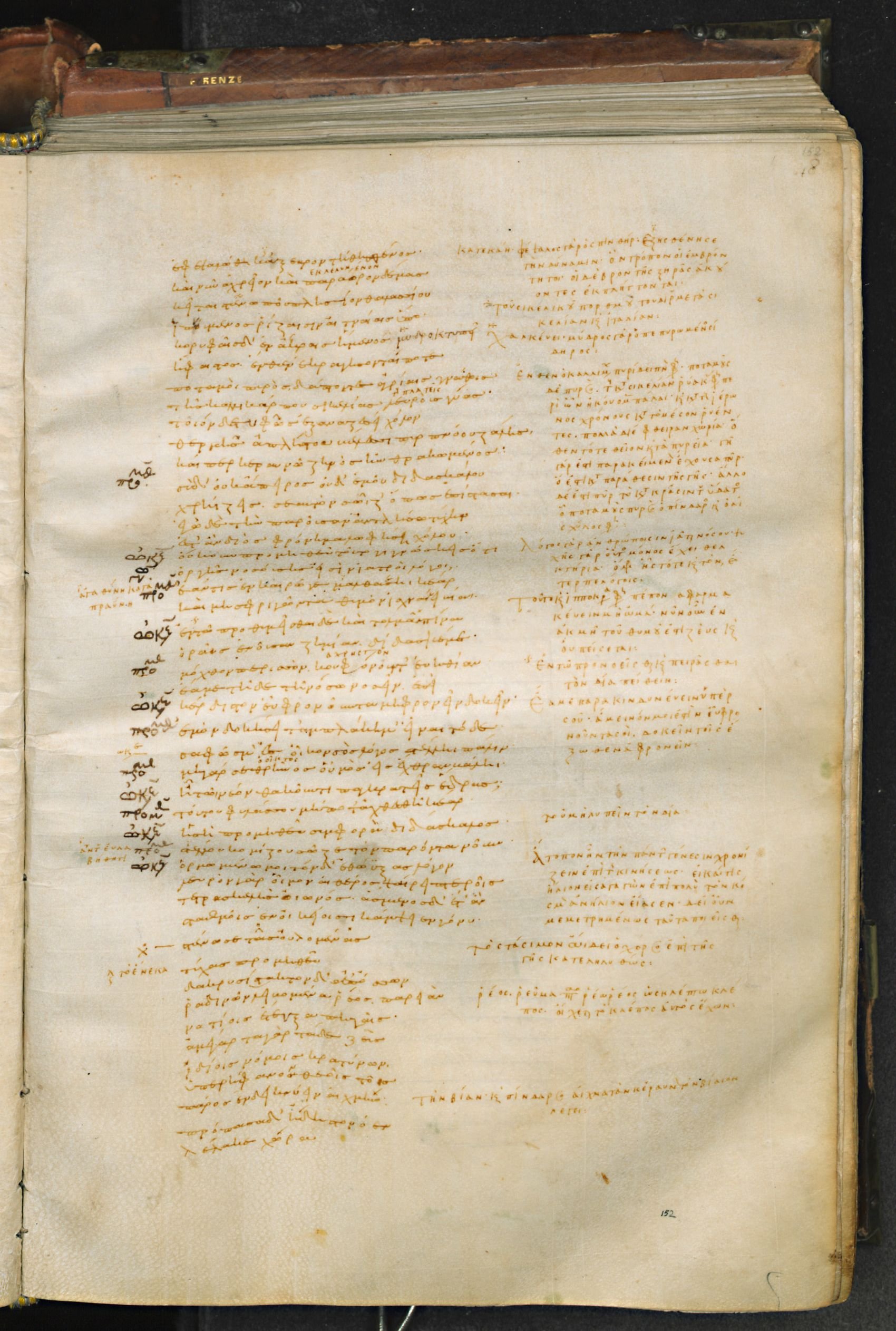
Where on the image
Laur. Plut. 32.9 fol. 152r: Prometheus Bound 364-407, from ‹ἐφεψαλώθη κἀξεβροντήθη σθένος› on its first verse line (364) to ‹πρόπασα δ' ἤδη στονόεν λέλακε χώρα› on its last (407); read on contrast-enhanced crops of the page image, and checked against the first verse of the next page. English here: 365-407; Smyth's sentence for 360-364 (But upon him came the unsleeping bolt ... the lightning bolt.) ends one line after the page break and is given whole with the page before; the English here begins with 365. The Greek shown is Smyth's edited text; the manuscript's spelling, accents and some readings differ. Viewer: https://tecabml.contentdm.oclc.org/digital/collection/plutei/id/710907
Προμηθεύς
364ἐφεψαλώθη κἀξεβροντήθη σθένος.
365καὶ νῦν ἀχρεῖον καὶ παράορον δέμας
366κεῖται στενωποῦ πλησίον θαλασσίου
367ἰπούμενος ῥίζαισιν Αἰτναίαις ὕπο·
368κορυφαῖς δʼ ἐν ἄκραις ἥμενος μυδροκτυπεῖ
369Ἥφαιστος· ἔνθεν ἐκραγήσονταί ποτε
370ποταμοὶ πυρὸς δάπτοντες ἀγρίαις γνάθοις
371τῆς καλλικάρπου Σικελίας λευροὺς γύας·
372τοιόνδε Τυφὼς ἐξαναζέσει χόλον
373θερμοῖς ἀπλάτου βέλεσι πυρπνόου ζάλης,
374καίπερ κεραυνῷ Ζηνὸς ἠνθρακωμένος.
375σὺ δʼ οὐκ ἄπειρος, οὐδʼ ἐμοῦ διδασκάλου
376χρῄζεις· σεαυτὸν σῷζʼ ὅπως ἐπίστασαι·
377ἐγὼ δὲ τὴν παροῦσαν ἀντλήσω τύχην,
378ἔστʼ ἂν Διὸς φρόνημα λωφήσῃ χόλου.
Ὠκεανός
379οὔκουν, Προμηθεῦ, τοῦτο γιγνώσκεις, ὅτι
380ὀργῆς νοσούσης εἰσὶν ἰατροὶ λόγοι;
Προμηθεύς
381ἐάν τις ἐν καιρῷ γε μαλθάσσῃ κέαρ
382καὶ μὴ σφριγῶντα θυμὸν ἰσχναίνῃ βίᾳ.
Ὠκεανός
383ἐν τῷ προθυμεῖσθαι δὲ καὶ τολμᾶν τίνα
384ὁρᾷς ἐνοῦσαν ζημίαν; δίδασκέ με.
Προμηθεύς
385μόχθον περισσὸν κουφόνουν τʼ εὐηθίαν.
Ὠκεανός
386ἔα με τῇδε τῇ νόσῳ νοσεῖν, ἐπεὶ
387κέρδιστον εὖ φρονοῦντα μὴ φρονεῖν δοκεῖν.
Προμηθεύς
388ἐμὸν δοκήσει τἀμπλάκημʼ εἶναι τόδε.
Ὠκεανός
389σαφῶς μʼ ἐς οἶκον σὸς λόγος στέλλει πάλιν.
Προμηθεύς
390μὴ γάρ σε θρῆνος οὑμὸς εἰς ἔχθραν βάλῃ.
Ὠκεανός
391ἦ τῷ νέον θακοῦντι παγκρατεῖς ἕδρας;
Προμηθεύς
392τούτου φυλάσσου μή ποτʼ ἀχθεσθῇ κέαρ.
Ὠκεανός
393ἡ σή, Προμηθεῦ, συμφορὰ διδάσκαλος.
Προμηθεύς
394στέλλου, κομίζου, σῷζε τὸν παρόντα νοῦν.
Ὠκεανός
395ὁρμωμένῳ μοι τόνδʼ ἐθώυξας λόγον.
396λευρὸν γὰρ οἷμον αἰθέρος ψαίρει πτεροῖς
397τετρασκελὴς οἰωνός· ἄσμενος δέ τἂν
398σταθμοῖς ἐν οἰκείοισι κάμψειεν γόνυ.
Χορός
399στένω σε τᾶς οὐλομένας τύχας, Προμηθεῦ·
400δακρυσίστακτα δʼ ἀπʼ ὄσσων
401ῥαδινὰν λειβομένα ῥέος παρειὰν
402νοτίοις ἔτεγξα παγαῖς·
403ἀμέγαρτα γὰρ τάδε Ζεὺς
404ἰδίοις νόμοις κρατύνων
405ὑπερήφανον θεοῖς τοῖς
406πάρος ἐνδείκνυσιν αἰχμάν.
407πρόπασα δʼ ἤδη στονόεν λέλακε χώρα,
365And now, a helpless and a sprawling bulk, he lies hard by the narrows of the sea, pressed down beneath the roots of Aetna; whilst on the topmost summit Hephaestus sits and hammers the molten ore. Thence there shall one day burst forth rivers of fire, with savage jaws devouring the level fields of ‘Sicily, land of fair fruit—such boiling rage shall Typho, although charred by the blazing levin of Zeus, send spouting forth with hot jets of appalling, fire-breathing surge.
But thou art not inexperienced, and hast no need of lessoning from me. Save thyself, as thou best knowest; while I will drain to the dregs my present lot until such time as the mind of Zeus shall abate its wrath.
Oceanus
Knowest thou not then, Prometheus, that words are the mediciners of a disordered temper?
Prometheus
If one salve the soul in season, and not seek to reduce its swelling rage by violence.
Oceanus
What lurking mischief dost thou mark when daring joins to zeal? Resolve me this.
Prometheus
Lost labour and blithe and guileless simplicity.
Oceanus
Leave me to be distempered on this wise, since it advantageth most, when truly wise, to be deemed a fool.
Prometheus
This fault will be seen to be mine own.
Oceanus
Clearly the tenor of thy speech remands me home.
Prometheus
See to it lest thy lamenting me win thee enmity.
With him new-seated on his throne omnipotent?
Prometheus
Beware lest the time come when his heart shall be angered with thee.
Oceanus
Thy plight, Prometheus, is my instructor.
Prometheus
Get thee gone, dispatch, keep thy present purpose.
Oceanus
Thy urgence meets my eagerness; for my four-footed winged beast fans with his wings the smooth pathway of the air; and truly will he be glad to rest his knees in his stall at home. [Exit
Chorus
I mourn over thee, Prometheus, by reason of thy hapless fate. Shedding from my eyes a coursing flood of tears I wet my tender cheeks with their moist streams. For Zeus, holding thus direful sway by self-appointed laws, displayeth towards the gods of eld an overweening spirit.
Now the whole earth crieth aloud in lamentation;
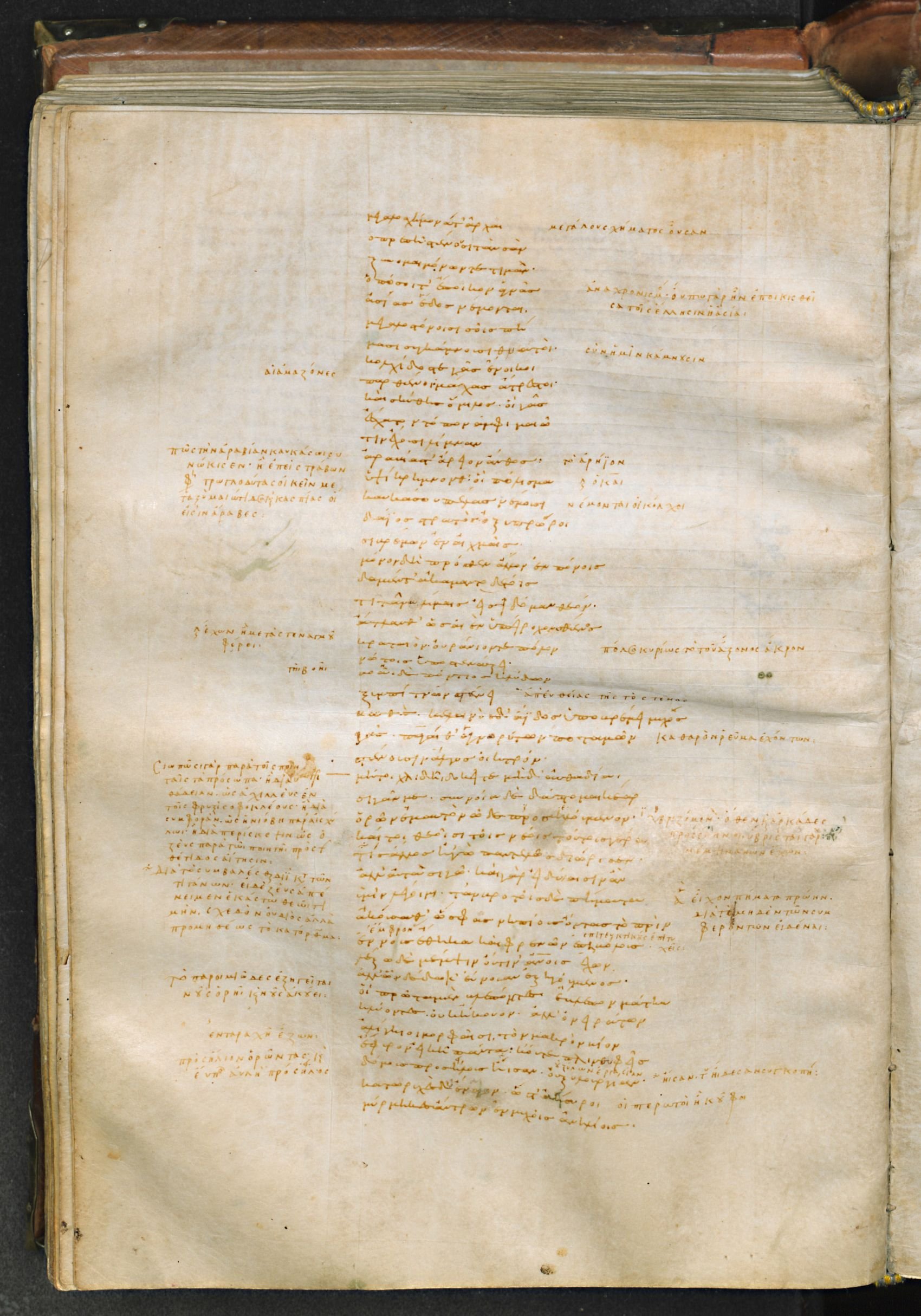
Where on the image
Laur. Plut. 32.9 fol. 152v: Prometheus Bound 408-435, from ‹μεγαλοσχήμονά τ' ἀρχαι(οπρεπῆ)› on its first verse line (408) to ‹βύθος, κελαινὸς δ' Ἄϊδος ὑποβρέμει μυχὸς γᾶς (435, middle of the page)› on its last (435); read on contrast-enhanced crops of the page image, and checked against the first verse of the next page. The page runs on to 453; 436 (μή τοι χλιδῇ δοκεῖτε) begins the next entry. Smyth brackets and daggers lines 425-430 as spurious, after Badham ([† ... †]). English here: 408-435; cut after 407 (Now the whole earth crieth aloud in lamentation;), the same line as the Greek; Smyth prints the dots. The Greek shown is Smyth's edited text; the manuscript's spelling, accents and some readings differ. Viewer: https://tecabml.contentdm.oclc.org/digital/collection/plutei/id/710908
Χορός
408μεγαλοσχήμονά ἀρχαι-
409οπρεπῆ –⏑⏑– στένουσι τὰν σὰν
410ξυνομαιμόνων τε τιμάν,
411ὁπόσοι τʼ ἔποικον ἁγνᾶς
412Ἀσίας ἕδος νέμονται,
413μεγαλοστόνοισι σοῖς πή-
414μασι συγκάμνουσι θνατοί.
415Κολχίδος τε γᾶς ἔνοικοι
416παρθένοι, μάχας ἄτρεστοι,
417καὶ Σκύθης ὅμιλος, οἳ γᾶς
418ἔσχατον τόπον ἀμφὶ Μαι-
419ῶτιν ἔχουσι λίμναν,
420†Ἀραβίας τʼ ἄρειον ἄνθος,
421ὑψίκρημνον οἳ πόλισμα
422Καυκάσου πέλας νέμονται,
423δάιος στρατός, ὀξυπρῴ-
424ροισι βρέμων ἐν αἰχμαῖς.
425[†μόνον δὴ πρόσθεν ἄλλον ἐν πόνοις
426δαμέντʼ ἀδαμαντοδέτοις
427Τιτᾶνα λύμαις εἰσιδόμαν, θεόν,
428Ἄτλαντος [αἰὲν] ὑπέροχον σθένος κραταιόν,
429⟨ὃς⟩ οὐράνιόν [τε] πόλον
430νώτοις ⟨στέγων⟩ ὑποστενάζει.†]
431βοᾷ δὲ πόντιος κλύδων
432ξυμπίτνων, στένει βυθός,
433κελαινὸς δʼ Ἄιδος ὑποβρέμει μυχὸς γᾶς,
434παγαί θʼ ἁγνορύτων ποταμῶν
435στένουσιν ἄλγος οἰκτρόν.
408. . . lament the greatness of the glory of thy time-hallowed honour, the honour that was thine and thy brethren’s; and all mortals that make their dwellingplace in holy Asia share the anguish of thy most lamentable suffering;
And the dwellers in the land of Colchis, the maidens fearless in fight; and the Scythian multitude that tenants the uttermost region of the earth bordering the Maeotic lake;
And the flower of Arabia in arms, that holdeth the high-cragged citadel hard by Caucasus, a hostile host that roareth in the mellay of sharp-pointed spears.
[†One other Titan god alone have I ere now beheld in distress, enthralled in torment by adamantine bonds—even Atlas, pre-eminent in mighty strength, who moaneth the while as he supports the vault of heaven upon his back.†]
And the waves of the sea utter a cry as they fall, the deep laments, the black abyss of Hades rumbles in response, and the streams of pure-flowing rivers lament thy piteous pain.
Notes
- Greek: Herbert Weir Smyth, Aeschylus I (Loeb Classical Library, 1922), Perseus digital text; speaker names as in Perseus. Smyth's editorial signs are kept as he prints them: words he deletes in [ ], words he supplies in ⟨ ⟩, daggers (†) for corrupt text, metrical signs (– ⏑) where he marks missing syllables and a row of dots for a lost line; lines that Perseus numbers with a letter (e.g. 600a) stand in their place.
- English: Herbert Weir Smyth, Aeschylus I (Loeb Classical Library, 1922), pp. 215-255, transcribed from the archive.org scan of the 1922 printing; footnotes and critical notes omitted; stage directions as printed (without closing brackets). Smyth brackets 425-430 with daggers as doubtful; the brackets are kept.
Cite
Sources
- Source: Florence, Laur. Plut. 32.9 (Medicean Aeschylus) fol. 147v-152v via Teca digitale BML + Smyth Greek (Perseus) + Smyth English (Loeb 1922, archive.org scan) (holding institution)
- Critical edition: Smyth, Aeschylus I (Loeb 1922), via Perseus
← previous · → next · v cycle view · l back to library