Aeschylus, Prometheus Bound 436-525: the arts Prometheus gave to mankind
Introduction
Prometheus Bound, handed down under the name of Aeschylus (died 456 BCE), shows the Titan Prometheus nailed to a rock at the edge of the world as punishment for stealing fire and giving it to mortals. In this speech to the chorus of the daughters of Oceanus he describes the first state of mankind: they saw without seeing and heard without understanding, 'like to shapes in dreams', and lived in sunless caves like ants, with no way of telling the seasons. Prometheus taught them the risings and settings of the stars, numbers, 'chiefest of sciences', and the combining of letters, the yoke for animals, the chariot and the ship, medicine, every kind of divination, and the use of the metals hidden in the earth: 'every art possessed by man comes from Prometheus' (506). The section ends with a short exchange in which Prometheus says that art is weaker than Necessity, which is steered by the Fates and the Furies, and hints at the secret on which the fate of Zeus depends.
The pages shown are from Florence, Biblioteca Medicea Laurenziana, Plut. 32.9, the Medicean manuscript, written in the 10th century, the oldest and most important manuscript of Aeschylus (siglum M). The play begins on fol. 147v; lines 436-525 stand on fol. 152v, 153r and 153v, in one column of verse with ancient commentary (scholia) in the margins. Each section below is one speech or one part of a speech; the page or pages listed for it were identified by reading the first and last verse of each page on the images. The Greek is Smyth's edition (1922), not a transcription of the manuscript. The English is Smyth's Loeb translation of the same year. Lines 1-435 are the preceding entry and lines 526-1093 the following one.
How was this verified? (Provenance)
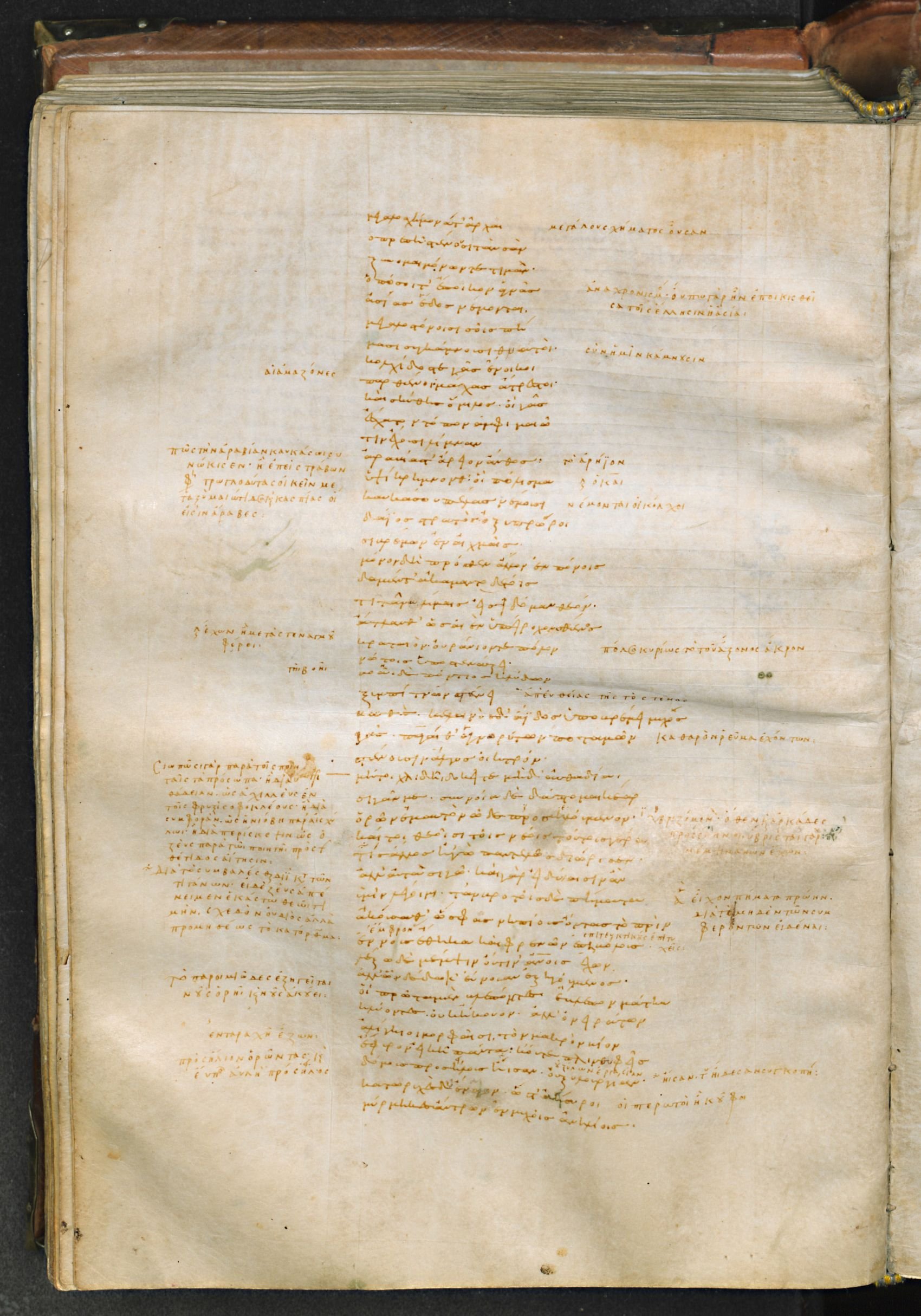
Where on the image
Lines 436-446 are on Laur. Plut. 32.9 fol. 152v. Checked on the images: Laur. Plut. 32.9 fol. 152v runs from 'μεγαλοσχήμονά τ᾽ ἀρχαι(οπρεπῆ)' on its first verse line (408) to 'μύρμηκες ἄντρων ἐν μυχοῖς ἀνηλίοις' on its last (453). 436 'μή τοι χλιδῇ δοκεῖτε μηδ᾽ αὐθαδίᾳ' begins in the lower half of the page, marked with a dash in the left margin; 447 'οἳ πρῶτα μὲν βλέποντες ἔβλεπον μάτην' is eleven lines below it. Viewer: https://tecabml.contentdm.oclc.org/digital/collection/plutei/id/710908 The Greek shown is Smyth's edited text; the manuscript's accents and some readings differ from it (Smyth's notes record M's readings).
Προμηθεύς
436μή τοι χλιδῇ δοκεῖτε μηδʼ αὐθαδίᾳ
437σιγᾶν με· συννοίᾳ δὲ δάπτομαι κέαρ,
438ὁρῶν ἐμαυτὸν ὧδε προυσελούμενον.
439καίτοι θεοῖσι τοῖς νέοις τούτοις γέρα
440τίς ἄλλος ἢ ʼγὼ παντελῶς διώρισεν;
441ἀλλʼ αὐτὰ σιγῶ· καὶ γὰρ εἰδυίαισιν ἂν
442ὑμῖν λέγοιμι· τἀν βροτοῖς δὲ πήματα
443ἀκούσαθʼ, ὥς σφας νηπίους ὄντας τὸ πρὶν
444ἔννους ἔθηκα καὶ φρενῶν ἐπηβόλους.
445λέξω δέ, μέμψιν οὔτινʼ ἀνθρώποις ἔχων,
446ἀλλʼ ὧν δέδωκʼ εὔνοιαν ἐξηγούμενος·
Prometheus
436Nay, impute it not to pride nor yet to wilfulness that I am silent. Painful thoughts devour my heart as I behold myself maltreated thus. And yet who but I definitely assigned their prerogatives unto these upstart gods? But of this I speak not; for my tale would tell you naught save what ye know. But hearken to the miseries that beset mankind—how that they were witless erst and I made them to have sense and be endowed with reason. Nor will I speak to upbraid mankind, but to set forth the friendly purpose that inspired my boons.
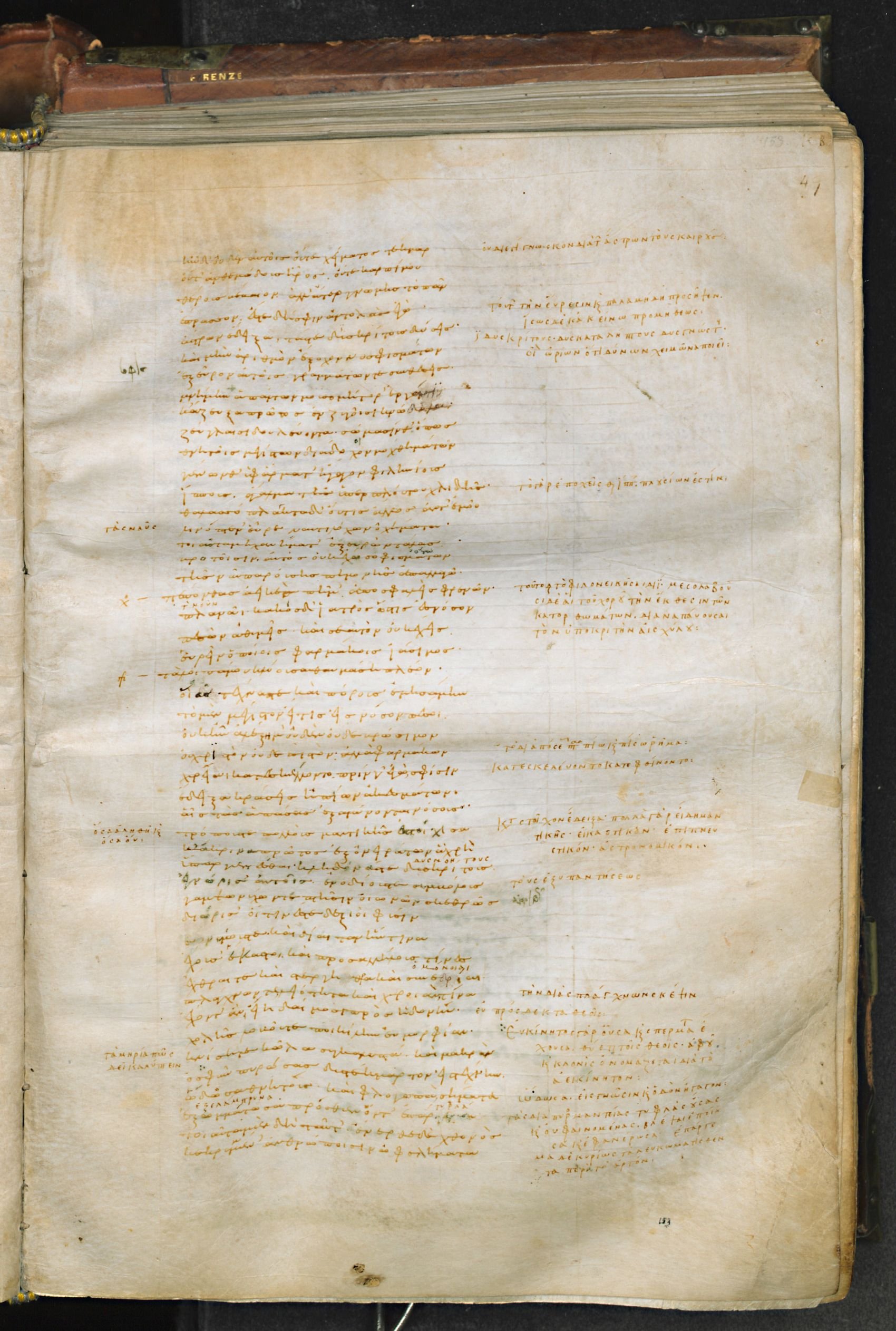
Where on the image
Lines 447-458 start on Laur. Plut. 32.9 fol. 152v and continue on fol. 153r (page break inside this section). Checked on the images: Laur. Plut. 32.9 fol. 152v runs from 'μεγαλοσχήμονά τ᾽ ἀρχαι(οπρεπῆ)' on its first verse line (408) to 'μύρμηκες ἄντρων ἐν μυχοῖς ἀνηλίοις' on its last (453). 436 'μή τοι χλιδῇ δοκεῖτε μηδ᾽ αὐθαδίᾳ' begins in the lower half of the page, marked with a dash in the left margin; 447 'οἳ πρῶτα μὲν βλέποντες ἔβλεπον μάτην' is eleven lines below it. Viewer: https://tecabml.contentdm.oclc.org/digital/collection/plutei/id/710908 Laur. Plut. 32.9 fol. 153r runs from 'ἦν δ᾽ οὐδὲν αὐτοῖς οὔτε χείματος τέκμαρ' on its first verse line (454) to 'κεκρυμμέν᾽ ἀνθρώποισιν ὠφελήματα' on its last (501). 459 'καὶ μὴν ἀριθμόν, ἔξοχον σοφισμάτων' is the sixth line of the page. Viewer: https://tecabml.contentdm.oclc.org/digital/collection/plutei/id/710909 The Greek shown is Smyth's edited text; the manuscript's accents and some readings differ from it (Smyth's notes record M's readings).
Προμηθεύς
447οἳ πρῶτα μὲν βλέποντες ἔβλεπον μάτην,
448κλύοντες οὐκ ἤκουον, ἀλλʼ ὀνειράτων
449ἀλίγκιοι μορφαῖσι τὸν μακρὸν βίον
450ἔφυρον εἰκῇ πάντα, κοὔτε πλινθυφεῖς
451δόμους προσείλους, ᾖσαν, οὐ ξυλουργίαν·
452κατώρυχες δʼ ἔναιον ὥστʼ ἀήσυροι
453μύρμηκες ἄντρων ἐν μυχοῖς ἀνηλίοις.
454ἦν δʼ οὐδὲν αὐτοῖς οὔτε χείματος τέκμαρ
455οὔτʼ ἀνθεμώδους ἦρος οὔτε καρπίμου
456θέρους βέβαιον, ἀλλʼ ἄτερ γνώμης τὸ πᾶν
457ἔπρασσον, ἔστε δή σφιν ἀντολὰς ἐγὼ
458ἄστρων ἔδειξα τάς τε δυσκρίτους δύσεις.
447First of all, though they had eyes to see, they saw to no avail; they had ears, but understood not; but, like to shapes in dreams, throughout their length of days, without purpose they wrought all things in confusion. Knowledge had they neither of houses built of bricks and turned to face the sun, nor yet of work in wood; but dwelt beneath the ground like swarming ants, in sunless caves. They had no sign either of winter or of flowery spring or of fruitful summer, whereon they could depend, but in everything they wrought without judgment, until such time as I taught them to discern the risings of the stars and their settings, ere this ill distinguishable.
Where on the image
Lines 459-468 are on Laur. Plut. 32.9 fol. 153r. Checked on the images: Laur. Plut. 32.9 fol. 153r runs from 'ἦν δ᾽ οὐδὲν αὐτοῖς οὔτε χείματος τέκμαρ' on its first verse line (454) to 'κεκρυμμέν᾽ ἀνθρώποισιν ὠφελήματα' on its last (501). 459 'καὶ μὴν ἀριθμόν, ἔξοχον σοφισμάτων' is the sixth line of the page. Viewer: https://tecabml.contentdm.oclc.org/digital/collection/plutei/id/710909 The Greek shown is Smyth's edited text; the manuscript's accents and some readings differ from it (Smyth's notes record M's readings).
Προμηθεύς
459καὶ μὴν ἀριθμόν, ἔξοχον σοφισμάτων,
460ἐξηῦρον αὐτοῖς, γραμμάτων τε συνθέσεις,
461μνήμην ἁπάντων, μουσομήτορʼ ἐργάνην.
462κἄζευξα πρῶτος ἐν ζυγοῖσι κνώδαλα
463ζεύγλαισι δουλεύοντα σάγμασὶν θʼ, ὅπως
464θνητοῖς μεγίστων διάδοχοι μοχθημάτων
465γένοινθʼ , ὑφʼ ἅρμα τʼ ἤγαγον φιληνίους
466ἵππους, ἄγαλμα τῆς ὑπερπλούτου χλιδῆς.
467θαλασσόπλαγκτα δʼ οὔτις ἄλλος ἀντʼ ἐμοῦ
468λινόπτερʼ ηὗρε ναυτίλων ὀχήματα.
459Aye, and numbers, too, chiefest of sciences, I invented for them, and the combining of letters, creative mother of the Muses' arts, wherewith to hold all things in memory. I, too, first brought brute beasts beneath the yoke to be subject to the collar and the pack-saddle, that they might bear in men's stead their heaviest burdens; and to the chariot I harnessed horses and made them obedient to the rein, to be an adornment of wealth and luxury. 'Twas I and no one else that contrived the mariner's flaxen-winged car to roam the sea.
Where on the image
Lines 469-471 are on Laur. Plut. 32.9 fol. 153r. Checked on the images: Laur. Plut. 32.9 fol. 153r runs from 'ἦν δ᾽ οὐδὲν αὐτοῖς οὔτε χείματος τέκμαρ' on its first verse line (454) to 'κεκρυμμέν᾽ ἀνθρώποισιν ὠφελήματα' on its last (501). 459 'καὶ μὴν ἀριθμόν, ἔξοχον σοφισμάτων' is the sixth line of the page. Viewer: https://tecabml.contentdm.oclc.org/digital/collection/plutei/id/710909 The Greek shown is Smyth's edited text; the manuscript's accents and some readings differ from it (Smyth's notes record M's readings).
Προμηθεύς
469τοιαῦτα μηχανήματʼ ἐξευρὼν τάλας
470βροτοῖσιν, αὐτὸς οὐκ ἔχω σόφισμʼ ὅτῳ
471τῆς νῦν παρούσης πημονῆς ἀπαλλαγῶ.
469Wretched that I am—such are the inventions I devised for mankind, yet have myself no cunning wherewith to rid me of my present suffering.
Where on the image
Lines 472-475 are on Laur. Plut. 32.9 fol. 153r. Checked on the images: Laur. Plut. 32.9 fol. 153r runs from 'ἦν δ᾽ οὐδὲν αὐτοῖς οὔτε χείματος τέκμαρ' on its first verse line (454) to 'κεκρυμμέν᾽ ἀνθρώποισιν ὠφελήματα' on its last (501). 459 'καὶ μὴν ἀριθμόν, ἔξοχον σοφισμάτων' is the sixth line of the page. Viewer: https://tecabml.contentdm.oclc.org/digital/collection/plutei/id/710909 The Greek shown is Smyth's edited text; the manuscript's accents and some readings differ from it (Smyth's notes record M's readings).
Χορός
472πέπονθας αἰκὲς πῆμʼ· ἀποσφαλεὶς φρενῶν
473πλανᾷ, κακὸς δʼ ἰατρὸς ὥς τις ἐς νόσον
474πεσὼν ἀθυμεῖς καὶ σεαυτὸν οὐκ ἔχεις
475εὑρεῖν ὁποίοις φαρμάκοις ἰάσιμος.
Chorus
472Thou hast suffered sorrow and humiliation. Thou art forsaken of thy wits and art gone astray; and, like an unskilled leech, fallen ill, thou losest heart and canst not discover what remedies to minister to thine own disease.
Where on the image
Lines 476-483 are on Laur. Plut. 32.9 fol. 153r. Checked on the images: Laur. Plut. 32.9 fol. 153r runs from 'ἦν δ᾽ οὐδὲν αὐτοῖς οὔτε χείματος τέκμαρ' on its first verse line (454) to 'κεκρυμμέν᾽ ἀνθρώποισιν ὠφελήματα' on its last (501). 459 'καὶ μὴν ἀριθμόν, ἔξοχον σοφισμάτων' is the sixth line of the page. Viewer: https://tecabml.contentdm.oclc.org/digital/collection/plutei/id/710909 The Greek shown is Smyth's edited text; the manuscript's accents and some readings differ from it (Smyth's notes record M's readings).
Προμηθεύς
476τὰ λοιπά μου κλύουσα θαυμάσῃ πλέον,
477οἵας τέχνας τε καὶ πόρους ἐμησάμην.
478τὸ μὲν μέγιστον, εἴ τις ἐς νόσον πέσοι,
479οὐκ ἦν ἀλέξημʼ οὐδέν, οὔτε βρώσιμον,
480οὐ χριστόν, οὐδὲ πιστόν, ἀλλὰ φαρμάκων
481χρείᾳ κατεσκέλλοντο, πρίν γʼ ἐγώ σφισιν
482ἔδειξα κράσεις ἠπίων ἀκεσμάτων,
483αἷς τὰς ἁπάσας ἐξαμύνονται νόσους.
Prometheus
476Hear but the rest and thou shalt wonder the more at the arts and resources I devised. This first and foremost: if ever man fell ill, there was no defence—no healing food, no ointment, nor any draught—but for lack of medicine they wasted away, until I showed them how to mix soothing remedies wherewith they now ward off all their disorders.
Where on the image
Lines 484-499 are on Laur. Plut. 32.9 fol. 153r. Checked on the images: Laur. Plut. 32.9 fol. 153r runs from 'ἦν δ᾽ οὐδὲν αὐτοῖς οὔτε χείματος τέκμαρ' on its first verse line (454) to 'κεκρυμμέν᾽ ἀνθρώποισιν ὠφελήματα' on its last (501). 459 'καὶ μὴν ἀριθμόν, ἔξοχον σοφισμάτων' is the sixth line of the page. Viewer: https://tecabml.contentdm.oclc.org/digital/collection/plutei/id/710909 The Greek shown is Smyth's edited text; the manuscript's accents and some readings differ from it (Smyth's notes record M's readings).
Προμηθεύς
484τρόπους τε πολλοὺς μαντικῆς ἐστοίχισα,
485κἄκρινα πρῶτος ἐξ ὀνειράτων ἃ χρὴ
486ὕπαρ γενέσθαι, κληδόνας τε δυσκρίτους
487ἐγνώρισʼ αὐτοῖς ἐνοδίους τε συμβόλους·
488γαμψωνύχων τε πτῆσιν οἰωνῶν σκεθρῶς
489διώρισʼ, οἵτινές τε δεξιοὶ φύσιν
490εὐωνύμους τε, καὶ δίαιταν ἥντινα
491ἔχουσʼ ἕκαστοι, καὶ πρὸς ἀλλήλους τίνες
492ἔχθραι τε καὶ στέργηθρα καὶ συνεδρίαι·
493σπλάγχνων τε λειότητα, καὶ χροιὰν τίνα
494ἔχουσʼ ἂν εἴη δαίμοσιν πρὸς ἡδονὴν
495χολή, λοβοῦ τε ποικίλην εὐμορφίαν.
496κνίσῃ τε κῶλα συγκαλυπτὰ καὶ μακρὰν
497ὀσφῦν πυρώσας δυστέκμαρτον ἐς τέχνην
498ὥδωσα θνητούς, καὶ φλογωπὰ σήματα
499ἐξωμμάτωσα, πρόσθεν ὄντʼ ἐπάργεμα.
484And I marked out many ways whereby they might read the future, and among dreams I first discerned which are destined to come true; and voices baffling interpretation I explained to them, and signs from meetings by the way. The flight of crook-taloned birds I distinguished clearly—which by nature are auspicious, which sinister—their various modes of life, their mutual feuds and loves, and their consortings; and the smoothness of their entrails, and what colour the gall must have to please the gods, and the speckled symmetry of the liver-lobe; and the thigh-bones, enwrapped in fat, and the long chine I burned and initiated mankind into an occult art. Also I cleared their vision to discern signs from flames, erstwhile obscure.
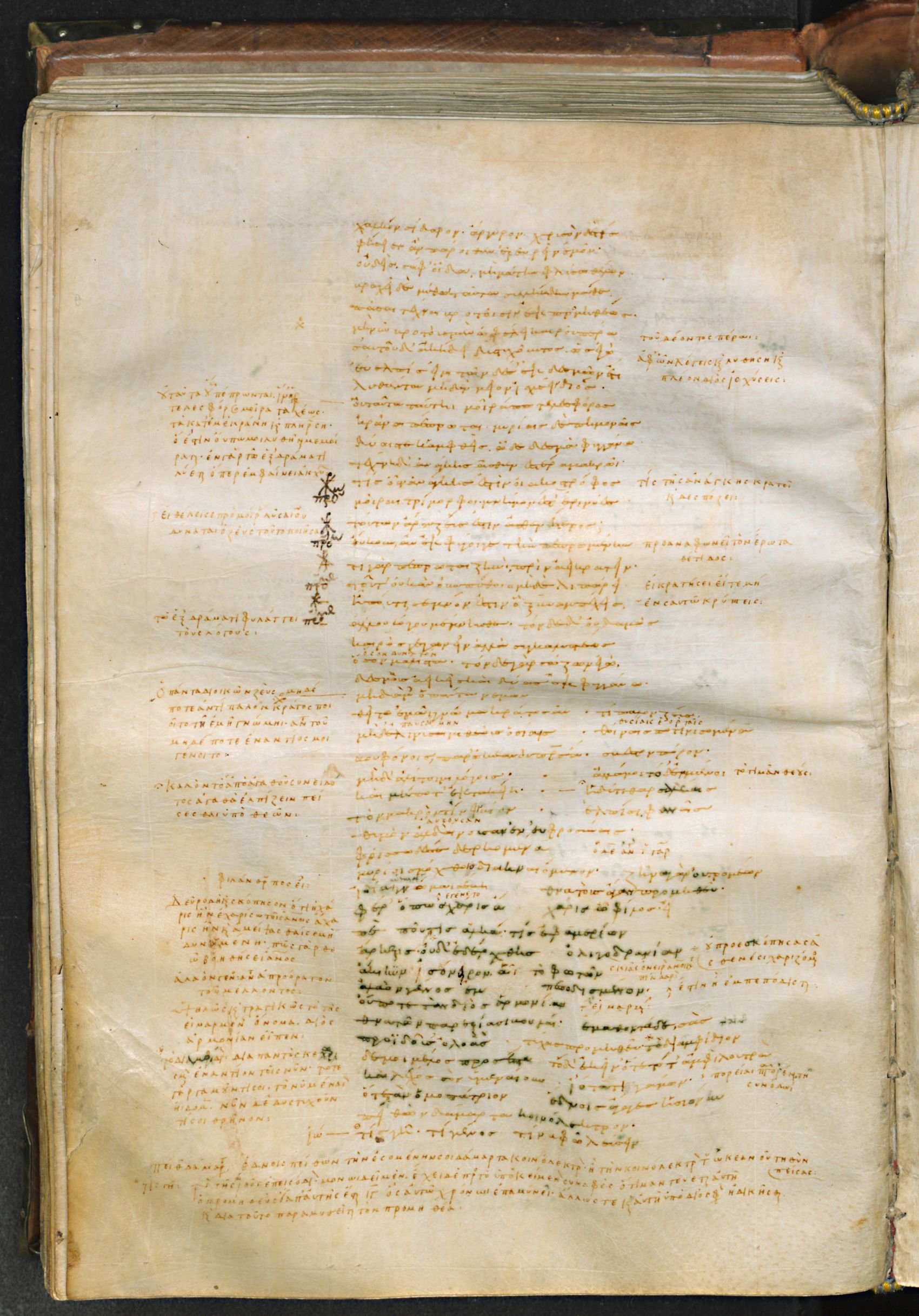
Where on the image
Lines 500-506 start on Laur. Plut. 32.9 fol. 153r and continue on fol. 153v (page break inside this section). Checked on the images: Laur. Plut. 32.9 fol. 153r runs from 'ἦν δ᾽ οὐδὲν αὐτοῖς οὔτε χείματος τέκμαρ' on its first verse line (454) to 'κεκρυμμέν᾽ ἀνθρώποισιν ὠφελήματα' on its last (501). 459 'καὶ μὴν ἀριθμόν, ἔξοχον σοφισμάτων' is the sixth line of the page. Viewer: https://tecabml.contentdm.oclc.org/digital/collection/plutei/id/710909 Laur. Plut. 32.9 fol. 153v runs from 'χαλκόν, σίδηρον, ἄργυρον, χρυσόν τε τίς' on its first verse line (502) to '(τίς) γῆ; τί γένος; τίνα φῶ λεύσσειν (Io's entry)' on its last (561). 525 'δεσμοὺς ἀεικεῖς καὶ δύας ἐκφυγγάνω' stands in the middle of the page, followed by the first choral ode (526ff.). Viewer: https://tecabml.contentdm.oclc.org/digital/collection/plutei/id/710910 The Greek shown is Smyth's edited text; the manuscript's accents and some readings differ from it (Smyth's notes record M's readings).
Προμηθεύς
500τοιαῦτα μὲν δὴ ταῦτʼ· ἔνερθε δὲ χθονὸς
501κεκρυμμένʼ, ἀνθρώποισιν ὠφελήματα,
502χαλκόν, σίδηρον, ἄργυρον, χρυσόν τε τίς
503φήσειεν ἂν πάροιθεν ἐξευρεῖν ἐμοῦ;
504οὐδείς, σάφʼ οἶδα, μὴ μάτην φλύσαι θέλων.
505βραχεῖ δὲ μύθῳ πάντα συλλήβδην μάθε,
506πᾶσαι τέχναι βροτοῖσιν ἐκ Προμηθέως.
500So much then touching these arts. Now as to the benefits to men that lay concealed beneath the earth—bronze, iron, silver, and gold—who would claim to have discovered them before me? No one, I know full well, unless he were fain to babble idly. Hear the sum of the whole matter in the compass of one brief word—every art possessed by man comes from Prometheus.
Where on the image
Lines 507-525 are on Laur. Plut. 32.9 fol. 153v. Checked on the images: Laur. Plut. 32.9 fol. 153v runs from 'χαλκόν, σίδηρον, ἄργυρον, χρυσόν τε τίς' on its first verse line (502) to '(τίς) γῆ; τί γένος; τίνα φῶ λεύσσειν (Io's entry)' on its last (561). 525 'δεσμοὺς ἀεικεῖς καὶ δύας ἐκφυγγάνω' stands in the middle of the page, followed by the first choral ode (526ff.). Viewer: https://tecabml.contentdm.oclc.org/digital/collection/plutei/id/710910 The Greek shown is Smyth's edited text; the manuscript's accents and some readings differ from it (Smyth's notes record M's readings).
Χορός
507μή νυν βροτοὺς μὲν ὠφέλει καιροῦ πέρα,
508σαυτοῦ δʼ ἀκήδει δυστυχοῦντος. ὡς ἐγὼ
509εὔελπίς εἰμι τῶνδέ σʼ ἐκ δεσμῶν ἔτι
510λυθέντα μηδὲν μεῖον ἰσχύσειν Διός.
Προμηθεύς
511οὐ ταῦτα ταύτῃ Μοῖρά πω τελεσφόρος
512κρᾶναι πέπρωται, μυρίαις δὲ πημοναῖς
513δύαις τε καμφθεὶς ὧδε δεσμὰ φυγγάνω·
514τέχνη δʼ ἀνάγκης ἀσθενεστέρα μακρῷ.
Χορός
515τίς οὖν ἀνάγκης ἐστὶν οἰακοστρόφος;
Προμηθεύς
516Μοῖραι τρίμορφοι μνήμονές τʼ Ἐρινύες
Χορός
517τούτων ἄρα Ζεύς ἐστιν ἀσθενέστερος;
Προμηθεύς
518οὔκουν ἂν ἐκφύγοι γε τὴν πεπρωμένην.
Χορός
519τί γὰρ πέπρωται Ζηνὶ πλὴν ἀεὶ κρατεῖν;
Προμηθεύς
520τοῦτʼ οὐκέτʼ ἂν πύθοιο μηδὲ λιπάρει.
Χορός
521ἦ πού τι σεμνόν ἐστιν ὃ ξυναμπέχεις.
Προμηθεύς
522ἄλλου λόγου μέμνησθε, τόνδε δʼ οὐδαμῶς
523καιρὸς γεγωνεῖν, ἀλλὰ συγκαλυπτέος
524ὅσον μάλιστα· τόνδε γὰρ σῴζων ἐγὼ
525δεσμοὺς ἀεικεῖς καὶ δύας ἐκφυγγάνω.
Chorus
507Do not then benefit mortals beyond due measure and yet be heedless of thine own distress; forasmuch as I am of good hope that thou shalt yet be loosed from these bonds and have power no wise inferior to Zeus.
Prometheus
Not thus, nor yet, is fulfilling Fate destined to bring this end to pass. When I have been bent by pangs and tortures infinite, thus only am I to escape my bondage. Art is feebler far than Necessity.
Chorus
Who then is the steersman of Necessity?
Prometheus
The triform Fates and mindful Furies.
Chorus
Can it be that Zeus hath lesser power than they?
Prometheus
Aye, in that at least he cannot escape what is foredoomed.
Chorus
Why, what is foredoomed for Zeus save to hold eternal sway?
Prometheus
This thou must not learn as yet; be not importunate.
Chorus
'Tis some solemn secret, surely, that thou dost enshroud in mystery.
Prometheus
Bethink ye of some other theme, for 'tis in no wise meet time to discourse of this. At every hazard this must be kept concealed; for 'tis by safeguarding it that I am to escape my ignominious bonds and outrage.
Notes
- Greek: Herbert Weir Smyth, Aeschylus I (Loeb Classical Library, 1922), Perseus digital text; speaker names as in Perseus.
- English: Herbert Weir Smyth, Aeschylus I (Loeb Classical Library, 1922), pp. 255-263, transcribed from the archive.org scan of the 1922 printing and checked against its page images. Smyth's English is prose without line numbers; each section begins where the speech or sense unit begins.
Cite
Sources
- Source: Florence, Laur. Plut. 32.9 (Medicean Aeschylus) fol. 152v-153v via Teca digitale BML + Smyth Greek (Perseus) + Smyth English (Loeb 1922, archive.org scan) (holding institution)
- Critical edition: Smyth, Aeschylus I (Loeb 1922), via Perseus
← previous · → next · v cycle view · l back to library