Aeschylus, Prometheus Bound 526-1093: Io, the secret of Zeus' fall, Hermes and the end
Introduction
The chorus sings that it will never set itself against Zeus and grieves for Prometheus (526-560). Io, daughter of Inachus, turned into a heifer and driven over the earth by a gad-fly through Hera's anger, comes to the rock (561-608). She tells how dreams urged her to yield to Zeus, how oracles made her father drive her out, and how Argus watched her (640-686). Prometheus foretells her wanderings across Europe and Asia to Egypt, where Zeus will restore her and she will bear Epaphus; from her line will come the fifty daughters of Danaus and, thirteen generations on, the archer who will free him (700-876). He declares that Zeus will be overthrown by a marriage he plans, and that only Prometheus can tell him how to escape it (907-940). Hermes comes from Zeus to demand the secret; Prometheus refuses, and the play ends as the rock is struck by thunder and he sinks into the earth (944-1093).
The pages are from Florence, Biblioteca Medicea Laurenziana, Plut. 32.9, the Medicean manuscript of the 10th century (Aeschylus siglum M), with scholia in the margins. Each section is one page, from the lower part of fol. 153v to fol. 159r, where the play ends and the Eumenides begins; the first and last verse of every page were read on the images. The Greek is Smyth's edition (1922), not a transcription of the manuscript. The English is Smyth's Loeb translation of the same year, cut at the speech start or sentence end nearest each page break; each section gives its exact English line range. With the two preceding entries the whole play is given.
How was this verified? (Provenance)
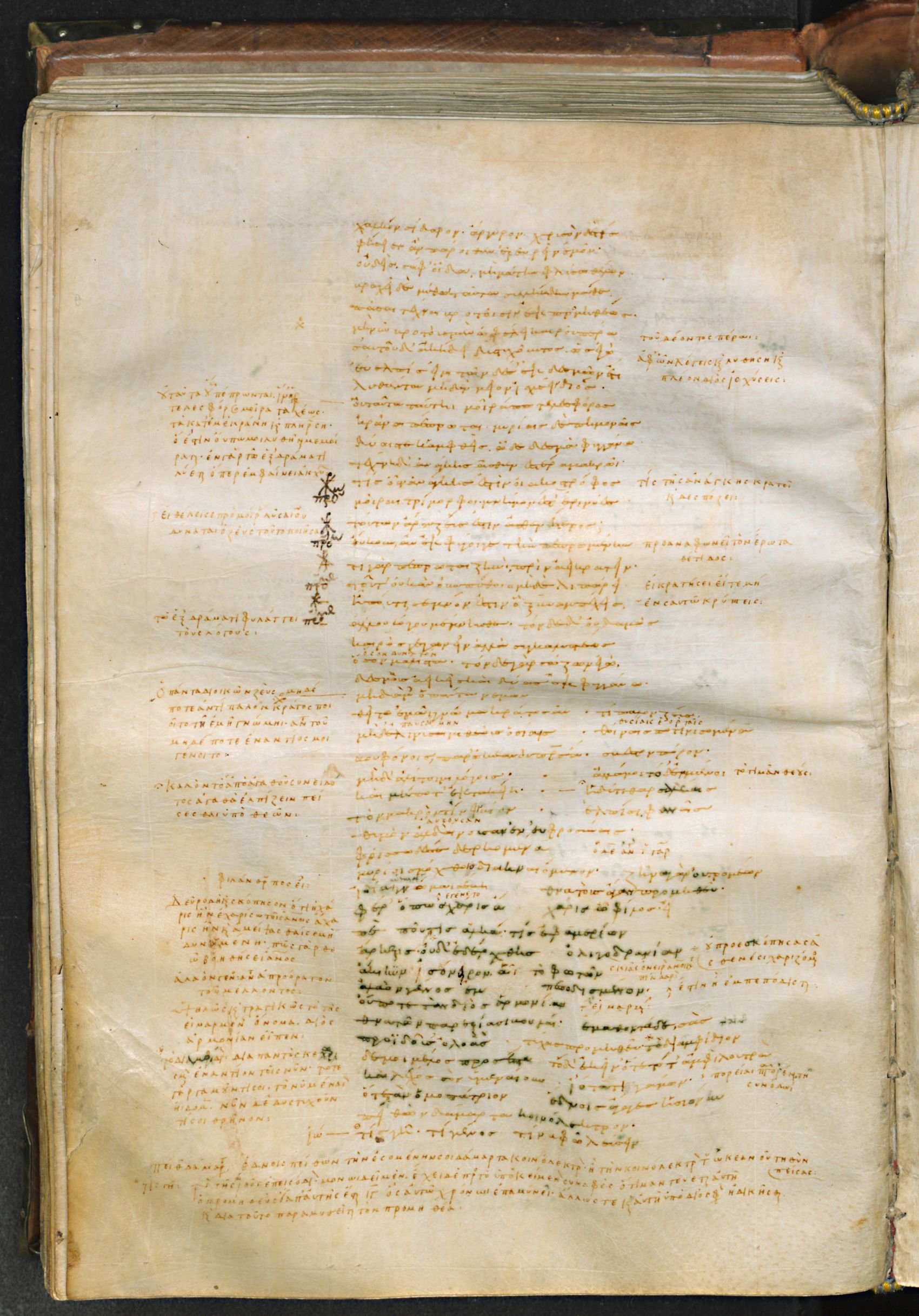
Where on the image
Laur. Plut. 32.9 fol. 153v: Prometheus Bound 526-561, from ‹μηδάμ' ὁ πάντα νέμων (526, in the middle of the page, after 525)› (526) to ‹τίς γῆ· τί γένος· τίνα φῶ λεύσσειν› (561); read on contrast-enhanced crops of the page image and checked against the neighbouring pages. The page runs 502-561; 502-525 are in the entry 436-525. The first stasimon (526-560) and Io's first line (561) follow. English here: 526-560; the English begins with the chorus' ode at 526, the same line as the Greek. The Greek shown is Smyth's edited text; the manuscript's spelling, accents and some readings differ. Viewer: https://tecabml.contentdm.oclc.org/digital/collection/plutei/id/710910
Χορός
526μηδάμʼ ὁ πάντα νέμων
527θεῖτʼ ἐμᾷ γνώμᾳ κράτος ἀντίπαλον Ζεύς,
530μηδʼ ἐλινύσαιμι θεοὺς ὁσίαις θοίναις ποτινισομένα
531βουφόνοις παρʼ Ὠκεανοῦ πατρὸς ἄσβεστον πόρον,
535μηδʼ ἀλίτοιμι λόγοις·
536ἀλλά μοι τόδʼ ἐμμένοι καὶ μήποτʼ ἐκτακείη·
537ἁδύ τι θαρσαλέαις
538τὸν μακρὸν τείνειν βίον ἐλπίσι, φαναῖς
539θυμὸν ἀλδαίνουσαν ἐν εὐφροσύναις. φρίσ-
540σω δέ σε δερκομένα
541μυρίοις μόχθοις διακναιόμενον – –⏑– .
542Ζῆνα γὰρ οὐ τρομέων
543ἰδίᾳ γνώμᾳ σέβῃ θνατοὺς ἄγαν, Προμηθεῦ.
545φέρʼ, ὅπως ἄχαρις χάρις, ὦ φίλος·
546εἰπὲ ποῦ τίς ἀλκά;
547τίς ἐφαμερίων ἄρηξις; οὐδʼ ἐδέρχθης
548ὀλιγοδρανίαν ἄκικυν,
549ἰσόνειρον, ᾇ τὸ φωτῶν
550ἀλαὸν γένος ἐμπεποδισμένον; οὔποτε – –
551τὰν Διὸς ἁρμονίαν θνατῶν παρεξίασι βουλαί.
552ἔμαθον τάδε σὰς προσιδοῦσʼ ὀλο-
553ὰς τύχας, Προμηθεῦ.
554τὸ διαμφίδιον δέ μοι μέλος προσέπτα
555τόδʼ ἐκεῖνό θʼ, ὅ τʼ ἀμφὶ λουτρὰ
556καὶ λέχος σὸν ὑμεναίουν
557ἰότατι γάμων, ὅτε τὰν ὁμοπάτριον ἕδνοις
560ἄγαγες Ἡσιόναν πείθὼν δάμαρτα κοινόλεκτρον.
Ἰώ
561τίς γῆ; τί γένος; τίνα φῶ λεύσσειν
Chorus
526Never may Zeus, the dispenser of all things, set his power in conflict with my will, nor may I be slow to approach the gods, with holy sacrifices of oxen slain, by the side of the ceaseless stream of Oceanus, my sire; and may I not offend in speech; but may this rule abide in my heart and never fade away.
Sweet it is to pass all the length of life amid confident hopes, feeding fat the heart in glad festivities. But I shudder as I look on thee, racked by tortures infinite. For thou hast no fear of Zeus, Prometheus, but in self-will dost reverence mortals overmuch.
See now, my friend, how bootless was thy boon. Tell me, what succour for thee is there, and where, in creatures of a day? What aid? Didst thou not behold the helpless infirmity, no better than a dream, wherein the purblind generation of men is shackled? Never shall the counsels of mortal men transgress the ordering of Zeus.
This is the lesson I have learned from beholding the fate, Prometheus, that has wrought thy ruin. And the difference in the strain stole into my thought—this strain and that, which, about thy bridal bed and bath, I raised to grace thy marriage, what time thou didst woo with gifts and win my sister Hesione to be thy wedded wife.
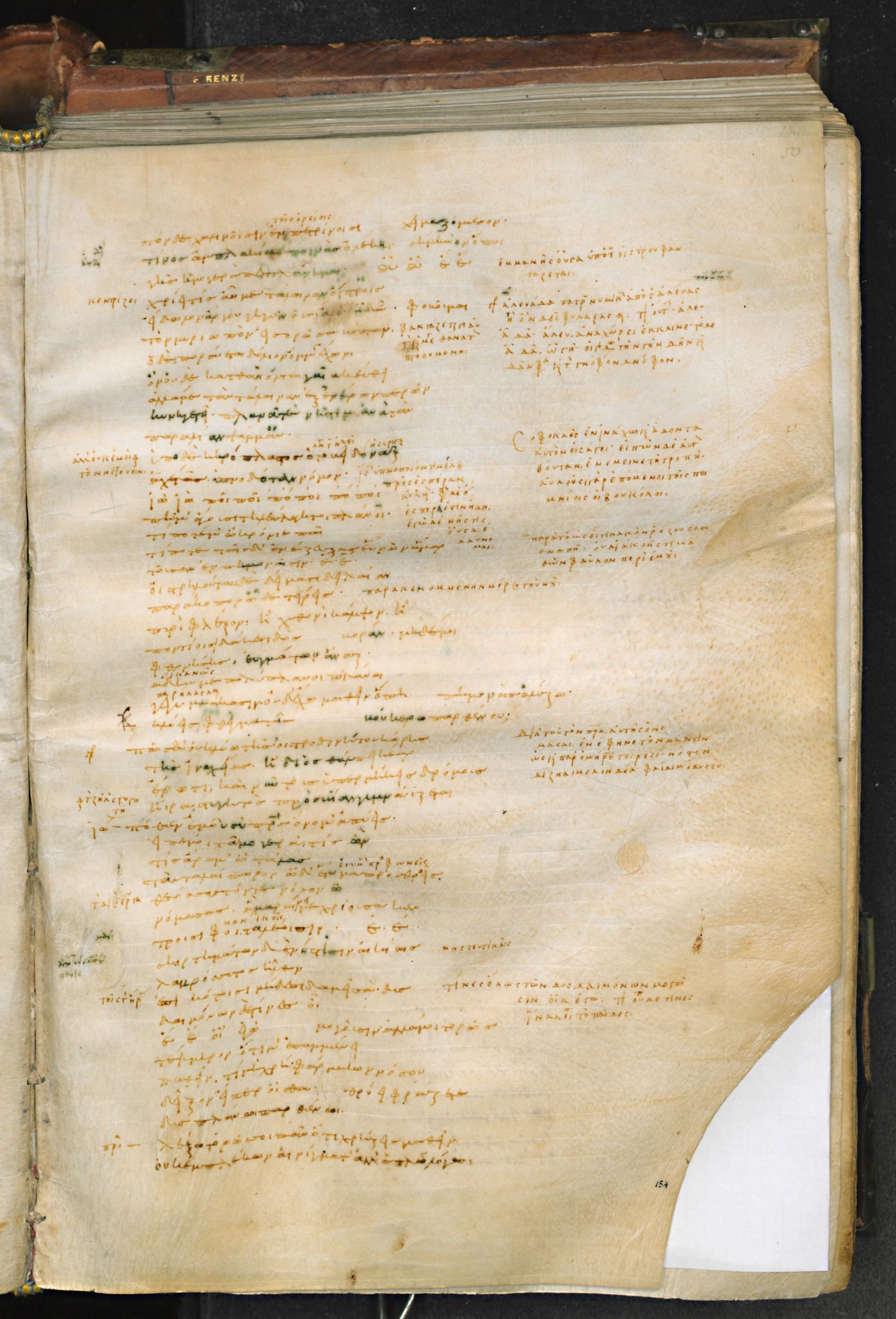
Where on the image
Laur. Plut. 32.9 fol. 154r: Prometheus Bound 562-610, from ‹τόνδε χαλινοῖς ἐν πετρίνοισι(ν) χειμαζόμενον› (562) to ‹οὐκ ἐμπλέκων αἰνίγματ' ἀλλ' ἁπλῷ λόγῳ› (610); read on contrast-enhanced crops of the page image and checked against the neighbouring pages. Io's lyrics are written two or more of Smyth's lines to a line (562-563 as one line, with the gloss τοῖς ὀρείοις over πετρίνοισι). English here: 561-611; Io's first line, 561 (What land is this?), is the last line of the page before; her speech is given whole with this page. The Greek shown is Smyth's edited text; the manuscript's spelling, accents and some readings differ. Viewer: https://tecabml.contentdm.oclc.org/digital/collection/plutei/id/710911
Ἰώ
562τόνδε χαλινοῖς ἐν πετρίνοισιν
563χειμαζόμενον;
564τίνος ἀμπλακίας ποινὰς ὀλέκῃ;
565σήμηνον ὅποι γῆς ἡ μογερὰ πεπλάνημαι.
566ἆ ἆ, ἒ ἔ,
567χρίει τις αὖ με τὰν τάλαιναν οἶστρος,
568εἴδωλον Ἄργου γηγενοῦς, ἄλευʼ ἆ δᾶ· φοβοῦμαι
569τὸν μυριωπὸν εἰσορῶσα βούταν.
570ὁ δὲ πορεύεται δόλιον ὄμμʼ ἔχων,
570aὃν οὐδὲ κατθανόντα γαῖα κεύθει.
571ἀλλʼ, ἐμὲ τὰν τάλαιναν
572ἐξ ἐνέρων περῶν κυναγετεῖ, πλανᾷ
573τε νῆστιν ἀνὰ τὰν παραλίαν ψάμμαν.
574ὑπὸ δὲ κηρόπλαστος ὀτοβεῖ δόναξ
575ἀχέτας ὑπνοδόταν νόμον·
576ἰὼ ἰὼ πόποι, ποῖ μʼ ἄγουσι τη-
577λέπλαγκτοι πλάναι;
578τί ποτέ μʼ, ὦ Κρόνιε παῖ, τί ποτε ταῖσδʼ
579ἐνέζευξας εὑρὼν ἁμαρτοῦσαν ἐν
580πημοναῖσιν; ἓ ἕ,
581οἰστρηλάτῳ δὲ δείματι
582δειλαίαν παράκοπον ὧδε τείρεις;
583πυρί ⟨με⟩ φλέξον, ἢ χθονὶ κάλυψον, ἤ
584ποντίοις δάκεσι δὸς βοράν,
585μηδέ μοι φθονήσῃς
586εὐγμάτων, ἄναξ.
585aἄδην με πολύπλανοι πλάναι
586aγεγυμνάκασιν, οὐδʼ ἔχω μαθεῖν ὅπα
587πημονὰς ἀλύξω.
588κλύεις φθέγμα τᾶς βούκερω παρθένου;
Προμηθεύς
589πῶς δʼ οὐ κλύω τῆς οἰστροδινήτου κόρης,
590τῆς Ἰναχείας; ἣ Διὸς θάλπει κέαρ
591ἔρωτι, καὶ νῦν τοὺς ὑπερμήκεις δρόμους
592Ἥρᾳ στυγητὸς πρὸς βίαν γυμνάζεται.
Ἰώ
593πόθεν ἐμοῦ σὺ πατρὸς ὄνομʼ ἀπύεις;
594εἰπέ μοι τᾷ μογερᾷ τίς ὤν;
595τίς ἄρα μʼ, ὦ τάλας, τὰν τάλαιναν ὧδʼ
596ἔτυμα προσθροεῖς;
597θεόσυτόν τε νόσον ὠνόμασας, ἃ
598μαραίνει με χρίουσα κέντροις, ⟨ἰώ⟩,
599φοιταλέοισιν ἓ ἕ·
600σκιρτημάτων δὲ νήστισιν
600aαἰκείαις λαβρόσυτος ἦλθον, ⟨Ἥρας⟩
601ἐπικότοισι μήδεσι δαμεῖσα. δυσ-
602δαιμόνων δὲ τίνες οἵ, ἓ ἕ,
603οἷʼ ἐγὼ μογοῦσιν;
604ἀλλά μοι τορῶς
605τέκμηρον ὅ τι μʼ ἐπαμμένει
606παθεῖν, τί μῆχαρ, ἢ τί φάρμακον νόσου,
607δεῖξον, εἴπερ οἶσθα·
608θρόει, φράζε τᾷ δυσπλάνῳ παρθένῳ.
Προμηθεύς
609λέξω τορῶς σοι πᾶν ὅπερ χρῄζεις μαθεῖν,
610οὐκ ἐμπλέκων αἰνίγματʼ, ἀλλʼ ἁπλῷ λόγῳ,
561[Enter Io
Io
What land is this? What people? By what name am I to call him I behold exposed to the tempest in bonds of rock? What offence hast thou committed that for penalty thou art doomed to destruction? Tell me to what region of the earth I have wandered in my wretchedness? Oh, oh! Again a gad-fly, phantom of earth-born Argus, stings me to my misery. Keep him aloof, O Earth! I am fearful when I behold that myriad-eyed herdsman. He travels onward with his crafty gaze upon me; nor even in death doth the earth conceal him, but passing from the shades he hounds me, the forlorn one, and drives me famished along the sands of the sea-shore.
And the clear-sounding wax-compacted pipe drones forth in accompaniment a slumberous strain. Alas, alas! Whither am I borne in my far-roaming wandering course? Wherein, O son of Cronus, wherein hast thou found offence in me that thou hast bound me to this yoke of misery—ah me! and dost thus harass a wretched maiden to frenzy by the terror of the pursuing gad-fly? Consume me with fire, or hide me in the earth, or give me to the monsters of the deep to devour; and grudge me not, O Lord, the boon that I implore. Enough of discipline have my far-roaming wanderings taught me, and I cannot discern how to escape my sufferings. Dost thou hear the voice of the horned virgin?
Prometheus
How can I fail to hear the maiden frenzied by the gad-fly, the daughter of Inachus? She it is who fires the heart of Zeus with passion, and now, through Hera’s hate, is disciplined perforce by wandering interminable.
Io
How comes it that thou voicest my father’s name? Tell me, the hapless maid, who art thou, unhappy wretch, that thou thus rightly dost address the miserable maiden, and hast named the heaven-sent plague that wastes and stings me with its maddening goad. Ah me!
In frenzied bounds I come, driven by torturing hunger, victim of Hera’s vengeful purpose. Who of the company of the unfortunate endure—ah me! —sufferings such as mine? Oh make plain to me what misery it is my fate yet to suffer, what remedy there is, or what cure, of my affliction. Reveal it, if thou hast the knowledge. Oh speak, declare it to the hapless, wandering virgin.
Prometheus
I will tell thee plainly all that thou art fain to know, not weaving riddles, but in simple language, even as is right to open the lips to friends.
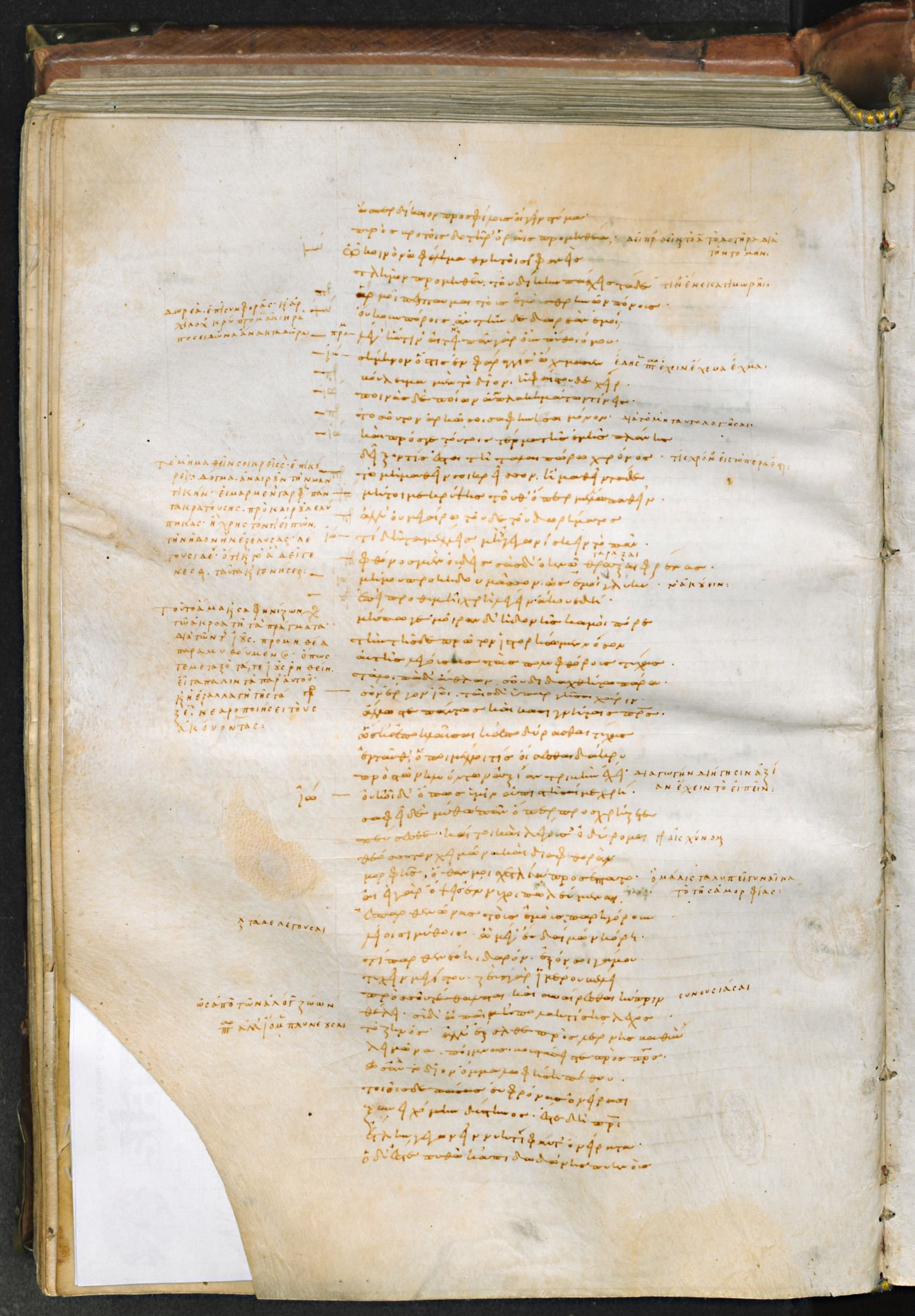
Where on the image
Laur. Plut. 32.9 fol. 154v: Prometheus Bound 611-658, from ‹ὥσπερ δίκαιον πρὸς φίλους οἴγειν στόμα› (611) to ‹ὁ δ' ἔς τε πυθὼ κἀπὶ δωδώνης πυκνοὺς› (658); read on contrast-enhanced crops of the page image and checked against the neighbouring pages. English here: 612-657; Prometheus' sentence for 609-611 (I will tell thee plainly ... to friends.) ends one line after the page break and is given whole with the page before; the English here begins with 612. The Greek shown is Smyth's edited text; the manuscript's spelling, accents and some readings differ. Viewer: https://tecabml.contentdm.oclc.org/digital/collection/plutei/id/710912
Προμηθεύς
611ὥσπερ δίκαιον πρὸς φίλους οἴγειν στόμα.
612πυρὸς βροτοῖς δοτῆρʼ ὁρᾷς Προμηθέα.
Ἰώ
613ὦ κοινὸν ὠφέλημα θνητοῖσιν φανείς,
614τλῆμον Προμηθεῦ, τοῦ δίκην πάσχεις τάδε;
Προμηθεύς
615ἁρμοῖ πέπαυμαι τοὺς ἐμοὺς θρηνῶν πόνους.
Ἰώ
616οὔκουν πόροις ἂν τήνδε δωρεὰν ἐμοί;
Προμηθεύς
617λέγʼ ἥντινʼ αἰτῇ· πᾶν γὰρ ἂν πύθοιό μου.
Ἰώ
618σήμηνον ὅστις ἐν φάραγγί σʼ ὤχμασεν.
Προμηθεύς
619βούλευμα μὲν τὸ Δῖον, Ἡφαίστου δὲ χείρ.
Ἰώ
620ποινὰς δὲ ποίων ἀμπλακημάτων τίνεις;
Προμηθεύς
621τοσοῦτον ἀρκῶ σοι σαφηνίσας μόνον.
Ἰώ
622καὶ πρός γε τούτοις τέρμα τῆς ἐμῆς πλάνης
623δεῖξον, τίς ἔσται τῇ ταλαιπώρῳ χρόνος.
Προμηθεύς
624τὸ μὴ μαθεῖν σοι κρεῖσσον ἢ μαθεῖν τάδε.
Ἰώ
625μήτοι με κρύψῃς τοῦθʼ ὅπερ μέλλω παθεῖν.
Προμηθεύς
626ἀλλʼ οὐ μεγαίρω τοῦδέ σοι δωρήματος.
Ἰώ
627τί δῆτα μέλλεις μὴ οὐ γεγωνίσκειν τὸ πᾶν;
Προμηθεύς
628φθόνος μὲν οὐδείς, σὰς δʼ ὀκνῶ θράξαι φρένας.
Ἰώ
629μή μου προκήδου μᾶσσον ὡς ἐμοὶ γλυκύ.
Προμηθεύς
630ἐπεὶ προθυμῇ, χρὴ λέγειν. ἄκουε δή.
Χορός
631μήπω γε· μοῖραν δʼ ἡδονῆς κἀμοὶ πόρε.
632τὴν τῆσδε πρῶτον ἱστορήσωμεν νόσον,
633αὐτῆς λεγούσης τὰς πολυφθόρους τύχας·
634τὰ λοιπὰ δʼ ἄθλων σοῦ διδαχθήτω πάρα.
Προμηθεύς
635σὸν ἔργον, Ἰοῖ, ταῖσδʼ ὑπουργῆσαι χάριν,
636ἄλλως τε πάντως καὶ κασιγνήταις πατρός.
637ὡς τἀποκλαῦσαι κἀποδύρασθαι τύχας
638ἐνταῦθʼ, ὅπου μέλλοι τις οἴσεσθαι δάκρυ
639πρὸς τῶν κλυόντων, ἀξίαν τριβὴν ἔχει.
Ἰώ
640οὐκ οἶδʼ ὅπως ὑμῖν ἀπιστῆσαί με χρή,
641σαφεῖ δὲ μύθῳ πᾶν ὅπερ προσχρῄζετε
642πεύσεσθε· καίτοι καὶ λέγουσʼ αἰσχύνομαι
643θεόσσυτον χειμῶνα καὶ διαφθορὰν
644μορφῆς, ὅθεν μοι σχετλίᾳ προσέπτατο.
645αἰεὶ γὰρ ὄψεις ἔννυχοι πωλεύμεναι
646ἐς παρθενῶνας τοὺς ἐμοὺς παρηγόρουν
647λείοισι μύθοις ὦ μέγʼ εὔδαιμον κόρη,
648τί παρθενεύει δαρόν, ἐξόν σοι γάμου
649τυχεῖν μεγίστου; Ζεὺς γὰρ ἱμέρου βέλει
650πρὸς σοῦ τέθαλπται καὶ συναίρεσθαι Κύπριν
651θέλει· σὺ δʼ, ὦ παῖ, μὴ ʼπολακτίσῃς λέχος
652τὸ Ζηνός, ἀλλʼ ἔξελθε πρὸς Λέρνης βαθὺν
653λειμῶνα, ποίμνας βουστάσεις τε πρὸς πατρός,
654ὡς ἂν τὸ Δῖον ὄμμα λωφήσῃ πόθου.
655τοιοῖσδε πάσας εὐφρόνας ὀνείρασι
656συνειχόμην δύστηνος, ἔστε δὴ πατρὶ
657ἔτλην γεγωνεῖν νυκτίφοιτʼ ὀνείρατα.
658ὁ δʼ ἔς τε Πυθὼ κἀπὶ Δωδώνης πυκνοὺς
612Behold, I whom thou seest am Prometheus, that gave fire unto mankind.
Io
O thou who hast shown thyself a common benefactor of mankind, wretched Prometheus, for what reason dost thou suffer thus?
Prometheus
I have but just now done with lamenting my own calamities.
Io
Thou wilt not then vouchsafe this boon to me?
Prometheus
Say what boon it is that thou dost crave; for thou canst learn all from me.
Io
Tell me who hath bound thee fast in this ravine.
Prometheus
Zeus by his will, Hephaestus by his hand.
Io
And of what manner of offence dost thou pay the penalty?
Prometheus
It sufficeth that I have made clear to thee thus much and no more.
Io
Nay, reveal besides the goal of my wandering— what time is set for wretched me.
Prometheus
Ignorance of this were better for thee than to know thereof.
Io
Do not, I pray thee, hide from me what I am doomed to suffer.
Prometheus
Nay, ’tis not that I am loath to grant this boon to thee.
Io
Why then this thy reluctance to tell me all?
Prometheus
I am nothing loath; but I shrink to crush thy heart.:
Io
Be not more kind to me than I myself desire.
Prometheus
Since thou art bent to have it so, speak I must. Hear me then.
Chorus
Nay, not yet. Grant us too a portion of the pleasure. Let us first inquire the story of her affliction and let her with her own lips relate the events that brought upon her sore calamity. Then let her be instructed by thee as to the toils still to come.
Prometheus
Tis for thee, Io, to grant this favour unto them— and for this cause above all, that they are the sisters of thy sire. For ’tis worth the while to indulge in weeping and in wailing over evil fortunes when one is like to win the tribute of a tear from the listener.
Io
I know not how I may refuse you. Ye shall learn in truthful speech all that ye would further know. Yet I am ashamed even in telling of the storm of calamity sent of Heaven, of the marring of my form, and of the source whence it swooped upon me, wretched that I am.
For visions of the night, ever haunting my virgin bower, sought to beguile me with seductive words, saying: “O damsel greatly blest of fortune, why tarry in thy maidenhood so long when it is within thy power to win a union of the highest? Zeus is inflamed by thee with passion’s dart and is eager to unite in love with thee. Do thou, my child, not spurn the bed of Zeus, but go thou forth to Lerna’s meadow land of pastures deep and to thy father’s flocks and where his cattle browse, that so the eye of Zeus may find respite from its longing.”
By such dreams was I, to my distress, beset night after night, until at last I gained courage to tell my father of the dreams that haunted me.
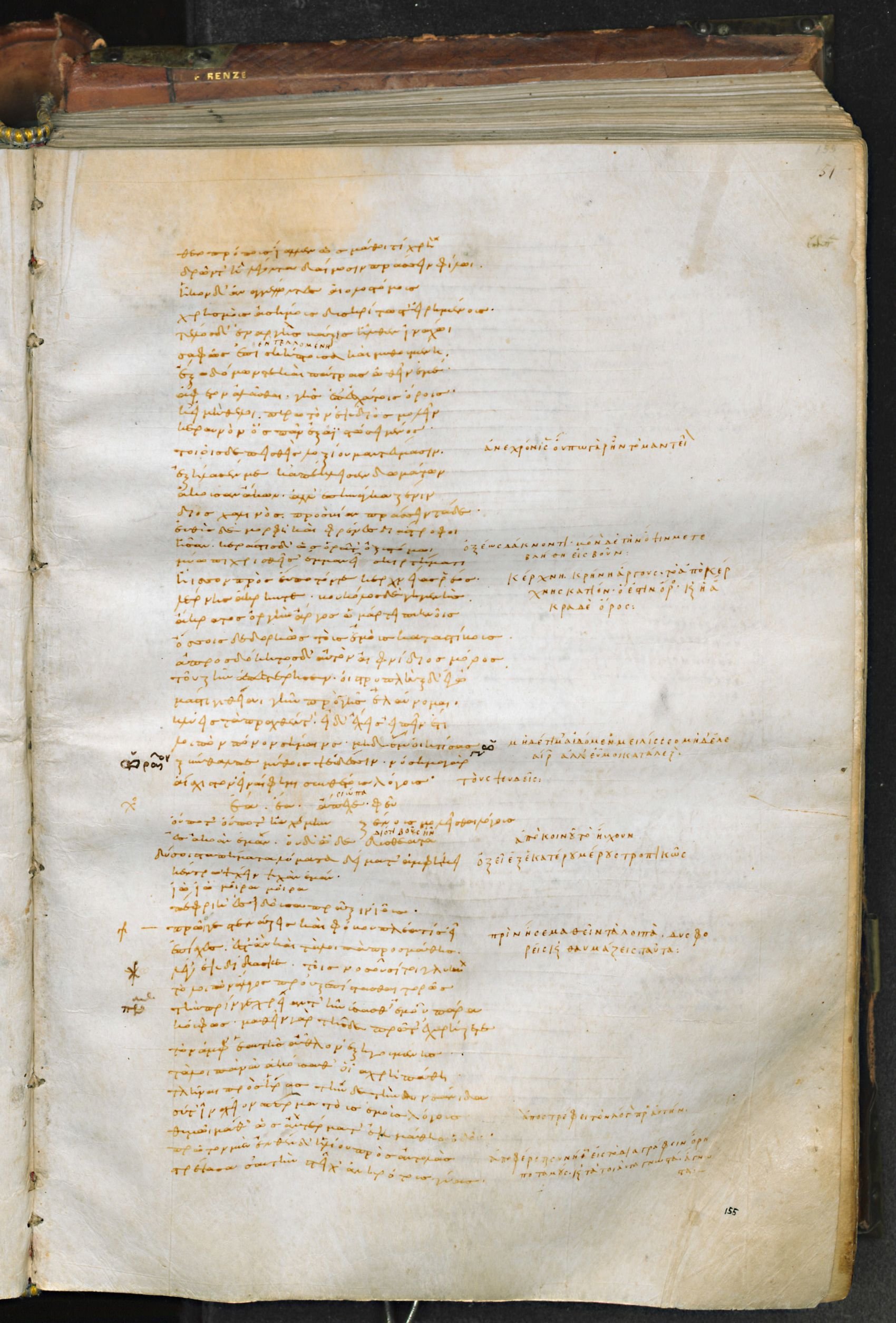
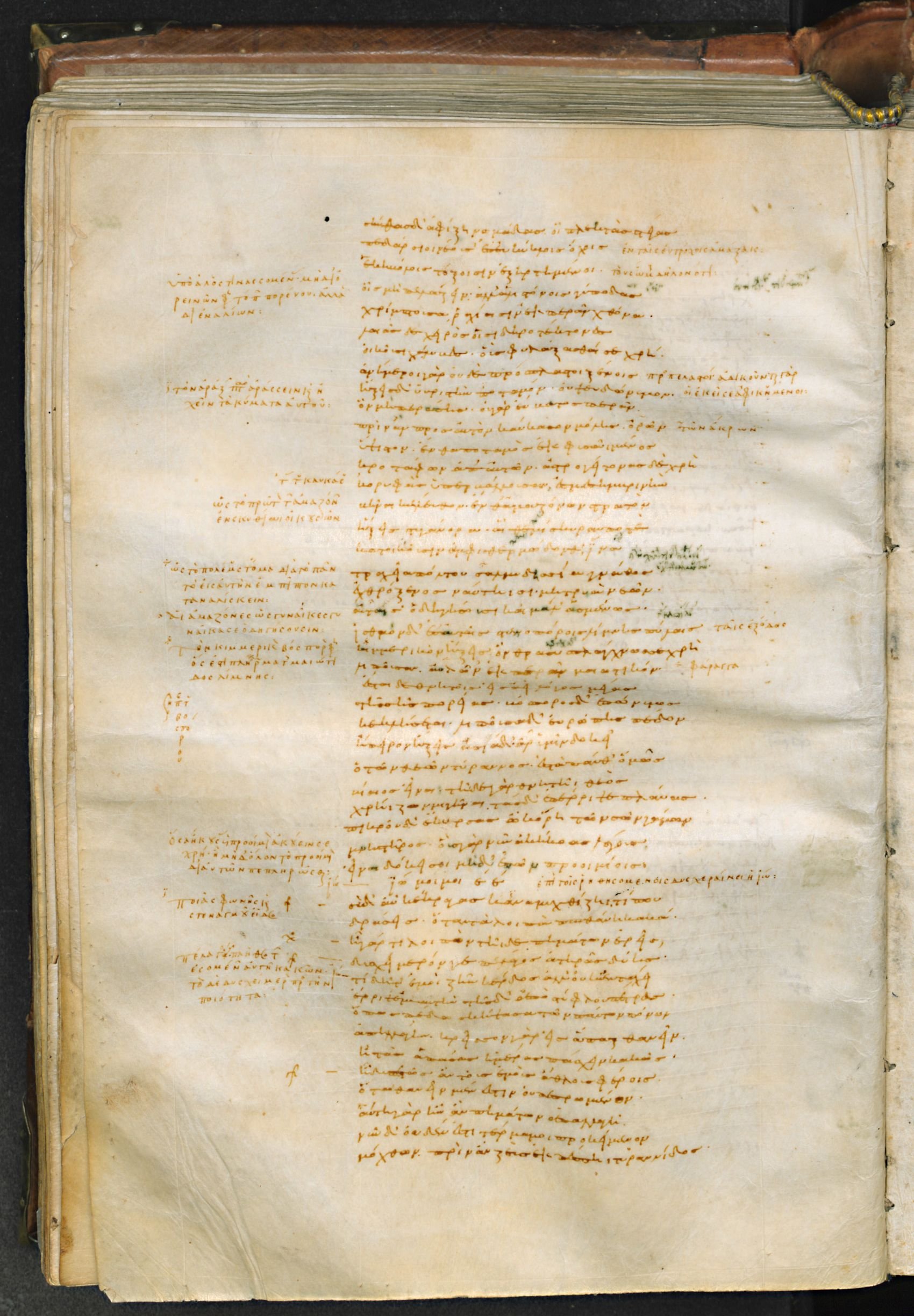
Where on the image
Laur. Plut. 32.9 fol. 155r: Prometheus Bound 659-708, from ‹θεοπρόπους ἴαλλεν ὡς μάθοι τί χρὴ› (659) to ‹στρέψασα σαυτὴν στεῖχ' ἀνηρότους γύας› (708); read on contrast-enhanced crops of the page image and checked against the neighbouring pages. English here: 658-706; Io's sentence for 658-660 (And he sent many a messenger ... favour with the gods.) begins one line before the page break and is given with this page. The Greek shown is Smyth's edited text; the manuscript's spelling, accents and some readings differ. Viewer: https://tecabml.contentdm.oclc.org/digital/collection/plutei/id/710913
Ἰώ
659θεοπρόπους ἴαλλεν, ὡς μάθοι τί χρὴ
660δρῶντʼ ἢ λέγοντα δαίμοσιν πράσσειν φίλα.
661ἧκον δʼ ἀναγγέλλοντες αἰολοστόμους
662χρησμοὺς ἀσήμους δυσκρίτως τʼ εἰρημένους.
663τέλος δʼ ἐναργὴς βάξις ἦλθεν Ἰνάχῳ
664σαφῶς ἐπισκήπτουσα καὶ μυθουμένη
665ἔξω δόμων τε καὶ πάτρας ὠθεῖν ἐμέ,
666ἄφετον ἀλᾶσθαι γῆς ἐπʼ ἐσχάτοις ὅροις·
667κεἰ μὴ θέλοι, πυρωπὸν ἐκ Διὸς μολεῖν
668κεραυνόν, ὃς πᾶν ἐξαϊστώσοι γένος.
669τοιοῖσδε πεισθεὶς Λοξίου μαντεύμασιν
670ἐξήλασέν με κἀπέκλῃσε δωμάτων
671ἄκουσαν ἄκων· ἀλλʼ ἐπηνάγκαζέ νιν
672Διὸς χαλινὸς πρὸς βίαν πράσσειν τάδε.
673εὐθὺς δὲ μορφὴ καὶ φρένες διάστροφοι
674ἦσαν, κεραστὶς δʼ, ὡς ὁρᾶτʼ, ὀξυστόμῳ
675μύωπι χρισθεῖσʼ ἐμμανεῖ σκιρτήματι
676ᾖσσον πρὸς εὔποτόν τε Κερχνείας ῥέος
677Λέρνης τε κρήνην · βουκόλος δὲ γηγενὴς
678ἄκρατος ὀργὴν Ἄργος ὡμάρτει, πυκνοῖς
679ὄσσοις δεδορκὼς τοὺς ἐμοὺς κατὰ στίβους.
680ἀπροσδόκητος δʼ αὐτὸν ἀφνίδιος μόρος
681τοῦ ζῆν ἀπεστέρησεν. οἰστροπλὴξ δʼ ἐγὼ
682μάστιγι θείᾳ γῆν πρὸ γῆς ἐλαύνομαι.
683κλύεις τὰ πραχθέντʼ· εἰ δʼ ἔχεις εἰπεῖν ὅ τι
684λοιπὸν πόνων, σήμαινε· μηδέ μʼ οἰκτίσας
685ξύνθαλπε μύθοις ψευδέσιν· νόσημα γὰρ
686αἴσχιστον εἶναί φημι συνθέτους λόγους.
Χορός
687ἔα ἔα, ἄπεχε, φεῦ·
688οὔποτʼ οὔποτʼ ηὔχουν ⟨ὧδε⟩ ξένους
689μολεῖσθαι λόγους εἰς ἀκοὰν ἐμάν,
690οὐδʼ ὧδε δυσθέατα καὶ δύσοιστα
691πήματα, λύματα, [δείματα] ἀμ-
692φάκει κέντρῳ τύψειν ψυχὰν ἐμάν.
693ἰὼ [ἰὼ] μοῖρα μοῖρα,
695πέφρικʼ εἰσιδοῦσα πρᾶξιν Ἰοῦς.
Προμηθεύς
696πρῴ γε στενάζεις καὶ φόβου πλέα τις εἶ·
697ἐπίσχες ἔστʼ ἂν καὶ τὰ λοιπὰ προσμάθῃς.
Χορός
698λέγʼ, ἐκδίδασκε· τοῖς νοσοῦσί τοι γλυκὺ
699τὸ λοιπὸν ἄλγος προυξεπίστασθαι τορῶς.
Προμηθεύς
700τὴν πρίν γε χρείαν ἠνύσασθʼ ἐμοῦ πάρα
701κούφως· μαθεῖν γὰρ τῆσδε πρῶτʼ ἐχρῄζετε
702τὸν ἀμφʼ ἑαυτῆς ἆθλον ἐξηγουμένης·
703τὰ λοιπὰ νῦν ἀκούσαθʼ, οἷα χρὴ πάθη
704τλῆναι πρὸς Ἥρας τήνδε τὴν νεάνιδα.
705σύ τʼ Ἰνάχειον σπέρμα, τοὺς ἐμοὺς λόγους
706θυμῷ βάλʼ, ὡς ἂν τέρματʼ ἐκμάθῃς ὁδοῦ.
707πρῶτον μὲν ἐνθένδʼ ἡλίου πρὸς ἀντολὰς
708στρέψασα σαυτὴν στεῖχʼ ἀνηρότους γύας·
658And he sent many a messenger to Pytho and Dodona-ward that he might discover what deed or word of his would find favour with the gods. But they returned with report of oracles, riddling, obscure, and darkly worded. But at the last there came an unmistakable utterance unto Inachus, charging and commanding him clearly that he must thrust me forth from home and native land to roam at large to the remotest confines of the earth; and, if he would not, a fiery thunderbolt should come from Zeus that would utterly bring to naught his whole race.
Yielding obedience to such prophetic utterances of Loxias, he drove me forth and barred me from his house, against his will and mine; but the curb of Zeus constrained him so to act perforce. Forthwith my form and mind were distorted, and with horns, as ye see, upon my front, stung by a sharp-fanged gad-fly I rushed with frantic bounds to Cerchnea’s sweet stream and Lerna’s spring. But the earth-born herdsman, untempered in his rage, even Argus, followed ever close upon me, peering with his many eyes upon my steps. But a sudden death reft him of life at unawares; while I, still tormented by the gad-fly, am driven on from land to land before the heaven-sent scourge.
Such is the tale of what befel; and if thou canst declare what toils still remain, oh reveal them. Do not, of thy pity, seek to cozen me by words untrue; for foulest of plagues do I account dissembling words.
Chorus
Ah, ah, avaunt, alas! Never, oh never, did I dream that words so strange would greet mine ears; nor yet that sufferings so grievous to look upon, aye and so grievous to endure, a tale of outrage, would smite my soul as with double-pronged goad. Alas, O Fate, O Fate, I shudder at beholding the plight that hath befallen Io.
Prometheus
Too soon thou makest lament and art full of fear. Forbear until thou hast learned the rest as well.
Chorus
Proceed, tell all. To the sick ’tis solace clearly to know beforehand what pain still awaiteth them.
Prometheus
Your former request ye lightly gained from me; for ye desired first of all to learn from her own lips the story of her ordeal. Hear now the sequel, the sufferings this maid is fated to endure at Hera’s hand. And do thou, offspring of Inachus, lay to heart my words that thou mayest learn the goal of thy wanderings.
Where on the image
Laur. Plut. 32.9 fol. 155v: Prometheus Bound 709-756, from ‹σκύθας δ' ἀφίξῃ νομάδας οἳ πλεκτὰς στέγας› (709) to ‹μόχθων πρὶν ἂν ζεὺς ἐκπέσῃ τυραννίδος› (756); read on contrast-enhanced crops of the page image and checked against the neighbouring pages. English here: 707-756; Prometheus' sentence for 707-711 (First, from this spot ... far-darting bows.) begins two lines before the page break and is given with this page. The Greek shown is Smyth's edited text; the manuscript's spelling, accents and some readings differ. Viewer: https://tecabml.contentdm.oclc.org/digital/collection/plutei/id/710914
Προμηθεύς
709Σκύθας δʼ ἀφίξῃ νομάδας, οἳ πλεκτὰς στέγας
710πεδάρσιοι ναίουσʼ ἐπʼ εὐκύκλοις ὄχοις
711ἑκηβόλοις τόξοισιν ἐξηρτυμένοι·
712οἷς μὴ πελάζειν, ἀλλʼ ἁλιστόνοις πόδας
713χρίμπτουσα ῥαχίαισιν ἐκπερᾶν χθόνα.
714λαιᾶς δὲ χειρὸς οἱ σιδηροτέκτονες
715οἰκοῦσι Χάλυβες, οὓς φυλάξασθαί σε χρή.
716ἀνήμεροι γὰρ οὐδὲ πρόσπλατοι ξένοις.
717ἥξεις δʼ Ὑβριστὴν ποταμὸν οὐ ψευδώνυμον,
718ὃν μὴ περάσῃς, οὐ γὰρ εὔβατος περᾶν,
719πρὶν ἂν πρὸς αὐτὸν Καύκασον μόλῃς, ὀρῶν
720ὕψιστον, ἔνθα ποταμὸς ἐκφυσᾷ μένος
721κροτάφων ἀπʼ αὐτῶν. ἀστρογείτονας δὲ χρὴ
722κορυφὰς ὑπερβάλλουσαν ἐς μεσημβρινὴν
723βῆναι κέλευθον, ἔνθʼ, Ἀμαζόνων στρατὸν
724ἥξεις στυγάνορʼ, αἳ Θεμίσκυράν ποτε
725κατοικιοῦσιν ἀμφὶ Θερμώδονθʼ, ἵνα
726τραχεῖα πόντου Σαλμυδησσία γνάθος
727ἐχθρόξενος ναύταισι, μητρυιὰ νεῶν·
728αὗταί σʼ ὁδηγήσουσι καὶ μάλʼ ἀσμένως.
729ἰσθμὸν δʼ ἐπʼ αὐταῖς στενοπόροις λίμνης πύλαις
730Κιμμερικὸν ἥξεις, ὃν θρασυσπλάγχνως σε χρὴ
731λιποῦσαν αὐλῶνʼ ἐκπερᾶν Μαιωτικόν·
732ἔσται δὲ θνητοῖς εἰσαεὶ λόγος μέγας
733τῆς σῆς πορείας, Βόσπορος δʼ ἐπώνυμος
734κεκλήσεται. λιποῦσα δʼ Εὐρώπης πέδον
735ἤπειρον ἥξεις Ἀσιάδʼ·. ἆρʼ, ὑμῖν δοκεῖ
736ὁ τῶν θεῶν τύραννος ἐς τὰ πάνθʼ ὁμῶς
737βίαιος εἶναι; τῇδε γὰρ θνητῇ θεὸς
738χρῄζων μιγῆναι τάσδʼ ἐπέρριψεν πλάνας.
739πικροῦ δʼ ἔκυρσας, ὦ κόρη, τῶν σῶν γάμων
740μνηστῆρος. οὓς γὰρ νῦν ἀκήκοας λόγους,
741εἶναι δόκει σοι μηδέπω ʼν προοιμίοις.
Ἰώ
742ἰώ μοί μοι, ἒ ἔ.
Προμηθεύς
743σὺ δʼ αὖ κέκραγας κἀναμυχθίζῃ; τί που
744δράσεις, ὅταν τὰ λοιπὰ πυνθάνῃ κακά;
Χορός
745ἦ γάρ τι λοιπὸν τῇδε πημάτων ἐρεῖς;
Προμηθεύς
746δυσχείμερόν γε πέλαγος ἀτηρᾶς δύης.
Ἰώ
747τί δῆτʼ ἐμοὶ ζῆν κέρδος, ἀλλʼ οὐκ ἐν τάχει
748ἔρριψʼ ἐμαυτὴν τῆσδʼ ἀπὸ στύφλου πέτρας,
749ὅπως πέδοι σκήψασα τῶν πάντων πόνων
750ἀπηλλάγην; κρεῖσσον γὰρ εἰσάπαξ θανεῖν
751ἢ τὰς ἁπάσας ἡμέρας πάσχειν κακῶς.
Προμηθεύς
752ἦ δυσπετῶς ἂν τοὺς ἐμοὺς ἄθλους φέροις,
753ὅτῳ θανεῖν μέν ἐστιν οὐ πεπρωμένον·
754αὕτη γὰρ ἦν ἂν πημάτων ἀπαλλαγή·
755νῦν δʼ οὐδέν ἐστι τέρμα μοι προκείμενον
756μόχθων, πρὶν ἂν Ζεὺς ἐκπέσῃ τυραννίδος.
707First, from this spot, turn thyself toward the rising sun and wend thy steps over untilled plains; and thou shalt reach the Scythian nomads, who dwell, perched aloft, in wattled houses on strong-wheeled wains, and are accoutred with far-darting bows. Approach them not, but keeping thy feet nigh the rugged strand, whereon the sea breaks with a roar, pass on beyond their land. On the left hand dwell the workers in iron, the Chalybes, and of them thou must beware, since they are savage and not to be approached by strangers. Then thou shalt reach the river Hybristes, which does not belie its name. Do not cross this—for it is hard to cross— until thou comest to Caucasus itself, loftiest of mountains, where from its very brows the river pours out its might in fury. Over its crests, which neighbour the stars, thou must pass and enter upon a southward course, wherein thou shalt reach the host of the Amazons, who loathe all men. They shall in time to come inhabit Themiscyra on the Thermodon, where, fronting the sea, is Salmydessus’ rugged jaw, evil host of mariners, step-dame of ships. The Amazons will guide thee on thy way right gladly. Next, Just at the narrow portals of the mere, thou shalt reach the Cimmerian isthmus. This thou must leave with stout heart and pass through the channel of Maeotis; and ever after among mankind there shall be great mention of thy passing, and it shall be called after thee the Bosporus. Then, leaving the soil of Europe, thou shalt come to the Asian continent.
Doth it not seem to you that the tyrant of the gods is violent in all his ways alike? For this god, desirous of union with this mortal maid, has imposed upon her these wanderings. Maiden, thou hast gained a suitor for thy hand whom thou hast cause to rue. As to the tale thou now hast heard— believe that it has not even reached the prelude.
Io
Ah me, ah me, alas!
Prometheus
What! Dost again cry out and groan? What wilt thou do, I wonder, when thou hast learned the sufferings still in store for thee?
Chorus
What! Can it be that thou hast sufferings still left to recount to her?
Prometheus
Aye, a tempestuous sea of calamitous distress.
Io
What gain have I then in life? Why did I not hurl myself amain from this rugged rock, that so I. had been dashed to earth and freed from all my sufferings? Better it were to die once for all than linger out all my days in misery.
Prometheus
Ah, hardly would’st thou bear my agonies to whom it is not foredoomed to die; for death had freed me from my sufferings. But now no limit to my tribulations has been appointed till Zeus be hurled from his sovereignty.
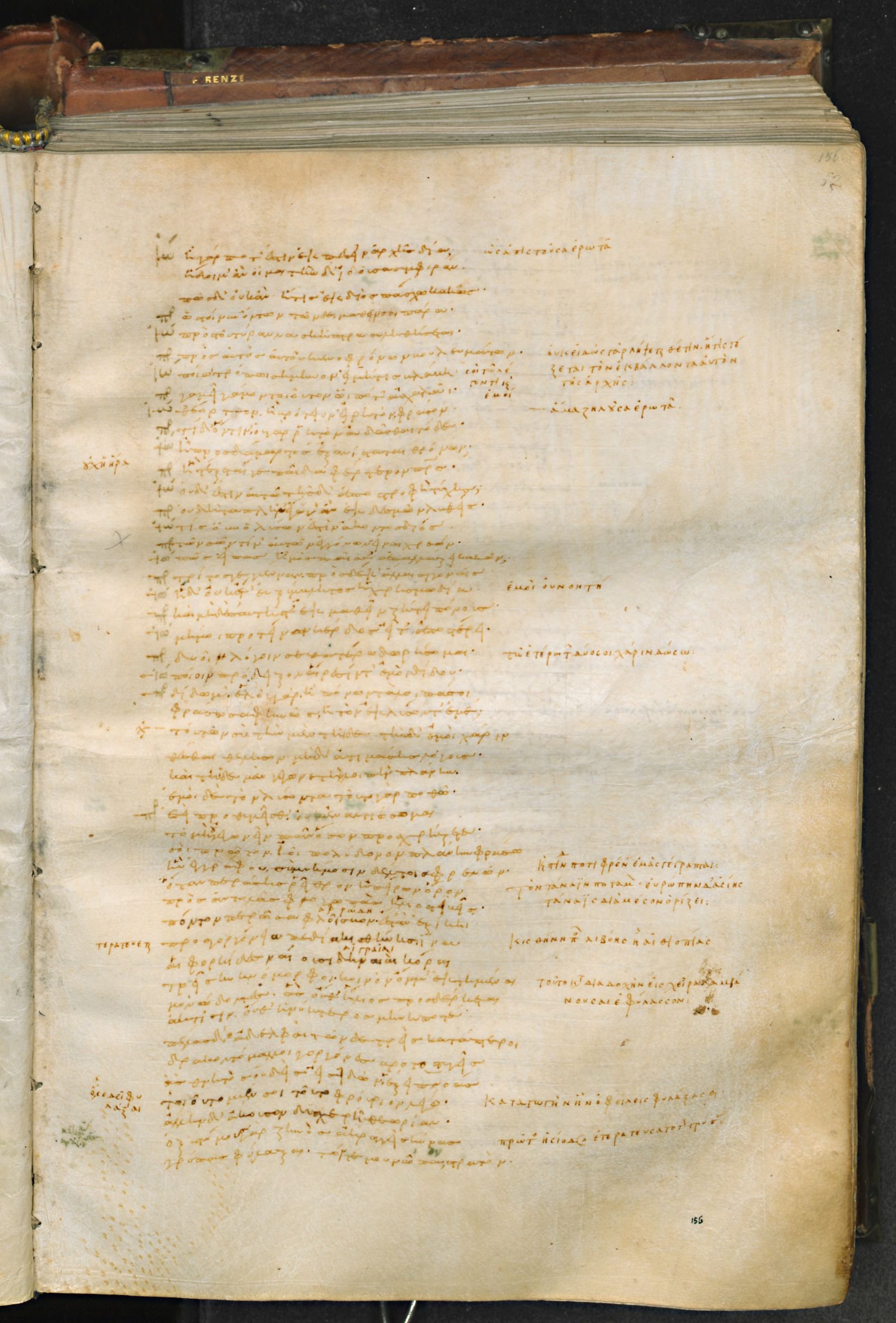
Where on the image
Laur. Plut. 32.9 fol. 156r: Prometheus Bound 757-804, from ‹ἦ γάρ ποτ' ἔστιν ἐκπεσεῖν ἀρχῆς δία› (757) to ‹γρῦπας φύλαξαι τόν τε μουνῶπα στρατὸν› (804); read on contrast-enhanced crops of the page image and checked against the neighbouring pages. English here: 757-806; cut where Io's line 757 begins, the same line as the Greek. The Greek shown is Smyth's edited text; the manuscript's spelling, accents and some readings differ. Viewer: https://tecabml.contentdm.oclc.org/digital/collection/plutei/id/710915
Ἰώ
757ἦ γάρ ποτʼ ἔστιν ἐκπεσεῖν ἀρχῆς Δία;
Προμηθεύς
758ἥδοιʼ ἄν, οἶμαι, τήνδʼ ἰδοῦσα συμφοράν.
Ἰώ
759πῶς δʼ οὐκ ἄν, ἥτις ἐκ Διὸς πάσχω κακῶς;
Προμηθεύς
760ὡς τοίνυν ὄντων τῶνδέ σοι μαθεῖν πάρα.
Ἰώ
761πρὸς τοῦ τύραννα σκῆπτρα συληθήσεται;
Προμηθεύς
762πρὸς αὐτὸς αὑτοῦ κενοφρόνων βουλευμάτων.
Ἰώ
763ποίῳ τρόπῳ; σήμηνον, εἰ μή τις βλάβη.
Προμηθεύς
764γαμεῖ γάμον τοιοῦτον ᾧ ποτʼ ἀσχαλᾷ.
Ἰώ
765θέορτον, ἢ βρότειον; εἰ ῥητόν, φράσον.
Προμηθεύς
766τί δʼ ὅντινʼ·; οὐ γὰρ ῥητὸν αὐδᾶσθαι τόδε.
Ἰώ
767ἦ πρὸς δάμαρτος ἐξανίσταται θρόνων;
Προμηθεύς
768ἣ τέξεταί γε παῖδα φέρτερον πατρός.
Ἰώ
769οὐδʼ ἔστιν αὐτῷ τῆσδʼ ἀποστροφὴ τύχης;
Προμηθεύς
770οὐ δῆτα, πλὴν ἔγωγʼ ἂν ἐκ δεσμῶν λυθείς.
Ἰώ
771τίς οὖν ὁ λύσων ἐστὶν ἄκοντος Διός;
Προμηθεύς
772τῶν σῶν τινʼ αὐτὸν ἐγγόνων εἶναι χρεών.
Ἰώ
773πῶς εἶπας; ἦ ʼμὸς παῖς σʼ ἀπαλλάξει κακῶν;
Προμηθεύς
774τρίτος γε γένναν πρὸς δέκʼ ἄλλαισιν γοναῖς.
Ἰώ
775ἥδʼ οὐκέτʼ εὐξύμβλητος ἡ χρησμῳδία.
Προμηθεύς
776καὶ μηδὲ σαυτῆς ἐκμαθεῖν ζήτει πόνους.
Ἰώ
777μή μοι προτείνων κέρδος εἶτʼ ἀποστέρει.
Προμηθεύς
778δυοῖν λόγοιν σε θατέρῳ δωρήσομαι.
Ἰώ
779ποίοιν; πρόδειξον, αἵρεσίν τʼ ἐμοὶ δίδου.
Προμηθεύς
780δίδωμʼ· ἑλοῦ γάρ, ἢ πόνων τὰ λοιπά σοι
781φράσω σαφηνῶς, ἢ τὸν ἐκλύσοντʼ ἐμέ.
Χορός
782τούτων σὺ τὴν μὲν τῇδε, τὴν δʼ ἐμοὶ χάριν
783θέσθαι θέλησον, μηδʼ ἀτιμάσῃς λόγου·
784καὶ τῇδε μὲν γέγωνε τὴν λοιπὴν πλάνην,
785ἐμοὶ δὲ τὸν λύσοντα· τοῦτο γὰρ ποθῶ.
Προμηθεύς
786ἐπεὶ προθυμεῖσθʼ, οὐκ ἐναντιώσομαι
787τὸ μὴ οὐ γεγωνεῖν πᾶν ὅσον προσχρῄζετε.
788σοὶ πρῶτον, Ἰοῖ, πολύδονον πλάνην φράσω,
789ἣν ἐγγράφου σὺ μνήμοσιν δέλτοις φρενῶν.
790ὅταν περάσῃς ῥεῖθρον ἠπείροιν ὅρον,
791πρὸς ἀντολὰς φλογῶπας ἡλιοστιβεῖς
792. . . . . . . .
793πόντου περῶσα φλοῖσβον, ἔστʼ ἂν ἐξίκῃ
794πρὸς Γοργόνεια πεδία Κισθήνης, ἵνα
795αἱ Φορκίδες ναίουσι δηναιαὶ κόραι
795aτρεῖς κυκνόμορφοι, κοινὸν ὄμμʼ ἐκτημέναι,
796μονόδοντες, ἃς οὔθʼ ἥλιος προσδέρκεται
797ἀκτῖσιν οὔθʼ ἡ νύκτερος μήνη ποτέ.
798πέλας δʼ ἀδελφαὶ τῶνδε τρεῖς κατάπτεροι,
799δρακοντόμαλλοι Γοργόνες βροτοστυγεῖς,
800ἃς θνητὸς οὐδεὶς εἰσιδὼν ἕξει πνοάς.
801τοιοῦτο μέν σοι τοῦτο φρούριον λέγω·
802ἄλλην δʼ ἄκουσον δυσχερῆ θεωρίαν·
803ὀξυστόμους γὰρ Ζηνὸς ἀκραγεῖς κύνας
804γρῦπας φύλαξαι, τόν τε μουνῶπα στρατὸν
Io
757What! Shall Zeus one day be hurled from his dominion?
Prometheus
Thou wouldst rejoice, I trow, to see that happen.
Io
How should I not, since ’tis at the hand of Zeus I suffer ill?
Prometheus
Then thou mayest assure thyself that these things are so.
Io
By whom shall he be despoiled of the sceptre of his sovereignty?
Prometheus
By himself and his own empty-headed purposes,
Io
In what wise? Oh tell me, if there be no harm in telling.
Prometheus
He shall make a marriage that shall one day cause him ruth.
Io
With one divine of birth or with a mortal? If it may be told, speak out.
Prometheus
Why ask with whom? Of this I may not speak.
Io
Is it by his consort that he shall be dethroned?
Prometheus
Aye, since she shall bear a son mightier than his sire.
Io
And hath he no means to avert this doom?
Prometheus
No, none—except it were I, released from bondage.
Io
Who then is to loose thee against the will of Zeus?
Prometheus
It is to be one of thine own lineage.
Io
How sayest thou? A child of mine release thee from thy misery?
Prometheus
Even so—the third in descent after ten generations.
Io
Here it is beyond my power easily to grasp the purport of thy prophecy.
Prometheus
Aye, and so seek not to learn the full extent of thine own sufferings.
Io
Do not proffer me a boon and then withdraw it.
Prometheus
I will present thee with one or other of two tales.
Io
What two? Set them forth and offer me the choice.
Prometheus
I make the offer: so take thy choice whether I shall reveal the sufferings still in store for thee or who is to be my deliverer.
Chorus
Consent to bestow on her the one of these favours, and on me the other; and deny me not the tale. To her, tell of her further wanderings; to me, who is to deliver thee—for this I am fain to know.
Prometheus
Well, since ye art bent thereon, I will not refuse to proclaim all ye still crave to know. First, to thee, Io, will I declare thy much-vexed wandering, and do thou engrave it on the recording tablets of thy mind.
When thou hast crossed the stream that bounds the two continents, toward the flaming east, where walks the sun, . . . . . crossing the surging sea until thou reachest the Gorgonean plains of Cisthene, where dwell the daughters of Phorcys, ancient maids, in number three, of shape like swans, possessing one eye amongst them and a single tooth; upon them neither doth the sun with his beams look down, nor ever the nightly moon. And near them are their winged sisters three, the snake-haired Gorgons, loathed of mankind, whom no one of mortal kind shall look upon and still draw breath. Such is the peril that I bid thee guard against. But now hearken to another and a fearsome spectacle. Beware the sharp-beaked hounds of Zeus that bark not, the gryphons, and the one-eyed Arimaspian folk, mounted on horses, who dwell about the flood of Pluto’s stream that flows with gold.
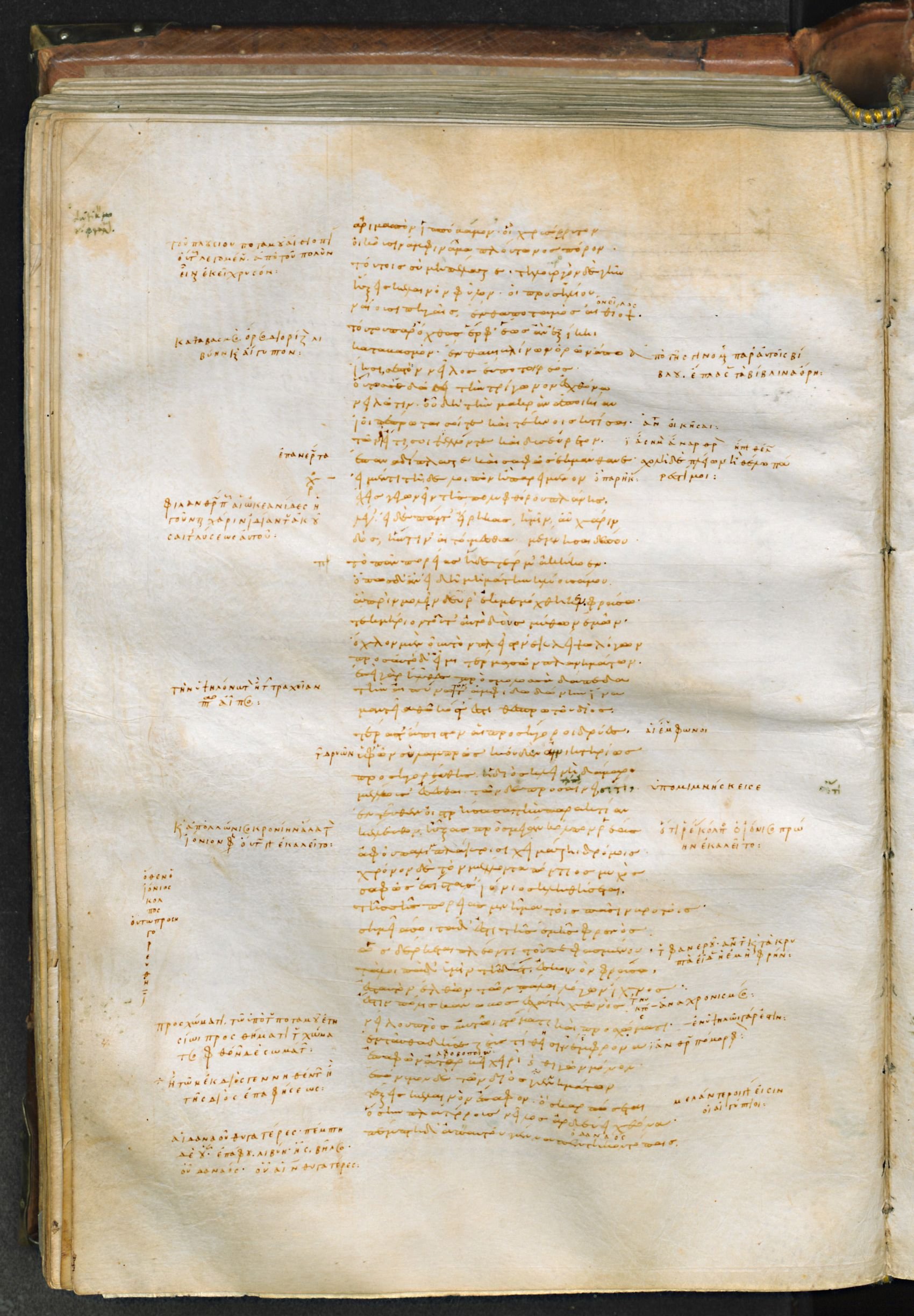
Where on the image
Laur. Plut. 32.9 fol. 156v: Prometheus Bound 805-853, from ‹ἀριμασπὸν ἱπποβάμον' οἳ χρυσόρρυτον› (805) to ‹πέμπτη δ' ἀπ' αὐτοῦ γέννα πεντηκοντάπαις› (853); read on contrast-enhanced crops of the page image and checked against the neighbouring pages. English here: 807-852; the sentence for 803-806 (Beware the sharp-beaked hounds ... flows with gold.) runs two lines on each side of the page break and is given whole with the page before; the English here begins with 807. The Greek shown is Smyth's edited text; the manuscript's spelling, accents and some readings differ. Viewer: https://tecabml.contentdm.oclc.org/digital/collection/plutei/id/710916
Προμηθεύς
805Ἀριμασπὸν ἱπποβάμονʼ, οἳ χρυσόρρυτον
806οἰκοῦσιν ἀμφὶ νᾶμα Πλούτωνος πόρου·
807τούτοις σὺ μὴ πέλαζε. τηλουρὸν δὲ γῆν
808ἥξεις, κελαινὸν φῦλον, οἳ πρὸς ἡλίου
809ναίουσι πηγαῖς, ἔνθα ποταμὸς Αἰθίοψ.
810τούτου παρʼ ὄχθας ἕρφʼ, ἕως ἂν ἐξίκῃ
811καταβασμόν, ἔνθα Βιβλίνων ὀρῶν ἄπο
812ἵησι σεπτὸν Νεῖλος εὔποτον ῥέος.
813οὗτός σʼ ὁδώσει τὴν τρίγωνον ἐς χθόνα
814Νειλῶτιν, οὗ δὴ τὴν μακρὰν ἀποικίαν,
815Ἰοῖ, πέπρωται σοί τε καὶ τέκνοις κτίσαι.
816τῶν δʼ εἴ τί σοι ψελλόν τε καὶ δυσεύρετον,
817ἐπανδίπλαζε καὶ σαφῶς ἐκμάνθανε·
818σχολὴ δὲ πλείων ἢ θέλω πάρεστί μοι.
Χορός
819εἰ μέν τι τῇδε λοιπὸν ἢ παρειμένον
820ἔχεις γεγωνεῖν τῆς πολυφθόρου πλάνης,
821λέγʼ· εἰ δὲ πάντʼ εἴρηκας, ἡμῖν αὖ χάριν
822δὸς ἥνπερ αἰτούμεσθα, μέμνησαι δέ που.
Προμηθεύς
823τὸ πᾶν πορείας ἥδε τέρμʼ ἀκήκοεν.
824ὅπως δʼ ἂν εἰδῇ μὴ μάτην κλύουσά μου,
825ἃ πρὶν μολεῖν δεῦρʼ ἐκμεμόχθηκεν φράσω,
826τεκμήριον τοῦτʼ αὐτὸ δοὺς μύθων ἐμῶν.
827ὄχλον μὲν οὖν τὸν πλεῖστον ἐκλείψω λόγων,
828πρὸς αὐτὸ δʼ εἶμι τέρμα σῶν πλανημάτων.
829ἐπεὶ γὰρ ἦλθες πρὸς Μολοσσὰ γάπεδα,
830τὴν αἰπύνωτόν τʼ ἀμφὶ Δωδώνην, ἵνα
831μαντεῖα θᾶκός τʼ ἐστὶ Θεσπρωτοῦ Διός,
832τέρας τʼ ἄπιστον, αἱ προσήγοροι δρύες,
833ὑφʼ ὧν σὺ λαμπρῶς κοὐδὲν αἰνικτηρίως
834προσηγορεύθης ἡ Διὸς κλεινὴ δάμαρ
835μέλλουσʼ ἔσεσθαι. τῶνδε προσσαίνει σέ τι ;
836ἐντεῦθεν οἰστρήσασα τὴν παρακτίαν
837κέλευθον ᾖξας πρὸς μέγαν κόλπον Ῥέας,
838ἀφʼ οὗ παλιμπλάγκτοισι χειμάζῃ δρόμοις·
839χρόνον δὲ τὸν μέλλοντα πόντιος μυχός,
840σαφῶς ἐπίστασʼ, Ἰόνιος κεκλήσεται,.
841τῆς σῆς πορείας μνῆμα τοῖς πᾶσιν βροτοῖς.
842σημεῖά σοι τάδʼ ἐστὶ τῆς ἐμῆς φρενός,
843ὡς δέρκεται πλέον τι τοῦ πεφασμένου.
844τὰ λοιπὰ δʼ ὑμῖν τῇδέ τʼ ἐς κοινὸν φράσω,
845ἐς ταὐτὸν ἐλθὼν τῶν πάλαι λόγων ἴχνος.
846ἔστιν πόλις Κάνωβος ἐσχάτη χθονός,
847Νείλου πρὸς αὐτῷ στόματι καὶ προσχώματι·
848ἐνταῦθα δή σε Ζεὺς τίθησιν ἔμφρονα
849ἐπαφῶν ἀταρβεῖ χειρὶ καὶ θιγὼν μόνον.
850ἐπώνυμον δὲ τῶν Διὸς γεννημάτων
851τέξεις κελαινὸν Ἔπαφον, ὃς καρπώσεται
852ὅσην πλατύρρους Νεῖλος ἀρδεύει χθόνα·
853πέμπτη δʼ ἀπʼ αὐτοῦ γέννα πεντηκοντάπαις
807Approach them not. Then thou shalt come to a far-off country of a swart race that dwells by the waters of the sun, where is the river Aethiop. Follow up along its banks till thou reach the cataract, where, from the Bybline mountains, Nile sends forth his hallowed and sweet stream. He will conduct thee on thy way to the three-angled land of Nilotis, where, at last, it is ordained for thee, O Io, and for thy children to found thy far-off colony.
If aught of this is indistinct to thee and hard to understand, do thou question me yet again, and gain a clear account; for I have more leisure than I crave.
Chorus
If there be aught still remaining or passed over of her direful wandering that thou hast to tell, oh speak. But if thou hast told all, grant us in turn the favour we request—and belike thou hast it still in memory.
Prometheus
She hath now heard the full end of her journeyings; yet that she may know that what she hath heard from me was no vain tale, I will describe the toils she has endured ere she came hither, giving this as a sure proof of my account.
Yet most of the weary tale I shall leave out and come to the very close of thy wanderings.
For when thou didst reach the Molossian plains, and the sheer ridge that encircles Dodona, where is the prophetic seat of Thesprotian Zeus and that marvel, passing all belief, the talking oaks, by which thou clearly, and in no riddling terms, wast saluted as the renowned spouse of Zeus that was to be (does aught of this make appeal to thee?), thence, stung by the gad-fly, thou didst rush along the pathway by the shore to the great gulf of Rhea, wherefrom thou art tossed in backward-wandering course; and for all time to come a recess of the sea, be well assured, shall bear the name Ionian, as a memorial of thy crossing unto all mankind.
These, then, are the tokens to thee of my understanding, to show that it discerneth more than has been made manifest. The rest I shall declare to you and her in common, returning to the track of my former tale.
There is a city, Canobus, on the utmost verge of the land at the very mouth and silt-bar of the Nile. There at last Zeus restores thee to thy senses by the mere stroke and touch of his unterrifying hand. And thou shalt bring forth swart Epaphus, thus named from the manner of Zeus’ engendering; and he shall gather the fruit of all the land watered by the broad-flowing Nile.
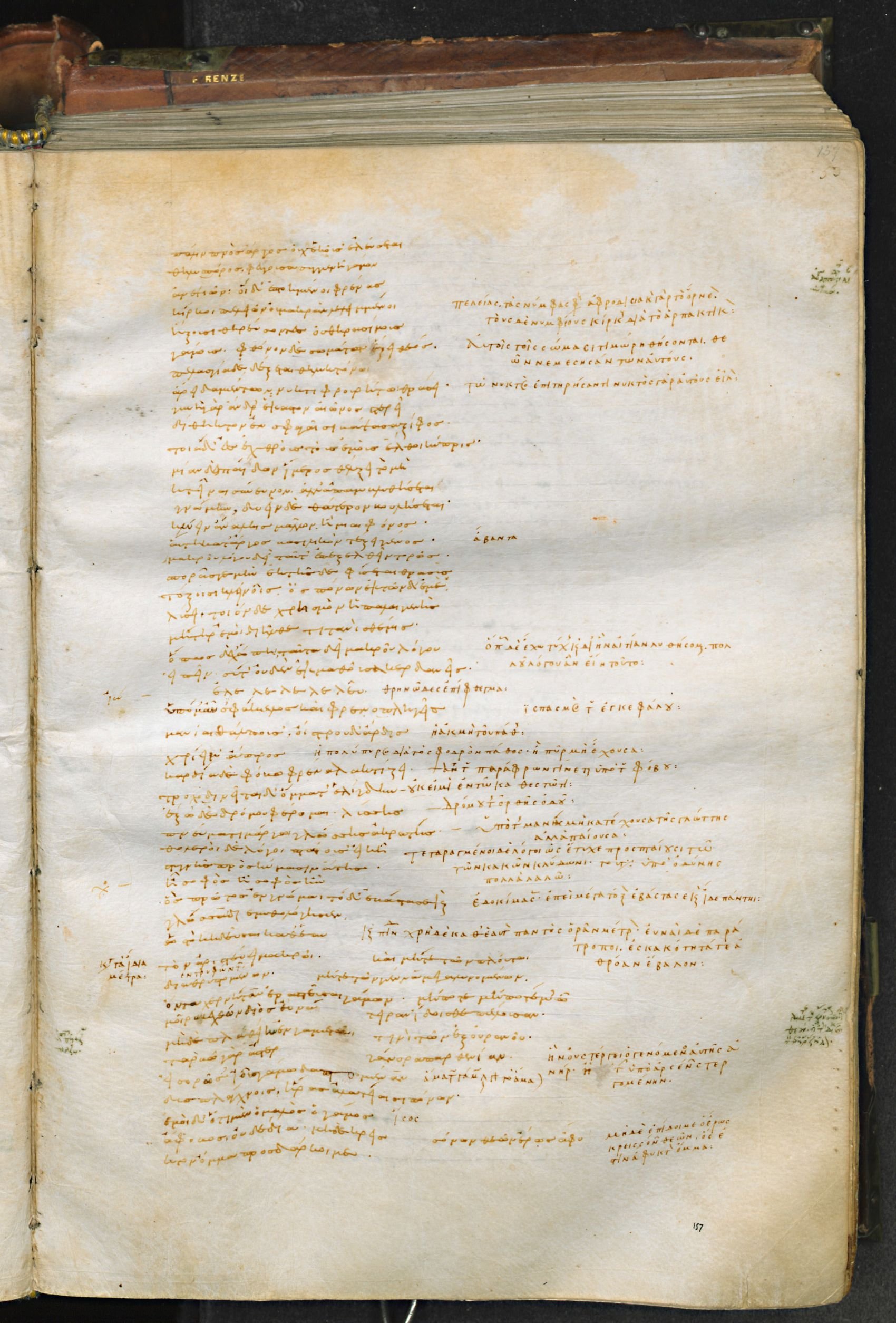
Where on the image
Laur. Plut. 32.9 fol. 157r: Prometheus Bound 854-903, from ‹πάλιν πρὸς ἄργος οὐχ ἑκοῦσ' ἐλεύσεται› (854) to ‹ἔρως ἄφυκτον ὄμμα προσδράκοι με› (903); read on contrast-enhanced crops of the page image and checked against the neighbouring pages. English here: 853-903; the sentence that begins at 853 (Fifth in descent from him ...) begins one line before the page break and is given with this page. The Greek shown is Smyth's edited text; the manuscript's spelling, accents and some readings differ. Viewer: https://tecabml.contentdm.oclc.org/digital/collection/plutei/id/710917
Προμηθεύς
854πάλιν πρὸς Ἄργος οὐχ ἑκοῦσʼ ἐλεύσεται
855θηλύσπορος, φεύγουσα συγγενῆ γάμον
856ἀνεψιῶν· οἱ δʼ ἐπτοημένοι φρένας,
857κίρκοι πελειῶν οὐ μακρὰν λελειμμένοι,
858ἥξουσι θηρεύοντες οὐ θηρασίμους
859γάμους, φθόνον δὲ σωμάτων ἕξει θεός·
860Πελασγία δὲ δέξεται θηλυκτόνῳ
861Ἄρει, δαμέντων νυκτιφρουρήτῳ θράσει.
862γυνὴ γὰρ ἄνδρʼ ἕκαστον αἰῶνος στερεῖ,
863δίθηκτον ἐν σφαγαῖσι βάψασα ξίφος·
864τοιάδʼ ἐπʼ ἐχθροὺς τοὺς ἐμοὺς ἔλθοι Κύπρις.
865μίαν δὲ παίδων ἵμερος θέλξει τὸ μὴ
866κτεῖναι σύνευνον, ἀλλʼ ἀπαμβλυνθήσεται
867γνώμην· δυοῖν δὲ θάτερον βουλήσεται,
868κλύειν ἄναλκις μᾶλλον ἢ μιαιφόνος·
869αὕτη κατʼ Ἄργος βασιλικὸν τέξει γένος.
870μακροῦ λόγου δεῖ ταῦτʼ ἐπεξελθεῖν τορῶς.
871σπορᾶς γε μὴν ἐκ τῆσδε φύσεται θρασὺς
872τόξοισι κλεινός, ὃς πόνων ἐκ τῶνδʼ ἐμὲ
873λύσει. τοιόνδε χρησμὸν ἡ παλαιγενὴς
874μήτηρ ἐμοὶ διῆλθε Τιτανὶς Θέμις·
875ὅπως δὲ χὤπη, ταῦτα δεῖ μακροῦ λόγου
876εἰπεῖν, σύ τʼ οὐδὲν ἐκμαθοῦσα κερδανεῖς.
Ἰώ
877ἐλελεῦ ἐλελεῦ,
878ὑπό μʼ αὖ σφάκελος καὶ φρενοπληγεῖς
879μανίαι θάλπουσʼ, οἴστρου δʼ ἄρδις
880χρίει μʼ ἄπυρος·
881κραδία δὲ φόβῳ φρένα λακτίζει.
882τροχοδινεῖται δʼ ὄμμαθʼ ἑλίγδην,
883ἔξω δὲ δρόμου φέρομαι λύσσης
884πνεύματι μάργῳ, γλώσσης ἀκρατής·
885θολεροὶ δὲ λόγοι παίουσʼ εἰκῆ
886στυγνῆς πρὸς κύμασιν ἄτης.
Χορός
887ἦ σοφὸς ἦ σοφὸς [ἦν] ὃς
888πρῶτος ἐν γνώμᾳ τόδʼ ἐβάστασε καὶ γλώσ-
889σᾳ διεμυθολόγησεν,
890ὡς τὸ κηδεῦσαι καθʼ ἑαυτὸν ἀριστεύει μακρῷ,
891καὶ μήτε τῶν πλούτῳ διαθρυπτομένων
892μήτε τῶν γέννᾳ μεγαλυνομένων
893ὄντα χερνήταν ἐραστεῦσαι γάμων.
894μήποτε μήποτέ μʼ, ὦ
895⟨πότνιαι⟩ Μοῖραι, λεχέων Διὸς εὐνά-
896τειραν ἴδοισθε πέλουσαν·
897μηδὲ πλαθείην γαμέτᾳ τινὶ τῶν ἐξ οὐρανοῦ.
898ταρβῶ γὰρ ἀστεργάνορα παρθενίαν
899εἰσορῶσʼ Ἰοῦς ἀμαλαπτομέναν
900δυσπλάνοις Ἥρας ἀλατείαις πόνων.
901ἐμοὶ δʼ ὅτε μὲν ὁμαλὸς ὁ γάμος,
902ἄφοβος· [οὐ δέδια·] μηδὲ κρεισσόνων θεῶν
903ἔρως ἄφυκτον ὄμμα προσδράκοι με.
853Fifth in descent from him, fifty maidens shall return to Argos, not of their own free choice, but fleeing marriage with their cousin kin; while these, their hearts ablaze with passion, like falcons following hard on doves, shall come in pursuit of wedlock unlawful to pursue; but God shall grudge them enjoyment of their brides. Pelasgian soil shall offer the maids a home, when, in the watches of the night, their husbands have been slain by a deed of daring wrought by women’s murderous blows. For each bride shall reave her lord of life, dyeing a two-edged sword in his blood—in such wise may Love come upon mine enemies! But one among the maidens shall love’s desire so charm as not to slay her mate; rather the edge of her resolve shall be blunted; for of two evil names she will make her choice to be called coward rather than murderess. She it is that shall give birth in Argos to a royal line—to set this forth at large hath need of long discourse; of her seed, however, shall be born a man of daring, renowned with the bow, who shall deliver me from these toils. Such is the oracle recounted to me by my mother, Titan Themis, born of eld. The manner and the means—these need lengthy speech to tell, and to learn them all would not advantage thee in aught.
Io
Eleleu, Eleleu! Once again convulsive pain and frenzy, smiting my brain, inflame me. I am stung by the gad-fly’s barb, unforged by fire. My heart in terror knocks at my ribs; my eyeballs roll wildly round and round. I am carried out of my course by a fierce blast of madness; over my tongue I’ve lost all mastery; and a stream of turbid words beats recklessly against the billows of dark destruction.
[Exit
Chorus
Ah, sage, sage in sooth, was he who first pondered this truth in his mind and with his tongue gave it utterance—that to marry in one’s own degree is far the best, and that neither among them that are puffed up by riches nor among them that are mighty in pride of birth should marriage be desired by him who toileth with his hands.
Never, oh never, august Fates, may ye behold me the partner of the bed of Zeus, and may I be wedded to no bridegroom who descends to me from heaven. For I shudder when I behold the loveless maidenhood of Io, thus cruelly crushed by her toilsome wanderings sent of Hera.
But to me, when marriage is on equal terms, it is no cause of dread; and never may the love of the mightier gods cast on me its irresistible glance.
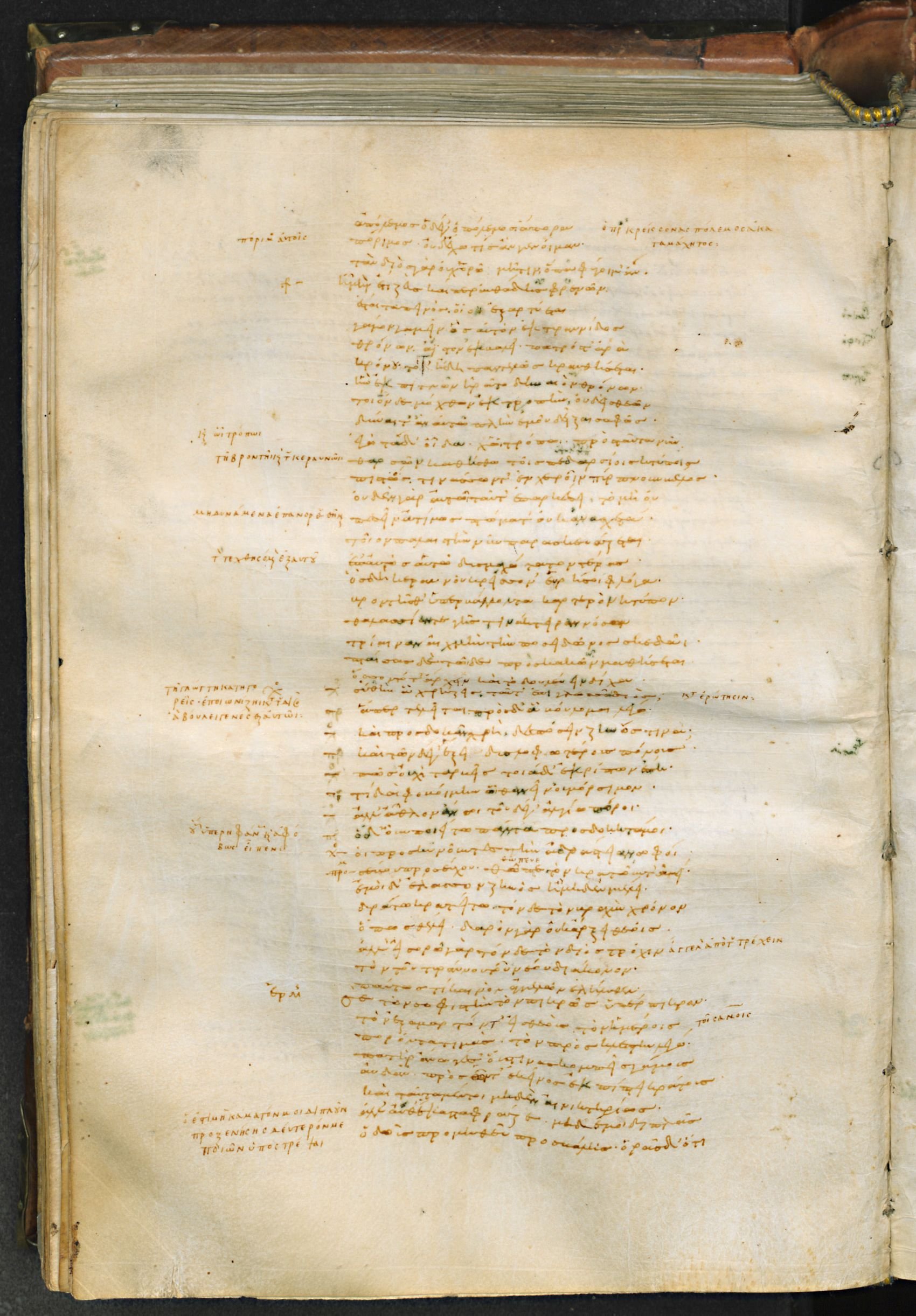
Where on the image
Laur. Plut. 32.9 fol. 157v: Prometheus Bound 904-951, from ‹ἀπόλεμος ὅδε γ' ὁ πόλεμος ἄπορα πόριμος› (904) to ‹ὁδούς προμηθεῦ προσβάλῃς· ὁρᾷς δ' ὅτι› (951); read on contrast-enhanced crops of the page image and checked against the neighbouring pages. English here: 904-952; cut at the sentence that begins with 904, the same line as the Greek. The Greek shown is Smyth's edited text; the manuscript's spelling, accents and some readings differ. Viewer: https://tecabml.contentdm.oclc.org/digital/collection/plutei/id/710918
Χορός
904ἀπόλεμος ὅδε γʼ ὁ πόλεμος, ἄπορα πόριμος·
905οὐδʼ ἔχω τίς ἂν γενοίμαν.
906τὰν Διὸς γὰρ οὐχ ὁρῶ
906bμῆτιν ὅπα φύγοιμʼ ἄν.
Προμηθεύς
907ἦ μὴν ἔτι Ζεύς, καίπερ αὐθάδης φρενῶν,
908ἔσται ταπεινός, οἷον ἐξαρτύεται
909γάμον γαμεῖν, ὃς αὐτὸν ἐκ τυραννίδος
910θρόνων τʼ ἄιστον ἐκβαλεῖ· πατρὸς δʼ ἀρὰ
911Κρόνου τότʼ ἤδη παντελῶς κρανθήσεται,
912ἣν ἐκπίτνων ἠρᾶτο δηναιῶν θρόνων.
913τοιῶνδε μόχθων ἐκτροπὴν οὐδεὶς θεῶν
914δύναιτʼ ἂν αὐτῷ πλὴν ἐμοῦ δεῖξαι σαφῶς.
915ἐγὼ τάδʼ οἶδα χᾦ τρόπῳ. πρὸς ταῦτά νυν
916θαρσῶν καθήσθω τοῖς πεδαρσίοις κτύποις
917πιστός, τινάσσων τʼ ἐν χεροῖν πύρπνουν βέλος.
918οὐδὲν γὰρ αὐτῷ ταῦτʼ ἐπαρκέσει τὸ μὴ οὐ
919πεσεῖν ἀτίμως πτώματʼ οὐκ ἀνασχετά·
920τοῖον παλαιστὴν νῦν παρασκευάζεται
921ἐπʼ αὐτὸς αὑτῷ, δυσμαχώτατον τέρας·
922ὃς δὴ κεραυνοῦ κρείσσονʼ εὑρήσει φλόγα,
923βροντῆς θʼ ὑπερβάλλοντα καρτερὸν κτύπον·
924θαλασσίαν τε γῆς τινάκτειραν νόσον
925τρίαιναν, αἰχμὴν τὴν Ποσειδῶνος, σκεδᾷ.
926πταίσας δὲ τῷδε πρὸς κακῷ μαθήσεται
927ὅσον τό τʼ ἄρχειν καὶ τὸ δουλεύειν δίχα.
Χορός
928σύ θην ἃ χρῄζεις, ταῦτʼ ἐπιγλωσσᾷ Διός.
Προμηθεύς
929ἅπερ τελεῖται, πρὸς δʼ ἃ βούλομαι λέγω.
Χορός
930καὶ προσδοκᾶν χρὴ δεσπόσειν Ζηνός τινα;
Προμηθεύς
931καὶ τῶνδέ γʼ, ἕξει δυσλοφωτέρους πόνους.
Χορός
932πῶς δʼ οὐχὶ ταρβεῖς τοιάδʼ ἐκρίπτων ἔπη;
Προμηθεύς
933τί δʼ ἂν φοβοίμην ᾧ θανεῖν οὐ μόρσιμον;
Χορός
934ἀλλʼ ἆθλον ἄν σοι τοῦδʼ ἔτʼ ἀλγίω πόροι.
Προμηθεύς
935ὁ δʼ οὖν ποιείτω· πάντα προσδοκητά μοι.
Χορός
936οἱ προσκυνοῦντες τὴν Ἀδράστειαν σοφοί.
Προμηθεύς
937σέβου, προσεύχου, θῶπτε τὸν κρατοῦντʼ ἀεί.
938ἐμοὶ δʼ ἔλασσον Ζηνὸς ἢ μηδὲν μέλει.
939δράτω, κρατείτω τόνδε τὸν βραχὺν χρόνον,
940ὅπως θέλει· δαρὸν γὰρ οὐκ ἄρξει θεοῖς.
941ἀλλʼ εἰσορῶ γὰρ τόνδε τὸν Διὸς τρόχιν,
942τὸν τοῦ τυράννου τοῦ νέου διάκονον·
943πάντως τι καινὸν ἀγγελῶν ἐλήλυθεν.
Ἑρμῆς
944σὲ τὸν σοφιστήν, τὸν πικρῶς ὑπέρπικρον,
945τὸν ἐξαμαρτόντʼ εἰς θεοὺς ἐφημέροις
946πορόντα τιμάς, τὸν πυρὸς κλέπτην λέγω·
947πατὴρ ἄνωγέ σʼ οὕστινας κομπεῖς γάμους
948αὐδᾶν, πρὸς ὧν ἐκεῖνος ἐκπίπτει κράτους.
949καὶ ταῦτα μέντοι μηδὲν αἰνικτηρίως,
950ἀλλʼ αὔθʼ ἕκαστα φράζε· μηδέ μοι διπλᾶς
951ὁδούς, Προμηθεῦ, προσβάλῃς· ὁρᾷς δʼ ὅτι
904That were indeed a war against which there is no warring, a source of resourceless misery; and I know not what would be my fate, for I do not see how I could escape the designs of Zeus.
Prometheus
Yea, verily, the day will come when Zeus, howbeit stubborn of soul, shall be humbled, seeing that he purposeth a marriage that shall hurl him into oblivion from his sovereignty and throne; and then shall straightway be fulfilled to the uttermost the malison his father Cronus imprecated as he fell from his ancient throne. Deliverance from such ruin can no one of the gods show him clearly save only myself. I know it and the means thereof. So let him sit there in his assurance, putting his trust in the crash reverberating on high and brandishing in his hands his fire-breathing bolt. For naught shall these avail him against falling in ignominious and unendurable ruin. Such an adversary is he now preparing in his own despite, a prodigy irresistible, even one that shall discover a flame mightier than the levin and a deafening crash to out-roar the thunder; a prodigy that shall shiver the trident, Poseidon’s spear, that scourge of the sea and shaker of the land. Then, wrecked upon this evil, Zeus shall learn how different it is to be a sovereign and a slave.
Chorus
Sooth, ’tis only thine own desire that thou dost imprecate against Zeus.
Prometheus
I speak what shall be brought to pass and, moreover, mine own desire.
Chorus
Must we really look for one to gain mastery over Zeus?
Prometheus
Aye, and he shall bear upon his neck pangs more galling than these of mine.
Chorus
How is it that thou knowest no fear in uttering such taunts?
Prometheus
Why should I fear whose fate is not to die?
Chorus
But he might inflict on thee an ordeal more bitter still than this.
Prometheus
Let him, for aught I care! I am prepared for all.
Chorus
Wise are they who do homage to Necessity.!
Prometheus
Worship, adore, and fawn upon whoever is thy lord. But I care for Zeus less than naught. Let him do his will, let him hold his power for his little day —since not for long shall he bear sway over the gods. But stay, for yonder I behold his lackey, the servitor of our new lord and master. Assuredly he hath come to harbinger some news.
[Enter Hermes
Hermes
To thee, the clever and crafty, bitter beyond all bitterness, who hast sinned against the gods in bestowing honours upon creatures of a day, and art the thief of fire—to thee I speak. The Father bids thee tell what marriage thou vauntest whereby he is to be hurled from power—and this, mark well, set forth in no riddling fashion, but point by point, as the case exactly stands; and do not impose upon me a double journey, Prometheus—thou seest Zeus is not appeased by dealing such as thine.
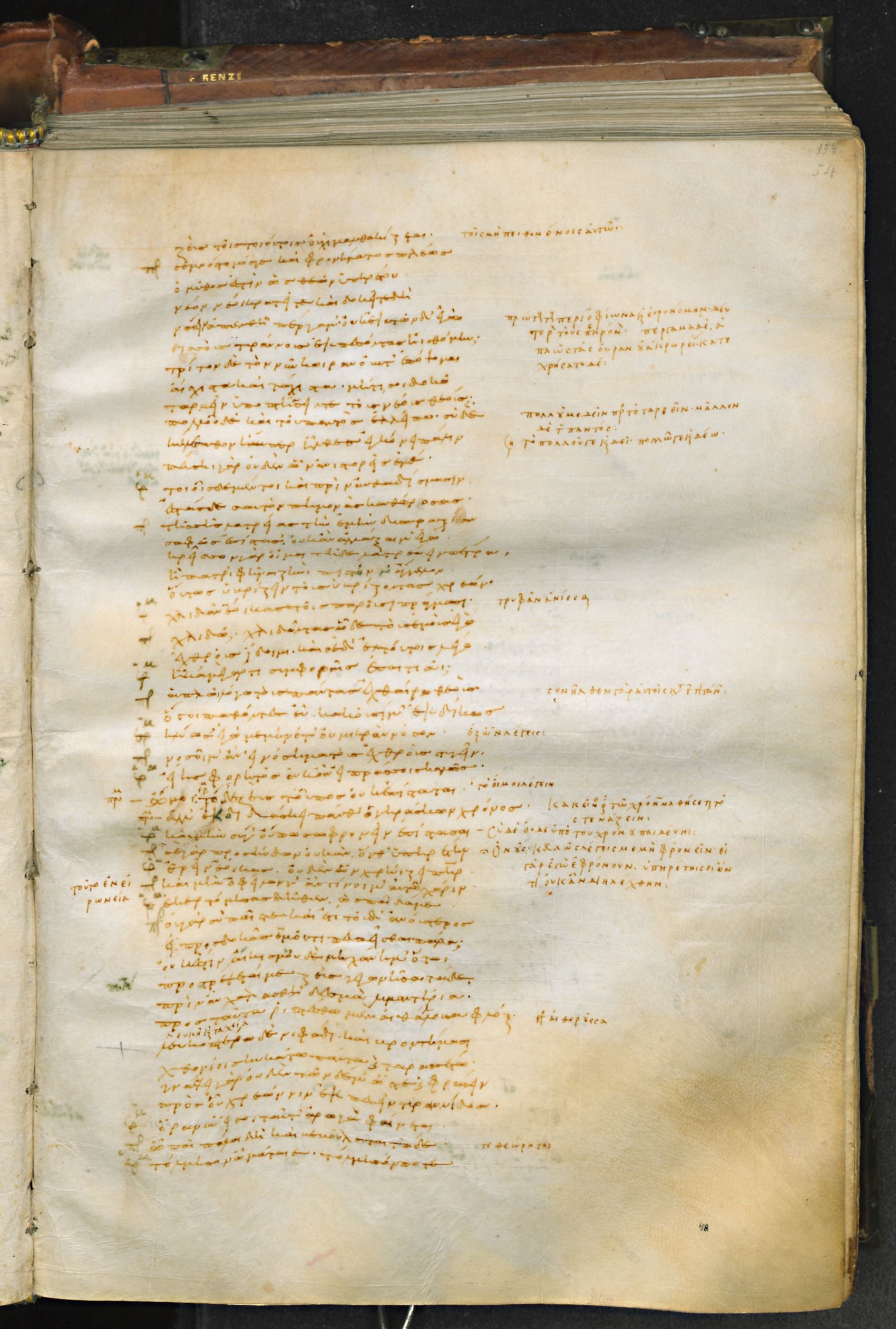
Where on the image
Laur. Plut. 32.9 fol. 158r: Prometheus Bound 952-999, from ‹ζεὺς τοῖς τοιούτοις οὐχὶ μαλθακίζεται› (952) to ‹τόλμησον ὦ μάταιε τόλμησόν ποτε› (999); read on contrast-enhanced crops of the page image and checked against the neighbouring pages. English here: 953-1000; Hermes' sentence for 947-952 (The Father bids thee tell ... dealing such as thine.) ends one line after the page break and is given whole with the page before; the English here begins with 953. The Greek shown is Smyth's edited text; the manuscript's spelling, accents and some readings differ. Viewer: https://tecabml.contentdm.oclc.org/digital/collection/plutei/id/710919
Ἑρμῆς
952Ζεὺς τοῖς τοιούτοις οὐχὶ μαλθακίζεται.
Προμηθεύς
953σεμνόστομός γε καὶ φρονήματος πλέως
954ὁ μῦθός ἐστιν, ὡς θεῶν ὑπηρέτου.
955νέον νέοι κρατεῖτε καὶ δοκεῖτε δὴ
956ναίειν ἀπενθῆ πέργαμʼ· οὐκ ἐκ τῶνδʼ ἐγὼ
957δισσοὺς τυράννους ἐκπεσόντας ᾐσθόμην;
958τρίτον δὲ τὸν νῦν κοιρανοῦντʼ ἐπόψομαι
959αἴσχιστα καὶ τάχιστα. μή τί σοι δοκῶ
960ταρβεῖν ὑποπτήσσειν τε τε τοὺς νέους θεούς;
961πολλοῦ γε καὶ τοῦ παντὸς ἐλλείπω. σὺ δὲ
962κέλευθον ἥνπερ ἦλθες ἐγκόνει πάλιν·
963πεύσῃ γὰρ οὐδὲν ὧν ἀνιστορεῖς ἐμέ.
Ἑρμῆς
964τοιοῖσδε μέντοι καὶ πρὶν αὐθαδίσμασιν
965ἐς τάσδε σαυτὸν πημονὰς καθώρμισας.
Προμηθεύς
966τῆς σῆς λατρείας τὴν ἐμὴν δυσπραξίαν,
967σαφῶς ἐπίστασʼ, οὐκ ἂν ἀλλάξαιμʼ ἐγώ.
Ἑρμῆς
968κρεῖσσον γὰρ οἶμαι τῇδε λατρεύειν πέτρᾳ
969ἢ πατρὶ φῦναι Ζηνὶ πιστὸν ἄγγελον.
Προμηθεύς
970οὕτως ὑβρίζειν τοὺς ὑβρίζοντας χρεών.
Ἑρμῆς
971χλιδᾶν ἔοικας τοῖς παροῦσι πράγμασι.
Προμηθεύς
972χλιδῶ; χλιδῶντας ὧδε τοὺς ἐμοὺς ἐγὼ
973ἐχθροὺς ἴδοιμι· καὶ σὲ δʼ ἐν τούτοις λέγω.
Ἑρμῆς
974ἦ κἀμὲ γάρ τι συμφοραῖς ἐπαιτιᾷ;
Προμηθεύς
975ἁπλῷ λόγῳ τοὺς πάντας ἐχθαίρω θεούς,
976ὅσοι παθόντες εὖ κακοῦσί μʼ ἐκδίκως.
Ἑρμῆς
977κλύω σʼ ἐγὼ μεμηνότʼ οὐ σμικρὰν νόσον.
Προμηθεύς
978νοσοῖμʼ ἄν, εἰ νόσημα τοὺς ἐχθροὺς στυγεῖν.
Ἑρμῆς
979εἴης φορητὸς οὐκ ἄν, εἰ πράσσοις καλῶς.
Προμηθεύς
980⟨ὤμοι.⟩
Ἑρμῆς
980aὤμοι; τόδε Ζεὺς τοὔπος οὐκ ἐπίσταται.
Προμηθεύς
981ἀλλʼ ἐκδιδάσκει πάνθʼ ὁ γηράσκων χρόνος.
Ἑρμῆς
982καὶ μὴν σύ γʼ οὔπω σωφρονεῖν ἐπίστασαι.
Προμηθεύς
983σὲ γὰρ προσηύδων οὐκ ἂν ὄνθʼ ὑπηρέτην.
Ἑρμῆς
984ἐρεῖν ἔοικας οὐδὲν ὧν χρῄζει πατήρ.
Προμηθεύς
985καὶ μὴν ὀφείλων γʼ ἂν τίνοιμʼ αὐτῷ χάριν.
Ἑρμῆς
986ἐκερτόμησας δῆθεν ὡς παῖδʼ ὄντα με.
Προμηθεύς
987οὐ γὰρ σὺ παῖς τε κἄτι τοῦδʼ ἀνούστερος
988εἰ προσδοκᾷς ἐμοῦ τι πεύσεσθαι πάρα;
989οὐκ ἔστιν αἴκισμʼ οὐδὲ μηχάνημʼ ὅτῳ
990προτρέψεταί με Ζεὺς γεγωνῆσαι τάδε,
991πρὶν ἂν χαλασθῇ δεσμὰ λυμαντήρια.
992πρὸς ταῦτα ῥιπτέσθω μὲν αἰθαλοῦσσα φλόξ,
993λευκοπτέρῳ δὲ νιφάδι καὶ βροντήμασι
994χθονίοις κυκάτω πάντα καὶ ταρασσέτω.
995γνάμψει γὰρ οὐδὲν τῶνδέ μʼ ὥστε καὶ φράσαι
996πρὸς οὗ χρεών νιν ἐκπεσεῖν τυραννίδος.
Ἑρμῆς
997ὅρα νυν εἴ σοι ταῦτʼ ἀρωγὰ φαίνεται.
Προμηθεύς
998ὦπται πάλαι δὴ καὶ βεβούλευται τάδε.
Ἑρμῆς
999τόλμησον, ὦ μάταιε, τόλμησόν ποτε
Prometheus
953Bravely spoken, in truth, and swollen with pride thy speech, as befits a minion of the gods. Young ye are, as young your power, and ye think forsooth that ye inhabit heights beyond the reach of grief. Have I not seen two sovereigns cast out from these heights? A third, the present lord, I shall live to see cast out in ruin most shameful and most swift. Dost think I quail, perchance, and cower before these upstart gods? Far from it—nay, not at all. But scurry thee back the way thou camest; for thou shalt learn naught whereof thou questionest me.
Hermes
Yet it was by like proud wilfulness before, too, that thou didst bring thyself to this harbour of distress.
Prometheus
For thy servitude, rest thee sure, I’d not barter my hard lot, not I.
Hermes
Better, no doubt, to serve this rock than be the trusted messenger of Father Zeus!
Prometheus
Such is the proper style for the insolent to offer insult.
Hermes
Methinks thou revellest in thy present plight.
Prometheus
I revel? Oh, that I might see mine enemies revelling thus! And thee, too, I count among them.
Hermes
What! Thou blamest me in some wise for thy calamities?
Prometheus
In one word, I hate all the gods that received good at my hands and with ill requite me wrongfully.
Hermes
Thy words declare thee stricken with no slight madness.
Prometheus
Mad I may be—if it is madness to loathe one’s enemies
Hermes
Thou wouldst be unbearable wert thou prosperous.
Prometheus
Alas!
Hermes
Alas’? That is a word unknown to Zeus.
Prometheus
But ever-ageing Time teaches all things.
Hermes
Aye, but thou at least hast not yet learned to keep a sober mind.
Prometheus
Else then I had not been addressing thee, an underling.
Hermes
It seems thou wilt answer naught that the Father demands.
Prometheus
Aye, truly, I am his debtor that I should repay favour unto him.
Hermes
Thou girdest at me as though, forsooth, I were a child.
Prometheus
And art thou not a child and even more witless than a child if thou expectest to learn aught from me? There is no torment or device by which Zeus shall induce me to utter this until these injurious fetters be loosed. So then, let his blazing levin be hurled, and with the white wings of the snow and thunders of earthquake let him confound the reeling world. For naught of this shall bend my will even to tell at whose hands he is fated to be hurled from his sovereignty.
Hermes
Look thee now whether this course seems to profit thee.
Prometheus
Long ago hath this my course been foreseen and resolved.
Hermes
Bend thy will, perverse fool, oh bend thy will at last to wisdom in face of thy present sufferings.
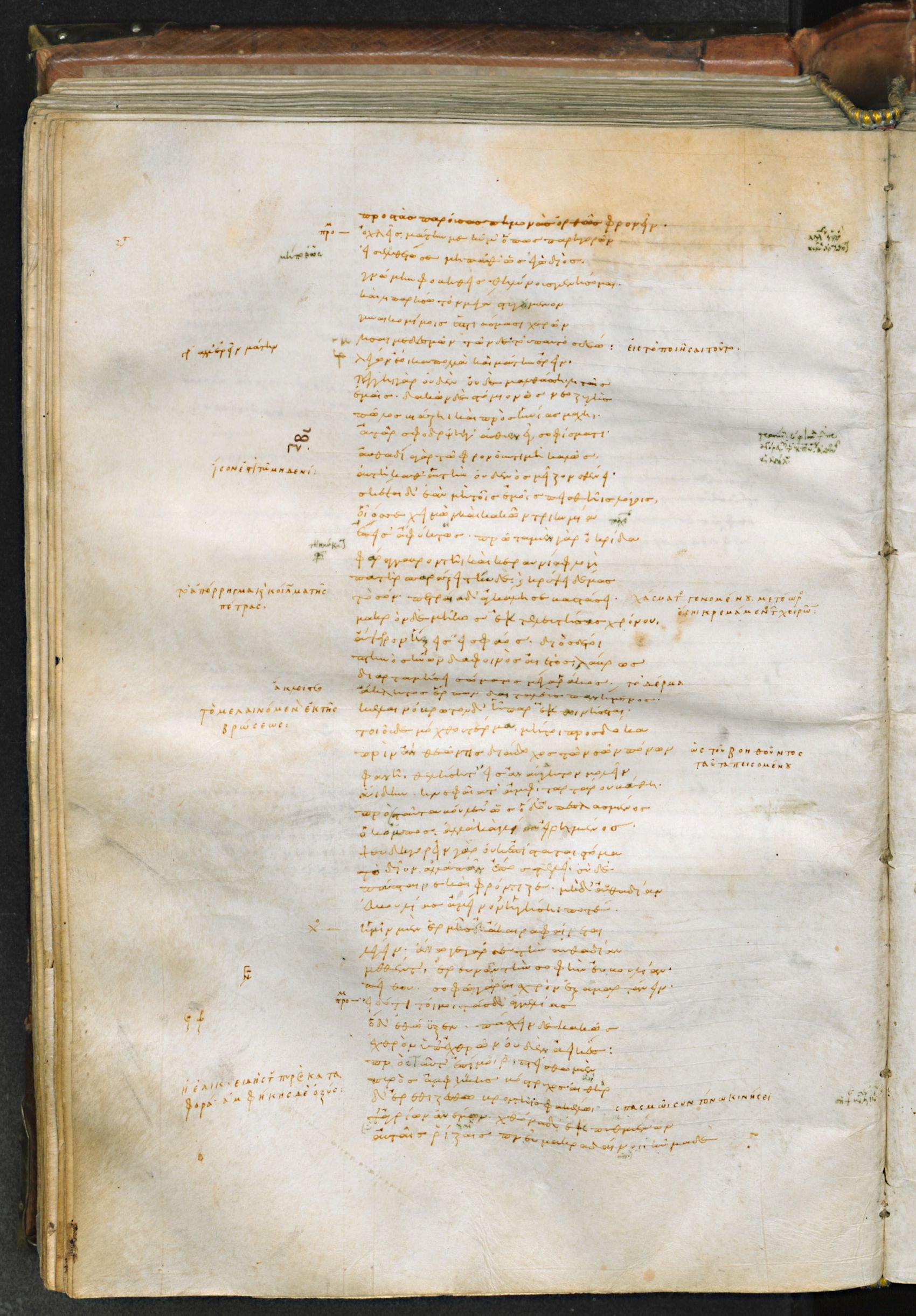
Where on the image
Laur. Plut. 32.9 fol. 158v: Prometheus Bound 1000-1047, from ‹πρὸς τὰς παρούσας πημονὰς ὀρθῶς φρονεῖν› (1000) to ‹αὐταῖς ῥίζαις πνεῦμα κραδαίνοι› (1047); read on contrast-enhanced crops of the page image and checked against the neighbouring pages. The last line of the page goes on after 1047 with the first words of 1048, κῦμα δὲ; the rest of 1048 is on fol. 159r, and 1048 is given with the next section, which lists both pages. English here: 1001-1047; Hermes' sentence for 999-1000 (Bend thy will, perverse fool ... present sufferings.) runs one line on each side of the page break and is given whole with the page before; the English here begins with 1001. The Greek shown is Smyth's edited text; the manuscript's spelling, accents and some readings differ. Viewer: https://tecabml.contentdm.oclc.org/digital/collection/plutei/id/710920
Ἑρμῆς
1000πρὸς τὰς παρούσας πημονὰς ὀρθῶς φρονεῖν,
Προμηθεύς
1001ὀχλεῖς μάτην με κῦμʼ ὅπως παρηγορῶν.
1002εἰσελθέτω σε μήποθʼ ὡς ἐγὼ Διὸς
1003γνώμην φοβηθεὶς θηλύνους γενήσομαι,
1004καὶ λιπαρήσω τὸν μέγα στυγούμενον
1005γυναικομίμοις ὑπτιάσμασιν χερῶν
1006λῦσαί με δεσμῶν τῶνδε· τοῦ παντὸς δέω.
Ἑρμῆς
1007λέγων ἔοικα πολλὰ καὶ μάτην ἐρεῖν·
1008τέγγῃ γὰρ οὐδὲν οὐδὲ μαλθάσσῃ λιταῖς
1009ἐμαῖς· δακὼν δὲ στόμιον ὡς νεοζυγὴς
1010πῶλος βιάζῃ καὶ πρὸς ἡνίας μάχῃ.
1011ἀτὰρ σφοδρύνῃ γʼ ἀσθενεῖ σοφίσματι·
1012αὐθαδία γὰρ τῷ φρονοῦντι μὴ καλῶς
1013αὐτὴ καθʼ αὑτὴν οὐδενὸς μεῖζον σθένει.
1014σκέψαι δʼ, ἐὰν μὴ τοῖς ἐμοῖς πεισθῇς λόγοις,
1015οἷός σε χειμὼν καὶ κακῶν τρικυμία
1016ἔπεισʼ ἄφυκτος · πρῶτα μὲν γὰρ ὀκρίδα
1017φάραγγα βροντῇ καὶ κεραυνίᾳ φλογὶ
1018πατὴρ σπαράξει τήνδε, καὶ κρύψει δέμας
1019τὸ σόν, πετραία δʼ ἀγκάλη σε βαστάσει.
1020μακρὸν δὲ μῆκος ἐκτελευτήσας χρόνου
1021ἄψορρον ἥξεις εἰς φάος· Διὸς δέ τοί
1022πτηνὸς κύων, δαφοινὸς αἰετός, λάβρως
1023διαρταμήσει σώματος μέγα ῥάκος,
1024ἄκλητος ἕρπων δαιταλεὺς πανήμερος,
1025κελαινόβρωτον δʼ ἧπαρ ἐκθοινήσεται.
1026τοιοῦδε μόχθου τέρμα μή τι προσδόκα,
1027πρὶν ἂν θεῶν τις διάδοχος τῶν σῶν πόνων
1028φανῇ, θελήσῃ τʼ εἰς ἀναύγητον μολεῖν
1029Ἅιδην κνεφαῖά τʼ ἀμφὶ Ταρτάρου βάθη.
1030πρὸς ταῦτα βούλευʼ· ὡς ὅδʼ οὐ πεπλασμένος
1031ὁ κόμπος, ἀλλὰ καὶ λίαν εἰρημένος ·
1032ψευδηγορεῖν γὰρ οὐκ ἐπίσταται στόμα
1033τὸ Δῖον, ἀλλὰ πᾶν ἔπος τελεῖ· σὺ δὲ
1034πάπταινε καὶ φρόντιζε, μηδʼ αὐθαδίαν
1035εὐβουλίας ἀμείνονʼ ἡγήσῃ ποτέ.
Χορός
1036ἡμῖν μὲν Ἑρμῆς οὐκ ἄκαιρα φαίνεται
1037λέγειν. ἄνωγε γάρ σε τὴν αὐθαδίαν
1038μεθέντʼ ἐρευνᾶν τὴν σοφὴν εὐβουλίαν.
1039πιθοῦ· σοφῷ γὰρ αἰσχρὸν ἐξαμαρτάνειν.
Προμηθεύς
1040εἰδότι τοί μοι τάσδʼ ἀγγελίας
1041ὅδʼ ἐθώυξεν· πάσχειν δὲ κακῶς
1042ἐχθρὸν ὑπʼ ἐχθρῶν οὐδὲν ἀεικές.
1043πρὸς ταῦτʼ ἐπʼ ἐμοὶ ῥιπτέσθω μὲν
1044πυρὸς ἀμφήκης βόστρυχος, αἰθὴρ δʼ
1045ἐρεθιζέσθω βροντῇ σφακέλῳ τʼ
1046ἀγρίων ἀνέμων· χθόνα δʼ ἐκ πυθμένων
1047αὐταῖς ῥίζαις πνεῦμα κραδαίνοι,
Prometheus
1001In vain thou troublest me, as though it were a wave thou wouldst persuade. Never think that, through terror at the will of Zeus, I shall become womanish and, with hands upturned, aping woman’s ways, shall importune my greatly hated foe to release me from these bonds. I am far, far from that.
Hermes
Methinks with my much speaking I but speak in vain; for thou art not soothed nor art thou softened by my entreaties. Thou dost take the bit in thy teeth like a new-harnessed colt and art restive and strugglest against the reins. Yet ’tis a paltry device that prompts thy vehemence, for in the foolish-minded mere self-will of itself availeth less than aught at all. But if thou wilt not be won to belief by my words, bethink thee what a tempest and a towering wave of woe shall break upon thee past escape. First, the Father will shatter this jagged cliff. with thunder and lightning-flame, and will entomb thy frame, while the rock shall still hold thee clasped in its embrace. But when thou hast completed a long stretch of time, thou shalt come back again to the light. Then verily the winged hound of Zeus, the ravening eagle, coming an unbidden banqueter the whole day long, with savage appetite shall tear thy body piecemeal into great rents and feast his fill upon thy liver till it be black with gnawing.
Look for no term of this thine agony until some god appear to take upon himself thy woes and of his own free will descend into the sunless realm of Death and the dark deeps of Tartarus.
Therefore advise thee, since this is no counterfeited vaunting but utter sooth; for the mouth of Zeus knoweth not how to utter falsehood, but will bring to pass every word. Do thou consider warily and reflect, and never deem stubbornness better than wise counsel.
Chorus
To us, at least, Hermes seemeth not to speak untimely; for he bids thee lay aside thy stubbornness and seek the good counsel of wisdom. Be advised! ’Tis shameful for the wise to persist in error.
Prometheus
No news to me, in truth, is the message this fellow hath proclaimed so noisily. Yet for foe to suffer ill from foe is no disgrace. Therefore let the lightning’s forked curl be cast upon my head and let the sky be convulsed with thunder and the wrack of savage winds; let the hurricane shake the earth from its rooted base,
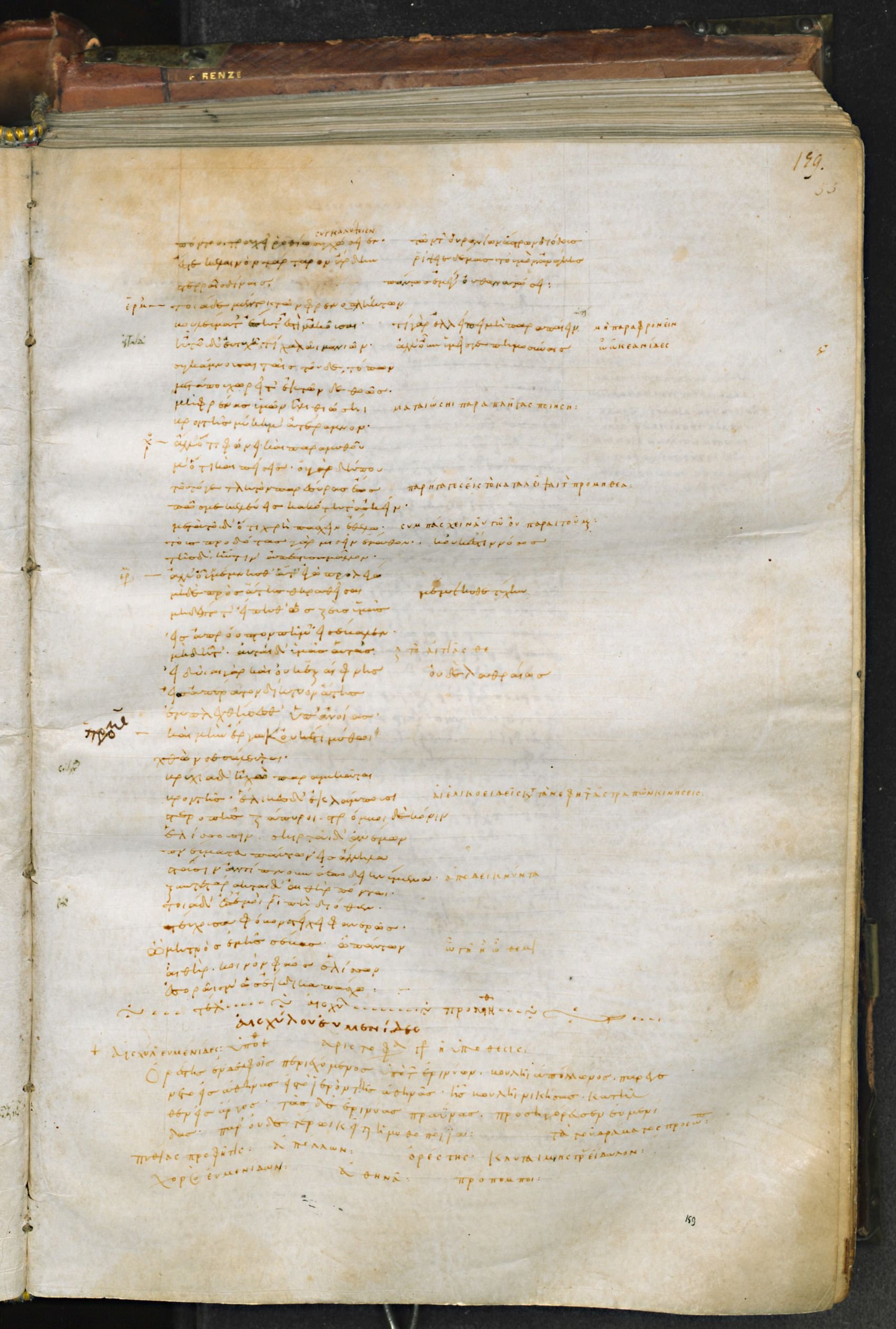
Where on the image
Laur. Plut. 32.9 fol. 159r: Prometheus Bound 1048-1093, from ‹πόντου τραχεῖ ῥοθίῳ συγχώσειεν (with the gloss συγκαλύψειεν), the rest of 1048, whose first words κῦμα δὲ end the last line of fol. 158v› (1048) to ‹ἐσορᾷς μ' ὡς ἔκδικα πάσχω› (1093); read on contrast-enhanced crops of the page image and checked against the neighbouring pages. Line 1048 straddles the page break, so fol. 158v is listed too. The anapaests are written two of Smyth's lines to a line in places. After 1093 come the end title and the title, hypothesis and list of characters of the Eumenides, which begins on fol. 159v. English here: 1048-1093; Prometheus' long sentence (1043-1053) is cut at the semicolon where the clause for 1048 (and let the waves of the sea ...) begins, the same line as the Greek. The Greek shown is Smyth's edited text; the manuscript's spelling, accents and some readings differ. Viewer: https://tecabml.contentdm.oclc.org/digital/collection/plutei/id/710921
Προμηθεύς
1048κῦμα δὲ πόντου τραχεῖ ῥοθίῳ
1049συγχώσειεν τῶν οὐρανίων
1050ἄστρων διόδους· εἴς τε κελαινὸν
1051Τάρταρον ἄρδην ῥίψειε δέμας
1052τοὐμὸν ἀνάγκης στερραῖς δίναις·
1053πάντως ἐμέ γʼ οὐ θανατώσει.
Ἑρμῆς
1054τοιάδε μέντοι τῶν φρενοπλήκτων
1055βουλεύματʼ ἔπη τʼ ἔστιν ἀκοῦσαι.
1056τί γὰρ ἐλλείπει μὴ ⟨οὐ⟩ παραπαίειν
1057ἡ τοῦδʼ εὐχή; τί χαλᾷ μανιῶν;
1058ἀλλʼ οὖν ὑμεῖς γʼ αἱ πημοσύναις
1059συγκάμνουσαι ταῖς τοῦδε τόπων
1060μετά ποι χωρεῖτʼ ἐκ τῶνδε θοῶς,
1061μὴ φρένας ὑμῶν ἠλιθιώσῃ
1062βροντῆς μύκημʼ ἀτέραμνον.
Χορός
1063ἄλλο τι φώνει καὶ παραμυθοῦ μʼ
1064ὅ τι καὶ πείσεις· οὐ γὰρ δή που
1065τοῦτό γε τλητὸν παρέσυρας ἔπος.
1066πῶς με κελεύεις κακότητʼ ἀσκεῖν;
1067μετὰ τοῦδʼ ὅ τι χρὴ πάσχειν ἐθέλω·
1068τοὺς προδότας γὰρ μισεῖν ἔμαθον,
1069κοὐκ ἔστι νόσος
1070τῆσδʼ ἥντινʼ ἀπέπτυσα μᾶλλον.
Ἑρμῆς
1071ἀλλʼ οὖν μέμνησθʼ ἁγὼ προλέγω
1072μηδὲ πρὸς ἄτης θηραθεῖσαι
1073μέμψησθε τύχην, μηδέ ποτʼ εἴπηθʼ
1074ὡς Ζεὺς ὑμᾶς εἰς ἀπρόοπτον
1075πῆμʼ εἰσέβαλεν· μὴ δῆτʼ αὐταὶ δʼ
1076ὑμᾶς αὐτάς. εἰδυῖαι γὰρ
1077κοὐκ ἐξαίφνης οὐδὲ λαθραίως
1078εἰς ἀπέρατον δίκτυον ἄτης
1079ἐμπλεχθήσεσθʼ ὑπʼ ἀνοίας.
Προμηθεύς
1080καὶ μὴν ἔργῳ κοὐκέτι μύθῳ
1081χθὼν σεσάλευται·
1082βρυχία δʼ ἠχὼ παραμυκᾶται
1083βροντῆς, ἕλικες δʼ ἐκλάμπουσι
1084στεροπῆς ζάπυροι, στρόμβοι δὲ κόνιν
1085εἱλίσσουσι· σκιρτᾷ δʼ ἀνέμων
1086πνεύματα πάντων εἰς ἄλληλα
1087στάσιν ἀντίπνουν ἀποδεικνύμενα·
1088ξυντετάρακται δʼ αἰθὴρ πόντῳ.
1089τοιάδʼ ἐπʼ ἐμοὶ ῥιπὴ Διόθεν
1090τεύχουσα φόβον στείχει φανερῶς.
1091ὦ μητρὸς ἐμῆς σέβας, ὦ πάντων
1092αἰθὴρ κοινὸν φάος εἱλίσσων,
1093ἐσορᾷς μʼ ὡς ἔκδικα πάσχω.
1048and let the waves of the sea mingle with their savage surge the courses of the stars in heaven; and let him lift me on high and hurl me down to black Tartarus with the swirling floods of stern Necessity: do what he will, me he shall never bring to death.
Hermes
Such indeed are the thoughts and the words one hears from men deranged. Wherein does his prayer fall short of raving? Wherein does he abate his frenzy?—But, at all events, do ye who compassionate his anguish, withdraw amain from this spot, lest the relentless roar of the thunder stun your senses.
Chorus
Use some other strain and urge me to some other course wherein thou art e’en like to convince me. This utterance in thy flood of speech is, I trow, past all endurance. How dost thou charge me to practise baseness? With him I am content to suffer any fate; for I have learned to detest traitors, and there is no pest I abhor more than this.
Hermes
Nay then, bear my warning in memory and blame not your case when ye are caught in the toils of calamity; nor ever say that it was Zeus who cast you into suffering unforeseen. Not so, but blame yourselves. For well forewarned, and not at unawares or secretly, shall ye be entangled in the inextricable net of calamity by reason of your folly.
[Exit
Prometheus
Lo, now it hath passed from word to deed—the earth rocks, the echoing thunder-peal from the depths rolls roaring past me; the fiery wreathed lightning-flashes flare forth, and whirlwinds toss the swirling dust; the blasts of all the winds leap forth and set in hostile array their embattled strife; the sky is confounded with the deep. Behold, this stormy turmoil advances against me, manifestly sped of Zeus to make me tremble. O holy mother mine, O thou firmament that dost revolve the common light of all, thou seest the wrongs I suffer!
[Amid thunder and lightning Prometheus vanishes from sight; and with him disappear the daughters of Oceanus
Notes
- Greek: Herbert Weir Smyth, Aeschylus I (Loeb Classical Library, 1922), Perseus digital text; speaker names as in Perseus. Smyth's editorial signs are kept as he prints them: words he deletes in [ ], words he supplies in ⟨ ⟩, daggers (†) for corrupt text, metrical signs (– ⏑) where he marks missing syllables and a row of dots for a lost line; lines that Perseus numbers with a letter (e.g. 600a) stand in their place. Smyth prints no lines 339, 528-529, 532-534, 544, 558-559 or 694 under those numbers (his line numbering follows the older editions); the Greek shows the lines as numbered.
- English: Herbert Weir Smyth, Aeschylus I (Loeb Classical Library, 1922), pp. 263-315, transcribed from the archive.org scan of the 1922 printing; footnotes and critical notes omitted; stage directions as printed (without closing brackets). In Io's route (after 791) Smyth marks a gap with dots, kept as printed.
Cite
Sources
- Source: Florence, Laur. Plut. 32.9 (Medicean Aeschylus) fol. 153v-159r via Teca digitale BML + Smyth Greek (Perseus) + Smyth English (Loeb 1922, archive.org scan) (holding institution)
- Critical edition: Smyth, Aeschylus I (Loeb 1922), via Perseus
← previous · → next · v cycle view · l back to library