Gospel of Peter (Akhmim codex, pages 2-10)
Introduction
The Gospel of Peter was known only by name, from Eusebius and from Serapion of Antioch (c. 200 AD), until a long fragment of it was found in the winter of 1886-87 in a monk's grave at Akhmim (ancient Panopolis) in Upper Egypt. The fragment tells the story of the passion from Pilate's hand-washing to the resurrection, in the first person of Simon Peter, and breaks off as Peter, Andrew and Levi go to the sea. It is now generally dated to the 2nd century.
The manuscript. The Akhmim codex (Cairo, Egyptian Museum, P. Cair. 10759) is a small parchment book of 33 leaves; proposed dates for its hands range from the 6th to the 9th century. Page 1 carries a cross; the Gospel of Peter fills pages 2-10 and ends with a braided band; the Apocalypse of Peter and the Greek text of 1 Enoch 1-32 follow. The pages shown are A. Lods's heliogravure plates of 1893, made from photographs taken in the Gizeh Museum: each plate reproduced two pages, and each page has been cut out of its plate and turned upright here.
Texts and mapping. The Greek is Lods's line-by-line diplomatic transcription of the same pages, with his page and line numbers (shown as page.line), so every line can be found on the photograph. Each section is one chapter of J. Armitage Robinson's division, which is also the division of his English translation; the chapter openings were located in Lods's lines by their Greek words. Robinson revised his translation against the photographic facsimile.
How was this verified? (Provenance)
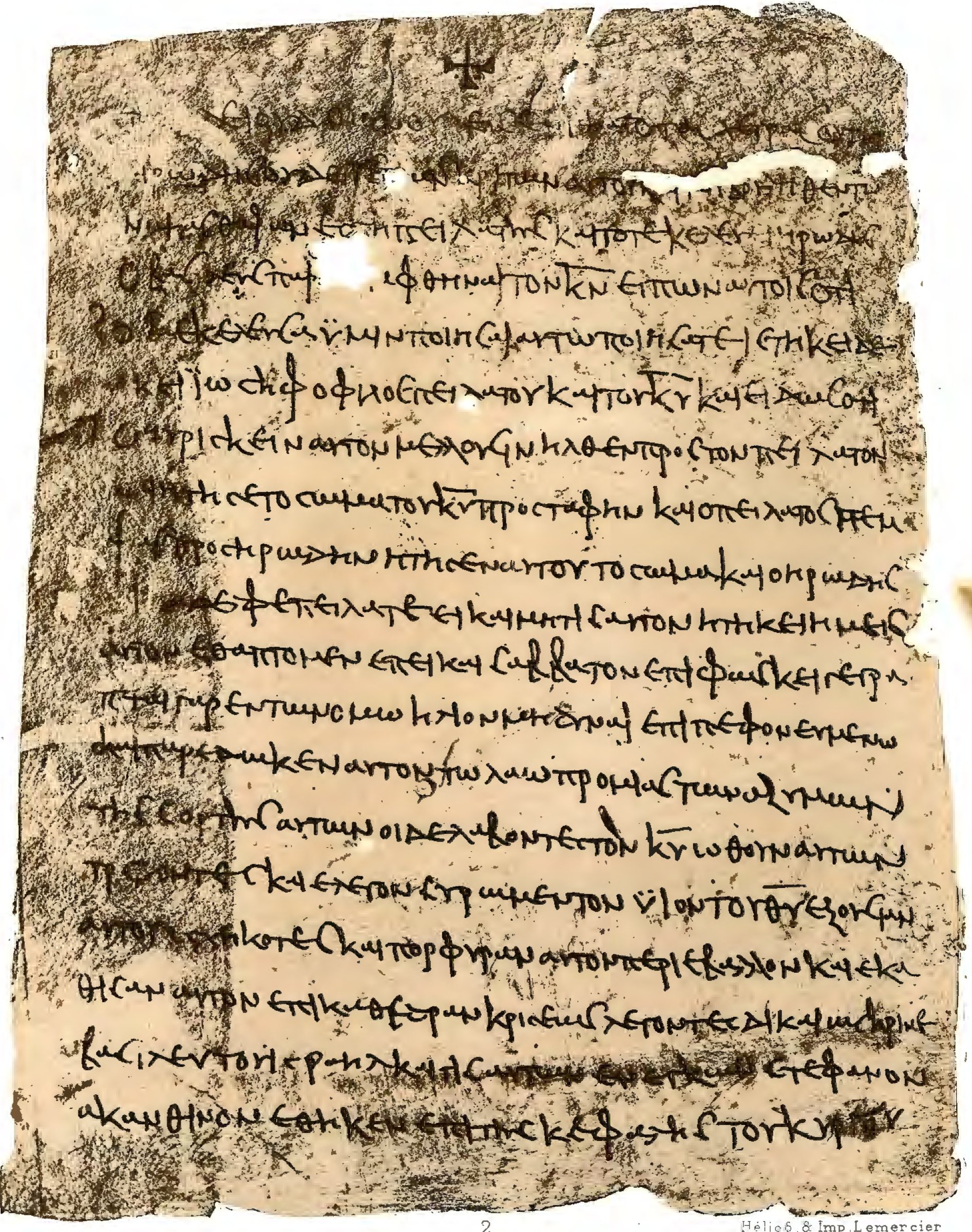
Where on the image
Akhmim codex p. 2, line 1 to p. 2, line 5, page and line numbers as printed by Lods (1893), whose heliogravure plates are shown. Checked on the plates: p. 2 begins ‹small cross above the text; line 1 ...δε ιουδαιων ουδεις ενιψατο τας χειρας›. The chapter opening was located in Lods's lines by its Greek words (‹τ . . δε›).
2.1 τ . . δε ϊουδαιων ουδεις ενιψατο τας χειρας ουδε
2.2 ηρωδης ουδε εις των κριτων αυτου κ.... βουληθεντω̅
2.3 νιψασθαι ανεστη πειλατης και τοτε κελευει ηρωδης
2.4 ο βασιλευς παρ. . .μφθηναι τον κ̅ν̅ ειπων αυτοις οτι
2.5 [οσα] εκελευσα ϋμιν ποιησαι αυτω ποιησατε
1 But of the Jews none washed his hands, neither Herod nor any one of his judges. And when they had refused to wash them, Pilate rose up. And then Herod the king commandeth that the Lord be taken, saying to them, What things soever I commanded you to do unto him, do.
Where on the image
Akhmim codex p. 2, line 5 to p. 2, line 12, page and line numbers as printed by Lods (1893), whose heliogravure plates are shown. Checked on the plates: p. 2 begins ‹small cross above the text; line 1 ...δε ιουδαιων ουδεις ενιψατο τας χειρας›. The chapter opening was located in Lods's lines by its Greek words (‹ιστηκει δε›).
2.5 ιστηκει δε
2.6 εκει ϊωσηφʼ ο φιλος πειλατου και του κ̅υ̅ και ειδως οτι
2.7 [στα]υρισκειν αυτον μελλουσιν ηλθεν προς τον πειλατον
2.8 [κα]ι ητησε το σωμα του κ̅υ̅ προς ταφην και ο πειλατος πεμ
2.9 ψας προς ηρωδην ητησεν αυτου το σωμα και ο ηρωδης
2.10 [εφη] αδελφε πειλατε ει και μη τις αυτον ητηκει ημεις
2.11 αυτον εθαπτομεν επει και σαββατον επιφωσκει γεγρα
2.12 πται γαρ εν τω νομω ηλιον μη δυναι επι πεφονευμενω
2 And there was standing there Joseph the friend of Pilate and of the Lord; and, knowing that they were about to crucify him, he came to Pilate and asked the body of the Lord for burial. And Pilate sent to Herod and asked his body. And Herod said, Brother Pilate, even if no one had asked for him, we purposed to bury him, especially as the sabbath draweth on: for it is written in the law, that the sun set not upon one that hath been put to death.
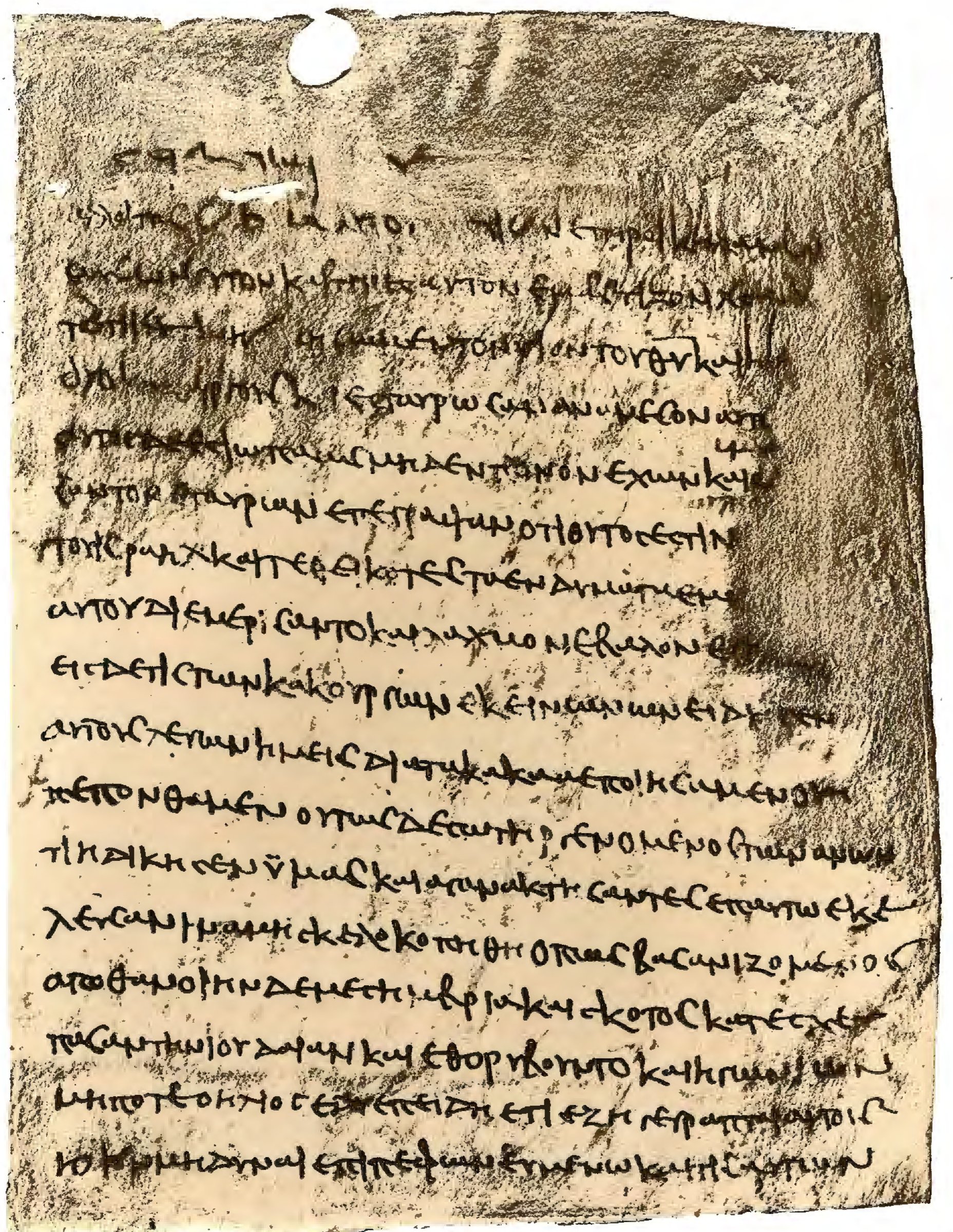
Where on the image
Akhmim codex p. 2, line 13 to p. 3, line 4, page and line numbers as printed by Lods (1893), whose heliogravure plates are shown. Checked on the plates: p. 2 begins ‹small cross above the text; line 1 ...δε ιουδαιων ουδεις ενιψατο τας χειρας›; p. 3 begins ‹lines 1-2 badly rubbed, as Lods's brackets show; the last line reads ηλιον μη δυναι επι πεφωνευμενω και τις αυτων›. The chapter opening was located in Lods's lines by its Greek words (‹και παρεδωκεν›).
2.13 και παρεδωκεν αυτον τω λαω προ μιας των αζυμων
2.14 της εορτης αυτων οι δε λαβοντες τον κ̅υ̅ ωθουν αυτων
2.15 τρεχοντες και ελεγον συρωμεν τον ϋιον του θ̅υ̅ εξουσιαν
2.16 αυτου εσχηκοτες και πορφυραν αυτον περιεβαλλον και εκα
2.17 θισαν αυτον επι καθεδραν κρισεως λεγοντες δικαιως κρινε
2.18 βασιλευ του ισραηλ και τις αυτων ενεγκων στεφανον
2.19 ακανθινον εθηκεν επι της κεφαλης του κυριου
3.1 [και ετεροι εσ]τωτ[ες ε]νεπ[τυον αυτου ταις οψεσι και]
3.2 αλλοι τας σια[γονας] αυτου εραπισαν ετεροι καλαμω̅
3.3 ενυσσον αυτον και τινες αυτον εμαστιζον λεγοντες
3.4 ταυτη τη τιμη [τι]μησωμεν τον υιον του θ̅υ̅
3 And he delivered him to the people on the day before the unleavened bread, their feast. And they took the Lord and pushed him as they ran, and said, Let us drag away the Son of God, having obtained power over him. And they clothed him with purple, and set him on the seat of judgment, saying, Judge righteously, O king of Israel. And one of them brought a crown of thorns and put it on the head of the Lord. And others stood and spat in his eyes, and others smote his cheeks: others pricked him with a reed; and some scourged him, saying, With this honour let us honour the Son of God.
Where on the image
Akhmim codex p. 3, line 4 to p. 3, line 15, page and line numbers as printed by Lods (1893), whose heliogravure plates are shown. Checked on the plates: p. 3 begins ‹lines 1-2 badly rubbed, as Lods's brackets show; the last line reads ηλιον μη δυναι επι πεφωνευμενω και τις αυτων›. The chapter opening was located in Lods's lines by its Greek words (‹και η[νεγκον]›).
3.4 και η[νεγκον]
3.5 δυο κακουργους και εσταυρωσαν ανα μεσον αυτ[ων τον κ̅ν̅]
3.6 αυτος δε εσιωπα ως μηδεν πονον εχων και οτ[ι εωρθω]
3.7 σαν τον σταυρων επεγραψαν οτι ουτος εστιν ο [βασιλευς]
3.8 του ισραηλ και τεθεικοτες τα ενδυματα εμπ[ροσθεν]
3.9 αυτου διεμερισαντο και λαχμον εβαλον επ [αυτοις]
3.10 εις δε τις των κακουργων εκεινων ωνειδησεν
3.11 αυτους λεγων ημεις δια τα κακα α εποιησαμεν ουτω
3.12 πεπονθαμεν ουτως δε σωτηρ γενομενος των α̅ν̅ω̅ν̅
3.13 τι ηδικησεν ϋμας και αγανακτησαντες επ αυτω εκε
3.14 λευσαν ινα μη σκελοκοπηθη οπως βασανιζομενος
3.15 αποθανοι
4 And they brought two malefactors, and they crucified the Lord between them. But he held his peace, as though having no pain. And when they had raised the cross, they wrote the title: This is the king of Israel. And having set his garments before him they parted them among them, and cast lots for them. And one of those malefactors reproached them, saying, We for the evils that we have done have suffered thus, but this man, who hath become the Saviour of men, what wrong hath he done to you? And they, being angered at him, commanded that his legs should not be broken, that he might die in torment.
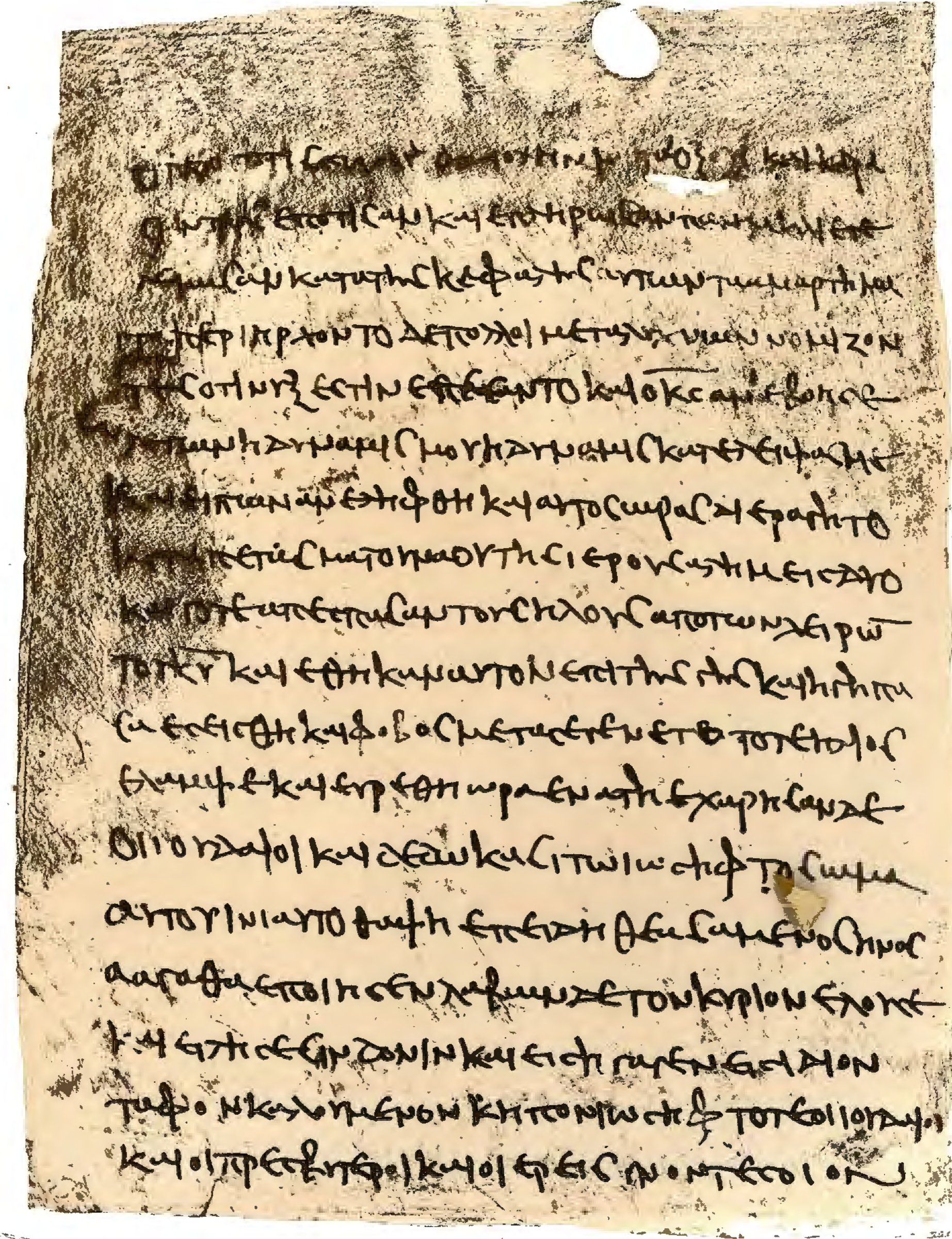
Where on the image
Akhmim codex p. 3, line 15 to p. 4, line 8, page and line numbers as printed by Lods (1893), whose heliogravure plates are shown. Checked on the plates: p. 3 begins ‹lines 1-2 badly rubbed, as Lods's brackets show; the last line reads ηλιον μη δυναι επι πεφωνευμενω και τις αυτων›; p. 4 begins ‹ειπεν ποτισατε αυτον χολην μετα οξους και κερα›. The chapter opening was located in Lods's lines by its Greek words (‹ην δε μεσημβρια›).
3.15 ην δε μεσημβρια και σκοτος κατεσχε
3.16 πασαν την ιουδαιαν και εθορυβουντο και ηγωνιων
3.17 μηποτε ο ηλιος εδυ επειδη ετι εζη γεγραπται αυτοις
3.18 ηλιον μη δυναι επι πεφωνευμενω και τις αυτων
4.1 ειπεν ποτισατε αυτον [χ]ολην μετα οξους και κερα
4.2 σαντες εποτισαν και επληρωσαν παντα και ετε
4.3 λειωσαν κατα της κεφαλης αυτων τα αμαρτημα
4.4 τα περιηρχοντο δε πολλοι μετα λυχνων νομιζον
4.5 τες οτι νυξ εστιν επεσαντο και ο̅κ̅ς̅ ανεβοησε
4.6 λεγων η δυναμις μου η δυναμις κατελειψας με
4.7 και ειπων ανεληφθη και αυτος ωρας διεραγη το
4.8 καταπετασμα του ναου της ιερουσαλημ εις δυο
5 And it was noon, and darkness came over all Judæa: and they were troubled and distressed, lest the sun had set, whilst he was yet alive: [for] it is written for them, that the sun set not on him that hath been put to death. And one of them said, Give him to drink gall with vinegar. And they mixed and gave him to drink, and fulfilled all things, and accomplished their sins against their own head. And many went about with lamps, supposing that it was night, and fell down. And the Lord cried out, saying, My power, my power, thou hast forsaken me. And when he had said it he was taken up. And in that hour the vail of the temple of Jerusalem was rent in twain.
Where on the image
Akhmim codex p. 4, line 9 to p. 4, line 17, page and line numbers as printed by Lods (1893), whose heliogravure plates are shown. Checked on the plates: p. 4 begins ‹ειπεν ποτισατε αυτον χολην μετα οξους και κερα›. The chapter opening was located in Lods's lines by its Greek words (‹και τοτε απεσπασαν›).
4.9 και τοτε απεσπασαν τους ηλους απο των χειρω̅
4.10 του κ̅υ̅ και εθηκαν αυτον επι της γης και η γη πα
4.11 σα εσεισθη και φοβος μεγας εγενετο τοτε ηλιος
4.12 ελαμψε και ευρεθη ωρα ενατη εχαρησαν δε
4.13 οι ιουδαιοι και δεδωκασι τω ιωσηφ το σωμα
4.14 αυτου ινι αυτο θαψη επειδη θεασαμενος ην οσ
4.15 α αγαθα εποιησεν λαβων δε τον κυριον ελουσε
4.16 και ειλησε σινδονιν και εισηγαγεν εις ιδιον
4.17 ταφον καλουμενον κηπον ιωσηφ
6 And then they drew out the nails from the hands of the Lord, and laid him upon the earth, and the whole earth quaked, and great fear arose. Then the sun shone, and it was found the ninth hour: and the Jews rejoiced, and gave his body to Joseph that he might bury it, since he had seen what good things he had done. And he took the Lord, and washed him, and rolled him in a linen cloth, and brought him into his own tomb, which was called the Garden of Joseph.
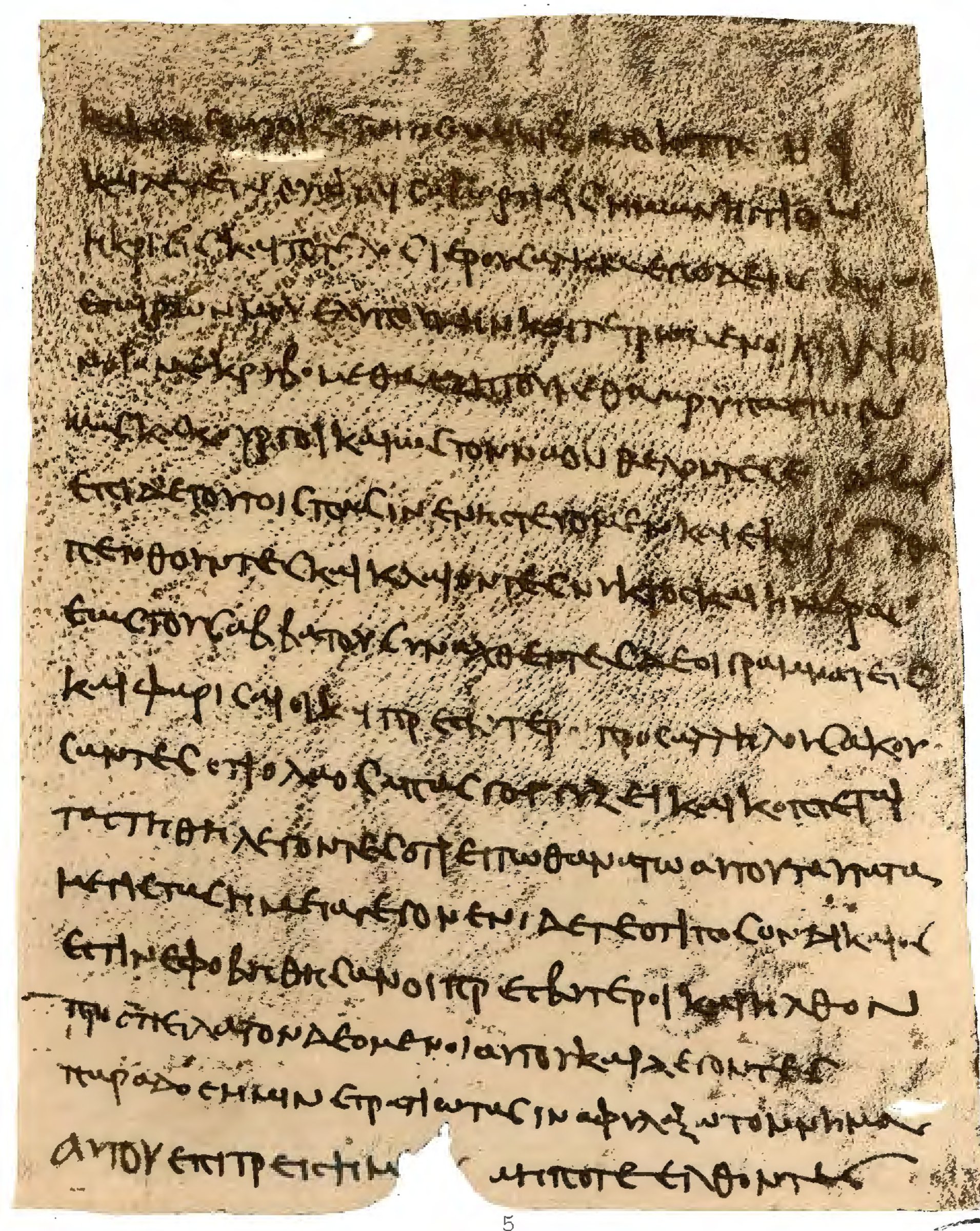
Where on the image
Akhmim codex p. 4, line 17 to p. 5, line 9, page and line numbers as printed by Lods (1893), whose heliogravure plates are shown. Checked on the plates: p. 4 begins ‹ειπεν ποτισατε αυτον χολην μετα οξους και κερα›; p. 5 begins ‹[κακον εα]υτοις εποιησαν ηρξαντο κοπτεσθαι›. The chapter opening was located in Lods's lines by its Greek words (‹τοτε οι ιουδαιοι›).
4.17 τοτε οι ιουδαιοι
4.18 και οι πρεσβυτεροι και ο ιερεις γνοντες οιον
5.1 [κακον εα]υτοις εποιησαν [η]ρξ[α]ντο κοπτεσθα[ι]
5.2 και λεγειν ουαι ταις αμαρτιαις ημων ηγγισεν
5.3 η κρισις και το τελος ιερουσαλημ εγω δε μετα τω̅
5.4 εταιρων μου ελυπουμην και τετρωμενοι κ[ατα δια]
5.5 νοιαν εκρυβομεθα εζητουμεθα γαρ ϋπ αυτων
5.6 ως κακουργοι και ως τον ναον θελοντες ε[μπρησαι]
5.7 επι δε τουτοις πασιν ενηστευομεν και εκα[θεζομε]θα
5.8 πενθουντες και κλαιοντες νυκτος και ημερας
5.9 εως του σαββατου
7 Then the Jews and the elders and the priests, perceiving what evil they had done to themselves, began to lament and to say, Woe for our sins: the judgement hath drawn nigh, and the end of Jerusalem. And I with my companions was grieved; and being wounded in mind we hid ourselves: for we were being sought for by them as malefactors, and as wishing to set fire to the temple. And upon all these things we fasted and sat mourning and weeping night and day until the sabbath.
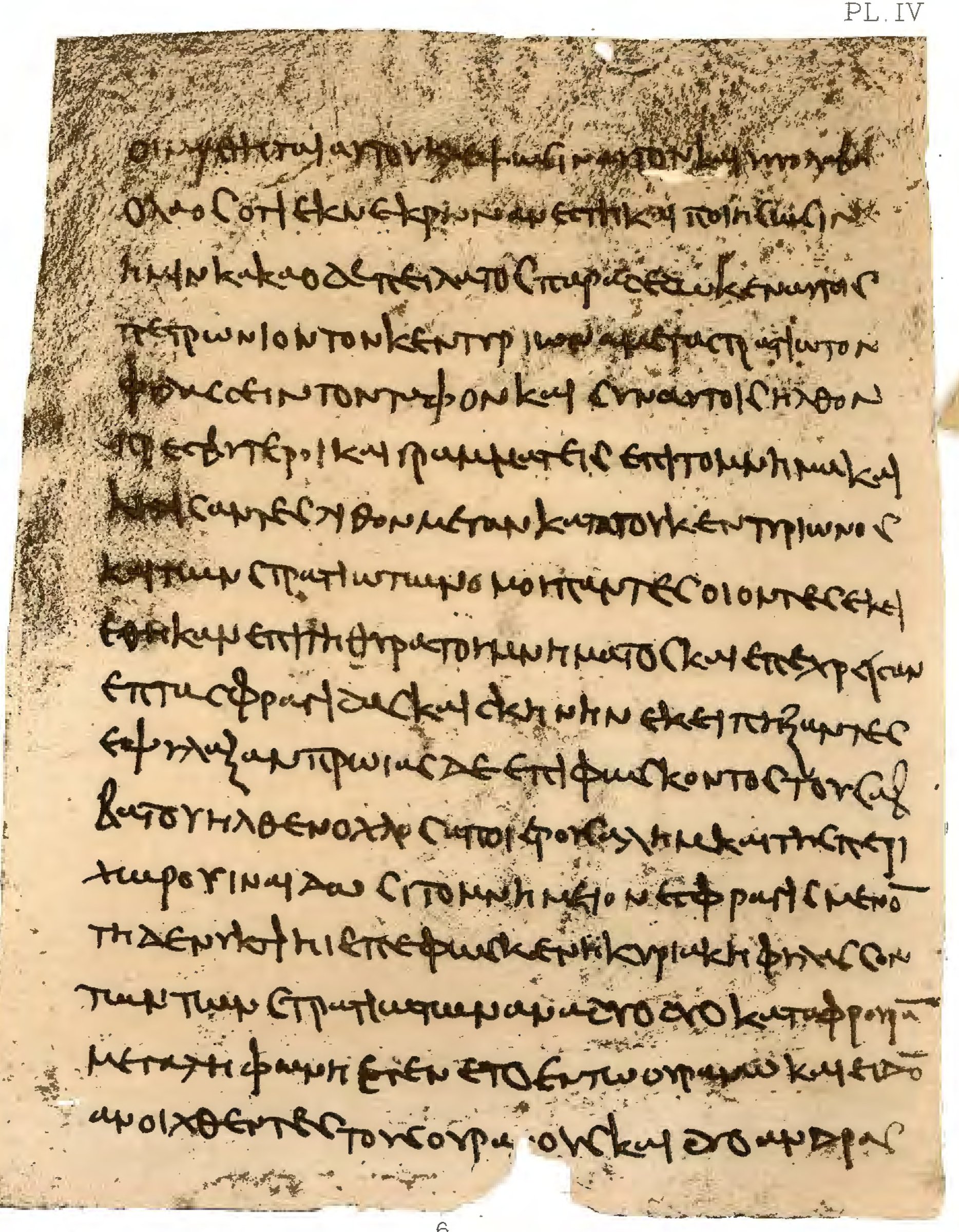
Where on the image
Akhmim codex p. 5, line 9 to p. 6, line 13, page and line numbers as printed by Lods (1893), whose heliogravure plates are shown. Checked on the plates: p. 5 begins ‹[κακον εα]υτοις εποιησαν ηρξαντο κοπτεσθαι›; p. 6 begins ‹οι μαθηται αυτου κλεψωσιν αυτον και υπολαβη›. The chapter opening was located in Lods's lines by its Greek words (‹συναχθεντες δε›).
5.9 συναχθεντες δε οι γραμματεις
5.10 και φαρισαιοι και πρεσβυτεροι προς αλληλους ακου
5.11 σαντες οτι ο λαος απας γογγυζει και κοπτεται
5.12 τα στηθη λεγοντες οτι ει τω θανατω αυτου ταυτα τα
5.13 μεγιστα σημεια γεγονεν ιδετε οτι ποσον δικαιος
5.14 εστιν εφοβηθησαν οι πρεσβυτεροι και ηλθον
5.15 προς πειλατον δεομενοι αυτου και λεγοντες
5.16 παραδος ημιν στρατιωτας ινα φυλαξω το μνημα
5.17 αυτου επι τρεις ημ.... μηποτε ελθοντες
6.1 οι μαθηται αυτου κλεψωσιν αυτον και υπολαβη
6.2 ο λαος οτι εκ νεκρων ανεστη και ποιησωσιν
6.3 ημιν κακα ο δε πειλατος παραδεδωκεν αυτοις
6.4 πετρωνιον τον κεντυριωνα μετα στρατιωτον
6.5 φυλασσειν τον ταφον και συν αυτοις ηλθον
6.6 πρεσβυτεροι και γραμματεις επι το μνημα και
6.7 κυλισαντες λιθον μεγαν κατα του κεντυριωνος
6.8 και των στρατιωτων ομου παντες οι οντες εκει
6.9 εθηκαν επι τη θυρα του μνηματος και επεχρεισαν
6.10 επτα σφραγιδας και σκηνην εκει πηξαντες
6.11 εφυλαξαν πρωιας δε επιφωσκοντος του σαβ
6.12 βατου ηλθεν οχλος απο ιερουσαλημ και της περι
6.13 χωρου ινα ιδωσι το μνημειον εσφραγισμενο̅
8 But the scribes and Pharisees and elders being gathered together one with another, when they heard that all the people murmured and beat their breasts saying, If by his death these most mighty signs have come to pass, see how righteous he is,—the elders were afraid and came to Pilate, beseeching him and saying, Give us soldiers, that we may guard his sepulchre for three days, lest his disciples come and steal him away, and the people suppose that he is risen from the dead and do us evil. And Pilate gave them Petronius the centurion with soldiers to guard the tomb. And with them came elders and scribes to the sepulchre, and having rolled a great stone together with the centurion and the soldiers, they all together who were there set it at the door of the sepulchre; and they affixed seven seals, and they pitched a tent there and guarded it. And early in the morning as the sabbath was drawing on, there came a multitude from Jerusalem and the region round about, that they might see the sepulchre that was sealed.
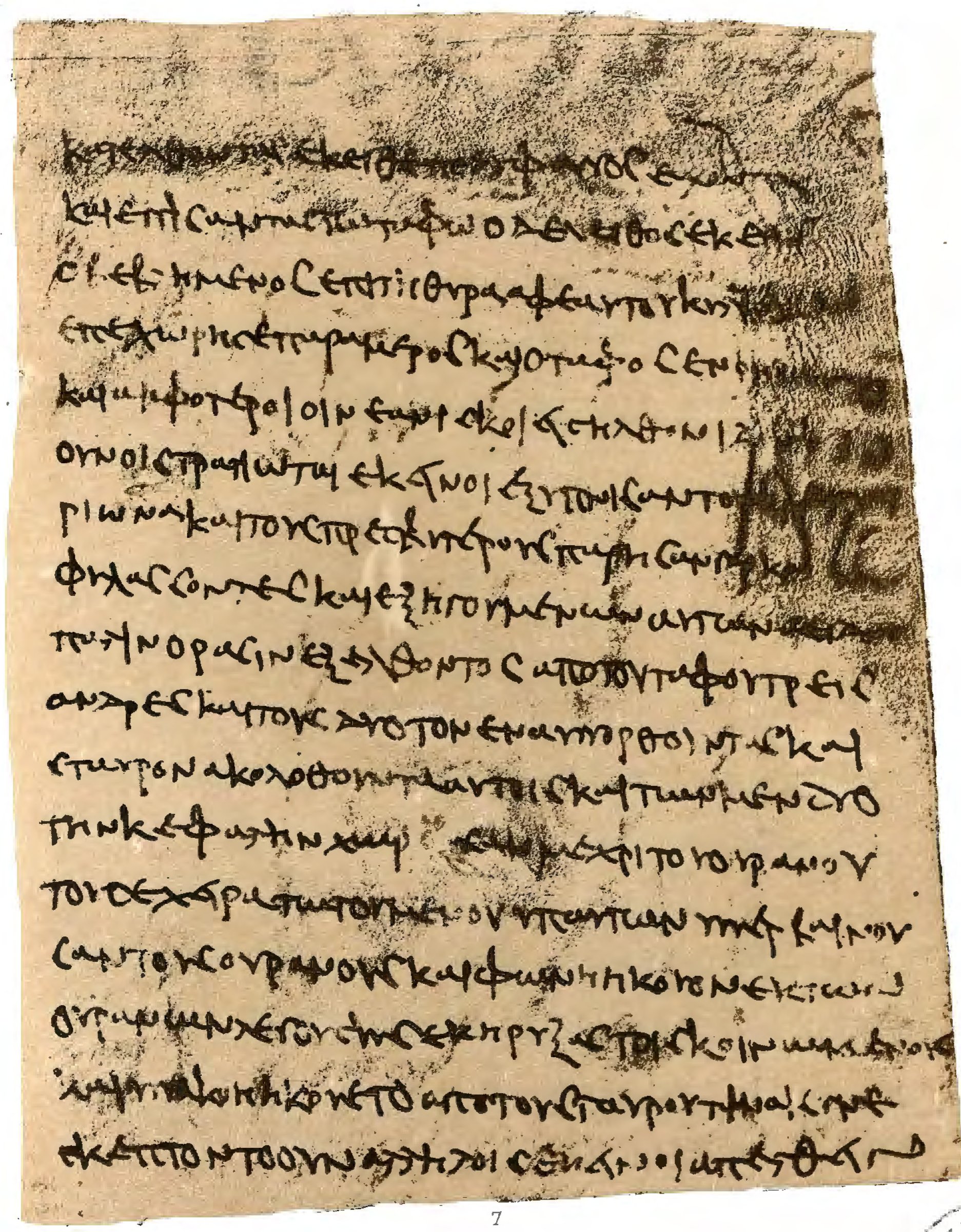
Where on the image
Akhmim codex p. 6, line 14 to p. 7, line 5, page and line numbers as printed by Lods (1893), whose heliogravure plates are shown. Checked on the plates: p. 6 begins ‹οι μαθηται αυτου κλεψωσιν αυτον και υπολαβη›; p. 7 begins ‹κατελθοντας εκειθε πολυ φεγγος εχοντας›. The chapter opening was located in Lods's lines by its Greek words (‹τη δε νυκτι›).
6.14 τη δε νυκτι ηι επεφωσκεν η̈ κυριακη φυλασσον
6.15 των των στρατιωτων ανα δυο δυο κατα φρουρα̅
6.16 μεγαλη φωνη εγενετο εν τω ουρανω και ειδο̅
6.17 ανοιχθεντες τους ουρα.ους και δυο ανδρας
7.1 κατελθοντας εκειθε πολυ φεγγος εχοντας
7.2 και εγγισαντας τω ταφω ο δε λειθος εκει[νος]
7.3 ο βεβλημενος επι τη θυρα αφ εαυτου κυλ[ισθεις]
7.4 επεχωρησε παρα μερος και ο ταφος ενοι[γη]
7.5 και αμφοτεροι οι νεανισκοι εισηλθον
9 And in the night in which the Lord’s day was drawing on, as the soldiers kept guard two by two in a watch, there was a great voice in the heaven; and they saw the heavens opened, and two men descend from thence with great light and approach the tomb. And that stone which was put at the door rolled of itself and made way in part; and the tomb was opened, and both the young men entered in.
Where on the image
Akhmim codex p. 7, line 5 to p. 7, line 16, page and line numbers as printed by Lods (1893), whose heliogravure plates are shown. Checked on the plates: p. 7 begins ‹κατελθοντας εκειθε πολυ φεγγος εχοντας›. The chapter opening was located in Lods's lines by its Greek words (‹ιδ[οντες]›).
7.5 ιδ[οντες]
7.6 ουν οι στρατιωται εκεινοι εξυπνισαν τον κ[εντυ]
7.7 ριωνα και τους πρεσβυτερους παρησαν γαρ και [αν οι]
7.8 φυλασσοντες και εξηγουμενων αυτων α ειδ[ον]
7.9 παλιν ορασιν εξελθοντος απο του ταφου τρεις
7.10 ανδρες και τους δυο τον ενα υπορθουντας και
7.11 σταυρον ακολοθουντα αυτοις και των μεν δυο
7.12 την κεφαλην χωρουσαν μεχρι του ουρανου
7.13 του δε χειρατωτουμενου υπ αυτων υπερβαινου
7.14 σαν τους ουρανους και φωνη ηκουον εκ των
7.15 ουρανων λεγουσης εκηρυξας τοις κοινωμενοις
7.16 και υπακοη ηκουετο απο του σταυρου τιναι
10 When therefore those soldiers saw it, they awakened the centurion and the elders; for they too were hard by keeping guard. And, as they declared what things they had seen, again they see three men come forth from the tomb, and two of them supporting one, and a cross following them: and of the two the head reached unto the heaven, but the head of him that was led by them overpassed the heavens. And they heard a voice from the heavens, saying, Thou hast preached to them that sleep. And a response was heard from the cross, Yea.
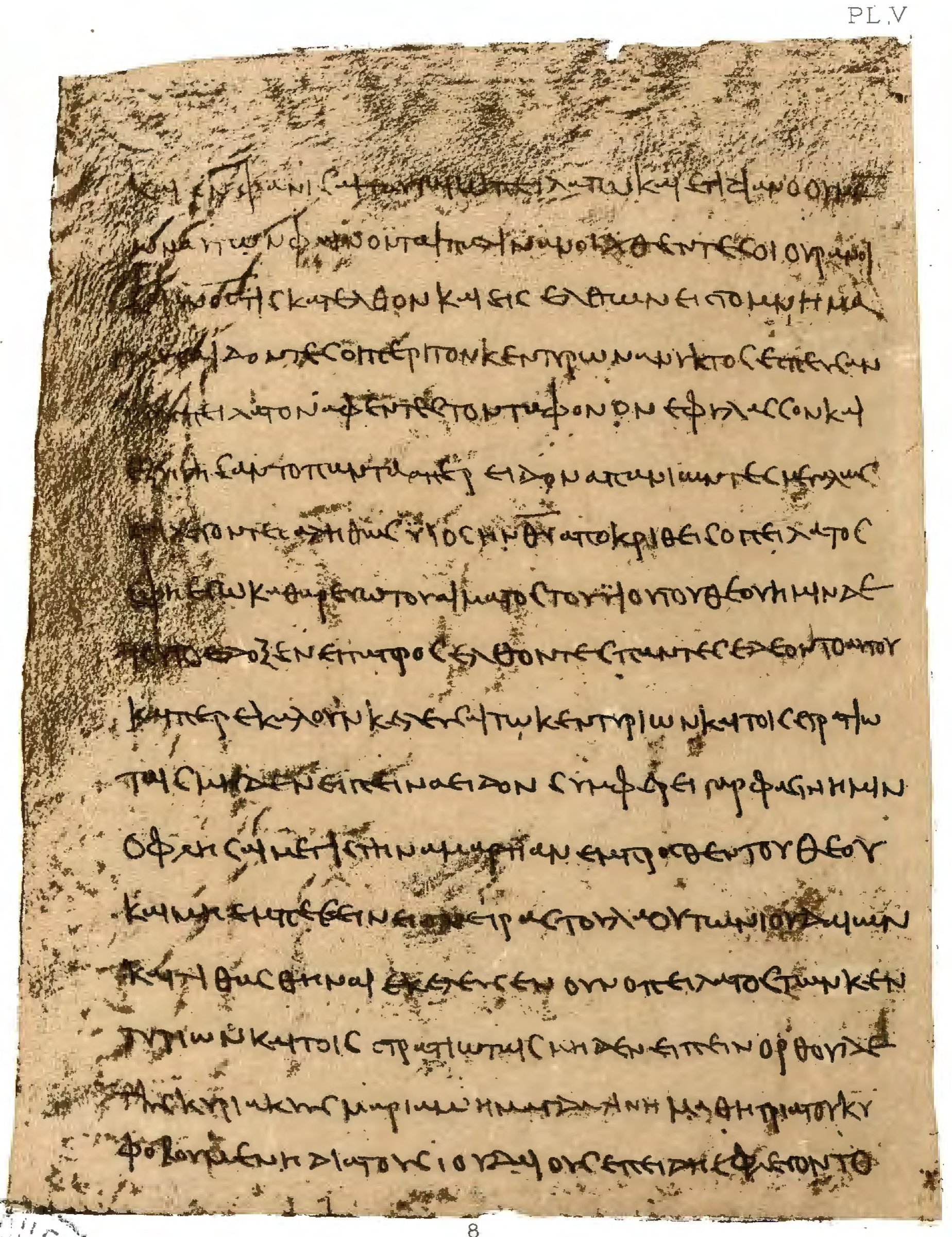
Where on the image
Akhmim codex p. 7, line 16 to p. 8, line 15, page and line numbers as printed by Lods (1893), whose heliogravure plates are shown. Checked on the plates: p. 7 begins ‹κατελθοντας εκειθε πολυ φεγγος εχοντας›; p. 8 begins ‹και ενφανισαι ταυτα τω πειλατω και ετι διανοουμε›. The chapter opening was located in Lods's lines by its Greek words (‹συνε›).
7.16 συνε
7.17 σκεπτοντο ουν αλληλοις εκεινοι απελθειν
8.1 και ενφανισαι ταυτα τω πειλατω και ετι διανοουμε̅
8.2 ων αυτων φαινονται παλιν ανοιχθεντες οι ουρανοι
8.3 και α̅ν̅ο̅ς̅ τις κατελθον και εισελθων εις το μνημα
8.4 ταυτα ιδοντες οι περι τον κεντυρωνα νυκτος εσπευσαν
8.5 προς πειλατον αφεντες τον ταφον ον εφυλασσον και
8.6 εξηγησαντο παντα απερ ειδον απανιωντες μεγαλως
8.7 και λεγοντες αληθως ϋιος ην θ̅υ̅ αποκριθεις ο πειλατος
8.8 εφη εγω καθαρευω του αιματος του ϋιου του θεου ημιν δε
8.9 τουτο εδοξεν ειτα προσελθοντες παντες εδεοντο αυτου
8.10 και περεκαλουν κελευσαι τω κεντωριων και τοις στρατιω
8.11 ταις μηδεν ειπειν α ειδον συμφερει γαρ φασιν ημιν
8.12 οφλησαι μεγιστην αμαρτιαν εμπροσθεν του θεου
8.13 και μη εμπεσειν εις χειρας του λαου των ιουδαιων
8.14 και λιθασθηναι εκελευσεν ουν ο πειλατος των κεν
8.15 τυριων και τοις στρατιωταις μηδεν ειπειν
11 They therefore considered one with another whether to go away and shew these things to Pilate. And while they yet thought thereon, the heavens again are seen to open, and a certain man to descend and enter into the sepulchre. When the centurion and they that were with him saw these things, they hastened in the night to Pilate, leaving the tomb which they were watching, and declared all things which they had seen, being greatly distressed and saying, Truly he was the Son of God. Pilate answered and said, I am pure from the blood of the Son of God: but it was ye who determined this. Then they all drew near and besought him and entreated him to command the centurion and the soldiers to say nothing of the things which they had seen: For it is better, say they, for us to be guilty of the greatest sin before God, and not to fall into the hands of the people of the Jews and to be stoned. Pilate therefore commanded the centurion and the soldiers to say nothing.
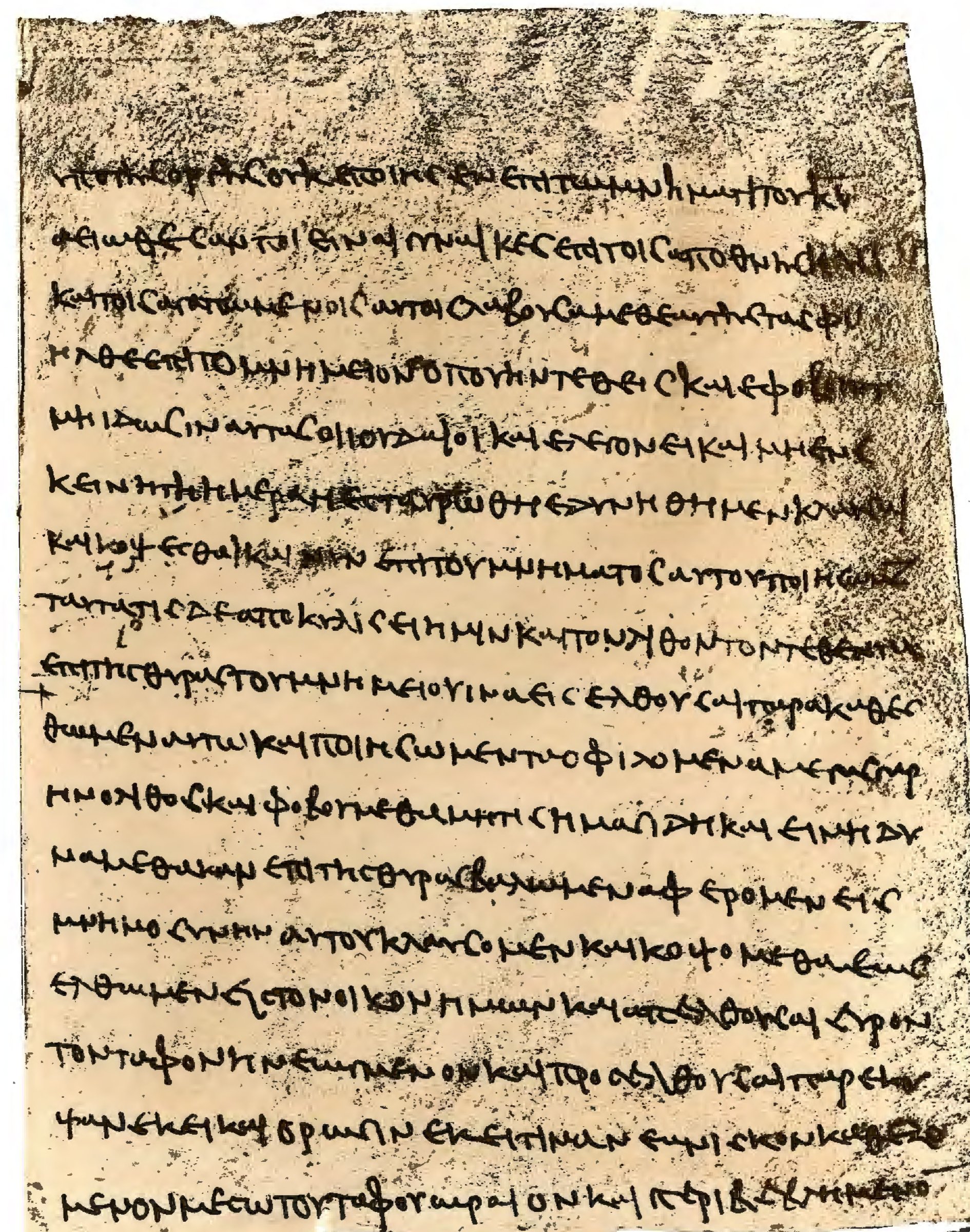
Where on the image
Akhmim codex p. 8, line 15 to p. 9, line 14, page and line numbers as printed by Lods (1893), whose heliogravure plates are shown. Checked on the plates: p. 8 begins ‹και ενφανισαι ταυτα τω πειλατω και ετι διανοουμε›; p. 9 begins ‹υπο της οργης ουκ εποιησεν επι τω μνηματι›. The chapter opening was located in Lods's lines by its Greek words (‹ορθου δε›).
8.15 ορθου δε
8.16 της κυριακης μαριαμʼ η μαγδαλινη μαθητρια του κ̅υ̅
8.17 φοβουμενη δια τους ιουδαιους επειδη εφλεγοντο
9.1 υπο της οργης ουκ εποιησεν επι τω μνηματι του κ̅υ̅
9.2 α ειωθεσαν ποιεν αι γυναικες επι τοις αποθνησκου[σι]
9.3 και τοις αγαπωμενοις αυταις λαβουσα μεθ εαυτης τας φιλ[ας]
9.4 ηλθε επι το μνημειον οπου ην τεθεις και εφοβουντο
9.5 μη ιδωσιν αυτας οι ιουδαιοι και ελεγον ει και μη εν ε
9.6 κεινη τη ημερα η εσταυρωθη εδυνηθημεν κλαυσαι
9.7 και κοψεσθαι και νυν επι του μνηματος αυτου ποιησωμε̅
9.8 ταυτα τις δε αποκυλισει ημιν και τον λιθον τον τεθεντα
9.9 επι της θυρας του μνημειου ινα εισελθουσαι παρακαθεσ
9.10 θωμεν αυτω και ποιησωμεν τα οφιλομενα μεγας γαρ
9.11 ην ο λιθος και φοβουμεθα μη τις ημας ιδη και ει μη δυ
9.12 ναμεθα καν επι της θυρας βαλωμεν α φερομεν εις
9.13 μνημοσυνην αυτου κλαυσομεν και κοψομεθα εως
9.14 ελθωμεν εις τον οικον ημων
12 And at dawn upon the Lord’s day Mary Magdalen, a disciple of the Lord, fearing because of the Jews, since they were burning with wrath, had not done at the Lord’s sepulchre the things which women are wont to do for those that die and for those that are beloved by them—she took her friends with her and came to the sepulchre where he was laid. And they feared lest the Jews should see them, and they said, Although on that day on which he was crucified we could not weep and lament, yet now let us do these things at his sepulchre. But who shall roll away for us the stone that was laid at the door of the sepulchre, that we may enter in and sit by him and do the things that are due? For the stone was great, and we fear lest some one see us. And if we cannot, yet if we but set at the door the things which we bring for a memorial of him, we will weep and lament, until we come unto our home.
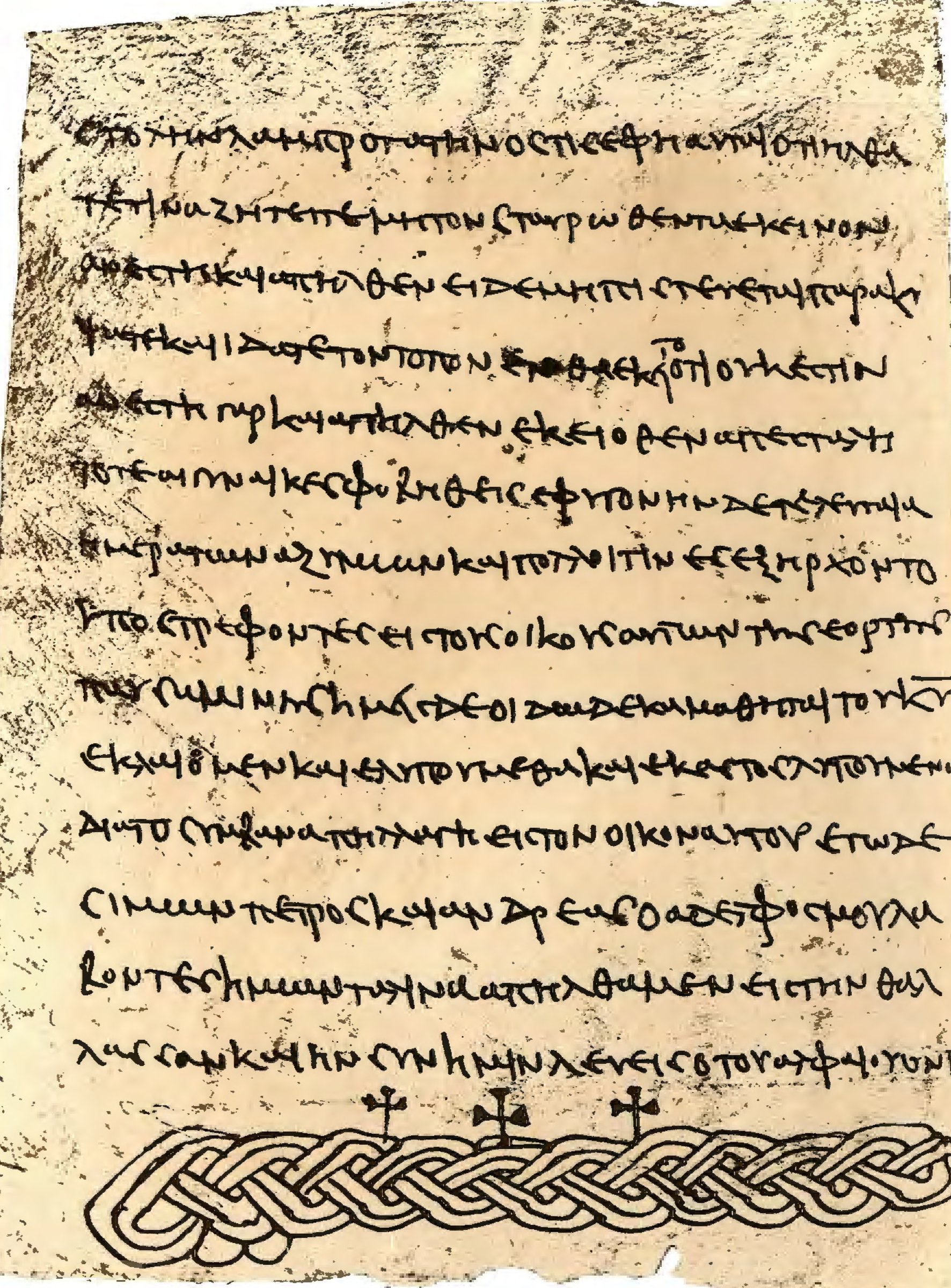
Where on the image
Akhmim codex p. 9, line 14 to p. 10, line 6, page and line numbers as printed by Lods (1893), whose heliogravure plates are shown. Checked on the plates: p. 9 begins ‹υπο της οργης ουκ εποιησεν επι τω μνηματι›; p. 10 begins ‹στολην λαμπροτατην οστις εφη αυται οτι ηλθα; the page ends with a braided band›. The chapter opening was located in Lods's lines by its Greek words (‹και απελθουσαι›).
9.14 και απελθουσαι ευρον
9.15 τον ταφον ηνεωγμενον και προσελθουσαι παρεκυ
9.16 ψαν εκει και ορωσιν εκει τινα νεανισκον καθεζο
9.17 μενον μεσω του ταφου ωραιον και περιβεβλημενο̅
10.1 στολην λαμπροτατην οστις εφη αυται οτι ηλθα
10.2 τε τινα ζητειτε μη τον σταυρωθεντα εκεινον
10.3 ανεστη και απηλθεν ει δε μη πιστευεται παρακυ
10.4 ψατε και ιδατε τον τοπον ενθα εκειτο οτι ουκ εστιν
10.5 ανεστη γαρ και απηλθεν εκει οθεν απεσταλη
10.6 τοτε αι γυναικες φοβηθεις εφυγον
13 And they went and found the tomb opened, and coming near they looked in there; and they see there a certain young man sitting in the midst of the tomb, beautiful and clothed in a robe exceeding bright: who said to them, Wherefore are ye come? Whom seek ye? Him that was crucified? He is risen and gone. But if ye believe not, look in and see the place where he lay, that he is not [here]; for he is risen and gone thither, whence he was sent. Then the women feared and fled.
Where on the image
Akhmim codex p. 10, line 6 to p. 10, line 14, page and line numbers as printed by Lods (1893), whose heliogravure plates are shown. Checked on the plates: p. 10 begins ‹στολην λαμπροτατην οστις εφη αυται οτι ηλθα; the page ends with a braided band›. The chapter opening was located in Lods's lines by its Greek words (‹ην δε τελευταια›).
10.6 ην δε τελευταια
10.7 ημερα των αζυμων και πολλοι τινες εξηρχοντο
10.8 ϋποστρεφοντες εις τους οικους αυτων της εορτης
10.9 παυσαμινης ημεις δε οι δωδεκα μαθηται του κ̅υ̅
10.10 εκλαιομεν και ελυπουμεθα και εκαστος λυπουμενος
10.11 δια το συμβαν απηλλαγη εις τον οικον αυτου εγω δε
10.12 σιμων πετρος και ανδρεας ο αδελφος μου λα
10.13 βοντες ημων τα λινα απηλθαμεν εις την θαλ
10.14 λασσαν και ην συν ημιν λευεις ο του αλφαιου ον κ̅ς̅ :
14 Now it was the last day of the unleavened bread, and many were going forth, returning to their homes, as the feast was ended. But we, the twelve disciples of the Lord, wept and were grieved: and each one, being grieved for that which was come to pass, departed to his home. But I Simon Peter and Andrew my brother took our nets and went to the sea; and there was with us Levi the son of Alphæus, whom the Lord…
Notes
- Lods's signs: [ ] letters not legible on the photographs and given from Bouriant's first copy; dots mark lost letters; the manuscript has no accents and almost no punctuation.
- A bar over a group of letters (nomina sacra such as κ̅υ̅ for κυριου, θ̅υ̅ for θεου, α̅ν̅ω̅ν̅ for ανθρωπων) or over a final letter standing for a dropped nu is shown with a combining overline.
- Lods prints ηι with iota adscript and η̈ with two dots at 6.14, and an apostrophe after ϊωσηφ (2.6) and μαριαμ (8.16), as in the manuscript.
- Chapter numbers (1-14) are J. Armitage Robinson's, used in his English translation.
Cite
Sources
- Source: Akhmim codex (P. Cair. 10759) pages 2-10 in A. Lods's heliogravure plates (1893, Internet Archive) + Lods's diplomatic transcription + English of J. Armitage Robinson (Ante-Nicene Fathers IX, public domain) (holding institution)
- Critical edition: A. Lods, diplomatic transcription and heliogravure facsimile (1893)
← previous · → next · v cycle view · l back to library