Galatians, Chapter 4 (Codex Alexandrinus)
Introduction
Galatians 4 from Codex Alexandrinus (GA 02), a fifth-century Greek Bible held by the British Library (Royal MS 1 D. VIII). In the New Testament it is the chief witness to the Byzantine text in the Gospels and to the Alexandrian text in the rest of the New Testament. Its New Testament volume lacks Matthew 1:1-25:5, John 6:50-8:52 and 2 Corinthians 4:13-12:6.
This entry meets the strict three-criteria standard of the Theosis Library:
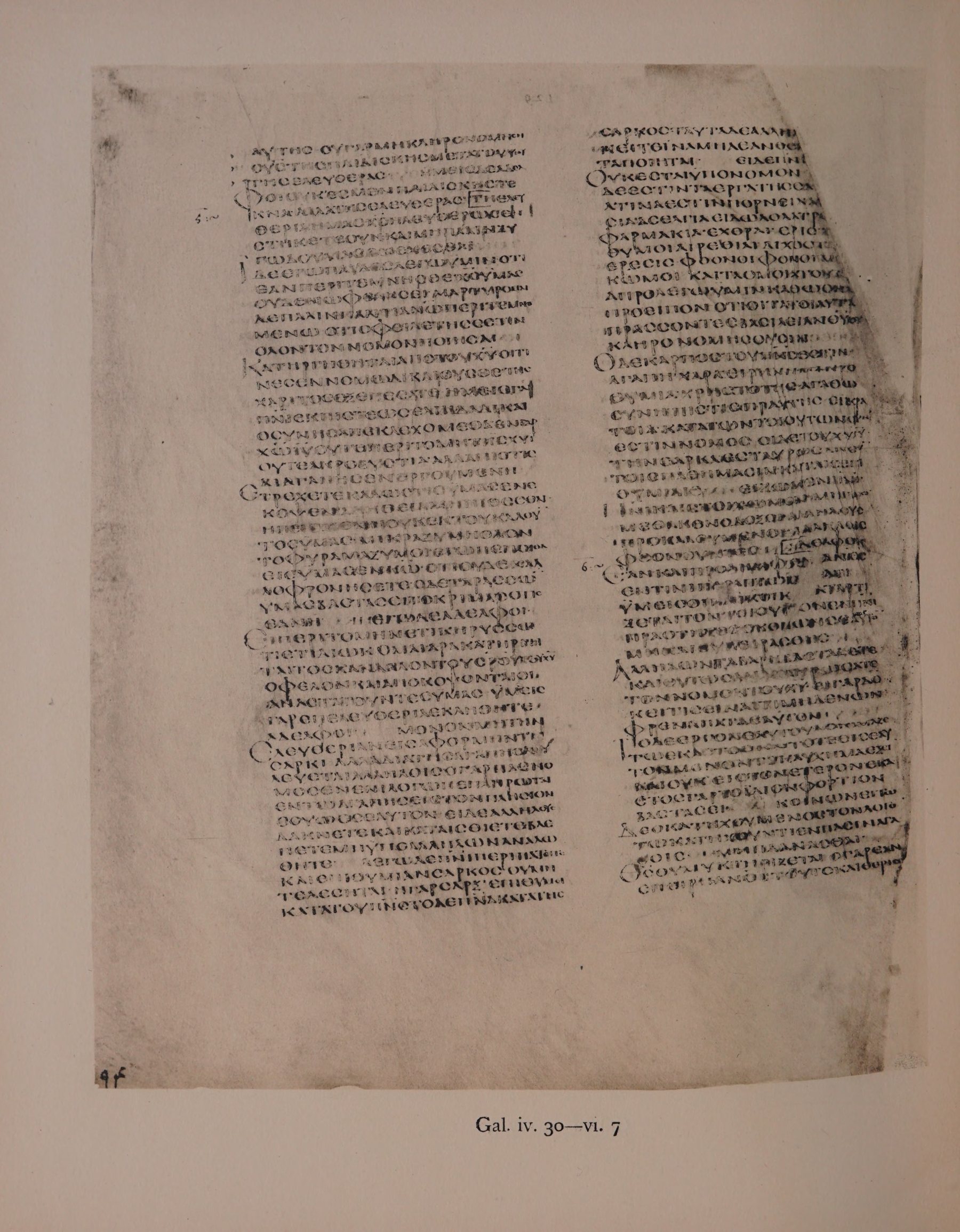
- Manuscript scan: the actual page(s) of Codex Alexandrinus containing this passage (folios 129r, 129v), reproduced from the British Museum's 1909 photographic facsimile edited by F. G. Kenyon, as digitised by the Getty Research Institute for the Internet Archive. The facsimile prints the verse range beneath each plate; that printed range was read for every page used and agrees with the INTF's NTVMR verse-level page index (CC BY 4.0). The page for each section now comes from the NTVMR transcription itself, which records the page and column on which every verse is written.
- Original text: the manuscript's own text, from a diplomatic transcription (see Greek text below), with Tischendorf's 8th critical edition (1869) for comparison.
- English translation: the King James Version (1611), retrieved verbatim from the public-domain bible-api.com endpoint.
Greek text: a diplomatic transcription of Codex Alexandrinus made by the Institut für Neutestamentliche Textforschung (INTF), Münster, for the New Testament Virtual Manuscript Room (NTVMR), published under a Creative Commons Attribution 4.0 licence. It gives the letters as the first scribe wrote them: no accents or breathings, the scribe's own spelling, and the sacred names in their contracted form (θς for θεος, ις for ιησους, κς for κυριος; the overline is not reproduced). Corrections by later hands are not shown. Letters in square brackets are not legible on the page and were restored by the transcribers, a dot under a letter marks an uncertain reading, and [...] marks text lost to damage. Beneath each section, for comparison, is Tischendorf's 8th critical edition (1869). Where the two differ, the transcription is what the manuscript says. Each section is shown with the page on which the transcription places its verses.
How was this verified? (Provenance)
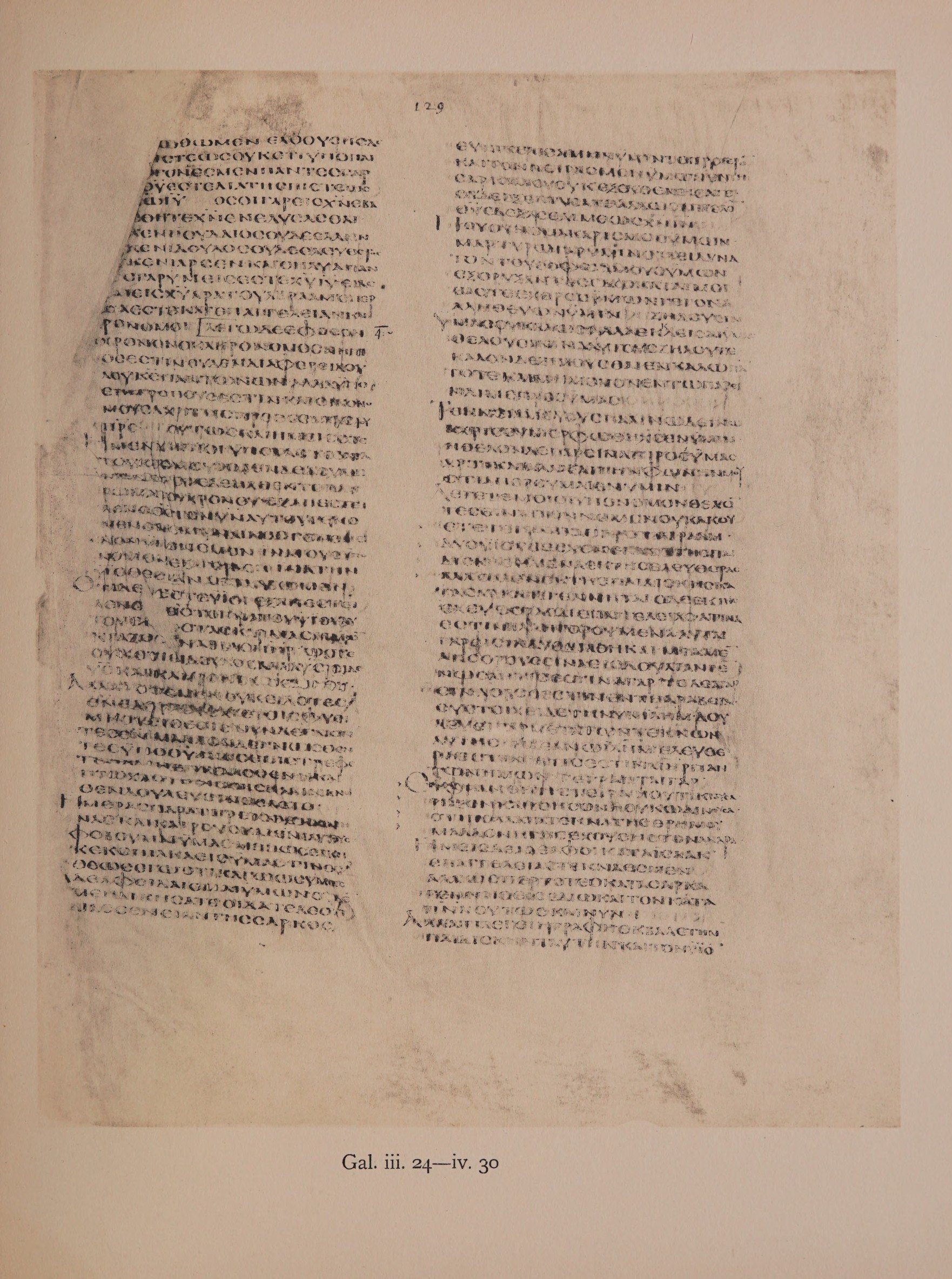
Where on the image
Page from the NTVMR transcription (docID 20002): verses 1-7 on fol. 129r (facsimile leaf 219), col. 1.
1λεγω δε εφ οσον χ̣ρονον ο κληρονομος νηπιος εστιν ουδεν διαφερει δουλου κς παντων ων · 2αλλα υπο επιτροπους εστιν και οικονομους αχρι της προθεσμιας του πρς · 3ουτως και ημεις οτε ημεν ν̣ηπιοι υπο τα στοι̣χ̣ια του κο̣σμου η̣μεν δεδουλωμ̣ε̣ν̣ο̣ι̣ 4οτε δε ηλθεν το πλη̣ρωμα του χρονου εξαπεστειλεν ο θς τον υν αυτου γενομενον εκ γυναικος γενομενον υπο νομον · 5ινα τους υπο νομον εξαγοραση ινα την υιοθεσιαν απο̣λ̣αβωμεν 6οτι δε εστε υιοι εξαπεστειλεν ο θς το πνα του υιου αυτου εις τας καρδιας ημων κραζον αββα ο πηρ · 7ωστε ουκετι ει δουλος αλλα υς ει δε υς και κληρονομ̣ος δια̣ θυ ·
Compare: Tischendorf 8th edition (1869)
1Λέγω δέ, ἐφ’ ὅσον χρόνον ὁ κληρονόμος νήπιός ἐστιν, οὐδὲν διαφέρει δούλου κύριος πάντων ὤν, 2ἀλλὰ ὑπὸ ἐπιτρόπους ἐστὶν καὶ οἰκονόμους ἄχρι τῆς προθεσμίας τοῦ πατρός. 3οὕτως καὶ ἡμεῖς, ὅτε ἦμεν νήπιοι, ὑπὸ τὰ στοιχεῖα τοῦ κόσμου ἤμεθα δεδουλωμένοι· 4ὅτε δὲ ἦλθεν τὸ πλήρωμα τοῦ χρόνου, ἐξαπέστειλεν ὁ θεὸς τὸν υἱὸν αὐτοῦ, γενόμενον ἐκ γυναικός, γενόμενον ὑπὸ νόμον, 5ἵνα τοὺς ὑπὸ νόμον ἐξαγοράσῃ, ἵνα τὴν υἱοθεσίαν ἀπολάβωμεν. 6ὅτι δέ ἐστε υἱοί, ἐξαπέστειλεν ὁ θεὸς τὸ πνεῦμα τοῦ υἱοῦ αὐτοῦ εἰς τὰς καρδίας ἡμῶν, κρᾶζον· Ἀββᾶ ὁ πατήρ. 7ὥστε οὐκέτι εἶ δοῦλος ἀλλὰ υἱός· εἰ δὲ υἱός, καὶ κληρονόμος διὰ θεοῦ.
1Now I say, That the heir, as long as he is a child, differeth nothing from a servant, though he be lord of all; 2But is under tutors and governors until the time appointed of the father. 3Even so we, when we were children, were in bondage under the elements of the world: 4But when the fulness of the time was come, God sent forth his Son, made of a woman, made under the law, 5To redeem them that were under the law, that we might receive the adoption of sons. 6And because ye are sons, God hath sent forth the Spirit of his Son into your hearts, crying, Abba, Father. 7Wherefore thou art no more a servant, but a son; and if a son, then an heir of God through Christ.
Where on the image
Page from the NTVMR transcription (docID 20002): verses 8-13 on fol. 129r (facsimile leaf 219), col. 1.
8αλλα τ̣οτε μεν ουκ ειδοτες θν εδο̣υ̣λευσ̣α̣τε τοις φυσι μη ουσι θεοις 9νυν δε γνοντες θν μαλλον δε γνωσθεντες υπο θυ πως επιστρεφετε παλι̣ν επι τα ασθενη και πτωχα στοι̣χ̣ια οις παλιν ανωθεν δουλευειν θελετε · 10ημερας παρατηρεισθε και μηνας και καιρους και ενιαυτους 11φοβουμαι υμας · μη πως εικη κεκοπιακα εις υμας · 12γινεσθε ως εγω οτι καγω ως υμε̣ι̣ς α̣δελφοι δαιομαι υμων ου̣δεν με ηδικησατε · 13οιδατε δε οτι δι ασθενειαν της σαρκος ευηγγ̣ελισαμην υμιν το προτερον
Compare: Tischendorf 8th edition (1869)
8Ἀλλὰ τότε μὲν οὐκ εἰδότες θεὸν ἐδουλεύσατε τοῖς φύσει μὴ οὖσιν θεοῖς· 9νῦν δὲ γνόντες θεόν, μᾶλλον δὲ γνωσθέντες ὑπὸ θεοῦ, πῶς ἐπιστρέφετε πάλιν ἐπὶ τὰ ἀσθενῆ καὶ πτωχὰ στοιχεῖα, οἷς πάλιν ἄνωθεν δουλεῦσαι θέλετε; 10ἡμέρας παρατηρεῖσθε καὶ μῆνας καὶ καιροὺς καὶ ἐνιαυτούς. 11φοβοῦμαι ὑμᾶς μήπως εἰκῇ κεκοπίακα εἰς ὑμᾶς. 12Γίνεσθε ὡς ἐγώ, ὅτι κἀγὼ ὡς ὑμεῖς, ἀδελφοί, δέομαι ὑμῶν. οὐδέν με ἠδικήσατε· 13οἴδατε δὲ ὅτι δι’ ἀσθένειαν τῆς σαρκὸς εὐηγγελισάμην ὑμῖν τὸ πρότερον,
8Howbeit then, when ye knew not God, ye did service unto them which by nature are no gods. 9But now, after that ye have known God, or rather are known of God, how turn ye again to the weak and beggarly elements, whereunto ye desire again to be in bondage? 10Ye observe days, and months, and times, and years. 11I am afraid of you, lest I have bestowed upon you labour in vain. 12Brethren, I beseech you, be as I am; for I am as ye are: ye have not injured me at all. 13Ye know how through infirmity of the flesh I preached the gospel unto you at the first.
Where on the image
Page from the NTVMR transcription (docID 20002): verses 14-22 on fol. 129r (facsimile leaf 219), col. 2.
14και τον πειρασμον υμων εν τη σαρκι̣ μ̣ου ουκ εξουθενησατε · ουδε εξεπτυσατε αλλ ως αγγελον θυ εδεξασθαι με ως χν ιν · 15που ουν ο μακαρισμος υμων μαρτυρω γαρ υμιν οτι ει δυνατον τους οφθαλμους υμων εξορυξαντες εδωκαται μοι 16ωστε εχθρος υμων γεγονα αληθευων υμιν 17ζηλουσιν υμας ου καλως αλλα εκλεισαι υμας θελουσιν ινα αυτους ζηλουτε 18καλον δε ζηλουσθαι εν καλω παντοτε και μη μονον εν τω παρειναι με προς υμας 19τεκνεια μου ους παλιν ωδεινω αχρις ου μορφωθη χς εν υμιν 20ηθελον δε παρειναι προς υμας αρτι και αλλαξαι την φωνην μου οτι απορουμαι εν υμιν · 21λεγετε μοι οι υπο νομον λ̣εγ̣οντες ειναι τον νομον ουκ ακουετε · 22γεγρ̣απ̣ται γαρ οτι αβρααμ · δυο υιους εσχεν εν̣α̣ ε̣κ̣ της παιδισκης και ενα εκ της ελευθερας
Compare: Tischendorf 8th edition (1869)
14καὶ τὸν πειρασμὸν ὑμῶν ἐν τῇ σαρκί μου οὐκ ἐξουθενήσατε οὐδὲ ἐξεπτύσατε, ἀλλὰ ὡς ἄγγελον θεοῦ ἐδέξασθέ με, ὡς Χριστὸν Ἰησοῦν. 15ποῦ οὖν ὁ μακαρισμὸς ὑμῶν; μαρτυρῶ γὰρ ὑμῖν ὅτι εἰ δυνατὸν τοὺς ὀφθαλμοὺς ὑμῶν ἐξορύξαντες ἐδώκατέ μοι. 16ὥστε ἐχθρὸς ὑμῶν γέγονα ἀληθεύων ὑμῖν; 17ζηλοῦσιν ὑμᾶς οὐ καλῶς, ἀλλὰ ἐκκλεῖσαι ὑμᾶς θέλουσιν, ἵνα αὐτοὺς ζηλοῦτε. 18καλὸν δὲ ζηλοῦσθαι ἐν καλῷ πάντοτε, καὶ μὴ μόνον ἐν τῷ παρεῖναί με πρὸς ὑμᾶς, 19τέκνα μου, οὓς πάλιν ὠδίνω μέχρις οὗ μορφωθῇ Χριστὸς ἐν ὑμῖν, 20ἤθελον δὲ παρεῖναι πρὸς ὑμᾶς ἄρτι, καὶ ἀλλάξαι τὴν φωνήν μου, ὅτι ἀποροῦμαι ἐν ὑμῖν. 21Λέγετέ μοι, οἱ ὑπὸ νόμον θέλοντες εἶναι, τὸν νόμον οὐκ ἀκούετε; 22γέγραπται γὰρ ὅτι Ἀβραὰμ δύο υἱοὺς ἔσχεν, ἕνα ἐκ τῆς παιδίσκης καὶ ἕνα ἐκ τῆς ἐλευθέρας.
14And my temptation which was in my flesh ye despised not, nor rejected; but received me as an angel of God, even as Christ Jesus. 15Where is then the blessedness ye spake of? for I bear you record, that, if it had been possible, ye would have plucked out your own eyes, and have given them to me. 16Am I therefore become your enemy, because I tell you the truth? 17They zealously affect you, but not well; yea, they would exclude you, that ye might affect them. 18But it is good to be zealously affected always in a good thing, and not only when I am present with you. 19My little children, of whom I travail in birth again until Christ be formed in you, 20I desire to be present with you now, and to change my voice; for I stand in doubt of you. 21Tell me, ye that desire to be under the law, do ye not hear the law? 22For it is written, that Abraham had two sons, the one by a bondmaid, the other by a freewoman.
Where on the image
Page from the NTVMR transcription (docID 20002): verses 23-30 on fol. 129r (facsimile leaf 219), col. 2; verse 30 continues on fol. 129v (facsimile leaf 220), col. 1 (which begins 'αυτης ου γαρ').
23αλλ ο μεν εκ της παιδισκης κατα σαρκα γεγεννηται ο δε εκ της ελευθερας δι επαγγελειας · 24ατινα εστιν αλληγορουμενα · αυται γαρ εισιν δυο δ[...]αι μια μεν απο ορους σινα εις δουλιαν γεννωσα ητις εστιν αγαρ 25το δε αγαρ σινα ορος εστιν εν τη αραβεια · συστοιχει δε τη νυν ιλημ · δουλευει γαρ μετα των τεκνων αυτης · 26η δε ανω ιλημ ελευθερα̣ εστιν̣ · ητις εστιν μηρ παντων ημων · 27γεγραπται γαρ · ευφρανθητι στειρα · η ου τικτουσα ρηξον και βοησον η ουκ ωδινουσα · οτι πολλα τα τεκνα της ερημου · μαλλον η της εχουσης τον ανδρα · 28ημεις δε αδελφοι κατα ισαακ · επαγγελειας τεκνα εσμεν · 29αλλ ωσπερ τοτε ο κατα σαρκα γεννηθεις εδιωκαι τον κατα πνα · ουτως και νυν · 30αλλα τι λεγει η γραφη · εκβαλε την παιδισκην ταυτην και τον υιον αυτης ου γαρ μη κληρονομηση ο υς της παιδισκης μετα του υιου της ελευθερας ·
Compare: Tischendorf 8th edition (1869)
23ἀλλ’ ὁ μὲν ἐκ τῆς παιδίσκης κατὰ σάρκα γεγέννηται, ὁ δὲ ἐκ τῆς ἐλευθέρας διὰ τῆς ἐπαγγελίας. 24ἅτινά ἐστιν ἀλληγορούμενα· αὗται γάρ εἰσιν δύο διαθῆκαι, μία μὲν ἀπὸ ὄρους Σινᾶ, εἰς δουλίαν γεννῶσα, ἥτις ἐστὶν Ἄγαρ. 25τὸ γὰρ Σινᾶ ὄρος ἐστὶν ἐν τῇ Ἀραβίᾳ· συνστοιχεῖ δὲ τῇ νῦν Ἱερουσαλήμ, δουλεύει γὰρ μετὰ τῶν τέκνων αὐτῆς. 26ἡ δὲ ἄνω Ἱερουσαλὴμ ἐλευθέρα ἐστίν, ἥτις ἐστὶν μήτηρ ἡμῶν· 27γέγραπται γάρ, εὐφράνθητι, στεῖρα ἡ οὐ τίκτουσα· ῥῆξον καὶ βόησον, ἡ οὐκ ὠδίνουσα· ὅτι πολλὰ τὰ τέκνα τῆς ἐρήμου μᾶλλον ἢ τῆς ἐχούσης τὸν ἄνδρα. 28ὑμεῖς δέ, ἀδελφοί, κατὰ Ἰσαὰκ ἐπαγγελίας τέκνα ἐστέ. 29ἀλλ’ ὥσπερ τότε ὁ κατὰ σάρκα γεννηθεὶς ἐδίωκεν τὸν κατὰ πνεῦμα, οὕτως καὶ νῦν. 30ἀλλὰ τί λέγει ἡ γραφή; ἔκβαλε τὴν παιδίσκην καὶ τὸν υἱὸν αὐτῆς, οὐ γὰρ μὴ κληρονομήσει ὁ υἱὸς τῆς παιδίσκης μετὰ τοῦ υἱοῦ τῆς ἐλευθέρας.
23But he who was of the bondwoman was born after the flesh; but he of the freewoman was by promise. 24Which things are an allegory: for these are the two covenants; the one from the mount Sinai, which gendereth to bondage, which is Agar. 25For this Agar is mount Sinai in Arabia, and answereth to Jerusalem which now is, and is in bondage with her children. 26But Jerusalem which is above is free, which is the mother of us all. 27For it is written, Rejoice, thou barren that bearest not; break forth and cry, thou that travailest not: for the desolate hath many more children than she which hath an husband. 28Now we, brethren, as Isaac was, are the children of promise. 29But as then he that was born after the flesh persecuted him that was born after the Spirit, even so it is now. 30Nevertheless what saith the scripture? Cast out the bondwoman and her son: for the son of the bondwoman shall not be heir with the son of the free woman.
Where on the image
Page from the NTVMR transcription (docID 20002): verse 31 on fol. 129v (facsimile leaf 220), col. 1.
31ημεις δε αδελφοι ουκ · εσμεν παιδισκης τεκνα · αλλα της ελευθερας ·
Compare: Tischendorf 8th edition (1869)
31διό, ἀδελφοί, οὐκ ἐσμὲν παιδίσκης τέκνα ἀλλὰ τῆς ἐλευθέρας.
31So then, brethren, we are not children of the bondwoman, but of the free.
Cite
Sources
- Source: Codex Alexandrinus page images + NTVMR transcription (CC BY 4.0) + Tischendorf 8th edition + KJV (holding institution)
- Critical edition: Codex Alexandrinus transcription, NTVMR (INTF Münster, CC BY 4.0); Tischendorf 8th edition for comparison
← previous · → next · v cycle view · l back to library