James, Chapter 1 (Codex Alexandrinus)
Introduction
James 1 from Codex Alexandrinus (GA 02), a fifth-century Greek Bible held by the British Library (Royal MS 1 D. VIII). In the New Testament it is the chief witness to the Byzantine text in the Gospels and to the Alexandrian text in the rest of the New Testament. Its New Testament volume lacks Matthew 1:1-25:5, John 6:50-8:52 and 2 Corinthians 4:13-12:6.
This entry meets the strict three-criteria standard of the Theosis Library:
- Manuscript scan: the actual page(s) of Codex Alexandrinus containing this passage (folios 102r, 102v), reproduced from the British Museum's 1909 photographic facsimile edited by F. G. Kenyon, as digitised by the Getty Research Institute for the Internet Archive. The facsimile prints the verse range beneath each plate; that printed range was read for every page used and agrees with the INTF's NTVMR verse-level page index (CC BY 4.0). The page for each section now comes from the NTVMR transcription itself, which records the page and column on which every verse is written.
- Original text: the manuscript's own text, from a diplomatic transcription (see Greek text below), with Tischendorf's 8th critical edition (1869) for comparison.
- English translation: the King James Version (1611), retrieved verbatim from the public-domain bible-api.com endpoint.
Greek text: a diplomatic transcription of Codex Alexandrinus made by the Institut für Neutestamentliche Textforschung (INTF), Münster, for the New Testament Virtual Manuscript Room (NTVMR), published under a Creative Commons Attribution 4.0 licence. It gives the letters as the first scribe wrote them: no accents or breathings, the scribe's own spelling, and the sacred names in their contracted form (θς for θεος, ις for ιησους, κς for κυριος; the overline is not reproduced). Corrections by later hands are not shown. Letters in square brackets are not legible on the page and were restored by the transcribers, a dot under a letter marks an uncertain reading, and [...] marks text lost to damage. Beneath each section, for comparison, is Tischendorf's 8th critical edition (1869). Where the two differ, the transcription is what the manuscript says. Each section is shown with the page on which the transcription places its verses.
How was this verified? (Provenance)
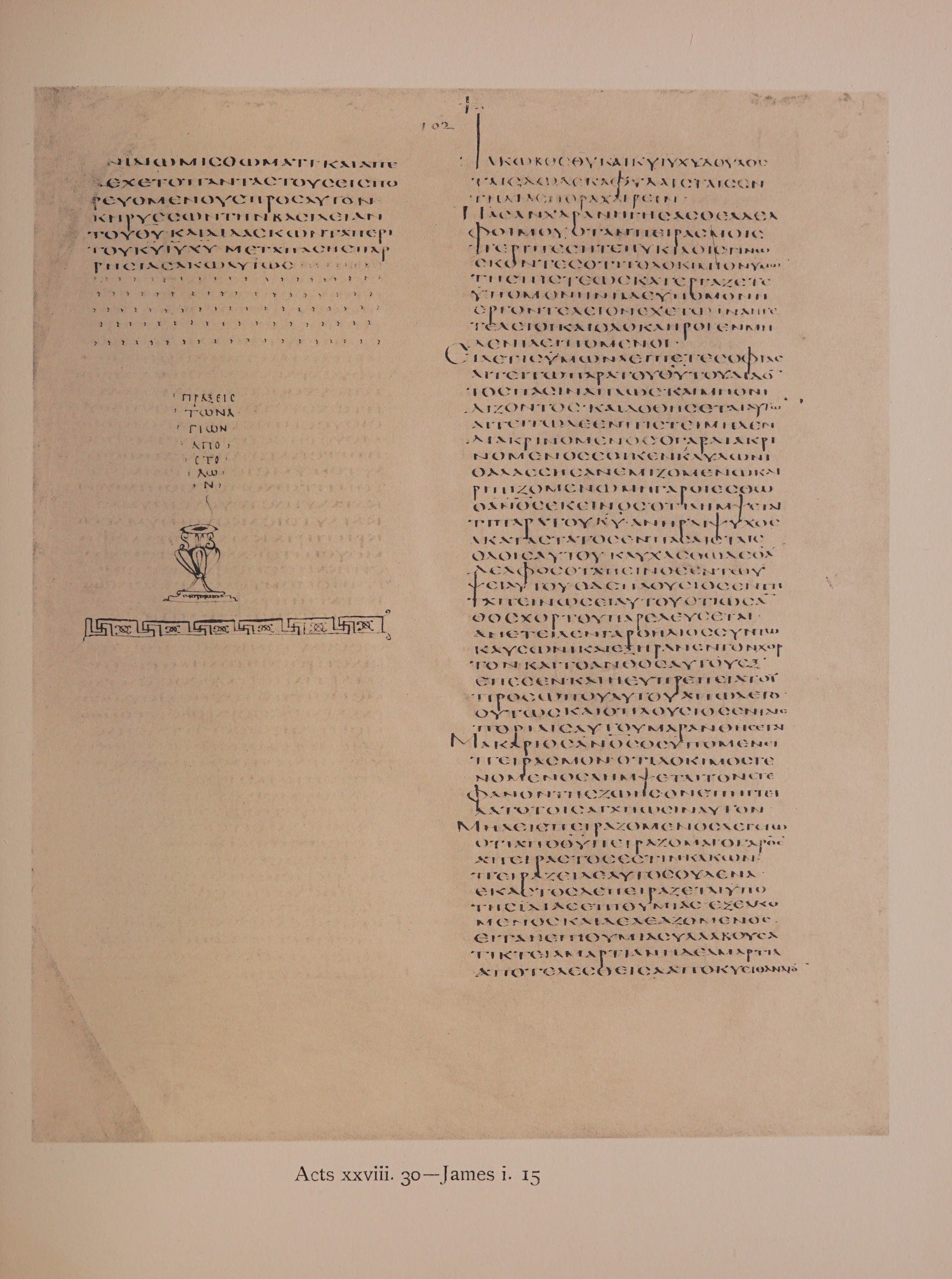
Where on the image
Page from the NTVMR transcription (docID 20002): verses 1-8 on fol. 102r (facsimile leaf 165), col. 2.
1ιακωβος θυ και κυ ιυ χυ δουλος ταις δωδεκα φυλαις ταις εν τη διασπορα χαιρειν · 2πασαν χαραν ηγησασθε αδελφοι μου οταν πειρασμοις περιπεσητε πυκιλοις · 3γινωσκοντες οτι το δοκιμιον υμων της πιστεως κατεργαζετε υπομονην 4η δε υπομονη εργον τελειον εχετω ινα ητε τελειοι · και ολοκληροι εν μηδενι λειπομενοι · 5ει δε τις υμων λειπετε σοφιας αιτειτω παρα του θυ του διδοντος πασιν απλως · και μη ονιδιζοντος · και δοθησεται αυτω 6αιτειτω δε εν πιστει μηδεν διακρινομενος · ο γαρ διακρινομενος εοικεν κλυδωνι θαλασσης ανεμιζομενω και ριπιζομενω 7μη γαρ οιεσθω ο ανος εκεινος · οτι λημψεται τι παρα του [.]υ · 8ανηρ διψυχος ακαταστατος εν πασαις ταις οδοις αυτου ·
Compare: Tischendorf 8th edition (1869)
1Ἰάκωβος θεοῦ καὶ κυρίου Ἰησοῦ Χριστοῦ δοῦλος ταῖς δώδεκα φυλαῖς ταῖς ἐν τῇ διασπορᾷ χαίρειν. 2Πᾶσαν χαρὰν ἡγήσασθε, ἀδελφοί μου, ὅταν πειρασμοῖς περιπέσητε ποικίλοις, 3γινώσκοντες ὅτι τὸ δοκίμιον ὑμῶν τῆς πίστεως κατεργάζεται ὑπομονήν. 4ἡ δὲ ὑπομονὴ ἔργον τέλειον ἐχέτω, ἵνα ἦτε τέλειοι καὶ ὁλόκληροι, ἐν μηδενὶ λειπόμενοι. 5εἰ δέ τις ὑμῶν λείπεται σοφίας, αἰτείτω παρὰ τοῦ διδόντος θεοῦ πᾶσιν ἁπλῶς καὶ μὴ ὀνειδίζοντος, καὶ δοθήσεται αὐτῷ. 6αἰτείτω δὲ ἐν πίστει, μηδὲν διακρινόμενος· ὁ γὰρ διακρινόμενος ἔοικεν κλύδωνι θαλάσσης ἀνεμιζομένῳ καὶ ῥιπιζομένῳ. 7μὴ γὰρ οἰέσθω ὁ ἄνθρωπος ἐκεῖνος ὅτι λήμψεταί τι παρὰ τοῦ κυρίου, 8ἀνὴρ δίψυχος, ἀκατάστατος ἐν πάσαις ταῖς ὁδοῖς αὐτοῦ.
1James, a servant of God and of the Lord Jesus Christ, to the twelve tribes which are scattered abroad, greeting. 2My brethren, count it all joy when ye fall into divers temptations; 3Knowing this, that the trying of your faith worketh patience. 4But let patience have her perfect work, that ye may be perfect and entire, wanting nothing. 5If any of you lack wisdom, let him ask of God, that giveth to all men liberally, and upbraideth not; and it shall be given him. 6But let him ask in faith, nothing wavering. For he that wavereth is like a wave of the sea driven with the wind and tossed. 7For let not that man think that he shall receive any thing of the Lord. 8A double minded man is unstable in all his ways.
Where on the image
Page from the NTVMR transcription (docID 20002): verses 9-15 on fol. 102r (facsimile leaf 165), col. 2.
9καυχασθω δε ο αδελφος ο ταπεινος εν τω υψει αυτου · 10ο δε πλουσιος εν τη ταπεινωσει αυτου οτι ως ανθος χορτου παρελευσεται · 11ανετειλεν γαρ ο ηλιος συν τω καυσωνι και εξηρανεν τον χορτον και το ανθος αυτου εξεπεσεν · και η ευπρεπεια του προσωπου αυτου απωλετο ουτως και ο πλουσιος εν ταις ποριαις αυτου μαρανθησεται 12μακαριος ανος ος υπομενει πειρασμον · οτι δοκιμος γενομενος λημψεται τον στεφανον της ζωης ον επηγγειλατο τοις αγαπωσιν αυτον · 13μηδεις πειραζομενος λεγετω οτι απο θυ πειραζομαι · ο γαρ θς απειραστος εστιν κακων · πειραζει δε αυτος ουδενα · 14εκαστος δε πειραζεται υπο της ιδιας επιθυμιας · εξελκομενος και δελεαζομενος 15ειτα η επιθυμια συλλαβουσα τικτει αμαρτιαν η δε αμαρτια αποτελεσθεισα αποκυει θανατον
Compare: Tischendorf 8th edition (1869)
9Καυχάσθω δὲ ὁ ἀδελφὸς ὁ ταπεινὸς ἐν τῷ ὕψει αὐτοῦ, 10ὁ δὲ πλούσιος ἐν τῇ ταπεινώσει αὐτοῦ, ὅτι ὡς ἄνθος χόρτου παρελεύσεται. 11ἀνέτειλεν γὰρ ὁ ἥλιος σὺν τῷ καύσωνι καὶ ἐξήρανεν τὸν χόρτον, καὶ τὸ ἄνθος αὐτοῦ ἐξέπεσεν καὶ ἡ εὐπρέπεια τοῦ προσώπου αὐτοῦ ἀπώλετο· οὕτως καὶ ὁ πλούσιος ἐν ταῖς πορείαις αὐτοῦ μαρανθήσεται. 12Μακάριος ἀνὴρ ὃς ὑπομένει πειρασμόν, ὅτι δόκιμος γενόμενος λήμψεται τὸν στέφανον τῆς ζωῆς, ὃν ἐπηγγείλατο τοῖς ἀγαπῶσιν αὐτόν. 13μηδεὶς πειραζόμενος λεγέτω ὅτι ἀπὸ θεοῦ πειράζομαι· ὁ γὰρ θεὸς ἀπείραστός ἐστιν κακῶν, πειράζει δὲ αὐτὸς οὐδένα. 14ἕκαστος δὲ πειράζεται ὑπὸ τῆς ἰδίας ἐπιθυμίας ἐξελκόμενος καὶ δελεαζόμενος· 15εἶτα ἡ ἐπιθυμία συλλαβοῦσα τίκτει ἁμαρτίαν, ἡ δὲ ἁμαρτία ἀποτελεσθεῖσα ἀποκύει θάνατον.
9Let the brother of low degree rejoice in that he is exalted: 10But the rich, in that he is made low: because as the flower of the grass he shall pass away. 11For the sun is no sooner risen with a burning heat, but it withereth the grass, and the flower thereof falleth, and the grace of the fashion of it perisheth: so also shall the rich man fade away in his ways. 12Blessed is the man that endureth temptation: for when he is tried, he shall receive the crown of life, which the Lord hath promised to them that love him. 13Let no man say when he is tempted, I am tempted of God: for God cannot be tempted with evil, neither tempteth he any man: 14But every man is tempted, when he is drawn away of his own lust, and enticed. 15Then when lust hath conceived, it bringeth forth sin: and sin, when it is finished, bringeth forth death.
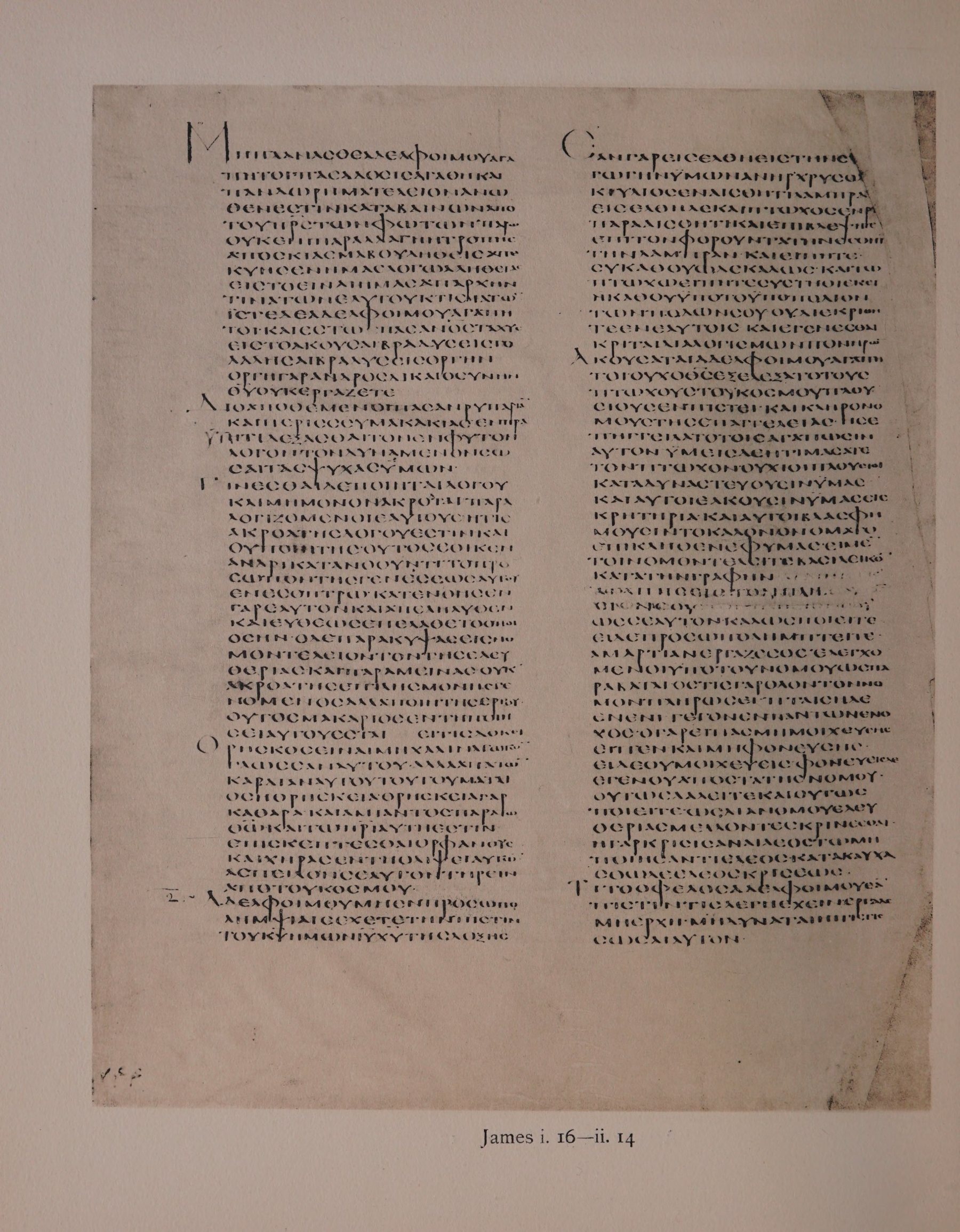
Where on the image
Page from the NTVMR transcription (docID 20002): verses 16-27 on fol. 102v (facsimile leaf 166), col. 1.
16μη πλανασθε αδελφοι μου αγαπητοι · 17πασα δοσις αγαθη και παν δωρημα τελειον ανωθεν εστιν καταβαινων απο του πρς των φωτων παρ ω ουκ ενι παραλλαγη η τροπης αποσκιασμα 18βουληθεις απεκυησεν ημας λογω αληθειας εις το ειναι ημας απαρχην τινα των εαυτου κτισματων · 19ιστε δε αδελφοι μου αγαπητοι · και εστως̣ πας ανος ταχυς εις το ακουσαι · βραδυς εις το λαλησαι βραδυς εις οργην 20οργη γαρ ανδρος δικαιοσυνην θυ ουκ εργαζετε 21διο αποθεμενοι πασαν ρυπαριαν και περισσευμα κακιας · εν πραυτι δεξασθαι τον ενφυτον λογον τον δυναμενον σωσαι τας ψυχας υμων · 22γινεσθαι δε ποιηται λογου και μη μονον ακροται παραλογιζομενοι εαυτους · 23η τις ακροατης λογου εστιν και ου ποιητης · ουτος εοικεν ανδρι κατανοουντι το προσωπον της γενεσεως αυτου εν εσοπτρω · 24κατενοησεν γαρ εαυτον και απεληλυθεν και ευθεως επελαθετο οποιος ην · 25ο δε παρακυψας εις νομον τελειον τον της ελευθεριας και παραμεινας ουκ ακροατης επιλησμονης γενομενος αλλα ποιητης εργου ουτος μακαριος εν τη ποιησει αυτου εσται 26ει τις δοκει θρησκος ειναι μη χαλιναγωγων γλωσσαν αυτου · αλλα απατων καρδιαν αυτου τουτου ματαιος η θρησκεια · 27θρησκεια γαρ καθαρα και αμιαντος παρα τω θω και τω πρι αυτη εστιν επισκεπτεσθαι ορφανους και χηρας εν τη θλιψει αυτων ασπειλον σεαυτον τηρειν απο του κοσμου ·
Compare: Tischendorf 8th edition (1869)
16Μὴ πλανᾶσθε, ἀδελφοί μου ἀγαπητοί. 17πᾶσα δόσις ἀγαθὴ καὶ πᾶν δώρημα τέλειον ἄνωθέν ἐστιν, καταβαῖνον ἀπὸ τοῦ πατρὸς τῶν φώτων, παρ’ ᾧ οὐκ ἔνι παραλλαγὴ ἢ τροπῆς ἀποσκίασμα. 18βουληθεὶς ἀπεκύησεν ἡμᾶς λόγῳ ἀληθείας, εἰς τὸ εἶναι ἡμᾶς ἀπαρχήν τινα τῶν αὐτοῦ κτισμάτων. 19Ἴστε, ἀδελφοί μου ἀγαπητοί. ἔστω δὲ πᾶς ἄνθρωπος ταχὺς εἰς τὸ ἀκοῦσαι, βραδὺς εἰς τὸ λαλῆσαι, βραδὺς εἰς ὀργήν· 20ὀργὴ γὰρ ἀνδρὸς δικαιοσύνην θεοῦ οὐκ ἐργάζεται. 21διὸ ἀποθέμενοι πᾶσαν ῥυπαρίαν καὶ περισσείαν κακίας ἐν πραΰτητι δέξασθε τὸν ἔμφυτον λόγον τὸν δυνάμενον σῶσαι τὰς ψυχὰς ὑμῶν. 22γίνεσθε δὲ ποιηταὶ λόγου καὶ μὴ μόνον ἀκροαταὶ παραλογιζόμενοι ἑαυτούς. 23ὅτι εἴ τις ἀκροατὴς λόγου ἐστὶν καὶ οὐ ποιητής, οὗτος ἔοικεν ἀνδρὶ κατανοοῦντι τὸ πρόσωπον τῆς γενέσεως αὐτοῦ ἐν ἐσόπτρῳ· 24κατενόησεν γὰρ ἑαυτὸν καὶ ἀπελήλυθεν καὶ εὐθέως ἐπελάθετο ὁποῖος ἦν. 25ὁ δὲ παρακύψας εἰς νόμον τέλειον τὸν τῆς ἐλευθερίας καὶ παραμείνας, οὐκ ἀκροατὴς ἐπιλησμονῆς γενόμενος ἀλλὰ ποιητὴς ἔργου, οὗτος μακάριος ἐν τῇ ποιήσει αὐτοῦ ἔσται. 26εἴ τις δοκεῖ θρησκὸς εἶναι, μὴ χαλιναγωγῶν γλῶσσαν αὐτοῦ ἀλλὰ ἀπατῶν καρδίαν αὐτοῦ, τούτου μάταιος ἡ θρησκία. 27θρησκία καθαρὰ καὶ ἀμίαντος παρὰ θεῷ καὶ πατρὶ αὕτη ἐστίν, ἐπισκέπτεσθαι ὀρφανοὺς καὶ χήρας ἐν τῇ θλίψει αὐτῶν, ἄσπιλον ἑαυτὸν τηρεῖν ἀπὸ τοῦ κόσμου.
16Do not err, my beloved brethren. 17Every good gift and every perfect gift is from above, and cometh down from the Father of lights, with whom is no variableness, neither shadow of turning. 18Of his own will begat he us with the word of truth, that we should be a kind of firstfruits of his creatures. 19Wherefore, my beloved brethren, let every man be swift to hear, slow to speak, slow to wrath: 20For the wrath of man worketh not the righteousness of God. 21Wherefore lay apart all filthiness and superfluity of naughtiness, and receive with meekness the engrafted word, which is able to save your souls. 22But be ye doers of the word, and not hearers only, deceiving your own selves. 23For if any be a hearer of the word, and not a doer, he is like unto a man beholding his natural face in a glass: 24For he beholdeth himself, and goeth his way, and straightway forgetteth what manner of man he was. 25But whoso looketh into the perfect law of liberty, and continueth therein, he being not a forgetful hearer, but a doer of the work, this man shall be blessed in his deed. 26If any man among you seem to be religious, and bridleth not his tongue, but deceiveth his own heart, this man’s religion is vain. 27Pure religion and undefiled before God and the Father is this, To visit the fatherless and widows in their affliction, and to keep himself unspotted from the world.
Cite
Sources
- Source: Codex Alexandrinus page images + NTVMR transcription (CC BY 4.0) + Tischendorf 8th edition + KJV (holding institution)
- Critical edition: Codex Alexandrinus transcription, NTVMR (INTF Münster, CC BY 4.0); Tischendorf 8th edition for comparison
← previous · → next · v cycle view · l back to library