John, Chapter 11 (Codex Alexandrinus)
Introduction
John 11 from Codex Alexandrinus (GA 02), a fifth-century Greek Bible held by the British Library (Royal MS 1 D. VIII). In the New Testament it is the chief witness to the Byzantine text in the Gospels and to the Alexandrian text in the rest of the New Testament. Its New Testament volume lacks Matthew 1:1-25:5, John 6:50-8:52 and 2 Corinthians 4:13-12:6.
This entry meets the strict three-criteria standard of the Theosis Library:
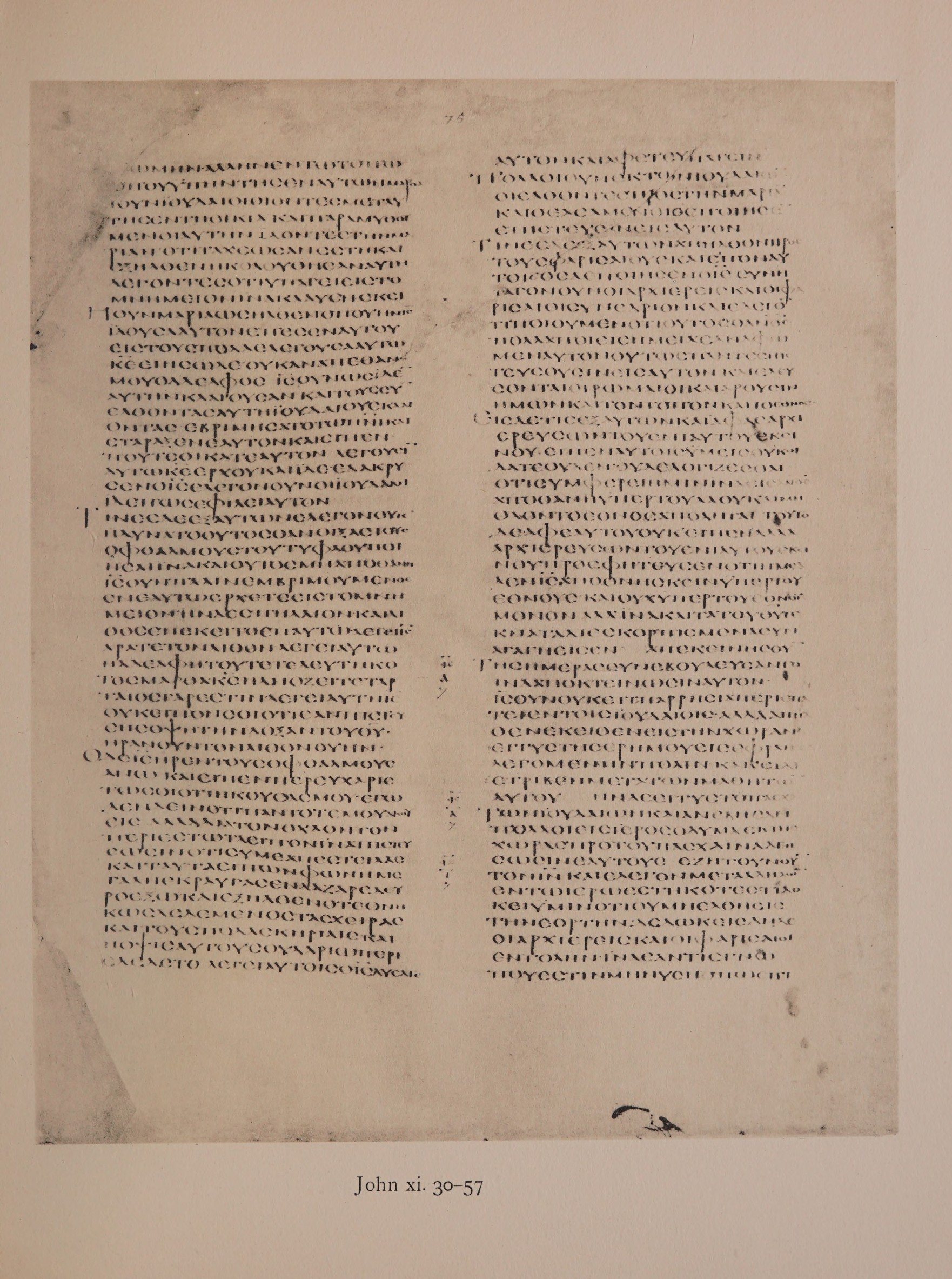
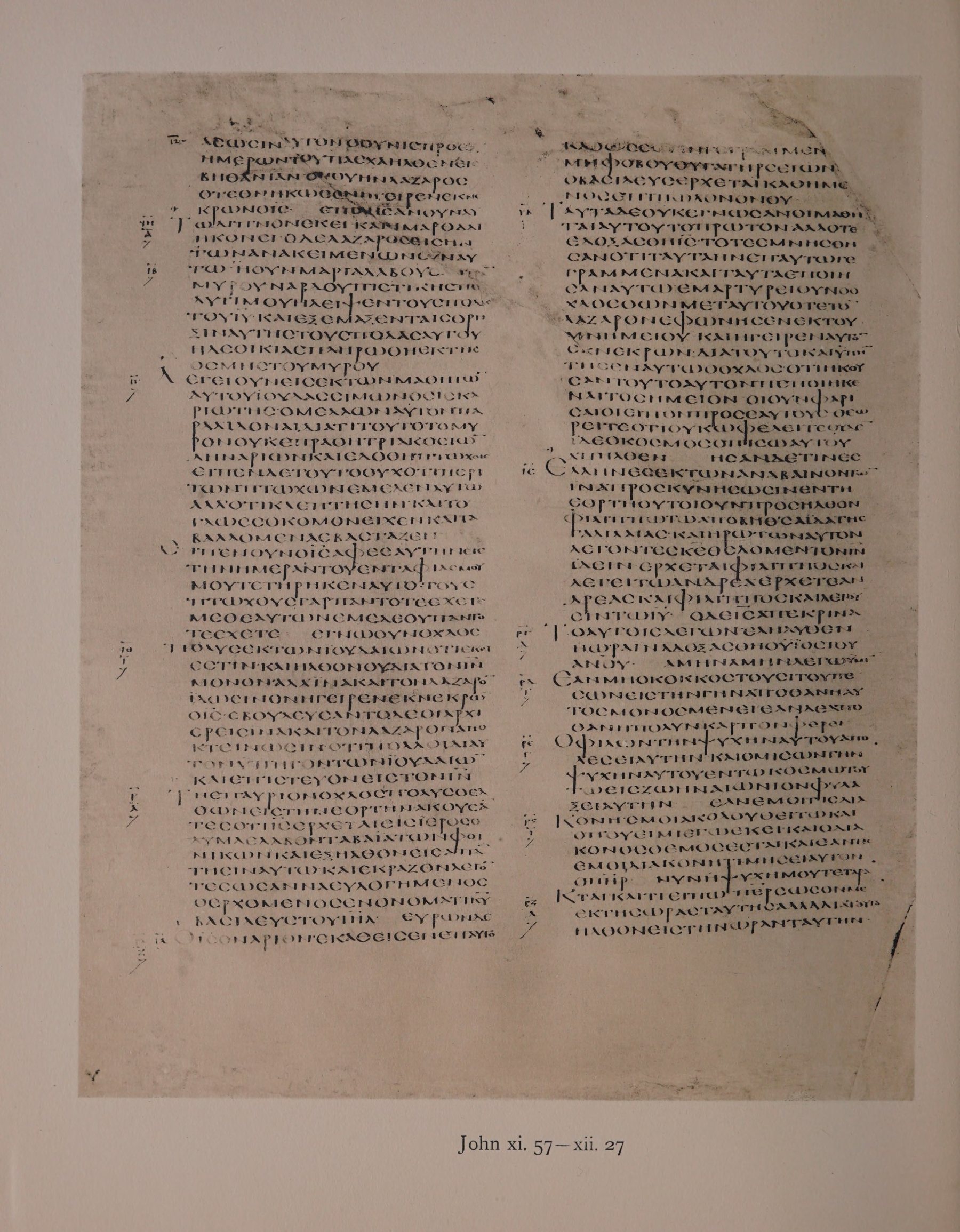
- Manuscript scan: the actual page(s) of Codex Alexandrinus containing this passage (folios 74v, 75r, 75v), reproduced from the British Museum's 1909 photographic facsimile edited by F. G. Kenyon, as digitised by the Getty Research Institute for the Internet Archive. The facsimile prints the verse range beneath each plate; that printed range was read for every page used and agrees with the INTF's NTVMR verse-level page index (CC BY 4.0). The page for each section now comes from the NTVMR transcription itself, which records the page and column on which every verse is written.
- Original text: the manuscript's own text, from a diplomatic transcription (see Greek text below), with Tischendorf's 8th critical edition (1869) for comparison.
- English translation: the King James Version (1611), retrieved verbatim from the public-domain bible-api.com endpoint.
Greek text: a diplomatic transcription of Codex Alexandrinus made by the Institut für Neutestamentliche Textforschung (INTF), Münster, for the New Testament Virtual Manuscript Room (NTVMR), published under a Creative Commons Attribution 4.0 licence. It gives the letters as the first scribe wrote them: no accents or breathings, the scribe's own spelling, and the sacred names in their contracted form (θς for θεος, ις for ιησους, κς for κυριος; the overline is not reproduced). Corrections by later hands are not shown. Letters in square brackets are not legible on the page and were restored by the transcribers, a dot under a letter marks an uncertain reading, and [...] marks text lost to damage. Beneath each section, for comparison, is Tischendorf's 8th critical edition (1869). Where the two differ, the transcription is what the manuscript says. Each section is shown with the page on which the transcription places its verses.
How was this verified? (Provenance)
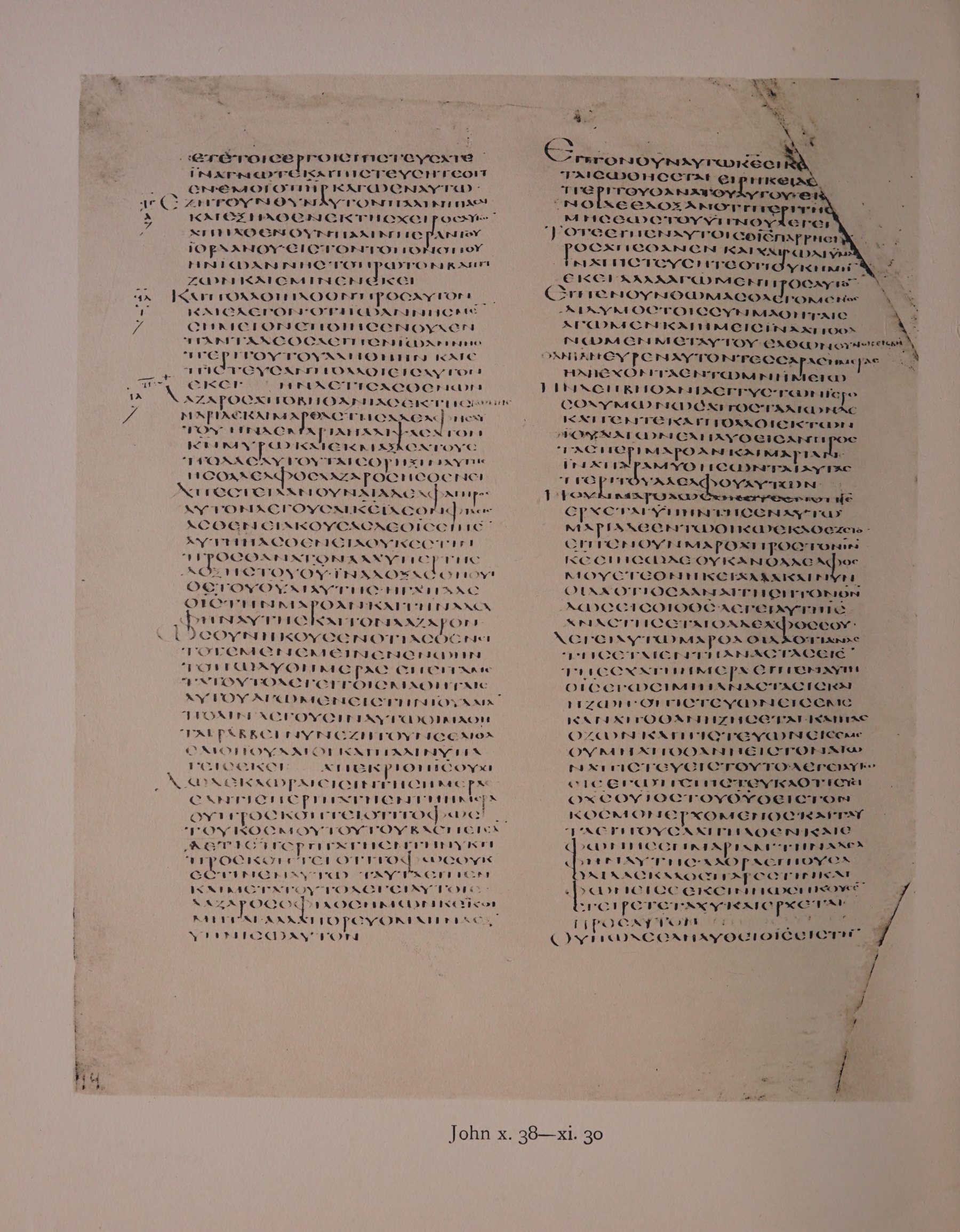
Where on the image
Page from the NTVMR transcription (docID 20002): verses 1-11 on fol. 74v (facsimile leaf 110), col. 1.
1ην δε τις ασθενων λαζαρος απο βηθανιας εκ της κ̣ω̣μ̣η̣ς̣ μ̣α̣ρ̣ι̣α̣ς̣ της αδελφης αυτου · 2ην δε μαρια η αλιψασα τον κν μυρω · και εκμαξασα τους ποδας αυτου ταις θρηξιν αυτης ης ο αδελφος λαζαρος ησθενει 3απεστειλαν ουν αι αδελφαι προς αυτον λεγουσαι κε ιδε ον φιλεις ασθενει · 4ακουσας δε ο ις ειπεν αυτη η ασθενεια ουκ εστιν προς θανατον · αλλ υπερ της δοξης του θυ · ινα δοξασθη ο υιος του θυ δι αυτης · 5ηγαπα δε ο ις την μαρθαν · και την αδελφην αυτης και τον λαζαρον · 6ως ουν ηκουσεν οτι ασθενει τοτε μεν εμεινεν εν ω ην τοπω δυο ημερας · 7επειτα μετα τουτο λεγει τοις μαθηταις αυτου αγωμεν εις την ιουδαιαν πολιν · 8λεγουσιν αυτω οι μαθηται · ραββει · νυν εζητουν σε λιθασαι οι ιουδαιοι και παλιν υπαγεις εκει · 9απεκριθη ις ουχι δωδεκα ωραι εισιν της ημερας εαν τις περιπατη εν τη ημερα ου προσκοπτει οτι το φως του κοσμου τουτου βλεπει 10εαν δε τις περιπατη εν τη νυκτι προσκοπτει οτι το φως ουκ εστιν εν αυτω · 11ταυτα ειπεν και μετα τουτο λεγει αυτοις · λαζαρος ο φιλος ημων κεκοιμηται · αλλα πορευομαι ινα εξυπνισω αυτον
Compare: Tischendorf 8th edition (1869)
1Ἦν δέ τις ἀσθενῶν, Λάζαρος ἀπὸ Βηθανίας, ἐκ τῆς κώμης τῆς Μαρίας καὶ Μάρθας τῆς ἀδελφῆς αὐτῆς. 2ἦν δὲ Μαρία ἡ ἀλείψασα τὸν κύριον μύρῳ καὶ ἐκμάξασα τοὺς πόδας αὐτοῦ ταῖς θριξὶν αὐτῆς, ἧς ὁ ἀδελφὸς Λάζαρος ἠσθένει. 3ἀπέστειλαν οὖν αἱ ἀδελφαὶ πρὸς αὐτὸν λέγουσαι· κύριε, ἴδε ὃν φιλεῖς ἀσθενεῖ. 4ἀκούσας δὲ ὁ Ἰησοῦς εἶπεν· αὕτη ἡ ἀσθένεια οὐκ ἔστιν πρὸς θάνατον ἀλλ’ ὑπὲρ τῆς δόξης τοῦ θεοῦ, ἵνα δοξασθῇ ὁ υἱὸς τοῦ θεοῦ δι’ αὐτῆς. 5ἠγάπα δὲ ὁ Ἰησοῦς τὴν Μάρθαν καὶ τὴν ἀδελφὴν αὐτῆς καὶ τὸν Λάζαρον. 6ὡς οὖν ἤκουσεν ὅτι ἀσθενεῖ, τότε μὲν ἔμεινεν ἐν ᾧ ἦν τόπῳ δύο ἡμέρας· 7ἔπειτα μετὰ τοῦτο λέγει τοῖς μαθηταῖς· ἄγωμεν εἰς τὴν Ἰουδαίαν πάλιν. 8λέγουσιν αὐτῷ οἱ μαθηταί· ῥαββεί, νῦν ἐζήτουν σε λιθάσαι οἱ Ἰουδαῖοι, καὶ πάλιν ὑπάγεις ἐκεῖ; 9ἀπεκρίθη Ἰησοῦς· οὐχὶ δώδεκα ὧραί εἰσίν τῆς ἡμέρας; ἐάν τις περιπατῇ ἐν τῇ ἡμέρᾳ, οὐ προσκόπτει, ὅτι τὸ φῶς τοῦ κόσμου τούτου βλέπει· 10ἐὰν δέ τις περιπατῇ ἐν τῇ νυκτί, προσκόπτει, ὅτι τὸ φῶς οὐκ ἔστιν ἐν αὐτῷ. 11ταῦτα εἶπεν, καὶ μετὰ τοῦτο λέγει αὐτοῖς· Λάζαρος ὁ φίλος ἡμῶν κεκοίμηται· ἀλλὰ πορεύομαι ἵνα ἐξυπνίσω αὐτόν.
1Now a certain man was sick, named Lazarus, of Bethany, the town of Mary and her sister Martha. 2(It was that Mary which anointed the Lord with ointment, and wiped his feet with her hair, whose brother Lazarus was sick.) 3Therefore his sisters sent unto him, saying, Lord, behold, he whom thou lovest is sick. 4When Jesus heard that, he said, This sickness is not unto death, but for the glory of God, that the Son of God might be glorified thereby. 5Now Jesus loved Martha, and her sister, and Lazarus. 6When he had heard therefore that he was sick, he abode two days still in the same place where he was. 7Then after that saith he to his disciples, Let us go into Judaea again. 8His disciples say unto him, Master, the Jews of late sought to stone thee; and goest thou thither again? 9Jesus answered, Are there not twelve hours in the day? If any man walk in the day, he stumbleth not, because he seeth the light of this world. 10But if a man walk in the night, he stumbleth, because there is no light in him. 11These things said he: and after that he saith unto them, Our friend Lazarus sleepeth; but I go, that I may awake him out of sleep.
Where on the image
Page from the NTVMR transcription (docID 20002): verses 12-21 on fol. 74v (facsimile leaf 110), col. 2.
12ειπον ουν αυτω κε ει κε[κοιμη]ται σωθησεται 13ειρηκει δε [ο] [ις] περι του θανατου αυτου · εκ[ει]νοι δε εδοξαν οτι περι της [κοι]μησεως του υπνου λεγει 14τοτε ειπεν αυτοις ο ις παρρησια̣ [λαζα]ρος απεθανεν 15και χαιρω δι υμας̣ ινα πιστευσητε οτι ουκ ημην εκει · αλλα αγωμεν προς αυτον 16ειπεν ουν θωμας ο λεγομενος διδυμος τοις συνμαθηταις αγωμεν · και ημεις ινα αποθανωμεν μετ αυτου · 17ελθων ουν ο ις ευρεν αυτον τεσσαρας ημε[ρας] εχοντα εν τω μνημειω 18ην δε η βηθανια εγγυς των ιεροσολυμων ως απο σταδιων δεκαπεντε · 19και πολλοι εκ των ιουδαιων εληλυθεισαν προς τας περι μαρθαν · και μαριαν · ινα παραμυθησωνται αυτας περι του αδελφου αυτων · 20η ουν μαρθα ως ηκουσεν οτι ις ερχεται · υπηντησεν αυτω μαρια δε εν τω οικω εκαθεζετο 21ειπεν ουν μαρθα προς τον ιν κε ει ης ωδε · ουκ αν ο αδελφος μου ετεθνηκει ·
Compare: Tischendorf 8th edition (1869)
12εἶπον οὖν αὐτῷ οἱ μαθηταὶ κύριε, εἰ κεκοίμηται σωθήσεται. 13εἰρήκει δὲ ὁ Ἰησοῦς περὶ τοῦ θανάτου αὐτοῦ. ἐκεῖνοι δὲ ἔδοξαν ὅτι περὶ τῆς κοιμήσεως τοῦ ὕπνου λέγει. 14τότε οὖν εἶπεν αὐτοῖς ὁ Ἰησοῦς παρρησίᾳ· Λάζαρος ἀπέθανεν, 15καὶ χαίρω δι’ ὑμᾶς, ἵνα πιστεύσητε, ὅτι οὐκ ἤμην ἐκεῖ· ἀλλὰ ἄγωμεν πρὸς αὐτόν. 16εἶπεν οὖν Θωμᾶς ὁ λεγόμενος Δίδυμος τοῖς συνμαθηταῖς· ἄγωμεν καὶ ἡμεῖς ἵνα ἀποθάνωμεν μετ’ αὐτοῦ. 17Ἐλθὼν οὖν ὁ Ἰησοῦς εὗρεν αὐτὸν τέσσαρας ἡμέρας ἔχοντα ἐν τῷ μνημείῳ. 18ἦν δὲ Βηθανία ἐγγὺς τῶν Ἱεροσολύμων ὡς ἀπὸ σταδίων δεκαπέντε. 19πολλοὶ δὲ ἐκ τῶν Ἰουδαίων ἐληλύθεισαν πρὸς τὰς περὶ Μάρθαν καὶ Μαριάμ, ἵνα παραμυθήσωνται αὐτὰς περὶ τοῦ ἀδελφοῦ. 20ἡ οὖν Μάρθα ὡς ἤκουσεν ὅτι Ἰησοῦς ἔρχεται, ὑπήντησεν αὐτῷ· Μαρία δὲ ἐν τῷ οἴκῳ ἐκαθέζετο. 21εἶπεν οὖν ἡ Μάρθα πρὸς Ἰησοῦν· κύριε, εἰ ἦς ὧδε, οὐκ ἂν ἀπέθανεν ὁ ἀδελφός μου·
12Then said his disciples, Lord, if he sleep, he shall do well. 13Howbeit Jesus spake of his death: but they thought that he had spoken of taking of rest in sleep. 14Then said Jesus unto them plainly, Lazarus is dead. 15And I am glad for your sakes that I was not there, to the intent ye may believe; nevertheless let us go unto him. 16Then said Thomas, which is called Didymus, unto his fellowdisciples, Let us also go, that we may die with him. 17Then when Jesus came, he found that he had lain in the grave four days already. 18Now Bethany was nigh unto Jerusalem, about fifteen furlongs off: 19And many of the Jews came to Martha and Mary, to comfort them concerning their brother. 20Then Martha, as soon as she heard that Jesus was coming, went and met him: but Mary sat still in the house. 21Then said Martha unto Jesus, Lord, if thou hadst been here, my brother had not died.
Where on the image
Page from the NTVMR transcription (docID 20002): verses 22-30 on fol. 74v (facsimile leaf 110), col. 2; verse 30 continues on fol. 75r (facsimile leaf 111), col. 1 (which begins '[κ]ωμην · αλλ').
22αλλα και νυν οιδα · οτι οσα αν αιτηση τον θν δωσει σοι ο θς · 23λεγει αυτη ις αναστησεται ο αδελφος σου · 24λεγει αυτω μαρθα οιδα οτι αναστησεται εν τη αναστασει εν τη εσχατη ημερα · 25ειπεν αυτη ο ις εγω ειμι η αναστασις και η ζωη · ο πιστευων εις εμε καν αποθανη ζησεται · 26και πας ο ζων · και πιστευων εις εμε ου μη αποθανη εις τον αιωνα πιστευεις τουτο · 27λεγει αυτω ο ις εγω πεπιστευκα οτι συ ει ο χς ο υιος του θυ ο εις τον κοσμον ερχομενος · 28και ταυτα ειπουσα απηλθεν · και εφωνησεν μαριαμ · την αδελφην αυτης · λαθρα ειπουσα ο διδασκαλος παρεστιν και φωνει σε · 29εκεινη ως ηκουσεν εγειρετε ταχυ · και ερχεται · προς αυτον 30ουπω δε εληλυθει ο ις εις την [κ]ωμην · αλλ ην εν τω τοπω ο̣που υπηντησεν αυτω η μαρθα ·
Compare: Tischendorf 8th edition (1869)
22καὶ νῦν οἶδα ὅτι ὅσα ἂν αἰτήσῃ τὸν θεόν, δώσει σοι ὁ θεός. 23λέγει αὐτῇ ὁ Ἰησοῦς· ἀναστήσεται ὁ ἀδελφός σου. 24λέγει αὐτῷ ἡ Μάρθα· οἶδα ὅτι ἀναστήσεται ἐν τῇ ἀναστάσει ἐν τῇ ἐσχάτῃ ἡμέρᾳ. 25εἶπεν αὐτῇ ὁ Ἰησοῦς· ἐγώ εἰμι ἡ ἀνάστασις καὶ ἡ ζωή· ὁ πιστεύων εἰς ἐμὲ κἂν ἀποθάνῃ ζήσεται, 26καὶ πᾶς ὁ ζῶν καὶ πιστεύων εἰς ἐμὲ οὐ μὴ ἀποθάνῃ εἰς τὸν αἰῶνα· πιστεύεις τοῦτο; 27λέγει αὐτῷ· ναί, κύριε· ἐγὼ πεπίστευκα ὅτι σὺ εἶ ὁ Χριστὸς ὁ υἱὸς τοῦ θεοῦ ὁ εἰς τὸν κόσμον ἐρχόμενος. 28καὶ τοῦτο εἰποῦσα ἀπῆλθεν καὶ ἐφώνησεν Μαριὰμ τὴν ἀδελφὴν αὐτῆς λάθρᾳ εἰποῦσα· ὁ διδάσκαλος πάρεστιν καὶ φωνεῖ σε. 29ἐκείνη ὡς ἤκουσεν, ἐγείρεται ταχὺ καὶ ἔρχεται πρὸς αὐτόν· 30οὔπω δὲ ἐληλύθει ὁ Ἰησοῦς εἰς τὴν κώμην, ἀλλ’ ἦν ἐν τῷ τόπῳ ὅπου ὑπήντησεν αὐτῷ ἡ Μάρθα.
22But I know, that even now, whatsoever thou wilt ask of God, God will give it thee. 23Jesus saith unto her, Thy brother shall rise again. 24Martha saith unto him, I know that he shall rise again in the resurrection at the last day. 25Jesus said unto her, I am the resurrection, and the life: he that believeth in me, though he were dead, yet shall he live: 26And whosoever liveth and believeth in me shall never die. Believest thou this? 27She saith unto him, Yea, Lord: I believe that thou art the Christ, the Son of God, which should come into the world. 28And when she had so said, she went her way, and called Mary her sister secretly, saying, The Master is come, and calleth for thee. 29As soon as she heard that, she arose quickly, and came unto him. 30Now Jesus was not yet come into the town, but was in that place where Martha met him.
Where on the image
Page from the NTVMR transcription (docID 20002): verses 31-37 on fol. 75r (facsimile leaf 111), col. 1.
31[ο]ι ουν ιουδαιοι οι οντες μετ αυτης εν τη οικια · και παραμυθουμενοι αυτην ιδοντες την μαριαν · οτι ταχεως ανεστη και εξηλθεν ηκολουθησαν αυτη λεγοντες οτι υπαγει εις το μνημειον ινα κλαυση εκει 32η ουν μαρια ως ηλθεν οπου ην ις ιδουσα αυτον επεσεν αυτου εις τους ποδας λεγουσα αυτω κε ει ης ωδε · ουκ αν απεθανεν̣ μου ο αδελφος · 33ις ουν ως ιδεν αυτην κλαιουσαν · και τους συνελθοντας αυτη ιουδαιους κλαιοντας · εβριμησατο τω πνι και εταραξεν εαυτον · 34και ειπεν · που τεθικατε αυτον · λεγουσιν αυτω κε ερχου και ιδε · 35εδακρυσεν ο ις 36ελεγον ουν οι ιουδαιοι ιδε πως εφιλει αυτον · 37τινες δε εξ αυτων ελεγον ουκ ηδυνατο ουτος ο ανοιξας τους οφθαλμους του τυφλου ποιησαι ινα και ουτος μη αποθανη
Compare: Tischendorf 8th edition (1869)
31οἱ οὖν Ἰουδαῖοι οἱ ὄντες μετ’ αὐτῆς ἐν τῇ οἰκίᾳ καὶ παραμυθούμενοι αὐτήν, ἰδόντες τὴν Μαριὰμ ὅτι ταχέως ἀνέστη καὶ ἐξῆλθεν, ἠκολούθησαν αὐτῇ, δόξαντες ὅτι ὑπάγει εἰς τὸ μνημεῖον ἵνα κλαύσῃ ἐκεῖ. 32ἡ οὖν Μαριὰμ ὡς ἦλθεν ὅπου ἦν Ἰησοῦς, ἰδοῦσα αὐτὸν ἔπεσεν αὐτοῦ πρὸς τοὺς πόδας, λέγουσα αὐτῷ· κύριε, εἰ ἦς ὧδε, οὐκ ἄν μου ἀπέθανεν ὁ ἀδελφός. 33Ἰησοῦς οὖν ὡς εἶδεν αὐτὴν κλαίουσαν καὶ τοὺς συνελθόντας αὐτῇ Ἰουδαίους κλαίοντας, ἐνεβριμήσατο τῷ πνεύματι καὶ ἐτάραξεν ἑαυτόν, 34καὶ εἶπεν· ποῦ τεθείκατε αὐτόν; λέγουσιν αὐτῷ· κύριε, ἔρχου καὶ ἴδε. 35ἐδάκρυσεν ὁ Ἰησοῦς. 36ἔλεγον οὖν οἱ Ἰουδαῖοι· ἴδε πῶς ἐφίλει αὐτόν. 37τινὲς δὲ ἐξ αὐτῶν εἶπον· οὐκ ἐδύνατο οὗτος ὁ ἀνοίξας τοὺς ὀφθαλμοὺς τοῦ τυφλοῦ ποιῆσαι ἵνα καὶ οὗτος μὴ ἀποθάνῃ;
31The Jews then which were with her in the house, and comforted her, when they saw Mary, that she rose up hastily and went out, followed her, saying, She goeth unto the grave to weep there. 32Then when Mary was come where Jesus was, and saw him, she fell down at his feet, saying unto him, Lord, if thou hadst been here, my brother had not died. 33When Jesus therefore saw her weeping, and the Jews also weeping which came with her, he groaned in the spirit, and was troubled, 34And said, Where have ye laid him? They said unto him, Lord, come and see. 35Jesus wept. 36Then said the Jews, Behold how he loved him! 37And some of them said, Could not this man, which opened the eyes of the blind, have caused that even this man should not have died?
Where on the image
Page from the NTVMR transcription (docID 20002): verses 38-44 on fol. 75r (facsimile leaf 111), col. 1.
38ις ουν παλιν εμβριμουμενος εν εαυτω ερχετε εις το μνημειον · ην δε σπηλαιον · και λιθος επεκειτο επ αυτω · 39λεγει ις αρατε τον λιθον · λεγει αυτω η αδελφη του τετελευτηκοτος μαρθα · κε ηδη οζει τεταρταιος γαρ εστιν · 40λεγει αυτη ις ουκ ειπον σοι οτι εαν πιστευσης οψη την δοξαν του θυ · 41ηραν ουν τον λιθον ου ην · ο δε ις ηρεν τους οφθαλμους ανω · και ειπεν περ ευχαριστω σοι οτι ηκουσας μου · 42εγω δε ηδειν οτι παντοτε μου ακουεις αλλα δια τον οχλον τον περιεστωτα ειπον ινα πιστευσωσιν οτι συ με απεστειλας 43και ταυτα ειπων φωνη μεγαλη εκραυγασεν λαζαρε δευρο εξω · 44και εξηλθεν ο τεθνηκως δεδεμενος τας χειρας και τους ποδας κηριαις και η οψις αυτου σουδαριω περιεδεδετο · λεγει αυτοις ο ις λυσατε αυτον και αφετε υπαγειν
Compare: Tischendorf 8th edition (1869)
38Ἰησοῦς οὖν πάλιν ἐμβριμώμενος ἐν ἑαυτῷ ἔρχεται εἰς τὸ μνημεῖον· ἦν δὲ σπήλαιον, καὶ λίθος ἐπέκειτο ἐπ’ αὐτῷ. 39λέγει ὁ Ἰησοῦς· ἄρατε τὸν λίθον. λέγει αὐτῷ ἡ ἀδελφὴ τοῦ τετελευτηκότος Μάρθα· κύριε, ἤδη ὄζει· τεταρταῖος γάρ ἐστιν. 40λέγει αὐτῇ ὁ Ἰησοῦς· οὐκ εἶπόν σοι ὅτι ἐὰν πιστεύσῃς ὄψῃ τὴν δόξαν τοῦ θεοῦ; 41ἦραν οὖν τὸν λίθον· ὁ δὲ Ἰησοῦς ἦρεν τοὺς ὀφθαλμοὺς ἄνω καὶ εἶπεν· πάτερ, εὐχαριστῶ σοι ὅτι ἤκουσάς μου. 42ἐγὼ δὲ ᾔδειν ὅτι πάντοτέ μου ἀκούεις· ἀλλὰ διὰ τὸν ὄχλον τὸν περιεστῶτα εἶπον, ἵνα πιστεύσωσιν ὅτι σύ με ἀπέστειλας. 43καὶ ταῦτα εἰπὼν φωνῇ μεγάλῃ ἐκραύγασεν· Λάζαρε, δεῦρο ἔξω. 44ἐξῆλθεν ὁ τεθνηκὼς δεδεμένος τοὺς πόδας καὶ τὰς χεῖρας κειρίαις, καὶ ἡ ὄψις αὐτοῦ σουδαρίῳ περιεδέδετο. λέγει αὐτοῖς ὁ Ἰησοῦς· λύσατε αὐτὸν καὶ ἄφετε αὐτὸν ὑπάγειν.
38Jesus therefore again groaning in himself cometh to the grave. It was a cave, and a stone lay upon it. 39Jesus said, Take ye away the stone. Martha, the sister of him that was dead, saith unto him, Lord, by this time he stinketh: for he hath been dead four days. 40Jesus saith unto her, Said I not unto thee, that, if thou wouldest believe, thou shouldest see the glory of God? 41Then they took away the stone from the place where the dead was laid. And Jesus lifted up his eyes, and said, Father, I thank thee that thou hast heard me. 42And I knew that thou hearest me always: but because of the people which stand by I said it, that they may believe that thou hast sent me. 43And when he thus had spoken, he cried with a loud voice, Lazarus, come forth. 44And he that was dead came forth, bound hand and foot with graveclothes: and his face was bound about with a napkin. Jesus saith unto them, Loose him, and let him go.
Where on the image
Page from the NTVMR transcription (docID 20002): verses 45-51 on fol. 75r (facsimile leaf 111), col. 2.
45πολλοι ουν εκ των ιουδαιων οι ελθοντες προς την μαριαν και θεασαμενοι α̣ εποιησεν επιστευσαν εις αυτον 46τινες δε εξ αυτων απηλθον προς τους φαρισαιους · και επον αυτοις οσα εποιησεν ο ις · 47συνηγαγον ουν οι αρχιερεις και οι φαρισαιοι συνεδριον και ελεγον τι ποιουμεν οτι ουτος ο ανος πολλα ποιει σημεια · 48εαν αφωμεν αυτον ουτως παντες πιστευσουσιν εις αυτον και ελευσονται οι ρωμαιοι · και αρουσιν ημων · και τον τοπον και το εθνος · 49εις δε τις εξ αυτων καιαφας αρχιερευς ων του ενιαυτου εκεινου ειπεν αυτοις υμεις ουκ οιδατε ουδεν · 50ουδε λογιζεσθαι οτι συμφερει ημιν ινα εις ανος αποθανη υπερ του λαου και μη ολον το εθνος αποληται 51τουτο δε · αφ εαυτου ουκ ειπεν αλλα αρχιερευς ων του ενιαυτου εκεινου προεφητευσεν οτι ημελλεν ις αποθνησκειν υπερ του εθνους ·
Compare: Tischendorf 8th edition (1869)
45Πολλοὶ οὖν ἐκ τῶν Ἰουδαίων, οἱ ἐλθόντες πρὸς τὴν Μαριὰμ καὶ θεασάμενοι ἃ ἐποίησεν, ἐπίστευσαν εἰς αὐτόν· 46τινὲς δὲ ἐξ αὐτῶν ἀπῆλθον πρὸς τοὺς Φαρισαίους καὶ εἶπαν αὐτοῖς ἃ ἐποίησεν Ἰησοῦς. 47Συνήγαγον οὖν οἱ ἀρχιερεῖς καὶ οἱ Φαρισαῖοι συνέδριον, καὶ ἔλεγον· τί ποιοῦμεν, ὅτι οὗτος ὁ ἄνθρωπος πολλὰ ποιεῖ σημεῖα; 48ἐὰν ἀφῶμεν αὐτὸν οὕτως, πάντες πιστεύσουσιν εἰς αὐτόν, καὶ ἐλεύσονται οἱ Ῥωμαῖοι καὶ ἀροῦσιν ἡμῶν καὶ τὸν τόπον καὶ τὸ ἔθνος. 49εἷς δέ τις ἐξ αὐτῶν Καϊάφας, ἀρχιερεὺς ὢν τοῦ ἐνιαυτοῦ ἐκείνου, εἶπεν αὐτοῖς· ὑμεῖς οὐκ οἴδατε οὐδέν, 50οὐδὲ λογίζεσθε ὅτι συμφέρει ὑμῖν ἵνα εἷς ἄνθρωπος ἀποθάνῃ ὑπὲρ τοῦ λαοῦ καὶ μὴ ὅλον τὸ ἔθνος ἀπόληται. 51τοῦτο δὲ ἀφ’ ἑαυτοῦ οὐκ εἶπεν, ἀλλὰ ἀρχιερεὺς ὢν τοῦ ἐνιαυτοῦ ἐκείνου ἐπροφήτευσεν ὅτι ἤμελλεν Ἰησοῦς ἀποθνῄσκειν ὑπὲρ τοῦ ἔθνους,
45Then many of the Jews which came to Mary, and had seen the things which Jesus did, believed on him. 46But some of them went their ways to the Pharisees, and told them what things Jesus had done. 47Then gathered the chief priests and the Pharisees a council, and said, What do we? for this man doeth many miracles. 48If we let him thus alone, all men will believe on him: and the Romans shall come and take away both our place and nation. 49And one of them, named Caiaphas, being the high priest that same year, said unto them, Ye know nothing at all, 50Nor consider that it is expedient for us, that one man should die for the people, and that the whole nation perish not. 51And this spake he not of himself: but being high priest that year, he prophesied that Jesus should die for that nation;
Where on the image
Page from the NTVMR transcription (docID 20002): verses 52-57 on fol. 75r (facsimile leaf 111), col. 2; verse 57 continues on fol. 75v (facsimile leaf 112), col. 1 (which begins 'ασωσιν αυτον').
52και ουχ υπερ του εθνους μονον αλλ ινα και τα του θυ τεκνα τα διεσκορπισμενα συναγαγη εις εν · 53απ εκεινης ουν της ημερας συνεβουλευσαντο ινα αποκτεινωσιν αυτον · 54ις ουν ουκετι παρρησια περιεπατει εν τοις ιουδαιοις · αλλα απηλθεν εκειθεν εις την χωραν εγγυς της ερημου εις εφραιμ λεγομενην πολιν · κακει διετριβεν μετα των μαθητων αυτου · 55ην δε εγγυς το πασχα των ιουδαιων και ανεβησαν πολλοι εις ιεροσολυμα · εκ της χωρας προ του πασχα ινα αγνισωσιν εαυτους · 56εζητουν ουν τον ιν · και ελεγον μετ αλληλων εν τω ιερω εστηκοτες τι δοκει υμιν οτι ου μη ελθη εις την εορτην · 57δεδωκεισαν δε οι αρχιερεις · και οι φαρισαιοι εντολην · ινα εαν τις γνω που εστιν μηνυση οπως πιασωσιν αυτον
Compare: Tischendorf 8th edition (1869)
52καὶ οὐχ ὑπὲρ τοῦ ἔθνους μόνον, ἀλλ’ ἵνα καὶ τὰ τέκνα τοῦ θεοῦ τὰ διεσκορπισμένα συναγάγῃ εἰς ἕν. 53ἀπ’ ἐκείνης οὖν τῆς ἡμέρας ἐβουλεύσαντο ἵνα ἀποκτείνωσιν αὐτόν. 54Ἰησοῦς οὖν οὐκέτι παρρησίᾳ περιεπάτει ἐν τοῖς Ἰουδαίοις, ἀλλὰ ἀπῆλθεν ἐκεῖθεν εἰς τὴν χώραν ἐγγὺς τῆς ἐρήμου, εἰς Ἐφραὶμ λεγομένην πόλιν, κἀκεῖ διέτριβεν μετὰ τῶν μαθητῶν. 55ἦν δὲ ἐγγὺς τὸ πάσχα τῶν Ἰουδαίων, καὶ ἀνέβησαν πολλοὶ εἰς Ἱεροσόλυμα ἐκ τῆς χώρας πρὸ τοῦ πάσχα, ἵνα ἁγνίσωσιν ἑαυτούς. 56ἐζήτουν οὖν τὸν Ἰησοῦν καὶ ἔλεγαν μετ’ ἀλλήλων ἐν τῷ ἱερῷ ἑστηκότες· τί δοκεῖ ὑμῖν, ὅτι οὐ μὴ ἔλθῃ εἰς τὴν ἑορτήν; 57δεδώκεισαν δὲ οἱ ἀρχιερεῖς καὶ οἱ Φαρισαῖοι ἐντολὰς ἵνα ἐάν τις γνῷ ποῦ ἔστιν μηνύσῃ, ὅπως πιάσωσιν αὐτόν.
52And not for that nation only, but that also he should gather together in one the children of God that were scattered abroad. 53Then from that day forth they took counsel together for to put him to death. 54Jesus therefore walked no more openly among the Jews; but went thence unto a country near to the wilderness, into a city called Ephraim, and there continued with his disciples. 55And the Jews’ passover was nigh at hand: and many went out of the country up to Jerusalem before the passover, to purify themselves. 56Then sought they for Jesus, and spake among themselves, as they stood in the temple, What think ye, that he will not come to the feast? 57Now both the chief priests and the Pharisees had given a commandment, that, if any man knew where he were, he should shew it, that they might take him.
Cite
Sources
- Source: Codex Alexandrinus page images + NTVMR transcription (CC BY 4.0) + Tischendorf 8th edition + KJV (holding institution)
- Critical edition: Codex Alexandrinus transcription, NTVMR (INTF Münster, CC BY 4.0); Tischendorf 8th edition for comparison
← previous · → next · v cycle view · l back to library