Mark, Chapter 12 (Codex Alexandrinus)
Introduction
Mark 12 from Codex Alexandrinus (GA 02), a fifth-century Greek Bible held by the British Library (Royal MS 1 D. VIII). In the New Testament it is the chief witness to the Byzantine text in the Gospels and to the Alexandrian text in the rest of the New Testament. Its New Testament volume lacks Matthew 1:1-25:5, John 6:50-8:52 and 2 Corinthians 4:13-12:6.
This entry meets the strict three-criteria standard of the Theosis Library:
- Manuscript scan: the actual page(s) of Codex Alexandrinus containing this passage (folios 38v, 39r), reproduced from the British Museum's 1909 photographic facsimile edited by F. G. Kenyon, as digitised by the Getty Research Institute for the Internet Archive. The facsimile prints the verse range beneath each plate; that printed range was read for every page used and agrees with the INTF's NTVMR verse-level page index (CC BY 4.0). The page for each section now comes from the NTVMR transcription itself, which records the page and column on which every verse is written.
- Original text: the manuscript's own text, from a diplomatic transcription (see Greek text below), with Tischendorf's 8th critical edition (1869) for comparison.
- English translation: the King James Version (1611), retrieved verbatim from the public-domain bible-api.com endpoint.
Greek text: a diplomatic transcription of Codex Alexandrinus made by the Institut für Neutestamentliche Textforschung (INTF), Münster, for the New Testament Virtual Manuscript Room (NTVMR), published under a Creative Commons Attribution 4.0 licence. It gives the letters as the first scribe wrote them: no accents or breathings, the scribe's own spelling, and the sacred names in their contracted form (θς for θεος, ις for ιησους, κς for κυριος; the overline is not reproduced). Corrections by later hands are not shown. Letters in square brackets are not legible on the page and were restored by the transcribers, a dot under a letter marks an uncertain reading, and [...] marks text lost to damage. Beneath each section, for comparison, is Tischendorf's 8th critical edition (1869). Where the two differ, the transcription is what the manuscript says. Each section is shown with the page on which the transcription places its verses.
How was this verified? (Provenance)
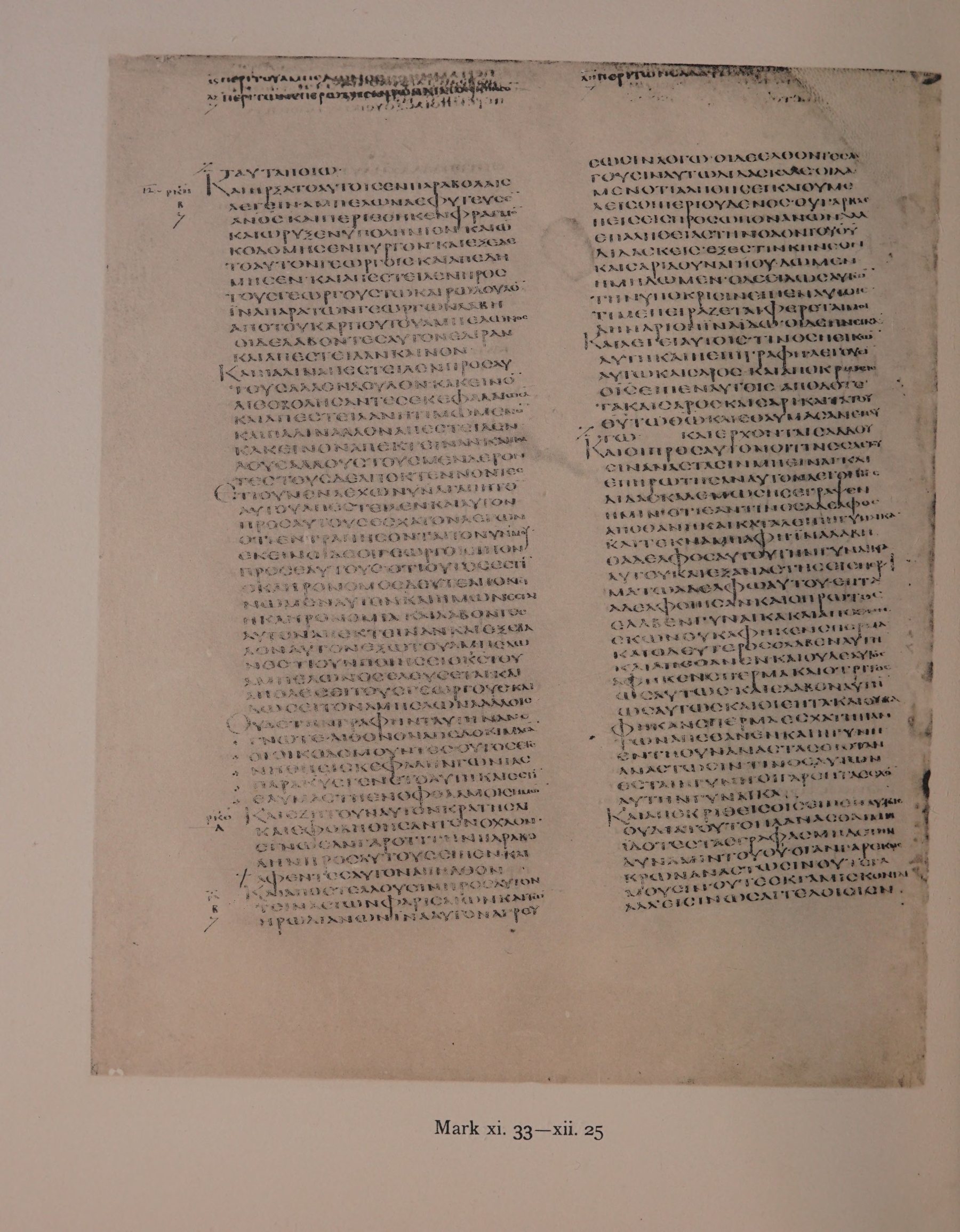
Where on the image
Page from the NTVMR transcription (docID 20002): verses 1-7 on fol. 38v (facsimile leaf 42), col. 1.
1και ηρξατο αυτοις εν παραβολαις λεγειν · αμπελωνα εφυτευσεν ανος και περιεθηκεν φραγμον και ωρυξεν υποληνιον και ωκοδομησεν πυργον · και εξεδετο αυτον γεωργοις · και απεδημησεν · 2και απεστειλεν προς τους γεωργους τω καιρω δουλον ινα παρα των γεωργων λαβη απο του καρπου του αμπελωνος 3οι δε λαβοντες αυτον εδιραν και απεστειλαν καινον · 4και παλιν απεστειλεν προς αυτους αλλον δουλον · κακεινον λιθοβολησαντες εκεφαλαιωσαν και απεστειλαν ητιμωμενον 5και παλιν αλλον απεστειλεν · κακεινον απεκτειναν · και πολλους αλλους τους μεν δεροντες τους δε αποκτεννοντες 6ετι ουν ενα εχων υν αγαπητον αυτου απεστειλεν και αυτον προς αυτους εσχατον λεγων οτι εντραπησονται τον υν μου · 7εκεινοι δε οι γεωργοι ειπον προς εαυτους · οτι ουτος εστιν ο κληρονομος δευτε αποκτεινωμεν αυτον · και ημων εσται η κληρονομια ·
Compare: Tischendorf 8th edition (1869)
1Καὶ ἤρξατο αὐτοῖς ἐν παραβολαῖς λαλεῖν. ἀμπελῶνα ἄνθρωπος ἐφύτευσεν, καὶ περιέθηκεν φραγμὸν καὶ ὤρυξεν ὑπολήνιον καὶ ᾠκοδόμησεν πύργον, καὶ ἐξέδετο αὐτὸν γεωργοῖς, καὶ ἀπεδήμησεν. 2καὶ ἀπέστειλεν πρὸς τοὺς γεωργοὺς τῷ καιρῷ δοῦλον, ἵνα παρὰ τῶν γεωργῶν λάβῃ ἀπὸ τῶν καρπῶν τοῦ ἀμπελῶνος· 3καὶ λαβόντες αὐτὸν ἔδειραν καὶ ἀπέστειλαν κενόν. 4καὶ πάλιν ἀπέστειλεν πρὸς αὐτοὺς ἄλλον δοῦλον· κἀκεῖνον ἐκεφαλίωσαν καὶ ἠτίμασαν. 5καὶ ἄλλον ἀπέστειλεν· κἀκεῖνον ἀπέκτειναν, καὶ πολλοὺς ἄλλους, οὓς μὲν δέροντες, οὓς δὲ ἀποκτέννοντες. 6ἔτι ἕνα εἶχεν, υἱὸν ἀγαπητόν· ἀπέστειλεν αὐτὸν ἔσχατον πρὸς αὐτοὺς λέγων ὅτι ἐντραπήσονται τὸν υἱόν μου. 7ἐκεῖνοι δὲ οἱ γεωργοὶ πρὸς ἑαυτοὺς εἶπαν ὅτι οὗτός ἐστιν ὁ κληρονόμος· δεῦτε ἀποκτείνωμεν αὐτόν, καὶ ἡμῶν ἔσται ἡ κληρονομία.
1And he began to speak unto them by parables. A certain man planted a vineyard, and set an hedge about it, and digged a place for the winefat, and built a tower, and let it out to husbandmen, and went into a far country. 2And at the season he sent to the husbandmen a servant, that he might receive from the husbandmen of the fruit of the vineyard. 3And they caught him, and beat him, and sent him away empty. 4And again he sent unto them another servant; and at him they cast stones, and wounded him in the head, and sent him away shamefully handled. 5And again he sent another; and him they killed, and many others; beating some, and killing some. 6Having yet therefore one son, his wellbeloved, he sent him also last unto them, saying, They will reverence my son. 7But those husbandmen said among themselves, This is the heir; come, let us kill him, and the inheritance shall be ours.
Where on the image
Page from the NTVMR transcription (docID 20002): verses 8-13 on fol. 38v (facsimile leaf 42), col. 1.
8και λαβοντες αυτον απεκτειναν · και εξεβαλον αυτον εξω του αμπελωνος · 9τι ουν ποιησει ο κς του αμπελωνος ελευσεται · και απολεσει τους γεωργους · και δωσει τον αμπελωνα αλλοις · 10ουδε την γραφην ταυτην ανεγνωτε · λιθον ον απεδοκιμασαν οι οικοδομουντες · ουτος εγενηθη εις κεφαλην γωνιας 11παρα κυ εγενετο αυτη · και εστιν θαυμαστη εν οφθαλμοις ημων 12και εζητουν αυτον κρατησαι και εφοβηθησαν τον οχλον · εγνωσαν γαρ οτι την παραβολην προς αυτους ειπεν · και αφεντες αυτον απηλθον 13και αποστελλουσιν προς αυτον τεινας των φαρισαιων και των ηρωδιανων ινα αυτον αγρευσωσιν λογω ·
Compare: Tischendorf 8th edition (1869)
8καὶ λαβόντες ἀπέκτειναν αὐτόν, καὶ ἐξέβαλον αὐτὸν ἔξω τοῦ ἀμπελῶνος. 9τί ποιήσει ὁ κύριος τοῦ ἀμπελῶνος; ἐλεύσεται καὶ ἀπολέσει τοὺς γεωργούς, καὶ δώσει τὸν ἀμπελῶνα ἄλλοις. 10οὐδὲ τὴν γραφὴν ταύτην ἀνέγνωτε· λίθον ὃν ἀπεδοκίμασαν οἱ οἰκοδομοῦντες, οὗτος ἐγενήθη εἰς κεφαλὴν γωνίας· 11παρὰ κυρίου ἐγένετο αὕτη καὶ ἔστιν θαυμαστὴ ἐν ὀφθαλμοῖς ἡμῶν; 12καὶ ἐζήτουν αὐτὸν κρατῆσαι, καὶ ἐφοβήθησαν τὸν ὄχλον· ἔγνωσαν γὰρ ὅτι πρὸς αὐτοὺς τὴν παραβολὴν εἶπεν. καὶ ἀφέντες αὐτὸν ἀπῆλθον. 13Καὶ ἀποστέλλουσιν πρὸς αὐτόν τινας τῶν Φαρισαίων καὶ τῶν Ἡρῳδιανῶν ἵνα αὐτὸν ἀγρεύσωσιν λόγῳ.
8And they took him, and killed him, and cast him out of the vineyard. 9What shall therefore the lord of the vineyard do? he will come and destroy the husbandmen, and will give the vineyard unto others. 10And have ye not read this scripture; The stone which the builders rejected is become the head of the corner: 11This was the Lord’s doing, and it is marvellous in our eyes? 12And they sought to lay hold on him, but feared the people: for they knew that he had spoken the parable against them: and they left him, and went their way. 13And they send unto him certain of the Pharisees and of the Herodians, to catch him in his words.
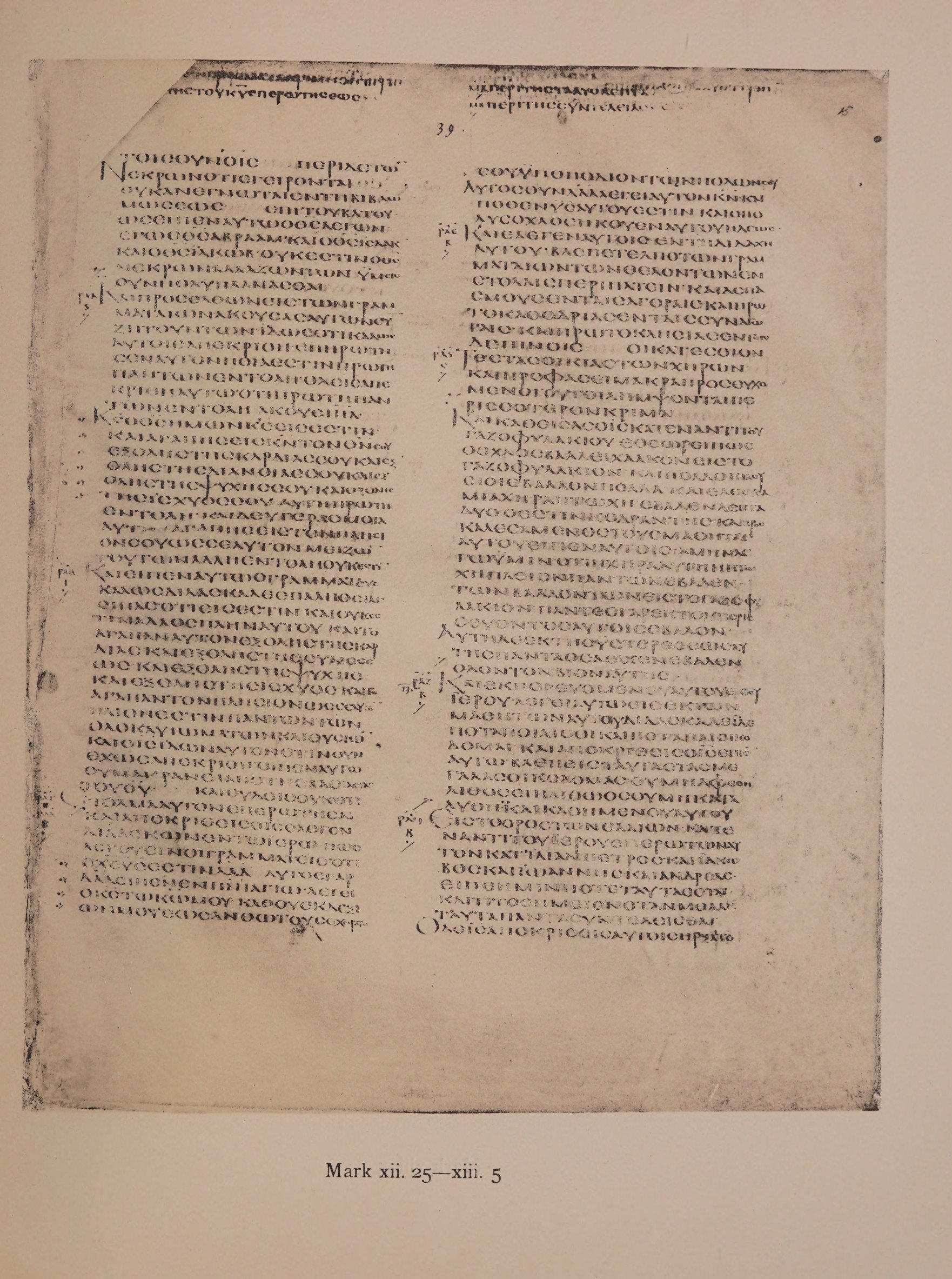
Where on the image
Page from the NTVMR transcription (docID 20002): verses 14-25 on fol. 38v (facsimile leaf 42), col. 2; verse 25 continues on fol. 39r (facsimile leaf 43), col. 1 (which begins 'τοις ουνοις ·').
14οι δε ελθοντες λ[ε]γουσιν αυτω διδασκαλε · οιδαμεν οτι αληθης ει και ου μελει σοι περι ουδενος · ου γαρ βλεπεις εις προσωπον ανων αλλ επ αληθειας την οδον του θυ διδασκεις · εξεστιν κηνσον καισαρι δουναι · η ου δωμεν · η μη δωμεν · 15ο δε ειδως αυτων την υποκρισιν ειπεν αυτοις · τι με πειραζεται · φερεται μοι δηναριον ινα ιδω · 16οι δε ηνεγκαν και λεγει αυτοις · τινος η εικων αυτη και η επιγραφη · λεγουσιν αυτω καισαρος · 17και αποκριθεις ο ις ειπεν αυτοις · αποδοτε τα καισαρος καισαρι · και τα του θυ τω θω · και εθαυμασαν επ̣ αυτω · 18και ερχονται σαδδουκαιοι προς αυτον οιτινες λεγουσιν αναστασιν μη ειναι · και επηρωτησαν αυτον λεγοντες 19διδασκαλε μωσης εγραψεν ημιν · οτι εαν τινος αδελφος αποθανη και καταλειπη γυναικα · και τεκνα μη αφη · ινα λαβη ο αδελφος αυτου την γυναικα αυτου · και εξαναστησει σπερμα τω αδελφω αυτου · 20επτα αδελφοι ησαν · και ο πρωτος ελαβεν γυναικα · και αποθνησκων ουκ αφηκεν σπερμα · 21και ο δευτερος ελαβεν αυτην και απεθανεν · και ουδε αυτος αφηκεν σπερμα και ο τριτος ωσαυτως · 22και ελαβον αυτην ωσαυτως και οι επτα · και ουκ αφηκαν σπερμα · εσχατη παντων · απεθανεν · και η γυνη · 23εν τη ουν αναστασει οταν αναστωσιν · τινος αυτων εσται η γυνη · οι γαρ επτα εσχον αυτην γυναικα · 24και αποκριθεις ο ις ειπεν αυτοις ου δια τουτο πλανασθαι μη ιδοτες τας γραφας μηδε την δυναμιν του θυ · 25οταν γαρ εκ νεκρων αναστωσιν ουτε γαμουσιν · ουτε εκγαμισκονται αλλ εισιν ως αγγελοι οι εν τοις ουνοις ·
Compare: Tischendorf 8th edition (1869)
14καὶ ἐλθόντες λέγουσιν αὐτῷ· διδάσκαλε, οἴδαμεν ὅτι ἀληθὴς εἶ καὶ οὐ μέλει σοι περὶ οὐδενός· οὐ γὰρ βλέπεις εἰς πρόσωπον ἀνθρώπων, ἀλλ’ ἐπ’ ἀληθείας τὴν ὁδὸν τοῦ θεοῦ διδάσκεις· ἔξεστιν κῆνσον Καίσαρι δοῦναι ἢ οὔ; δῶμεν ἢ μὴ δῶμεν; 15ὁ δὲ ἰδὼν αὐτῶν τὴν ὑπόκρισιν εἶπεν αὐτοῖς· τί με πειράζετε; φέρετέ μοι δηνάριον ἵνα ἴδω. 16οἱ δὲ ἤνεγκαν. καὶ λέγει αὐτοῖς· τίνος ἡ εἰκὼν αὕτη καὶ ἡ ἐπιγραφή; οἱ δὲ εἶπαν αὐτῷ· Καίσαρος. 17ὁ δὲ Ἰησοῦς εἶπεν αὐτοῖς· τὰ Καίσαρος ἀπόδοτε Καίσαρι καὶ τὰ τοῦ θεοῦ τῷ θεῷ. καὶ ἐξεθαύμαζον ἐπ’ αὐτῷ. 18Καὶ ἔρχονται Σαδδουκαῖοι πρὸς αὐτόν, οἵτινες λέγουσιν ἀνάστασιν μὴ εἶναι, καὶ ἐπηρώτων αὐτὸν λέγοντες· 19διδάσκαλε, Μωϋσῆς ἔγραψεν ἡμῖν ὅτι ἐάν τινος ἀδελφὸς ἀποθάνῃ καὶ καταλίπῃ γυναῖκα καὶ μὴ ἀφῇ τέκνον, ἵνα λάβῃ ὁ ἀδελφὸς αὐτοῦ τὴν γυναῖκα καὶ ἐξαναστήσῃ σπέρμα τῷ ἀδελφῷ αὐτοῦ. 20ἑπτὰ ἀδελφοὶ ἦσαν· καὶ ὁ πρῶτος ἔλαβεν γυναῖκα, καὶ ἀποθνῄσκων οὐκ ἀφῆκεν σπέρμα. 21καὶ ὁ δεύτερος ἔλαβεν αὐτήν, καὶ ἀπέθανεν μὴ καταλιπὼν σπέρμα· καὶ ὁ τρίτος ὡσαύτως· 22καὶ οἱ ἑπτὰ οὐκ ἀφῆκαν σπέρμα. ἔσχατον πάντων καὶ ἡ γυνὴ ἀπέθανεν. 23ἐν τῇ ἀναστάσει, ὅταν ἀναστῶσιν, τίνος αὐτῶν ἔσται γυνή; οἱ γὰρ ἑπτὰ ἔσχον αὐτὴν γυναῖκα. 24ἔφη αὐτοῖς ὁ Ἰησοῦς· οὐ διὰ τοῦτο πλανᾶσθε μὴ εἰδότες τὰς γραφὰς μηδὲ τὴν δύναμιν τοῦ θεοῦ; 25ὅταν γὰρ ἐκ νεκρῶν ἀναστῶσιν, οὔτε γαμοῦσιν οὔτε γαμίζονται, ἀλλ’ εἰσὶν ὡς ἄγγελοι ἐν τοῖς οὐρανοῖς.
14And when they were come, they say unto him, Master, we know that thou art true, and carest for no man: for thou regardest not the person of men, but teachest the way of God in truth: Is it lawful to give tribute to Caesar, or not? 15Shall we give, or shall we not give? But he, knowing their hypocrisy, said unto them, Why tempt ye me? bring me a penny, that I may seeit. 16And they brought it. And he saith unto them, Whose is this image and superscription? And they said unto him, Caesar’s. 17And Jesus answering said unto them, Render to Caesar the things that are Caesar’s, and to God the things that are God’s. And they marvelled at him. 18Then come unto him the Sadducees, which say there is no resurrection; and they asked him, saying, 19Master, Moses wrote unto us, If a man’s brother die, and leave his wife behind him, and leave no children, that his brother should take his wife, and raise up seed unto his brother. 20Now there were seven brethren: and the first took a wife, and dying left no seed. 21And the second took her, and died, neither left he any seed: and the third likewise. 22And the seven had her, and left no seed: last of all the woman died also. 23In the resurrection therefore, when they shall rise, whose wife shall she be of them? for the seven had her to wife. 24And Jesus answering said unto them, Do ye not therefore err, because ye know not the scriptures, neither the power of God? 25For when they shall rise from the dead, they neither marry, nor are given in marriage; but are as the angels which are in heaven.
Where on the image
Page from the NTVMR transcription (docID 20002): verses 26-36 on fol. 39r (facsimile leaf 43), col. 1.
26περι δε των νεκρων οτι εγειρονται ουκ ανεγνωται εν τη βιβλω μωσεως · [...] επι του βατου · ως ειπεν αυτω ο θς λεγων · εγω ο θς αβρααμ · και ο θς ισαακ και ο θς ιακωβ · 27ουκ εστιν ο θς νεκρων αλλα ζωντων · υμεις ουν πολυ πλανασθαι · 28και προσελθων εις των γραμματαιων ακουσας αυτων συνζητουντων · ιδως οτι καλως αυτοις απεκριθη · επηρωτησεν αυτον ποια εστιν πρωτη παντων εντολη · 29ο δε ις απεκριθη αυτω · οτι πρωτη παντων εντολη · ακουε ιηλ · κς ο θς ημων κς εις εστιν · 30και αγαπησεις κν τον θν σου εξ ολης της καρδιας σου και εξ ολης της διανοιας σου και εξ ολης της ψυχης σου · και εξ ολης της ισχυος σου αυτη πρωτη εντολη · 31και δευτερα ομοια αυτη̣ς̣ · αγαπησεις τον πλησιον σου ως σεαυτον μειζων τουτων αλλη εντολη ουκ εστιν 32και ειπεν αυτω ο γραμματευς καλως διδασκαλε επ αληθειας ειπας · οτι εις εστιν · και ουκ εστιν αλλος πλην αυτου 33και το αγαπαν αυτον εξ ολης της καρδιας και εξ ολης της συνεσεως · και εξ ολης της ψυχης και εξ ολης της ισχυος · και το αγαπαν τον πλησιον ως σεαυτον πλιον εστιν παντων των ολοκαυτωματων και θυσιων · 34και ο ις ιδων αυτον οτι νουνεχως απεκριθη ειπεν αυτω ου μακραν ει απο της βασιλειας του θυ · και ουδεις ουκετι ετολμα αυτον επερωτησαι 35και αποκριθεις ο ις ελεγεν διδασκων εν τω ιερω · πως λεγουσιν οι γραμματεις · οτι ο χς υς εστιν δαδ · 36αυτος γαρ δαδ ειπεν εν πνι αγιω · λεγει ο κς τω κω μου · καθου εκ δεξιων μου εως αν θω τους εχθρους σου υποποδιον των ποδων σου
Compare: Tischendorf 8th edition (1869)
26περὶ δὲ τῶν νεκρῶν, ὅτι ἐγείρονται οὐκ ἀνέγνωτε ἐν τῇ βίβλῳ Μωϋσέως ἐπὶ τοῦ βάτου πῶς εἶπεν αὐτῷ ὁ θεὸς λέγων· ἐγὼ ὁ θεὸς Ἀβραὰμ καὶ ὁ θεὸς Ἰσαὰκ καὶ ὁ θεὸς Ἰακώβ; 27οὐκ ἔστιν θεὸς νεκρῶν ἀλλὰ ζώντων. πολὺ πλανᾶσθε. 28Καὶ προσελθὼν εἷς τῶν γραμματέων, ἀκούσας αὐτῶν συζητούντων, ἰδὼν ὅτι καλῶς ἀπεκρίθη αὐτοῖς, ἐπηρώτησεν αὐτόν· ποία ἐστὶν ἐντολὴ πρώτη πάντων; 29ἀπεκρίθη ὁ Ἰησοῦς ὅτι πρώτη ἐστίν· ἄκουε Ἰσραήλ, κύριος ὁ θεὸς ἡμῶν κύριος εἷς ἐστιν, 30καὶ ἀγαπήσεις κύριον τὸν θεόν σου ἐξ ὅλης τῆς καρδίας σου καὶ ἐξ ὅλης τῆς ψυχῆς σου καὶ ἐξ ὅλης τῆς διανοίας σου καὶ ἐξ ὅλης τῆς ἰσχύος σου. 31δευτέρα αὕτη· ἀγαπήσεις τὸν πλησίον σου ὡς σεαυτόν. μείζων τούτων ἄλλη ἐντολὴ οὐκ ἔστιν. 32καὶ εἶπεν αὐτῷ ὁ γραμματεύς· καλῶς, διδάσκαλε, ἐπ’ ἀληθείας εἶπες ὅτι εἷς ἐστιν καὶ οὐκ ἔστιν ἄλλος πλὴν αὐτοῦ· 33καὶ τὸ ἀγαπᾶν αὐτὸν ἐξ ὅλης τῆς καρδίας καὶ ἐξ ὅλης τῆς συνέσεως καὶ ἐξ ὅλης τῆς ἰσχύος καὶ τὸ ἀγαπᾶν τὸν πλησίον ὡς ἑαυτὸν περισσότερόν ἐστιν πάντων τῶν ὁλοκαυτωμάτων καὶ τῶν θυσιῶν. 34καὶ ὁ Ἰησοῦς ἰδὼν αὐτὸν ὅτι νουνεχῶς ἀπεκρίθη, εἶπεν αὐτῷ· οὐ μακρὰν εἶ ἀπὸ τῆς βασιλείας τοῦ θεοῦ. καὶ οὐδεὶς οὐκέτι ἐτόλμα αὐτὸν ἐπερωτῆσαι. 35Καὶ ἀποκριθεὶς ὁ Ἰησοῦς ἔλεγεν διδάσκων ἐν τῷ ἱερῷ· πῶς λέγουσιν οἱ γραμματεῖς ὅτι ὁ Χριστὸς υἱὸς Δαυείδ ἐστιν; 36αὐτὸς Δαυεὶδ εἶπεν ἐν τῷ πνεύματι τῷ ἁγίῳ· εἶπεν ὁ κύριος τῷ κυρίῳ μου· κάθου ἐκ δεξιῶν μου ἕως ἂν θῶ τοὺς ἐχθρούς σου ὑποπόδιον τῶν ποδῶν σου.
26And as touching the dead, that they rise: have ye not read in the book of Moses, how in the bush God spake unto him, saying, I am the God of Abraham, and the God of Isaac, and the God of Jacob? 27He is not the God of the dead, but the God of the living: ye therefore do greatly err. 28And one of the scribes came, and having heard them reasoning together, and perceiving that he had answered them well, asked him, Which is the first commandment of all? 29And Jesus answered him, The first of all the commandments is, Hear, O Israel; The Lord our God is one Lord: 30And thou shalt love the Lord thy God with all thy heart, and with all thy soul, and with all thy mind, and with all thy strength: this is the first commandment. 31And the second is like, namely this, Thou shalt love thy neighbour as thyself. There is none other commandment greater than these. 32And the scribe said unto him, Well, Master, thou hast said the truth: for there is one God; and there is none other but he: 33And to love him with all the heart, and with all the understanding, and with all the soul, and with all the strength, and to love his neighbour as himself, is more than all whole burnt offerings and sacrifices. 34And when Jesus saw that he answered discreetly, he said unto him, Thou art not far from the kingdom of God. And no man after that durst ask him any question. 35And Jesus answered and said, while he taught in the temple, How say the scribes that Christ is the Son of David? 36For David himself said by the Holy Ghost, The Lord said to my Lord, Sit thou on my right hand, till I make thine enemies thy footstool.
Where on the image
Page from the NTVMR transcription (docID 20002): verses 37-44 on fol. 39r (facsimile leaf 43), col. 2.
37αυτος ουν δαδ λεγει αυτον κν · και ποθεν υς αυτου εστιν · και ο πολυς οχλος ηκουεν αυτου ηδεως · 38και ελεγεν αυτοις εν τη διδαχη αυτου · βλεπετε απο των γραμματαιων των θελοντων εν στολαις περιπατειν · και ασπασμους εν ταις αγοραις · 39και πρωτοκαθεδριας εν ταις συναγωγαις · και πρωτοκλησιας εν τοις δειπνοις 40οι κατεσθιοντες τας οικιας των χηρων · και προφασει μακρα προσευχομενοι · ουτοι λημψονται περισσοτερον κριμα 41και καθεισας ο ις κατεναντι του γαζοφυλακιου εθεωρει πως ο οχλος βαλλει χαλκον εις το γαζοφυλακιον · και πολλοι πλουσιοι εβαλλον πολλα · 42και ελθουσα μια χηρα πτωχη · εβαλεν λεπτα δυο · ο εστιν κοδραντης · 43και προσκαλεσαμενος τους μαθητας αυτου ειπεν αυτοις · αμην λεγω υμιν · οτι η χηρα αυτη η πτωχη πλειον παντων εβαλεν των βαλλοντων εις το γαζοφυλακιον · 44παντες γαρ εκ του περισσευοντος αυτοις εβαλον · αυτη δε εκ της υστερεσεως αυτης παντα οσα ειχεν εβαλεν ολον τον βιον αυτης ·
Compare: Tischendorf 8th edition (1869)
37αὐτὸς Δαυεὶδ λέγει αὐτὸν κύριον, καὶ πόθεν αὐτοῦ ἐστιν υἱός; καὶ ὁ πολὺς ὄχλος ἤκουεν αὐτοῦ ἡδέως. 38Καὶ ἐν τῇ διδαχῇ αὐτοῦ ἔλεγεν· βλέπετε ἀπὸ τῶν γραμματέων τῶν θελόντων ἐν στολαῖς περιπατεῖν καὶ ἀσπασμοὺς ἐν ταῖς ἀγοραῖς 39καὶ πρωτοκαθεδρίας ἐν ταῖς συναγωγαῖς καὶ πρωτοκλισίας ἐν τοῖς δείπνοις· 40οἱ κατεσθίοντες τὰς οἰκίας τῶν χηρῶν καὶ προφάσει μακρὰ προσευχόμενοι, οὗτοι λήμψονται περισσότερον κρίμα. 41Καὶ καθίσας κατέναντι τοῦ γαζοφυλακίου ἐθεώρει πῶς ὁ ὄχλος βάλλει χαλκὸν εἰς τὸ γαζοφυλάκιον· καὶ πολλοὶ πλούσιοι ἔβαλλον πολλά, 42καὶ ἐλθοῦσα μία χήρα πτωχὴ ἔβαλεν λεπτὰ δύο, ὅ ἐστιν κοδράντης. 43καὶ προσκαλεσάμενος τοὺς μαθητὰς αὐτοῦ εἶπεν αὐτοῖς· ἀμὴν λέγω ὑμῖν ὅτι ἡ χήρα αὕτη ἡ πτωχὴ πλεῖον πάντων βέβληκεν τῶν βαλλόντων εἰς τὸ γαζοφυλάκιον· 44πάντες γὰρ ἐκ τοῦ περισσεύοντος αὐτοῖς ἔβαλον, αὕτη δὲ ἐκ τῆς ὑστερήσεως αὐτῆς πάντα ὅσα εἶχεν ἔβαλεν, ὅλον τὸν βίον αὐτῆς.
37David therefore himself calleth him Lord; and whence is he then his son? And the common people heard him gladly. 38And he said unto them in his doctrine, Beware of the scribes, which love to go in long clothing, and love salutations in the marketplaces, 39And the chief seats in the synagogues, and the uppermost rooms at feasts: 40Which devour widows’ houses, and for a pretence make long prayers: these shall receive greater damnation. 41And Jesus sat over against the treasury, and beheld how the people cast money into the treasury: and many that were rich cast in much. 42And there came a certain poor widow, and she threw in two mites, which make a farthing. 43And he called unto him his disciples, and saith unto them, Verily I say unto you, That this poor widow hath cast more in, than all they which have cast into the treasury: 44For all they did cast in of their abundance; but she of her want did cast in all that she had, even all her living.
Cite
Sources
- Source: Codex Alexandrinus page images + NTVMR transcription (CC BY 4.0) + Tischendorf 8th edition + KJV (holding institution)
- Critical edition: Codex Alexandrinus transcription, NTVMR (INTF Münster, CC BY 4.0); Tischendorf 8th edition for comparison
← previous · → next · v cycle view · l back to library