Philippians, Chapter 2 (Codex Alexandrinus)
Introduction
Philippians 2 from Codex Alexandrinus (GA 02), a fifth-century Greek Bible held by the British Library (Royal MS 1 D. VIII). In the New Testament it is the chief witness to the Byzantine text in the Gospels and to the Alexandrian text in the rest of the New Testament. Its New Testament volume lacks Matthew 1:1-25:5, John 6:50-8:52 and 2 Corinthians 4:13-12:6.
This entry meets the strict three-criteria standard of the Theosis Library:
- Manuscript scan: the actual page(s) of Codex Alexandrinus containing this passage (folios 133v, 134r), reproduced from the British Museum's 1909 photographic facsimile edited by F. G. Kenyon, as digitised by the Getty Research Institute for the Internet Archive. The facsimile prints the verse range beneath each plate; that printed range was read for every page used and agrees with the INTF's NTVMR verse-level page index (CC BY 4.0). The page for each section now comes from the NTVMR transcription itself, which records the page and column on which every verse is written.
- Original text: the manuscript's own text, from a diplomatic transcription (see Greek text below), with Tischendorf's 8th critical edition (1869) for comparison.
- English translation: the King James Version (1611), retrieved verbatim from the public-domain bible-api.com endpoint.
Greek text: a diplomatic transcription of Codex Alexandrinus made by the Institut für Neutestamentliche Textforschung (INTF), Münster, for the New Testament Virtual Manuscript Room (NTVMR), published under a Creative Commons Attribution 4.0 licence. It gives the letters as the first scribe wrote them: no accents or breathings, the scribe's own spelling, and the sacred names in their contracted form (θς for θεος, ις for ιησους, κς for κυριος; the overline is not reproduced). Corrections by later hands are not shown. Letters in square brackets are not legible on the page and were restored by the transcribers, a dot under a letter marks an uncertain reading, and [...] marks text lost to damage. Beneath each section, for comparison, is Tischendorf's 8th critical edition (1869). Where the two differ, the transcription is what the manuscript says. Each section is shown with the page on which the transcription places its verses.
How was this verified? (Provenance)
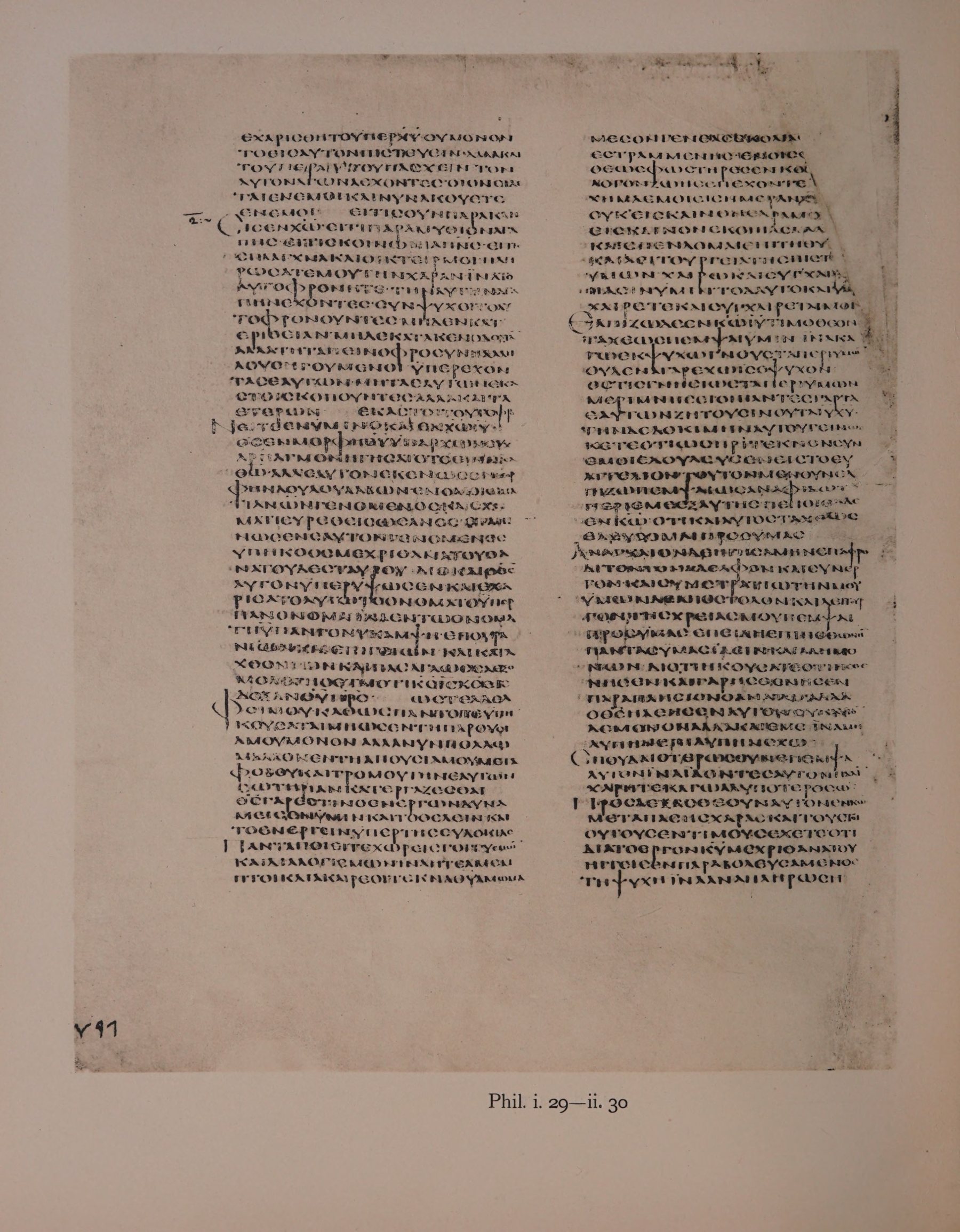
Where on the image
Page from the NTVMR transcription (docID 20002): verses 1-8 on fol. 133v (facsimile leaf 228), col. 1.
1ει τις ουν παρακλησις · εν χω · ει τι παραμυθιον αγαπης · ει τις κοινωνια πνς · ει τις σπλαγχνα · και οικτειρμοι · 2πληρωσατε μου την χαραν · ινα το αυτο φρονητε · την αυτην αγαπην εχοντες · συνψυχοι το αυτο φρονουντες · 3μηδεν κατ εριθειαν · μηδε κατα κενοδοξιαν αλλα τη ταπεινοφροσυνη αλληλους ηγουμενοι υπερεχοντας εαυτων · 4μη τα εαυτων εκαστοι σκοπουντες · αλλα και τα ετερων · εκαστοι 5τουτο φρονειτε εν υμιν ο και εν χω ιυ · 6ος εν μορφη θυ υπαρχων ουχ αρπαγμον ηγησατο το ειναι ισα θω · 7αλλ εαυτον εκενωσεν μορφην δουλου λαβων · εν ομοιωματι ανων γενομενος και σχηματι ευρεθεις ως ανος · 8εταπινωσεν εαυτον γενομενος υπηκοος μεχρι θανατου θανατου δε σταυρου
Compare: Tischendorf 8th edition (1869)
1Εἴ τις οὖν παράκλησις ἐν Χριστῷ, εἴ τι παραμύθιον ἀγάπης, εἴ τις κοινωνία πνεύματος, εἴ τις σπλάγχνα καὶ οἰκτιρμοί, 2πληρώσατέ μου τὴν χαρὰν ἵνα τὸ αὐτὸ φρονῆτε, τὴν αὐτὴν ἀγάπην ἔχοντες, σύνψυχοι, τὸ ἓν φρονοῦντες, 3μηδὲν κατ’ ἐριθείαν μηδὲ κατὰ κενοδοξίαν, ἀλλὰ τῇ ταπεινοφροσύνῃ ἀλλήλους ἡγούμενοι ὑπερέχοντας ἑαυτῶν, 4μὴ τὰ ἑαυτῶν ἕκαστοι σκοποῦντες, ἀλλὰ καὶ τὰ ἑτέρων ἕκαστοι. 5τοῦτο φρονεῖτε ἐν ὑμῖν ὃ καὶ ἐν Χριστῷ Ἰησοῦ, 6ὃς ἐν μορφῇ θεοῦ ὑπάρχων οὐχ ἁρπαγμὸν ἡγήσατο τὸ εἶναι ἴσα θεῷ, 7ἀλλὰ ἑαυτὸν ἐκένωσεν μορφὴν δούλου λαβών, ἐν ὁμοιώματι ἀνθρώπων γενόμενος· καὶ σχήματι εὑρεθεὶς ὡς ἄνθρωπος 8ἐταπείνωσεν ἑαυτὸν γενόμενος ὑπήκοος μέχρι θανάτου, θανάτου δὲ σταυροῦ.
1If there be therefore any consolation in Christ, if any comfort of love, if any fellowship of the Spirit, if any bowels and mercies, 2Fulfil ye my joy, that ye be likeminded, having the same love, being of one accord, of one mind. 3Let nothing be done through strife or vainglory; but in lowliness of mind let each esteem other better than themselves. 4Look not every man on his own things, but every man also on the things of others. 5Let this mind be in you, which was also in Christ Jesus: 6Who, being in the form of God, thought it not robbery to be equal with God: 7But made himself of no reputation, and took upon him the form of a servant, and was made in the likeness of men: 8And being found in fashion as a man, he humbled himself, and became obedient unto death, even the death of the cross.
Where on the image
Page from the NTVMR transcription (docID 20002): verses 9-15 on fol. 133v (facsimile leaf 228), col. 1.
9διο και ο θς αυτον υπερυψωσεν · και εχαρισατο αυτω το ονομα το υπερ παν ονομα 10ινα εν τω ονοματι ιυ παν γονυ καμψη · επουρανιων και επιγειων και καταχθονιων 11και πασα γλωσσα εξομολογησεται οτι κς ις χς εις δοξαν θυ πρς · 12ωστε αδελφοι μου · καθως παντοτε υπηκουσαται μη ως εν τη παρουσια μου μονον αλλα νυν πολλω μαλλον εν τη απουσια μου μετα φοβου και τρομου την εαυτων σωτηριαν κατεργαζεσθαι 13θς γαρ εστιν ο ενεργων δυναμεις εν υμιν · και το θελειν και το ενεργειν υπερ της ευδοκιας 14παντα ποιειτε χωρεις γογγυσμων και διαλογισμων · 15ινα ητε αμεμπτοι και ακαιρεοι τεκνα θυ αμωμα μεσον γενεας σκολιας̣ [και] [δι]εστραμμενης · εν οις [φαινεσ]θε ως φωστηρες εν κοσ̣[μω]
Compare: Tischendorf 8th edition (1869)
9διὸ καὶ ὁ θεὸς αὐτὸν ὑπερύψωσεν καὶ ἐχαρίσατο αὐτῷ τὸ ὄνομα τὸ ὑπὲρ πᾶν ὄνομα, 10ἵνα ἐν τῷ ὀνόματι Ἰησοῦ πᾶν γόνυ κάμψῃ ἐπουρανίων καὶ ἐπιγείων καὶ καταχθονίων, 11καὶ πᾶσα γλῶσσα ἐξομολογήσηται ὅτι κύριος Ἰησοῦς Χριστὸς εἰς δόξαν θεοῦ πατρός. 12Ὥστε, ἀγαπητοί μου, καθὼς πάντοτε ὑπηκούσατε, μὴ ὡς ἐν τῇ παρουσίᾳ μου μόνον ἀλλὰ νῦν πολλῷ μᾶλλον ἐν τῇ ἀπουσίᾳ μου, μετὰ φόβου καὶ τρόμου τὴν ἑαυτῶν σωτηρίαν κατεργάζεσθε· 13θεὸς γάρ ἐστιν ὁ ἐνεργῶν ἐν ὑμῖν καὶ τὸ θέλειν καὶ τὸ ἐνεργεῖν ὑπὲρ τῆς εὐδοκίας. 14πάντα ποιεῖτε χωρὶς γογγυσμῶν καὶ διαλογισμῶν, 15ἵνα γένησθε ἄμεμπτοι καὶ ἀκέραιοι, τέκνα θεοῦ ἄμωμα μέσον γενεᾶς σκολιᾶς καὶ διεστραμμένης, ἐν οἷς φαίνεσθε ὡς φωστῆρες ἐν κόσμῳ,
9Wherefore God also hath highly exalted him, and given him a name which is above every name: 10That at the name of Jesus every knee should bow, of things in heaven, and things in earth, and things under the earth; 11And that every tongue should confess that Jesus Christ is Lord, to the glory of God the Father. 12Wherefore, my beloved, as ye have always obeyed, not as in my presence only, but now much more in my absence, work out your own salvation with fear and trembling. 13For it is God which worketh in you both to will and to do of his good pleasure. 14Do all things without murmurings and disputings: 15That ye may be blameless and harmless, the sons of God, without rebuke, in the midst of a crooked and perverse nation, among whom ye shine as lights in the world;
Where on the image
Page from the NTVMR transcription (docID 20002): verses 16-23 on fol. 133v (facsimile leaf 228), col. 2.
16λογον ζωης επεχοντε[ς] [εις] [καυ]χημα εμοι εις ημεραν χυ [οτι] ουκ · εις καινον εδραμο[ν] [ουδε] εις καινον εκοπιασα 17αλ[λ...] [ει] και σπενδομαι επι τη θυ[σια] και λειτουργεια της πιστ[εως] υμων · χαιρω και συγχαιρ[ω] πασιν υμιν · 18το δ αυτο και υμ[εις] χαιρετε και συγχαιρεται μοι · 19ελπιζω δε εν κω ιυ τιμοθεον ταχεως πεμψαι υμιν ινα καγω εκψυχω γνους τα περι υμων 20ουδενα γαρ εχω ισοψυχον · οστις γνησιως τα περι υμων μεριμνησει · 21οι παντες γαρ τα εαυτων ζητουσιν ου τα ιυ χυ · 22την δε δοκιμην αυτου γεινωσκετε οτι ως πρι τεκνον συν εμοι εδουλευσεν εις το ευαγγελιον · 23τουτον μεν ουν ελπιζω πεμψαι ως αν αφιδω τα περι εμε εξαυτης
Compare: Tischendorf 8th edition (1869)
16λόγον ζωῆς ἐπέχοντες, εἰς καύχημα ἐμοὶ εἰς ἡμέραν Χριστοῦ, ὅτι οὐκ εἰς κενὸν ἔδραμον οὐδὲ εἰς κενὸν ἐκοπίασα. 17ἀλλὰ εἰ καὶ σπένδομαι ἐπὶ τῇ θυσίᾳ καὶ λειτουργίᾳ τῆς πίστεως ὑμῶν, χαίρω καὶ συνχαίρω πᾶσιν ὑμῖν· 18τὸ δὲ αὐτὸ καὶ ὑμεῖς χαίρετε καὶ συνχαίρετέ μοι. 19Ἐλπίζω δὲ ἐν κυρίῳ Ἰησοῦ Τιμόθεον ταχέως πέμψαι ὑμῖν, ἵνα κἀγὼ εὐψυχῶ γνοὺς τὰ περὶ ὑμῶν. 20οὐδένα γὰρ ἔχω ἰσόψυχον ὅστις γνησίως τὰ περὶ ὑμῶν μεριμνήσει, 21οἱ πάντες γὰρ τὰ ἑαυτῶν ζητοῦσιν, οὐ τὰ Χριστοῦ Ἰησοῦ. 22τὴν δὲ δοκιμὴν αὐτοῦ γινώσκετε, ὅτι ὡς πατρὶ τέκνον σὺν ἐμοὶ ἐδούλευσεν εἰς τὸ εὐαγγέλιον. 23τοῦτον μὲν οὖν ἐλπίζω πέμψαι ὡς ἂν ἀφίδω τὰ περὶ ἐμὲ ἐξαυτῆς·
16Holding forth the word of life; that I may rejoice in the day of Christ, that I have not run in vain, neither laboured in vain. 17Yea, and if I be offered upon the sacrifice and service of your faith, I joy, and rejoice with you all. 18For the same cause also do ye joy, and rejoice with me. 19But I trust in the Lord Jesus to send Timotheus shortly unto you, that I also may be of good comfort, when I know your state. 20For I have no man likeminded, who will naturally care for your state. 21For all seek their own, not the things which are Jesus Christ’s. 22But ye know the proof of him, that, as a son with the father, he hath served with me in the gospel. 23Him therefore I hope to send presently, so soon as I shall see how it will go with me.
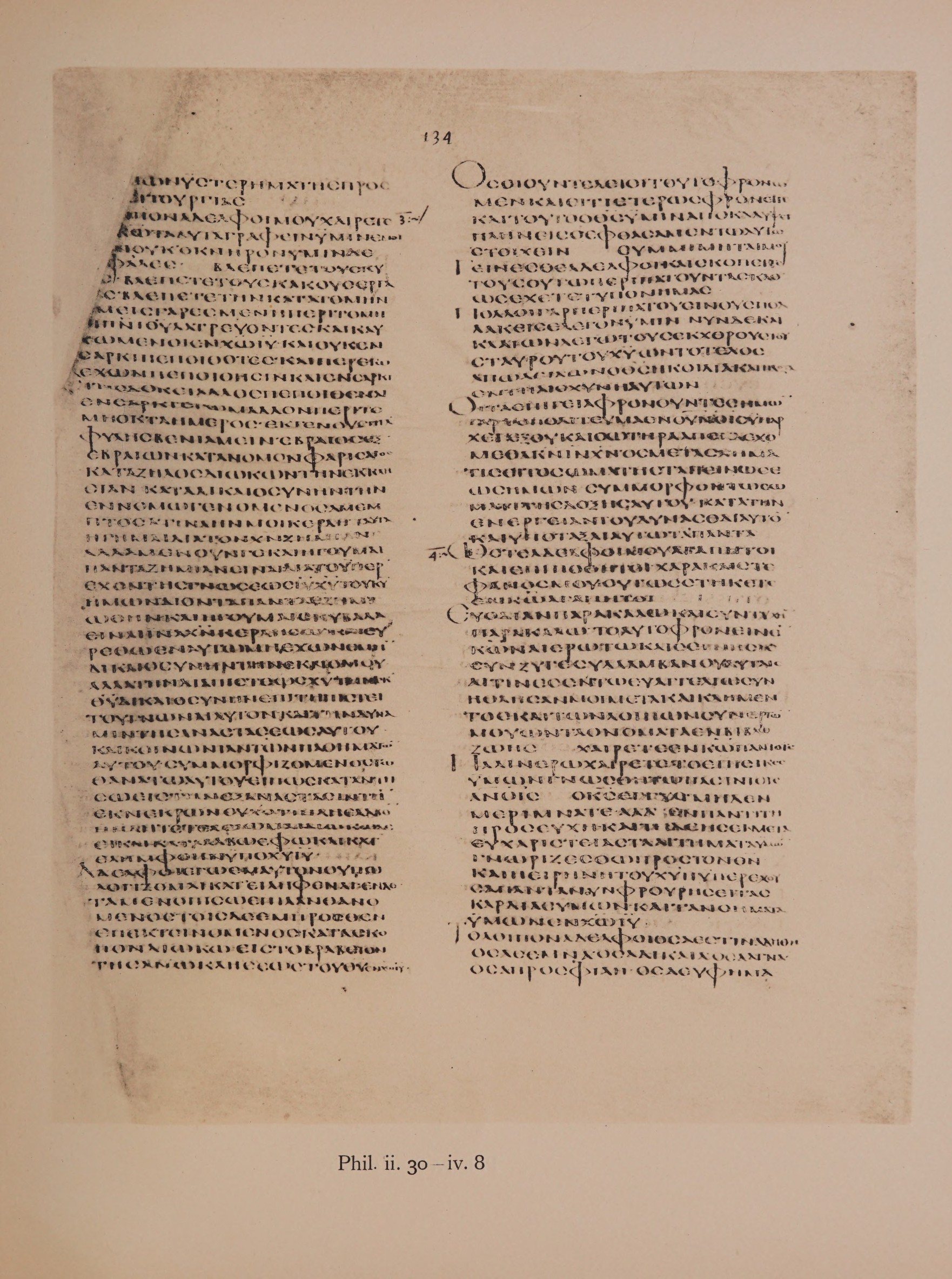
Where on the image
Page from the NTVMR transcription (docID 20002): verses 24-30 on fol. 133v (facsimile leaf 228), col. 2; verse 30 continues on fol. 134r (facsimile leaf 229), col. 1 (which begins '[το] [υμ]ων υστερημα').
24πεποιθα δε εν κω · οτι και αυτος ταχεως ελευσομαι προς υμας · 25αναγκαιον δε ηγησαμην επαφροδιτον τον αδελφον και συνεργον · και συνστρατιωτην μου υμων δε αποστολον και λειτουργον της χρειας μου πεμψαι προς υμας 26επειδη επιποθων ην παντας υμας ιδειν · και αδημονων · διοτι ηκουσατε οτι ησθενησεν 27και γαρ ησθενησεν παραπλησιον θανατω · αλλα ο θς ηλεησεν αυτον ουκ αυτον δε μονον αλλα και εμε · ινα μη λυπην επι λυπην σχω · 28σπουδαιοτερως ουν επεμψα αυτον ινα ιδοντες αυτον παλιν χαρητε καγω αλυποτερος ω · 29προσδεχεσθε ουν αυτον εν κω μετα πασης χαρας και τους τοιουτους εντιμους εχετε · 30οτι δια το εργον κυ μεχρι θανατου ηγγεισεν παραβολευσαμενος τη ψυχη ινα αναπληρωση [το] [υμ]ων υστερημα της προς [με] [λ]ειτουργιας
Compare: Tischendorf 8th edition (1869)
24πέποιθα δὲ ἐν κυρίῳ ὅτι καὶ αὐτὸς ταχέως ἐλεύσομαι. 25Ἀναγκαῖον δὲ ἡγησάμην Ἐπαφρόδιτον τὸν ἀδελφὸν καὶ συνεργὸν καὶ συνστρατιώτην μου, ὑμῶν δὲ ἀπόστολον καὶ λειτουργὸν τῆς χρείας μου, πέμψαι πρὸς ὑμᾶς, 26ἐπειδὴ ἐπιποθῶν ἦν πάντας ὑμᾶς, καὶ ἀδημονῶν διότι ἠκούσατε ὅτι ἠσθένησεν. 27καὶ γὰρ ἠσθένησεν παραπλήσιον θανάτῳ· ἀλλὰ ὁ θεὸς ἠλέησεν αὐτόν, οὐκ αὐτὸν δὲ μόνον ἀλλὰ καὶ ἐμέ, ἵνα μὴ λύπην ἐπὶ λύπην σχῶ. 28σπουδαιοτέρως οὖν ἔπεμψα αὐτὸν ἵνα ἰδόντες αὐτὸν πάλιν χαρῆτε κἀγὼ ἀλυπότερος ὦ. 29προσδέχεσθε οὖν αὐτὸν ἐν κυρίῳ μετὰ πάσης χαρᾶς, καὶ τοὺς τοιούτους ἐντίμους ἔχετε, 30ὅτι διὰ τὸ ἔργον Χριστοῦ μέχρι θανάτου ἤγγισεν, παραβολευσάμενος τῇ ψυχῇ ἵνα ἀναπληρώσῃ τὸ ὑμῶν ὑστέρημα τῆς πρός με λειτουργίας.
24But I trust in the Lord that I also myself shall come shortly. 25Yet I supposed it necessary to send to you Epaphroditus, my brother, and companion in labour, and fellow soldier, but your messenger, and he that ministered to my wants. 26For he longed after you all, and was full of heaviness, because that ye had heard that he had been sick. 27For indeed he was sick nigh unto death: but God had mercy on him; and not on him only, but on me also, lest I should have sorrow upon sorrow. 28I sent him therefore the more carefully, that, when ye see him again, ye may rejoice, and that I may be the less sorrowful. 29Receive him therefore in the Lord with all gladness; and hold such in reputation: 30Because for the work of Christ he was nigh unto death, not regarding his life, to supply your lack of service toward me.
Cite
Sources
- Source: Codex Alexandrinus page images + NTVMR transcription (CC BY 4.0) + Tischendorf 8th edition + KJV (holding institution)
- Critical edition: Codex Alexandrinus transcription, NTVMR (INTF Münster, CC BY 4.0); Tischendorf 8th edition for comparison
← previous · → next · v cycle view · l back to library