Titus, Chapter 2 (Codex Alexandrinus)
Introduction
Titus 2 from Codex Alexandrinus (GA 02), a fifth-century Greek Bible held by the British Library (Royal MS 1 D. VIII). In the New Testament it is the chief witness to the Byzantine text in the Gospels and to the Alexandrian text in the rest of the New Testament. Its New Testament volume lacks Matthew 1:1-25:5, John 6:50-8:52 and 2 Corinthians 4:13-12:6.
This entry meets the strict three-criteria standard of the Theosis Library:
- Manuscript scan: the actual page(s) of Codex Alexandrinus containing this passage (folios 148r, 148v), reproduced from the British Museum's 1909 photographic facsimile edited by F. G. Kenyon, as digitised by the Getty Research Institute for the Internet Archive. The facsimile prints the verse range beneath each plate; that printed range was read for every page used and agrees with the INTF's NTVMR verse-level page index (CC BY 4.0). The page for each section now comes from the NTVMR transcription itself, which records the page and column on which every verse is written.
- Original text: the manuscript's own text, from a diplomatic transcription (see Greek text below), with Tischendorf's 8th critical edition (1869) for comparison.
- English translation: the King James Version (1611), retrieved verbatim from the public-domain bible-api.com endpoint.
Greek text: a diplomatic transcription of Codex Alexandrinus made by the Institut für Neutestamentliche Textforschung (INTF), Münster, for the New Testament Virtual Manuscript Room (NTVMR), published under a Creative Commons Attribution 4.0 licence. It gives the letters as the first scribe wrote them: no accents or breathings, the scribe's own spelling, and the sacred names in their contracted form (θς for θεος, ις for ιησους, κς for κυριος; the overline is not reproduced). Corrections by later hands are not shown. Letters in square brackets are not legible on the page and were restored by the transcribers, a dot under a letter marks an uncertain reading, and [...] marks text lost to damage. Beneath each section, for comparison, is Tischendorf's 8th critical edition (1869). Where the two differ, the transcription is what the manuscript says. Each section is shown with the page on which the transcription places its verses.
How was this verified? (Provenance)
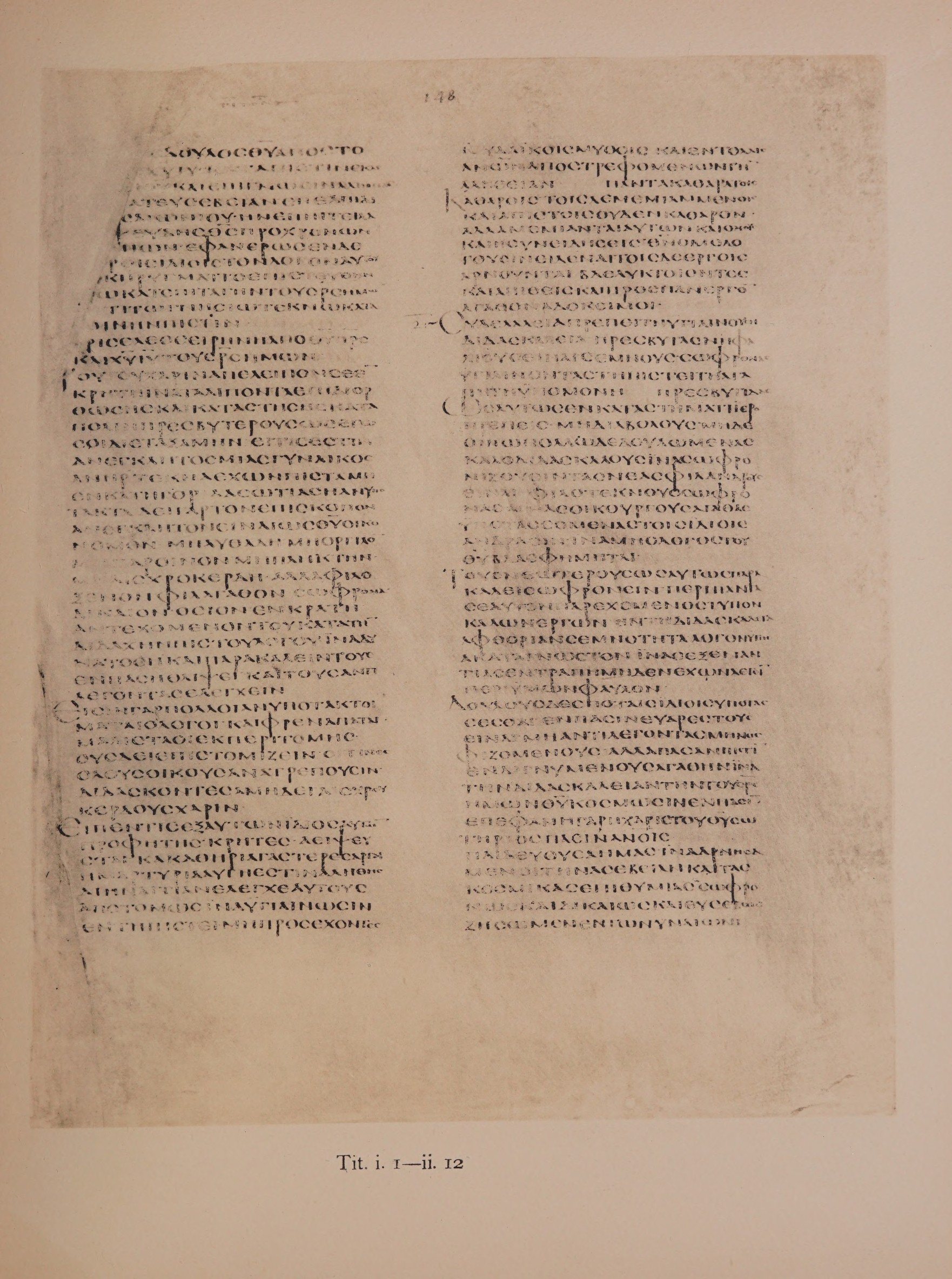
Where on the image
Page from the NTVMR transcription (docID 20002): verses 1-12 on fol. 148r (facsimile leaf 259), col. 2.
1συ δε λαλει α πρεπει τη υγιαινουση διδασκαλεια · 2πρεσβυτας νηφαλιους ειναι · σεμνους · σωφρονας υγιαινοντας τη πιστει τη αγαπη τη υπομονη · 3πρεσβυτιδας ωσαυτως εν καταστηματι ιεροπρεπεις · μη διαβολους · μηδε οινω πολλω δεδουλωμενας καλοδιδασκαλους 4ινα σωφρονιζουσιν τας νεας φιλανδρους ειναι φιλοτεκνους 5σωφρονας αγνας οικουργους αγαθας υποτασσομενας τοις ιδιοις ανδρασιν · ινα μη ο λογος του θυ βλασφημηται · 6τους νεωτερους ωσαυτως παρακαλει σωφρονειν · 7περι παντα σεαυτον παρεχομενος τυπον καλων εργων εν τη διδασκαλεια αφθοριαν σεμνοτητα 8λογον υγιη ακαταγνωστον · ινα ο εξ εναντιας εντραπη μηδεν εχων λεγειν περι υμων φαυλον · 9δουλους δεσποταις ιδιοις υποτασσεσθαι · εν πασιν ευαρεστους ειναι · μη αντιλεγοντας 10μη νοσφιζομενους · αλλα πασαν πιστιν ενδιγνυμενους αγαθην ινα την διδασκαλειαν την του σρς ημων θυ κοσμωσιν εν πασιν · 11επεφανη γαρ η χαρις του θυ σωτηριος [...] πασιν ανοις 12παιδευουσα ημας · ινα αρνησαμενοι την ασεβειαν και τας κοσμικας επιθυμιας σωφρονως και δικαιως και ευσεβως ζησωμεν εν τω νυν αιωνι
Compare: Tischendorf 8th edition (1869)
1Σὺ δὲ λάλει ἃ πρέπει τῇ ὑγιαινούσῃ διδασκαλίᾳ. 2πρεσβύτας νηφαλίους εἶναι, σεμνούς, σώφρονας, ὑγιαίνοντας τῇ πίστει, τῇ ἀγάπῃ, τῇ ὑπομονῇ. 3πρεσβύτιδας ὡσαύτως ἐν καταστήματι ἱεροπρεπεῖς, μὴ διαβόλους μὴ οἴνῳ πολλῷ δεδουλωμένας, καλοδιδασκάλους, 4ἵνα σωφρονίζωσιν τὰς νέας φιλάνδρους εἶναι, φιλοτέκνους, 5σώφρονας, ἁγνάς, οἰκουργούς ἀγαθάς, ὑποτασσομένας τοῖς ἰδίοις ἀνδράσιν, ἵνα μὴ ὁ λόγος τοῦ θεοῦ βλασφημῆται. 6Τοὺς νεωτέρους ὡσαύτως παρακάλει σωφρονεῖν 7περὶ πάντα, σεαυτὸν παρεχόμενος τύπον καλῶν ἔργων, ἐν τῇ διδασκαλίᾳ ἀφθορίαν, σεμνότητα, 8λόγον ὑγιῆ ἀκατάγνωστον, ἵνα ὁ ἐξ ἐναντίας ἐντραπῇ μηδὲν ἔχων λέγειν περὶ ἡμῶν φαῦλον. 9Δούλους ἰδίοις δεσπόταις ὑποτάσσεσθαι ἐν πᾶσιν, εὐαρέστους εἶναι, μὴ ἀντιλέγοντας, 10μὴ νοσφιζομένους, ἀλλὰ πᾶσαν πίστιν ἐνδεικνυμένους ἀγαθήν, ἵνα τὴν διδασκαλίαν τὴν τοῦ σωτῆρος ἡμῶν θεοῦ κοσμῶσιν ἐν πᾶσιν. 11Ἐπεφάνη γὰρ ἡ χάρις τοῦ θεοῦ σωτήριος πᾶσιν ἀνθρώποις, 12παιδεύουσα ἡμᾶς ἵνα ἀρνησάμενοι τὴν ἀσέβειαν καὶ τὰς κοσμικὰς ἐπιθυμίας σωφρόνως καὶ δικαίως καὶ εὐσεβῶς ζήσωμεν ἐν τῷ νῦν αἰῶνι,
1But speak thou the things which become sound doctrine: 2That the aged men be sober, grave, temperate, sound in faith, in charity, in patience. 3The aged women likewise, that they be in behaviour as becometh holiness, not false accusers, not given to much wine, teachers of good things; 4That they may teach the young women to be sober, to love their husbands, to love their children, 5To be discreet, chaste, keepers at home, good, obedient to their own husbands, that the word of God be not blasphemed. 6Young men likewise exhort to be sober minded. 7In all things shewing thyself a pattern of good works: in doctrine shewing uncorruptness, gravity, sincerity, 8Sound speech, that cannot be condemned; that he that is of the contrary part may be ashamed, having no evil thing to say of you. 9Exhort servants to be obedient unto their own masters, and to please them well in all things; not answering again; 10Not purloining, but shewing all good fidelity; that they may adorn the doctrine of God our Saviour in all things. 11For the grace of God that bringeth salvation hath appeared to all men, 12Teaching us that, denying ungodliness and worldly lusts, we should live soberly, righteously, and godly, in this present world;
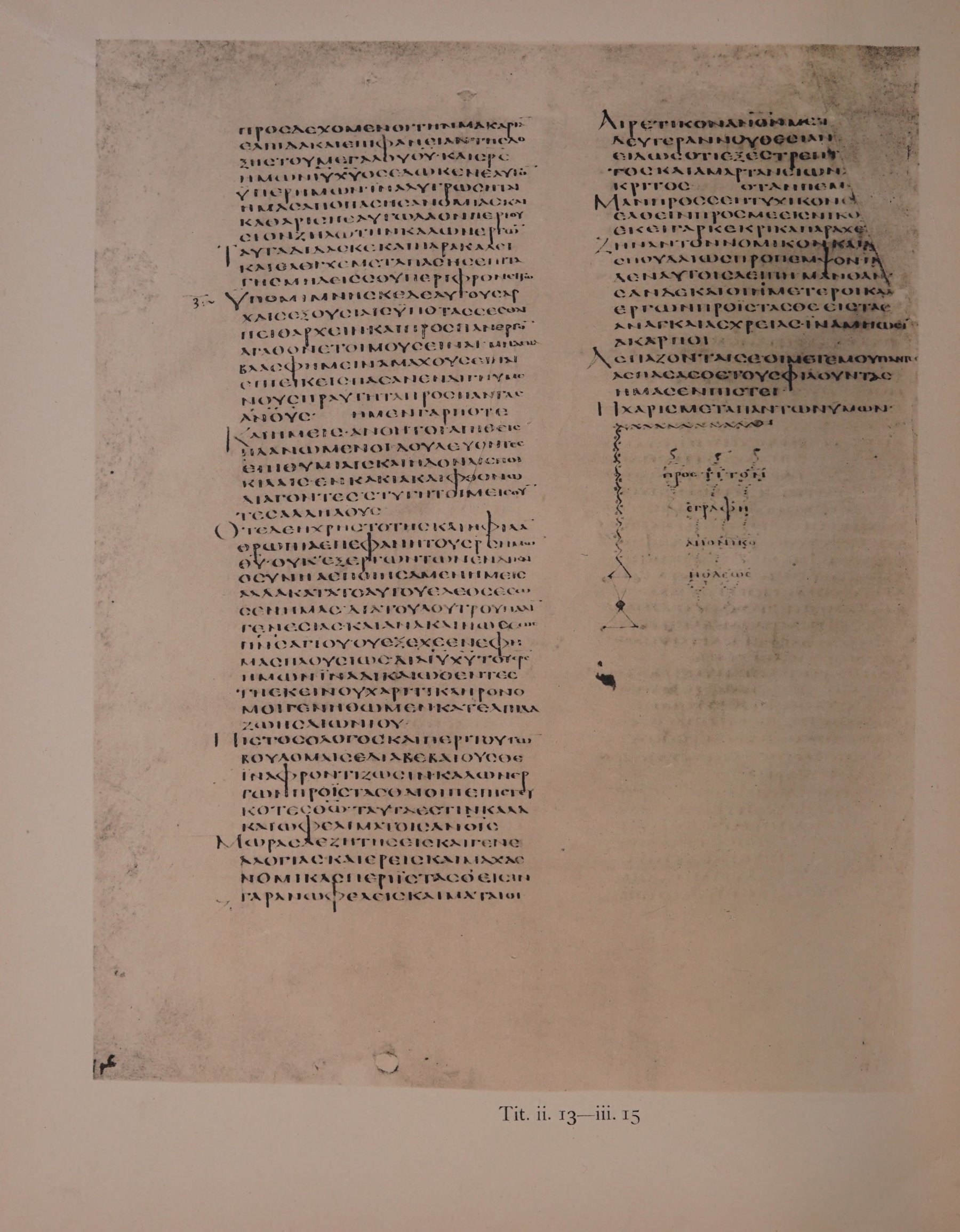
Where on the image
Page from the NTVMR transcription (docID 20002): verses 13-15 on fol. 148v (facsimile leaf 260), col. 1.
13προσδεχομενοι την μακαριαν ελπιδα και επιφανειαν της δοξης του μεγαλου θυ · και σρς ημων ιυ χυ 14ος εδωκεν εαυτον υπερ ημων · ινα λυτρωσηται ημας απο πασης ανομιας και καθαριση εαυτω λαον περιουσιον ζηλωτην καλων εργων 15ταυτα διδασκε και παρακαλει και ελεγχε μετα πασης επιταγης μηδεις σου περιφρονειτω
Compare: Tischendorf 8th edition (1869)
13προσδεχόμενοι τὴν μακαρίαν ἐλπίδα καὶ ἐπιφάνειαν τῆς δόξης τοῦ μεγάλου θεοῦ καὶ σωτῆρος ἡμῶν Χριστοῦ Ἰησοῦ, 14ὃς ἔδωκεν ἑαυτὸν ὑπὲρ ἡμῶν ἵνα λυτρώσηται ἡμᾶς ἀπὸ πάσης ἀνομίας καὶ καθαρίσῃ ἑαυτῷ λαὸν περιούσιον, ζηλωτὴν καλῶν ἔργων. 15Ταῦτα λάλει καὶ παρακάλει καὶ ἔλεγχε μετὰ πάσης ἐπιταγῆς· μηδείς σου περιφρονείτω.
13Looking for that blessed hope, and the glorious appearing of the great God and our Saviour Jesus Christ; 14Who gave himself for us, that he might redeem us from all iniquity, and purify unto himself a peculiar people, zealous of good works. 15These things speak, and exhort, and rebuke with all authority. Let no man despise thee.
Cite
Sources
- Source: Codex Alexandrinus page images + NTVMR transcription (CC BY 4.0) + Tischendorf 8th edition + KJV (holding institution)
- Critical edition: Codex Alexandrinus transcription, NTVMR (INTF Münster, CC BY 4.0); Tischendorf 8th edition for comparison
← previous · → next · v cycle view · l back to library