Edicts of Ashoka at Girnar: the fourteen Major Rock Edicts
Introduction
The Girnar rock stands at the foot of Mount Girnar, east of Junagadh in Gujarat. Its north-eastern face carries the fourteen Major Rock Edicts of the Maurya king Ashoka, who calls himself Devanampriya Priyadarsin ('Beloved of the Gods', 'of gracious appearance'). They were cut in Brahmi script in the middle of the third century BCE: edicts III and IV say they were written twelve years after his consecration, and edict V refers to the thirteenth year. Girnar has the western version of the series. Its dialect keeps r where the eastern versions at Kalsi, Dhauli and Jaugada have l (rājā against lājā), and keeps some groups of consonants that they simplify (prāṇa against pāna).
The edicts are laid out in two columns of ruled bands (I-V on the left, VI-XII on the right) with XIII and XIV below. Much of the thirteenth edict, which tells of the conquest of Kalinga, was blasted away during road building in the nineteenth century; two pieces of it were later recovered. The fourteen sections of this entry follow the edicts in order. Two short fragments below the thirteenth edict, one naming 'the entirely white elephant', are not included here.
Sources. Original text and English: E. Hultzsch, Inscriptions of Asoka. New Edition (Corpus Inscriptionum Indicarum, vol. I), Oxford: Clarendon Press for the Government of India, 1925, transcribed from the page images of the archive.org scan (public domain). Images: Hultzsch's collotype plates of inked impressions (estampages) of the Girnar rock, taken on the stone for the Archaeological Survey of India. An impression is a contact copy pressed on paper from the inscribed surface itself, not a drawing; each section's image is the part of the plate that carries that text, with the plate's own numerals and line numbers in the margins.
Reading the text. Line numbers are Hultzsch's lines on the stone. Letters in square brackets are damaged or uncertain on the stone; dots mark lost letters. The capital letters in brackets, (A), (B) ..., are Hultzsch's sentence divisions and are the same in the transliteration and the English. Hultzsch's footnotes, which record other scholars' readings and his corrections, are not reproduced.
How was this verified? (Provenance)
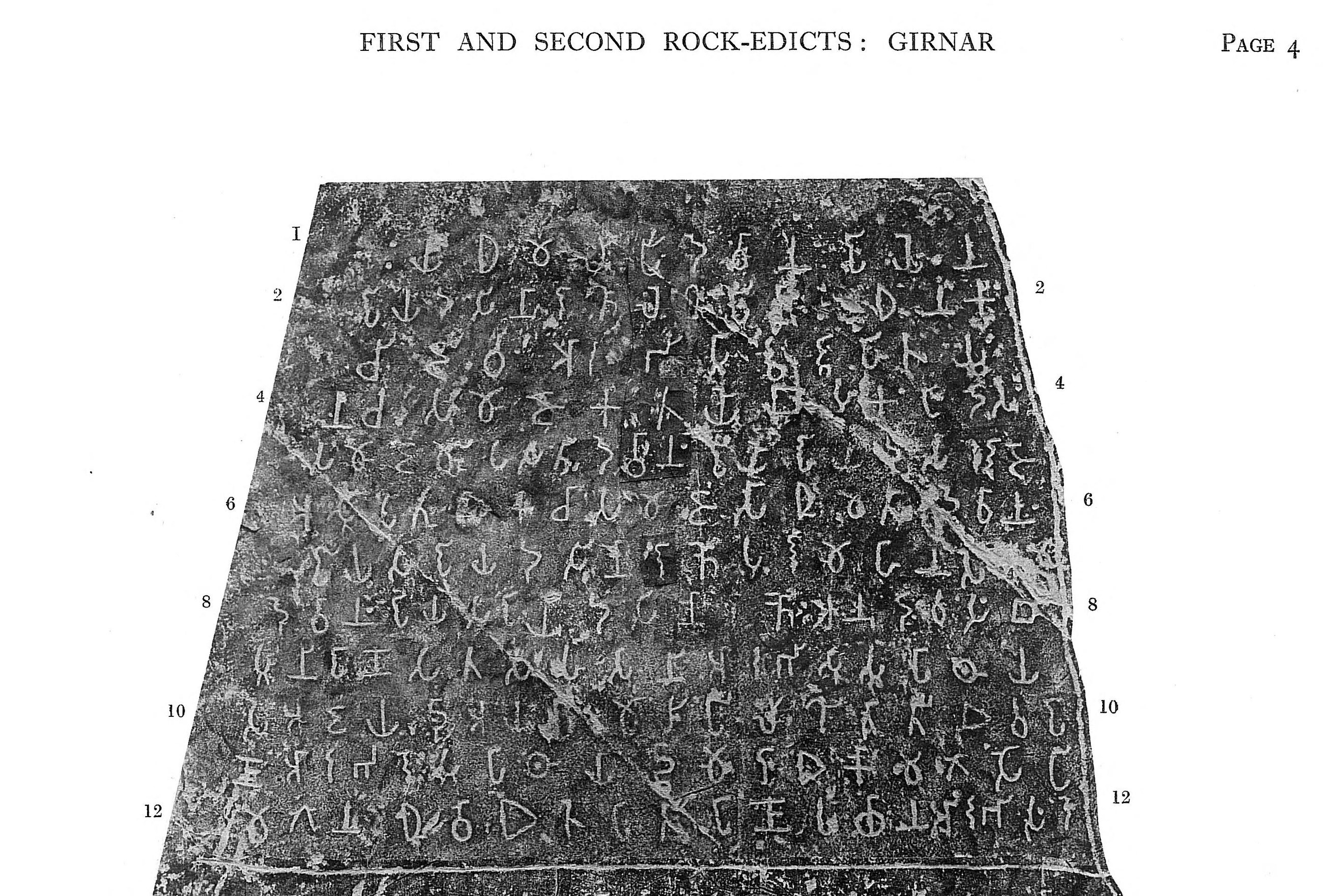
Where on the image
Inked impression (estampage) of the Girnar rock, not a photograph of the stone: Hultzsch 1925, plate 'First and second rock-edicts: Girnar' (facing p. 4; archive.org leaf 138), cropped to the upper band of the plate, marked I in the left margin and numbered 2 to 12 in both margins: 12 lines, as in the transcription. Checked on the image against the transcription (lines 1-12). Text and English: Hultzsch 1925, pp. 1-2 (archive.org leaves 134-135).
1(A) iy[aṁ] dhaṁma-lipī Devānaṁpriyena
2Priyadasinā rāñā lekh[ā]pitā (B) [i]dha na kiṁ-
3chi jīvaṁ ārabhitpā prajūhitavyaṁ
4(C) na cha samājo katavyo (D) bahukaṁ hi dosaṁ
5samājamhi pasati Devānaṁpriyo Priyadasi rājā
6(E) asti pi tu ekachā samājā sādhu-matā Devānaṁ-
7priyasa Priyadasino rāño (F) purā mahānas[amhi]
8Devānaṁpriyasa Priy[a]dasino rāño anudivasaṁ ba-
9hūni prāṇa-sata-sahasrāni ārabhisu sūpāthāya
10(G) se aja yadā ayaṁ dha[ṁ]ma-lip[ī] likhitā tī eva prā-
11nā ārabhare sūpāthāya dvo morā eko mago so pi
12mago na dhruvo (H) ete pi trī prāṇā pachhā na ārabhisare
(A) This rescript on morality has been caused to be written by king Dēvānāṁpriya Priyadarśin.
(B) Here no living being must be killed and sacrificed.
(C) And no festival meeting must be held.
(D) For king Dēvānāṁpriya Priyadarśin sees much evil in festival meetings.
(E) But there are also some festival meetings which are considered meritorious by king Dēvānāṁpriya Priyadarśin.
(F) Formerly in the kitchen of king Dēvānāṁpriya Priyadarśin many hundred thousands of animals were killed daily for the sake of curry.
(G) But now, when this rescript on morality is written, only three animals are being killed (daily) for the sake of curry, (viz.) two peacocks (and) one deer, (but) even this deer not regularly.
(H) Even these three animals shall not be killed in future.
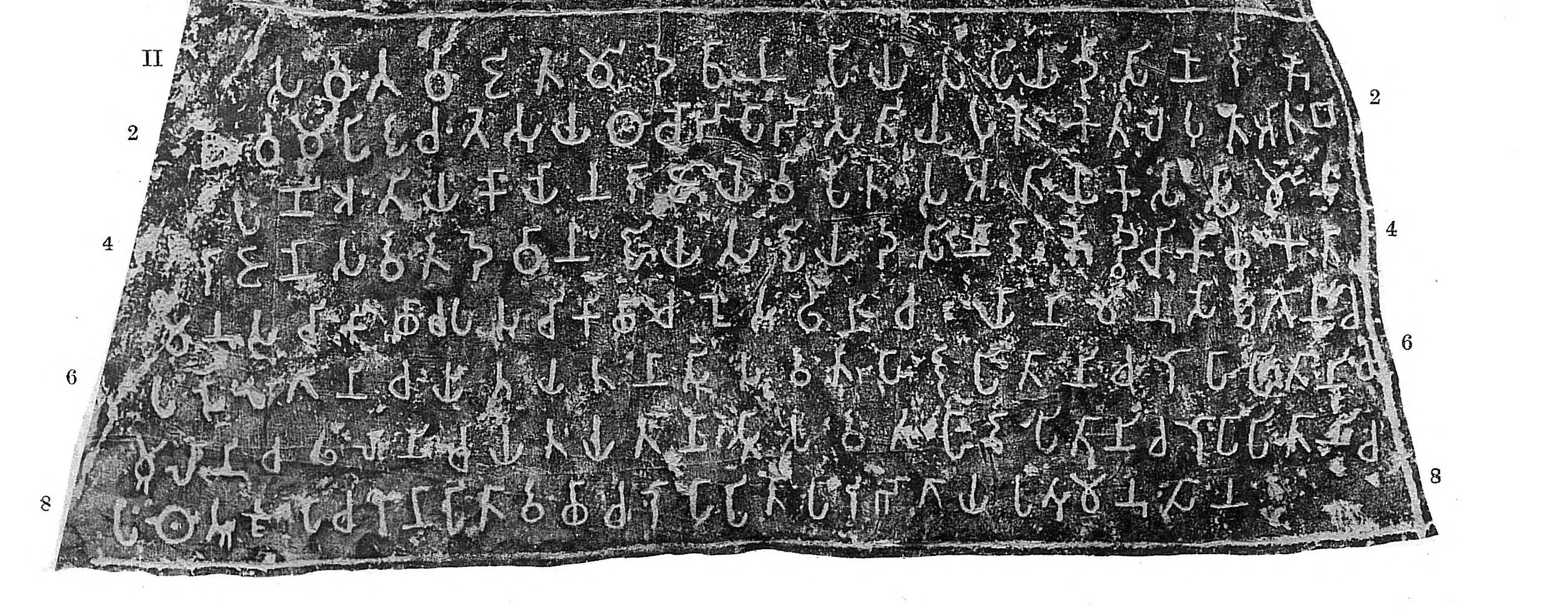
Where on the image
Inked impression (estampage) of the Girnar rock, not a photograph of the stone: Hultzsch 1925, plate 'First and second rock-edicts: Girnar' (facing p. 4; archive.org leaf 138), cropped to the lower band of the plate, below the ruled line, marked II and numbered 2 to 8: 8 lines. Checked on the image against the transcription (lines 1-8). Text and English: Hultzsch 1925, pp. 2-4 (archive.org leaves 135-137).
1(A) sarvata vijitamhi Devānaṁpriyasa Piyadasino rāño
2evamapi prachaṁtesu yathā Choḍā Pāḍā Satiyaputo Ketalaputo ā Taṁba-
3paṁṇī Aṁtiyako Yona-rājā ye vā pi tasa Aṁtiy[a]kas[a] sāmīp[aṁ]
4rājāno sarvatra Devānaṁpriyasa Priyadasino rāño dve chikīchha katā
5manusa-chikīchhā cha pasu-chikīchhā cha (B) osuḍhāni cha yāni m[a]nusopagān[i] cha
6paso[pa]gāni cha yata yata nāsti sarvatrā hārāpitāni cha ropāpitāni cha
7(C) mūlāni cha phalāni cha yata yatra nāsti sarvata hārāpitāni cha rop[ā]pitāni cha
8(D) paṁthesū kūpā cha khānāpitā vrachhā cha ropāpit[ā] paribhogāya pasu-manusānaṁ
(A) Everywhere in the dominions of king Dēvānāṁpriya Priyadarśin, and likewise among (his) borderers, such as the Chōḍas, the Pāṇḍyas, the Satiyaputa, the Kētalaputa, even Tāmraparṇī, the Yōna king Antiyaka, and also the kings who are the neighbours of this Antiyaka,—everywhere two (kinds of) medical treatment were established by king Dēvānāṁpriya Priyadarśin, (viz.) medical treatment for men and medical treatment for cattle.
(B) And wherever there were no herbs that are beneficial to men and beneficial to cattle, everywhere they were caused to be imported and to be planted.
(C) Wherever there were no roots and fruits, everywhere they were caused to be imported and to be planted.
(D) On the roads wells were caused to be dug, and trees were caused to be planted for the use of cattle and men.
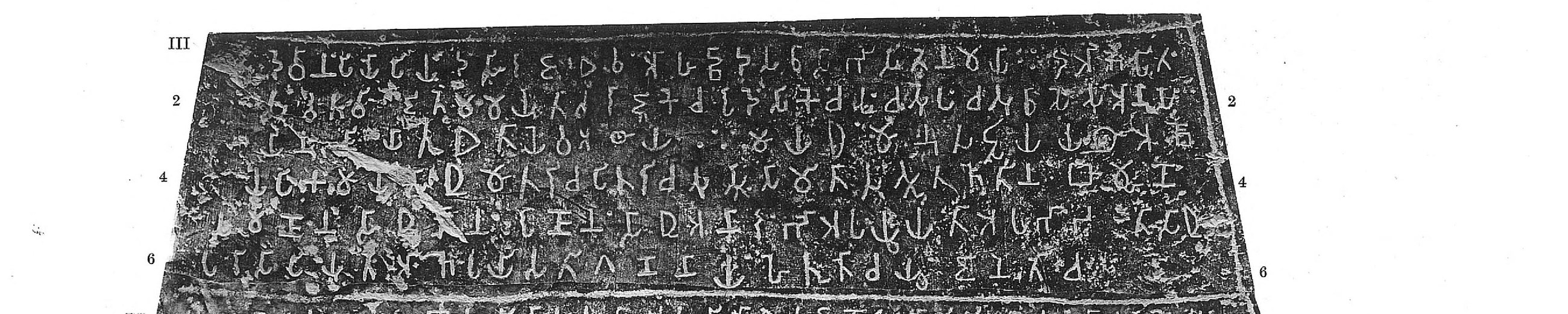
Where on the image
Inked impression (estampage) of the Girnar rock, not a photograph of the stone: Hultzsch 1925, plate 'Third to fifth rock-edicts: Girnar' (facing p. 10; archive.org leaf 145), cropped to the top band of the plate, marked III and numbered 2 to 6: 6 lines. Checked on the image against the transcription (lines 1-6). Text and English: Hultzsch 1925, pp. 4-5 (archive.org leaves 137, 139).
1(A) Devānaṁpiyo Piyadasi r[ā]jā evaṁ āha (B) dbādasa-vāsābhisitena mayā idaṁ āñ[a]pitaṁ
2(C) sarvata vijite mama yutā cha rājūke cha prādesike cha paṁchasu paṁchasu vāsesu anusaṁ-
3y[ā]na[ṁ n]iyātu etāyeva athāya imāya dhaṁmānusasṭiya yathā añā-
4ya pi kaṁmāy[a] (D) [s]ādhu mātari cha pitari cha susrūsā mitra-saṁstuta-ñātīnaṁ bāmhaṇa-
5samaṇānaṁ sādh[u d]ānaṁ prāṇānaṁ sādhu anāraṁbho apa-vyayatā apa-bhāḍatā sādhu
6(E) parisā pi yute āñapayisati gaṇanāyaṁ hetuto cha vyaṁjanato cha
(A) King Dēvānāṁpriya Priyadarśin speaks thus.
(B) (When I had been) anointed twelve years, the following was ordered by me.
(C) Everywhere in my dominions the Yuktas, the Rājūka, and the Prādēśika shall set out on a complete tour (throughout their charges) every five years for this very purpose, (viz.) for the following instruction in morality as well as for other business.
(D) ‘Meritorious is obedience to mother and father. Liberality to friends, acquaintances, and relatives, to Brāhmaṇas and Śramaṇas is meritorious. Abstention from killing animals is meritorious. Moderation in expenditure (and) moderation in possessions are meritorious.’
(E) The council (of Mahāmātras) also shall order the Yuktas to register (these rules) both with (the addition of) reasons and according to the letter.
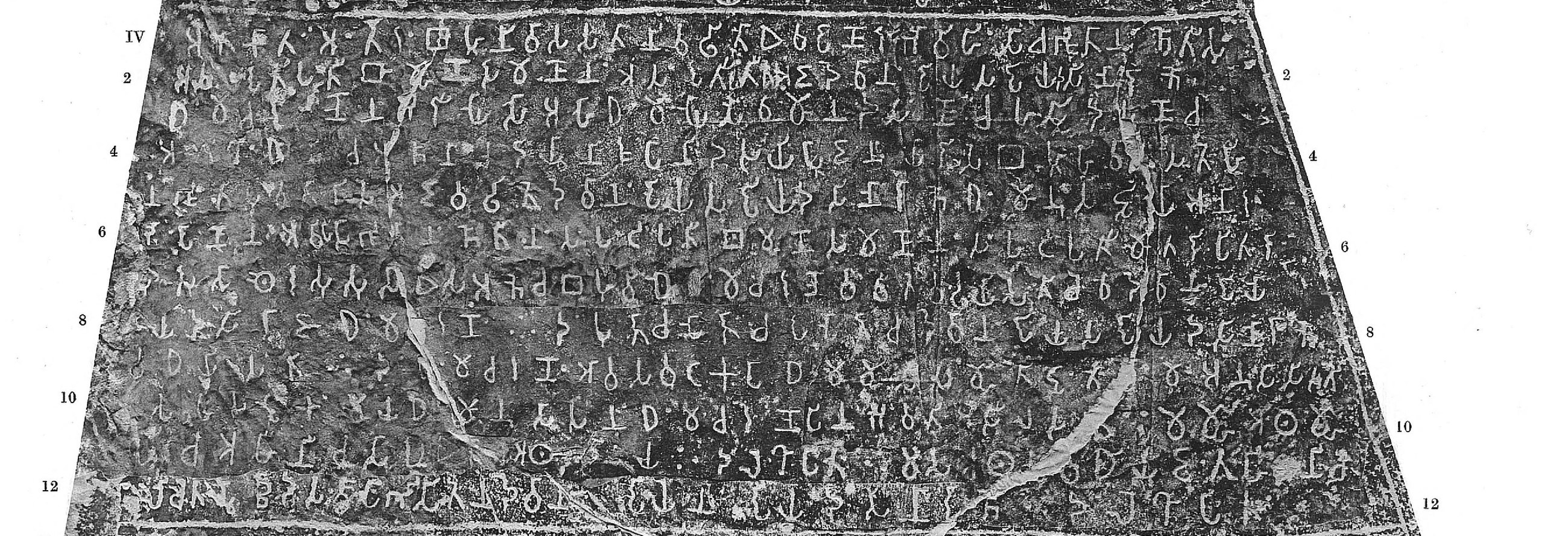
Where on the image
Inked impression (estampage) of the Girnar rock, not a photograph of the stone: Hultzsch 1925, plate 'Third to fifth rock-edicts: Girnar' (facing p. 10; archive.org leaf 145), cropped to the middle band, between the ruled lines, marked IV and numbered 2 to 12: 12 lines. Checked on the image against the transcription (lines 1-12). Text and English: Hultzsch 1925, pp. 6-8 (archive.org leaves 140-142).
1(A) atikātaṁ aṁt[a]raṁ bahūni vāsa-satāni vaḍhito eva prāṇāraṁbho vihiṁsā cha bhūtānaṁ ñātīsu
2a[s]aṁpratipatī brā[m]haṇa-sramaṇānaṁ asaṁpratīpatī (B) ta aja Devānaṁpriyasa Priyadasino rāño
3dhaṁma-charaṇena [bhe]rī-ghoso aho dhaṁma-ghoso vimāna-darsaṇā cha hasti-da[sa]ṇā cha
4agi-kh[a]ṁdhāni cha [a]ñāni cha divyāni rūpāni dasayitpā janaṁ (C) yārise bahūhi v[āsa]-satehi
5na bhūta-puve tārise aja vaḍhite Devānaṁpriyasa Priyadasino rāño dhaṁmānusasṭiyā anāraṁ-
6[bh]o prāṇānaṁ avihīsā bhūtānaṁ ñātīnaṁ saṁpaṭipatī bramhaṇa-samaṇānaṁ saṁpaṭipatī mātari pitari
7[s]usrusā thaira-susrusā (D) esa añe cha bahuvidhe [dha]ṁma-charaṇe va[ḍhi]te (E) vaḍhayisati cheva Devānaṁpriyo
8[Pri*]ya[da]si rājā dhaṁma-[cha]raṇaṁ idaṁ (F) putrā cha [p]otrā cha prapotrā cha Devānaṁpriyasa Priyadasino rāño
9[pra*]vadhayisaṁti idaṁ [dha]ṁma-charaṇaṁ āva savaṭa-kapā dhaṁmamhi sīlamhi tisṭaṁto [dha]ṁmaṁ anusāsisaṁti
10(G) [e]sa hi sesṭe kaṁme ya dhaṁmānusāsanaṁ (H) dhaṁma-charaṇe pi na [bha]vati asīlasa (I) [ta] imamhi athamhi
11[va]ḍhī cha ahīnī cha sādhu (J) e[t]āya athāya ida[ṁ] lekhāpitaṁ imasa atha[sa] v[a]dhi yujaṁtu hīni ch[a]
12[no] lochetavyā (K) dbādasa-vāsābhisitena Devān[a]ṁpriyena Priyadasinā rāñ[ā] idaṁ lekhāpitaṁ
(A) In times past, for many hundreds of years, there had ever been promoted the killing of animals and the hurting of living beings, discourtesy to relatives, (and) discourtesy to Brāhmaṇas and Śramaṇas.
(B) But now, in consequence of the practice of morality on the part of king Dēvānāṁpriya Priyadarśin, the sound of drums has become the sound of morality, showing the people representations of aerial chariots, representations of elephants, masses of fire, and other divine figures.
(C) Such as they had not existed before for many hundreds of years, thus there are now promoted, through the instruction in morality on the part of king Dēvānāṁpriya Priyadarśin, abstention from killing animals, abstention from hurting living beings, courtesy to relatives, courtesy to Brāhmaṇas and Śramaṇas, obedience to mother (and) father, (and) obedience to the aged.
(D) In this and many other ways is the practice of morality promoted.
(E) And king Dēvānāṁpriya Priyadarśin will ever promote this practice of morality.
(F) And the sons, grandsons, and great-grandsons of king Dēvānāṁpriya Priyadarśin will promote this practice of morality until the æon of destruction (of the world), (and) will instruct (people) in morality, abiding by morality (and) by good conduct.
(G) For this is the best work, viz. instruction in morality.
(H) And the practice of morality is not (possible) for (a person) devoid of good conduct.
(I) Therefore promotion and not neglect of this object is meritorious.
(J) For the following purpose has this been caused to be written, (viz. in order that) they should devote themselves to the promotion of this practice, and that the neglect (of it) should not be approved (by them).
(K) This was caused to be written by king Dēvānāṁpriya Priyadarśin (when he had been) anointed twelve years.
Where on the image
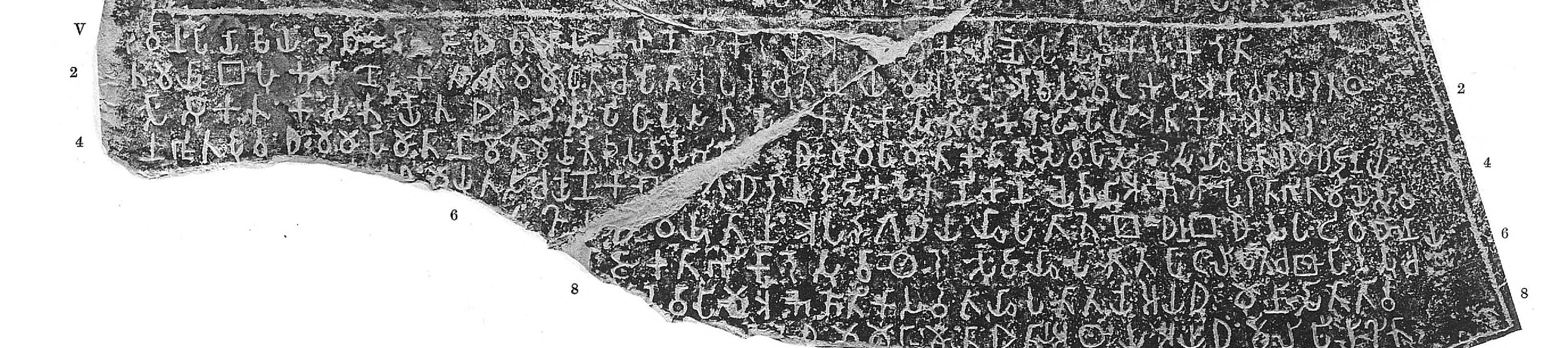
Inked impression (estampage) of the Girnar rock, not a photograph of the stone: Hultzsch 1925, plate 'Third to fifth rock-edicts: Girnar' (facing p. 10; archive.org leaf 145), cropped to the lowest band, marked V and numbered 2 to 8; the broken lower edge of the rock cuts the band, and only a few letters of line 9 survive at the right; line 10 is lost. Checked on the image against the transcription (lines 1-10). Text and English: Hultzsch 1925, pp. 9-11 (archive.org leaves 143-144, 146).
1(A) D[e]vānaṁpriyo Piyadasi rājā evaṁ āha (B) kalāṇaṁ dukaraṁ (C) y[o ādikaro] kalāṇ[a]sa so dukaraṁ karoti
2(D) ta mayā bahu kalāṇaṁ kataṁ (E) t[a] mama putā cha potā cha paraṁ cha tena y[a] me [a]pachaṁ āva saṁvaṭa-kapā anuvatisare tathā
3so sukataṁ kāsati (F) yo tu eta desaṁ pi hāpesati so [du]kataṁ kāsati (G) sukaraṁ hi pāpa[ṁ] (H) atikātaṁ aṁtaraṁ
4na bhūta-pruvaṁ dhaṁma-mahāmātā nāma (I) ta m[a]yā traidasa-vāsābhi[s]i[tena] dhaṁm[a]-mahāmātā katā (J) te sava-pāsaṁḍesu vyāpatā dhāmadhisṭānāya
5.......... [dha]ṁma-yutasa cha Yoṇa-K[a]ṁbo[ja]-Gaṁdhārānaṁ Risṭika-P[e]teṇikānaṁ ye vā pi a[ṁ]ñ[e ā]parātā (K) bhatamayesu va
6.......... [su]khā[ya dhaṁma]-yutānaṁ apar[i]godhāya vyāpatā te (L) ba[ṁ]dhana-badhasa paṭividhānāya
7.......... [p]rajā katābhikāresu vā thairesu vā vyāpatā te (M) Pāṭalipute cha bāhirasu cha
8.......... [y]e vā pi me añe ñātikā sarvata vyāpatā te (N) yo ayaṁ dhaṁma-nisrito ti va
9.......... [t]e [dha]ṁma-mahāmātā (O) etāya athāya ayaṁ dhaṁma-lipī likhitā
10..........
(A) King Dēvānāṁpriya Priyadarśin speaks thus.
(B) It is difficult to perform virtuous deeds.
(C) He who starts performing virtuous deeds accomplishes something difficult.
(D) Now, by me many virtuous deeds have been performed.
(E) Therefore (among) my sons and grandsons, and (among) my descendants (who shall come) after them until the æon of destruction (of the world), those who will conform to this (duty) will perform good deeds.
(F) But he who will neglect even a portion of this (duty) will perform evil deeds.
(G) For sin is easily committed.
(H) In times past (officers) called Mahāmātras of morality (Dharma-mahāmātra) did not exist before.
(I) But Mahāmātras of morality were appointed by me (when I had been) anointed thirteen years.
(J) These are occupied with all sects in establishing morality .......... of those who are devoted to morality (even) among the Yōṇas, Kambōjas, and Gandhāras, the Risṭikas and Pētēṇikas, and whatever other western borderers (of mine there are).
(K) They are occupied with servants and masters .......... for the .......... happiness of those who are devoted to morality, (and) in freeing (them) from desire (for worldly life).
(L) They are occupied in supporting prisoners (with money) .......... (if one has) children, or with those who are bewitched (i.e. incurably ill?), or with the aged.
(M) They are occupied everywhere, both in Pāṭaliputra and in the outlying .......... and whatever other relatives of mine (there are).
(N) These Mahāmātras of morality .......... whether one is eager for morality ..........
(O) For the following purpose has this rescript on morality been written ..........
Where on the image
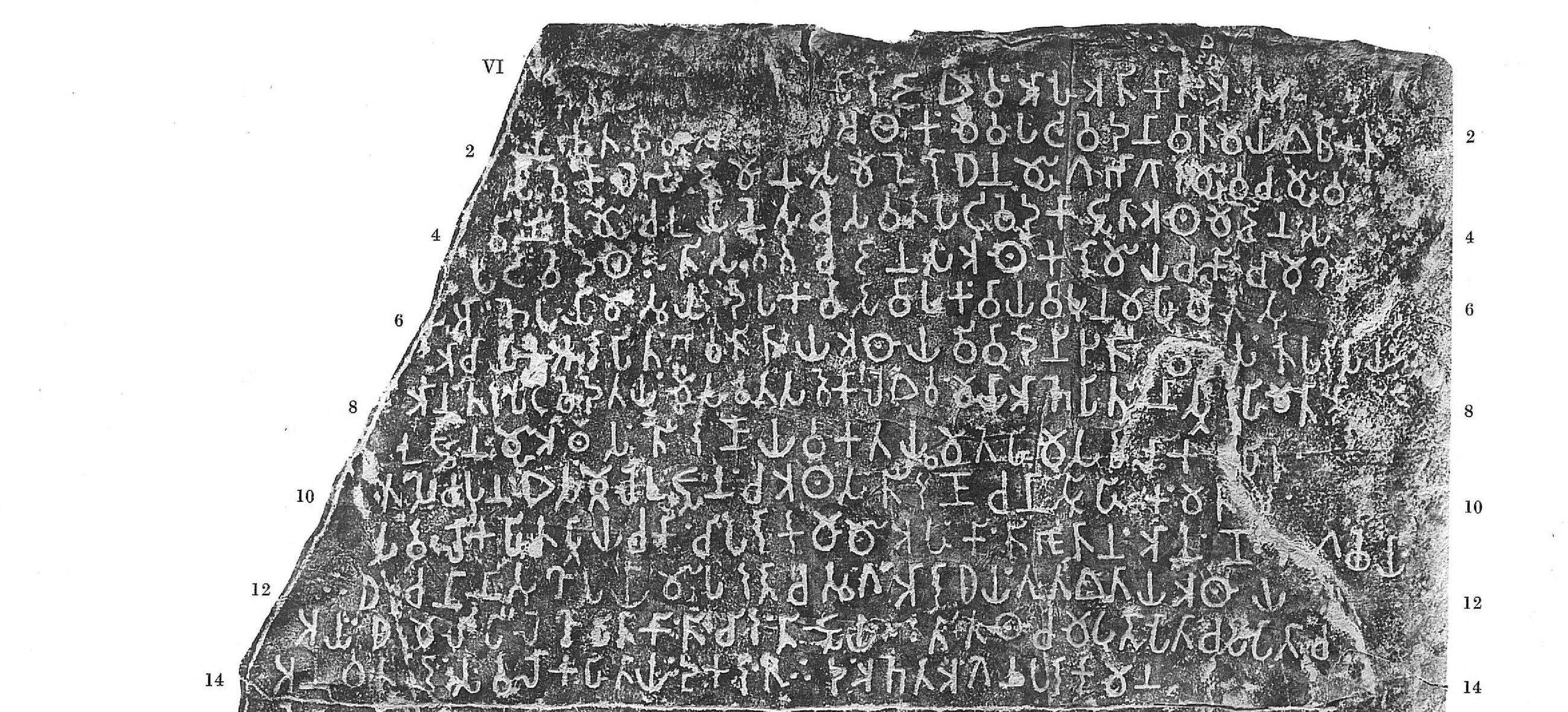
Inked impression (estampage) of the Girnar rock, not a photograph of the stone: Hultzsch 1925, plate 'Sixth to eighth rock-edicts: Girnar' (facing p. 14; archive.org leaf 150), cropped to the upper band, marked VI and numbered 2 to 14: 14 lines. Checked on the image against the transcription (lines 1-14). Text and English: Hultzsch 1925, pp. 11-13 (archive.org leaves 146-148).
1(A) [Devā] .......... [s]i rājā evaṁ āha (B) atikrāt[a]ṁ aṁtara[ṁ]
2na bhūta-pru[v] . [s] . [v] . . . [l] . atha-kaṁme va paṭivedanā vā (C) ta mayā evaṁ kataṁ
3(D) s[a]ve kāle bhuṁj[a]mānasa me orodhanamhi gabhāgāramhi vachamhi va
4vinītamhi cha uyānesu cha savatra paṭivedakā sṭitā athe me [ja]nasa
5paṭivedetha iti (E) sarvatra cha janasa athe karomi (F) ya cha kiṁchi mukhato
6āñapayāmi svayaṁ dāpakaṁ vā srāvāpakaṁ vā ya vā puna mahāmātresu
7āchāyi[ke] aropitaṁ bhavati tāya athāya vivādo nijhatī v[a s]aṁto parisāyaṁ
8ānaṁtaraṁ paṭ[i]vedeta[v]yaṁ me sa[r]vatra sarve kāle (G) evaṁ mayā āñapitaṁ (H) nāsti hi me to[s]o
9usṭānamhi atha-saṁtīraṇāya va (I) katavya-mate hi me sa[rva]-loka-hitaṁ
10(J) tasa cha puna esa mūle usṭānaṁ cha atha-saṁtīraṇā cha (K) nāsti hi kaṁmataraṁ
11sarva-loka-hitatpā (L) ya cha kiṁchi parākramāmi ahaṁ kiṁti bhūtānaṁ ānaṁṇaṁ gachheyaṁ
12idha cha nāni sukhāpayāmi paratrā cha svagaṁ ārādhayaṁtu ta (M) etāya athāya
13ayaṁ dha[ṁ]ma-lipī lekhāpitā kiṁti chiraṁ tisṭeya iti tathā cha me putrā potā cha prapotrā cha
14anuvataraṁ sava-loka-hitāya (N) dukaraṁ [t]u idaṁ añatra agena parākramena
(A) King Dēvānāṁpriya Priyadarśin speaks thus.
(B) In times past neither the disposal of affairs nor the submission of reports at any time did exist before.
(C) But I have made the following (arrangement).
(D) Reporters are posted everywhere, (with instructions) to report to me the affairs of the people at any time, while I am eating, in the harem, in the inner apartment, even at the cowpen, in the palanquin, and in the parks.
(E) And everywhere I am disposing of the affairs of the people.
(F) And if in the council (of Mahāmātras) a dispute arises, or an amendment is moved, in connexion with any donation or proclamation which I myself am ordering verbally, or (in connexion with) an emergent matter which has been delegated to the Mahāmātras, it must be reported to me immediately, anywhere, (and) at any time.
(G) Thus I have ordered.
(H) For I am never content in exerting myself and in dispatching business.
(I) For I consider it my duty (to promote) the welfare of all men.
(J) But the root of that (is) this, (viz.) exertion and the dispatch of business.
(K) For no duty is more important than (promoting) the welfare of all men.
(L) And whatever effort I am making, (is made) in order that I may discharge the debt (which I owe) to living beings, (that) I may make them happy in this (world), and (that) they may attain heaven in the other (world).
(M) For the following purpose has this rescript on morality been caused to be written, (viz.) that it may last long, and that my sons, grandsons, and great-grandsons may conform to this for the welfare of all men.
(N) But it is difficult to accomplish this without great zeal.

Where on the image
Inked impression (estampage) of the Girnar rock, not a photograph of the stone: Hultzsch 1925, plate 'Sixth to eighth rock-edicts: Girnar' (facing p. 14; archive.org leaf 150), cropped to the narrow band marked VII between two ruled lines (3 lines, numbered 2 in the margins); the last line of VI shows above it and the first line of VIII below. Checked on the image against the transcription (lines 1-3). Text and English: Hultzsch 1925, pp. 13-14 (archive.org leaves 148-149).
1(A) Devānaṁpiyo Piyadasi rājā sarvata ichhati save pāsaṁḍā vaseyu (B) save te sayamaṁ cha
2bhāva-sudhiṁ cha ichhati (C) jano tu uchāvacha-chhaṁdo uchāvacha-rāgo (D) te sarvaṁ va kāsaṁti eka-desaṁ va kasa[ṁ]ti
3(E) vip[ul]e tu pi dāne yasa nāsti sayame bhāva-sudhitā va kataṁñatā va daḍha-bhati[t]ā cha nichā bāḍhaṁ
(A) King Dēvānāṁpriya Priyadarśin desires (that) all sects may reside everywhere.
(B) (For) all these desire both self-control and purity of mind.
(C) But men possess various desires (and) various passions.
(D) Either they will fulfil the whole, or they will fulfil (only) a portion (of their duties).
(E) But even one who (practises) great liberality, (but) does not possess self-control, purity of mind, gratitude, and firm devotion, is very mean.
Where on the image
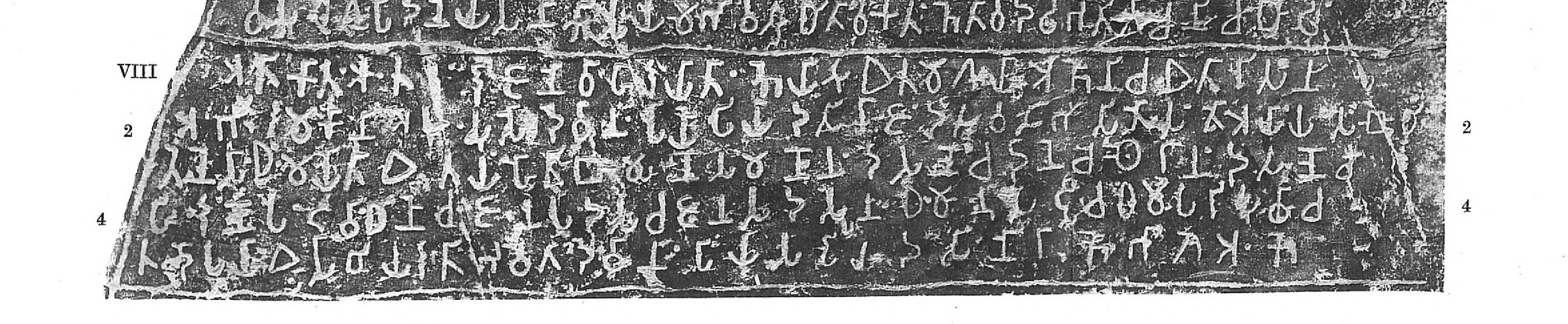
Inked impression (estampage) of the Girnar rock, not a photograph of the stone: Hultzsch 1925, plate 'Sixth to eighth rock-edicts: Girnar' (facing p. 14; archive.org leaf 150), cropped to the lowest band, marked VIII and numbered 2 and 4: 5 lines. Checked on the image against the transcription (lines 1-5). Text and English: Hultzsch 1925, pp. 14-15 (archive.org leaves 149, 151).
1(A) atikātaṁ aṁtaraṁ rājāno vihāra-yātāṁ ñayāsu (B) eta magavyā añāni cha etārisani
2abhīramakāni ahuṁsu (C) so Devānaṁpriyo Piyadasi rājā dasa-varsābhisito saṁto ayāya Saṁbodhiṁ
3(D) tenesā dhaṁma-yātā (E) etayaṁ hoti bāṁhana-samaṇānaṁ dasaṇe cha dāne cha thairānaṁ dasaṇe ch[a]
4hiraṁṇa-paṭividhāno cha jānapadasa cha janasa daspanaṁ dhaṁmānus[a]sṭī cha dhama-paripuchhā cha
5tadopayā (F) esā bhuya rati bhavati Devānaṁpiyasa Priyadasino rāño bhā[g]e aṁñe
(A) In times past kings used to set out on pleasure-tours.
(B) On these (tours) hunting and other such pleasures were (enjoyed).
(C) But when king Dēvānāṁpriya Priyadarśin had been anointed ten years, he went to Saṁbōdhi.
(D) Therefore these tours of morality (were undertaken).
(E) On these (tours) the following takes place, (viz.) visiting Brāhmaṇas and Śramaṇas and making gifts (to them), visiting the aged and supporting (them) with gold, visiting the people of the country, instructing (them) in morality, and questioning (them) about morality, as suitable for this (occasion).
(F) This second period (of the reign) of king Dēvānāṁpriya Priyadarśin becomes a pleasure in a higher degree.
Where on the image
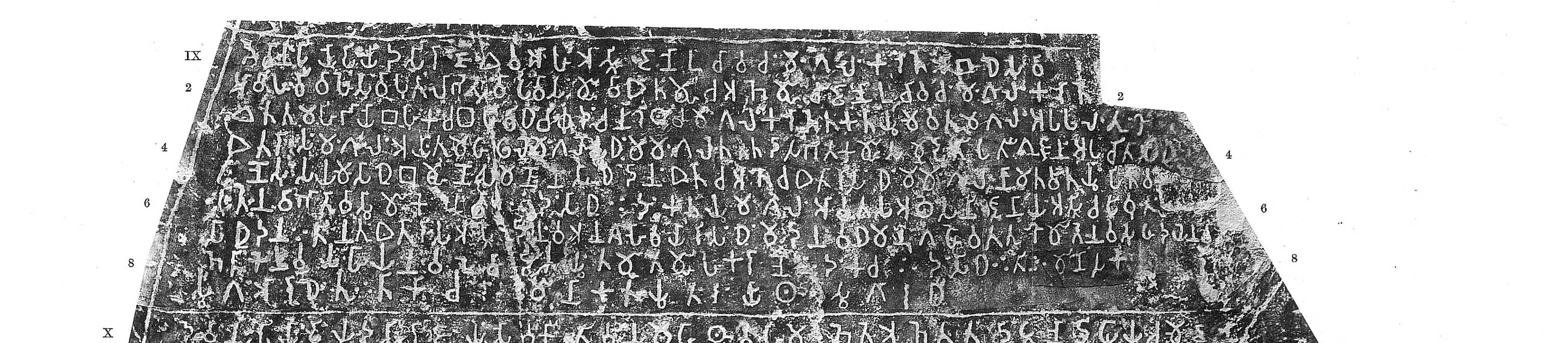
Inked impression (estampage) of the Girnar rock, not a photograph of the stone: Hultzsch 1925, plate 'Ninth to twelfth rock-edicts: Girnar' (facing p. 22; archive.org leaf 159), cropped to the top band, marked IX and numbered 2 to 8: 9 lines. Checked on the image against the transcription (lines 1-9). Text and English: Hultzsch 1925, pp. 16-17 (archive.org leaves 152-153).
1(A) Devānaṁpiyo Priyadasi rājā eva āha (B) asti jano uchāvachaṁ maṁgalaṁ karote ābādhesu vā
2āvāha-vīvāhesu vā putra-lābhesu vā pravāsaṁmhi vā etamhī cha añamhi cha jano uchāvachaṁ maṁgalaṁ karote
3(C) eta tu mahiḍāyo bahukaṁ cha bahuvidhaṁ cha chhudaṁ cha nirath[aṁ] cha maṁgalaṁ karote (D) ta katavyameva tu magalaṁ (E) apa-phalaṁ tu kho
4etarisaṁ maṁgalaṁ (F) ayaṁ tu mah[ā]-phale maṁgale ya dhaṁma-maṁgale (G) ta[te]ta dāsa-bhatakamhi samya-pratipatī gurūnaṁ apachiti sādhu
5pānesu sayamo sādhu bamhaṇa-samaṇānaṁ sādhu dānaṁ et[a] cha añ[a] cha etārisaṁ dhaṁma-maṁgalaṁ nāma (H) ta vatavyaṁ pitā va
6putena vā bhātrā vā svāmikena vā idaṁ sādhu idaṁ katavya maṁgalaṁ āva tasa athasa nisṭānāya (I) asti cha pi vutaṁ
7sādhu dana iti (J) na tu etārisaṁ astā dānaṁ va ana[ga]ho va yārisaṁ dhaṁma-dānaṁ va dhamanugaho va (K) ta tu kho mitrena va suhadayena [v]ā
8ñatikena va sahāyana va ovāditavyaṁ tamhi tamhi pakaraṇe [i]daṁ kachaṁ idaṁ sādha iti iminā sak[a]
9svagaṁ ārādhetu iti (L) ki cha iminā katavyataraṁ yathā svagāradhī
(A) King Dēvānāṁpriya Priyadarśin speaks thus.
(B) Men are practising various ceremonies during illness, or at the marriage of a son or a daughter, or at the birth of a son, or when setting out on a journey; on these and other (occasions) men are practising various ceremonies.
(C) But in such (cases) women are practising many and various vulgar and useless ceremonies.
(D) Now, ceremonies should certainly be practised.
(E) But ceremonies like these bear little fruit indeed.
(F) But the following practice bears much fruit, viz. the practice of morality.
(G) Herein the following (are comprised), (viz.) proper courtesy to slaves and servants, reverence to elders, gentleness to animals, (and) liberality to Brāhmaṇas and Śramaṇas; these and other such (virtues) are called the practice of morality.
(H) Therefore a father, or a son, or a brother, or a master ought to say:—‘This is meritorious. This practice should be observed until the (desired) object is attained.’
(I) And it has been said also: ‘Gifts are meritorious.’
(J) But there is no such gift or benefit as the gift of morality or the benefit of morality.
(K) Therefore a friend, or a well-wisher, or a relative, or a companion should indeed admonish (another) on such and such an occasion:—‘This ought to be done; this is meritorious. By this (practice) it is possible to attain heaven.’
(L) And what is more desirable than this, viz. the attainment of heaven?
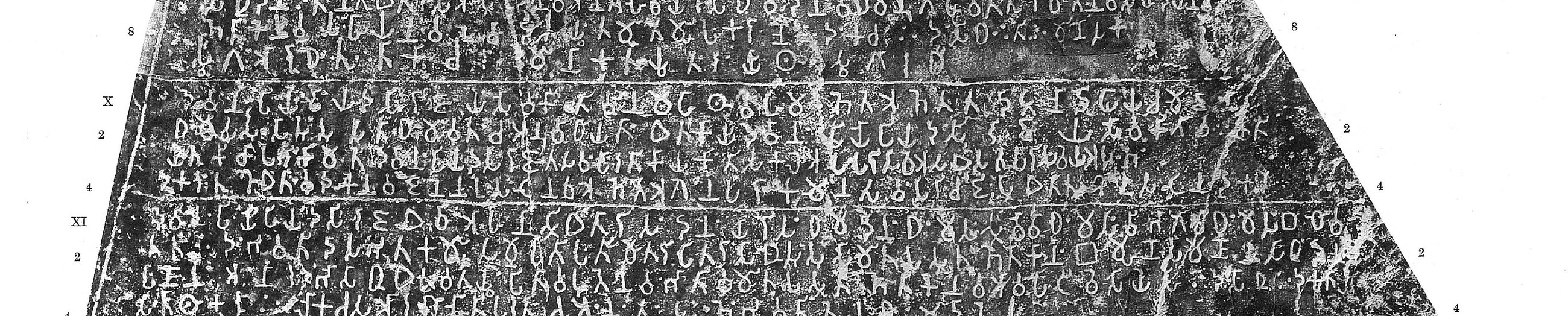
Where on the image
Inked impression (estampage) of the Girnar rock, not a photograph of the stone: Hultzsch 1925, plate 'Ninth to twelfth rock-edicts: Girnar' (facing p. 22; archive.org leaf 159), cropped to the band in the middle of the crop, marked X in the left margin and numbered 2 and 4 (4 lines), between the ruled lines; the end of IX shows above it and the start of XI below. Checked on the image against the transcription (lines 1-4). Text and English: Hultzsch 1925, pp. 17-18 (archive.org leaves 153-154).
1(A) Devānaṁpiyo Priyadasi rājā yaso va kīti va na mahāthāvah[ā] mañate añata tadātpano dighāya cha me [ja]no
2dhaṁma-susru[ṁ]sā susrusatā dhaṁma-vutaṁ cha anuvidhiyatāṁ (B) etakāya Devānaṁpiyo Piyadasi rājā yaso va kiti va i[chha]ti
3(C) ya[ṁ] tu kich[i] parik[a]mate Devānaṁ Priyadasi rājā ta savaṁ pāratrikāya kiṁti sakale a[pa]-parisrave asa (D) esa tu parisave ya apuṁñaṁ
4(E) dukaraṁ tu kho etaṁ chhudakena va janena usaṭena va añatra agena parāk[r]amena savaṁ parichajitpā (F) et[a] t[u] kho usaṭena dukaraṁ
(A) King Dēvānāṁpriya Priyadarśin does not think that either glory or fame conveys much advantage, except (on account of his aim that) in the present time, and in the distant (future), men may (be induced) by him to practise obedience to morality, and that they may conform to the duties of morality.
(B) On this (account) king Dēvānāṁpriya Priyadarśin is desiring glory and fame.
(C) But whatever effort king Dēvānāṁpriya Priyadarśin is making, all that (is) for the sake of (merit) in the other (world), (and) in order that all (men) may run little danger.
(D) But the danger is this, viz. demerit.
(E) But it is indeed difficult either for a lowly person or for a high one to accomplish this without great zeal (and without) laying aside every (other aim).
(F) But among these (two) it is indeed (more) difficult to accomplish for a high (person).
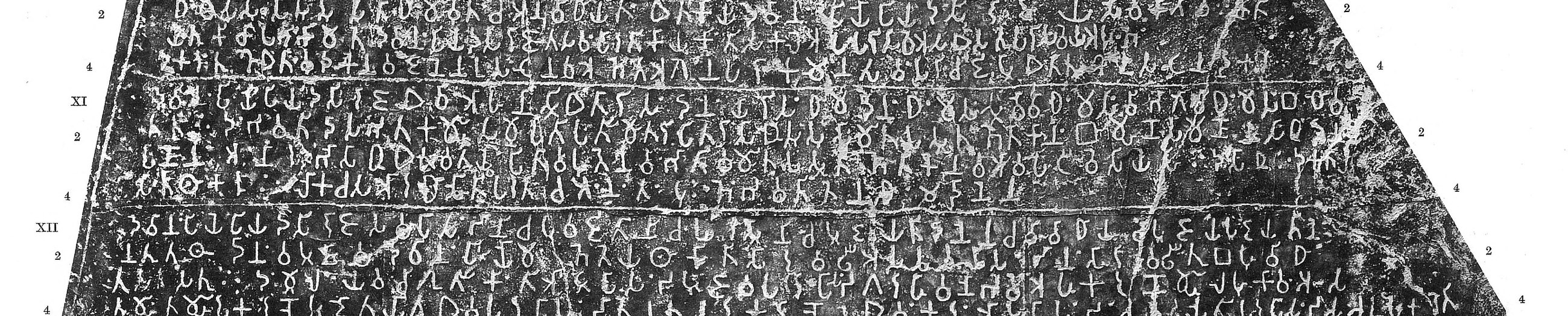
Where on the image
Inked impression (estampage) of the Girnar rock, not a photograph of the stone: Hultzsch 1925, plate 'Ninth to twelfth rock-edicts: Girnar' (facing p. 22; archive.org leaf 159), cropped to the band in the middle of the crop, marked XI and numbered 2 and 4 (4 lines); the end of X shows above it and the start of XII below. Checked on the image against the transcription (lines 1-4). Text and English: Hultzsch 1925, p. 19 (archive.org leaf 155).
1(A) Devinaṁpriyo Piyadasi rājā ev[a]ṁ āha (B) nāsti etārisaṁ dānaṁ yārisaṁ dhaṁma-dānaṁ dhaṁma-saṁstavo vā dhaṁma-saṁvibhāgo [vā] dhaṁma-saṁbadho va
2(C) tata idaṁ bhavati dāsa-bhatakamhi samya-p[r]atipatī mātari pitarā sādhu sus[r]usā mita-[sa]stuta-ñātikānaṁ bāmhaṇa-s[r]amaṇā[naṁ] sādhu dā[naṁ]
3prāṇānaṁ anāraṁbho sādhu (D) eta vatavyaṁ pitā va putrena va bhāt[ā] va mita-sastut[a]-ñāt[i]k[e]na va āva paṭivesiyehi ida sādhu ida ka[tav]ya[ṁ]
4(E) so t[a]thā karu ilokachasa āradho hoti parata cha aṁnaṁtaṁ puiñaṁ bhavati tena dhaṁma-dānena
(A) King Dēvānāṁpriya Priyadarśin speaks thus.
(B) There is no such gift as the gift of morality, or acquaintance through morality, or the distribution of morality, or kinship through morality.
(C) Herein the following are (comprised), (viz.) proper courtesy to slaves and servants, obedience to mother (and) father, liberality to friends, acquaintances, and relatives, to Brāhmaṇas and Śramaṇas, (and) abstention from killing animals.
(D) Concerning this a father, or a son, or a brother, or a friend, an acquaintance, or a relative, (or) even (mere) neighbours, ought to say: ‘This is meritorious. This ought to be done.’
(E) If one is acting thus, the attainment of (happiness) in this world is (secured), and endless merit is produced in the other (world) by that gift of morality.
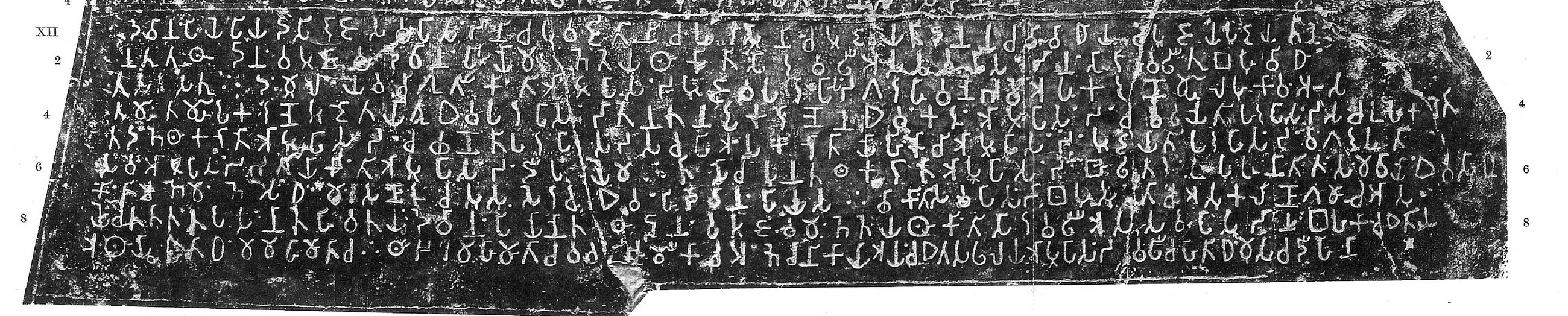
Where on the image
Inked impression (estampage) of the Girnar rock, not a photograph of the stone: Hultzsch 1925, plate 'Ninth to twelfth rock-edicts: Girnar' (facing p. 22; archive.org leaf 159), cropped to the lowest band, marked XII and numbered 2 to 8: 9 lines. Checked on the image against the transcription (lines 1-9). Text and English: Hultzsch 1925, pp. 20-22 (archive.org leaves 156-158).
1(A) Devānaṁpiye Piyad[a]si rājā sava-pāsaṁḍāni cha [pa]vajitāni cha gharastāni cha pūjayati d[ā]nena cha vivādhāya [cha] pūjāya pūjayati ne
2(B) na tu tathā dānaṁ va pū[jā] va D[e]vānaṁpiyo maṁñate yathā kiti sāra-vaḍhī asa sa[va-pā]saṁḍānaṁ (C) sār[a]-vaḍhī tu bahuvidhā
3(D) tasa tu idaṁ mūlaṁ ya vachi-gutī kiṁti ātpa-pāsaṁḍa-pūjā va para-pāsaṁḍa-garahā va no bhave aprakaraṇamhi lahukā va asa
4tamhi tamhi prakaraṇe (E) pūjetayā tu eva para-pāsaṁḍā tena tana prakaraṇena (F) evaṁ karuṁ ātpa-pāsaṁḍaṁ cha vaḍhayati para-pāsaṁḍasa cha upakaroti
5(G) tad-aṁñathā karoto ātpa-pāsaḍaṁ cha chhaṇati para-pāsaṁḍasa cha pi apakaroti (H) yo hi kochi ātpa-pāsaṁḍaṁ pūjayati para-pāsaṁḍaṁ v[a] garahati
6savaṁ ātpa-pāsaṁḍa-bhatiyā kiṁti ātpa-pāsaṁḍaṁ dīpayema iti so cha puna tatha karāto ātpa-pāsaṁḍa[ṁ] bāḍhataraṁ upahanāti (I) ta samavāyo eva sādhu
7kiṁti [a]ñamaṁñasa dhaṁmaṁ sruṇāru cha susuṁsera cha (J) evaṁ hi D[e]vānaṁpiyasa ichhā kiṁti sava-pāsaṁḍā bahu-srutā cha asu kal[ā]ṇāgamā cha [a]su
8(K) ye cha tatra tata prasaṁnā tehi vatavyaṁ (L) Devānaṁpiyo no tathā dānaṁ va pūjāṁ va maṁñate yathā kiṁti sāra-vaḍhī asa sarva-pāsaḍānaṁ (M) bahakā cha etāya
9athā vyāpatā dhaṁma-mahāmātā cha ithījhakha-mahāmātā cha vacha-bhūmīkā cha añe cha nikāyā (N) ayaṁ cha etasa phala ya ātpa-pāsaṁḍa-vaḍhī cha hoti dhaṁmasa cha dīp[a]nā
(A) King Dēvānāṁpriya Priyadarśin is honouring all sects: both ascetics and householders; both with gifts and with honours of various kinds he is honouring them.
(B) But Dēvānāṁpriya does not value either gifts or honours so (highly) as (this), (viz.) that a promotion of the essentials of all sects should take place.
(C) But a promotion of the essentials (is possible) in many ways.
(D) But its root is this, viz. guarding (one’s) speech, (i.e.) that neither praising one’s own sect nor blaming other sects should take place on improper occasions, or (that) it should be moderate in every case.
(E) But other sects ought to be duly honoured in every case.
(F) If one is acting thus, he is both promoting his own sect and benefiting other sects.
(G) If one is acting otherwise than thus, he is both hurting his own sect and wronging other sects as well.
(H) For whosoever praises his own sect or blames other sects,—all (this) out of devotion to his own sect, (i.e.) with the view of glorifying his own sect,—if he is acting thus, he rather injures his own sect very severely.
(I) Therefore concord alone is meritorious, (i.e.) that they should both hear and obey each other’s morals.
(J) For this is the desire of Dēvānāṁpriya, (viz.) that all sects should be full of learning, and should be pure in doctrine.
(K) And those who are attached to their respective (sects) ought to be spoken to (as follows).
(L) Dēvānāṁpriya does not value either gifts or honours so (highly) as (this), (viz.) that a promotion of the essentials of all sects should take place.
(M) And many (officers) are occupied for this purpose, (viz.) the Mahāmātras of morality, the Mahāmātras controlling women, the inspectors of cowpens, and other classes (of officials).
(N) And this is the fruit of it, (viz.) that both the promotion of one’s own sect takes place, and the glorification of morality.
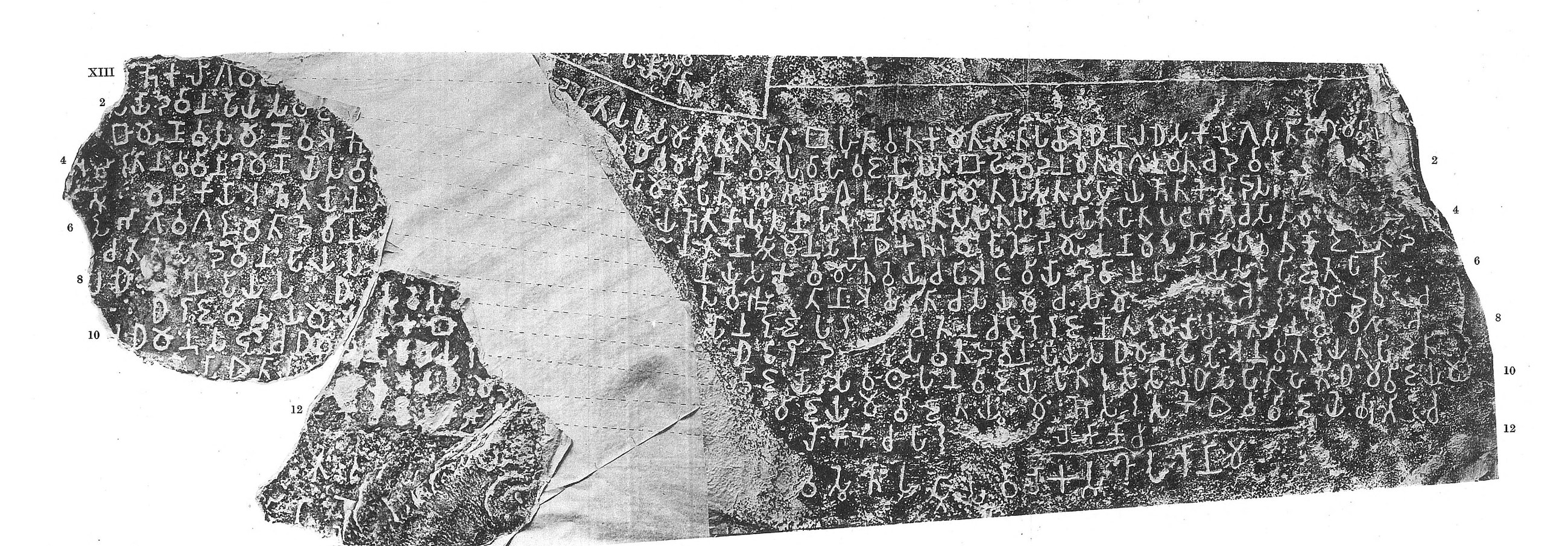
Where on the image
Inked impression (estampage) of the Girnar rock, not a photograph of the stone: Hultzsch 1925, plate 'Thirteenth and fourteenth rock-edicts: Girnar' (facing p. 26; archive.org leaf 164), cropped to the upper part of the plate, marked XIII and numbered 2 to 12: the two fragments on the left (recovered pieces of the left part of the edict, the second holding the beginnings of lines 11-12) and the main surface on the right; the gap between them is the part of the rock destroyed in the nineteenth century, which Hultzsch marks with dots. Checked on the image against the transcription (lines 1-12). Text and English: Hultzsch 1925, pp. 22-25 (archive.org leaves 158, 160-162).
1(A) .......... ño Kaliṁgā [v . j .] .......... [v . ḍh]e [sa]ta-sahasra-mātraṁ tatrā hataṁ bahu-tāvatakaṁ mata (C) tatā pachhā adh[u]nā ladhesu Kaliṁgesu tī[v]o dhaṁmavāyo
2.......... [sa]yo Devānaṁpriyasa [v . j .] .......... [va]dho va maraṇaṁ va apavāho va janasa ta bāḍhaṁ vedana-mata cha g[u]r[u]-mata cha Devā[naṁpi] . . [sa]
3.......... bāmhaṇā va samaṇā va añe .......... [s]ā mātr[i] pitari susuṁsā guru-susuṁsā mita-saṁstata-sahāya-ñātike[su] dāsa-[bha] . . . . . .
4.......... abhiratānaṁ va vinikhamaṇa (H) yesaṁ vā [p .] .......... [h]āya-ñātikā vyasanaṁ prāpuṇati tata so pi tesa [u]paghāto hāti (I) paṭībhā[g]o chesā s[ava] . . . . . .
5.......... sti ime nikāyā añatra Yone[su] .......... [mh]i yatra nāsti mānusānaṁ ekataramhi pāsaṁḍamhi na nāma prasā[d]o (K) y[ā]vata[k]o j[ano ta]d[ā]
6.......... ṣra-bhāgo va garu-mat[o] Devānaṁ .......... na ya saka chhamitave (M) yā cha pi aṭaviyo D[e]vāṇaṁpiya[sa] pijite pāti
7.......... chate te[sa]ṁ Devānaṁpiyasa .......... sava-bhūtānāṁ achhatiṁ cha sayamaṁ cha samachairaṁ ch[a] māḍava cha
8.......... [la]dh[o] . . . . naṁpriyasa idha [sa]vesu [ch .] .......... [Yo]na-rāja paraṁ cha tena chatpāro rājāno Turamāyo cha [A]ṁt[ek]ina cha Magā cha
9.......... idha rāja-vi[sa]yamhi [Y]o[na]-Kaṁbo .......... ṁdhra-Pāriṁdesu savata Devānaṁpiyasa dhaṁmānus[a]sṭiṁ anuv[a]tare (S) yata pi dūti
10.......... [na]ṁ dhamānusasṭiṁ cha dhamaṁ anuvidhiyare .......... [v]ijayo savathā puna vijayo pīti-raso sā (U) ladhā sā pītī hoti dhaṁma-vījayamhi
11.......... ṁ[p]riyo (X) etā[ya athā]ya ayaṁ dhaṁma-[l] .......... [va]ṁ vijayaṁ mā vijetavyaṁ maṁñā sarasake eva vijaye chhāti cha
12.......... kik[o] ch[a pā]r[alo]ki[ko] .......... ilokikā cha pāralokikā cha
(A) .......... the Kaliṅgas ..........
(B) .......... one hundred thousand in number were those who were slain there, (and) many times as many those who died.
(C) After that, now that (the country of) the Kaliṅgas has been taken, a zealous study of morality ..........
(D) . . . . . [the repentance] of Dēvānāṁpriya ..........
(E) .......... slaughter, death, and deportation of people, this is considered very painful and deplorable by Dēvānāṁpriya.
(G) .......... Brāhmaṇas or Śramaṇas, [or] other .......... obedience to mother (and) to father, obedience to elders .......... to friends, acquaintances, companions, and relatives, [to] slaves .......... or deportation of (their) beloved ones.
(H) .......... [companions] and relatives are then incurring misfortune, this (misfortune) as well becomes an injury to those (persons).
(I) This is shared [by] all ..........
(J) .......... these classes .......... except among the Yōnas .......... where men are not indeed attached to some sect.
(K) As many people as at that time .......... part is considered deplorable by Dēvānāṁ[priya].
(L) .......... what can be forgiven.
(M) And even the forests which are (included) in the dominions of Dēvānāṁpriya ..........
(N) They are [told] .......... of Dēvānāṁpriya ..........
(O) .......... towards all beings abstention from hurting, self-control, impartiality, and kindness.
(Q) .......... has been won by [Dēvā]nāṁpriya here and among all .......... the Yōna king, and beyond him four kings, (viz.) Turamāya, Antekina, Magā ..........
(R) . . . . . here in the king’s territory, [among] the Yōnas and Kambō[jas] .......... among the [A]ndhras and Pārindas,—everywhere (people) are conforming to Dēvānāṁpriya’s instruction in morality.
(S) Even where the envoys .......... and the instruction in morality, are conforming to morality ..........
(T) .......... this conquest,—a conquest (won) in every respect (and) repeatedly,—causes the feeling of satisfaction.
(U) This satisfaction has been obtained (by me) at the conquest by morality.
(W) .......... [Dēvānā]ṁpriya.
(X) For the following purpose this [rescript] on morality .......... should not think that a [fresh] conquest ought to be made, (that), if a conquest does please them, mercy ..........
(Y) .......... in the other world.
(AA) .......... both in this world and in the other world.
Where on the image
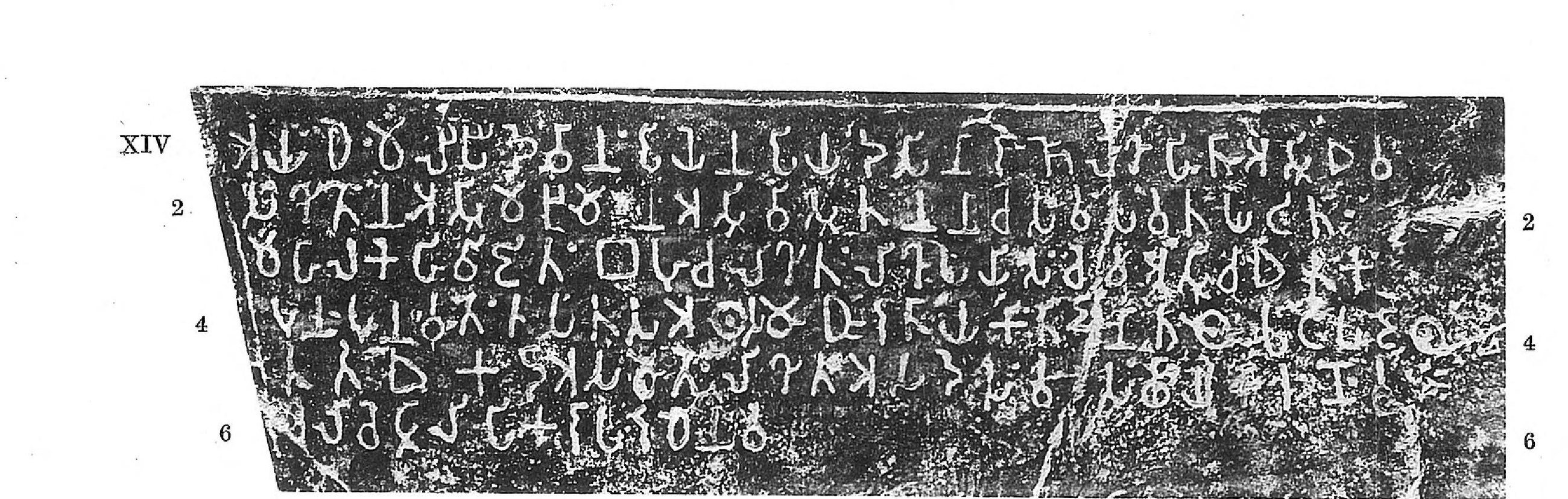
Inked impression (estampage) of the Girnar rock, not a photograph of the stone: Hultzsch 1925, plate 'Thirteenth and fourteenth rock-edicts: Girnar' (facing p. 26; archive.org leaf 164), cropped to the separate band at the foot of the plate, marked XIV and numbered 2 to 6: 6 lines. Checked on the image against the transcription (lines 1-6). Text and English: Hultzsch 1925, p. 26 (archive.org leaf 163).
1(A) ayaṁ dhaṁma-lipī Devānaṁpriyena Priyadasinā r[ā]ñā l[e]khāpitā asti eva
2saṁkhit[e]na asti majhamena asti vistatana (B) na cha sarvaṁ [sa]rvata ghaṭitaṁ
3(C) mahālake hi vijitaṁ bahu cha likhitaṁ likhāpayisaṁ cheva (D) asti cha eta kaṁ
4puna puna vutaṁ tasa tasa athasa mādhūratāya kiṁti jano tathā paṭipajetha
5(E) tatra ekadā asamāt[a]ṁ likhita[ṁ] asa desaṁ va sachhāya [kā]raṇaṁ va
6[a]lochetpā lipikarāparadhena va
(A) These rescripts on morality have been caused to be written by king Dēvānāṁpriya Priyadarśin either in an abridged (form), or of middle (size), or at full length.
(B) And the whole was not suitable everywhere.
(C) For (my) dominions are wide, and much has been written, and I shall cause still (more) to be written.
(D) And some of this has been stated again and again because of the charm of certain topics, (and) in order that men should act accordingly.
(E) In some instances (some) of this may have been written incompletely, either on account of the locality, or because (my) motive was not liked, or by the fault of the writer.
Notes
- Hultzsch translates dhamma as 'morality'; other translators use 'Dharma' or 'righteousness'.
- Words in round brackets in the English are Hultzsch's additions for sense; words in square brackets render damaged letters.
Cite
Sources
- Source: Girnar, near Junagadh (Gujarat), rock inscription of Ashoka; Hultzsch's collotype plates of inked impressions (1925); Hultzsch's transliteration and English (CII I, 1925), read from the archive.org scan (holding institution)
- Critical edition: E. Hultzsch, Inscriptions of Asoka (CII I, 1925), transliteration read from the scan
← previous · → next · v cycle view · l back to library